-
-
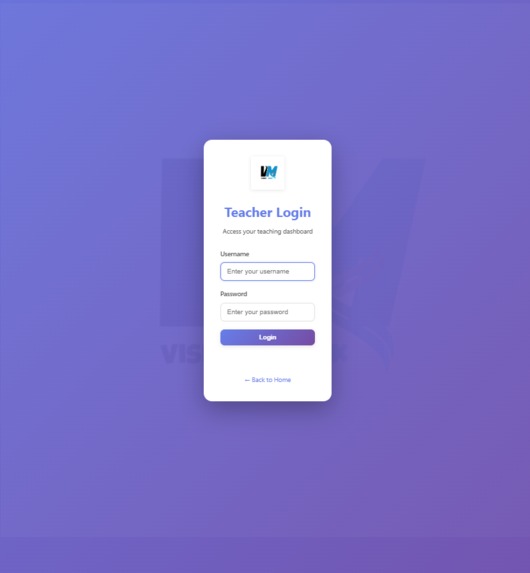
Teacher Login Page
-
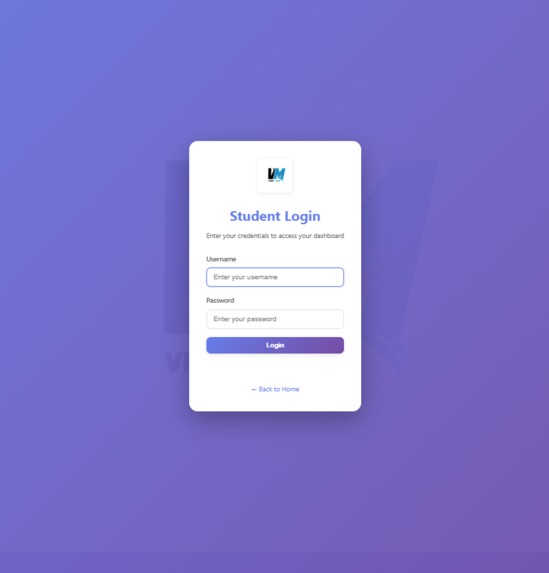
Student Login Page
-
Teacher Login Page
-
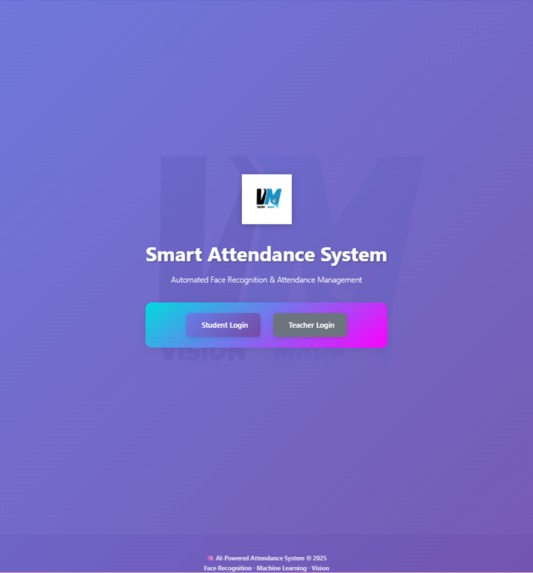
Front Page
-
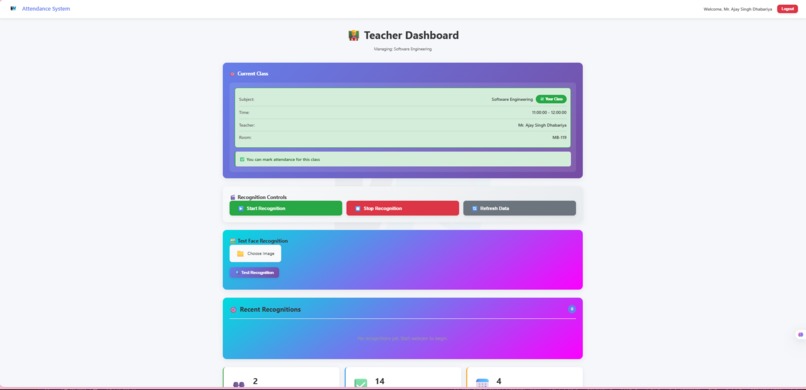
Teacher Dashboard UI Page1
-
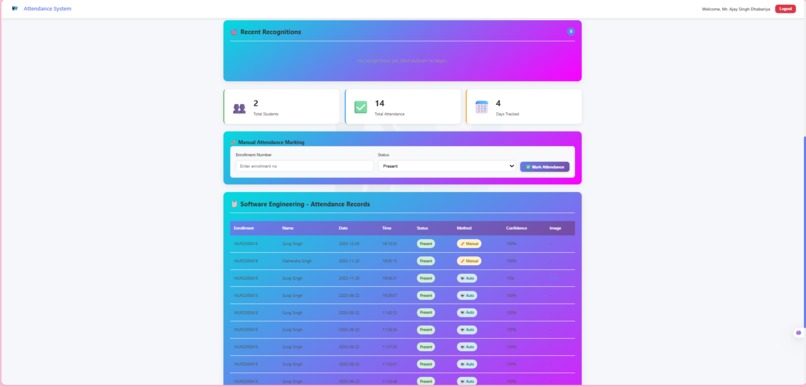
Teacher Dashboard UI Page 2
-
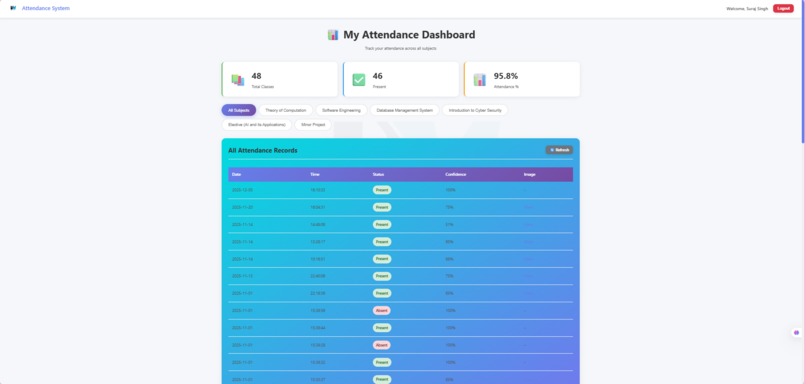
Student Dashboard UI


Inspiration
Traditional attendance systems are time-consuming, error-prone, and easy to manipulate. Manual roll calls interrupt classes, proxy attendance undermines integrity, and biometric systems often require expensive hardware. We were inspired to solve this problem using computer vision and automation, creating a system that is fast, contactless, and scalable. VisionMark was born from the idea that a camera and intelligent AI are enough to reliably verify presence.
What it does
VisionMark is an AI-powered automatic attendance system that uses computer vision to identify individuals and mark attendance in real time.
The system:
Detects faces from live camera feeds or images
Recognizes registered individuals using face embeddings
Automatically marks attendance without manual intervention
Teacher Also Mark Attendence Manually
Teacher And Student Login Page
Stores attendance records digitally for accuracy and traceability
VisionMark eliminates proxy attendance, reduces administrative overhead, and provides a seamless, contactless attendance experience.
How we built it
VisionMark was built using a modular AI pipeline:
Face Detection We used a computer vision model to detect multiple faces in real time from camera input.
Face Recognition Each detected face is converted into embeddings and compared with stored encodings to identify individuals accurately.
Attendance Logic Once a match is confirmed, attendance is marked automatically while preventing duplicate entries.
Data Storage Attendance data is stored securely in structured formats (CSV / database) for easy access and reporting.
User Interface A simple interface allows administrators to register users, capture images, and review attendance logs.
The system is designed to be lightweight, hardware-independent, and deployable in classrooms or offices.
Challenges we ran into
Lighting and Angle Variations: Face recognition accuracy can drop under poor lighting or extreme angles.
Multiple Faces in a Frame: Handling simultaneous detection and recognition while maintaining performance required careful optimization.
False Positives & Negatives: Balancing strictness and flexibility in recognition thresholds was critical.
Real-Time Performance: Ensuring smooth processing without lag on standard hardware was a significant challenge.
Accomplishments that we're proud of
Built a fully automated attendance system without specialized biometric hardware
Achieved real-time face recognition with reliable accuracy
Successfully handled multiple people simultaneously
Designed a scalable and modular architecture
Delivered a solution that is practical, affordable
What we learned
Practical challenges of deploying computer vision in real-world conditions
Importance of dataset quality and preprocessing in face recognition
How to optimize AI pipelines for real-time applications
System design trade-offs between accuracy, speed, and usability
The value of automation in improving institutional efficiency
What's next for Vision Mark
We plan to enhance VisionMark with:
Liveness detection to prevent spoofing using photos or videos
Cloud-based dashboards for analytics and reporting
Mobile and web app integration
Role-based access control for administrators and instructors
Improved model training for higher accuracy across diverse environments
Our long-term goal is to make VisionMark a secure, intelligent, and widely deployable attendance solution for educational institutions and organizations.


Log in or sign up for Devpost to join the conversation.