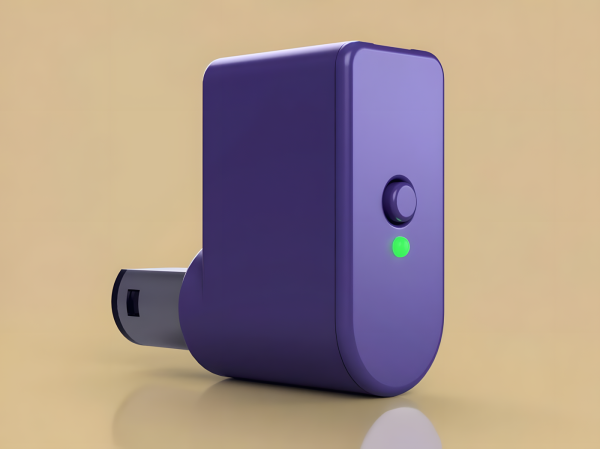
Computer rendering of a DIY, purple Nintendo Wavebird controller adapter

Wavebird Controller Soars Once More With Open Source Adapter

After scouring the second-hand shops and the endless pages of eBay for original video game hardware, a pattern emerges. The size of the accessory matters. If a relatively big controller originally came with a tiny wireless dongle, after twenty years, only the controller will survive. It’s almost as if these game controllers used to be owned by a bunch of irresponsible children who lose things (wink). Such is the case today when searching for a Nintendo Wavebird controller, and [James] published a wireless receiver design to make sure that the original hardware can be resurrected.

Continue reading “Wavebird Controller Soars Once More With Open Source Adapter”

Jerry Seinfeld dressed up as a honey bee promoting his film Bee Movie.

Retrotechtacular: The $550K Video Conferencing System Used To Make Bee Movie

The modern office environment has shifted in recent years. Employees are routinely asked to collaborate with co-workers half way around the globe and be camera ready, or whatever passes for webcam ready, in order to telecommute when they are out of office. Every office laptop, tablet, or cell phone these days comes equipped with some sort of camera sensor capable of recording at HD resolution. Twenty years ago, that was not the case. Though tech conglomerates like HP had a different idea of teleconferencing to sell back in 2005 dubbed the Halo Collaboration Studio.
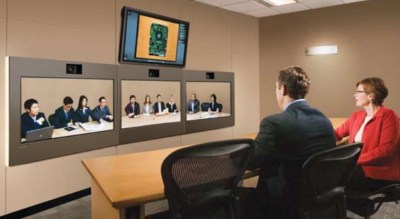
ImageThe Halo Studio was a collaboration between HP and Dreamworks that was used during the production of Bee Movie. Studio heads at Dreamworks thought it necessary to install the HP teleconferencing solution inside the New York office of Jerry Seinfeld, the writer of the film, as to allow him to avoid long trips to Dreamworks production offices in Los Angeles. According to the HP Halo Collaboration Studio brochure, “Halo actually pays for itself, not only by reducing travel costs, but also by encouraging higher productivity and stronger employee loyalty.” Certainly Dreamworks believed in that sales pitch for Bee Movie, because the upfront asking price left a bit of a sting.

Less of a singular machine, more of an entire dedicated room, the Halo Studio had a $550,000 asking price. It utilized three 1280×960 resolution plasma screens each fitted with a 720p broadcast camera and even included an “executive” table for six. The room lighting solution was also part of the package as the intent was to have all participants appear true to life size on the monitors. The system ran on a dedicated T3 fiber optic connection rated at 45 Mbps that connected to the proprietary Halo Video Exchange Network that gave customers access to 24×7 tech support for the small sum of $30,000 a month.

For more Retrotechtacular stories, check out Dan’s post on the Surveyor 1 documentary. It’s out of this world.

Continue reading “Retrotechtacular: The $550K Video Conferencing System Used To Make Bee Movie

Image

Nintendo Switch 2 Teardown, Let’s A-Go!

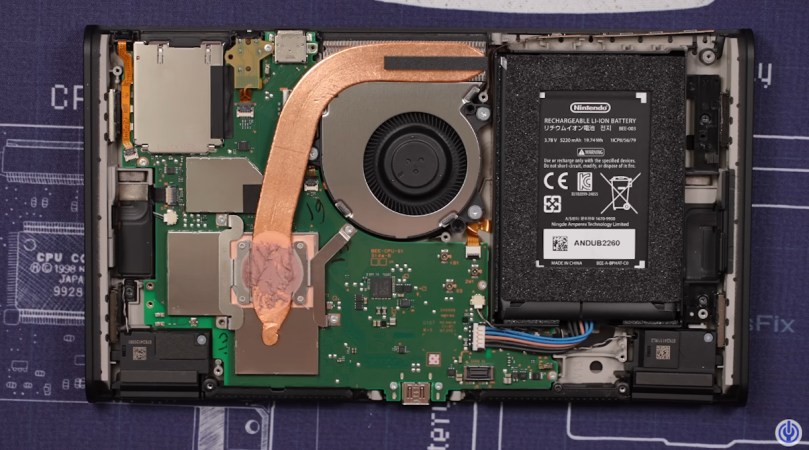
A new console challenger has appeared, and it goes by the name Nintendo Switch 2. The company’s latest iteration of the home console portable hybrid initially showed promise by featuring a large 1080p display, though very little official footage of the handheld existed prior to the device’s global release last week. However, thanks to a teardown video from [TronicsFix], we’ve got a little more insight into the hardware.

ImageThe technical specifications of this new console have been speculated on for the last handful of years. We now know NVIDIA is again providing the main silicon in the form of a custom 8x ARM Cortex A78C processor. Keeping the system powered is a 5220 mAh lithium ion battery that according to [TronicsFix] is held in with some seriously strong adhesive.

On the plus side for repairability, the onboard microphone and headphone jack are each attached by their own ribbon cable to the motherboard. The magnetic controller interfaces are also modular in design as they may one day prove to be a point of failure from repeated detachment. Speaking of which, [TronicsFix] also took apart the new version of the Joy-Con controller that ships with the system.

Arguably the biggest pain point for owners of the original Nintendo Switch was the reliability of the analog sticks on the diminutive controllers. There were widespread reports of “stick drift” that caused players to lose control as onscreen avatars would lazily move in one direction without player input. For the Switch 2, the Joy-Con controllers feature roughly the same number of dome switch buttons as well as haptic feedback motors. The analog sticks are larger in size on the outside, but feature the same general wiper/resistor design of the original. Many will cry foul of the continued use of conventional analog stick design in favor of hall effect sensors, but only time will tell if the Nintendo Switch 2 will repeat history.

Continue reading “Nintendo Switch 2 Teardown, Let’s A-Go!”

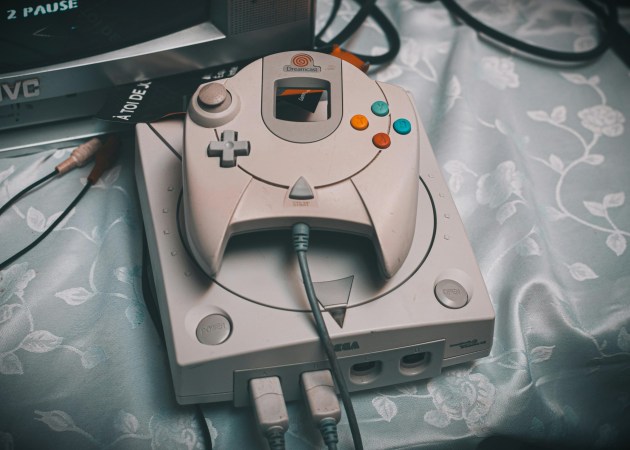
Sega Dreamcast console banner image

Fan Made Dreamcast Port Of GTA 3 Steals The Show

As it turns out, Sega’s long defunct Dreamcast console is still thinking. The company behind the machine cut support long ago due in part to the commercial pressures applied by Sony’s PlayStation 2 console, but that never stopped the most dedicated of Dreamcast fans from seeking out its true potential. Thanks to [Stefanos] and his team, the genre defining Grand Theft Auto III (GTA 3), can now run on Sega’s hardware. Their combined efforts have yielded a fully playable port of the PC version of the game for the Dreamcast.

The porting effort was years in the making. It began with reverse engineering the entire source code of GTA 3 then implementing it into the homebrew SDK for the Dreamcast, KallistiOS. All the in-game graphic and sound assets are only pulled from a user provided PC copy of the game. Steps for those seeking to compile a bootable Dreamcast image of their own have been provided on the project’s website. Real hardware enthusiasts will be pleased as the port runs fine on the twenty-five year old Dreamcast as evidenced in the video below.

This port of GTA 3 represents what could have been a true butterfly effect moment in console gaming history. The game was a major hit in the early days of the PlayStation 2, and it has been theorized that it could have proven to be a major commercial success for Sega as well had it been pressed onto a Dreamcast GD-ROM disc. Recently one of the original developers of GTA 3, Obbe Vermejj, divulged that the game actually began development on the Dreamcast. The project was obviously transferred onto PlayStation 2 for commercial reasons, but with this port from [Stefanos] and crew we no longer have to dream of what could have been.

Continue reading “Fan Made Dreamcast Port Of GTA 3 Steals The Show”

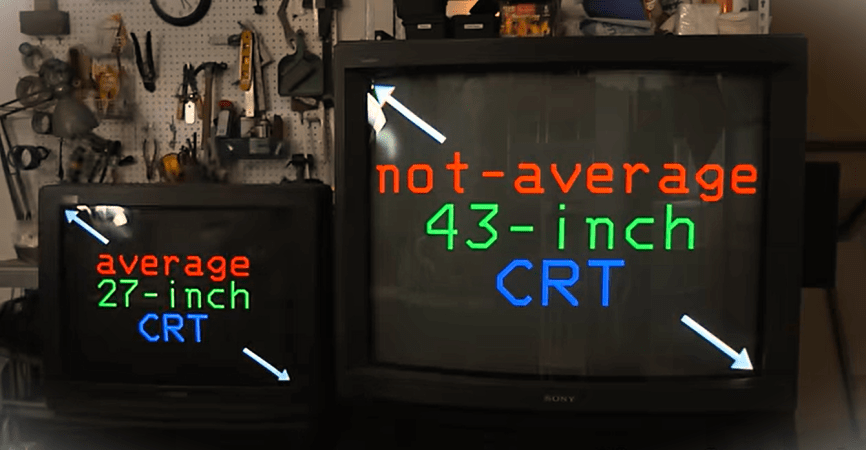
Size comparison of a 27 in CRT TV next to a 43 in CRT TV.

Retrotechtacular: Quest For The “Big Boy” CRT Finds New Home In Mini Doc

To celebrate the twentieth anniversary of their Trinitron line of televisions, Sony launched the KX-45ED1. At forty three inches the screen on this particular model made it the largest tube television in the world, and it came with the kind of price tag that if you need to ask…you can’t afford it (likely around $100,000 USD today). Three decades later, only two of these mythical displays were thought to exist and [shank] chronicled his quest to acquire one of the last remaining “Big Boys” in the mini documentary below.

As it turns out, one of these gigantic tube televisions was located on the second floor of a restaurant in Japan still sitting in the same place it was installed in 1989. It hadn’t moved in the intervening decades, because the television and its specialized support stand weighed over 500 pounds. Having an object that heavy physically moved down a flight of stairs would seem to be the most formidable challenge for most, but compounding the issue for [shank] was that the building housing this colossal CRT was set to be permanently closed in less than a week.

With next to no time to arrange an international flight, [shank] utilized the power of internet to ask for help from anyone currently living near the “Big Boy” CRT’s soon-to-be final resting place. It just so happened that a fellow retro tech enthusiast based in Japan saw the post, and traveled over an hour by train at a moment’s notice to aid [shank]. The heartwarming story of total strangers united by a common interest of preserving a rare piece of tech history is certainly worth a watch. Let alone the goofy size comparison footage of the smallest CRT display sitting on top of the biggest one.

Continue reading “Retrotechtacular: Quest For The “Big Boy” CRT Finds New Home In Mini Doc”

An homemade automated air freshener dispenser

GPS Enabled Pumpkin Spice Sprayer Knows When It’s PSL Season

Pumpkin spice, also known as allspice with better marketing, has found its way into a seemingly endless amount of products over the years. It goes beyond the obvious foodstuffs of pies and cakes; because there are plenty of candles, deodorants, and air fresheners ready to add a little more spice to your world. One such autumnal smell enthusiast, YouTube user [J-Knows], sought to automate the delivery mechanism with his 3D printed pumpkin spice aerosol sprayer.

The sprayer device uses an Arduino to rotate a small 3D printed arm that depresses the button on an air freshener cap. This design came as a result of multiple attempts to create a clip that would securely attach to a standard canister. When problems arose with the clip slipping out of place after the motor rotated, a pinch of sticky tack ended up being just the solution. With the proper amount of adhesion, the automated sprayer could now “pollute” any space it is in, as [J-Knows] described.

What took this project to another level is the addition of an Adafruit GPS module. It was coded to respond when it was within one mile of a Starbucks — arguably the organization responsible for the pumpkin spice craze. For some the company’s pumpkin spice latte (PSL) is synonymous with all things fall, and marks the beginning of the season when it is brought back to the coffee menu. Though not being a regular coffee drinker himself, [J-Knows] fully committed to the bit by taking his creation on a test trip to his local Starbucks for a PSL. Judging by the amount of pumpkin spice aerosol solution that ended up on his car dash, he is going to be smelling it into the next year.

Continue reading “GPS Enabled Pumpkin Spice Sprayer Knows When It’s PSL Season”

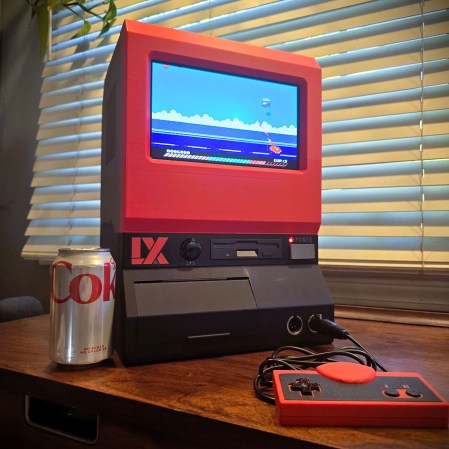
A replica LX System game console inspired by the UFO 50 video game sitting on a wooden desk next to a can of diet Coke.

UFO 50 Inspired LX System Looks Straight Out Of A Video Game

They simply don’t make them like they used to, and in the case of this retro LX system build, they only make what never existed in the first place. Earlier this year the long awaited video game UFO 50 released to widespread critical acclaim. The conceit of the game is an interactive anthology of a faux 1980’s game console constructed by a large group of actual indie game developers. Leave it to [Luke], who admitted to UFO 50 to taking over his life, to bring the LX system from the digital screen to the real world.

Each piece of the LX System case was printed on a multi-color filament capable Bambu Labs P1S. Dual XLR jacks wired up as USB serve as controller ports, and the controller itself is a repurposed NES style USB controller fitted with a new housing printed with the same filament as the case. Both the prominent front mounted power and “sys” buttons are functional; the latter actually switches to a new game within UFO 50. The brains of this project is a mini Windows PC hooked up to a 9 inch 720p LCD screen which is plenty enough resolution for pixelated look of the games. As impressive as replicating the whole case look is, it’s really brought together by the addition of a 3.5 inch floppy drive. It could be an interesting way to backup save files, provided they fit within 1.44 MB.

In addition to sharing the completed LX System, [Luke] has also made the print files available online along with a list of project materials used. It would be neat to see an alternate color scheme or remix for this working prototype of a console that never actually existed. In the meantime, there are plenty more games to play and discover in UFO 50…there’s 50 of them after all.

via Time Extension