Image

NASA May Have Lost The MAVEN Mars Orbiter

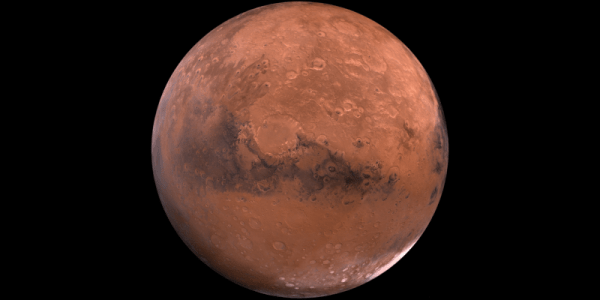
When the orbit of NASA’s Mars Atmosphere and Volatile EvolutioN (MAVEN) spacecraft took it behind the Red Planet on December 6th, ground controllers expected a temporary loss of signal (LoS). Unfortunately, the Deep Space Network hasn’t heard from the science orbiter since. Engineers are currently trying to troubleshoot this issue, but without a sign of life from the stricken spacecraft, there are precious few options.

As noted by [Stephen Clark] over at ArsTechnica this is a pretty big deal. Even though MAVEN was launched in November of 2013, it’s a spring chicken compared to the other Mars orbiters. The two other US orbiters: Mars Reconnaissance Orbiter (MRO) and Mars Odyssey, are significantly older by around a decade. Of the two ESA orbiters, Mars Express and ExoMars, the latter is fairly new (2016) and could at least be a partial backup for MAVEN’s communication relay functionality with the ground-based units, in particular the two active rovers. ExoMars has a less ideal orbit for large data transfers, which would hamper scientific research.

With neither the Chinese nor UAE orbiters capable of serving as a relay, this puts the burden on a potential replacement orbiter, such as the suggested Mars Telecommunications Orbiter, which was cancelled in 2005. Even if contact with MAVEN is restored, it would only have fuel for a few more years. This makes a replacement essential if we wish to keep doing ground-based science missions on Mars, as well as any potential manned missions.
Image

MagQuest: Measuring Earth’s Magnetic Field With Space-Based Quantum Sensors

Recently the MagQuest competition on improving the measuring of the Earth’s magnetic field announced that the contestants in the final phase have now moved on to launching their satellites within the near future. The goal here is to create a much improved World Magnetic Model (WMM), which is used by the World Geodetic System (WGS). The WGS is an integral part of cartography, geodesy and satellite-based navigation, which includes every sat nav, smartphone and similar with built-in GNSS capabilities.

Although in this age of sat navs and similar it can seem quaint to see anyone bother with using the Earth’s magnetic field with a compass, there is a very good reason why e.g. your Android smartphone has an API for estimating the Earth’s magnetic field at the current location. After your sat nav or smartphone uses its magnetometer, the measurements are then corrected so that ‘north’ really is ‘north’. Since this uses the WMM, it’s pertinent that this model is kept as up to date as possible, with serious shifts in 2019 necessitating an early update outside of the usual five-year cycle.

Continue reading “MagQuest: Measuring Earth’s Magnetic Field With Space-Based Quantum Sensors”

Image

Water On Mars? Maybe Not

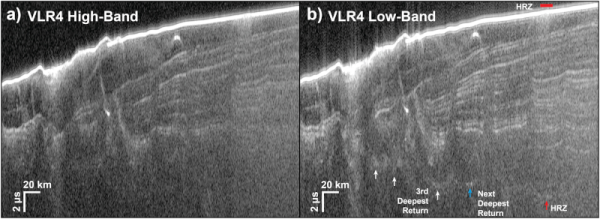
We were as excited as anyone when MARSIS (the Mars Advanced Radar for Subsurface and Ionosphere Sounding) experiment announced there was possibly liquid water under the southern polar ice cap. If there is liquid water on Mars, it would make future exploration and colonization much more feasible. Unfortunately, SHARAD (the Shallow Radar) has a new trick that suggests the data may not indicate liquid water after all.

While the news is a bummer, the way scientists used SHARAD to confirm — or, in this case, deny — the water hypothesis was a worthy hack. The SHARAD antenna is on the Mars Reconnaissance Orbiter, but in a position that makes it difficult to obtain direct surface readings from Mars. To compensate, operators typically roll the spacecraft to give the omnidirectional antenna a clearer view of the ground. However, those rolls have been under 30 degrees.

Continue reading “Water On Mars? Maybe Not”

Image

Testing The Survivability Of Moss In Space

The cool part about science is that you can ask questions like what happens if you stick some moss spores on the outside of the International Space Station, and then get funding for answering said question. This was roughly the scope of the experiment that [Chang-hyun Maeng] and colleagues ran back in 2022, with their findings reported in iScience.

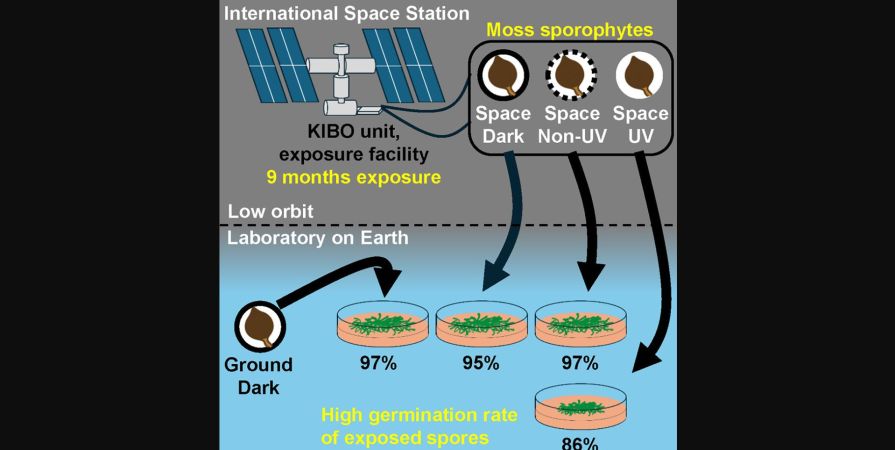
Used as moss specimen was Physcomitrium patens, a very common model organism. After previously finding during Earth-based experiments that the spores are the most resilient, these were subsequently transported to the ISS where they found themselves placed in the exposure unit of the Kibo module. Three different exposure scenarios were attempted for the spores, with all exposed to space, but one set kept in the dark, another protected from UV and a third set exposed to the healthy goodness of the all-natural UV that space in LEO has to offer.

After the nine month exposure period, the spores were transported back to Earth, where the spores were allowed to develop into mature P. patens moss. Here it was found that only the spores which had been exposed to significant UV radiation – including UV-C unfiltered by the Earth’s atmosphere – saw a significant reduction in viability. Yet even after nine months of basking in UV-C, these still had a germination rate of 86%, which provides fascinating follow-up questions regarding their survivability mechanisms when exposed to UV-C as well as a deep vacuum, freezing temperatures and so on.

Image

The King Of Rocket Photography

If you are a nerdy kid today, you have your choice of wondrous gadgets and time wasters. When we were nerdy kids, our options were somewhat limited: there was ham radio, or you could blow things up with a chemistry set. There were also model rockets. Not only were model rockets undeniably cool, but thanks to a company called Estes, you could find ready-to-go kits and gear that made it possible to launch something into the heavens, relatively speaking. But what about photographic proof? No live streams or digital cameras. But there was the Estes AstroCam 100. [Bill Engar] remembers the joy of getting film from your rocket developed.

Of course, photography was another nerdy kid staple, so maybe you did your own darkroom work. Either way, the Astrocam 110 was a big improvement over the company’s earlier Camroc. In 1965, if you wanted to fly Camroc, you had to cut a 1.5-inch piece of film in a darkroom and mount it just to get one terrible black-and-white photo. Or, you could buy the film canisters loaded if you had the extra money, which, of course, you didn’t.

Continue reading “The King Of Rocket Photography”

Image

Radio Astronomy In The Palm Of Your Hand

When you think of a radio telescope, you usually think of a giant dish antenna pointing skyward. But [vhuvanmakes] built Wavy-Scope, a handheld radio telescope that can find the Sun and the Moon, among other things.

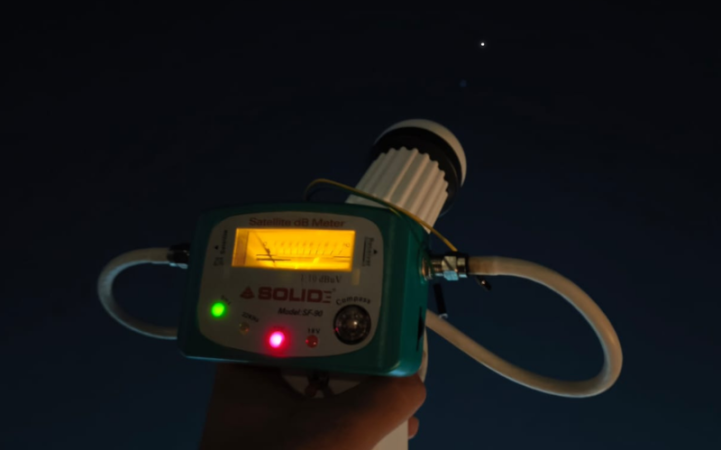
The build is relatively straightforward, using a commercial LNB to detect signals in the 10-12 GHz range. The detector is a simple satellite finder, although you could also connect it to a software-defined radio, if you wanted something more sophisticated.

Continue reading “Radio Astronomy In The Palm Of Your Hand”

Image

Building The LEM’s Legs

If you built a car in, say, Germany, for use in Canada, you could assume that the roads will be more or less the same. Gravity will work the same. While the weather might not be exactly the same, it won’t be totally different. But imagine designing the Lunar Excursion Module that would land two astronauts on the moon for the first time. No one had any experience landing a craft on any alien body before.

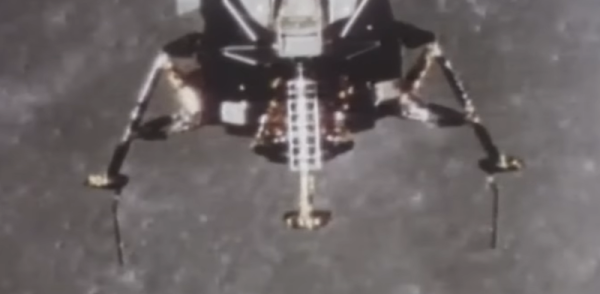
The LEM was amazing for many reasons, but as [Apollo11Space] points out, the legs were a particularly thorny engineering problem. They had to land on mostly unknown terrain, stay upright, allow for the ascent module to take off again, and, of course, not weigh down the tiny spaceship. They also had to survive the blast of the LEM’s engine.

Continue reading “Building The LEM’s Legs”