Image

Super-Sizing Insects And The Benefits Of Bones

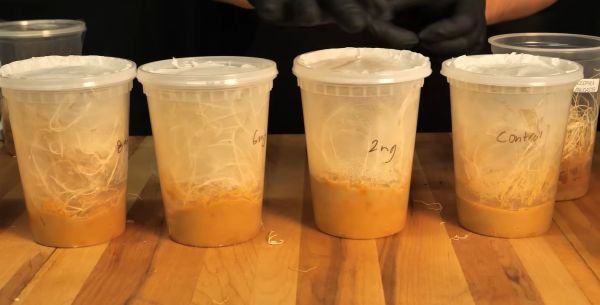
One swol mealworm amidst its weaker brethren. (Credit: The Thought Emporium, YouTube)

Have you ever found yourself looking at the insects of the Paleozoic era, including the dragonfly Meganeuropsis permiana with its 71 cm wingspan and wondered what it would be like to have one as a pet? If so, you’re in luck because the mad lads over at [The Thought Emporium] have done a lot of the legwork already to grow your own raven-sized moths and more. As it turns out, all it takes is hijacking the chemical signals that control the development phases, to grow positively humongous mealworms and friends.

The growth process of the juveniles, such as mealworms – the larval form of the yellow mealworm beetle – goes through a number of molting stages (instars), with the insect juvenile hormone levels staying high until it is time for the final molt and transformation into a pupa from which the adult form emerges. The pyriproxyfen insecticide is a juvenile hormone analog that prevents this event. Although at high doses larvae perish, the video demonstrates that lower doses work to merely inhibit the final molt.

Continue reading “Super-Sizing Insects And The Benefits Of Bones”
Image

Necroprinting Isn’t As Bad As It Sounds

A mosquito has a very finely tuned proboscis that is excellent at slipping through your skin to suck out the blood beneath. Researchers at McGill University recently figured that the same biological structure could also prove useful in another was—as a fine and precise nozzle for 3D printing (via Tom’s Hardware).

Image
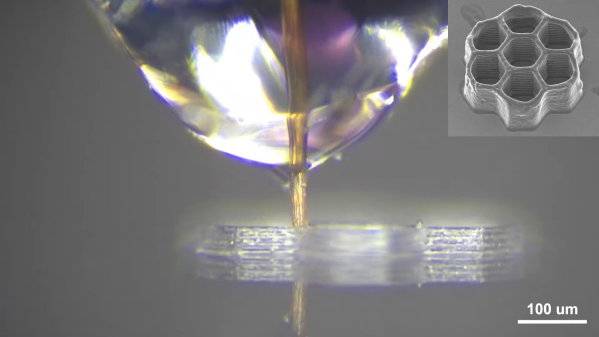
Small prints made with the mosquito proboscis nozzle. Credit: research paper

To achieve this feat, the research team harvested the proboscis from a female mosquito, as only the female of the species sucks blood in this timeline. The mosquito’s proboscis was chosen over other similar biological structures, like insect stingers and snake fangs. It was prized for its tiny size, with an inside diameter of just 20 micrometers—which outdoes just about any man-made nozzle out there. It’s also surprisingly strong, able to resist  up to 60 kPa of pressure from the fluid squirted through it.

Of course, you can’t just grab a mosquito and stick it on your 3D printer. It takes very fine work to remove the proboscis and turn it into a functional nozzle; it also requires the use of 3D printed scaffolding to give the structure additional strength. The nozzle is apparently used with bio-inks, rather than molten plastic, and proved capable of printing some basic 3D structures in testing.

Amusingly, the process has been termed 3D necroprinting, we suspect both because it uses a dead organism and because it sounds cool on the Internet. We’ve created a necroprinting tag, just in case, but we’re not holding our breath for this to become the next big thing. At 20 um, more likely the next small thing.

Further details are available in the research paper. We’ve actually featured quite a few mosquito hacks over the years. Video after the break.

Continue reading “Necroprinting Isn’t As Bad As It Sounds”

Image

Mothbox Watches Bugs, So You — Or Your Grad Students — Don’t Have To

To the extent that one has strong feelings about insects, they tend toward the extremes of a spectrum that runs from a complete fascination with their diversity and the specializations they’ve evolved to exploit unique and ultra-narrow ecological niches, and “Eww, ick! Kill it!” It’s pretty clear that [Dr. Andy Quitmeyer] and his team tend toward the former, and while they love their bugs, spending all night watching them is a tough enough gig that they came up with Mothbox, the automated insect monitor.

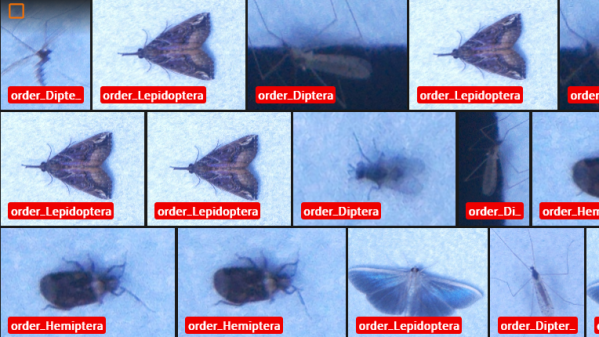
Insect censuses are valuable tools for assessing the state of an ecosystem, especially insects’ vast numbers, short lifespan, and proximity to the base of the food chain. Mothbox is designed to be deployed in insect-rich environments and automatically recognize and tally the moths it sees. It uses an Arducam and Raspberry Pi for image capture, plus an array of UV and visible LEDs, all in a weatherproof enclosure. The moths are attracted to the light and fly between the camera and a plain white background, where an image is captured. YOLO v8 locates all the moths in the image, crops them out, and sends them to BioCLIP, a vision model for organismal biology that appears similar to something we’ve seen before. The model automatically sorts the moths by taxonomic features and keeps a running tally of which species it sees.

Mothbox is open source and the site has a ton of build information if you’re keen to start bug hunting, plus plenty of pictures of actual deployments, which should serve as nightmare fuel to the insectophobes out there.

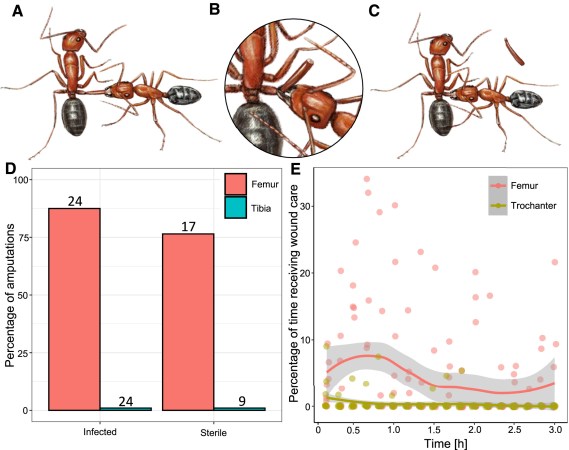
Amputation and wound care behavior in C. floridanus (A) Illustration of a worker providing wound care on a femur-injured individual. (B) A worker amputating (biting) the injured leg at the trochanter. (C) A worker providing wound care on the newly created trochanter wound after amputation. (D) Percentage of amputations performed on ants with an infected or sterile femur (red) or tibia (blue) injury after 24 h. Numbers above the bars represent the sample size for each treatment. (E) Percentage of time the injured ant received wound care behavior over 3 h, binned in 10 min intervals, with a local polynomial regression (loess) showing a 95% confidence interval for the first 3 h after the experimental femur injury (femur, red: n = 8) and the first 3 h after amputation on the trochanter wound (trochanter, brown: n = 7).

Surgery — Not Just For Humans Anymore

Sometimes, a limb is damaged so badly that the only way to save the patient is to amputate it. Researchers have now found that humans aren’t the only species to perform life-saving amputations. [via Live Science]

While some ants have a gland that secretes antimicrobial chemicals to treat wounds in their comrades, Florida carpenter ants have lost this ability over the course of evolution. Lacking this chemical means to treat wounds, these ants have developed the first observed surgery in an animal other than humans.

When an ant has a wounded leg, its fellow ants analyze the damage. If the femur is the site of the wound, the other ants removed the damaged limb in 76% of cases by biting it off, while tibial wounds were treated in other ways. Experimental amputations of the tibia by researchers showed no difference in survivability compared to leaving the limb intact unless the amputation was performed immediately, so it seems the ants know what they’re doing.

Maybe these ants could be helpful surgical aids with some cyborg additions since they’ve already got experience? Ants can help you with programming too if that’s more your speed.

Continue reading “Surgery — Not Just For Humans Anymore”

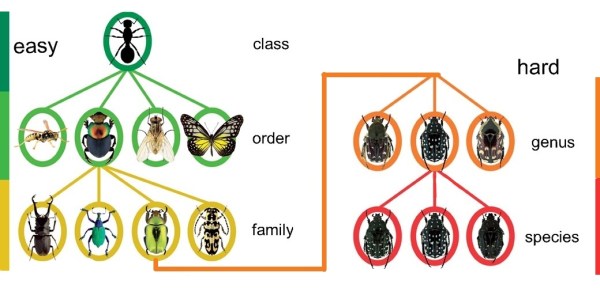
Insect class-order-family-genus-species chart with drawn examples

Neural Network Identifies Insects, Outperforming Humans

There are about one million known species of insects – more than for any other group of living organisms. If you need to determine which species an insect belongs to, things get complicated quick. In fact, for distinguishing between certain kinds of species, you might need a well-trained expert in that species, and experts’ time is often better spent on something else. This is where CNNs (convolutional neural networks) come in nowadays, and this paper describes a CNN doing just as well if not better than human experts.

Continue reading “Neural Network Identifies Insects, Outperforming Humans”

Image

Computers May Someday Need A Drink

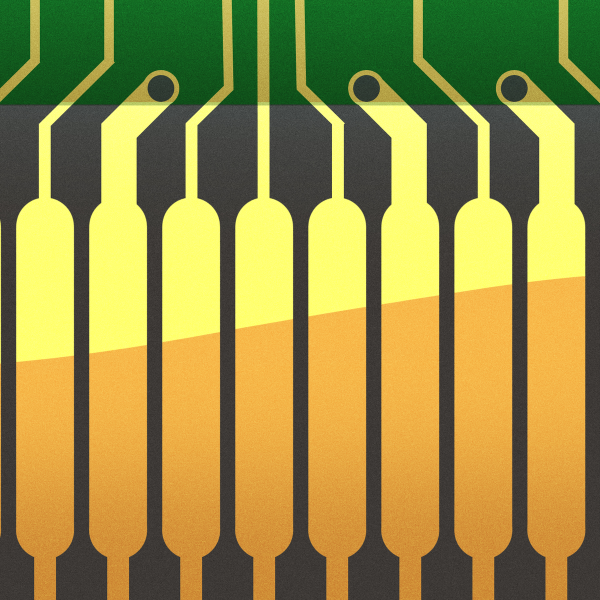
“We want to put water right into your processor.” If that statement makes you sweat, that is good. Sweating is what we’re talking about, but it’s more involved than adding some water like a potted plant. Sweating works naturally by allowing liquid to evaporate, and that phase change is endothermic which is why it feels cool. Evaporative coolers that work in this way, also known as swamp coolers, haven’t been put into computers before because they are full of sloshy water. Researchers in South Korea and the United States of America have been working on an evaporative cooling system mimicking the way some insects keep themselves cool by breathing through their exoskeletons while living in damp soil.

Image

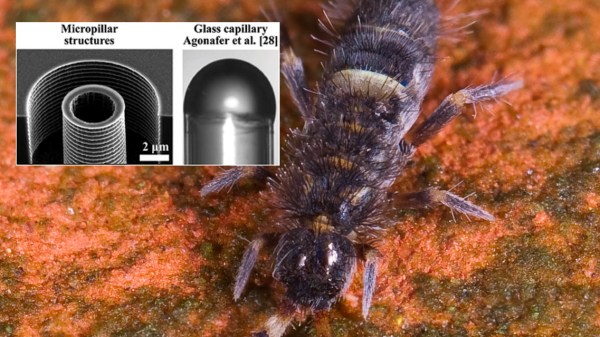
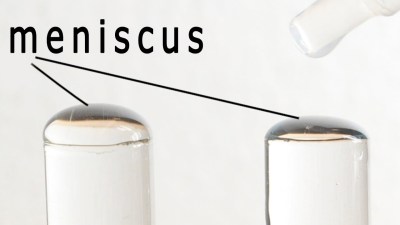
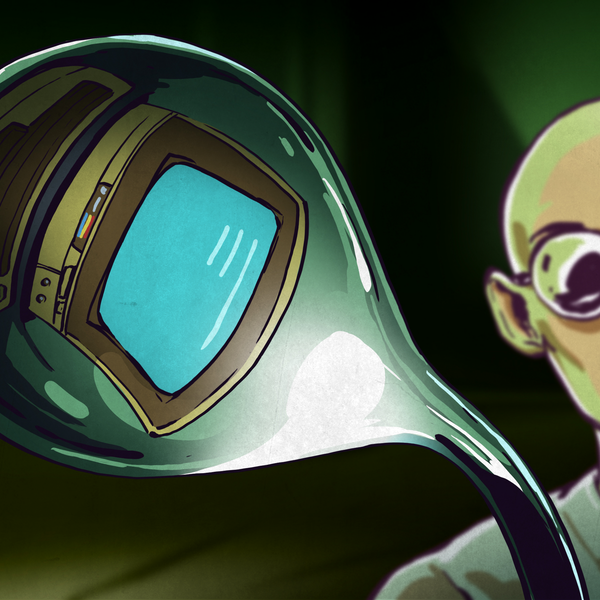
Springtails are little bugs that have to keep the water and air separate, so they don’t drown in the wet dirt where they live. Mother Nature’s solution was for them to evolve to do this with columns that have sharp edges at the exit. Imagine you slowly add water to a test tube, it won’t spill as soon as you reach the top, it will form a dome. This is the meniscus. At a large scale, say a river dam, as soon as you get over the dam you would expect spillage, but at the test tube level you can see a curve. At the scale of the springtail, exuded water will form a globe and resist water pressure. That resistance to water pressure allows this type of water cooling to self-regulate. Those globes provide a lot of surface area, and as they evaporate, they allow more water to replenish the globe. Of course, excessive pressure will turn them into the smallest squirt guns.

We have invented a lot by copying Mother Nature. Velcro was inspired by burrs, and some of our most clever robots copy insects. We can also be jerks about it.

Image

Learn Programming From Ants

Humans and insects think on a different scale, but entomologists study the behavior of these little organisms, so they’re not a complete mystery. There isn’t much intelligence in a single ant or a cubic millimeter of gray matter, but when they all start acting together, you get something greater than the sum of the parts. It is easy to fall into the trap of putting all the intelligence or programming into a single box since that’s how we function. Comparatively, itty-bitty brains, like microcontrollers and single-board computers are inexpensive and plentiful. Enter swarm mentality, and new tasks become possible.

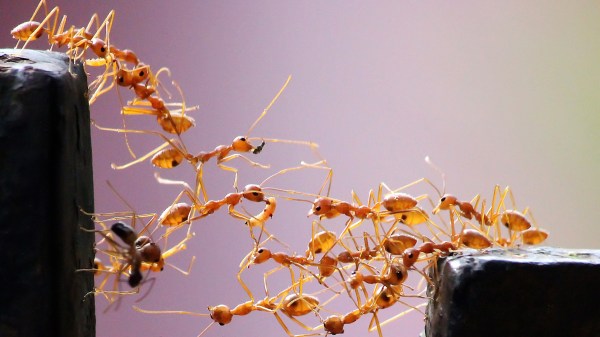
[Kevin Hartnett] talks about a paper researching the simple rules which govern army ants who use their bodies as bridges when confronted with a gap in their path. Anyone with a ruler and a map can decide the shortest route between two places, but army ants perform this optimization from the ground, real-time, and with only a few neurons at their disposal. Two simple rules control bridge building behavior, and that might leave some space in the memory banks of some swarm robots.

A simpler example of swarm mentality could be robots which drive forward anytime they sense infrared waves from above. In this way, anyone watching the swarm could observe when an infrared light was present and where it was directed. You could do the same with inexpensive solar-powered toy cars, but we can already see visible light.

We’re not saying ants should be recruited to control robots, but we’re not objecting to the humane treatment of cyborg bugs either. We’ve been looking into swarm robots for a long time.

Thanks for the tip, [JRD].

Continue reading “Learn Programming From Ants”