Image

Windmill Desk Lamp Is Beautifully Soothing

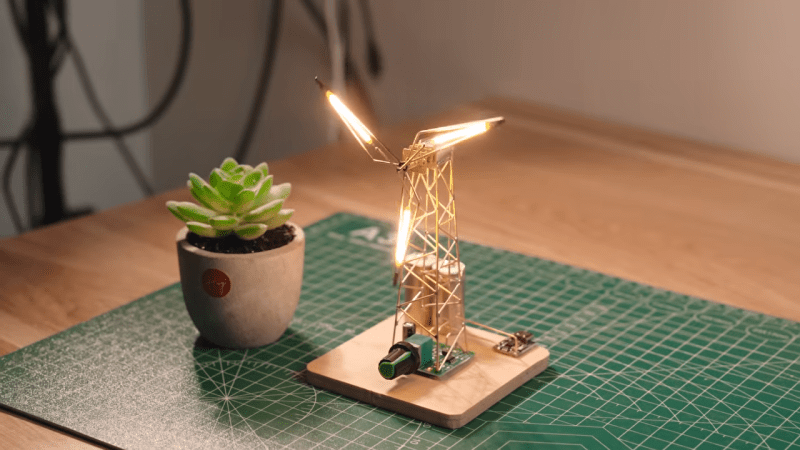
Typically, lamps provide a stationary source of light to illuminate a given area and help us see what we’re doing. However, they can also be a little more artistic and eye-catching, like this windmill lamp from [Huy Vector].

It’s somewhat of a charming desk toy, constructed out of copper wire soldered into the form of a traditional windmill. At its base, lives a simple motor speed controller, while up top, a brushed DC gearmotor is responsible for turning the blades. As you might imagine, it’s a little tricky to get power to flow to the LED filaments installed on those blades while they happen to be rotating. That’s where the build gets tricky, using the output shaft of the motor’s gear drive and a custom slip ring to pass power to the LEDs. That power comes courtesy of a pair of 16340 lithium-ion cells, which can be juiced up with the aid of a USB-C charger board.

It’s an elegant build, and rather charming to watch in motion to boot. We love a good lamp build here at Hackaday, particularly when they’re aesthetically beautiful.

Continue reading “Windmill Desk Lamp Is Beautifully Soothing”
Image

Off-Axis Rotation For Amiga-Themed Levitating Lamp

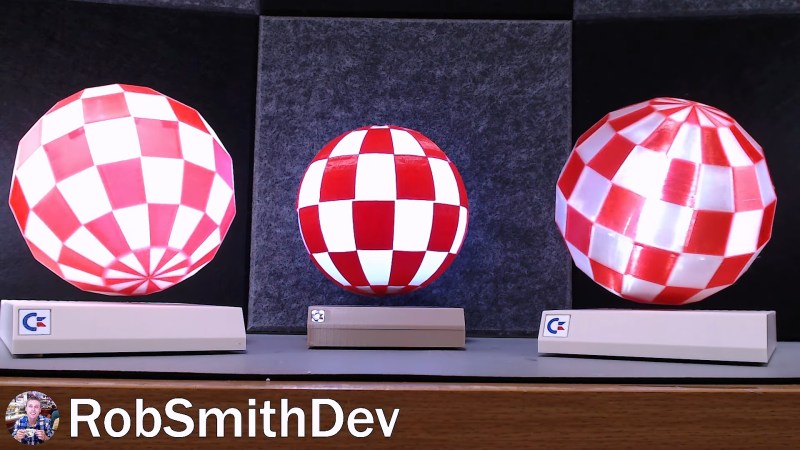
Do you remember those levitating lamps that were all the rage some years ago? Floating light bulbs, globes, you name it. After the initial craze of expensive desk toys, a wave of cheap kits became available from the usual suspects. [RobSmithDev] wanted to make a commemorative lamp for the Amiga’s 40th anniversary, but… it was missing something. Sure, the levitating red-and-white “boing” ball looked good, but in the famous demo, the ball is spinning at a jaunty angle. You can’t do that with mag-lev… not without a hack, anyway.

Continue reading “Off-Axis Rotation For Amiga-Themed Levitating Lamp”

Image

A Flexible Light Inspired By IKEA

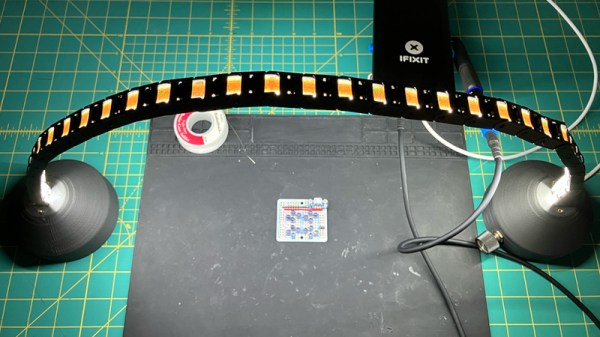
The IKEA SMÅSNÖRE is a flexible silicone rod with an embedded LED strip, attached at each end to a base. It’s eye-catching enough, and it has the useful property of providing a diffuse light from multiple angles that makes it a promising candidate for a work lamp. That’s enough for [Daniel James] to create his own lamp on a similar vein.

The electronics of his lamp are straightforward enough: a 12 volt LED strip whose brightness is controlled by a Pi Pico in response to a potentiometer as a brightness control. It’s not quite stiff enough to form the arch itself, so he’s created a 3D printed chain that forms the structure of the lamp. Similar to a bicycle chain in the way it’s constructed, it has individual links that slot together and pivot. The electronics are in the printed base at one end.

We like this lamp a lot, for the light it gives on the bench and for the ingenuity of the printed chain. We might even make one for ourselves.

Image

Folding Lamp Becomes A Tasty Reverb Tank

If you’re a musician and you want a reverb effect, there are lots of ways to go about it. You can use software plugins, all kinds of rack-mount effects, or pedals. Or, as [David] has done, you could go with a lamp.

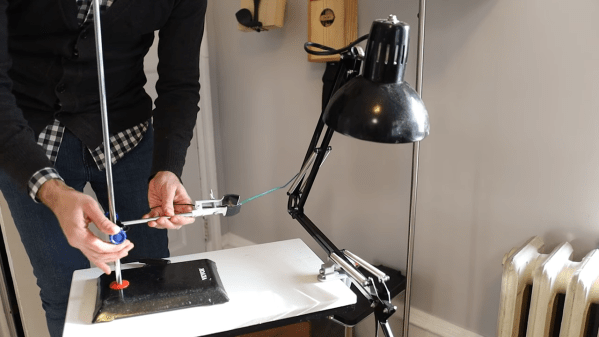
[David’s] build is straightforward enough in concept—he just chose a relatively unconventional item to use as a reverb tank. The lamp might seem like an odd choice, but it actually does a decent job at resonating because of its metal construction and the multiple springs that tension the structure. [David] turns the lamp into a reverb by fitting it with a Vidsonix Ghost audio transducer to put sound into the structure—picture the magnetic driver of a loudspeaker without the cone fitted, and you get the idea. Piezo elements were then used as contact mics to pick up reverberations from the lamp itself. Everything was assembled with a bunch of lab stands that give the build a rather nice aesthetic. The reverb time isn’t particularly long, but the sound is hauntingly beautiful.

Continue reading “Folding Lamp Becomes A Tasty Reverb Tank”

Image

Building A Minecraft Lantern For Halloween

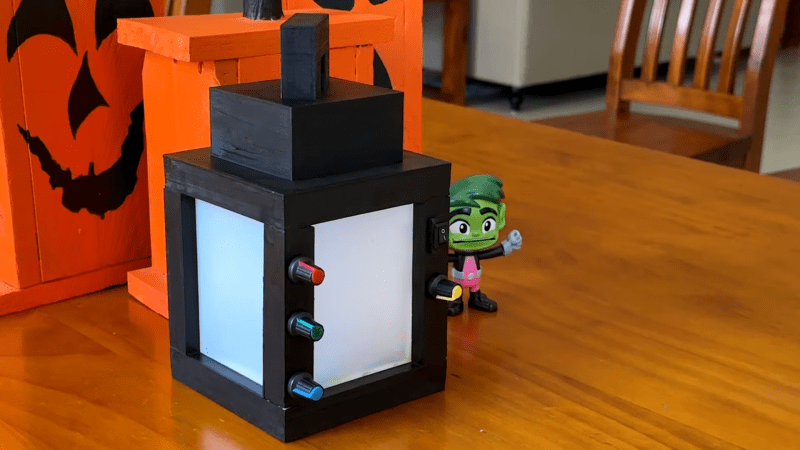
Sometimes it’s fun to bring props from video games into the real world. [Hulk] has done just that with their latest Halloween build—creating a working replica of the lantern from Minecraft.

Key to the build is the 3D printed enclosure, which faithfully mimics the look of the in-game item. By virtue of Minecraft’s simplistic visual style, it’s a relatively straightforward print, without a lot of quirky geometry or difficult overhangs that might otherwise trip up your printer. It’s printed in six parts and assembled with acrylic lenses which act to diffuse the light coming from inside.

Electronically, an Arduino Nano runs the show. It’s hooked up to a pair of NeoPixel addressable LED rings, which provide rich RGB colors on demand. Rotary pots are installed on the enclosure to enable the color to be tuned to the user’s desire. Power is courtesy of an 18650 lithium-ion cell and a TP4056 module ensures the battery is kept happy when charging.

It’s a fun prop build, and one that would be the perfect addition to any Minecraft costume. Except for maybe a chicken jockey, because they don’t use lanterns. In any case, we’ve seen similar work before, too.

Continue reading “Building A Minecraft Lantern For Halloween”

Image

DIY Book Lamp Is A Different Take On The Illuminated Manuscript

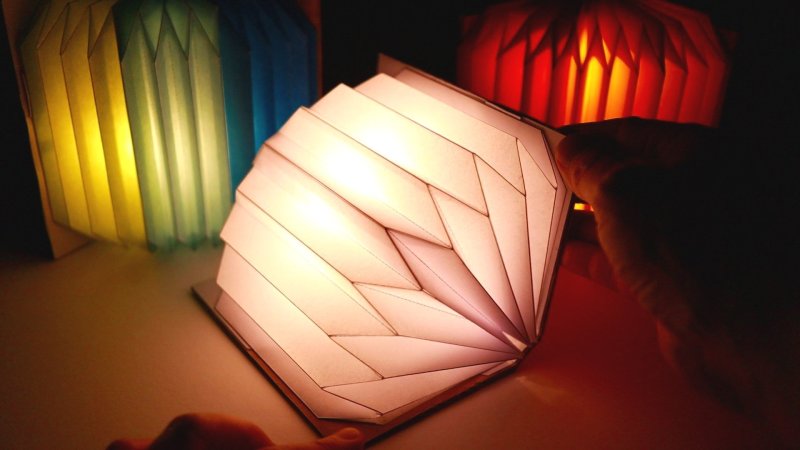
People have been coming up with clever ways to bring light to the darkness since we lived in caves, so it’s no surprise we still love finding interesting ways to illuminate our world. [Michael] designed a simple, but beautiful, book lamp that’s easy to assemble yourself.

This build really outshines its origins as an assembly of conductive tape, paper, resistors, LEDs, button cells, and a binder clip. With a printable template for the circuit, this project seems perfect for a makerspace workshop or school science project kids could take home with them. [Michael] walks us through assembling the project in a quick video and even has additional information available for working with conductive tape which makes it super approachable for the beginner.

The slider switch is particularly interesting as it allows you to only turn on the light when the book is open using just conductive tape and paper. We can think of a few other ways you could control this, but they quickly start increasing the part count which makes this particularly elegant. By changing the paper used for the shade or the cover material for the book, you can put a fun spin on the project to match any aesthetic.

If you want to build something a little more complex to light your world, how about a 3D printed Shoji lamp, a color-accurate therapy lamp, or a lamp that can tell you to get back to work.

Continue reading “DIY Book Lamp Is A Different Take On The Illuminated Manuscript”

Image

Broken USB Lamp Saved With A Bit Of Woodworking

For many of us, when we think of creating a custom enclosure, our minds immediately go towards our 3D printer. A bit of time in your CAD program of choice, and in an hour (or several), you’ve got a bespoke plastic box. A hacker’s dream come true.

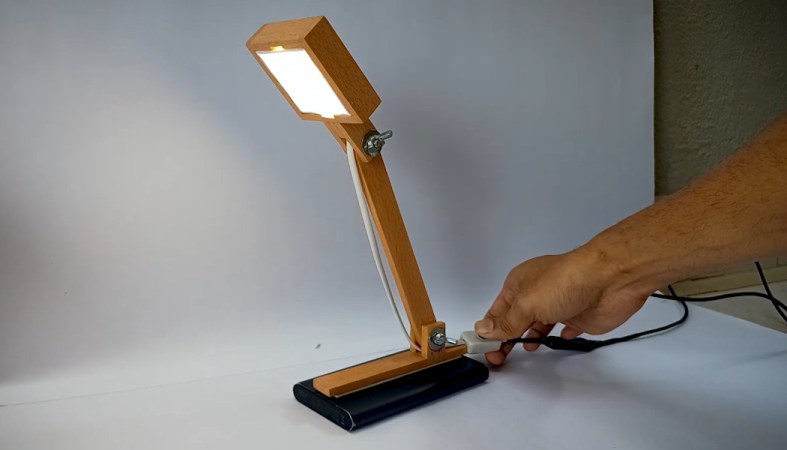
But extruded plastic is hardly perfect. For one thing, you might want a finished piece that looks a little more attractive on your desk. Which is why we appreciate this quick hack from [Tilma]. When faced with a broken LED light and minimal equipment, he decided to transplant the repaired electronics into a scratch-built wooden frame that not only looks better than the original, but is more functional.

Continue reading “Broken USB Lamp Saved With A Bit Of Woodworking”