Image

Finally, A Pipe Slapophone With MIDI

If you live in a major city, you’ve probably seen a street performer with some variety of slapophone. It’s a simple musical instrument that typically uses different lengths of PVC pipe to act as resonant cavities. When struck with an implement like a flip-flop, they release a dull but pleasant tone. [Ivan Miranda] decided to build such an instrument himself and went even further by giving it MIDI capability. Check it out in the video below.

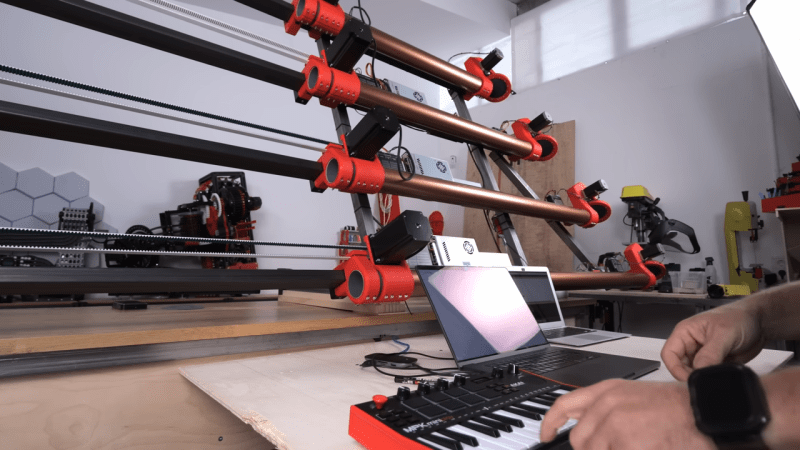
[Ivan’s] design uses a simple trick to provide a wide range of notes without needing a lot of individual pipes. He built four telescoping pipe assemblies, each of which can change length with the aid of a stepper motor and a toothed belt drive. Lengthening the cavity produces a lower note, while shortening it produces a higher note. The four pipe assemblies are electronically controlled to produce notes sent from a MIDI keyboard, all under the command of an Arduino. The pipes are struck by specially constructed paddles made of yoga mats, again controlled by large stepper motors.

The final result is large, power-hungry, and vaguely playable. It’s a little unconventional, though, because moving the pipes takes time. Thus, keypresses on a MIDI keyboard set the pipes to a given note, but don’t actually play it. The slapping of the pipe is then triggered with a drum pad.
We love weird instruments around these parts.

Continue reading “Finally, A Pipe Slapophone With MIDI”

Image

Skateboard Wheels Add Capabilities To Plasma Cutter

Although firmly entrenched in the cultural zeitgeist now, the skateboard wasn’t always a staple of popular culture. It had a pretty rocky start as surfers jankily attached roller skating hardware to wooden planks searching for wave-riding experiences on land. From those rough beginnings it still took decades of innovation until Rodney Mullen adapted the ollie for flatground skating before the sport really took off. Skateboard hardware is quite elegant now too; the way leaning turns the board due to the shape of the trucks is immediately intuitive for even the most beginner riders, and bearing technology is so high-quality and inexpensive now that skateboard hardware is a go-to parts bin grab for plenty of other projects like this plasma cutter modification.

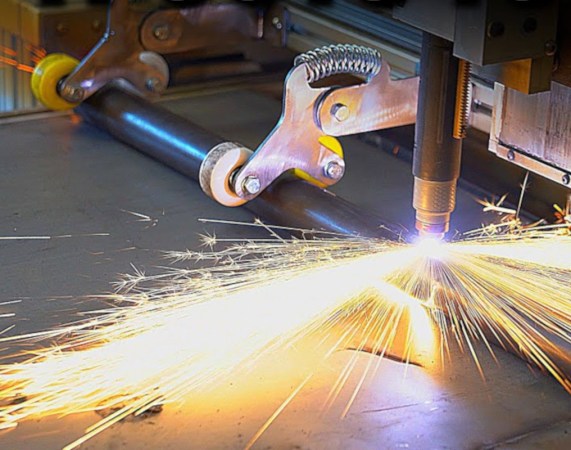
[The Fabrication Series]’s plasma cutter is mounted to a CNC machine, allowing for many complex cuts in much less time than it would take to do by hand. But cutting tubes is a more complicated endeavor for a machine like this. This is where the skateboard hardware comes in: by fabricating two custom pivoting arms each with two skateboard wheels that push down on a tube to hold it in place, the CNC machine can roll the tube along the table in a precise way as the plasma cutter works through it.

Of course, cutting a moving part is a little more complicated for the CNC machine than cutting a fixed piece of sheet metal, so [The Fabrication Series] walks us through a few ways of cutting pipe for various purposes, including miters and notches. The first step is to build a model of the pipes, in this case using Onshape, and then converting the 3D model of the pipes into a sheet metal model that the CNC machine can use. It does take a few cuts on the machine to fine-tune the cuts, but in no time the machine is effortlessly cutting complex shapes into the pipe. Don’t have a plasma cutter at all? You can always build your own from scratch.

Thanks to [JohnU] and [paulvdh] for the tip!

Continue reading “Skateboard Wheels Add Capabilities To Plasma Cutter”

Image

Robots Want The Jobs You Can’t Do

There’s something ominous about robots taking over jobs that humans are suited to do. Maybe you don’t want a job turning a wrench or pushing a broom, but someone does. But then there are the jobs no one wants to do or physically can’t do. Robots fighting fires, disarming bombs, or cleaning up nuclear reactors is something most people will support. But can you climb through a water pipe from the inside? No? There are robots that are available from several commercial companies and others from university researchers from multiple continents.

If you think about it, it makes sense. For years, companies that deal with pipes would shoot large slugs, or “pigs”, through the pipeline to scrape them clean. Eventually, they festooned some pigs with sensors, and thus was born the smart pig. But now that it is possible to make tiny robots, why not send them inside the pipe to inspect and repair?

Continue reading “Robots Want The Jobs You Can’t Do”

Image

Makerpipe Turns Conduit Into Structures

At the risk of stating the obvious, building big things can be difficult. Sure, parts that fit on the bed of a 3D printer are easy to make, if not particularly fast, and scaling up from there is possible. But if you need a long beam or structural element, printing makes little sense; better to buy than build in that case. The trouble then becomes, how do you attach such parts together?

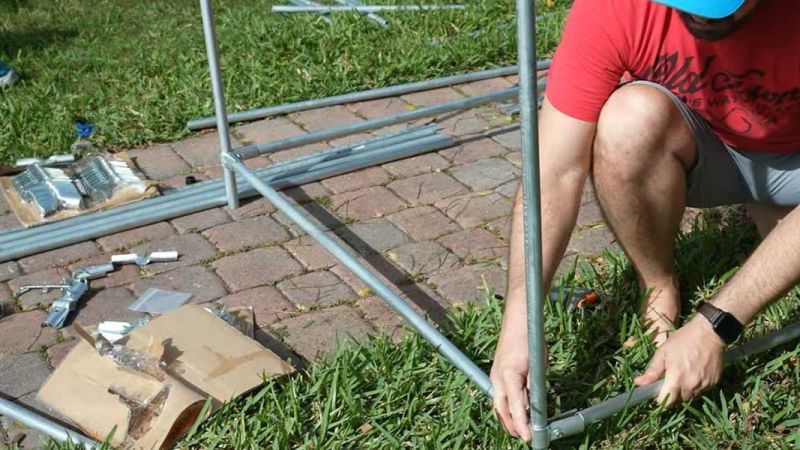
Enter Makerpipe. This South Carolina company, recently out of a crowdfunding campaign, makes a range of structural connectors and fittings for electrical mechanical tubing, or EMT, the galvanized steel conduit used in the electrical trades. EMT is widely available in multiple sizes and is relatively cheap, although we have noticed that the price here has ticked up quite a bit over the last couple of years. It also has the advantage of being available off-the-shelf at any big-box home improvement store, meaning you have instant access to a fantastic building material.

Makerpipe’s bolt-together couplings let you turn pieces of EMT, easily cut with a hacksaw or pipe cutter, into structures without the need for welding. Yes, you can do the same with extruded aluminum, but even if you’re lucky enough to live near a supply house that carries extrusions and the necessary fittings and is open on Saturday afternoon, you’ll probably pay through the nose for it.

Makerpipe isn’t giving their stuff away, and while we normally don’t like to feature strictly commercial products, something that makes building large structures easier and faster seems worth sharing with our community. We’ve done our share of fabricobbling together EMT structures after all, and would have killed for fittings like these.

Continue reading “Makerpipe Turns Conduit Into Structures”

Image

DIY Airless Tires Work Surprisingly Well

Airless tires have been “a few years away” from production for decades now. They’re one of the automotive version of vaporware (at least those meant for passenger vehicles), always on the cusp of being produced but somehow never materializing. They have a number of perks over traditional air-filled tires in that they are immune to flats and punctures, and since there aren’t any airless tires available at the local tire shop, [Driven Media] decided to make and test their own.

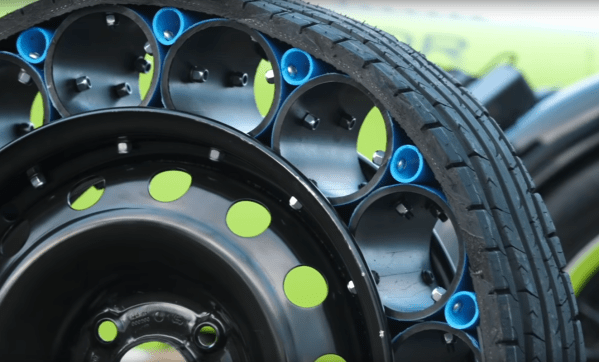
The tires are surprisingly inexpensive to make. A few pieces of drainage tubing of varying diameters, cut to short lengths, and then bolted together with off-the-shelf hardware is all it takes, although they note that there was a tremendous amount of hardware needed to fasten all the pipe lengths together. With the structure in place they simply cut a tread off of a traditional tire and wrapped it around each of the four assemblies, then bolted them up to their Caterham street-legal race car for testing.

While the ride quality was notoriously (and unsurprisingly) rough and bumpy, the tires perform admirably under the circumstances and survive being driven fairly aggressively on a closed-circuit race course. For such a low price and simple parts list it’s shocking that a major tire manufacturer like Michelin hasn’t figured out how to successfully bring one to a light passenger car yet.

Thanks to [Itay] for the tip!

Continue reading “DIY Airless Tires Work Surprisingly Well”

Image

PVC Pipe Transformed Into Handy Tool Box

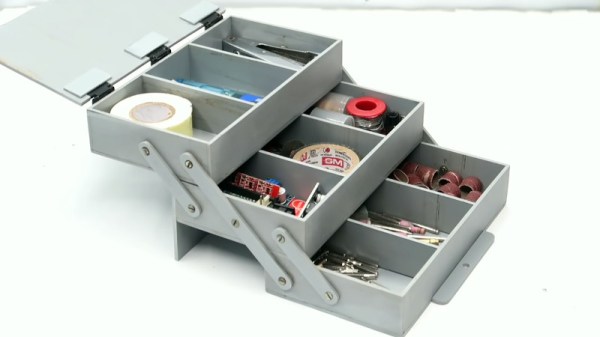
Would you believe the multi-tiered toolbox pictured here started its life as a piece of bog standard PVC pipe? It certainly wouldn’t be our first choice of building material, but as shown in the video after the break, it only takes a heat source and something suitably flat to convert a piece of PVC pipe into a versatile sheet material.

Image
Flattening the heated PVC.

Unrolling the PVC pipe and getting it flat is covered in the first minute of the video, while the rest of the run time is dedicated to building the tool box. Each and every piece you see here, except for the screws and lid hinges, is carefully cut from the PVC sheet. Though we suspect a few more chunks of pipe went into this build than the video would have you believe.

Would we build such an elaborate box if we had to cut each piece of the thing out by hand? Probably not. But then, we can’t deny the final results here are pretty impressive. Incidentally, if you thought those hinges on the top looked a lot like links removed from a watch band…you’d be correct.

Admittedly we’re a bit late covering this one, and under normal circumstances we might have let it slip by given the several million views it’s amassed over the last year. But the central theme of reusing a common material to build something unexpected is solid Hackaday territory, and aligns closely with this year’s Hackaday Prize challenges.

Continue reading “PVC Pipe Transformed Into Handy Tool Box”

Image

Retrotechtacular: Clay Pipe The Hard Way

Troll YouTube long enough and chances are good that you’ll come across all kinds of videos of the “How It’s Made” genre. And buried in with the frying pans and treadmills and dental floss manufacturers, there no doubt will be deep dives on how pipe is made. Methods will vary by material, but copper, PVC, cast iron, or even concrete, what the pipe factories will all have in common is the high degree of automation they employ. With a commodity item like pipe, it’s hard to differentiate yourself from another manufacturer on features, so price is about the only way to compete. That means cutting costs to the bone, and that means getting rid of as many employees as possible.

Such was not always the case, of course, as this look at how Irish Stoneware & Fireclays Ltd. made clay pipe, drain tiles, and chimney flues back in the 1980s shows. The amount of handwork involved in making a single, simple piece of clay pipe is astonishing, as is the number of hands employed at the various tasks. The factory was located in Carrickmacross, County Monaghan, Ireland, near an outcropping of shale that forms the raw material for its products. Quarrying the shale and milling it into clay were among the few mechanized steps in the process; although the extrusion of the pipe itself was also mechanized, the machines required teams of workers to load and unload them.

Continue reading “Retrotechtacular: Clay Pipe The Hard Way”