








Customers who viewed this item also viewed
Buy new:
-47% $35.13$35.13
FREE delivery Saturday, December 27
Advertisement
Ships from: Amazon.com Sold by: Amazon.com
Save with Used - Good
$7.38$7.38
$3.98 delivery Monday, December 29
Advertisement
Ships from: World of Books (previously glenthebookseller) Sold by: World of Books (previously glenthebookseller)
Sorry, there was a problem.
There was an error retrieving your Wish Lists. Please try again.Sorry, there was a problem.
List unavailable.
Download the free Kindle app and start reading Kindle books instantly on your smartphone, tablet, or computer - no Kindle device required.
Read instantly on your browser with Kindle for Web.
Using your mobile phone camera - scan the code below and download the Kindle app.

Follow the authors
OK
Design Patterns: Elements of Reusable Object-Oriented Software 1st Edition
Purchase options and add-ons
The authors begin by describing what patterns are and how they can help you design object-oriented software. They then go on to systematically name, explain, evaluate, and catalog recurring designs in object-oriented systems. With Design Patterns as your guide, you will learn how these important patterns fit into the software development process, and how you can leverage them to solve your own design problems most efficiently.
Each pattern describes the circumstances in which it is applicable, when it can be applied in view of other design constraints, and the consequences and trade-offs of using the pattern within a larger design. All patterns are compiled from real systems and are based on real-world examples. Each pattern also includes code that demonstrates how it may be implemented in object-oriented programming languages like C++ or Smalltalk.
- ISBN-100201633612
- ISBN-13978-0201633610
- Edition1st
- PublisherAddison-Wesley Professional
- Publication dateOctober 31, 1994
- LanguageEnglish
- Dimensions9.31 x 7.62 x 1.04 inches
- Print length416 pages
Frequently bought together

Deals on related products
Customers also bought or read
- Clean Architecture: A Craftsman's Guide to Software Structure and Design (Robert C. Martin Series)
Paperback$26.46$26.46Delivery Sat, Dec 27 - The Pragmatic Programmer: Your Journey To Mastery, 20th Anniversary Edition (2nd Edition)#1 Best SellerSoftware Design & Engineering
Hardcover$49.89$49.89FREE delivery Sat, Dec 27 - Head First Design Patterns: Building Extensible and Maintainable Object-Oriented Software 2nd Edition
Paperback$43.99$43.99FREE delivery Sat, Dec 27 - Operating Systems: Three Easy Pieces#1 Best SellerComputer Operating Systems Theory
Paperback$28.27$28.27Delivery Sat, Dec 27 - Domain-Driven Design: Tackling Complexity in the Heart of Software
Hardcover$51.94$51.94FREE delivery Wed, Dec 31 - Code Complete#1 Best SellerClient-Server Networking Systems
Paperback$38.00$38.00FREE delivery Jan 7 - 16 - Inside the Machine: An Illustrated Introduction to Microprocessors and Computer Architecture#1 Best SellerComputer Hardware Design
Paperback$55.32$55.32FREE delivery Sat, Dec 27 - C++: A Beginner's Guide, Second Edition: A Beginner's Guide, Second Edition
Paperback$36.14$36.14FREE delivery Sat, Dec 27 - C++ Software Design: Design Principles and Patterns for High-Quality Software
Paperback$51.24$51.24FREE delivery Wed, Dec 31 - C++17 In Detail: Learn the Exciting Features of The New C++ Standard!
Paperback$34.99$34.99Delivery Sat, Dec 27 - Effective Modern C++: 42 Specific Ways to Improve Your Use of C++11 and C++14
Paperback$50.68$50.68FREE delivery Sun, Dec 28 - Beautiful C++: 30 Core Guidelines for Writing Clean, Safe, and Fast Code
Paperback$44.99$44.99FREE delivery Wed, Dec 31 - Introduction to Algorithms, fourth edition
Hardcover$85.99$85.99FREE delivery Dec 29, 2025 - Jan 5, 2026 - Mythical Man-Month, The: Essays on Software Engineering, Anniversary Edition
Paperback$17.90$17.90$3.99 delivery Wed, Dec 31 - Structure and Interpretation of Computer Programs - 2nd Edition (MIT Electrical Engineering and Computer Science)
Paperback$75.00$75.00FREE delivery Dec 31, 2025 - Jan 5, 2026 - Clean Code: A Handbook of Agile Software Craftsmanship (Robert C. Martin Series)
Just releasedPaperback$53.99$53.99FREE delivery Sat, Dec 27 - C Programming Language, 2nd Edition#1 Best SellerC Programming Language
Paperback$65.00$65.00FREE delivery Jan 9 - 18 - C++ Best Practices: 45ish Simple Rules with Specific Action Items for Better C++ (With Color Syntax Highlighting)
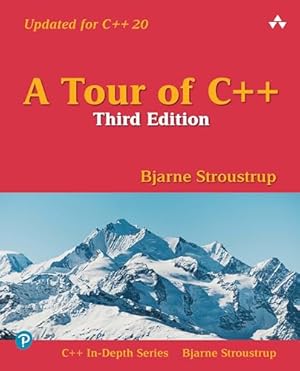
Paperback$25.99$25.99Delivery Dec 26 - 27 - Tour of C++, A (C++ In-Depth Series)#1 Best SellerC++ Programming Language
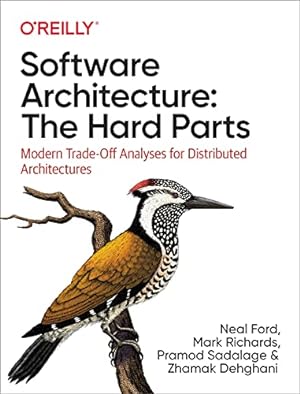
Paperback$33.08$33.08Delivery Sat, Dec 27 - Software Architecture: The Hard Parts: Modern Trade-Off Analyses for Distributed Architectures
Paperback$37.40$37.40FREE delivery Jan 4 - 19 - UML Distilled: A Brief Guide to the Standard Object Modeling Language
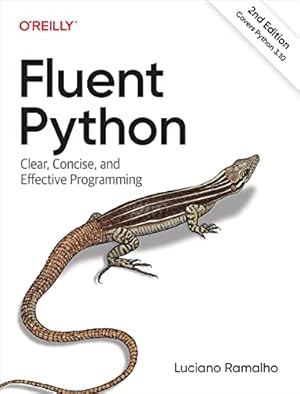
Paperback$21.43$21.43$3.99 delivery Jan 2 - 7 - Fluent Python: Clear, Concise, and Effective Programming
Paperback$43.99$43.99FREE delivery Sat, Dec 27
From the Publisher
Must-Read for Every Software Developer and Engineer
This classic is on just about every single must-read list for software developers, engineers, and architects (including lists featured on ZDNET, DZone, Guru99, Built In, Geeks for Geeks, Hacker News, and more) as a bible for solving software design problems effeciently.
Despite being one of the oldest books on a software engineer's shelf, it is still relevant and THE guide to creating reusable designs that are elegant and flexible, without having to rediscover the design solutions themselves.
Editorial Reviews
Amazon.com Review
Review
This is one of the best written and wonderfully insightful books that I have read in a great long while...this book establishes the legitimacy of patterns in the best way: not by argument, but by example. -- C++ Report
From the Inside Flap
On the other hand, this isn't an advanced technical treatise either. It's a book of design patterns that describes simple and elegant solutions to specific problems in object-oriented software design. Design patterns capture solutions that have developed and evolved over time. Hence they aren't the designs people They reflect untold redesign and recoding as developers have struggled for greater reuse and flexibility in their software.Design patterns capture these solutions in a succinct and easily applied form.
The design patterns require neither unusual language features nor amazing programming tricks with which to astound your friends and managers. All can be implemented in standard object-oriented languages, though they might take a little more work than ad hoc solutions. But the extra effort invariably pays dividends in increased flexibility and reusability.
Once you understand the design patterns and have had an "Aha!" (and not just a "Huh?") experience with them, you won't ever think about object-oriented design in the same way. You'll have insights that can make your own designs more flexible, modular, reusable, and understandable - which is why you're interested in object-oriented technology in the first place, right?
A word of warning and encouragement: Don't worry if you don't understand this book completely on the first reading. We didn't understand it all on the first writing! Remember that this isn't a book to read once and put on a shelf. We hope you'll find yourself referring to it again and again for design insights and for inspiration.
This book has had a long gestation. It has seen four countries, three of its authors' marriages, and the birth of two (unrelated) offspring.Many people have had a part in its development. Special thanks are due Bruce Andersen, Kent Beck, and Andre Weinand for their inspiration and advice. We also thank those who reviewed drafts of the manuscript: Roger Bielefeld, Grady Booch, Tom Cargill, Marshall Cline, Ralph Hyre, Brian Kernighan, Thomas Laliberty, Mark Lorenz, Arthur Riel, Doug Schmidt, Clovis Tondo, Steve Vinoski, and Rebecca Wirfs-Brock. We are also grateful to the team at Addison-Wesley for their help and patience: Kate Habib, Tiffany Moore, Lisa Raffaele, Pradeepa Siva, and John Wait. Special thanks to Carl Kessler, Danny Sabbah, and Mark Wegman at IBM Research for their unflagging support of this work.
Last but certainly not least, we thank everyone on the Internet and points beyond who commented on versions of the patterns, offered encouraging words, and told us that what we were doing was worthwhile. These people include but are not limited to Ran Alexander, Jon Avotins, Steve Berczuk, Julian Berdych, Matthias Bohlen, John Brant, Allan Clarke, Paul Chisholm, Jens Coldewey, Dave Collins, Jim Coplien, Don Dwiggins, Gabriele Elia, Doug Felt, Brian Foote, Denis Fortin, Ward Harold, Hermann Hueni, Nayeem Islam, Bikramjit Kalra, Paul Keefer, Thomas Kofler, Doug Lea, Dan LaLiberte, James Long, Ann Louise Luu, Pundi Madhavan, Brian Marick, Robert Martin, Dave McComb, Carl McConnell, Christine Mingins, Hanspeter Mossenbock, Eric Newton, Marianne Ozcan, Roxsan Payette, Larry Podmolik, George Radin, Sita Ramakrishnan, Russ Ramirez, Dirk Riehle, Bryan Rosenburg, Aamod Sane, Duri Schmidt, Robert Seidl, Xin Shu, and Bill Walker.
We don't consider this collection of design patterns complete and static; it's more a recording of our current thoughts on design. We welcome comments on it, whether criticisms of our examples, references and known uses we've missed, or design patterns we should have included. You can write us care of Addison-Wesley, or send electronic mail to design-patterns@cs.uiuc. You can also obtain softcopy for the code in the Sample Code sections by sending the message "send design pattern source" to design-patterns-source@cs.uiuc.
Mountain View, California - E.G.
Montreal, Quebec - R.H.
Urbana, Illinois - R.J.
Hawthorne, New York - J.V.
August 1994
0201633612P04062001
From the Back Cover
Capturing a wealth of experience about the design of object-oriented software, four top-notch designers present a catalog of simple and succinct solutions to commonly occurring design problems. Previously undocumented, these 23 patterns allow designers to create more flexible, elegant, and ultimately reusable designs without having to rediscover the design solutions themselves.
The authors begin by describing what patterns are and how they can help you design object-oriented software. They then go on to systematically name, explain, evaluate, and catalog recurring designs in object-oriented systems. With Design Patterns as your guide, you will learn how these important patterns fit into the software development process, and how you can leverage them to solve your own design problems most efficiently.
Each pattern describes the circumstances in which it is applicable, when it can be applied in view of other design constraints, and the consequences and trade-offs of using the pattern within a larger design. All patterns are compiled from real systems and are based on real-world examples. Each pattern also includes code that demonstrates how it may be implemented in object-oriented programming languages like C++ or Smalltalk.
0201633612B07092001
About the Author
Dr. Erich Gamma is technical director at the Software Technology Center of Object Technology International in Zurich, Switzerland. Dr. Richard Helm is a member of the Object Technology Practice Group in the IBM Consulting Group in Sydney, Australia. Dr. Ralph Johnson is a faculty member at the University of Illinois at Urbana-Champaign's Computer Science Department.
John Vlissides is a member of the research staff at the IBM T. J. Watson Research Center in Hawthorne, New York. He has practiced object-oriented technology for more than a decade as a designer, implementer, researcher, lecturer, and consultant. In addition to co-authoring Design Patterns: Elements of Reusable Object-Oriented Software, he is co-editor of the book Pattern Languages of Program Design 2 (both from Addison-Wesley). He and the other co-authors of Design Patterns are recipients of the 1998 Dr. Dobb's Journal Excellence in Programming Award.
0201633612AB09122003
Excerpt. © Reprinted by permission. All rights reserved.
Product details
- Publisher : Addison-Wesley Professional
- Publication date : October 31, 1994
- Edition : 1st
- Language : English
- Print length : 416 pages
- ISBN-10 : 0201633612
- ISBN-13 : 978-0201633610
- Item Weight : 7.4 ounces
- Dimensions : 9.31 x 7.62 x 1.04 inches
- Best Sellers Rank: #21,354 in Books (See Top 100 in Books)
- #1 in Object-Oriented Design
- #11 in Computer Science (Books)
- #19 in Computer Software (Books)
- Customer Reviews:
About the authors

Discover more of the author’s books, see similar authors, read book recommendations and more.

John Matthew Vlissides (August 2, 1961 - November 24, 2005) was a software scientist known mainly as one of the four authors (referred to as the Gang of Four) of the book Design Patterns: Elements of Reusable Object-Oriented Software. Vlissides referred to himself as "#4 of the Gang of Four and wouldn't have it any other way".
Bio from Wikipedia, the free encyclopedia.

Discover more of the author’s books, see similar authors, read book recommendations and more.

Erich Gamma (born 1961 in Zürich) is a Swiss computer scientist and co-author of the influential software engineering textbook, Design Patterns: Elements of Reusable Object-Oriented Software. He co-wrote the JUnit software testing framework with Kent Beck and led the design of the Eclipse platform's Java Development Tools (JDT). He also worked on the IBM Rational Jazz project.
He joined the Microsoft Visual Studio team in 2011 and leads a development lab in Zürich, Switzerland that has developed the "Monaco" suite of components for browser-based development, found in products such as Visual Studio Online, Visual Studio Code, Azure Mobile Services, Azure Web Sites, and the Office 365 Development tools.
Bio from Wikipedia, the free encyclopedia.
Related products with free delivery on eligible orders
Customer reviews
Customer Reviews, including Product Star Ratings help customers to learn more about the product and decide whether it is the right product for them.
To calculate the overall star rating and percentage breakdown by star, we don’t use a simple average. Instead, our system considers things like how recent a review is and if the reviewer bought the item on Amazon. It also analyzed reviews to verify trustworthiness.
Learn more how customers reviews work on AmazonCustomers say
Generated from the text of customer reviewsSelect to learn more
Reviews with images
1 month delayed in delivery, but still got it
Top reviews from the United States
There was a problem filtering reviews. Please reload the page.
- Reviewed in the United States on September 2, 2022Format: HardcoverVerified PurchaseThis book characterizes the kind of thinking that moves you from the low-level 'small' view of a software developer to the high level long-term view of a software architect.
While entry-level and junior developers may spent hours arguing fruitlessly over whether OOP is dead or alive, or whether functional programming is better or worse, most senior engineers and software architects are able to use many different paradigms. They understand that these patterns are deeper than the paradigm they are implemented in.
They understand that the concepts and ideas underlying these design patterns cannot and will not ever die because they express evergreen solutions to dealing with evolving software systems.
Javascript made the prototype pattern its object model. Generators (and coroutines) that make async/await possible are often implemented as combinations of Factories and Iterators. The Observer pattern underlies almost every single reactive UI framework and most micro-service architectures. Decorators have become mainstays in most languages, inversion of control (IoC) is crucial for dependency injection patterns (Angular, etc.), and on and on... In short... these patterns are used absolutely everywhere, yes, even today.
Basically, anyone who says these patterns are dead is either profoundly confused or unaware of how prevalent they are underneath everything they do.
For those who say you don't need to know the patterns themselves because they are implemented as language features in modern languages... I would say that coders are generally afraid to use what they don't understand. Have you ever seen someone try to do reactive state management well who didn't understand the Observer pattern? It's not pretty. Moreover, there is no language that offers every single one of these patterns as first-class objects, and certainly no language that has them tailor-made for your use case and your business logic.
Understanding the problems that these design patterns solve will help you design better software systems no matter what language or framework you use. Understanding how they work is crucial to using them well and not taking the pros and cons of these abstractions for granted.
Yes, the examples are in C++ and quite old, and I wish they updated this book to implement these patterns in a newer language like Python, Typescript, Go, Carbon, Kotlin, or C#... but even this slight deficiency doesn't justify taking a star away. Every other part of the book is complete gold. It should be updated, but even this version is well-worth the money.
- Reviewed in the United States on June 25, 2015This purchase was for my son who graduated with a Computer Science and Math degree. It is a great reference book.
- Reviewed in the United States on April 7, 2016Format: HardcoverVerified PurchaseTwenty Two years since the book's publication it remains incredibly relevant. In the beginning I was surprised the discussion in 1994 was this high level. The preface and introduction are awesome. For example, there was one discussion about dynamically typed languages versus statically typed lanugages... I was not even aware this was being discussed in 1994.
In certain situations you see how this book changed the way the field of computer science developed. Before the writing of the book the authors originally called the Singleton pattern the Solitaire pattern. They changed it last minute (explained in the Conclusion) from Solitaire to Singleton, and that is a major part of why everybody calls it Singleton today.
Some people may have an issue with the age of book. When you read the introduction, they mention that C++ and Smalltalk are cutting edge programming languages. I know C++ pretty well, but I have never used Smalltalk. What I learned from the book was how Smalltalk was fundamental to creating the MVC (Model-View-Controller) framework. In a lot of places the authors point out situations where C++ programmers would implement a pattern one way, and Smalltalk programmers might use the pattern another way.
The book's examples are mostly about text writing programs, windowing, and drawing. These examples fit well for the patterns. You can also see how the current state of programming was much different. Text editors were creating huge innovations back then.
This book requires sophistication as a programmer. It will be a challenging book for pretty much anyone to understand completely. You need to have familiarity with the word choice as well. The authors assume you are well versed in their language. The glossary was pretty good in this book, I would recommend taking a look before you start.
The progression of the book is excellent. There is a lengthy introduction before getting to the patterns. This helps put the entire book in context and prepares you for the challenge to come. Each pattern is unique in subtle ways that the authors explain masterfully.
One hundred years from now this book will still work. The patterns are fundamental to software design itself. I wish most authors were this bold.
Top reviews from other countries
Willy Van den DriesscheReviewed in the Netherlands on October 7, 20225.0 out of 5 stars As a computer programmer you have no excuse not to own this book
Format: HardcoverVerified PurchaseDesign patterns is the bible that popularized the design patterns movements. While it triggered a lot of offspring books this one is still the most important one by far. It documents 23 design patterns, most of which are still widely used today.
There is only one caveat for beginning programmers. Time and time again they told me "I don't get it"' after reading the book. You probably need to bump your head a few times against the problems that these patterns solve before you actually see why they are so good. Highly recommended.
Kindle CustomerReviewed in the United Kingdom on July 16, 20235.0 out of 5 stars a must for all software developers
Format: KindleVerified PurchaseEasy to pick up and perfect as a reference guide. Using these patterns in your work will make it easier for yourself and others to get up to speed when you come back to it later
-
UQI8Reviewed in Turkey on November 11, 20245.0 out of 5 stars iyi
Format: HardcoverVerified Purchaseiyi ürün
Amazon CustomerReviewed in Japan on May 22, 20215.0 out of 5 stars This is the bible to learn design pattern.
Format: HardcoverVerified PurchaseIt is really the bible in design patterns.
If you are considering learning design pattern, I believe you only need this book as the only one book on your way to master it.
Though the language used in the book including smalltalk (which is dead now), the examples and explanation are really straightforward.
For readers who are not familiar with design patterns at all, I recommend to first start from chapter three, which has a lot of details in each design pattern. Then come back to chapter one and chapter two, which are summary and comparison for each pattern.
-
Yuri FreireReviewed in Brazil on July 14, 20255.0 out of 5 stars Satisfeito
Format: HardcoverVerified PurchaseLivro excelente