The State of Python in Blockchain 2023 report

I have been co-authoring the report The state of Python in the blockchain 2023. The report overviews the modern blockchain development ecosystem for Python developers. Despite turbulences in the markets, we see the year-over-year growth of developer numbers. The demand for Python developers in the industry is growing: Last year, we organised PyChain 2022 conference, where we got 1200 signups.
Python-based open-source solutions lead in two categories: ETL (extract, transform, load) and security and auditing (static linting, formal verification). Python is also heavily used in development and devops toolchains (smart contract compilation) and integration (RPC clients).
If you are a Python developer and looking for opportunities in the blockchain ecosystem, take a look, and you may find a lot of interesting projects that are hiring. The report is also good to read if you just want to understand what’s happening in the blockchain industry without all the noise of market news.

\"\" Subscribe to RSS feed Image Follow me on Twitter Image Follow me on Facebook Image Follow me Google+

Python standard logging pattern

(this article originally appeared in Websauna documentation)

1. Introduction

Python standard library provides logging module as a de facto solution for libraries and applications to log their behavior. logging is extensively used by Websauna, Pyramid, SQLAlchemy and other Python packages.

  • Python logging subsystem can be configured using external configuration file and the logging configuration format is specified in Python standard library.
  • Python logger can be individually turned on, off and their verbosity adjusted on per module basis. For example by default, Websauna development server sets SQLALchemy logging level to INFO instead of DEBUG to avoid flooding the console with verbose SQL logs. However if you are debugging issues related to a database you might want to set the SQLAlchemy logging back to INFO.
  • Logging is preferred diagnose method over print statements cluttered around source code.. Well designed logging calls can be left in the source code and later turned back on if the problems must be diagnosed further.
  • Python logging output can be directed to console, file, rotating file, syslog, remote server, email, etc.

2. Log colorization

  • Websauna uses rainbow_logging_handler which colorizes the logs, making it easier to read them in the console of the development web server.

logging

3. Standard logging pattern

A common logging pattern in Python is:

import logging


logger = logging.getLogger(__name__)


def my_view(request):
    logger.debug("my_view got request: %s", request)
    logger.info("my_view got request: %s", request)
    logger.error("my_view got request: %s and BAD STUFF HAPPENS", request)

    try:
        raise RuntimeError("OH NOES")
    except Exception as e:
        # Let's log full traceback even when we ignore this exception
        # and it's not risen again
        logger.exception(e)
  • This names a logger based on a module so you can switch logger on/off on module basis.
  • Pass logged objects to logging.Logger.debug() and co. as full and let the logger handle the string formatting. This allows intelligent display of logged objects when using non-console logging solutions like Sentry.
  • Use logging.Logger.exception() to report exceptions. This will record the full traceback of the exception and not just the error message.

Please note that although this logging pattern is common, it’s not a universal solution. For example if you are creating third party APIs, you might want to pass the logger to a class instance of an API, so that the API consumer can take over the logger setup and there is no inversion of control.

4. Changing logging level using INI settings

Websauna defines development web server log levels in its core development.ini. Your Websauna application inherits settings from this file and can override them for each logger in the conf/development.ini file of your application.

For example to set SQLAlchemy and transaction logging level to more verbose you can do:

[logger_sqlalchemy]
level = DEBUG

[logger_transaction]
level = DEBUG

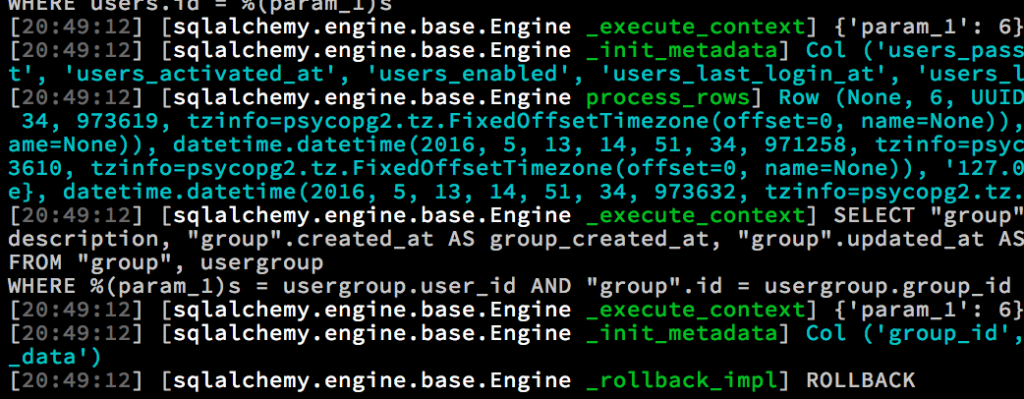
Now console is flooded with very verbose logging:

[2016-05-22 20:39:55,429] [sqlalchemy.engine.base.Engine _begin_impl] BEGIN (implicit)
[2016-05-22 20:39:55,429] [txn.123145312813056 __init__] new transaction
[2016-05-22 20:39:55,429] [sqlalchemy.engine.base.Engine _execute_context] SELECT users.password AS users_password, users.id AS users_id, users.uuid AS users_uuid, users.username AS users_username, users.email AS users_email, users.created_at AS users_created_at, users.updated_at AS users_updated_at, users.activated_at AS users_activated_at, users.enabled AS users_enabled, users.last_login_at AS users_last_login_at, users.last_login_ip AS users_last_login_ip, users.user_data AS users_user_data, users.last_auth_sensitive_operation_at AS users_last_auth_sensitive_operation_at, users.activation_id AS users_activation_id

5. Initialization loggers from INI file

If you need to initialize loggers in your own applications see websauna.system.devop.cmdline.setup_logging() for how Websauna picks up loggers from INI configuration file.

6. More information

How Websauna logs username and email for every internal server error. It’s impressive service if your devops teams calls a customer on a second an error happens and guide the customer around the error. As a bonus if using Sentry you will see the Gravatar profile image of the user when viewing the exception.

Logbook is an alternative for Python standard library logging if performance is critical or the application has more complex logging requirements .

Discussion about log message formatting and why we are still using old style string formatting.

structlog package – add context to your logged messages like user id or HTTP request URL.

\"\" Subscribe to RSS feed Image Follow me on Twitter Image Follow me on Facebook Image Follow me Google+

Twitter bot using Google Spreadsheets in Python

This blog posts shows how to build a Twitter bot using Google Spreadsheets as data source in Python.

Fight of lovers... they agreed and hugged at the end

The service presented here was originally created for a friend of mine who works in Megacorp Inc. They have a marketing intelligence department that is filling out stalked information about potential customers. This information stored in Google Spreadsheet. Every day a new spreadsheet arrives to a folder. Then my friend proceeds to go through all of the leads in the spreadsheet, check who have a Twitter account and harass them in Twitter about Megacorp Inc. products.

To make my friend jobless I decided to replace his tedious workflow with a Python script. Python is a programming language for making simple tasks simple, eliminating the feeling of repeating yourself with as little lines as possible. So it is a good weapon of choice for crushing middle class labor force participation.

The bot sends two tweets to every Twitter user. Timing between tweets and the second tweet is randomized, just to make sure that no one could not figure out in a blink of an eye that they are actually communicating with a bot.

The ingredients of this Twitter bot are

  • Python 3.4+ – a snake programming language loved by everyone
  • gspread – a Python client for Google Spreadsheets making reading and manipulating data less painful
  • tweepy – A Twitter client library for Python
  • ZODB – An ACID compliant transaction database for native Python objects

The script is pretty much self-contained, around 200 lines of Python code and 3 hours of work.

1. Authenticating for third party services

The bot uses OAuth protocol to authenticate itself against Google services (Google Drive, Google Spreadsheet) and Twitter. In OAuth, you arrive to a service provider web site through your normal web browser. If you are not yet logged in the service asks you log in. Then you get this page where it asks authorize the app. Twitter authentication is done in a separate script run tweepyauth.py which asks you enter the pin number shown on Twitter website. Google API client does things different and spins up a local web server running in a localhost port. When you authorize on Google services it redirects you back to the local webserver and the script grabs the authentication token from there.

The script stores authentication tokens in JSON files You can run the script on your local computer first to generate JSON files and then move it to the server where a web browser for authentication is not possibly available.

2. Maintaining persistent state

The bot needs to maintain a state. It needs to process a new spreadsheet every day. But on some days the bot might not be running. Thus, it needs to remember already processed spreadsheets. Sometimes the spreadsheets may contain duplicate entries of the same Twitter handle and we don’t want to harass this Twitter user over and over again. Some data cleaning is applied to the column contents, as it might be raw Twitter handle, HTTP or HTTPS URL to a Twitter user – those marketing intelligence people are not very strict on what they spill in to their spreadsheets.

The state is maintained using a ZODB. ZODB is a transaction database, very robust. It is mature, probably older than some of the blog post readers, having multigigabyte deployments running factories around the world. It can run in-process like SQLite and doesn’t need other software running on the machine. It doesn’t need any ORM as it uses native Python objects. Thus, to make your application persistent you just stick your Python objects to ZODB root. Everything inside a transaction context manager is written to the disk or nothing is written to the disk.

As a side note using Google Spreadsheets over their REST API is painfully slow. If you need to process larger amounts of data it might be more efficient to download the data locally as CSV export and do it from there.

3. Usage instructions

This code is exemplary. You can’t use it as you do not have correct data or access to data. Use it to inspire your imagination. However if you were to use it would happen like this:

4. Source code

chirper.py

"""

Installation:

    pip install --upgrade oauth2client gspread google-api-python-client ZODB zodbpickle tweepy iso8601
"""

import time
import datetime
import json
import httplib2
import os
import sys

# Authorize server-to-server interactions from Google Compute Engine.
from apiclient import discovery
import oauth2client
from oauth2client import client
from oauth2client import tools

# ZODB
import ZODB
import ZODB.FileStorage
import BTrees.OOBTree
from persistent.mapping import PersistentMapping
import random
import transaction

# Date parsing
import iso8601

# https://github.com/burnash/gspread
import gspread

# Twitter client
import tweepy

try:
    import argparse
    flags = argparse.ArgumentParser(parents=[tools.argparser]).parse_args()
except ImportError:
    flags = None


# We need permissions to drive list files, drive read files, spreadsheet manipulation
SCOPES = ['https://www.googleapis.com/auth/devstorage.read_write', 'https://www.googleapis.com/auth/drive.metadata.readonly', 'https://spreadsheets.google.com/feeds']
CLIENT_SECRET_FILE = 'client_secrets.json'
APPLICATION_NAME = 'MEGACORP SPREADSHEET SCRAPER BOT'
OAUTH_DATABASE = "oauth_authorization.json"

FIRST_TWEET_CHOICES = [
    "WE AT MEGACORP THINK YOU MIGHT LIKE US - http://megacorp.example.com",
]

SECOND_TWEET_CHOICES = [
    "AS WELL, WE ARE PROBABLY CHEAPER THAN COMPETITORCORP INC. http://megacorp.example.com/prices",
    "AS WELL, OUR FEATURE SET IS LONGER THAN MISSISSIPPI http://megacorp.example.com/features",
    "AS WELL, OUR CEO IS VERY HANDSOME http://megacorp.example.com/team",

]

# Make sure our text is edited correctly
for tweet in FIRST_TWEET_CHOICES + SECOND_TWEET_CHOICES:
    assert len(tweet) < 140

# How many tweets can be send in one run... limit for testing / debugging
MAX_TWEET_COUNT = 10


# https://developers.google.com/drive/web/quickstart/python
def get_google_credentials():
    """Gets valid user credentials from storage.

    If nothing has been stored, or if the stored credentials are invalid,
    the OAuth2 flow is completed to obtain the new credentials.

    Returns:
        Credentials, the obtained credential.
    """

    credential_path = os.path.join(os.getcwd(), OAUTH_DATABASE)

    store = oauth2client.file.Storage(credential_path)
    credentials = store.get()
    if not credentials or credentials.invalid:
        flow = client.flow_from_clientsecrets(CLIENT_SECRET_FILE, SCOPES)
        flow.user_agent = APPLICATION_NAME
        if flags:
            credentials = tools.run_flow(flow, store, flags)
        else: # Needed only for compatability with Python 2.6
            credentials = tools.run(flow, store)
        print('Storing credentials to ' + credential_path)
    return credentials


def get_tweepy():
    """Create a Tweepy client instance."""
    creds = json.load(open("twitter_oauth.json", "rt"))

    auth = tweepy.OAuthHandler(creds["consumer_key"], creds["consumer_secret"])
    auth.set_access_token(creds["access_token"], creds["access_token_secret"])
    api = tweepy.API(auth)
    return api


def get_database():
    """Get or create a ZODB database where we store information about processed spreadsheets and sent tweets."""

    storage = ZODB.FileStorage.FileStorage('chirper.data.fs')
    db = ZODB.DB(storage)
    connection = db.open()
    root = connection.root

    # Initialize root data structure if not present yet
    with transaction.manager:
        if not hasattr(root, "files"):
            root.files = BTrees.OOBTree.BTree()
        if not hasattr(root, "twitter_handles"):
            # Format of {added: datetime, imported: datetime, sheet: str, first_tweet_at: datetime, second_tweet_at: datetime}
            root.twitter_handles = BTrees.OOBTree.BTree()


    return root


def extract_twitter_handles(spread, sheet_id, column_id="L"):
    """Process one spreadsheet and return Twitter handles in it."""

    twitter_url_prefix = ["https://twitter.com/", "http://twitter.com/"]

    worksheet = spread.open_by_key(sheet_id).sheet1

    col_index = ord(column_id) - ord("A") + 1

    # Painfully slow, 2600 records = 3+ min.
    start = time.time()
    print("Fetching data from sheet {}".format(sheet_id))
    twitter_urls =  worksheet.col_values(col_index)
    print("Fetched everything in {} seconds".format(time.time() - start))

    valid_handles = []

    # Cell contents are URLs (possibly) pointing to a Twitter
    # Extract the Twitter handle from these urls if they exist
    for cell_content in twitter_urls:

        if not cell_content:
            continue

        # Twitter handle as it
        if "://" not in cell_content:
            valid_handles.append(cell_content.strip())
            continue

        # One cell can contain multiple URLs, comma separated
        urls = [url.strip() for url in cell_content.split(",")]

        for url in urls:
            for prefix in twitter_url_prefix:
                if url.startswith(prefix):
                    handle = url[len(prefix):]

                    # Clean old style fragment URLs e.g #!/foobar
                    if handle.startswith("#!/"):
                        handle = handle[len("#!/"):]

                    valid_handles.append(handle)

    return valid_handles


def watch_files(http, title_match=None, folder_id=None) -> list:
    """Check all Google Drive files which match certain file pattern.

    Drive API:

    https://developers.google.com/drive/web/search-parameters

    :return: Iterable GDrive file list
    """

    service = discovery.build('drive', 'v2', http=http)

    if folder_id:
        results = service.files().list(q="'{}' in parents".format(folder_id)).execute()
    elif title_match:
        results = service.files().list(q="title contains '{}'".format(title_match)).execute()
    else:
        raise RuntimeError("Unknown criteria")

    return results["items"]


def scan_for_new_spreadsheets(http, db):
    """Check Google Drive for new spreadsheets.

        1. Use Google Drive API to list all files matching our spreadsheet criteria
        2. If the file is not seen before add it to our list of files to process
    """
    # First discover new spreadsheets

    discovered = False

    for file in watch_files(http, folder_id="0BytechWnbrJVTlNqbGpWZllaYW8"):
        title = file["title"]
        last_char = title[-1]

        # It's .csv, photos, etc. misc files
        if not last_char.isdigit():
            continue

        with transaction.manager:
            file_id = file["id"]
            if file_id not in db.files:
                print("Discovered file {}: {}".format(file["title"], file_id))
                db.files[file_id] = PersistentMapping(file)
                discovered = True

    if not discovered:
        print("No new spreadsheets available")


def extract_twitter_handles_from_spreadsheets(spread, db):
    """Extract new Twitter handles from spreadsheets.

        1. Go through all spreadsheets we know.
        2. If the spreadsheet is not marked as processed extract Twitter handles out of it
        3. If any of the Twitter handles is unseen before add it to the database with empty record

    """

    # Then extract Twitter handles from the files we know about
    for file_id, file_data in db.files.items():

        spreadsheet_creation_date = iso8601.parse_date(file_data["createdDate"])

        print("Processing {} created at {}".format(file_data["title"], spreadsheet_creation_date))

        # Check the processing flag on the file
        if not file_data.get("processed"):
            handles = extract_twitter_handles(spread, file_id)

            # Using this transaction lock we write all the handles to the database once or none of them
            with transaction.manager:
                for handle in handles:
                    # If we have not seen this
                    if handle not in db.twitter_handles:
                        print("Importing Twitter handle {}".format(handle))
                        db.twitter_handles[handle] = PersistentMapping({"added": spreadsheet_creation_date, "imported": datetime.datetime.utcnow(), "sheet": file_id})

                file_data["processed"] = True


def send_tweet(twitter, msg):
    """Send a Tweet.
    """

    try:
        twitter.update_status(status=msg)
    except tweepy.error.TweepError as e:
        try:
            # {"errors":[{"code":187,"message":"Status is a duplicate."}]}
            resp = json.loads(e.response.text)
            if resp.get("errors"):
                if resp["errors"][0]["code"] == 187:
                    print("Was duplicate {}".format(msg))
                    time.sleep(10 + random.randint(0, 10))
                    return
        except:
            pass

        raise RuntimeError("Twitter doesn't like us: {}".format(e.response.text or str(e))) from e

    # Throttle down the bot
    time.sleep(30 + random.randint(0, 90))


def tweet_everything(twitter, db):
    """Run through all users and check if we need to Tweet to them. """

    tweet_count = 0

    for handle_id, handle_data in db.twitter_handles.items():

        with transaction.manager:

            # Check if we had not sent the first Tweet yet and send it
            if not handle_data.get("first_tweet_at"):

                tweet = "@{} {}".format(handle_id, random.choice(FIRST_TWEET_CHOICES))

                print("Tweeting {} at {}".format(tweet, datetime.datetime.utcnow()))
                send_tweet(twitter, tweet)
                handle_data["first_tweet_at"] = datetime.datetime.utcnow()
                tweet_count += 1

            # Check if we had not sent the first Tweet yet and send it
            elif not handle_data.get("second_tweet_at"):

                tweet = "@{} {}".format(handle_id, random.choice(SECOND_TWEET_CHOICES))

                print("Tweeting {} at {}".format(tweet, datetime.datetime.utcnow()))
                send_tweet(twitter, tweet)
                handle_data["second_tweet_at"] = datetime.datetime.utcnow()
                tweet_count += 1

        if tweet_count >= MAX_TWEET_COUNT:
            # Testing limiter - don't spam too much if our test run is out of control
            break


def main():

    script_name = sys.argv[1] if sys.argv[0] == "python" else sys.argv[0]
    print("Starting {} at {} UTC".format(script_name, datetime.datetime.utcnow()))

    # open database
    db = get_database()

    # get OAuth permissions from Google for Drive client and Spreadsheet client
    credentials = get_google_credentials()
    http = credentials.authorize(httplib2.Http())
    spread = gspread.authorize(credentials)
    twitter = get_tweepy()

    # Do action
    scan_for_new_spreadsheets(http, db)
    extract_twitter_handles_from_spreadsheets(spread, db)
    tweet_everything(twitter, db)


main()


tweepyauth.py

import json
import webbrowser

import tweepy

"""
    Query the user for their consumer key/secret
    then attempt to fetch a valid access token.
"""

if __name__ == "__main__":

    consumer_key = input('Consumer key: ').strip()
    consumer_secret = input('Consumer secret: ').strip()
    auth = tweepy.OAuthHandler(consumer_key, consumer_secret)

    # Open authorization URL in browser
    webbrowser.open(auth.get_authorization_url())

    # Ask user for verifier pin
    pin = input('Verification pin number from twitter.com: ').strip()

    # Get access token
    access_token, access_token_secret = auth.get_access_token(verifier=pin)

    data = dict(consumer_key=consumer_key, consumer_secret=consumer_secret, access_token=access_token, access_token_secret=access_token_secret)
    with open("twitter_oauth.json", "wt") as f:
        json.dump(data, f)


\"\" Subscribe to RSS feed Image Follow me on Twitter Image Follow me on Facebook Image Follow me Google+

PyCharm vs. Sublime Text

This blog post is about comparing two popular development tools and text editors, Sublime Text and PyCharm to each other. This blog post is written from the perspective of professional software development or if the programming is what you do for living.

1. Preface: meet the contenders

I have been developing Python for a decade now in various environments. Few weeks ago, I decided to make a shift from Sublime Text 3 to PyCharm as my primary tool for typing in code on OSX. I tried PyCharm long time ago and I was dissatisfied – PyCharm is built on Java software stack and UI issues, alongside “Java software bloat”, were major turn off for me by the time. But the times change, hardware gets more powerful and it was time for me to reconsider my decision.

Sublime Text is a commercial programmer’s text editor being in development since 2008. Its major selling points are speed, powerful code text editing features (multicursor), cross platform support, customizations and plugin ecosystem. Currently Sublime Text version 3 is in beta. Though the development slowed down in one point, as Sublime Text has been mostly one man show, new Sublime Text builds roll out now regularly. Sublime Text costs 70 USD. Unless you purchase a license you’ll be notified by a nagging dialog.

PyCharm is a child of JetBrains IntelliJ IDEA family of editors. First PyCharm was released 2010, but the IDE codebase goes all way back to IntelliJ IDEA which was released as far back as 2001 – I remember doing Java development on IntelliJ in 2004. PyCharm is developed by Czech company JetBrains, having over 400 employees. PyCharm shares most of the features with other IDEA family IDEs, which means it has robust HTML, JavaScript and CSS support. PyCharm license costs 199 EUR / year (professional), 99 EUR / year (individual) and there is also free community edition. The community edition is 100% open source.

Though Sublime Text is not an IDE per se, many Python and JavaScript developers I know use it as “development platform”. This is possible because active Sublime Text community provides tools to optimize your development workflow – namely to support autocomplete, syntax highlighting and background linting and various programming languages.

There are also other well know options for Python development, including PyDev (LiClipse), Komodo IDE and WingWare IDE.

2. Feature highlights both in Sublime Text and PyCharm

Sublime Text and PyCharm have integrated plugin manager. Sublime Text Package Control is not built in, making the initial adoption more hassle. On the other hand I found PyCharm’s plugin installer to be more cumbersome to use – more clicks. Reminds me of those Windows EXE installers.
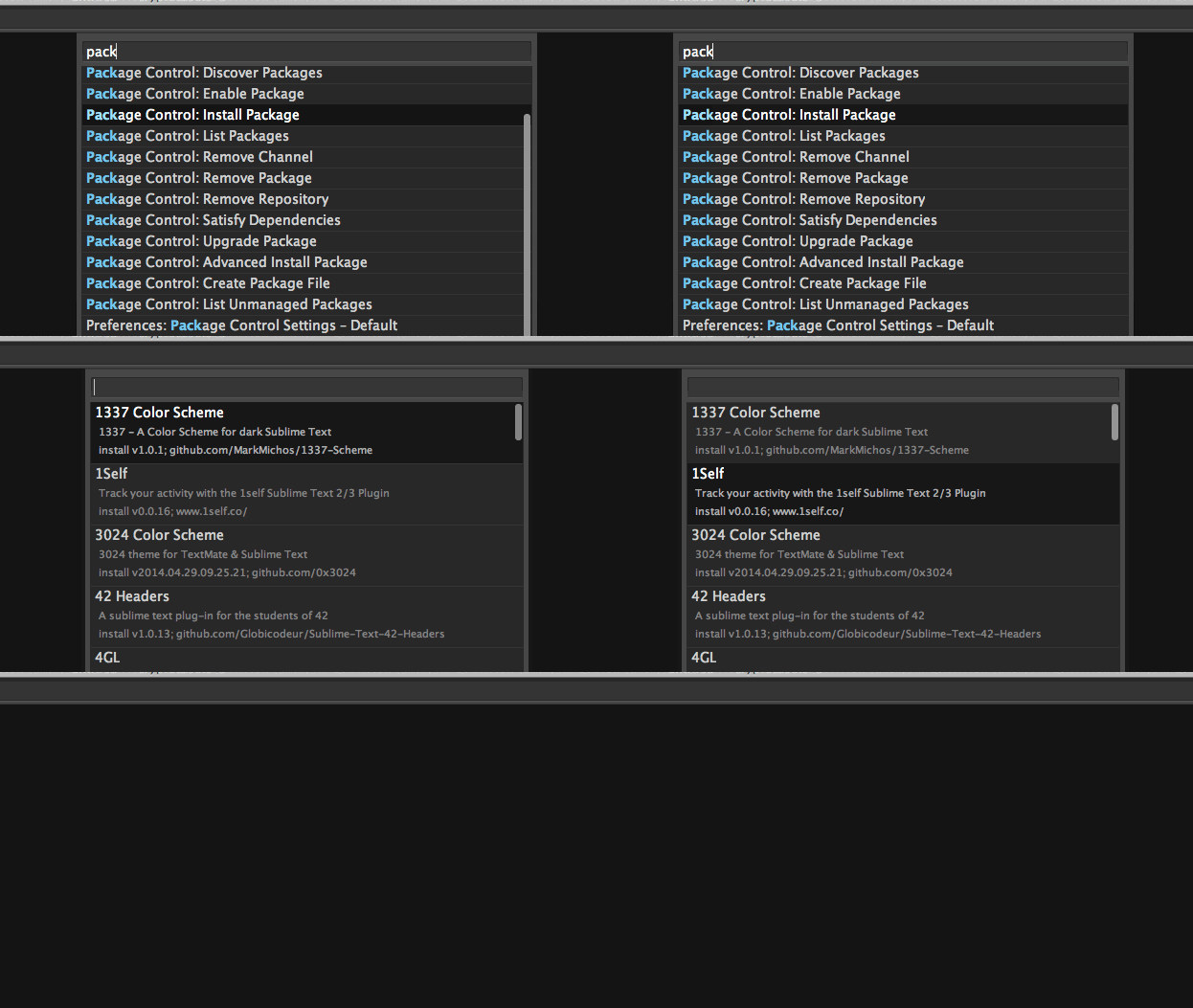
packagecontrol

Installing a new plugin in Sublime Text is only few keystrokes
Screen Shot 2015-05-02 at 14.30.05

PyCharm Plugins dialog is a lot of buttons

Sublime text has been famous for its multicursor feature. With the release of PyCharm 4.0 it gained the multicursor support. It does not work exactly as in Sublime Text, but close enough.

The editors enjoy plenty of themes available and both support my favorite Twilight theme. Also to further make the text more readable Source Code Pro font renders out nicely on OSX.

The text editors are good for Python editing and have e.g. indention guidelines and fast toggle soft text wrap options.
Screen Shot 2015-05-02 at 14.35.08

3. Sublime Text pros

Sublime Text beats PyCharm in few points and I miss these features in PyCharm, though some of them can be replaced using PyCharm alternatives.

Sublime Text’s Go To Anywhere is more powerful. Press CMD+T and type in few letters of  package and module name.  Go To Anywhere finds the suitable match. PyCharm Navigate -> File or Navigate -> Symbol are not as powerful as their heuristics seem to need more typing to get where you want.

gotoanywhere

Jumping to cryptoassets.core.backend.base in Sublime Text

Whereas PyCharm has a scrollbar with color hints to highlight next TODO / warning / error place, Sublime Text has a minimap. Scrolling around with the minimap is more powerful as your eyes see the structure of the file unfolding.
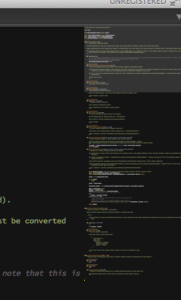
Screen Shot 2015-05-02 at 14.45.03

Sublime Text minimap shows outline of the file in visual

Sublime Text user interface is OpenGL accelerated and it runs smoothly 60 FPS all the time, making it pleasant for the eye and for typing. PyCharm is slower, though the difference is not so noticeable anymore after you pour in enough money to your hardware.

The Sublime Text plugin community is more vibrant. There are more plugins available, they get more support. For example if you need to do polyglot programming in rare languages, like R, Erlang or Haskell, there is guaranteed to be good Sublime Text support. Also if you write documentation in Restructured Text or Markdown PyCharm did not have such good plugins as one gets for Sublime Text.
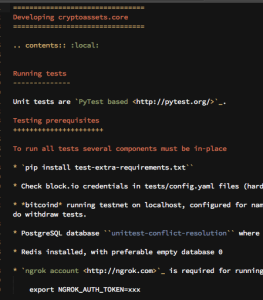
Restructured Text syntax highlighting in Sublime Text

Restructured Text syntax highlighting in Sublime Text

As this blog post is mostly about Python development, one cannot dismiss the fact that Sublime Text plugins are self-contained Python modules – not cumbersome Java projects. It is very easy to write them, though Sublime Text plugin API is somewhat limited. There is even a menu entry New plugin. This might be one of the fact explaining why the Sublime Text plugin ecosystem is so healthy.
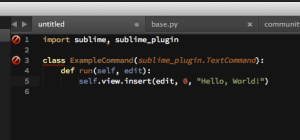
Screen Shot 2015-05-02 at 14.55.48

Creating Sublime Text plugin

4. PyCharm pros

PyCharm is big. The editor has history since 2001, it comes tons of features out of the box. It is very polished and it does most of the features very well – after all selling IDEs is the main business for JetBrains – for example compared IBM’s Eclipse whereas IBM’s main business is sell IBM services. With PyCharm you need to spent little time to tune up your programming environment or hunt plugins for your basic development needs (Python, JavaScript, HTML, CSS).

PyCharm comes with an integrated debugger. You can double click to set breakpoints in your editor and then run your application to stop on the line. But you still don’t lose the ability of drop into an interactive IPython shell when hit to the breakpoint:
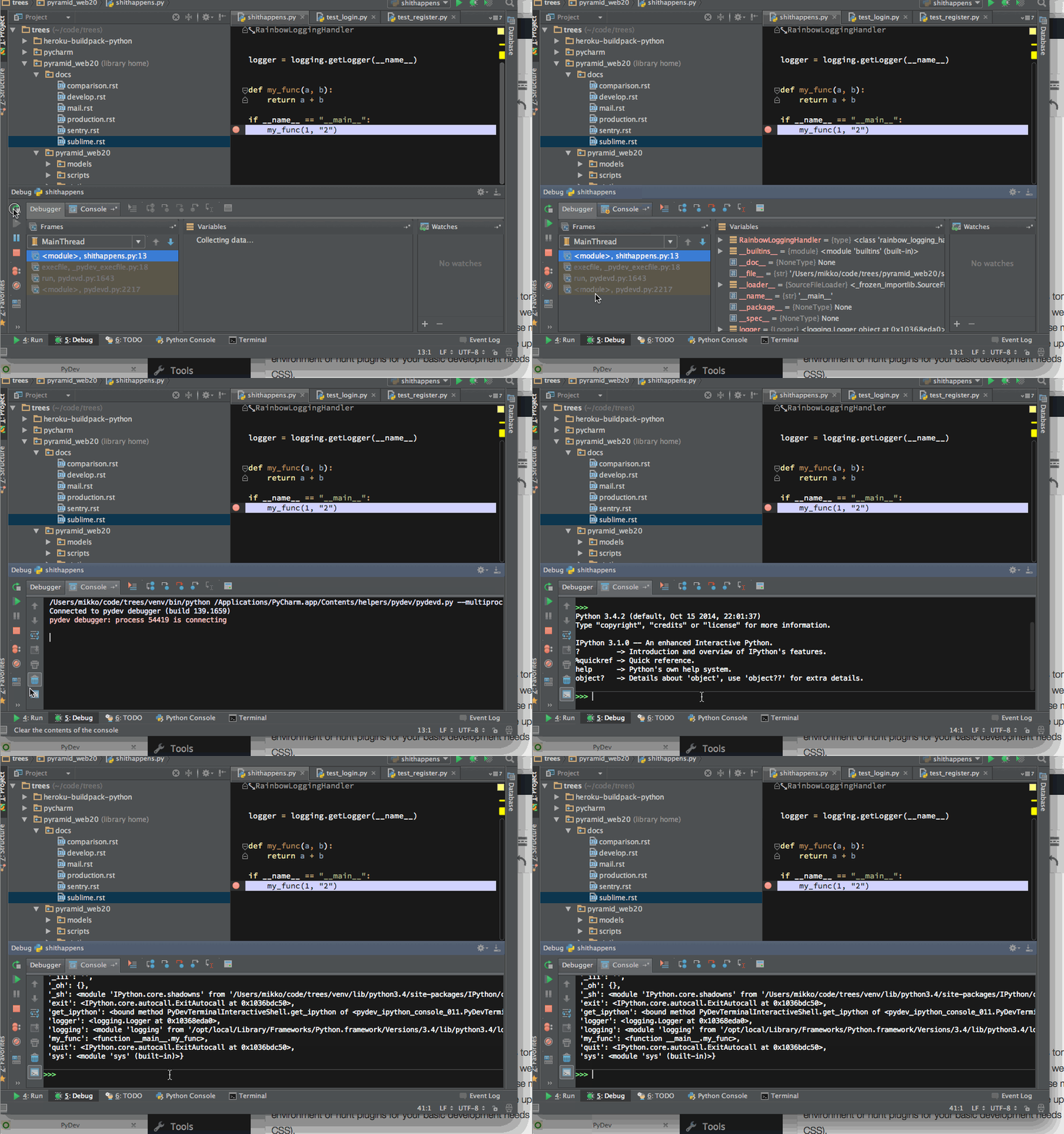
pydev debugger

Dropping into IPython session after PyCharm stops in a Python breakpoint

Though I did find the PyCharm debugger slowing down the application too much. For example, when running a Pyramid website application inside the debugger the automatic restart cycle became too slow. You had to wait each restart more than ten seconds. This kills the basic web development flow: edit – save – refresh. Maybe there is a way to speed up the debugger for large projects – please somebody tell me?

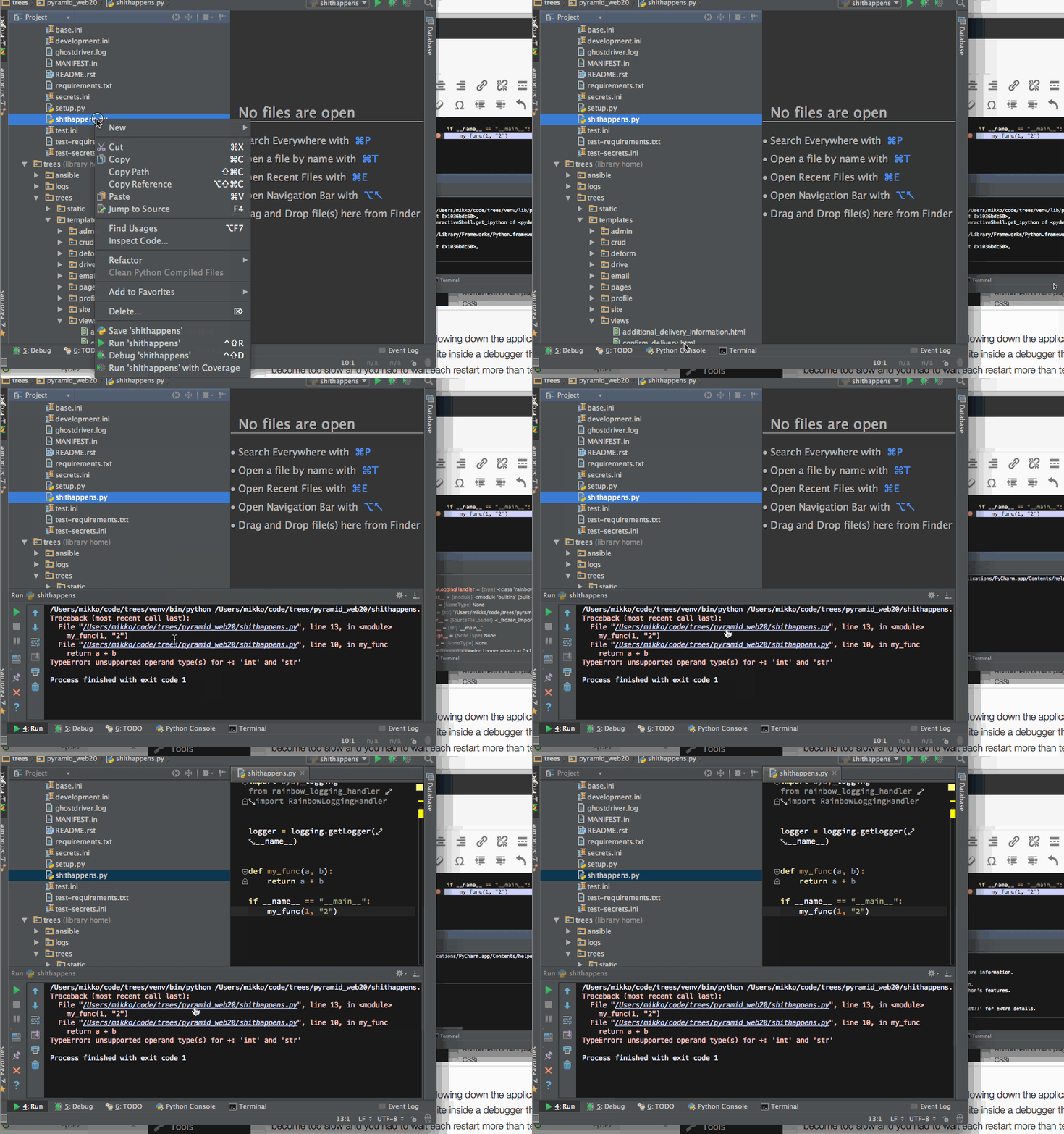
Then the major reason why I switched over – due to limitations in Sublime Text plugin API one simply could not get run output where one can click Python traceback and is taken where the error happened.
pydev traceback

Click Python traceback to navigate around the codebase and find the error root cause

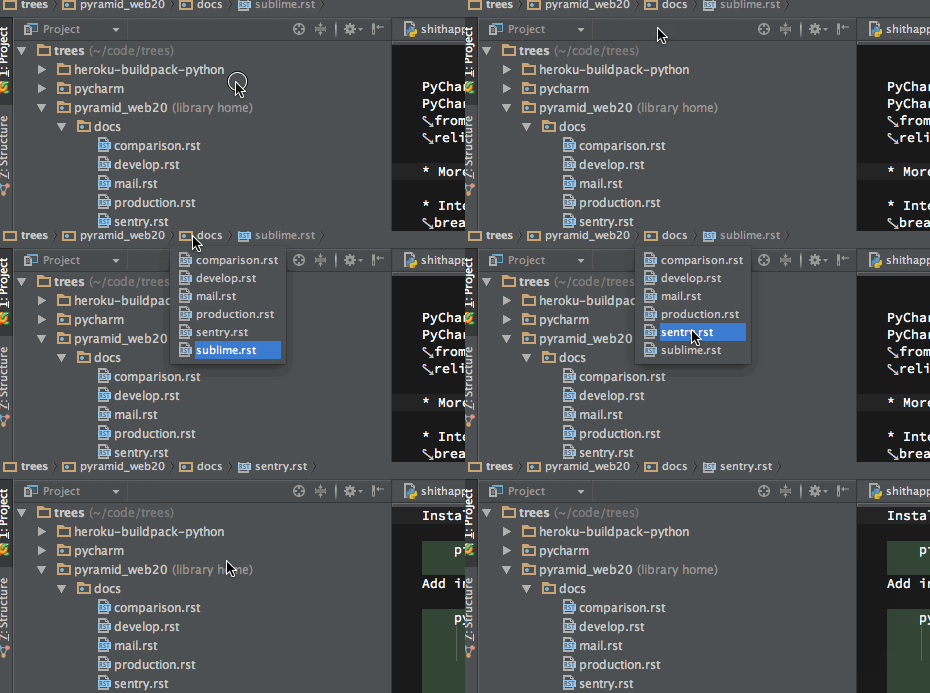
I found this lovely navigation bar a quick fix to navigate around to related modules – partially compensates the lack of powerful Go To Anywhere as in Sublime Text:
navbar

PyCharm shows the path to the current file as interactive navigation bar

Autocomplete, autoimport and other code intel and refactoring tools work better in PyCharm. With Sublime Text you need to play around with a lot of plugins to get decent autocomplete. Sublime Text plugins have their own, incompatible settings and need a lot of manual package installation (pip install flake8, etc). In PyCharm I just hit alt+enter on a missing symbol and it got added as the import at the beginning of the file. Though I could not change it to format the import as I want – one import statement per one line.

PyCharm does background spellchecking of written text and Python docstrings. It’s very handy if you want to write high quality software with meaningful comments and API descriptions.

PyCharm has more robust integrated version control support (Git, SVN). Though Sublime Text has plugins for this, Sublime Text plugin API offers only very limited UI interaction and you cannot, for example, color files in the project explorer based on their edit status.

PyCharm has Power save mode. It disables background tasks like code intel which are  CPU drainage for large projects. This makes digital nomading much more fun when you are fighting over the single available power plug in a hostel on a remote island.

PyCharm has integrated terminal and run window, though it has shortcomings and doesn’t seem to behave like a real terminal.

PyCharm has integrated unit test runner. But it did not work for my py.test and splinter browser tests, as it seems to behave differently than virtualenv’ed tests launched from command line.

5. Conclusion and the future

After few weeks I found myself using PyCharm for the most of my programming needs. The key pain points PyCharm solved for me where robust code intel tools, better Python application run and debug support, with traceback clicking. The development efficiency gained from these features is enough to migrate over, even though there are features I miss in Sublime Text. However, these editors sync files perfectly and I can always alt+tab switch to Sublime Text when I need to write some Restructured Text or Markdown.

I am looking forward for the upcoming contender Github’s atom.io editor which has the ease and flexibility of Sublime Text plugin system, but with better features, UI integration and big development-oriented company backing it up. Atom team is still working on getting the basic architecture together, so it might be few years until we see robust Python tools on Atom. I’d guess HTML, CSS and JavaScript support get there sooner, as they are building the Atom itself on CoffeeScript.

\"\" Subscribe to RSS feed Image Follow me on Twitter Image Follow me on Facebook Image Follow me Google+