Thoughts on the Supreme Court Ruling Against Trump in the Illinois National Guard Case
The decision is a preliminary "shadow docket" ruling. But it strongly suggests the majority believes Trump's use of the Guard is illegal.


The decision is a preliminary "shadow docket" ruling. But it strongly suggests the majority believes Trump's use of the Guard is illegal.

The First Amendment protects filming the police, but Berenice Garcia-Hernandez says she was dragged out of her car and detained for nearly seven hours for snapping photos of ICE agents.

The most common uses of "magic mushrooms" will never gain FDA approval.
Author Sarah Weinman's Without Consent tells the story of the legal and political battles to outlaw spousal rape in the U.S.
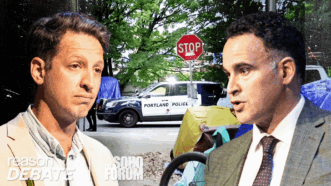
The Drug Policy Institute's Kevin Sabet debates Reason's Zach Weissmueller.

Trump’s presidency may have amplified executive power, but unless lawmakers roll back those powers—and the bloated government behind them—the next administration will do the same.

The decision “erodes core constitutional principles, including sovereign States’ control over their States’ militias and the people’s First Amendment rights,” Judge Susan P. Graber warned in her dissent.

The Court of Appeals unanimously refused to stay a trial court ruling against Trump, signaling the judges believe his use of the Guard is illegal.
A guest post by Joshua Braver and John Dehn.

If the courts try to enforce legal limits on the president's military deployments, he can resort to an alarmingly broad statute that gives him more discretion.

Sometimes the state's rules require stores to cover almost the entire label of products—in places that don't even admit minors.

U.S. District Judge Karin Immergut concluded that the president's description of "War ravaged Portland" was "simply untethered to the facts."

Five years after the city’s fiery 2020 protests, Portland is mostly calm. That hasn’t stopped Trump from reviving old battles, fueled by false memories and made-for-TV outrage.
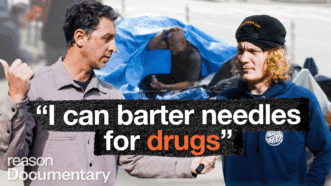
The lesson isn’t that decriminalization can’t work. It’s that Portland-style governance is broken.

The administration ordered the federalization of 200 Oregon National Guard members for 60 days, citing the same suspect legal authority used to send troops to California earlier this year.

One rural county expects the regulation to cost its landfill almost $4 million up front, and an additional $1 million annually.

The state just cracked down on a form of state-sanctioned robbery, where governments seized and sold homes over minor tax delinquencies—and then pocketed the profits.

Plaintiffs’ argument that access to in-home psilocybin services for those with disabilities is required under the ADA survives motion to dismiss.

Like that in the similar case filed by Liberty Justice Center and myself, this one indicated judicial skepticism of Trump's claims to virtually unlimited power to impose tariffs.

The suit resembles previous ones on the same subject filed by the state of California, and by the Liberty Justice Center and myself.

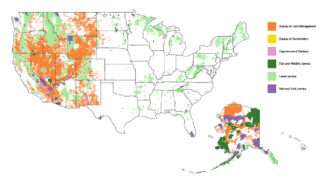
One proposal would create a streamlined process for selling off federal land to state and local governments, but only if they allow housing to be built on it.

The initiative also would have authorized state-licensed "psychedelic therapy centers."

There are any number of reasons to support or oppose a switch to ranked choice voting, but most of the opposition comes from the majority parties.
Vineyard owners face $120,000 in fines for letting an employee and his family live on their 60-acre property without a permit.
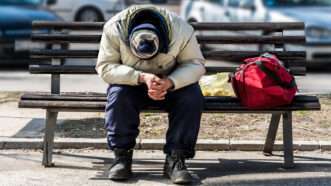
Homeless advocates say the court's decision in Grants Pass v. Johnson gives local governments a blank check to "to arrest or fine those with no choice but to sleep outdoors."

The now-dead bill would have permitted three counties to establish pilot programs in which military veterans could take psilocybin under the supervision of medical professionals.

The city's Rent Guidelines Board approved a nominal 2.75 rent increase for one million rent-stabilized apartments. That's below the year's 3.3 percent inflation rate.
Oregon lawmakers recently voted to recriminalize drugs after voters approved landmark reforms in 2020.

In California, which has a slew of renewable energy regulations, the cost of electricity increased three times faster than in the rest of the U.S.—and the state still doesn't even get reliable energy.

The reversal of a landmark reform was driven by unrealistic expectations and unproven assertions.
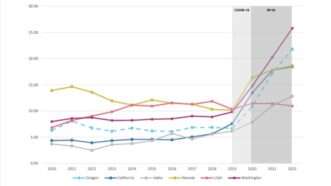
Recent research finds "no evidence" that it did, undermining a key claim by critics of that policy.

Plus: A listener asks if the state of Oregon’s policy on drug decriminalization should be viewed as a success.


Plus: the House votes for more affordable housing subsidies, Portland tries to fix its "inclusionary housing" program, and is 2024 the year of the granny flat?

In some cases, the city is also requiring homeowners to pay to replace trees that squashed their houses.

The measure, which had been paused since 2020, required students to meet benchmarks in reading, writing, and math.

The researchers reached a similar conclusion about overdose trends in Washington, where penalties for simple possession were reduced in 2021.
Prohibition is at the root of the hazards that have led to record numbers of opioid-related deaths.
Many of the problems the state is experiencing are caused by the continuing impact of prohibition.

A town clamps down on distributing clothes, personal care items, and food to the homeless.

Rent control is getting a rhetorical makeover from progressive policy makers.

Will the Beaver State join Maine and Alaska?

After many failed efforts at reform, the Oregon Legislature has passed a bill allowing gas stations to designate up to half their pumps as self-service.

Oregon liquor regulators were caught diverting prized whiskey for personal use.

The imminent expiration of a law that recriminalized drug possession triggered a bipartisan panic.

Today, the Lone Star state counts 90 homeless people per every 100,000 residents. In California, the problem is almost five times as bad.

Help Reason push back with more of the fact-based reporting we do best. Your support means more reporters, more investigations, and more coverage.
Make a donation today! No thanks
Every dollar I give helps to fund more journalists, more videos, and more amazing stories that celebrate liberty.
Yes! I want to put my money where your mouth is! Not interested
So much of the media tries telling you what to think. Support journalism that helps you to think for yourself.
I’ll donate to Reason right now! No thanks
Push back against misleading media lies and bad ideas. Support Reason’s journalism today.
My donation today will help Reason push back! Not today
Back journalism committed to transparency, independence, and intellectual honesty.
Yes, I’ll donate to Reason today! No thanks
Support journalism that challenges central planning, big government overreach, and creeping socialism.
Yes, I’ll support Reason today! No thanks
Support journalism that exposes bad economics, failed policies, and threats to open markets.
Yes, I’ll donate to Reason today! No thanks
Back independent media that examines the real-world consequences of socialist policies.
Yes, I’ll donate to Reason today! No thanks
Support journalism that challenges government overreach with rational analysis and clear reasoning.
Yes, I’ll donate to Reason today! No thanks
Support journalism that challenges centralized power and defends individual liberty.
Yes, I’ll donate to Reason today! No thanks
Your support helps expose the real-world costs of socialist policy proposals—and highlight better alternatives.
Yes, I’ll donate to Reason today! No thanks
Donate today to fuel reporting that exposes the real costs of heavy-handed government.
Yes, I’ll donate to Reason today! No thanks