
In this article, we’ll walk-through the SQL Pivot and SQL Unpivot operators and how they can be useful to transpose SQL Server data. Also, we’ll discuss both static and dynamic ways to use PIVOT and UNPIVOT relational operators that can be used to transform aggregated distinct values as column(s) in the result-set by specifying all the column values in the PIVOT IN clause.
SQL Server pivot Introduction
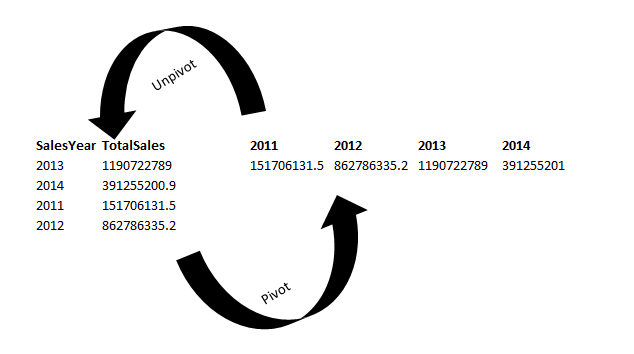
There are several ways to transpose a dataset from rows to columns and columns to rows. SQL Pivot is one of the techniques that allows transposing of rows to columns and performs possible aggregations along the way. SQL PIVOT and SQL UNPIVOT relational operators transpose a table-valued two-dimensional data into another form of data. SQL PIVOT transposes a table-valued expression from a unique set of values from one column into multiple columns in the output and performs aggregations. SQL UNPIVOT performs the opposite operation of SQL PIVOT by transforming the columns of a table-valued expression into column values.
Continue reading…


 Prashanth Jayaram
