
In This Article

In the tech world, especially when discussing the broader world of web development, terms like full-stack development and web development are often used interchangeably, as both involve building websites. However, the key point to note here is the difference between their skills and the scope of work.
Companies and businesses seeking an expert for their web app project should understand the difference between the two terms. While web development focuses on either front-end or back-end components, full-stack development covers both, offering a broader, more integrated approach, and can be considered the master.
Web developers usually specialize in either creating engaging user interfaces or building the server-side logic that powers a web app. Full-stack developers, on the other hand, manage the entire stack, encompassing everything from client-side design to server-side programming and database management. This makes them mostly valuable for businesses with complex projects or limited resources.
If you are seeking end-to-end development expertise, a full-stack development company can deliver effective and scalable solutions across the entire software development lifecycle.
Defining Web Development
Web development refers to the process of creating websites and web apps that users interact with through mobile/desktop web browsers. It generally focuses on either front-end or back-end development.
Front-end development involves designing and building the graphical user interface (GUI) using tools like HTML, CSS, and JavaScript. Front-end developers focus on the client-side aspects, ensuring that the site or app looks good and continues to function smoothly across devices.
Back-end development involves server-side languages, database integration, and system architecture. Back-end developers build the infrastructure that powers websites, managing data, server-side logic, and interactions with databases and APIs.
Web developers may work as either a front-end web developer or a back-end web developer, but rarely cover both ends unless they’ve trained as a full-stack developer.
What Is Full Stack Development?
Full-stack development refers to building both the front-end and back-end parts of a web application. The developer understands multiple aspects of the full development process, including user interface design, database management, server-side logic, and deployment. They utilize various programming languages and web frameworks to develop comprehensive web applications that provide a seamless user experience from start to finish.
A full-stack web developer is experienced enough to be able to work with both the technologies that users interact with directly (including HTML, CSS, and JavaScript) and those that run in the background (e.g., Python, PHP, SQL, and Apache web server). This dual knowledge enables them to work independently on projects or as part of cross-functional teams.
Full Stack vs Web Developers: Key Differences

- Scope of Work
- Web developers usually specialize in either the front end or the back end.
- Full-stack developers handle both the frontend and backend, giving them a comprehensive understanding of system architecture and development flow.
- Programming Skills
- Web developers may only need to master front-end technologies or server-side languages.
- Full-stack developers are skilled in multiple technologies, including HTML, CSS, JavaScript, Python, PHP, Ruby, and Node.js, and must also be familiar with relational databases, version control systems, and web frameworks.
- Project Roles
- Web developers are often part of a larger team where they focus on one layer of the stack.
- Full-stack developers can manage entire stack projects from start to finish, making them ideal for rapid development cycles or startups.
- App Development
- Web developers typically create websites or web apps with defined responsibilities.
- Full-stack developers deliver complete web applications, from interactive user interfaces to backend logic and data management.
- Soft Skills and Collaboration
- Web developers collaborate closely with designers, database engineers, or back-end teams.
- Full-stack developers require strong soft skills, as they often serve as a bridge between front-end and back-end development, as well as with project managers.
Why Businesses Choose Full Stack Development

Hiring full-stack developers is particularly beneficial for businesses that require flexibility and a broad skill set within a single role. These developers are capable of handling complex projects, can adapt to changing requirements, and can implement software security features throughout the entire development phase.
Let us explain this better with an example: a full-stack web developer working on a new platform may design the user interface, build the back-end database logic, and deploy the app using tools like Apache’s web server. They can accomplish all of this without having to hand the project over to multiple specialists.
Full-stack developers can also facilitate better communication between front-end and back-end teams; this is precisely what helps streamline the entire development process while reducing misalignment across different roles.
When to Choose the Web Developers

Although the full-stack developers offer you the most outstanding resourcefulness, there are still use case scenarios where businesses can gain benefit by hiring web developers with the expertise necessary for the project.
For example, when it comes to larger enterprises, they may prefer dedicated front-end developers who can focus on delivering visually appealing, engaging user interfaces or back-end web developers who specialize in handling complex infrastructure.
This is particularly useful in highly scalable systems or projects that demand machine learning integration, custom database management, or extensive backend development.
Full Stack Development Requires Broad Knowledge
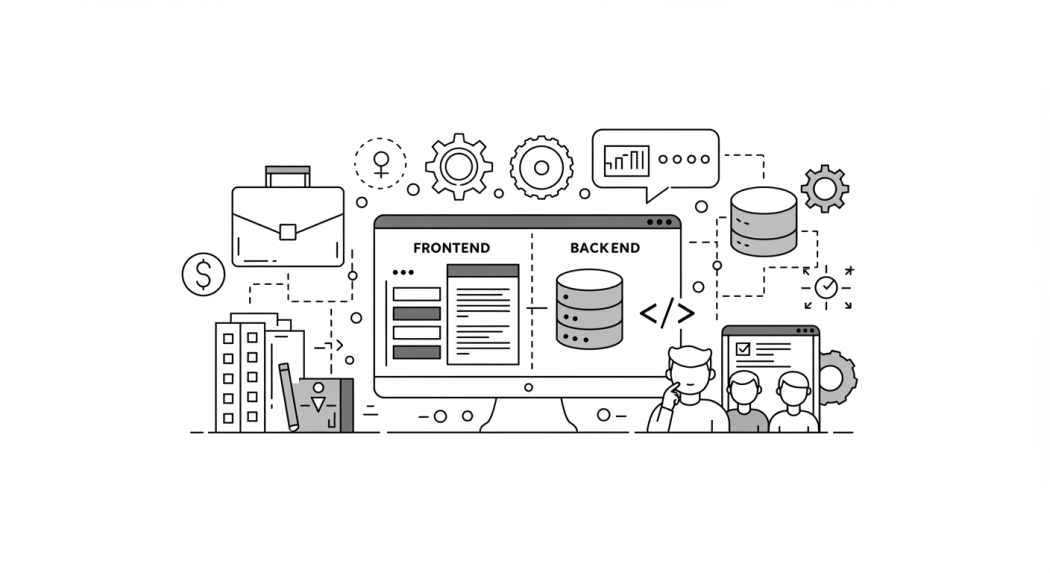
When it comes to full-stack developers, the skill involves attaining an in-depth understanding and knowledge of both front-end and back-end technologies. It means learning how to manage data efficiently, integrate web frameworks, deploy applications securely, and maintain the codebase across the full product lifecycle.
The reason is very evident, as full-stack development requires the developer to have a thorough knowledge of UI/UX, server-side logic, client-side logic, and sometimes cloud infrastructure as well. It demands a broad skill set not only in coding but also in multiple scopes, including system architecture, testing, optimization, and collaboration.
Concluding Thoughts
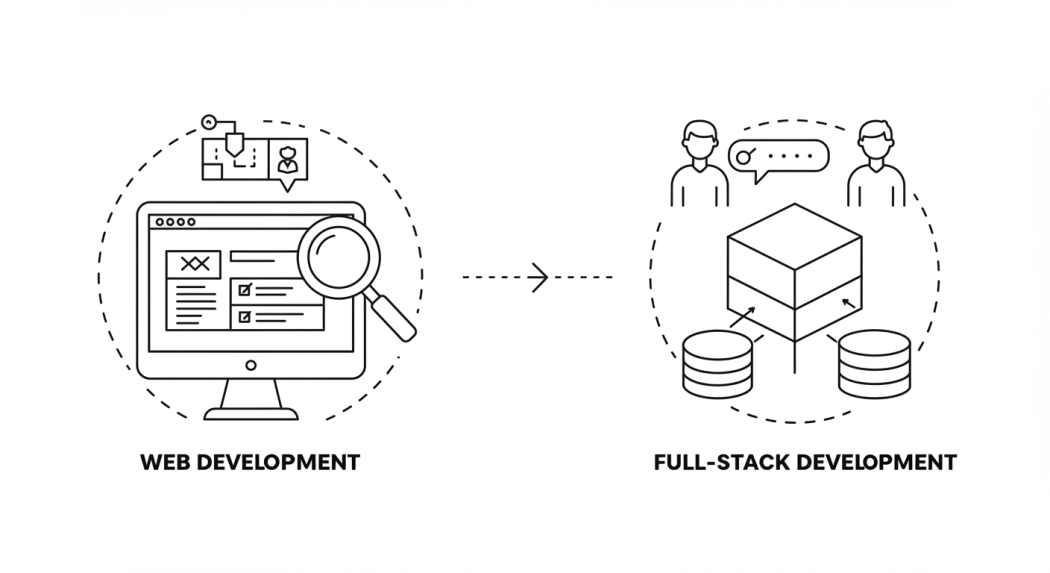
As we have seen, the key difference between web development and full-stack development lies in the scope and the required skills to complete the task. Web developers have experience and expertise in the front-end or the back-end. In contrast, full-stack developers work on multiple areas across front-end and back-end to create compelling and consistent solutions.
For businesses and companies that require end-to-end support and the ability to build GUIs and manage server-side logic, full-stack development offers speed, flexibility, and efficiency.
Regardless of whether you are outsourcing the development of web apps, expanding your team of software engineers, or aiming for complete web app development, having a better understanding of your project’s needs will help determine the right expertise.
You can even consider partnering with a trusted full-stack development company, which ensures your software is not only built to spec but also scalable, secure, and well-managed from front to back.