Sunday Mass Readings

Image

Holy Family by Simón Gutiérrez, 1680

Feast of the Holy Family of Jesus, Mary and Joseph

Lectionary: 17 

Reading I

Sirach 3:2-6, 12-14

God sets a father in honor over his children;
    a mother’s authority he confirms over her sons.
Whoever honors his father atones for sins,
    and preserves himself from them.
When he prays, he is heard;
    he stores up riches who reveres his mother.
Whoever honors his father is gladdened by children,
    and, when he prays, is heard.
Whoever reveres his father will live a long life;
    he who obeys his father brings comfort to his mother.

My son, take care of your father when he is old;
    grieve him not as long as he lives.
Even if his mind fail, be considerate of him;
    revile him not all the days of his life;
kindness to a father will not be forgotten,
    firmly planted against the debt of your sins
    —a house raised in justice to you.

Responsorial Psalm

Psalm 128:1-2, 3, 4-5.

R. (cf. 1)  Blessed are those who fear the Lord and walk in his ways.
Blessed is everyone who fears the LORD,
   who walks in his ways!
For you shall eat the fruit of your handiwork;
   blessed shall you be, and favored.
R. Blessed are those who fear the Lord and walk in his ways.
Your wife shall be like a fruitful vine
   in the recesses of your home;
your children like olive plants
   around your table.
R. Blessed are those who fear the Lord and walk in his ways.
Behold, thus is the man blessed
   who fears the LORD.
The LORD bless you from Zion:
   may you see the prosperity of Jerusalem
   all the days of your life.
R. Blessed are those who fear the Lord and walk in his ways.

Reading II

Colossians 3:12-21 or 3:12-17

Brothers and sisters:
Put on, as God’s chosen ones, holy and beloved,
heartfelt compassion, kindness, humility, gentleness, and patience,
bearing with one another and forgiving one another, 
if one has a grievance against another; 
as the Lord has forgiven you, so must you also do.
And over all these put on love, 
that is, the bond of perfection.
And let the peace of Christ control your hearts, 
the peace into which you were also called in one body.
And be thankful.
Let the word of Christ dwell in you richly, 
as in all wisdom you teach and admonish one another, 
singing psalms, hymns, and spiritual songs 
with gratitude in your hearts to God.
And whatever you do, in word or in deed, 
do everything in the name of the Lord Jesus, 
giving thanks to God the Father through him.  

Wives, be subordinate to your husbands, 
as is proper in the Lord.
Husbands, love your wives, 
and avoid any bitterness toward them.
Children, obey your parents in everything, 
for this is pleasing to the Lord.
Fathers, do not provoke your children, 
so they may not become discouraged.


OR:

Brothers and sisters:
Put on, as God’s chosen ones, holy and beloved,
heartfelt compassion, kindness, humility, gentleness, and patience,
bearing with one another and forgiving one another, 
if one has a grievance against another; 
as the Lord has forgiven you, so must you also do.
And over all these put on love, 
that is, the bond of perfection.
And let the peace of Christ control your hearts, 
the peace into which you were also called in one body.
And be thankful.
Let the word of Christ dwell in you richly, 
as in all wisdom you teach and admonish one another, 
singing psalms, hymns, and spiritual songs 
with gratitude in your hearts to God.
And whatever you do, in word or in deed, 
do everything in the name of the Lord Jesus, 
giving thanks to God the Father through him.  

Alleluia

Colossians 3:15a, 16a

R. Alleluia, alleluia.
Let the peace of Christ control your hearts;
Let the word of Christ dwell in you richly.
R. Alleluia, alleluia.

Gospel

Mt 2:13-15, 19-23

When the magi had departed, behold,
the angel of the Lord appeared to Joseph in a dream and said,
“Rise, take the child and his mother, flee to Egypt,
and stay there until I tell you.
Herod is going to search for the child to destroy him.”
Joseph rose and took the child and his mother by night
and departed for Egypt.
He stayed there until the death of Herod,
that what the Lord had said through the prophet might be fulfilled,
Out of Egypt I called my son.

When Herod had died, behold,
the angel of the Lord appeared in a dream
to Joseph in Egypt and said,
“Rise, take the child and his mother and go to the land of Israel,
for those who sought the child’s life are dead.”
He rose, took the child and his mother,
and went to the land of Israel.
But when he heard that Archelaus was ruling over Judea
in place of his father Herod,
he was afraid to go back there.
And because he had been warned in a dream,
he departed for the region of Galilee.
He went and dwelt in a town called Nazareth,
so that what had been spoken through the prophets
might be fulfilled,
He shall be called a Nazorean.

Traditional Latin Mass Readings for this Sunday
Click here for a live-streamed Traditional Latin Mass 

Posted in Uncategorized | Tagged , , , , , , | Leave a comment

The Ruler and King of the whole creation

Image
Posted in Uncategorized | Leave a comment

The Poverty of Christmas

Thursday, December 25, 2025

The Nativity of the Lord (Christmas Day)

Readings:
At the Vigil Mass – Mass During the Night – Mass at Dawn – Mass During the Day

Image

Gerard van Honthorst, Public domain, via Wikimedia

While they were there, the time came for her to have her child, and she gave birth to her firstborn son. She wrapped him in swaddling clothes and laid him in a manger, because there was no room for them in the inn. Luke 2:6–7 (Gospel from Mass During the Night)

A loving mother and father who experience the birth of their first child receive insight into the sacredness and beauty of this scene. Though great mystery surrounds Jesus’ conception within the womb of the Blessed Virgin Mary, she was truly His mother, and He was truly her Son. Saint Joseph, knowing he was not this Child’s biological father, made a profound act of faith by accepting that fatherly responsibility, as instructed in a dream by an angel of the Lord. Because of his faith and God-given mission, Joseph’s commitment to being the father of the Son of God was one that only a most loving and devoted father would make.

As we celebrate Christmas Day, we are reminded of the humility with which our Lord chose to enter the world. Jesus was born in a place where animals dwelt because Mary and Joseph were away from their home to register for the Roman census. At first glance, one might conclude that the physical environment, most likely a cave, was unfortunate. However, we can be certain that this humble and poor setting was part of God’s divine plan, adding to the glory of that night. Christ, in His humility, chose this setting to reveal to us the true greatness of love.

The poverty and humility of the cave and the manger—a feeding trough for animals—helped point to the sacredness of Jesus’ birth. No glamor, no fancy or comfortable setting, only love. Pure love. The love in the heart of the Blessed Virgin Mary, the devotion of Saint Joseph, and the Incarnate presence of the Son of God were everything needed to make that night glorious.

One lesson we can learn from the Nativity of the Lord is that the beauty, peacefulness, and contentment of our lives are not dependent upon how much money or how many material possessions we have, but rather on the purity of our love. The Holy Family’s hearts were perfectly fulfilled, not because of their surroundings, but because of their intimate union with God in the person of Jesus Christ.

The presence of the Son of God in that place of poverty sheds light on the true riches we crave. The true treasures we seek are found not in wealth, comfort, or possessions, but in the love and grace of God. The Holy Family’s witness reveals to us that when we place our hearts in God’s hands, we will be filled with all we need.

Reflect today on that most sacred, simple, and humble scene. As you do, try to imagine how humanly fulfilling that experience was for the Holy Family. Jesus was wrapped tightly in swaddling clothing, and He was adored with the greatest affection of His mother and foster father. Mary and Joseph’s hearts contained all that was necessary for profound gratitude and fulfillment. If you struggle with being fulfilled, learn a lesson from the Holy Family and seek to imitate Mary and Joseph so that your love for our Incarnate Lord fills you with all you need.

My Incarnate Lord, Your divine nature, united to Your human nature, transformed that humble cave near Bethlehem into a tabernacle filled with the most powerful bonds of pure love. Please draw me into that sacred scene and help me to share in the love in the Immaculate Heart of Your mother, as well as the human devotion of Your foster father, Joseph. May I find contentment and total fulfillment in life by seeing You and loving You in every way that You come to me. Jesus, I trust in You.

(source: My Catholic Life)

The team at Catholicism Pure & Simple wish you and your loved ones every blessing for Christmas and the New Year!

Posted in Uncategorized | Tagged , , , , , , | Leave a comment

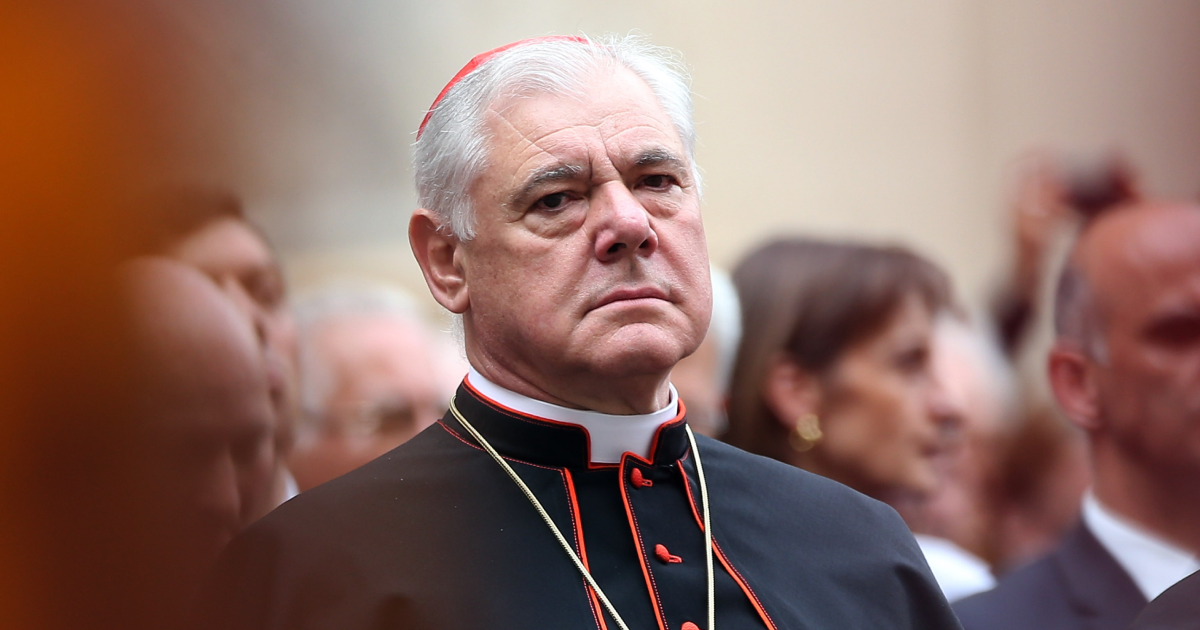
Cardinal Müller on dialogue, tradition and the Church’s internal tensions

Image

DECEMBER 23, 2025

From The Catholic Herald:

Cardinal Gerhard Ludwig Müller has accused the Vatican of operating a damaging double standard, arguing that its constant appeals to dialogue and respect are selectively applied and too often withheld from faithful Catholics themselves.

Speaking in a recent interview with Michael Haynes of Pelican +, the former prefect of the Congregation for the Doctrine of the Faith said that current approaches had deepened division rather than healed it. He argued that while Church authorities frequently stress openness and respect in their engagement with contemporary cultural movements, this spirit is not consistently extended to practising Catholics, particularly those who wish to attend the Traditional Latin Mass.

Cardinal Müller’s remarks come amid a prolonged debate over the decision to restrict the celebration of the traditional Roman Mass, a move that has affected dioceses and religious communities across the world. Asked directly about the policy, the German cardinal said it was “not so good” that Pope Francis had suppressed the Tridentine Rite “in an authoritarian way”.

The former prefect went further, suggesting that Pope Francis’s rhetoric had unfairly stigmatised a significant group of faithful Catholics. Pope Francis, Cardinal Müller said, had been “hurting and committing an injustice by accusing everyone who loves the older form of the rite of being against the Second Vatican Council in a general way, without any differentiating justice to single persons”.

The cardinal emphasised that the Church’s unity cannot be sustained by coercive measures. “We do not have a police state system in the Church, and we do not need one.” He added that “the Pope and the bishops must be good shepherds”.

Cardinal Müller’s assessment of the treatment of traditional Catholics may seem obvious to some, but it opens a wider question about whether the Church still knows what it is trying to be. How the Church orders its priorities reveals what it believes about truth, authority and the human person, and whether doctrine is something to be lived and taught, or managed and sidelined. The present tension is therefore less about liturgy or personality than about a shift in ecclesial culture, in which image and gesture increasingly displace theological coherence.

This is the context in which Cardinal Gerhard Ludwig Müller’s remarks must be read. His criticism of what he sees as a double standard in Rome is not a conservative lament for a vanished past, but a diagnosis of a deeper pattern. “All the time they speak about dialogue and respect for other persons,” the cardinal said, adding that “when it comes to the homosexual agenda and gender ideology, they speak about respect, but toward their own people, they have no respect.” 

The point is not that engagement with the modern world is wrong. The Church is, by her nature, universal. The problem arises when engagement becomes performative, selective and detached from the Church’s own doctrinal centre of gravity.

This is not merely a complaint about process. It points to a failure of theological discrimination, an inability or unwillingness to distinguish between legitimate attachment to tradition and ideological opposition to the Council.

What emerges is a picture of a Church increasingly comfortable with large scale public spectacle, celebrity endorsement and tightly managed messaging, while appearing uneasy with the slow, quiet work of doctrinal formation. Rome today is saturated with events, conferences, concerts and curated encounters designed to project openness and relevance. Yet Catholics who ask for continuity, doctrine or tradition often find themselves treated as problems to be contained rather than as members of the Roman Catholic Church.

The danger of the present moment is not that the Church engages the world, but that she forgets herself in the process. When doctrine is treated as an embarrassment, tradition as a liability and stability as dull, the result is not renewal but confusion. The credibility of the Church does not rest on spectacle or approval, but on her willingness to be recognisably and unapologetically Catholic.

Posted in Uncategorized | Tagged , , , , , , | Leave a comment

When I feel nothing…

Image
Posted in Uncategorized | Leave a comment

Sunday Mass Readings

Image

“Joseph’s Dream,” by Gaetano Gandolfi, circa 1790

Sunday, December 21
Fourth Sunday of Advent

Roman Ordinary calendar

St. Peter Canisius

Book of Isaiah 7,10-14.

The LORD spoke to Ahaz, saying:
Ask for a sign from the LORD, your God; let it be deep as the nether world, or high as the sky!
But Ahaz answered, “I will not ask! I will not tempt the LORD!”
Then he said: Listen, O house of David! Is it not enough for you to weary men, must you also weary my God?
Therefore the Lord himself will give you this sign: the virgin shall be with child, and bear a son, and shall name him Emmanuel.

Psalms 24(23),1-2.3-4ab.5-6.

The LORD’s are the earth and its fullness; 
the world and those who dwell in it.
For he founded it upon the seas 
and established it upon the rivers.

Who can ascend the mountain of the LORD? 
or who may stand in his holy place?
One whose hands are sinless, whose heart is clean,
who desires not what is vain.

He shall receive a blessing from the LORD, 
a reward from God his savior.
Such is the race that seeks for him, 
that seeks the face of the God of Jacob.

Letter to the Romans 1,1-7.

Paul, a slave of Christ Jesus, called to be an apostle and set apart for the gospel of God,
which he promised previously through his prophets in the holy scriptures,
the gospel about his Son, descended from David according to the flesh,
but established as Son of God in power according to the spirit of holiness through resurrection from the dead, Jesus Christ our Lord.
Through him we have received the grace of apostleship, to bring about the obedience of faith, for the sake of his name, among all the Gentiles,
among whom are you also, who are called to belong to Jesus Christ;
to all the beloved of God in Rome, called to be holy. Grace to you and peace from God our Father and the Lord Jesus Christ.

Holy Gospel of Jesus Christ according to Saint Matthew 1,18-24.

This is how the birth of Jesus Christ came about. When his mother Mary was betrothed to Joseph, but before they lived together, she was found with child through the Holy Spirit.
Joseph her husband, since he was a righteous man, yet unwilling to expose her to shame, decided to divorce her quietly.
Such was his intention when, behold, the angel of the Lord appeared to him in a dream and said, “Joseph, son of David, do not be afraid to take Mary your wife into your home. For it is through the holy Spirit that this child has been conceived in her.
She will bear a son and you are to name him Jesus, because he will save his people from their sins.”
All this took place to fulfill what the Lord had said through the prophet:
Behold, the virgin shall be with child and bear a son, and they shall name him Emmanuel, which means “God is with us.”
When Joseph awoke, he did as the angel of the Lord had commanded him and took his wife into his home.


Benedict XVI
pope from 2005 to 2013
(© L’Osservatore Romano)

Saint Joseph, a model of listening

The silence of Saint Joseph is a silence drawn from his contemplation of the mystery of God in an attitude of complete availability to the divine will. In other words, Saint Joseph’s silence is not a sign of interior emptiness but, to the contrary, of the fullness of the faith he carries in his heart and that guides each of his thoughts and actions. It is a silence due to which Joseph, together with Mary, keeps the Word of God made known through the Holy Scriptures while confronting them all the time with the events of Jesus’ life. It is a silence woven of constant prayer, of prayer blessing the Lord, of adoration of his holy will and of total trust in his providence.

Let us allow ourselves to be “infected” by Saint Joseph’s silence! We have such need of it in a world that is often far too noisy, unsupportive of listening in recollection to the voice of God. At this time, as we prepare for Christmas, let us cultivate an interior recollection that we may welcome and keep Jesus in our lives.

Traditional Latin Mass Readings for this Sunday
Click here for a live-streamed Traditional Latin Mass 

Posted in Uncategorized | Tagged , , , , , , , , | Leave a comment

Annoyed and Frustrated at Mass

By Randall Smith at The Catholic Thing:

I am often annoyed and frustrated at Mass. Not with the Mass, mind you. I used to get annoyed and frustrated a lot with the way Mass was done when I first became Catholic. But some of that craziness from earlier years seems to have subsided somewhat. Or maybe it’s just that I’m fortunate in the places I go to Mass these days. Mostly, I’m just grateful to be going to Mass at all.  A lot of people don’t have that luxury, or they risk their lives to go.

No, I get annoyed and frustrated with myself, because my mind wanders. I find that strange and troubling. Strange, because it’s Christ Himself present. Troubling, because if I can’t get myself to listen to God, then who would I listen to?

I mean, if Christ was present not in the accidents of bread and wine, but as He appeared to the disciples in the upper room after His crucifixion, would my mind wander then?  Would I be wondering, “Wow, it’s Jesus, but what am I going to have for lunch?” or “These are the words of life, but did I remember to send my students that email?” Would I have to say: “What’s that, Lord?  What did you say?  I’m sorry, my mind wandered.” That would be more than a little embarrassing.

The Scriptures are God’s own inspired words, but my mind still wanders when I’m listening to them. If God appeared to me in a vision and said, as He did to John the Apostle, “Listen and write this down!” would I be only half-listening and have to ask Him to repeat Himself? Did St. John say, “Wait, God, what was that?  I lost my train of thought. I just remembered a funny joke Matthew used to tell.”

What kinds of things does my mind wander to? Well, one day, I was kneeling during the consecration, and while my mind was wandering, I thought, “Maybe I should write an article about how my mind wanders at Mass.” Now that’s just perverse. I thought I heard something the other day about staying awake and “keeping alert.” But it’s fuzzy, because my mind wandered to what I am going to put on my syllabus next semester.

One thing (among many) I admire about the Byzantine liturgy, which we in the West should consider, is that before the Scripture readings, the priest announces: “Wisdom! Be attentive!” I love that. It’s a good reminder.

Maybe in the Western Church, we need a bigger “windup” before the Scripture readings — something that indicates liturgically: “Okay everybody, breathe deeply, shake out the cobwebs, and get your brains in the right space. This is the word of God, so let’s all just. . .pay attention!” Perhaps this is the purpose of having preparatory periods like Advent and Lent.

Image
You Could Not Watch One Hour With Me by James Tissot, c. 1890 [Brooklyn Museum, New York]

So too, it would be nice if the homily helped us remember the readings. My wife has a points system for homilies, and the priest gets extra points if he mentions all the readings – big points if he mentions the Psalm for the day in the homily, which oddly, almost no one ever does.  This is strange because they’re always so great, and they are in one of the most commented-upon books of the entire Bible.

But for me, reverence at Mass would be remembering the Lord is here, so pay attention! This is important. This is the key to my whole life.  Without this, I’m lost. Everything else is pretty much secondary.

So, what can I say? It’s frustrating and annoying. Mass could be done better; that might help. But one lesson of the Scriptures seems to be that, even if Jesus is on top of a hill or out in a boat or walking in a crowd along the street, I should strain my ears and my soul to pay attention. But I don’t.

Perhaps the problem is, as T. S. Eliot says, “Humankind cannot bear very much reality.” It’s true; there are days when I am blown away that the God of all Creation cares enough to speak to us, and it’s just a bit much. Wait, He did what? God incarnate touched some guy? He wept?  He died on a Cross? Sometimes, it just blows all my circuits.

But, as much as I’d like to say the problem was always bound up with some deep metaphysical awe, the truth is, I don’t listen to my neighbors all that well either, and that’s definitely not the result of deep metaphysical awe. It’s just lazy brain and lack of focus. I wish I could get my brain to “Talk less, listen more,” and to “seek first to understand and then to be understood,” like they tell you to do. But my brain is notoriously uncooperative.

In his work The Journey of the Mind into God, St. Bonaventure wonders why everyone doesn’t recognize all the time that God is present in Creation. His answer is that our minds are drawn away to other things. What we need, says Bonaventure, is humility. He’s undoubtedly right.

So, I suppose I should go to Mass and make a prayer, something like this:

Lord, I’m here, hoping and praying that the Holy Spirit will pray in me and through me; hoping my desire to please you does please you; hoping that if, during the long parts of the Eucharistic prayer, I start thinking about whether that package from Amazon will be in front of the door when I get back to the house, you won’t take it the wrong way. I just have trouble turning off all the noise in my head. But I’m working on it. Even if my mind wanders, and even when I don’t attend carefully to everything You’ve said, I hope You understand, you’re still Number One and the most important thing in my life.

And then I just have to try to convince my wife of the same thing.

Posted in Uncategorized | Tagged , , , , , , | Leave a comment

What are the O Antiphons?

By Father William Saunders

O-Antiphons_02

The “O Antiphons” refer to the seven antiphons that are recited (or chanted) preceding the Magnificat during Vespers of the Liturgy of the Hours. They cover the special period of Advent preparation known as the Octave before Christmas, Dec. 17-23, with Dec. 24 being Christmas Eve and Vespers for that evening being for the Christmas Vigil.

The exact origin of the “O Antiphons” is not known. Boethius (c. 480-524) made a slight reference to them, thereby suggesting their presence at that time. At the Benedictine abbey of Fleury (now Saint-Benoit-sur-Loire), these antiphons were recited by the abbot and other abbey leaders in descending rank, and then a gift was given to each member of the community. By the eighth century, they are in use in the liturgical celebrations in Rome. The usage of the “O Antiphons” was so prevalent in monasteries that the phrases, “Keep your O” and “The Great O Antiphons” were common parlance. One may thereby conclude that in some fashion the “O Antiphons” have been part of our liturgical tradition since the very early Church.

The importance of “O Antiphons” is twofold: Each one highlights a title for the Messiah: O Sapientia (O Wisdom), O Adonai (O Lord), O Radix Jesse (O Root of Jesse), O Clavis David (O Key of David), O Oriens (O Rising Sun), O Rex Gentium (O King of the Nations), and O Emmanuel. Also, each one refers to the prophecy of Isaiah of the coming of the Messiah. Let’s now look at each antiphon with just a sample of Isaiah’s related prophecies :

O Sapientia: “O Wisdom, O holy Word of God, you govern all creation with your strong yet tender care. Come and show your people the way to salvation.” Isaiah had prophesied, “The spirit of the Lord shall rest upon him: a spirit of wisdom and of understanding, a spirit of counsel and of strength, a spirit of knowledge and fear of the Lord, and his delight shall be the fear of the Lord.” (11:2-3), and “Wonderful is His counsel and great is His wisdom.” (28:29).

O Adonai: “O sacred Lord of ancient Israel, who showed yourself to Moses in the burning bush, who gave him the holy law on Sinai mountain: come, stretch out your mighty hand to set us free.” Isaiah had prophesied, “But He shall judge the poor with justice, and decide aright for the land’s afflicted. He shall strike the ruthless with the rod of his mouth, and with the breath of his lips he shall slay the wicked. Justice shall be the band around his waist, and faithfulness a belt upon his hips.” (11:4-5); and “Indeed the Lord will be there with us, majestic; yes the Lord our judge, the Lord our lawgiver, the Lord our king, he it is who will save us.” (33:22).

O Radix Jesse: “O Flower of Jesse’s stem, you have been raised up as a sign for all peoples; kings stand silent in your presence; the nations bow down in worship before you. Come, let nothing keep you from coming to our aid.” Isaiah had prophesied, “But a shoot shall sprout from the stump of Jesse, and from his roots a bud shall blossom.” (11:1), and On that day, the root of Jesse, set up as a signal for the nations, the Gentiles shall seek out, for his dwelling shall be glorious.” (11:10). Remember also that Jesse was the father of King David, and Micah had prophesied that the Messiah would be of the house and lineage of David and be born in David’s city, Bethlehem (Micah 5:1).

O Clavis David: “O Key of David, O royal Power of Israel controlling at your will the gate of Heaven: Come, break down the prison walls of death for those who dwell in darkness and the shadow of death; and lead your captive people into freedom.” Isaiah had prophesied, I will place the Key of the House of David on His shoulder; when he opens, no one will shut, when he shuts, no one will open.” (22:22), and “His dominion is vast and forever peaceful, from David’s throne, and over His kingdom, which he confirms and sustains by judgment and justice, both now and forever.” (9:6).

O Oriens: “O Radiant Dawn, splendor of eternal light, sun of justice: come, shine on those who dwell in darkness and the shadow of death.” Isaiah had prophesied, “The people who walked in darkness have seen a great light; upon those who dwelt in the land of gloom a light has shown.” (9:1).

O Rex Gentium: “O King of all the nations, the only joy of every human heart; O Keystone of the mighty arch of man, come and save the creature you fashioned from the dust.” Isaiah had prophesied, “For a child is born to us, a son is given us; upon his shoulder dominion rests. They name him Wonder-Counselor, God-Hero, Father-Forever, Prince of Peace.” (9:5), and “He shall judge between the nations, and impose terms on many peoples. They shall beat their swords into plowshares and their spears into pruning hooks; one nation shall not raise the sword against another, nor shall they train for war again.” (2:4) .

O Emmanuel: “O Emmanuel, king and lawgiver, desire of the nations, Savior of all people, come and set us free, Lord our God.” Isaiah had prophesied, “The Lord himself will give you this sign: the Virgin shall be with child, and bear a son, and shall name him Emmanuel.”

(7:14). Remember “Emmanuel” means “God is with us.”

According to Professor Robert Greenberg of the San Francisco Conservatory of Music, the Benedictine monks arranged these antiphons with a definite purpose. If one starts with the last title and takes the first letter of each one – Emmanuel, Rex, Oriens, Clavis, Radix, Adonai, Sapientia – the Latin words ero cras are formed, meaning, “Tomorrow, I will come.” Therefore, the Lord Jesus, whose coming we have prepared for in Advent and whom we have addressed in these seven Messianic titles, now speaks to us, “Tomorrow, I will come.” So the “O Antiphons” not only bring intensity to our Advent preparation, but bring it to a joyful conclusion.

Posted in Uncategorized | Tagged , , , , , , | Leave a comment

Sunday Mass Readings

Image

Saint John the Baptist in Prison Visited by Salome, Guercino (1591-1666)

Sunday, December 14
Third Sunday of Advent

Roman Ordinary calendar

St. John of the Cross

Book of Isaiah 35,1-6.10.

The desert and the parched land will exult; the steppe will rejoice and bloom.
They will bloom with abundant flowers, and rejoice with joyful song. The glory of Lebanon will be given to them, the splendor of Carmel and Sharon; They will see the glory of the LORD, the splendor of our God.
Strengthen the hands that are feeble, make firm the knees that are weak,
Say to those whose hearts are frightened: Be strong, fear not! Here is your God, he comes with vindication; With divine recompense he comes to save you.
Then will the eyes of the blind be opened, the ears of the deaf be cleared;
Then will the lame leap like a stag, then the tongue of the dumb will sing. Streams will burst forth in the desert, and rivers in the steppe.
Those whom the LORD has ransomed will return and enter Zion singing, crowned with everlasting joy; They will meet with joy and gladness, sorrow and mourning will flee.

Psalms 146(145),7-10.

The LORD keeps faith forever,
secures justice for the oppressed, 
gives food to the hungry. 

the LORD sets captives free.
The LORD gives sight to the blind. 
The LORD raises up those who were bowed down; 
the LORD loves the just.

The LORD protects strangers. 
The fatherless and the widow he sustains, 
but the way of the wicked he thwarts.
The LORD shall reign forever; 

your God, O Zion, through all generations. Alleluia.

Letter of James 5,7-10.

Be patient, brothers and sisters, until the coming of the Lord. See how the farmer waits for the precious fruit of the earth, being patient with it until it receives the early and the late rains.
You too must be patient. Make your hearts firm, because the coming of the Lord is at hand.
Do not complain, brothers and sisters, about one another, that you may not be judged. Behold, the Judge is standing before the gates.
Take as an example of hardship and patience, brothers and sisters, the prophets who spoke in the name of the Lord.

Holy Gospel of Jesus Christ according to Saint Matthew 11,2-11.

When John the Baptist heard in prison of the works of the Christ, he sent his disciples to Jesus
with this question, “Are you the one who is to come, or should we look for another?”
Jesus said to them in reply, “Go and tell John what you hear and see:
the blind regain their sight, the lame walk, lepers are cleansed, the deaf hear, the dead are raised, and the poor have the good news proclaimed to them.
And blessed is the one who takes no offense at me.”
As they were going off, Jesus began to speak to the crowds about John, “What did you go out to the desert to see? A reed swayed by the wind?
Then what did you go out to see? Someone dressed in fine clothing? Those who wear fine clothing are in royal palaces.
Then why did you go out? To see a prophet? Yes, I tell you, and more than a prophet.
This is the one about whom it is written: ‘Behold, I am sending my messenger ahead of you; he will prepare your way before you.’
Amen, I say to you, among those born of women there has been none greater than John the Baptist; yet the least in the kingdom of heaven is greater than he.


Saint Cyril of Alexandria (380-444)
Bishop, Doctor of the Church
First Christological Dialogue, 706

“The blind regain their sight (…), the dead are raised, and the poor have the good news proclaimed to them”

“The one who is coming after me is mightier than I. (…) He will baptize you with the Holy Spirit and fire” (Mt 3,11). Are we to say that the ability to baptize in fire and the Holy Spirit is the work of a nature similar to ours? How can that be? And yet, talking about a man who has still not presented himself, John declares that this one will baptize “in fire and the Holy Spirit”: not as any other servant would do by blowing into the baptized a spirit that is not his own, but like someone who is God by nature, who gives with sovereign power what comes from him and what is particular to him. It is thanks to this that the divine seal is stamped within us.

In fact, in Jesus Christ we are transformed in his divine image, not because our body is molded once again but because we receive the Holy Spirit and earn possession of Christ himself, to the point of being able to cry out our joy forever: “My heart exults in the Lord…because he clothed me with salvation and jubilation” (1Sm 2,1). The apostle Paul in fact says: “All of you who were baptized into Christ have clothed yourselves with Christ” (Gal 3,27).

Therefore, is it into a man that we have been baptized? Silence, you who are only a man; do you want to turn down our hopes? We have been baptized into a God who became man; he frees all those who believe in him from sorrow and from sin. “Repent and be baptized, every one of you, in the name of Jesus Christ. (…) You will receive the gift of the Holy Spirit” (Acts 2,38). He delivers those who cling to him…; he binds his own nature to ours…The Spirit belongs exclusively to the Son, who became man, a man similar to us. For he himself is the life of everything that exists.

Traditional Latin Mass Readings for this Sunday
Click here for a live-streamed Traditional Latin Mass 
Posted in Uncategorized | Tagged , , , , , , , , , | Leave a comment

Our Lady of Guadalupe, pray for us!

Image
Image of Our Lady of Guadalupe

December 12th marks the anniversary of the apparition of Our Lady to Saint Juan Diego in Mexico, in 1531. The number of pilgrims flocking to the Shrine of Our Lady of Guadalupe each year, from all over the world, is tremendous—over 14 million!

What is the story of Guadalupe? On December 9, 1531, on the hill of Tepeyac, just north of Mexico City, a young lady “dazzling with light” appeared to a native called Juan Diego Cuauhtlatoatzin. She revealed herself as the Virgin Mary and asked him to have a church built on the site of the apparition.

The unbelieving bishop asked the seer to obtain a sign from the Virgin Mary. This didn’t take long—on December 12th, appearing to Juan Diego for the fourth and last time, the Virgin sent him to pick roses on the hilltop. He came back utterly amazed, as his tilma (or cloak) was filled with the most beautiful roses he had ever seen and that were mysteriously blooming in the middle of winter!

The Virgin sent him again to the bishop. When Juan Diego opened his cloak for the prelate and the people gathered around him, there was a general expression of astonishment—all could see the miraculous imprint on the tilma of an image representing “the ever Virgin Mary of Guadalupe,” as she called herself.

During this time of Advent, let us not forget this important detail—the Virgin who appeared to Juan Diego, and who is printed on his tilma, is with child!

Our Lady of Guadalupe was declared Patroness of the Americas and Star of Evangelization by Saint John Paul II.

(source: Marie de Nazareth)

O Virgin of Guadalupe,
Mother of the Americas,
grant to our homes the grace of loving
and respecting life in its beginnings,
with the same love with which
you conceived in your womb 
the life of the Son of God.
Blessed Virgin Mary,
Mother of Fair Love,
protect our families so that 
they may always be united 
and bless the upbringing of our children.

Our hope, look upon us with pity,
teach is to go continually to Jesus,
and if we fall 
help us to rise again and return to Him 
through the confession of our faults 
and our sins in the Sacrament of penance, 
which gives peace to the soul.

We beg you to grant us a great love 
of all the holy Sacraments,
which are, as it were,
the signs that your Son left us on earth.
Thus, Most Holy Mother,
with the peace of God in our consciences,
with our hearts free from evil and hatred,
we will be able to bring to all others 
true joy and peace,
which come to us from your Son, 
our Lord Jesus Christ,
who with the Father and the Holy Spirit,
lives and reigns for ever and ever.

Amen.

– (Pope John Paul II.)

Posted in Uncategorized | Tagged , , , , , , | Leave a comment

Our Blessed Mother

Image


A Sermon by St Anselm on Our Lady 

Blessed Lady, sky and stars, earth and rivers, day and night – everything that is subject to the power or use of man – rejoice that through you they are in some sense restored to their lost beauty and are endowed with inexpressible new grace. All creatures were dead, as it were, useless for men or for the praise of God, who made them. The world, contrary to its true destiny, was corrupted and tainted by the acts of men who served idols. Now all creation has been restored to life and rejoices that it is controlled and given splendour by men who believe in God. 

The universe rejoices with new and indefinable loveliness. Not only does it feel the unseen presence of God himself, its Creator, it sees him openly, working and making it holy. These great blessings spring from the blessed fruit of Mary’s womb. 

Through the fullness of the grace that was given you, dead things rejoice in their freedom, and those in heaven are glad to be made new. Through the Son who was the glorious fruit of your virgin womb, just souls who died before his life-giving death rejoice as they are freed from captivity, and the angels are glad at the restoration of their shattered domain. 

Lady, full and overflowing with grace, all creation receives new life from your abundance. Virgin, blessed above all creatures, through your blessing all creation is blessed, not only creation from its Creator, but the Creator himself has been blessed by creation. 

To Mary God gave his only-begotten Son, whom he loved as himself. Through Mary God made himself a Son, not different but the same, by nature Son of God and Son of Mary. The whole universe was created by God, and God was born of Mary. God created all things, and Mary gave birth to God. The God who made all things gave himself form through Mary, and thus he made his own creation. He who could create all things from nothing would not remake his ruined creation without Mary. 

God, then, is the Father of the created world and Mary the mother of the re-created world. God is the Father by whom all things were given life, and Mary the mother through whom all things were given new life. For God begot the Son, through whom all things were made, and Mary gave birth to him as the Saviour of the world. Without God’s Son, nothing could exist; without Mary’s Son, nothing could be redeemed. 

Truly the Lord is with you, to whom the Lord granted that all nature should owe as much to you as to himself.

Posted in Uncategorized | Tagged , , , , , , , | Leave a comment

Sunday Mass Readings

Image

St John the Baptist Preaching by Luca Giordano (1643 – 1705)

Sunday, December 7
Second Sunday of Advent

Roman Ordinary calendar

St. Ambrose

Book of Isaiah 11,1-10.

On that day, a shoot shall sprout from the stump of Jesse, and from his roots a bud shall blossom.
The spirit of the LORD shall rest upon him: a spirit of wisdom and of understanding, A spirit of counsel and of strength, a spirit of knowledge and of fear of the LORD,
and his delight shall be the fear of the LORD. Not by appearance shall he judge, nor by hearsay shall he decide,
But he shall judge the poor with justice, and decide aright for the land’s afflicted. He shall strike the ruthless with the rod of his mouth, and with the breath of his lips he shall slay the wicked.
Justice shall be the band around his waist, and faithfulness a belt upon his hips.
Then the wolf shall be a guest of the lamb, and the leopard shall lie down with the kid; The calf and the young lion shall browse together, with a little child to guide them.
The cow and the bear shall be neighbors, together their young shall rest; the lion shall eat hay like the ox.
The baby shall play by the cobra’s den, and the child lay his hand on the adder’s lair.
There shall be no harm or ruin on all my holy mountain; for the earth shall be filled with knowledge of the LORD, as water covers the sea.
On that day, The root of Jesse, set up as a signal for the nations, The Gentiles shall seek out, for his dwelling shall be glorious.

Psalms 72(71),1-2.7-8.12-13.17.

O God, with your judgment endow the king, 
and with your justice, the king’s son;
He shall govern your people with justice 
and your afflicted ones with judgment.

Justice shall flower in his days, 
and profound peace, till the moon be no more.
May he rule from sea to sea, 
and from the River to the ends of the earth.

For he shall rescue the poor when he cries out, 
And the afflicted when he has no one to help him.
He shall have pity for the lowly and the poor; 
The lives of the poor he shall save.

May his name be blessed forever; 
As long as the sun his name shall remain. 
In him shall all the tribes of the earth be blessed; 
All the nations shall proclaim his happiness.  

Letter to the Romans 15,4-9.

Brothers and sisters: Whatever was written previously was written for our instruction, that by endurance and by the encouragement of the Scriptures we might have hope.
May the God of endurance and encouragement grant you to think in harmony with one another, in keeping with Christ Jesus,
that with one accord you may with one voice glorify the God and Father of our Lord Jesus Christ.
Welcome one another, then, as Christ welcomed you, for the glory of God.
For I say that Christ became a minister of the circumcised to show God’s truthfulness, to confirm the promises to the patriarchs,
but so that the Gentiles might glorify God for his mercy. As it is written: “Therefore, I will praise you among the Gentiles and sing praises to your name.”

Holy Gospel of Jesus Christ according to Saint Matthew 3,1-12.

John the Baptist appeared, preaching in the desert of Judea
(and) saying, “Repent, for the kingdom of heaven is at hand!”
It was of him that the prophet Isaiah had spoken when he said: “A voice of one crying out in the desert, ‘Prepare the way of the Lord, make straight his paths.'”
John wore clothing made of camel’s hair and had a leather belt around his waist. His food was locusts and wild honey.
At that time Jerusalem, all Judea, and the whole region around the Jordan were going out to him
and were being baptized by him in the Jordan River as they acknowledged their sins.
When he saw many of the Pharisees and Sadducees coming to his baptism, he said to them, “You brood of vipers! Who warned you to flee from the coming wrath?
Produce good fruit as evidence of your repentance.
And do not presume to say to yourselves, ‘We have Abraham as our father.’ For I tell you, God can raise up children to Abraham from these stones.
Even now the ax lies at the root of the trees. Therefore every tree that does not bear good fruit will be cut down and thrown into the fire.
I am baptizing you with water, for repentance, but the one who is coming after me is mightier than I. I am not worthy to carry his sandals. He will baptize you with the holy Spirit and fire.
His winnowing fan is in his hand. He will clear his threshing floor and gather his wheat into his barn, but the chaff he will burn with unquenchable fire.”


Book of hours of Sinai (9th century)

Canon to the Precurser, SC 486

Extend me a hand, O Blessed Precurser

On the solid rock of faith in you, strengthen my resolve and strengthen, Lord, wisdom, since in you, Most Good, I have a refuge and a fortress. 

Grant me to return now from my error on the right path, and extend your hand to me, blessed Precursor, to me continually tossed on the ocean of evils. 

I live in carelessness, and the ax is near: grant me, by your entreaties, to rise up again, Praiseworthy Precursor, that I may not be, like a tree without fruit, sent to the unquenchable fire. 

The terrible Day is at the gates, and I am laden with overwhelming burdens: remove this weight from me, you who baptized the Lord, by your most pure supplications. 

Mother of God, you have shown yourself the throne of God, on which he sat in the flesh to raise from the original fall the men who celebrate you with words of thanksgiving. 

I have heard, O Lord, what you have spoken, and I have feared; I have considered your works, and I have been amazed: glory to your power, O Lord! 

Heal, I beg you, O Precursor, my heart wounded by the attacks of the bandits, with the energetic remedy of your divine intercession. 

Cast down, O Precursor, the sin still alive in my soul, and give me now to straighten myself, while I slide towards pleasures. 

Show yourself a port for us, tossed as we are on the ocean of life, and change into tranquility, oh thrice Blessed, all the agitation of the waves. 

Do not judge me, I beg you, Lord, according to my works, but be lenient towards me, she who gave birth to you begs you with the Baptist.

Traditional Latin Mass Readings for this Sunday
Click here for a live-streamed Traditional Latin Mass 

Posted in Uncategorized | Tagged , , , , , , , , | Leave a comment

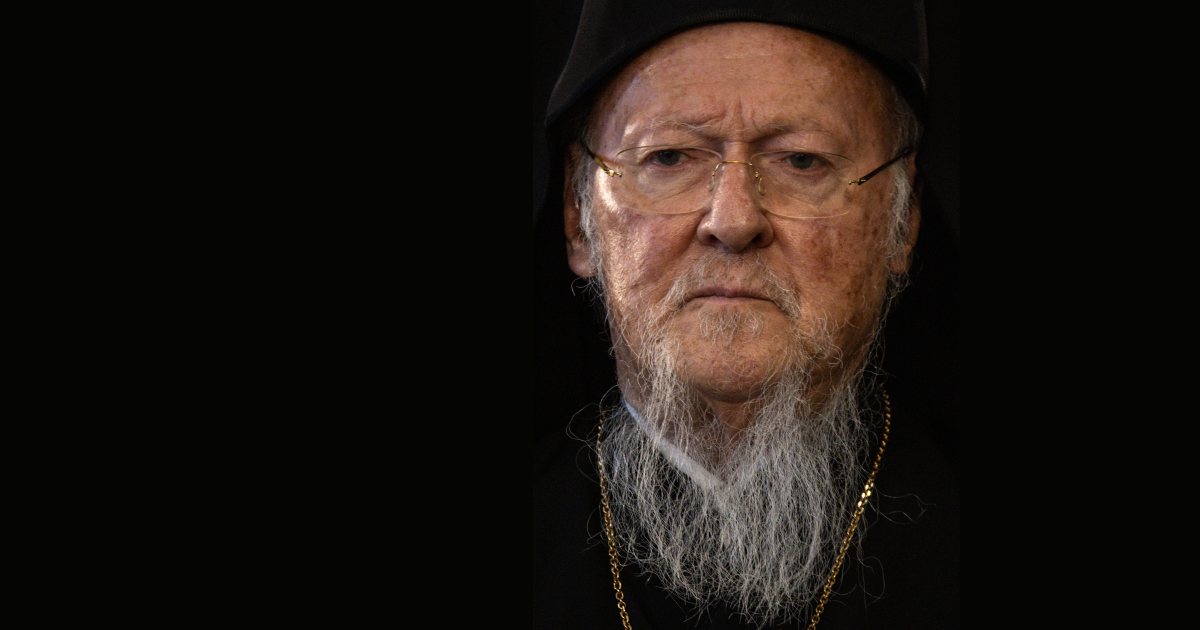
The Patriarch of Constantinople is asking more than Rome can give

Image

By Niwa Limbu at The Catholic Herald:

When Pope Leo XIV attended the Divine Liturgy, his presence beside Ecumenical Patriarch Bartholomew reaffirmed Rome’s commitment to Christian unity at a moment when secular governments in East and West are engaged in closed-door political conflict.

During his homily, Patriarch Bartholomew emphasised the spiritual unity of the two Churches while acknowledging the formidable theological barriers that continue to obstruct communion between the Eastern and Western Christian traditions.

“As successors of the two holy Apostles, the founders of our respective Churches,” he said, referring to Peter and Andrew, “we feel bound by ties of spiritual brotherhood.”

The two holy apostles invoked by the Patriarch were Peter, who became the first Pope, preached in Rome and was martyred there, making that city the centre of the Western Church, and Andrew, whom Constantinople later claimed as its own founder by virtue of establishing the Diocese of Byzantium, which grew into a principal spiritual centre of the Eastern Christian world.

The Patriarch also noted that “we can only pray that issues such as the filioque and infallibility will be resolved so that differences in understanding may no longer serve as stumbling blocks to the communion of our Churches.”

Addressing the packed cathedral, Pope Leo described the past six decades of dialogue as “a path of reconciliation, peace and growing communion,” adding that cordial relations are sustained through “frequent contact, fraternal meetings and encouraging theological dialogue.” He reiterated that the pursuit of full communion remains “one of the priorities of my ministry as Bishop of Rome.”

After the liturgy, the Pope and Patriarch stepped onto the balcony above the courtyard to bless the faithful who had gathered despite heavy rain. Among the hierarchs present was Patriarch Theodore II of Alexandria.

Patriarch Bartholomew appeared at Pope Leo’s side for nearly every major moment of the visit, from the meeting with President Erdoğan in Ankara to the commemorations at Nicaea and the Mass celebrated for Turkey’s Catholic communities.

The lifting of the anathemas in 1965, once described as a spiritual spring, set in motion the theological work that continues through the Joint International Commission. Although progress has slowed amid internal divisions within Orthodoxy, both leaders signalled their resolve to sustain the dialogue.

The Patriarch’s homily, however, conveyed more than a call for unity. It suggested an expectation that Rome, rather than Constantinople, must make the decisive doctrinal concessions if communion is to be restored. By identifying “the filioque”, the Catholic belief that the Holy Spirit proceeds from the Father and Son, rather than from the Father alone,  and “infallibility”, the Catholic belief that the Pope is incapable of error in pronouncing dogma, as “stumbling blocks” for communion his words read less like fraternal diplomacy and more like a measured challenge to the parameters of Catholic ecumenism. He points directly to the doctrines over which communion fractured, signalling a belief that responsibility for the rupture lies primarily with Rome. 

Rome has shown legitimate liturgical flexibility concerning the filioque—omitting it at Nicaea, and permitting Eastern-rite Catholics to profess the Creed without it in keeping with the received tradition of their rites—but papal infallibility cannot be relegated to a negotiable adaptation or cultural variance. If it were, it would be ceasing to profess a dogmatic definition solemnly articulated by an ecumenical council, Vatican I.

The Patriarch’s insistence that unity must not become “absorption or domination” clarifies that the Orthodox concern remains the risk of doctrinal universalism overwhelming local ecclesial identity.

The central dividing line is not whether ecumenical warmth endures, Leo’s attendance demonstrates that it does. The core question is whether Catholic-Orthodox dialogue can progress without requiring either Church to revise doctrines that form constitutive elements of apostolic and conciliar identity.

Unity cannot require the dissolution, repeal or abandonment of doctrines that each Church professes as integral to its own dogmatic integrity. Warmth may open a door once closed, but doctrine still holds the key. There is no plausible path to full communion that requires Catholicism to cease professing the doctrines by which it defines its own conciliar and apostolic identity.

Posted in Uncategorized | Tagged , , , , , , , , , , | Leave a comment

A Great Day (Award Winning Catholic Short Film)

Based on a true story, a priest is confronted with the confession of the man responsible for the death of his family. “A Great Day” (winner of the New York Indie Film Festival Awards) is a powerful short film that captures the heart of the Catholic faith, revealing the profound beauty of true forgiveness, healing, and spiritual renewal through the sacramental life of the Church.

Rather than merely telling, this film shows—through visual storytelling and prayerful moments—the real power of God’s grace in action. Set amidst the real struggles of everyday Christians, the story explores how brokenness, resentment, and guilt are not the end—but the beginning of transformation when brought to Christ.

Through the presence and ministry of Catholic priests, the film depicts the vital role of the sacraments, especially Confession, Anointing of the Sick, the Last Rites, and most importantly, the Eucharist, the source and summit of our faith. It also highlights the importance of prayer, both personal and liturgical, and the quiet yet powerful witness of those living the religious life—priests and religious who devote themselves to Christ and His Church.

Their guidance, intercession, and sacramental ministry become channels of God’s mercy and healing. At its core, the film affirms a truth the world often overlooks: that only through Jesus Christ, and the Catholic worldview, can we discover authentic, lasting forgiveness. It’s in the silence of adoration, the whispers of confession, and the mystery of the Mass that grace is poured out.

The film is now more accessible than ever with this new 30 minute version and is ideal for being shown in classrooms, youth groups, or at any other event. If you’d like to find out more about the backstory behind the film and it’s mission, check out our Website https://mountcarmelstudios.com/

Posted in Uncategorized | Tagged , , , , | Leave a comment

Saint Andrew’s Christmas Novena begins today

Beginning today, on the feast day of Saint Andrew the Apostle, the following beautiful prayer is traditionally recited fifteen times a day until Christmas. This is a meditative prayer that helps us to increase our awareness of the real focus of Christmas and to prepare ourselves spiritually for The Lord’s coming. Make this novena for any intention close to your heart and for the triumph of the Prince of Peace in our Church, our homes, and in every nation throughout the world.

Image

Posted in Uncategorized | 2 Comments