Unfortunately, bad fiscal policy has become worse fiscal policy.
First, some background from an editorial in the Wall Street Journal.
The backdrop is Germany’s long-brewing retirement crisis. A rapidly aging population means the “statutory pension” costs some €360 billion per year, or 8% of GDP. Payroll tax revenue is insufficient to fund benefits, forcing Berlin to tap into general tax revenue to fill a gap of €96 billion for the social-insurance system as a whole last year. Left unchecked, this single entitlement will require escalating tax increases to fund… The legislation up for a vote this week doesn’t fix this. The main provision guarantees that the pension payout will be maintained at 48% of the average wage until 2031, meaning benefits will increase automatically as wages grow. When it was first introduced a few years ago, this “stabilization” provision overruled a prior formula that increased benefits more slowly. Extending the higher benefit level is a costly concession to the center-left Social Democratic Party (SPD)… lawmakers associated with the CDU’s youth wing…demanding bigger reforms as the price for their votes. Mr. Merz and the SPD need that support to pass anything through the Bundestag with the coalition’s 12-seat majority.
For more background, here are some passages from a report in the U.K.-based Telegraph.
…the so-called “young rebels”…are fighting tooth and nail against proposed changes to Germany’s pension system. They say the cost of these changes will put a €200bn (£175bn) burden on the taxpayers of their generation, funding the generous pensions of German baby boomers. …These changes will cumulatively add to government spending, heading north of €15bn a year. By 2040, the extra spending is expected to total €200bn, which a shrinking pool of working-age taxpayers must bear. Germany’s fertility rate of 1.39 is one of the lowest in Europe. …“Merz’s pension package would add 0.2pc of GDP to German pension spending by 2028. In 2035, pension spending would be 0.4pc of GDP higher than in a constant policy scenario.”
Here’s a chart from the article, showing the increased burden of government spending.
So what happened?
Did the rebels block the additional spending?
Nope. Merz and his socialist friends got their way. Here’s some of what ABC reported.
Germany’s parliament on Friday approved a pension reform package that had prompted a rebellion in the ranks of Chancellor Friedrich Merz’s party… A group of 18 young lawmakers in Merz’s center-right Union bloc — a larger number than his coalition’s parliamentary majority — had balked for weeks at a provision that said after 2031, the pension level would be slightly higher than under current law. They argued that that would cost up to 15 billion euros ($17.5 billion) per year, and that this would come at the expense of young people. Merz’s junior coalition partners, the center-left Social Democrats, were adamant that the package be approved unchanged. Merz backed that. …Friday’s result saved him from the potential embarrassment of getting the measures passed thanks only to abstentions by the opposition Left Party.
The final sentence in the excerpt deserves more attention.
Merz’s Christian Democrat Party is in a coalition with the Social Democrat Party. The Left Party is basically former communists, even more statist than the Social Democrats.
So the bottom line is that Merz was able to increase spending by cooperating officially with the socialists and unofficially with the communists.
Leaving the European Union would give the United Kingdom more leeway to choose a pro-market, Singapore-on-Thames policy agenda.
The good news is that Point #1 is still completely relevant. In the long run (which may be short run), I fear the European Union will will turn into the Welfare State Transfer Union.
The not-so-good news is that Point #2 is still relevant, but British politicians have moved policy in the wrong direction ever since Brexit. I’m tempted to joke that they are bad at geography and opted for Caracas-on-Thames by mistake.
All things considered, I think Brexit was the right choice, but I’m very disappointed that British politicians have not taken advantage of their nation’s independence from Brussels.
But what if I’m wrong? That heretical thought crossed my mind when I saw these estimates showing that Brexit has produced all sorts of negative outcomes.
The charts all come from a new study published by the National Bureau of Economic Research, authored by Nicholas Bloom, Philip Bunn, Paul Mizen, Pawel Smietanka, and Gregory Thwaites.
Here are the key findings from the abstract.
This paper examines the impact of the UK’s decision to leave the European Union (Brexit) in 2016. Using almost a decade of data since the referendum, we combine simulations based on macro data with estimates derived from micro data collected through our Decision Maker Panel survey. These estimates suggest that by 2025, Brexit had reduced UK GDP by 6% to 8%, with the impact accumulating gradually over time. We estimate that investment was reduced by between 12% and 18%, employment by 3% to 4% and productivity by 3% to 4%. These large negative impacts reflect a combination of elevated uncertainty, reduced demand, diverted management time, and increased misallocation of resources from a protracted Brexit process.
This seems like bad news, and I instinctively agree that “the protracted Brexit process” was not helpful for the U.K. economy.
But what about the study’s main findings? Did Brexit actually reduce GDP, investment, employment, and productivity?
The study is based on data from 33 nations (North America, Japan, and Europe), which is certainly a reasonable approach. But I wondered what the data would show if we just compared the United Kingdom to the other two major European economies?
So I crunched some numbers from the IMF’s big database and found that France, Germany, and the United Kingdom have all suffered from anemic economic performance, with the U.K. being in the middle of the pack.
I then contemplated why these major economies have all averaged less than 1 percent growth over the past 10 years.
And the United Kingdom, for what it’s worth, has been the worst of the worst.
Since I’m a fiscal wonk, I also went to the IMF database to specifically see what has happened to the burden of taxes and spending in Europe’s Big-3 economies.
Interestingly, France has moved slightly in the right direction since 2015 (when you’re at the bottom of the barrel, it’s hard to get worse).
Germany and the United Kingdom, however, have both substantially deteriorated, with Germany being especially bad on spending and the U.K. doing a bad job across the board.
Looking at all this data, and thinking about the results of the aforementioned study, leads me to ask a few questions.
If Brexit was so terrible for the United Kingdom, why have France and Germany endured similar economic weakness?
Is it possible that the weakness of the United Kingdom has been caused by statist domestic policy instead of Brexit?
Why is it better to compare the U.K. to 33 rather different nations rather than the two nations that are most similar?
I’m open to there being good answers to these questions, but suffice the say the study doesn’t provide them.
Since today’s column is a defense of Brexit, I’ll also address an article last year for the Institute of Economic Affairs. Emmanual Comte made a libertarian argument against Brexit.
Here are some of his claims.
Many libertarians supported Brexit, believing it would reduce governmental layers… They saw it as an opportunity to escape the control of Brussels’ technocracy, expecting increased autonomy and economic freedom. …They imagined a country liberated from Brussels… The critique of the EU often portrays it as an overreaching superstate… This interpretation overlooks the true nature and purpose of the EU. Contrary to being an emerging superstate, the EU essentially operates as a collection of regimes designed to check excessive state power. …Membership in the EU involves states mutually restricting their arbitrary power – for example, of limiting international trade or controlling the movement of people. …This approach is evident in the EU’s efforts to curtail excessive state intervention in trade, capital movement, and the flow of people. In monetary matters, the creation of an independent European Central Bank (ECB) following the Maastricht Treaty was aimed at imposing restraint on monetary debasement – a common strategy of overreaching states. …In retrospect, the libertarian argument supporting Brexit appears to have been fundamentally flawed in its understanding of the European Union’s nature and functions.
I agree with Mr. Comte that the European Union has some positive features.
I’m even open to the idea that it is a net plus for poorer nations from Southern and Eastern Europe to join (though it’s definitely not a slam-dunk case).
But as I wrote recently about Iceland, I think richer nations lose by being part of the Brussels-based bureaucracy. Especially if they have a history of being more market-friendly.
P.S. I definitely agree with Mr. Comte’s analysis of the U.K.’s misguided post-Brexit approach to policy.
After Brexit, the United Kingdom’s policy direction did not follow the libertarian ideal of limited state intervention. …Libertarians had hoped for a reduction in state involvement, greater economic freedom, and a move towards decentralised power. However, the reality has been quite different.
I have a three-part series (here, here, and here) about a likely fiscal crisis hitting Europe.
As a matter of fact, I don’t actually think it is “likely.” It’s a given at this point. The only mystery is which domino falls first.
My pessimism is based on the fact that European nations already suffer from staggering fiscal burdens.
And because of aging populations, government spending is projected to consume ever-larger shares of economic output in the future.
It seems more people are now aware of the problem.
Here are some excerpts from a report in the Washington Post by Annabelle Timsit, Anthony Faiola, and Aaron Wiener. They focus on France and Germany and the news is grim.
Across Europe, and especially in France,the bill is coming due. The cost of…the so-called European way of life, offering health care, affordable education and a dignified retirement to all, through high social spending — is becoming unbearably high. …In France, …the nation’s debt soars, its credit rating slips, incomes stagnate, prime ministers fall and the country stumbles into ungovernability… Related challenges loom in neighboring Germany, where the economy is flat after two consecutive years of decline, companies are shedding jobs, infrastructure has crumbled, and the government is bracing the populace for tumultuous cuts… For France and Germany, long the pillars of the European Union, it is unclear that they can still afford to be the West’s guiding lights of economic justice.
Here are some passages showing the dependency mindset in France.
Anastasia Blay, 31, a camera assistant in Paris, does not believe her generation should…sacrifice benefits. For years, Blay survived with the help of a government subsidy for entertainment workers…which she and others view as an unbreakable social contract… A monthly social welfare payment for low-income workers now supports her during periods of unemployment… She has joined a string of street protests aimed at paralyzing the country. Even with government aid and a family apartment that allows her to live rent-free, she says it’s hard to make ends meet. “For me, the problem is injustice, the gap between the poor and the rich, and the rich who, in reality, are barely taxed compared to what they earn,” she said. While she said she feels “a bit ashamed” to rely on welfare and fears people’s judgment, the payments help her “keep my dignity and … live decently.” “It’s a right and not a privilege, in my opinion,” she said.
Ms. Blay obviously does not understand economics, as shown by her views that upper-income people are under-taxed.
But the biggest problem with the above is that she thinks mooching off taxpayers is “a right and not a privilege.”
She could be the poster child for my 17th Theorem of Government.
Makes me wonder if she is friends with Olga and Natalija.
Let’s shift to Germany. Here’s an excerpt showing fiscal extravagance – and fiscal delusion – in Germany.
Today, between basic welfare and housing assistance, a German family of four on welfare can receive as much as 5,000 euros a month — roughly $5,873, or $70,476 a year, an unthinkably high amount in the United States. …Labor Minister and co-SPD chief Bärbel Bas responded curtly to Merz’s claim that Germany can’t afford its social programs. “That is bulls—,” Bas said.
I’ll close with a chart, based on IMF data, showing that the problem in much of Europe is excessive government spending. As you can see, both taxes and spending consume much greater shares of economic output in Germany and France than Switzerland.
I also included Italy to show that France and Germany are just as bad – or even worse – on fiscal policy.
Actually, I’ll include one more chart. It’s no coincidence that Switzerland is much richer than its neighbors – more than $22,000 of additional economic output per year compared to the average of Germany, France, and Italy!
Maybe, just maybe, there’s a lesson to be learned about the relationship between the size of government and national prosperity.
We have lots of evidence that lower corporate tax rates are good for growth (see here, here, and here), so that’s indirect proof.
There’s also plenty of evidence that lower corporate tax rates have a Laffer Curve effect (see here, here, and here), so that’s more indirect proof.
Today, let’s look at a direct estimate.
We’ll start with this chart looking at the effect of increases in local corporate tax rates in Germany.
I’ve highlighted the impact on wages.
But what does it actually mean? Well, here are some relevant excerpts from the accompanying study, starting with a description of theory and methodology.
The obligation to pay a tax and bearing its economic burden are two different things. Typically (a part of) the economic burden of a tax is passed on to other economic agents through price adjustments. The fact that the legal incidence of taxation differs from its economic incidence is particularly evident in the case of corporate income taxation. While the taxpayer is a legal entity, the economic burden of a tax can only be borne by people. This paper offers the so far most comprehensive analysis of the incidence of corporate in come taxation. Combining theoretical modeling with an empirical analysis, we investigate how changes in corporate income tax rates affect the economic welfare of four groups: firm owners, workers, owners of residential real estate, and owners of commercial real estate.
And here are some results.
Our main finding is that higher corporate income tax rates significantly reduce profits, wages, as well as residential and commercial property prices. The negative effect of tax hikes on property prices and wages is increasing over time, while the negative effect on profits becomes smaller (in absolute terms). …we find that wages decline by about one percent following a one percentage point tax hike, which is close to the estimate by Fuest et al. …the U.S. Congressional Budget Office (CBO) assumes that 75 percent of the corporate income tax burden falls on capital owners and 25 percent on workers
The part that seems most relevant is the finding that wages drop by one percent if the corporate tax rate goes up by one-percentage point.
When I wrote yesterday about Germany, I could imagine readers shrugging their shoulders and thinking it was just another column about European decline.
Though not all European nations are the same. I wrote back in May, for instance, about Denmark moving in the right direction.
For purposes of today’s column, however, I want to look at Switzerland.
More specifically, I want to compare Switzerland’s prudence and Germany’s decline.
Here’s a chart, based on the IMF’s database, comparing annual growth of overall government spending in the two nations. As you can see, Germany has increased the fiscal burden of government at a much faster rate than Switzerland since 2015.
From an economic perspective, the best way of measuring the burden of government is to see what share of a nation’s economic output is being consumed by the public sector.
Switzerland is much better than Germany in that regard, with 32.1 percent of GDP diverted to government compared to 49.9 percent of GDP going to government in Germany.
But trends also are important, and this next chart shows that the economic burden of government spending has dramatically increased in Germany (and fallen slightly in Switzerland).
But since the majority of my readers are from the U.S., let’s expand today’s analysis by including data on what has happened to government spending in America over the same time period.
Lo and behold, we see that politicians in the United States have been even worse than German politicians.
However, since the United States has enjoyed faster economic growth, the government/GDP ratio has not deteriorated as much.
Here’s a chart showing how the burden of government spending has increased in the U.S., but fortunately not as much as it has expanded in Germany.
The should-be-obvious takeaway is that lawmakers should strive for both spending restraint and faster growth. That’s the recipe for shrinking the burden of government spending.
At this point, I could wrap up with another endorsement of Switzerland’s spending cap. But I want to make one final point.
I recently saw on Twitter this analysis of interest rates in six key nations, including Germany, Switzerland, and the United States.
Notice that interest rates are trending higher in every country other than Switzerland. Why? Because investors can look at Swiss fiscal policy and feel confident that there won’t be a future crisis.
Yes, Switzerland did make the mistake of spending more money during the pandemic, and that pushed up interest. But not nearly as much as spending increased and interest rates rose in the other five nations.
The moral of the story is that investors obviously are much less concerned about a potential default (or some other type of fiscal crisis) in Switzerland. And they obviously are much less worried about politicians using the printing press to finance budget deficits (which also would push up interest rates).
So now I’ll conclude by saying that the United States (as well as Germany, Australia, Canada, and the United Kingdom) should copy Switzerland’s spending cap.
You can click here to learn more about that much-needed reform.
In 2023, I wrote about Germany’s fiscal decay, noting that the burden of government spending had been increasing faster than the productive sector of the economy.
In the accompanying chart, I noted that government was consuming 48.7 percent of economic output, up from 44.1 percent of GDP in 2015.
And, for those who fixate on red ink and fiscal balance, I also noted that Germany’s 8-year experiment in profligacy turned a budget surplus into a budget deficit.
My message was simple. Germany needed to change direction.
The good news is that politicians in Berlin did shift policy.
The bad news is that they decided to make a bad situation even worse. Following elections earlier this year, new Prime Minister Friedrich Merz decided to make government even bigger.
Even the Washington Post has noticed, as illustrated by the headline from this story from last month.
Though I can’t help but point out that it has been about 20 years since Germany budget could be described as “tightfisted.”
But the story was largely accurate even if the title had an error. Merz and the other politicians in Berlin are increasing the fiscal burden of government.
So I was flummoxed to see that Germany’s Prime Minister has suddenly realized that his country is in a fiscal ditch. Here are some excerpts from an editorial in the Wall Street Journal.
Friedrich Merz, the German Chancellor, said at a Christian Democratic Union conference on Saturday that “the welfare state that we have today can no longer be financed with what we produce in the economy.” Thank you, Chancellor, for this burst of candor. …Nations have built welfare and entitlement states that are so large they have outstripped the ability of slow-growing economies to pay for them. …there’s no more difficult challenge in politics than reforming government handouts—whether in pensions, jobless benefits, government healthcare, or income subsidies. It will be worth watching what Mr. Merz and his coalition propose. But the first step toward solving the problem is admitting it exists.
In my not-so-humble opinion, the WSJ‘s editorial writers are being too kind.
They are praising Merz for acknowledging the problem when they should have been condemning him for making the problem worse.
Merz reminds me of the old joke about the kid who murders his parents and then asks for mercy because he’s an orphan.
Maybe Merz has had an epiphany and will now do what’s right, but I’m not holding my breath.
P.S. When I did the chart in 2023, I noted that the burden of government spending had increased by 4.6 percentage points of GDP since 2015. The latest numbers show that government is now consuming an additional 5.3 percent of GDP.
Since I’m patriotic (in the proper sense), I like seeing this kind of data. I want everyone to get richer, but I can’t resist wanting Americans to do better than everyone else.
That being said, my guy instinct is that there’s something quirky in the data. Simply stated, I question whether France, Germany, and U.K. were almost as rich as the United States in 2008. And I also question whether we’ve grown that much faster than those nations since then.
Lo and behold, this chart (all numbers in this case based on inflation-adjusted 2011 dollars) shows that my skepticism is warranted. The United States has always enjoyed an economic advantage, but the lead is not expanding at a rapid rate.
However, I admit to some misgivings about this chart, especially when looking at Germany’s comparatively strong economic performance.
My gut instinct is that policy has significantly deteriorated in recent years (more spending and green energy), so I wouldn’t expect Germany to out-perform the U.K. and France.
Interestingly, the IMF’s data is much closer to the World Bank data in the first chart.
Though there are differences. The World Bank numbers preposterously showed France ahead of the U.S. in one year, while the IMF numbers (almost as preposterously) show occasional leads for Germany and the United Kingdom.
The bottom line is that I don’t know which numbers are most accurate. Maybe somewhere in between all three data sources.
Regardless, all of the numbers lead to the same conclusion, which is that it would be very smart for the U.S. to avoid becoming more like Europe. Which is why yesterday’s column was so critical of Senator Josh Hawley.
In my humble opinion, the third option is akin to a slow-developing cancer and is not responsible for Germany’s current malaise (though it must be galling for German taxpayers that they bear the biggest share of the cost for European institutions).
So that leaves the country’s fiscal mess and energy mess as the two areas that need immediate attention.
Well, Germany just had an election and a new coalition government has announced its economic agenda. But the parties did not choose spending restraint or more energy production.
Instead, as reported by the U.K.-based Economist, they are going to make government bigger.
I’m not joking. Here are some excerpts.
For years, Germany’s aversion to debt has been a millstone, leading to crippling underinvestment…and weighing down both the domestic economy and that of Europe as a whole. …Friedrich Merz, who won Germany’s election on February 23rd, has just..revealed plans for two changes to the debt brake, a constitutional provision in place since 2009 that lets the government run only minuscule structural deficits. …The first reform will establish a brake-exempted infrastructure fund of €500bn ($535bn) over ten years, a boost worth around 1% of GDP each year. This should get the economy moving… Mr Merz’s second proposal…is to exempt any defence spending beyond 1% of GDP from the debt brake altogether. …And there may be more to come. The potential new coalition is also talking about further reforms to the debt brake, which implies yet more spending on other underfunded areas.
It’s baffling that this dirigiste agenda is labeled “a fantastic start,” but it reminds me of columns I wrote in 2016 and 2022 referring to “anti-economics from the Economist.”
The magazine either is relying on journalists to cover economics, or it is hiring the wrong kind of economists.
Here’s the right way to think about German fiscal policy.
If Chancellor-to-be Merz had proposed to reduce the burden of government spending by 6 percent of GDP (like Javier Milei did in his first year), that would be a “fantastic start.”
If Merz had proposed to reduce domestic spending by 6 percent of GDP and then boosted both infrastructure and defense spending by 1 percent of GDP, that would be a good start.
If Merz had proposed to reduce domestic spending by 2 percent of GDP and then boosted both infrastructure and defense spending by 1 percent of GDP, that would be a mediocre start.
But since Merz simply proposed more spending – in a country where government already consumes nearly 50 percent of economic output, that’s a very bad start.
I can’t resist sharing a couple of additional sentences from the article.
Because the debt brake is a constitutional provision, amending it requires a two-thirds majority in the Bundestag. …So the changes need to be made right now, before the new parliament is sworn in on March 25th. It is highly unorthodox, not least because Mr Merz said nothing about it on the campaign trail.
One suspect that a campaign slogan of “Make Germany into Italy” would not have been very popular, so I guess we should not be surprised he waited until after the election to put government first and taxpayers last.
I suspect Merz’s next unpleasant surprise will be tax increases. That will make the IMF happy but lead to further stagnation for Germany.
P.S. This is one of the reasons I always cite the Swiss debt brake as a role model. It functions as a spending cap and is far superior to the weak (and soon-to-be eviscerated) German version.
The European version, by contrast, has been more focused on making energy more expensive by forcing consumers to use wind and solar. And, on that basis, this chart shows that it has been very effective.
But in a bad way.
Electricity prices are two to three times more expensive than they are in the United States (and about three to four times more expensive than they are in India and China).
At the risk of sounding alarmist, this is a slow-motion form of economic suicide.
The chart comes for a Wall Street Journalcolumn by Bjorn Lomborg. Here are some excerpts.
The claim that green energy is cheaper relies on bogus math that measures the cost of electricity only when the sun is shining and the wind is blowing. Modern societies need around-the-clock power, requiring backup, often powered by fossil fuels. That means we’re paying for two power systems: renewables and backup. …The International Energy Agency’s latest data (from 2022) on solar and wind power generation costs and consumption across nearly 70 countries shows a clear correlation between more solar and wind and higher average household and industry energy prices. …At least climate-obsessed European governments are generally honest about solar and wind costs and raise electricity prices accordingly.
Some of our friends on the left applaud these outcomes as part of their campaign to discourage fossil fuels.
But what they don’t understand (or don’t care about) is that these policies make Europe very uncompetitive.
Germany is a good example of what’s happening. Though maybe I should say it’s a bad example.
Writing in National Review last November, Peter Cleppe of Brusselsreport.euexplained the consequences of “net zero” extremism. Here are a few of the relevant passages.
Ahead of the traditional October summit of EU leaders, Germany’s leading business association, BDI, launched a stern warning that deindustrialization was no longer a risk but a reality. …It is not hard to understand why German industry is struggling. …there’s the European Union’s Emission Trading Scheme (ETS), a de facto climate tax that is so high that it exceeds the full U.S. natural-gas price. …scrapping the EU’s ETS system remains an absolute taboo, despite the dire consequences this approach is having for Europe’s economic well-being. …Europeans are wary that the incoming Trump administration will start a trade war, but at the moment, it is the EU that is introducing new tariffs under the pretext of climate policy, with its new Carbon Border Adjustment Mechanism… The logic of the EU is that because the rest of the world refuses to follow its self-damaging energy policies, imports into the EU should be burdened with this new tariff.
Back in 2019, I compared OECD nations based on the total burden of social welfare spending as a share of economic output.
France was the worst of the worst, unsurprisingly, followed by Finland and Belgium.
That column also differentiated by types of spending.
Greece had the biggest burden of pension spending.
France had the biggest burden of health spending.
Belgium had the biggest burden of redistribution spending.
Today, let’s look at an even narrower slice of the social welfare state.
According to a new article in the Economist, Germany arguably has the most lavish sickness benefits in Europe. Maybe the most extravagant in the world.
That sounds very kind and compassionate, but it seems this policy is creating perverse incentives and undermining national prosperity.
Here are some excerpts from the article.
Germany is now “the world champion when it comes to sick days,” according to Oliver Bäte, the boss of Allianz, Europe’s biggest insurer. …Ola Källenius, the boss of Mercedes, agrees with Mr Bäte. He warns of the “economic consequences” of a sickness rate in Germany that is often twice as high as in other European countries. …Germany has one of the most generous sick-leave regimes in the world and it is costing businesses dearly. …“It’s very hard to police,” says Jochen Pimpertz of the German Economic Institute (iw). In a study he found that the total nominal cost of sick pay for employers rose from €36.9bn to €76.7bn between 2010 and 2023 (a 57% increase, adjusted for inflation). …There is clear correlation between the generosity of the system and the number of sick days, says Nicolas Ziebarth of the Leibniz Centre for European Economic Research. Germany’s arrangements are lavish compared with elsewhere in Europe and have become easier to manipulate.
The article mentions that there used to be similar problems in some Scandinavian nations, and that reminded me that Sweden enacted some good reforms a few decades ago.
So I did a search for “sick days Sweden” and found a study published by the OECD in 2020.
Authored by Philip Hemmings and Christopher Prinz, it included this chart showing that spending on sick days was dramatically reduced over a 20-year period, dropping from 5 percent of GDP in the late 1980s to 2 percent of GDP about 20 years later.
How did Sweden get these remarkable results?
The answer was simple. They reduced, in two stages, the amount of money people got for being sick (or, in many cases, for pretending to be sick). Here are a few excerpts from the study.
Sick-leave compensation reform (1990s). Pushed by a major economic downturn in the early 1990s, Sweden embarked on a series of sickness benefit reforms as part of a broader attempt to curb public spending. This included the introduction of a 14-day sick-pay period covered by employers (1992). In addition there were significant changes to compensation: Before 1991, sickness benefits replaced 100% of earnings for 90 days and 95% thereafter, with no time limit. As of 1993, there was no payment on the first day of sickness absence (i.e. one “waiting day”), compensation then varied over time: 75% of previous earnings (days 2 and 3 of absence), 90% (until day 90), 80% (to the end of first year) and 70% thereafter. This reform promoted a sharp drop in absence spells, especially in short-term absences… When the economy recovered in the late 1990s, sick-pay rates were increased, to 90% of the previous wage until the end of the first year and 80% thereafter. This led to a significant rise in absence rates, especially longer-term absences… Overall, the cost of being absent significantly affected absence behaviour. …Starting in 2006, Sweden undertook a series of reforms to sickness and disability policies, which contributed to further considerable drops in both sickness absence rates and disability claims. These reforms included (Economic Survey of Sweden, OECD 2012b) among other things the introduction of…more rigorous implementation of existing regulations… Requirements for individuals on sick leave to consider a wider scope of jobs… A 2.5-year ceiling on the duration of sick leave compensation… More stringent disability-pension entitlement criteria.
The broader lesson from Sweden’s successful reforms is that Ronald Reagan was right.
So what should Germany do? A rational person, especially if that person had any knowledge of economics, would urge spending restraint.
But let’s instead look at what the Keystone Cops at the International Monetary Fund are recommending. They want Germany to weaken its fiscal rule to enable even more spending.
An aging population will also adversely affect public finances as tax revenue growth slows and spending on pensions and healthcare rises. …To accommodate rising spending needs, the authorities should consider moderately easing the debt brake. …Germany’s debt brake is set at a relatively tight level, such that the annual limit on net borrowing could be eased by about 1 percentage point of GDP while still keeping the debt-to-GDP ratio on a downward path. Such an easing would allow more room for much-needed public investment and other key priorities.
And, keeping with tradition, the bureaucrats at the IMF also want higher taxes in Germany.
Options that could be explored include eliminating environmentally harmful…tax expenditures, …raising taxes on real estate and on goods and services (as Germany’s revenue from such sources is below the advanced-economy average), and/or closing loopholes in inheritance taxes.
Adding more spending to Germany’s fiscal burden is bad news, but adding more taxes is equally offensive.
That part of the report merits two observations.
If the IMF cared about growth, it would recommend lower tax rates in the many areas where Germany is above the advanced-economy average, not pushing for higher taxes in the few areas where the German government has demonstrated a bit of restraint.
It is utterly hypocritical for IMF bureaucrats to push for higher taxes (in Germany or elsewhere) since their generous salaries are exempt from tax. Maybe if they had to pay taxes and live by the same rules as everyone else, they wouldn’t be so quick to urge bad policies.
P.S. I can’t resist citing one final bit of economic illiteracy from the IMF.
High energy prices following the shut-off of Russian gas contributed to surging inflation during 2022-23.
P.P.S. Given this statement by the previous head of the IMF (and current head of the ECB), you’ll understand why there’s a problem with economic literacy at that international bureaucracy.
Just a few months ago, I wrote about Germany’s fiscal decay.
Over the past eight years, government spending has grown much faster than the private sector, thus violating the Golden Rule of fiscal policy.
Given the shift to bad policy in Germany, I was very interested to see that the New York Times has a report by Liz Alderman and Melissa Eddy that explains how Germany no longer is the economic engine in Europe.
Here are some excerpts.
Something extraordinary is happening to the European economy: Southern nations that nearly broke up the euro currency bloc during the financial crisis in 2012 are growing faster than Germany… In a reversal of fortunes, the laggards have become leaders. Greece, Spain and Portugal grew in 2023 more than twice as fast as the eurozone average. Italy was not far behind. …southern European countries made crucial changes that have attracted investors, revived growth and…reversed record-high unemployment. Governments cut red tape and corporate taxes to stimulate business and pushed through changes to their once-rigid labor markets, including making it easier for employers to hire and fire workers.
It’s encouraging to read about some pro-market reforms in Southern Europe.
It’s also encouraging that the New York Times seems to be acknowledging that free markets are the way to achieve more growth.
That being said, I’m not ready to declare that the PIGS (Portugal, Italy, Greece, and Spain) are the new role models for economic policy.
For instance, the NYT story is based on just one year of economic data. And I’ve warned that it is risky to draw big conclusions without seeing decades of evidence.
But a journey of a thousand miles begins with a first step. Given my interest in fiscal policy, I looked at the IMF data to see which countries have been most responsible over the past few years.
Lo and behold, Greece and Italy have been doing a decent job.
Three years of fiscal restraint may not seem like much, but it’s worth noting that the burden of government spending in Greece has declined by more than 10 percentage points of GDP.
And the spending burden in Italy has been reduced by nearly 7 percentage points of GDP.
Keep that up for 5-10 more years, and those countries could become Switzerland.
Do it for 10-20 years, and they can become Singapore or Taiwan.
When I write a “Great Moments” column, that’s always been a sign that some government is going to be subject to mockery.
For today’s column, though, I’m going to break with that pattern. That’s because I’m writing about the success story of Botswana, a country in southern Africa that has enjoyed remarkable growth thanks to comparatively good economic policy.
But fast growth and free markets are not the reasons for a “Great Moments” column.
Instead, I want to applaud Botswana’s leaders for dunking on some vapid European politicians. Here are some excerpts from Jacqueline Howard’s BBC report.
The president of Botswana has threatened to send 20,000 elephants to Germany in a dispute over conservation. Earlier this year, Germany’s environment ministry suggested there should be stricter limits on importing trophies from hunting animals. Botswana’s President Mokgweetsi Masisi told German media this would only impoverish people in his country. He said elephant numbers had exploded as a result of conservation efforts, and hunting helped keep them in check.Germans should “live together with the animals, in the way you are trying to tell us to”, Mr Masisi told German newspaper Bild. “This is no joke.” Botswana is home to about a third of the world’s elephant population – over 130,000 – more than it has space for. …Botswana’s Wildlife Minister Dumezweni Mthimkhulu last month threatened to send 10,000 elephants to London’s Hyde Park so British people could “have a taste of living alongside” them. In March, UK MPs voted to support a ban on importing hunting trophies, but the legislation has further scrutiny to pass before becoming law.
Needless to say, British and German politicians won’t accept surplus elephants from Botswana. Instead, they’ll continue to engage in moral preening and virtue signalling.
Since politicians are almost always worthy of contempt, I could end the column at this point.
Today, I’m going to add more applause. I took another look at the IMF data and calculated Germany’s budgetary performance between 1995 and 2007.
Lo and behold, the Golden Rule of fiscal policy was in effect for a 12-year period. And that meant the burden of government spending dropped significantly as a share of economic output and a budget deficit became a budget surplus.
That’s impressive, though keep in mind that politicians used unification with East Germany as an excuse to dramatically increase the spending burden in the early 1990s.
But at least they eventually applied the brakes.
That being said, the purpose of today’s column is to explain that German politicians now deserve jeers rather than applause.
For context, here are some excerpts from a just-published New York Timesreport by Melissa Eddy.
The German government said on Tuesday it would immediately halt all new spending as it grappled with how to plug a gap of tens of billions of euros following a court ruling… The Constitutional Court, Germany’s highest, ruled last week that Chancellor Olaf Scholz’s government had acted improperly by taking money borrowed in 2020 to combat the coronavirus pandemic and shifting it to a new fund to finance environmental projects and green technology. …The halt in new spending authorizations applies to all ministries. …Among the spending commitments that could be threatened are billions in subsidies aimed at attracting new industries to Germany, such as the chipmakers Intel and TSMC. …The pledges were made to help Germany transform its industrial sector from heavy industries to green technology, aimed at helping the country meet its goal of carbon neutrality by 2045. …Lawmakers were expected to pass Germany’s 2024 budget last week. But after the ruling effectively ripped a $64.6 billion hole in this year’s spending plan, the talks were postponed pending a solution.
I’m not qualified to comment on the legal issues, so I have no idea if the Constitutional Court made the right choice.
But I can look at budget numbers to see the real cause of Germany’s current fiscal problems.
Here’s a look at what’s happened to spending over the past eight years.
Now you know everything you need to know about why Germany is in fiscal trouble.
By the way, Germany is like Switzerland in that it has a “debt brake.”
But Switzerland’s version is far better (and far more effective) because it is designed to control spending rather than deficits. In other words, a spending cap.
Here’s what the story says about the misguided German version.
In 2009, Germany imposed strong borrowing limits on itself. The so-called debt brake, written into its Constitution, restricts annual borrowing to 0.35 percent of gross domestic product, or roughly €12 billion a year. Exceptions are allowed in emergencies, including natural disasters or a pandemic. The court ruled that the €60 billion, borrowed during the pandemic, could not be used for purposes unrelated to the spread of Covid.
In conclusion, I’ll note that the German government is pushing for European-wide spending caps. Maybe those officials should lead by example by capping spending in Germany.
To achieve good fiscal policy, cap government spending so that it grows slower than the economy’s productive sector.
When people ask whether a balanced budget should be primary goal, I explain that fiscal balance is good.
But I then point out that spending limits are the only effective way to achieve that goal.
If they don’t believe me, I direct them to pro-spending-cap studies from left-leaning bureaucracies such as the International Monetary Fund (here and here) and the Organization for Economic Cooperation and Development (here and here).
There are also similar studies from the European Central Bank (here and here).
And maybe in the future I can direct them to a proposal prepared for the European Commission by the German government.
In an article for the International Business Times, Jan Strupczewski explains the proposal to have nations abide by my Golden Rule.
…a German paper prepared for discussions on the rules to be held in the coming months…called for the use of the expenditure benchmark as a way to steer public spending, keeping increases in net primary expenditure below increases in potential growth rate of the economy. …The bigger a country’s debt, the bigger the gap between increases in spending and potential growth would have to be, leading to a overall decline in the government deficit and therefore also debt, the paper said.
Here are some additional details, as reported by the EU Observer.
Berlin proposes “common quantitative benchmarks”… The paper states that highly-indebted countries’ GDP growth should always exceed the growth of expenditure, a function described as the “convergence margin.” …If a country’s output is expected to be 1.5 percent, its spending is limited to 0.5 percent of GDP. …Limiting government spending to one percent beneath projected growth.
This is remarkable. Germany, governed by a Social Democrat, is proposing a spending cap that is even better than Switzerland’s debt brake.
P.S. There already are fiscal rules in the European Commission, but they are ineffective since they focus on red ink rather than government spending.
The obvious lesson to be learned from this example of “anti-convergence” is that market-oriented economies out-perform state-controlled economies.
I want to revisit this topic because I recently dealt with someone who claimed that government spending via the Marshall Plan deserves the credit for West Germany’s post-war economic renaissance.
What does the evidence say? Was foreign aid from the United States after World War II a key driver (for Keynesian or socialist reasons) of the West German economy.
The answer is no.
Professor David Henderson explained the role of the Marshall Plan for Econlib.
After World War II the German economy lay in shambles. …less than ten years after the war people already were talking about the German economic miracle. What caused the so-called miracle? The two main factors were currency reform and the elimination of price controls, both of which happened over a period of weeks in 1948. A further factor was the reduction of marginal tax rates later in 1948 and in 1949. …Marshall Plan aid to West Germany was not that large. Cumulative aid from the Marshall Plan and other aid programs totaled only $2 billion through October 1954. Even in 1948 and 1949, when aid was at its peak, Marshall Plan aid was less than 5 percent of German national income. Other countries that received substantial Marshall Plan aid exhibited lower growth than Germany.
Moreover, the money that was dumped into Germany as part of the Marshall plan was offset by money that was taken out of the country.
…while West Germany was receiving aid, it was also making reparations and restitution payments well in excess of $1 billion. Finally, and most important, the Allies charged the Germans DM7.2 billion annually ($2.4 billion) for their costs of occupying Germany.
Inconvenient facts like this make the socialism or Keynesian argument very difficult to maintain.
In a 1990 study on whether there should be something similar to the Marshall Plan for Eastern Europe, Melanie Tammen summarized some of the research on how the original plan for Western Europe was a flop.
…those that received relatively large amounts of aid per capita, such as Greece and Austria, did not recover economically until U.S. assistance was winding down. Germany, France, and Italy, on the other hand, began their recovery before receiving Marshall Plan funds. As for Belgium, it embarked on a radical monetary reform program in October 1944, only one month after liberation. Belgium’s economic stabilization and recovery were well under way by 1946, fully two years before the arrival of U.S. aid. Great Britain, conversely, received more Marshall Plan aid than any other nation but had the lowest postwar economic growth rate of any European country. The critical problem facing Europe was…simply bad economic policy.
Kai Weiss of the Austrian Economic Center in Vienna also addressed this issue. Here’s some of what he wrote for the Foundation for Economic Education.
Common knowledge says that the United States’ Marshall Plan was responsible for the rapid economic growth, rebuilding the country by throwing a lot of money at it. But that’s a mistaken view. …why was there a “Wirtschaftswunder”? …two main reasons: a monetary reform and the freeing of the economy by abolishing price controls and cutting taxes. All of this was implemented thanks to one man: Ludwig Erhard. …What Erhard did was unthinkable in a hostile environment. The Allied forces, still heavily controlling Germany, left the Nazi price controls and rationing intact. But when Erhard became Secretary of the Economy in West Germany, he quickly ended all price controls and stopped rationing — to the dismay of the US advisors. …He, not a Keynesian Project like the Marshall Plan, enabled the miracle.
Speaking of Ludwig Erhard, here’s a video clip on what he did to trigger West Germany’s prosperity.
I have one minor disagreement with that video.
It states that Germany combined “free markets with a strong welfare state.”
But the main takeaway from today’s column is that it’s even more absurd to claim that Germany’s post-war growth was because of big government.
P.S. Regarding Eastern Europe, western nations ultimately decided to create a cronyist institution, the European Bank for Reconstruction and Development, in hopes of boosting post-Soviet economies. Needless to say, that was a mistake. Many nations have enjoyed good growth after escaping communist tyranny, but the cause was good policy rather than handouts.
P.P.S. The Erhard video is an excerpt from The Commanding Heights, a must-watch video that basically tells the economic history of the 20th century).
This is because such data, especially over decades, teaches us very important lessons about the policies that are most likely to generate prosperity.
I’m revisiting these issues today because John Cochrane, a Senior Fellow at the Hoover Institution and a former professor of economics at the University of Chicago, recently wrote a column that contains a must-see chart showing how some of the major European nations have been losing ground to the United States over the past several decades.
The main thing to understand is that European nations were catching up to the United States after World War II, which is what one would expect.
But that trend came to a halt about 40 years ago and now these nations are suffering divergence instead of enjoying convergence.
Here’s some of Cochrane’s analysis.
…the US is 54% better off than the UK.. France…50% less than US. …the US is 96% better off than Italy. …And it’s been getting steadily worse. France got almost to the US level in 1980. And then slowly slipped behind. The UK seems to be doing ok, but in fact has lost 5 percentage points since the early 2000s peak. And Italy… Once noticeably better off than the UK, and contending with France, Italy’s GDP per capita is now lower than it was in 2000. GDP per capita is income per capita. The average European is about a third or more worse off than the average American, and it’s getting worse.
What’s most remarkable, as I wrote about back in 2014, is that the gap between the United States and Europe is “getting worse.”
Cochrane wonders if this is evidence against the European Union’s free-trade rules.
This should be profoundly unsettling for economists. Everyone thinks free trade is a good thing. The European union, one big integrated market, was supposed to ignite growth. It did not. The grand failure of the world’s biggest free trade zone really is a striking fact to gnaw on. Sure, other things are not held constant. Perhaps what should have been the world’s biggest free trade zone became the world’s biggest regulatory-stagnation, high-tax, welfare-state disincentive zone. Still, “it would have been even worse” is a hard argument to make.
For what it’s worth, I don’t think it’s “a hard argument to make”. I’ve pointed out – over and over again – that Europe’s reasonably good policies in some areas are more than offset by really bad fiscal policy.
Think of the different types of economic policy as classes for a student. If a kid flunks one class, that’s going to produce a sub-par grade point average even if there was good marks in all the other classes.
Besides, I suspect some of the benefits of free trade inside the European Union are offset by the damage of the E.U.’s protectionist barriers against trade with the rest of the world.
P.S. Some people may wonder why Germany was not included in Cochrane’s chart. I assume that’s because the reunification of West Germany and East Germany about 30 years ago creates a massive discontinuity in the data. For those interested, Germany is slightly better off than France and the U.K., according to the Maddison data, but still lagging well behind the United States.
P.P.P.S. I don’t think it’s a coincidence that America started out-performing Europe after Reaganomics was implemented.
P.P.P.P.S One obvious takeaway from Cochrane’s data (though not obvious to President Biden) is that the United States should not be copying Europe. Unless, of course, one wants ordinary Americans to be much poorer.
In my lifetime, perhaps the greatest moment for human liberty took place 31 years ago when the corrupt socialist dictatorship of East Germany lost the will and ability to maintain the Berlin Wall.
Almost overnight, there was hope for the long-suffering people of the so-called German Democratic Republic.
In a spontaneous celebration that still brings tears to my eyes, they joined together with the free people of West Germany to tear down the ugly symbol of Marxist tyranny and oppression.
But not everybody is happy that the communism wound up on the ash heap of history. In a column for Jacobin, Loren Balhorn wistfully remembers East Germany’s Stalinst regime.
On October 3, 1990, the German Democratic Republic (GDR), formerly one of the most enthusiastic members of the Warsaw Pact, …ceased to exist…the uprisings of 1989–1990 across Eastern Europe saw the consolidation of a neoliberal order as the supposed price to pay for basic civil liberties and nominal freedom of movement. Communist parties that had ruled for decades fell into disarray, hastily rebranding themselves as social democrats or dissolving entirely. The fall of the Soviet bloc also demoralized large sections of the Left on the other side of the Iron Curtain, prompting the collapse of the international communist movement. …The specter of dictatorship and economic stagnation that is used to (one-sidedly) characterize life in the Eastern Bloc continues to be cited as incontrovertible “proof” that capitalism is the only workable — and indeed desirable — socioeconomic system. Moreover, socialism’s collapse in 1989 demonstrated that, when presented with the choice, most workers opt for the material abundance of capitalism and liberal democracy over whatever a socialist system has to offer. …whatever gains workers had made under socialism evidently were not enough to retain their loyalty when the moment of decision came. …But did it have to be this way?
After posing the rhetorical question whether it had “to be this way?”, Balhorn provides a very twisted answer
For many who survived fascism and wanted a new, better Germany, the GDR appeared as the natural choice. A number of prominent leftist intellectuals and artists, like renowned playwright Bertolt Brecht, composer Hanns Eisler, philosopher Ernst Bloch, and legal theorist Wolfgang Abendroth, opted to move East and lend their services to the cause. …Beyond these famous examples, it should not be forgotten that over five hundred thousand Germans chose to migrate not West but East in the first decade of the GDR’s existence. …The Wall…gave the GDR the chance to build a society that was broadly characterized by modest prosperity and social equality between classes and genders. Workers were guaranteed employment, housing, and all-day childcare, while basic foodstuffs and other goods were heavily subsidized. Though wages were only half of what they were in the West, adjusted for prices in relation to earnings, GDR workers’ actual purchasing power was more or less the same. …class distinctions in the GDR were in fact dramatically reduced, both in material as well as cultural terms.
In other words, Balhorn wants readers to believe that equal levels of misery and deprivation in former communist nations are something to celebrate.
I can’t resist pointing out that his assertion about levels of purchasing power being “more of less the same” in West Germany and East Germany is utter nonsense.
Here’s one final excerpt which must set a record for romanticizing a Marxist dictatorship.
…the women and men who lived and worked in the GDR spent four decades building a society they understood as such and registered a number of remarkable achievements. …we can look to many of its achievements in education, housing, childcare, and labor relations as evidence that society does not have to be organized around the interests of the wealthy and that the free market is not the only way to organize an economy. It is possible to ensure that everyone has a place to live, health care, enough food to eat, and access to education — something that no capitalist society can claim today.
This is – at best – moral blindness.
I noted back in 2017 that there were some economists who used to write about the supposed superior performance of communist nations. But there were merely guilty of naively believing data from communist nations (and also guilty of not actually understanding economics).
I don’t think any of them would be dumb enough to praise East Germany today.
P.S. You won’t be surprised to learn that the nations with the most pro-market reforms are the ones that have most prospered since the collapse of communism.
Near the beginning of the croronavirus crisis, I observed that “government-run health systems have not done a good job” of dealing with the pandemic.
And I’ve repeatedlynoted the failure of government bureaucracies to respond effectively in the United States.
Is there, perhaps, a lesson to be learned about what happens when politicians get more control of the health sector?
Let’s consider the different experiences of two European nations.
Kai Wess of the Austrian Economics Center in Vienna has a column for CapX on the performance of the German system.
…the responses of national governments to the crisis have been starkly different. …Germany’s approach is particularly interesting. …the death rate of Germany has been hovering around 0.2% to 0.5% for the entirety of March, only rising to the current 1.1% in the last days after deaths spiked in the first days of April. And yet, 1.1% is still light years away from Spain’s 8.7% Italy’s 11.7%, Britain’s 7.11%, and France’s 6.8%. …Germany’s lockdown has also been somewhat more lenient than in other European countries. …So why is Germany doing comparatively well? For one thing, mass testing has taken place for weeks… The second key factor is the good condition of Germany’s health sector. The number of critical care beds in Germany previously stood at 29.2 per 100,000 inhabitants – the highest of the countries most affected by Covid-19 other than the US (34.7). …why does Germany have these testing capacities? And why is the health sector so well-equipped? One of the main answers is that, at least relatively speaking, Germany’s health sector is more decentralised and leaves more room for competition… Germany does not have an NHS-style one-size-fits-all approach, but an insurance-based system. Everyone has to have health care and the government bears the cost for poorer patients. …there is competition between different insurance plans and individuals can pick their preferred plan. The health sector’s revenue comes from the premiums paid by patients as well as their employer – not through state funding. …The testing system has also been very decentralised, with a mixture of government agencies, private enterprise, and research organisations working on expanding testing capabilities – indeed, the January test was made possible by a private biotech entrepreneur. …when it comes to testing, Germany does not have a centralised diagnostic system, but a network of local authorities. As Christian Drosten explain, “Germany does not have a public health laboratory that would restrict other labs from doing the tests.”
Writing for the Telegraph, Charles Moore opines on its less-than-impressive track record.
The Government’s policy of lockdown is in significant part dictated by the demands not of patients, but of the NHS, and by its lack of adaptability and readiness. …A significant reason for the slow development, arrival and use of the antigen tests (“Have I got it?”) and the antibody tests (“Have I had it?”) seems to be the reluctance of the health service, and of Public Health England, to look outside their own spheres for help. In a culture almost proudly hostile to the private sector and mistrustful of independent academic work, the NHS’s first instinct is to defend bureaucratic territory. …the NHS belatedly admitted within government that it had failed to get enough ventilators. …University College Hospital, Formula I and Mercedes Benz got together to produce the CPAP… Next week, the repurposed Mercedes Benz F1 factory in Brixworth expects to produce 1,000 CPAPs a day. …the amazing 4,000-bed capacity Nightingale field hospital at the ExCeL centre in east London, opened yesterday… For two weeks after it was proposed, NHS top brass opposed it. When they finally admitted they needed it, the Army and the private contractors were the ones who made it happen in nine days. …Ten days ago, government contacts found the only company in Britain with expertise in making reagent for antigen swab tests. The firm was put on to the NHS, but at the time of writing, the health service had still not had a conversation with it. …That system is the problem. …The defects are baked into our system of national bureaucratic command. People have noticed that Germany has been more successful in managing the virus spread through testing. This is not a coincidence. Germany does not have our lumbering central diagnostic system, because it does not have, in our sense, a national health service.
These two columns are very instructive, not only because they show the adverse consequences of too much government, but also because they show that there are big differences in European health systems.
Many people have the (very!) inaccurate belief that the United States has a market-based system. And many of them also share the mistaken belief that all European nations have systems where everything is financed and provided by government.
In reality, there’s a wide divergence of policies across the globe.
Back in 2013, I created a back-of-the-envelope “Freedom Meter” to illustrate how Obamacare was best viewed as in incremental step on a long (and well-traveled) road to a government-dominated health care system.
Simply stated, we already greatly reduced the role of markets thanks to a range of programs and policies (Medicare, Medicaid, the tax code’s healthcare exclusion, etc).
Obamacare simply added another layer of taxes, spending, and regulation.
I actually suspect many nations that supposedly have “government-run healthcare” actually would be closer to the free-market side of the Freedom Meter than the United States.
Sort of like what I’m depicting in this revised, worldwide version.
Though I admit I’m just guessing that Germany and Switzerland might be better than the United States.
Only instead of a fiscal ranking based on factors such as income taxes, business taxes, property taxes, and consumption taxes, we’d have a health ranking based on factors such as third-party payer, degree of centralization, consumer choice, regulatory burden, financing mechanisms, and extent of direct government provision.
If anybody’s aware of anything like this, please share.
One of the videos was this excerpt of his famous tear-down-this-wall speech at Brandenburg Gate.
In a column for the Washington Examiner, Quin Hillyer explains why this was a momentous event.
The greatest climactic event of the 20th century occurred 30 years ago Saturday, as thousands of Germans pushed through, climbed over, and began tearing down the Berlin Wall. Human freedom overcame human evil. Human potential was unleashed. Exuberantly but peaceably, the good guys won. The story needs to be told again and again, because those too young to have lived through the Cold War have trouble feeling viscerally the stakes, the danger, and the drama. …the late William F. Buckley said in his last-ever public speech that The Lives of Others, about life in East Germany under communist domination, should be required viewing in every American high school. The film reminds us that not just in gulags where perceived “troublemakers” were sent but in everyday life: The repression was severe; the fear was palpable; the attempted destruction of the human psyche was pervasive. And there stood the Berlin Wall. Both the real presence of brutality and the era’s most chilling symbol of mass enslavement, the wall was the physical, concrete portion of the figurative Iron Curtain. Also featuring extended barriers of metal-mesh fences, trenches, and 259 vicious-dog runs, and guarded by 186 observation towers manned by machine-gun-toting soldiers, the wall was a monstrosity. The joy that greeted the wall’s fall, not just on-site but around the world, remains almost indescribable.
By the way, I echo Quin’s endorsement of The Lives of Others. It really does capture the day-to-day horror of statism, and has a really nice twist at the end.
Returning to the issue of the Wall and communism, Reagan deserves considerable credit for this victory over evil.
Part of Reagan’s genius is that he attacked the moral foundations of communism. Or the lack of any moral foundation, to be more precise.
Here are some observations about his speech at Moscow State University in 1988.
Ronald Reagan, in the last year of his presidency, delivered one of his most magnificent speeches. …It was the last day of his fourth and final summit with Mikhail Gorbachev. …Reagan never regarded his meetings with Mr. Gorbachev as pertaining solely to arms control. Arms control was merely the pretext for a more fundamental challenge. …If the theme is diplomacy, the underlying purpose is liberty. …He did…understand that victory would belong in the end not to one nation over another, but to one political-moral idea over another. Freedom must triumph over totalitarianism. Reagan had always abominated communism. …Reagan’s ultimate aim was to plant the seed of freedom in the newly receptive furrows of a cracking totalitarianism. “Mr. Gorbachev, tear down this wall,” he cried at the Brandenburg Gate in 1987. “Isn’t it strange,” he mused to reporters, “that there’s only one part of the world and one philosophy where they have to build walls to keep their people in.” …Reagan delivered his Moscow speech standing before a gigantic scowling bust of Lenin and a mural of the Russian Revolution. He incorporated them as props in his address. “Standing here before a mural of your revolution,” he said, “I want to talk about a very different revolution,”… “The key,” Reagan said, “is freedom—freedom of thought, freedom of information, freedom of communication.”
And, yes, Reagan’s military buildup helped weaken the Soviet Union’s resolve.
I’m convinced, though, that Reagan’s attack on the core evil of communism made a key difference. Aided and abetted by his relentless mockery of communism’s many failures.
Let’s not forget that history also is the result of random events.
David Frum last year wrote about a bureaucratic snafu that helped hasten the downfall of East Germany’s evil regime.
At an evening news conference on November 9, 1989, a spokesman for the East German Communist government made a history-altering mistake. The spokesman had been authorized to say that travel restrictions on East German citizens would be lifted the next day, November 10. Instead, he said that the restrictions were lifted effective immediately. Within minutes, hundreds of thousands of East Berliners rushed to the checkpoints of the Berlin Wall. Since the erection of the wall in 1961, border guards had killed more than 750 people seeking to escape East Germany. That night, the border guards had heard the same news as everyone else. Their license to kill had been withdrawn. They stood aside. The long-imprisoned citizens of East Berlin rushed out into West Berlin that night, in what became the greatest and best street party in the history of the world. Soon, Berliners east and west began to attack the hated wall, smash it, rip it apart.
Here’s a video that describes the same event.
By the way, we can’t write about the Berlin Wall without taking the opportunity to reflect on the failure of socialism.
Writing for the U.K.-based Spectator, Kristian Niemietz points out that big government failed in East Germany, just like it fails everywhere.
Thirty years on from the fall of the Berlin Wall, socialism is back in fashion. The anniversary is a good occasion to reflect on some of the lessons that we have collectively un-learned, or perhaps never learned properly in the first place from the fall of Communism. The division of Germany into a broadly capitalist West, and a broadly socialist East, representeda natural experiment, and did so in two ways. It was, first of all, a gigantic economic experiment about the viability of socialism, and it produced conclusive results. Around the time of Reunification, West Germany’s GDP per capita was about three times that of East Germany’s. There was also around a three-year-gap in average life expectancy.
Amen.
I invite people to compare the numbers on East German vs. West German economic performance.
Last but not least, let’s close by adding an item to our collection of socialism/communism humor.
To be sure, this is dark humor. Hundreds of people were killed trying to escape into West Berlin. That may seem like an asterisk compared to communism’s horrendous death toll, but every needless death is a tragedy.
According to a report by Car and Driver, the German Parliament voted – by an overwhelming margin – against a proposal by the Green Party to impose speed limits on the autobahn.
Auto enthusiasts in Germany scored a major victory yesterday as the country’s federal parliament, the Bundestag, overwhelmingly voted to to defy a motion by the Green Party that would have asked the government to install a speed limit on the famous autobahn. The 80-mph limit suggested by the Greens would have effectively closed down one of the last roads where drivers can freely select their preferred speed. The autobahn is a defining factor in the perception of Germany abroad, but the topic is highly contested and politically charged at home. …The vote was 126 for a speed limit, 498 against, with seven abstentions.
The vote basically reflected a right-left split, though the Social Democrats tried to have their cake and eat it too.
…Green Party big shot Cem Özdemir claimed that roads would be safer with a speed limit, and he asked for German’s “special way” to be ended. …The post-communist Left Party volunteered that “electric mobility” should mean more “trains and trams,” while the Social Democrats, who are in a ruling coalition with the Christian Democrats, argued that they would support a speed limit were it not for their obligations to the coalition. The centrist CDU, the center-liberal FDP, and the conservative AfD all argued against a speed limit.
For what it’s worth, the autobahn is actually quite safe.
The autobahn road system, situated in one of the most traveled places on earth, is extremely safe. Accident rates have fallen dramatically over the past few decades, and many of the remaining deaths can be attributed to factors other than speed. Today, the fatality rate is one of the lowest in the world. Those opposed to a speed limit argue that this could be due to the fact that due to the differences in velocity, drivers are alert, generally stay to the right when not passing, and tend to stay aware of their surroundings.
Having driven many times in Europe, I can state with confidence that they are better (and more polite) drivers.
Slow cars don’t loiter in the left lane on highways, and that’s true in France and Italy as well as Germany.
I’ll close with some good news.
…speed limits have gradually eased all over the globe. Austria’s limit has been provisionally raised to 87 mph on select stretches; Abu Dhabi allows 100 mph on sections of the road system, and many U.S. states are raising limits as well.
I’m old enough to remember the horror of a nationwide 55-mph speed limit (one of the many awful policies adopted during the Nixon years).
The limit was increased in 1987 and then – in a rare moment of federalism – the nationwide speed limit was repealed in the mid-1990s (among the many good policies of the Reagan and Clinton years).
Let’s hope Germany holds firm so they don’t ever have to worry about repealing bad policy.
P.S. The article also noted that, “It has been reported that in the summer of 1995, Germany chancellor Angela Merkel, then minister for environmental affairs, broke out in tears over Helmut Kohl’s refusal to mandate a speed limit on the autobahn.” Given Merkel’s statism, I’m not surprised.
P.P.S. Enviro-zealots want onerous speed limits because of their quasi-religious opposition to energy consumption. Politicians, by contrast, view speed limits as a tool for generating tax revenue (which is why I’ve applauded civil disobedience in Washington, DC, and Arizona).
We’ll start in China, where a local government proved that incentives mattered.
In March, a man in Zhejiang, China…divorced his wife. He then married his sister-in-law. Shortly after, he divorced her too, in order to marry another sister-in-law. Several other members of the Pan family started to do the same with other relatives and eventually, 11 members of the brood married and divorced each other 23 times over a two-week period. Their motivation? To cash in on a compensation scheme… As part of an urban village renovation project, those living in the area are given a minimum compensation of one 40-square meter apartment, even though they didn’t own property. This was provided to any family whose hukou (household registration) was filed by April 10. But the Pan family learned that they could game the process by getting married, registering as residents of the village, and divorcing to do it again… By doing so, each family member would get their own household registration, which means more compensation. …The 11 family members involved have been arrested… Upon interrogation, one suspect said they didn’t think there was anything illegal with what they were doing.
I wonder if the Chinese government will learn anything about incentives from this episode.
Maybe, just maybe, it will then apply those lessons to tax policy (at the very least, by ignoring poisonous advice from the IMF and OECD).
In Spain, we re-confirm that governments are just as capable of wasting money on defense spending as they do on domestic programs.
A new, Spanish-designed submarine has a weighty problem: The vessel is more than 70 tons too heavy, and officials fear if it goes out to sea, it will not be able to surface. And a former Spanish official says the problem can be traced to a miscalculation — someone apparently put a decimal point in the wrong place. “It was a fatal mistake,” said Rafael Bardaji, who until recently was director of the Office of Strategic Assessment at Spain’s Defence Ministry. The Isaac Peral, the first in a new class of diesel-electric submarines, was nearly completed when engineers discovered the problem. …The Isaac Peral, named for a 19th century Spanish submarine designer, is one of four vessels in the class that are in various stages of construction. The country has invested about $2.7 billion in the program. The first was scheduled to be delivered in 2015 but the Spanish state-owned shipbuilder, Navantia, has said the weight problems could cause delays of up to two years.
Last but not least, we travel to Germany, where the government is trying to outdo New York City for the prize of most over-budget infrastructure boondoggle.
As a structure, it looks impressive enough. Until you pause, look around you, and absorb the silence. This is Berlin Brandenburg…, the new, state-of-the-art international airport… It is a bold new structure, costing billions, and was supposed to be completed in 2012. But it has never opened. BER has become for Germany not a new source of pride but a symbol of engineering catastrophe. …a “national trauma” and an ideal way “to learn how not to do things”. No passengers have ever emerged from the railway station, which is currently running only one “ghost train” a day, to keep the air moving. No-one has stayed at the smart airport hotel, which has a skeleton staff forlornly dusting rooms and turning on taps to keep the water supply moving. …Huge luggage carousels are being given their daily rotation to stop them from seizing up. …The company running the airport promises it will finally open next year, which would make it at least eight years late as well as billions over budget. …So what on Earth has happened…? politicians…set up a company to build an ambitious new airport. “The supervisory board was full of politicians who had no idea how to supervise the project,” says Prof Genia Kostka, of the Free University of Berlin. “They were in charge of key decisions.” …the politicians supervising the airport…insisted new departure gates were added to accommodate giant Airbus A380 aircraft, whose production has ended before the airport can open. …the overall cost of the project will be 6bn euros (£5.3bn) – if it opens as planned next year – up from an original projection of about 2bn euros. The final sum will be paid mostly by German taxpayers.
Of course taxpayers will get stuck with the tab. That’s the ongoing scam we call government.
But there is another question to ponder: How can a nation that is so aggressive (not to mention dogmatic and inventive) about collecting taxes be so incompetent at spending money?
The bottom line is that waste seems to be an inevitable part of government, regardless of the nation or the continent.
The moral of these stories, both from America and around the world, it that government is not the answer.
Some of his potential 2020 opponents, by contrast, are coherent but crazy.
And economic craziness exists in other nations as well.
In a column for the New York Times, Jochen Bittner writes about how a rising star of Germany’s Social Democrat Party wants the type of socialism that made the former East Germany an economic failure.
Socialism, the idea that workers’ needs are best met by the collectivization of the means of production… A system in which factories, banks and even housing were nationalized required a planned economy, as a substitute for capitalist competition. Central planning, however, proved unable to meet people’s individual demands… Eventually, the entire system collapsed; as it did everywhere else, socialism in Germany failed. Which is why it is strange, in 2019, to see socialism coming back into German mainstream politics.
But this real-world evidence doesn’t matter for some Germans.
Kevin Kühnert, the leader of the Social Democrats’ youth organization and one of his party’s most promising young talents, has made it his calling card. Forget the wannabe socialism of American Democrats like Bernie Sanders or Alexandria Ocasio-Cortez. The 29-year-old Mr. Kühnert is aiming for the real thing. Socialism, he says, means democratic control over the economy. He wants to replace capitalism… German neo-socialism is profoundly different from capitalism. …Mr. Kühnert took specific aim at the American dream as a model for individual achievement. …“Without collectivization of one form or another it is unthinkable to overcome capitalism,” he told us.
What makes Kühnert’s view so absurd is that he obviously knows nothing about his nation’s history.
Just in case he reads this, let’s look at the evidence.
Jaap Sleifer’s book, Planning Ahead and Falling Behind, points out that the eastern part of Germany was actually richer than the western part prior to World War II.
The entire country’s economy was then destroyed by the war.
What happened afterwards, though, shows the difference between socialism and free enterprise.
Before…the Third Reich the East German economy had…per capita national income…103 percent of West Germany, compared to a mere 31 percent in 1991. …Here is the case of an economy that was relatively wealthy, but lost out in a relatively short time… Based on the official statistics on national product the East German growth rates were very impressive. However, …the actual performance was not that impressive at all.
Sleifer has two tables that are worth sharing.
First, nobody should be surprised to discover that communist authorities released garbage numbers that ostensibly showed faster growth.
What’s really depressing is that there were more than a few gullible Americans – including some economists – who blindly believe this nonsensical data.
Second, I like this table because it confirms that Nazism and communism are very similar from an economic perspective.
Though I guess we should give Germans credit for doing a decent job on product quality under both strains of socialism.
For those who want to read further about East German economic performance, you can find other scholarly articles here, here, and here.
I want to call special attention, though, to a column by an economist from India. Written back in 1960, even before there was a Berlin Wall, he compared the two halves of the city.
Here’s the situation in the capitalist part.
The contrast between the two Berlins cannot miss the attention of a school child. West Berlin, though an island within East Germany, is an integral part of West German economy and shares the latter’s prosperity. Destruction through bombing was impartial to the two parts of the city. Rebuilding is virtually complete in West Berlin. …The main thoroughfares of West Berlin are near jammed with prosperous looking automobile traffic, the German make of cars, big and small, being much in evidence. …The departmental stores in West Berlin are cramming with wearing apparel, other personal effects and a multiplicity of household equipment, temptingly displayed.
Here’s what he saw in the communist part.
…In East Berlin a good part of the destruction still remains; twisted iron, broken walls and heaped up rubble are common enough sights. The new structures, especially the pre-fabricated workers’ tenements, look drab. …automobiles, generally old and small cars, are in much smaller numbers than in West Berlin. …shops in East Berlin exhibit cheap articles in indifferent wrappers or containers and the prices for comparable items, despite the poor quality, are noticeably higher than in West Berlin. …Visiting East Berlin gives the impression of visiting a prison camp.
The lessons, he explained, should be quite obvious.
…the contrast of the two Berlins…the main explanation lies in the divergent political systems. The people being the same, there is no difference in talent, technological skill and aspirations of the residents of the two parts of the city. In West Berlin efforts are spontaneous and self-directed by free men, under the urge to go ahead. In East Berlin effort is centrally directed by Communist planners… The contrast in prosperity is convincing proof of the superiority of the forces of freedom over centralised planning.
Back in 2011, I shared a video highlighting the role of Ludwig Erhard in freeing the West German economy. Given today’s topic here’s an encore presentation.
Samuel Gregg, writing for FEE, elaborates about the market-driven causes of the post-war German economic miracle.
It wasn’t just Ludwig Erhard.
Seventy years ago this month, a small group of economists and legal scholars helped bring about what’s now widely known as the Wirtschaftswunder, the “German economic miracle.” Even among many Germans, names like Walter Eucken, Wilhelm Röpke, and Franz Böhm are unfamiliar today. But it’s largely thanks to their relentless advocacy of market liberalization in 1948 that what was then West Germany escaped an economic abyss… It was a rare instance of free-market intellectuals’ playing a decisive role in liberating an economy from decades of interventionist and collectivist policies.
As was mentioned in the video, the American occupiers were not on the right side.
Indeed, they exacerbated West Germany’s economic problems.
…reform was going to be easy: in 1945, few Germans were amenable to the free market. The Social Democratic Party emerged from the catacombs wanting more top-down economic planning, not less. …Further complicating matters was the fact that the military authorities in the Western-occupied zones in Germany, with many Keynesians in their contingent, admired the economic policies of Clement Atlee’s Labour government in Britain. Indeed, between 1945 and 1947, the Allied administrators left largely in place the partly collectivized, state-oriented economy put in place by the defeated Nazis. This included price-controls, widespread rationing… The result was widespread food shortages and soaring malnutrition levels.
But at least there was a happy ending.
Erhard’s June 1948 reforms…abolition of price-controls and the replacement of the Nazi-era Reichsmark with much smaller quantities of a new currency: the Deutsche Mark. These measures effectively killed off…inflation… Within six months, industrial production had increased by an incredible 50 percent. Real incomes started growing.
I’ll close with my modest contribution to the debate. Based on data from the OECD and Wikipedia, here’s a look at comparative economic output in East Germany and West Germany.
You’ll notice that I added some dotted lines to illustrate that both nations presumably started at the same very low level after WWII ended.
I’ll also assert that the blue line probably exaggerates East German economic output. If you doubt that claim, check out this 1990 story from the New York Times.
The bottom line is that the economic conditions in West Germany and East Germany diverged dramatically because one had good policy (West Germany routinely scored in the top 10 for economic liberty between 1950 and 1975) and one suffered from socialism.
These numbers should be very compelling since traditional economic theory holds that incomes in countries should converge. In the real world, however, that only happens if governments don’t create too many obstacles to prosperity.
It gets a decent ranking (#20) for overall economic freedom, but mostly because a bad score for fiscal policy is offset by reasonably good scores in other policy areas.
Taking a closer look at fiscal policy, there’s a heavy burden of government spending (not as bad as France, for what it’s worth) and taxes consume a big chunk of household income.
And the Germans are big believers in enforcing onerous tax laws. Sometimes in remarkable ways.
Using parking meters to levy taxes on the services of prostitutes.
Losing 30€ for every 1€ collected by taxing online sales of coffee.
Levying a fine on a one-armed man for having a one-handled bicycle.
To be fair, the last example is a penalty rather than a tax, but it’s included because it captures Germany’s über-zealous approach to enforcement.
Today, we’re going to add to this list by looking at what happens to taxpayers when they can’t afford their country’s onerous tax burden.
One of the consequences, as reported by the BBC, is that you can lose the family pooch.
A town in Germany has made headlines for seizing a family’s dog over unpaid taxes – and then selling it on eBay. German media report that officials in Ahlen initially wanted to seize the wheelchair of a disabled resident as the most valuable item on the premises. Instead, they settled on a pedigree pug bitch named Edda. One of the officials then listed the dog on eBay at an apparent bargain price of €750 – half of what its new owner expected to pay. …Edda’s new owner was Michaela Jordan, a police officer, who told the newspaper she was initially suspicious of the low price. Upon calling the number listed in the advert, she spoke to an employee of Ahlen’s administration, who explained that the dog had been seized because the owner owed the city money – including for unpaid dog tax. …the former owner said…her three children miss the dog.
And I guess we should all be happy that the tax police didn’t seize the wheelchair (maybe they were inspired by Francois the Merciful?).
In any event, I also noticed that the dog’s new owner is a bureaucrat – i.e., a net tax consumer rather than a net tax payer. There’s probably a lesson there as well.
Though even bureaucrats should be careful when dealing with government.
Edda had medical problems that were not disclosed. Since changing owners in December, she has needed four operations due to eye problems, including an emergency operation over Christmas. …totalling about €1,800.
The bottom line is that Germans are over-taxed and they have tax collectors that go above and beyond the call of duty.
Ideally, the nation’s taxpayers will get angry, have their version of the Tea Party, and elect some better politicians. Until that happens, I recommend they copy the clever tax-avoidance tactics of their French, Spanish, Irish, and Austrian neighbors.
P.S. You won’t be surprised to learn that Germany’s surtax to finance reunification is still being imposed even though East Germany was aborbed almost three decades ago (though it took more than 100 years for Washington to repeal the “temporary” telephone tax to finance the Spanish-American War).
I’ll write about that issue in the near future, but today’s topic is based on a presentation from Michael Jäger of the Barvarian Taxpayers Association. He shared some depressing data on how the German government imposed a surtax for the ostensibly limited purpose of helping the finance the reunification of West Germany and East Germany.
But limited apparently means forever.
You’ll notice two things in the chart he shared..
First, the German government has been the big winner from this new levy, collecting €214 billion euros over the past 15 years and spending less than €157 billion euros. In other words, the politicians now have a lot of extra loot to spend elsewhere.
Second, revenues continue to rise even though the ostensible purpose of the tax is disappearing. Herr Jäger is pressuring the German government to eliminate the tax, but Frau Merkel apparently has little interest in reducing the nation’s tax burden.
To save non-German speakers from having to translate, the dark blue bars are “federal allocations to new states” and the light blue bars are “revenues from the solidarity surcharge.”
The big lesson to learn from this data is that temporary taxes are like temporary programs. They will last forever unless politicians somehow can br pressured to reduce their grip on the economy.
And that’s not easy, though I told some participants in the conference that it could be done. The United States government actually repealed a temporary telephone tax that was imposed to help finance the Spanish-American War.
That’s the good news.
The bad news is that the tax wasn’t repealed until last decade, more than 100 years after that war ended. I’m not joking.
Another painful lesson is that taxes on the rich often wind up penalizing other people. The Spanish-American War telephone tax was supposed to hit rich people since they were the ones who first utilized telephone technology.
But then the rest of us eventually got telephones as well, and we also had to pay the tax.
According to leftists like Bernie Sanders, European nations have wonderfully generous welfare states financed by high tax rates on the rich.
They’re partly right. There are very large welfare states in Europe (though I wouldn’t use “wonderfully” and “generous” to describe systems that have caused economic stagnation and high levels of unemployment).
But they’re wrong about how those welfare states are financed. Yes, tax rates on the rich are onerous, but not that much higher than in the United States. Instead, the big difference between America and Europe is that ordinary people pay much higher taxes on the other side of the Atlantic.
Indeed, I’ve previously cited Tax Foundation data showing that the United States arguably has the most “progressive” tax system in the developed world. Not because we tax the rich more, but simply because we impose comparatively modest burdens on everyone else.
And now we have some new evidence making the same point. Joseph Sternberg of the Wall Street Journal has some very sobering data on how the German tax system imposes a heavy weight on poor and middle-income taxpayers.
Europeans believe their tax codes are highly progressive, giving lower earners a break while levying significant proportions of the income of higher earners and corporations to fund generous social benefits. But that progressivity holds true only for direct taxes on personal and corporate income. Indirect taxes, such as the value-added tax on consumption and social-security taxes (disguised as “contributions”), are a different matter. The VAT disproportionately affects lower earners, who spend a higher proportion of their incomes. And social taxes tend to kick in at lower income levels than income taxes, and extract a higher and more uniform proportion of income. …if you look at the proportion of gross household income paid in all forms of tax, the rate varies by only 25 points. The lowest-earning 5% of households pay roughly 27% of their income in various taxes—mainly VAT—while a household in the 85th income percentile pays total taxes of around 52%, mostly in social-security taxes that amount to nearly double the income-tax bill.
Here’s a chart the WSJ included with the editorial.
As you can see, high payroll taxes and the value-added tax are a very costly combination.
And the rest of Europe is similar to Germany.
…Germany is not unique. The way German total revenues are split among income taxes, social taxes and the consumption tax is in line with the rest of Western Europe, as are its tax rates, according to OECD data. If other countries are more progressive than Germany, it’s only because Germany applies its second-highest marginal income-tax rate of 42% at a lower level of income than most.
Speaking of the OECD, here’s the bureaucracy’s data on the burden of government spending.
Germany is in the middle of the pack, with the public sector consuming 44 percent of economic output (Finland edges out France and Greece for the dubious honor of having the most expensive government).
The overall burden of the public sector is far too high in the United States, but we’re actually on the “low” side by OECD standards.
According to the data, total government spending “only” consumes 37.7 percent of America’s GDP. Only Ireland, Switzerland, and Latvia have better numbers (though my friend Constantin Gurdgiev explains we should be cautious about Irish economic data).
But I’m digressing. The point I want to emphasize is that punitive taxes on poor and middle-income taxpayers are unavoidable once politicians decide to impose a large welfare state.
Which is why I’m so inflexibly hostile to any tax increase, especially a value-added tax (or anything close to a VAT, such as the BAT) that would vacuum up huge amounts of money from the general population. Simply stated, politicians in Washington will have a hard time financing a bigger burden of government if they can only target the rich.
Sternberg makes the same point in his column.
Tax cuts have emerged as an issue ahead of Germany’s national election next month, with both major parties promising various timid tinkers… Not gonna happen. The VAT and social taxes are too important to the modern welfare state. The great lie is that there are a) enough “rich people,” b) who are rich enough, that c) taxing their incomes heavily enough can pay for generous health benefits and an old-age pension at 65. None of those propositions are true, and the third is especially wrong in an era of globally mobile capital and labor. That leaves the lower and middle classes, and taxes concealed in price tags or dolled up as “insurance contributions” to obscure exactly how much voters are paying for the privilege of their welfare states. …reform of the indirect taxes that impose such a drag on European economies awaits a more serious discussion about the proper role of the state overall.
Exactly.
There’s no feasible way to ease the burden on ordinary German taxpayers (or regular people in other European nations) unless there are sweeping reforms to reduce the welfare state.
And the moral of the story for Americans is that we better enact genuine entitlement reform if we don’t want to suffer the same fate.
P.S. If you don’t like German data, for whatever reason, I wrote last year about Belgium and made the same point about how a big welfare state necessarily means a bad tax system.
P.P.S. By the way, even the OECD admitted that European nations would grow faster if the burden of government was reduced.
I periodically share data showing that living standards are higher in the United States than in Europe.
My goal isn’t to be jingoistic. Instead, I’m warning readers that we won’t be as prosperous if we copy out tax-and-spend friends on the other side of the Atlantic (just like I try to draw certain conclusions when showing how many low-tax jurisdictions have higher levels of economic output than the United States).
I’m sometimes asked, though, how America can be doing better than Europe when we have more poverty.
And when I ask them why they thinks that’s the case, they will point to sources such as this study from the German-based Institute of Labor Economics. Here’s some attention-grabbing data from the report.
The United States has the highest poverty rate both overall and among households with an employed person, but it stands farther away from the other countries on its in-work poverty rate than its overall poverty rate. The contrast between the US and three other English-speaking countries — Australia, Ireland, and the United Kingdom — is particularly striking. Compared to those three nations, the United States has an overall poverty rate only a little higher but an in-work poverty rate that is much higher.
And here’s the main chart from the study, with the United States as the bottom. It appears that there twice as much poverty in the USA as there is in a stagnant economy like France.
There even appears to be more poverty in America than there is in Spain and Italy, both of which are so economically shaky that they required bailouts during the recent fiscal/financial crisis.
Sounds horrible, right?
Yes, it does sound really bad. However, it’s total nonsense. Because what you read in the excerpt and see in the graph has nothing to do with poverty.
Instead, it’s a measure of income distribution.
And, if you read carefully, the study actually admits there’s a bait-and-switch.
The…approach to measuring poverty is a “relative” one, with the poverty line set at 60 or 50 percent of the median income.
Think about what this means. A country where everyone is impoverished will have zero or close-to-zero poverty because everyone is at the median income. But as I’ve explained before, a very wealthy society can have lots of “poverty” if some people are a lot richer than others.
And since the United States is much richer than other nations, this means an American household with $35,000 of income can be poor, even though they wouldn’t count as poor if they earned that much elsewhere.
This is like grading on a rigged curve. And if you read the fine print of the IZA study, you’ll see that the “poverty” threshold for a four-person household magically jumps by $16,260.
For a household of four (two adults, two children) the difference between the official US threshold and the 60-percent-of-median threshold amounts to more than $16,000 ($24,000 versus $40,260). This means that the size of the working poor population in America according to the official poverty measure is significantly lower than the size obtained in studies using a relative threshold.
In other words, you can calculate a much higher poverty rate if you include people who aren’t poor.
By the way, since the IZA report acknowledges this bait-and-switch approach, I guess one would have to say that the study technically is honest.
But it’s still misleading because most people aren’t going to read the fine print. Instead, they’ll see the main chart showing higher “poverty” and assume that there is a much higher percentage of actual poor people in the United States.
Moreover, some people may understand that there’s a bait-and-switch and simply want to help fool additional people.
And I’m guessing that this is exactly what the authors and the IZA staff expected and wanted. And if that’s the case, then the study is deliberately misleading, even if not technically dishonest.
I’ll close by stating that I don’t mind if folks on the left want to argue that market-based societies are somehow unfair because some people are richer than others. And it’s also fine for them to argue that we should be willing sacrifice some of our national prosperity to achieve more after-the-fact equality of income.
But I’d like for them to be upfront about their agenda and not hide behind dodgy data manipulation.
P.S.When you do apples-to-apples comparisons of the United States with the best-performing economies of Europe, you find that the poor tend to be at the same level, but every other group is better off in America.
P.P.P.S. The problem with our statist friends, as Margaret Thatcher explained, is that some of them are so upset about inequality that they’re willing to make everyone poorer if that’s what it takes to reduce income differences.
P.P.P.P.S. Indeed, this “Swiftian” column about reducing inequality is satire, but one wonders whether statists would actually accept such an outcome.
P.P.P.P.P.S. Data from China demonstrates why our attention should be on poverty reduction rather than inequality.
Now I have a new example, though I’m not sure whether to call it dishonest or clueless.
The EU Observer has a brief report that poverty has reached record levels in Germany.
Despite a booming economy, 12.9 million people in Germany were living below the poverty line in 2015, the Equal Welfare Association reported on Thursday. Based on figures from the Federal Statistical Office the alliance found a record high poverty rate of 15.7 percent in 2015.
By the way, I can’t resist pointing out that there is no “booming economy” in Germany. Growth in 2016 was only 1.9 percent.
But I’m digressing. Let’s get back to the main point of today’s column.
As you can see from the story’s headline, the implication is that lots of people are left behind and mired in deprivation even though the economy is moving forward.
But there’s a problem with both the story and the headline.
If you read carefully, it turns out that both the story (and the study that triggered the story) have nothing to do with poverty.
No link at all. None. Zero. Nada. Zilch.
I’m not joking. There’s no estimate of the number of people below some measure of a German poverty line. There’s no calculation of any sort about living standards. Instead, this story (and the underlying report) are about the distribution of income.
…people [are] defined as poor when living on an income less than 60 percent of that of the median German household.
One might be tempted at this point to dismiss this as a bit of journalistic sloppiness. Indeed, one might even conclude that this is a story about nothing.
After all, noting that some people are below 60 percent of the median income level is about as newsworthy as a report saying that half of people are above average and half are below average.
But there actually is a story here. Though it’s not about poverty. Instead, it’s about an ongoing statist campaign to redefine poverty to mean unequal distribution of income.
I’m not joking. For instance, the bureaucrats at the Paris-based Organization for Economic Cooperation and Development actually put out a study claiming that there was more poverty in the United States than in nations such as Greece, Portugal, and Turkey.
How could they make such a preposterous claim? Easy, the OECD bureaucrats didn’t measure poverty. Instead, they concocted a measure of the degree to which various countries are close to the left-wing dream of equal incomes.
And the Obama Administration also tried to manipulate poverty statistics in the United States in hopes of pushing this statist agenda of coerced equality.
Robert Rector of the Heritage Foundation wrote about what Obama tried to do.
…the Obama administration…measure, which has little or nothing to do with actual poverty, will serve as the propaganda tool in Obama’s endless quest to “spread the wealth.” …The current poverty measure counts absolute purchasing power — how much steak and potatoes you can buy. The new measure will count comparative purchasing power — how much steak and potatoes you can buy relative to other people. …In other words, Obama will employ a statistical trick to ensure that “the poor will always be with you,” no matter how much better off they get in absolute terms. …The weird new poverty measure will produce very odd results. For example, if the real income of every single American were to magically triple over night, the new poverty measure would show there had been no drop in “poverty,” because the poverty income threshold would also triple. …Another paradox of the new poverty measure is that countries such as Bangladesh and Albania will have lower poverty rates than the United States, even though the actual living conditions in those countries are extremely bad.
Even moderates such as Robert Samuelson recognized that Obama’s agenda was absurd. Here is some of what he wrote.
…the new definition has strange consequences. Suppose that all Americans doubled their incomes tomorrow, and suppose that their spending on food, clothing, housing and utilities also doubled. That would seem to signify less poverty — but not by the new poverty measure. It wouldn’t decline, because the poverty threshold would go up as spending went up. Many Americans would find this weird: People get richer but “poverty” stays stuck.
To put this all in context, the left isn’t merely motivated by a desire to exaggerate and misstate poverty. That simply the means to an end.
What they want is more redistribution and higher tax rates. The OECD openly admitted that was the goal in another report. Much as all the fixation about inequality in America is simply a tool to advocate bigger government.
Since I’m always reading and writing about government policies, both in America and around the world, I’m frequently reminded of H.L. Mencken’s famous observation about the shortcomings of “tolerable” government.
If you take a close look at the world’s freest economies, you quickly learn that they are highly ranked mostly because of the even-worse governments elsewhere.
But there’s a silver lining to this dark cloud. The incompetence, mendacity, and cronyism that exists all over the world means that I’ll never run out of things to write about.
So let’s enjoy a new edition of Great Moments in Foreign Government.
The government must stop ‘nannying’ British parents and do away with universal free childcare, a new report has urged. Families most in need of help are not getting it because Government subsidies are poorly targeted, the Institute of Economic Affairs publication said. Many families on average earnings are spending more than a third of their net income on childcare, the report claimed, saying too much regulation in the sector has hiked prices. …One study has estimated that keeping parents in work costs £65,000 per job, the report claimed, describing current policy as ‘costly and inefficient’. …home-based childminders are priced out of the sector, it said. Co-author of the report Len Shackleton, an editorial research fellow at the Institute of Economic Affairs, said: ‘Government interventions in the childcare sector have resulted in both British families and taxpayers bearing a heavy burden of expensive provision.
Gee, a sector of the economy gets more expensive and inefficient once government gets involved.
I’m totally shocked, just like Inspector Renault in Casablanca.
Sentient human beings, of course, are not surprised. After all, just look at what government intervention has done for healthcare and higher education.
I’m still waiting for an example of a government “solution” that makes a problem better rather than worse.
But apparently the incompetence goes well beyond architecture. Another German intelligence division, the BfV, had an Islamic terrorist on staff. Here are some excerpts from a report in the Washington Post.
German intelligence agents noticed an unusual user in a chat room known as a digital hideout for Islamic militants. The man claimed to be one of them — and said he was a German spy. He was offering to help Islamists infiltrate his agency’s defenses to stage a strike. Agents lured him into a private chat, and he gave away so many details about the spy agency — and his own directives within it to thwart Islamists — that they quickly identified him, arresting the 51-year-old the next day. Only then would the extent of his double life become clear. The German citizen of Spanish descent confessed to secretly converting to Islam in 2014. From there, his story took a stranger turn. Officials ran a check on the online alias he assumed in radical chat rooms.
And they found out that the terrorist had a rather colorful past.
The married father of four had used it before — as recently as 2011 — as his stage name for acting in gay pornographic films. …which could cast a fresh light on the judgment and vetting of the German intelligence agency at a critical time.
These revelations have generated some concern, as one might expect.
News of the case sparked a storm of outrage in Germany, even as critics said it raised serious questions about the country’s bureaucratically named domestic spy agency, known as the Federal Office for the Protection of the Constitution (BfV). …“It’s not only a rather bizarre, but also a quite scary, story that an agency, whose central role it is to engage in counterespionage, hired an Islamist who potentially had access to classified information, who might have even tried to spread Islamist propaganda and to recruit others to let themselves be hired by and possibly launch an attack” against the domestic intelligence agency, said Hans-Christian Ströbele, a member of the Parliamentary Control Committee that oversees the work of the German intelligence services.
You won’t be surprised to learn that the German government is not alone. The U.K. government also has hired terrorists to work in anti-terrorism divisions.
In the United States, by contrast, we import them and give them welfare. I’m not sure which approach is more insane.
Let’s close with a trip to Canada. Our friends to the north generally are a sensible bunch, but you can find plenty of senseless policies, particularly in the French-speaking areas.
And I’m not sure whether to laugh or cry about this example of bureaucratic extortion.
A Camrose man is ticked about his ticket — a $465 traffic violation issued by Edmonton police — for having a cracked driver’s licence. Dave Balay admits he’s guilty of having a small crack in his licence. But he doesn’t think the penalty fits the crime. He was returning home from visiting a friend Wednesday evening when he was pulled over on Anthony Henday Drive. …He gave the officer his driver’s licence, registration and insurance card. …”He came back, and the younger policeman said he was going to give me a ticket for my driver’s licence being mutilated,” said Balay. “I said, ‘Mutilated? I didn’t even know there was such a thing.’ Then he gave me a ticket for $465.” The mutilation referred to was a crack in the top left corner of Balay’s licence. “Maybe not even quite an inch long,” said Balay, adding the crack doesn’t obstruct any pertinent information. …”I think I outright laughed, and said, ‘Seriously? Four-hundred-and-sixty-five bucks for this crack?’ [The officer] said, ‘It’s a mutilated licence.’ …”Had I scratched out my eyes or drawn a mustache on my face, or scratched out the licence number or something, then, yeah, give me a ticket for that. That should be an offence.”
But the local government says Mr. Balay should be grateful that he was treated with such kindness.
Edmonton police released a statement Friday suggesting the officer actually gave Balay a break. According to the statement, the officer had grounds to lay a careless driving charge, which carries a fine of $543 and six demerit points. But because Balay was co-operative, the officer issued a lesser fine for a cracked driver’s licence.
Though Mr. Balay doesn’t think he’s been given a break.
Balay said he won’t pay the fine, even if that means serving jail time or community service. “I don’t have $465,” he said. “…I do some part-time substitute teaching, supply teacher. It’s a week’s wage.”
Good for Mr. Balay. Hopefully the publicity that he’s getting will force the revenue-hungry bureaucrats in Edmonton to back down.
Mancur Olson (1932-1998) was a great economist who came up with a very useful analogy to help explain the behavior of many governments. He pointed out that a “roving bandit” has an incentive to maximize short-run plunder by stealing everything from victims (i.e. a 100 percent tax rate), whereas a “stationary bandit” has an incentive to maximize long-run plunder by stealing just a portion of what victims produce every year (i.e., the revenue-maximizing tax rate).
Tyler Cowen of George Mason University elaborates on this theory in this very helpful video.
As you can see, Olson’s theory mostly is used to analyze and explain the behavior of autocratic governments. Now let’s apply these lessons to political behavior in modern democracies.
I wrote last year about a field of economic theory called “public choice” to help explain how and why the democratic process often generates bad results. Simply stated, politicians and special interests have powerful incentives to use government coercion to enrich themselves while ordinary taxpayers and consumers have a much smaller incentive to fight against that kind of plunder.
But what’s the best way to think about these politicians and interest groups? Are they roving bandits or stationary bandits?
The answer is both. To the extent that they think their power is temporary, they’ll behave like roving bandits, extracting as much money from taxpayers and consumers as possible.
Though if you think of democracies as duopolies, with two parties and rotating control of government, then each party will also behave like a stationary bandit, understanding that it’s not a good idea to strangle the goose that lays the golden eggs.
And this is one of the reasons why I’m a big fan of “tax competition.” Simply stated, politicians and special interests constrain their greed when they know that potential victims have the ability to escape.
Here’s a report from the Wall Street Journal that is a perfect example of my argument.
Germany could reduce its corporate tax rate in the wake of similar moves in the U.K. and the U.S., German Finance Minister Wolfgang Schäuble said. Europe’s largest economy should simplify its complex tax system for companies in order to…remain competitive internationally, Mr. Schäuble told The Wall Street Journal in an interview. He also said that while Germany opposed beggar-thy-neighbor tax competition between mature industrial nations, Berlin would also consider cutting tax rates if necessary.
And such steps may be necessary. In other words, Germany may reduce tax rates, not because politicians want to do the right thing, but rather because they fear they’ll lose jobs and investment (i.e., sources of tax revenue) to other jurisdictions.
U.S. President-elect Donald Trump has said he would like to cut the corporate tax rate from 35% to 15% as part of a broader tax overhaul. In November, U.K. Prime Minister Theresa May said the main corporate rate there should fall from 20% to 17% by 2020. These followed announcements about corporate tax-rate cuts by Japan, Canada, Italy and France.
Let’s look at another example.
I made the economic case for Brexit in large part because the European Union is controlled by anti-tax competition bureaucrats and politicians in Brussels.
Well, it appears that the British vote for independence is already paying dividends as seen by comments from the U.K.’s Chancellor of the Exchequer.
Philip Hammond warned yesterday that the Government will come out fighting with tax cuts if the EU tries to wound Britain by refusing a trade deal. …Yesterday, Mr Hammond was asked by a German newspaper if the UK could become a tax haven by further lowering corporation tax in order to attract businesses if Brussels denies a deal. In his strongest language yet on Brexit, the Chancellor said he was optimistic a reciprocal deal on market access could be struck… But he added: …‘In this case, we could be forced to change our economic model and we will have to change our model to regain competitiveness. And you can be sure we will do whatever we have to do. …We will change our model, and we will come back, and we will be competitively engaged.’ …Earlier this year Mrs May committed Britain to having the lowest corporation tax of the world’s 20 biggest economies. The intention is a rate of 17 per cent by 2020.
In other words, yet another case of politicians doing the right thing because of tax competition.
The stationary bandits described by Olson are being forced to adopt better tax policy.
So it’s very appropriate to close with some wise counsel from a Wall Street Journaleditorial.
The EU needs more tax competition from government vying to stimulate business investment. …The real tax-policy scandal is that so few European governments understand there’s a cause-and-effect relationship between oppressive tax rates and low economic growth.
P.S. Since we’re looking at tax competition, Europe, and bandits, keep in mind there’s considerable academic work showing that Europe became a rich continent precisely because there were many small nations that competed with each other. Those jurisdictions felt pressure to adopt good policy because the various leaders wanted lots of economic activity to tax. All of which helps to explain why modern statists are so hostile to decentralization and federalism.
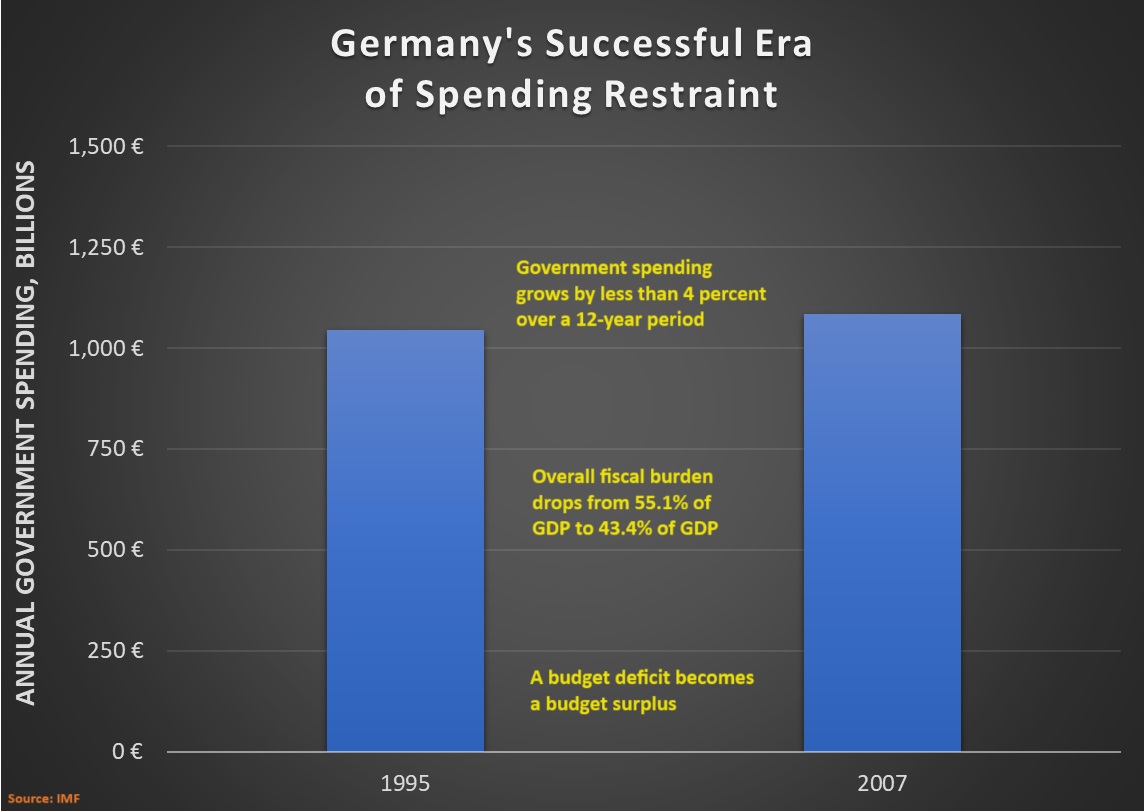 An impressive free-market revival after World War II.
Left unchecked, this single entitlement will require escalating tax increases to fund… The legislation up for a vote this week doesn’t fix this. The main provision guarantees that the pension payout will be maintained at 48% of the average wage until 2031, meaning benefits will increase automatically as wages grow. When it was first introduced a few years ago, this “stabilization” provision overruled a prior formula that increased benefits more slowly. Extending the higher benefit level is a costly concession to the center-left Social Democratic Party (SPD)… lawmakers associated with the CDU’s youth wing…demanding bigger reforms as the price for their votes. Mr. Merz and the SPD need that support to pass anything through the Bundestag with the coalition’s 12-seat majority.

…These changes will cumulatively add to government spending, heading north of €15bn a year. By 2040, the extra spending is expected to total €200bn, which a shrinking pool of working-age taxpayers must bear. Germany’s fertility rate of 1.39 is one of the lowest in Europe. …“Merz’s pension package would add 0.2pc of GDP to German pension spending by 2028. In 2035, pension spending would be 0.4pc of GDP higher than in a constant policy scenario.”


the pension level would be slightly higher than under current law. They argued that that would cost up to 15 billion euros ($17.5 billion) per year, and that this would come at the expense of young people. Merz’s junior coalition partners, the center-left Social Democrats, were adamant that the package be approved unchanged. Merz backed that. …Friday’s result saved him from the potential embarrassment of getting the measures passed thanks only to abstentions by the opposition Left Party.


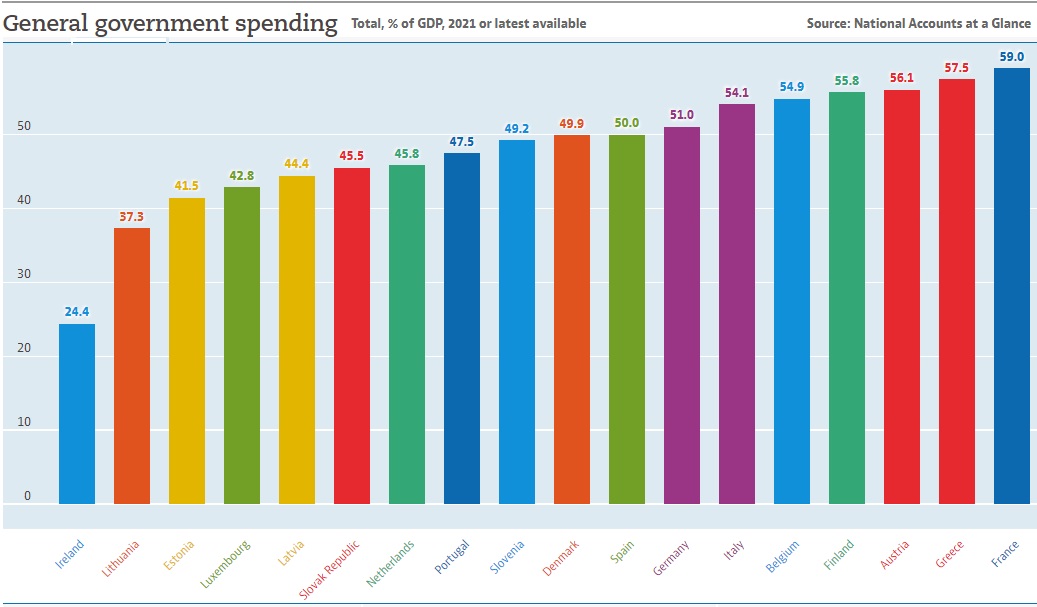

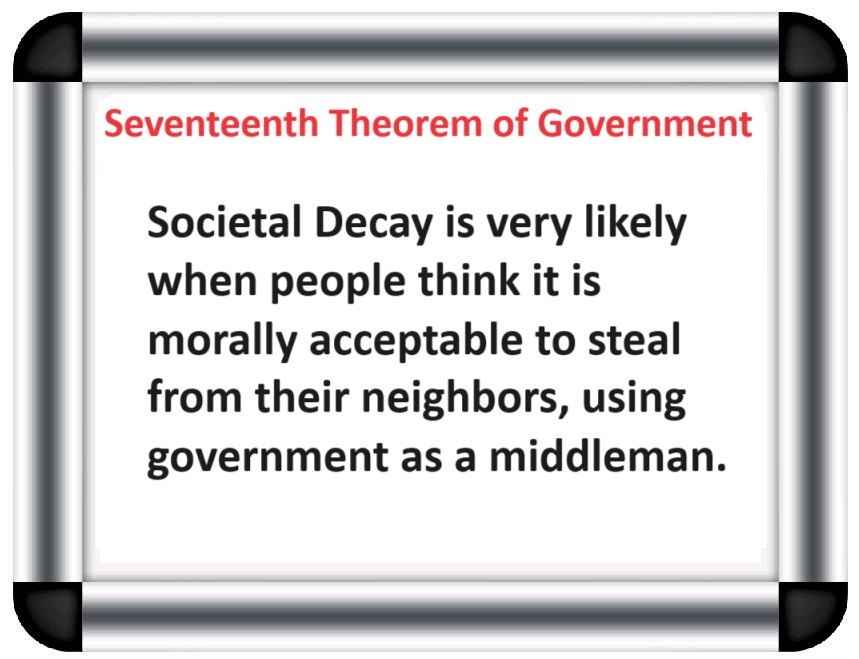


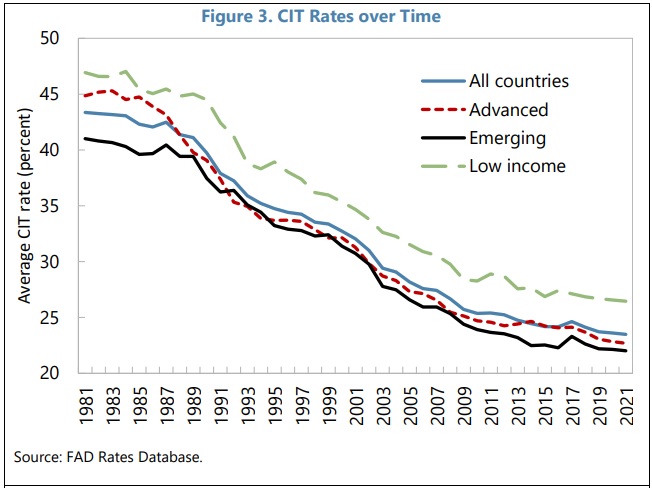


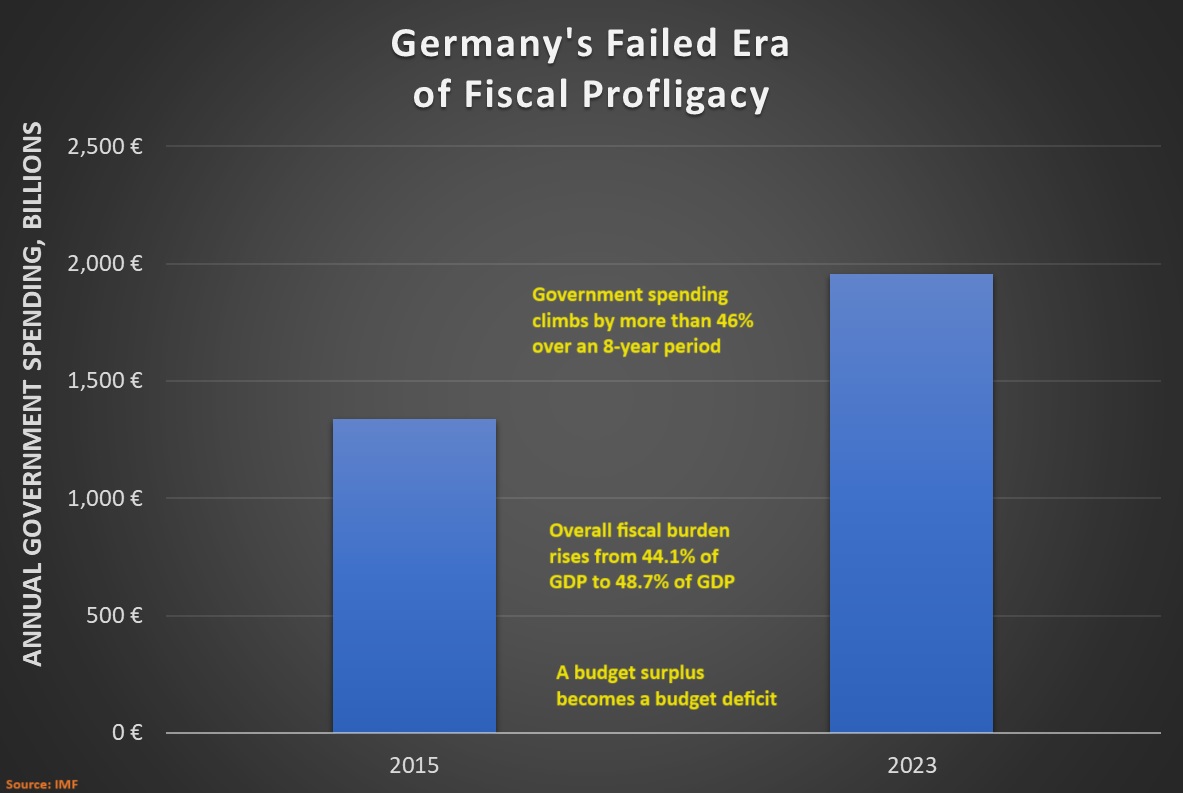


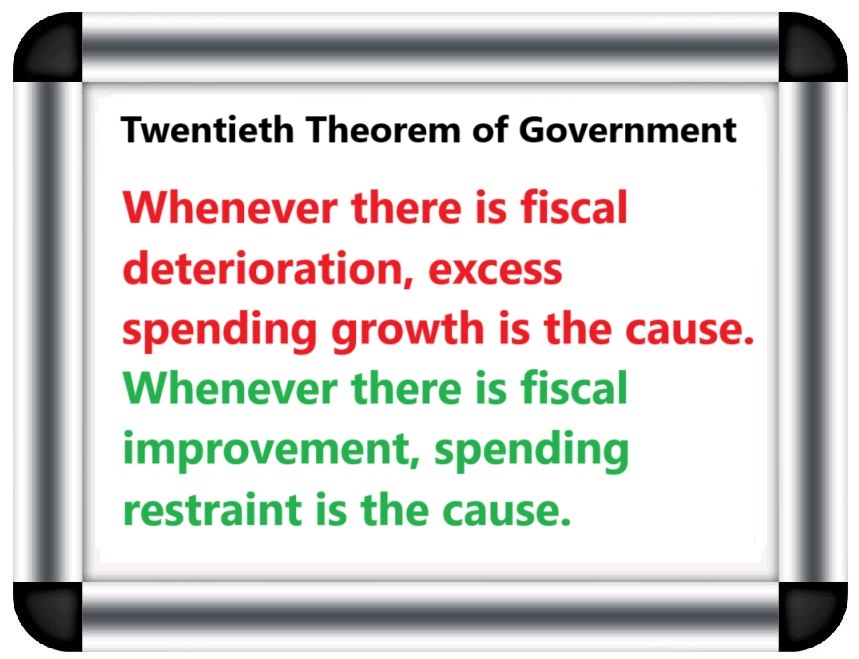


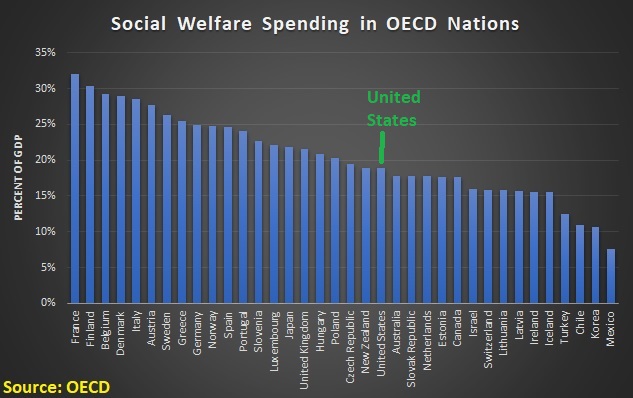


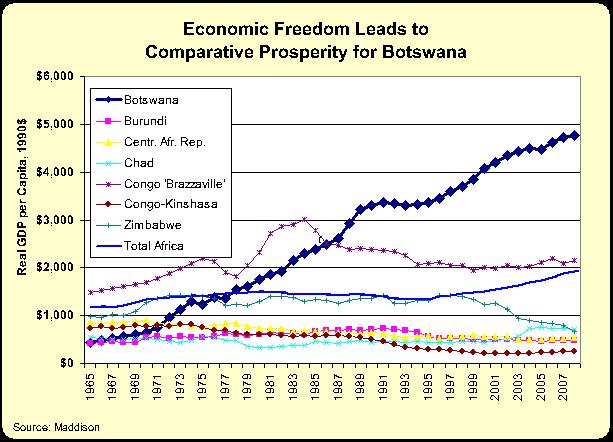


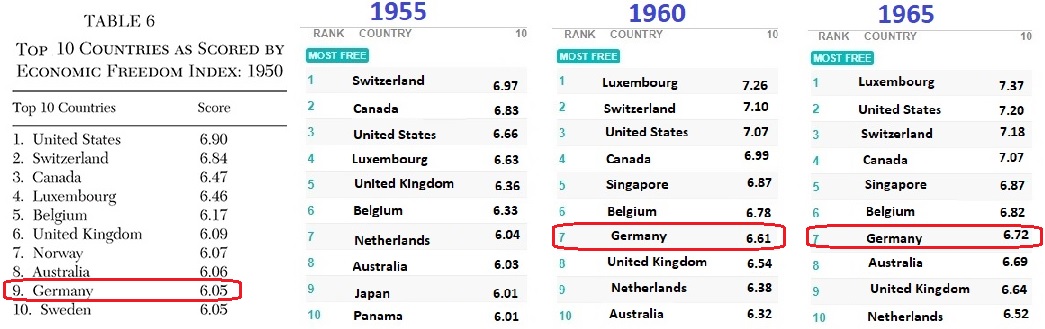


 International Liberty
