This means American taxpayers who earn money outside of America’s borders are subject to taxes where they earn their money, but then the IRS gets to take a second bite at the apple.
When American businesses earn money in other nations, that income is subject to tax by governments in those other nations, but that income can then also be taxed by the IRS.
When American investors earn money in other nations, that income is subject to tax by governments in those other nations, but that income can then also be taxed by the IRS.
When American workers earn money in other nations, that income is subject to tax by governments in those other nations, but that income can then also be taxed by the IRS.
The solution to all these problems is the common-sense notion of territorial taxation, which simply means that governments don’t tax outside their borders.
All good tax systems, such as the flat tax, are based on territorial taxation.
Now that we’ve explained the issue and considered the theoretical implications, let’s now look at a real-world example.
A new Pope was just elected and he’s the first American to fill that role.
That’s newsworthy from a religious perspective, but it also has some major tax implications (and could cause some major tax headaches), as explained by Victoria Craw and Julie Zauzmer Weil in a report for the Washington Post.
Here are some excerpts.
Pope Leo XIV, the newly elected pontiff, must answer to at least one more higher power: the IRS. The United States generally requires all citizens to file an annual tax return, even those who live out of the country. But assuming he doesn’t renounce his U.S. citizenship, Leo…has special tax considerations, both as a clergyman and now as the head of a foreign government. …many countries do not assess taxes on citizens living abroad. “Recent popes from Poland, Germany and Argentina were not taxed by their home countries,” said Jared Walczak, a vice president of the Tax Foundation… The pope’s job as a member of the clergy does not exempt him from U.S. taxes. American citizens abroad must generally file tax returns…according to the Internal Revenue Service. …That means Leo will need to calculate the value of his earnings. The pope does not earn a set salary, but the Vatican covers his housing, food, travel and health care, and provides a monthly stipend for personal expenses. …Leo probably will need an accountant to determine how to translate such benefits into income for a U.S. tax return.
None of that would be necessary, of course, if the U.S. had a sensible tax code.
By the way, U.S. extraterritoriality could be a headache in other ways for the Pope.
Since 2015, the Vatican has been affected by a U.S. federal law that requires financial institutions around the world to report to the IRS details of accounts held by U.S. clients… U.S. citizens living abroad have to file a report with the Treasury Department’s Financial Crimes Enforcement Network if they have “signature authority” — meaning control over the use of funds or other assets — over foreign bank accounts whose total value exceeds $10,000 according to Brittany Benson, an analyst with the Tax Institute at H&R Block. “This would likely apply [to Pope Leo XIV] if he has signature authority on Vatican accounts,” Benson said… Edward A. David, an assistant professor in the department of theology and religious studies at King’s College London, said..it’s hard to predict how the unprecedented situation will work in reality. “U.S. tax law is very far-reaching. And while there might be an exemption for heads of state, this is brand-new territory.”
For what it’s worth, Trump claimed during the 2024 campaign that he wanted to get rid of worldwide taxation for people like the Pope. Sadly, there’s been no follow-through since the election.
Let’s hope that changes, and that he gets rid of FATCA as well.
P.S. America’s extraterritorial tax mistake doesn’t just penalize citizens. It’s also a problem for foreigners (including famous ones) who choose to live in the United States.
P.P.S. This is why I’ve explained that Trump’s plan for a “Golden Visa” won’t be very successful unless he gets rid of worldwide taxation
In hopes of convincing people to be libertarian, most of my columns are based on data.
I’ve noticed, however, that evidence is only persuasive if readers trust that numbers are being presented honestly. This is a challenge because everyone seems to think that the other side is guilty of “cherry picking,” which is what happens when someone shares data that is accurate but misleading.
For example, I wrote back in 2012 about the assertion that the creation of the Occupational Safety and Health Administration (OSHA) led to a decline in workplace deaths.
If you just look at data since OSHA was created, it seems like proponents of more regulation are correct and the answer is yes. But if you also look at data for several decades before OSHA’s creation, the logical inference is that OSHA had no effect.
Today, let’s look at another example of cherry picking.
By sharing about 40 years of data about the Service’s inflation-adjusted budget, I allow readers to see both long-run trends (more money for the IRS) and short-run fluctuations.
One of the short-run fluctuations is that the IRS budget was dramatically increased about 15 years ago. Afterwards, the budget declined from that peak (if I updated the chart, you would see the budget going back up because of Biden’s plan to super-size the IRS).
Seeing those decades of data, people can have honest and fact-based arguments about the proper size of the IRS.
However, not everyone is interested in an honest debate. The left-leaning Tax Policy Center (TPC) released a report last week making the case for more IRS spending.
The TPC argument revolved around this chart, which (very conveniently) picks 2010 as the starting year.
Needless to say, this is a grotesque example of cherry picking. If the chart started in some other year, say 2008 or 2012, the lines would look much different and the entire TPC argument would evaporate.
I’ll conclude by observing that this column is not about the proper size of the IRS budget. Instead, I’m simply pointing out that it is preferable to have honest arguments. Which is why I’m a big fan of using decades and decades of data (indeed, that’s the only approach I use when picking members for the anti-convergence club).
P.S. For those interested in my views on the proper size of the IRS budget, I want dramatic reform like the flat tax. If that happened, the IRS could be radically downsized.
P.P.S. I don’t like cherry picking, but at least that’s better than outright lying to promote a bigger IRS.
I’ve been arguing for a long time that we need tax simplification rather than a bigger budget for the IRS.
The clowns in Washington have a different perspective, however, and they approved the Biden-Harris plan to dramatically increase the IRS budget because that supposedly would generate hundreds of billions of dollars in additional tax revenue.
Well, they definitely achieved the first part. If you go to the supplemental materials section of the most-recent Biden-Harris budget and access the massive excel file for outlays, you can scroll down to get detailed numbers for the IRS budget.
But what about the second part? Has all this money led to a torrent of tax revenue.
The Treasury Department wants people to think the answer is yes. Here’s a headline from a September 6 press release.
Sounds impressive until you remember that folks on the left (and some naive/stupid folks on the right) claimed that super-sizing the IRS budget would produce much more.
In reality, the torrent turned out to be a trickle.
Dominic Pino of National Reviewsummarizes how the goal posts have been moved.
After lots of hemming and hawing, Democrats finally got their huge boost in IRS funding in the so-called Inflation Reduction Act in August 2022. This $80 billion boost over ten years was supposed to help to “close the tax gap” by improving IRS enforcement to collect money taxpayers owed but were not paying. …The target was those evil rich guys sitting on piles of money. …At various stages in the Democrats’ quest for a bigger IRS, they were throwing around numbers as high as a $1 trillion to be collected from better enforcement. …the Treasury itself in May 2021 thought it could raise $700 billion over ten years from better tax enforcement. …By October 2021, the White House had revised its estimate to $400 billion over ten years. Still a ton of money. …Once the Inflation Reduction Act actually came into being, Democrats were banking on the IRS provisions raising $203.7 billion over ten years. …Then, in February 2024, the Biden administration cranked up the crazy again. The Treasury released a new study that claimed if the current IRS funding levels were made permanent, …the Inflation Reduction Act’s provisions could raise up to . . . wait for it . . . $851 billion over ten years. …There is not — and never was — any possible way that the IRS is going to raise several hundred billion dollars over ten years from better tax enforcement. This was magical thinking from Democrats. And they only wanted it to be true so that they could immediately spend the money raised on progressive policies. They got the spending; we get the debt.
You don’t know whether to laugh or cry at these results. Politicians lied through their teeth, but it worked.
And it doesn’t even capture the entire truth since very few taxpayers know that their payroll taxes are actually twice as high as what they see on their pay stubs and W-2 forms.
Perhaps because I grew up reading the Peanuts comic strip, this is today’s favorite item.
If only opting out of the tax code was this simple!
The net result is that we now have a tax system that – according to the IRS website – requires more than 2,700 separate forms, instructions, or publications (a huge increase over the past two decades).
Instead of 2,700-plus forms, we would have one simple postcard-sized tax return for households and another simple postcard-sized tax form for businesses.
Seems like a win-win approach, but the Washington Post has a different perspective, editorializing instead in favor of simply giving the IRS more money and power.
For the past three years, the IRS has failed to do its most basic job: processing tax returns in a timely manner. There are many reasons. The pandemic upended almost everything for a while. …Ancient computer systems hampered operations. And Congress kept asking the IRS to do more: implement the sweeping 2017 GOP tax code overhaul, then send stimulus checks — three times — to the vast majority of Americans during the pandemic. …Yet House Republicans made it their first priority this year to pass legislation slashing IRS funding, which would worsen the agency’s problems — and the service it provides Americans. …Congress’s priority should be modernizing the IRS and getting it back to full functionality. That’s why Democrats passed $80 billion in extra funding for the agency… This isn’t the time to cut. It’s the time to resuscitate.
But we should expect misleading analysis from the Washington Post.
So let’s conclude by instead asking a fundamental question: Is it better to continue on the current path (an ever-more-complex tax system requiring ever-more-money for the IRS) or is it better to have a clean tax system?
P.S. I’m sure that not every additional form on the IRS website represents additional complexity. But I’m also sure that the tax code is far worse than it was in the past. Perhaps the most compelling evidence is the huge increase in the number of pages needed for the instruction manual for the 1040 tax form.
In the spirit of bipartisanship, I also applaud when Donald Trump does the same thing, and that part of what we’re going to discuss today.
First, some background: The ongoing battle over Donald Trump’s personal tax information has finally ended. If you’re curious, the New York Times has a detailed report on what Trump earned (or lost) in recent years.
And the NYT also tells us how much tax he paid during those years.
When I look at these numbers, my first thought is that Trump is not a very good businessman since he has a negative income most years.
My second thought is that I’m glad he paid a low tax rate of about 3 percent in 2018 and approximately 4 percent in 2019, the two years when his income was positive.
Why am I glad? Because money in private hands is far more likely to be utilized wisely than money that gets diverted to the IRS and then spent by the politicians in Washington.
That’s the first part of today’s column.
The second part of today’s column is to use Trump’s tax return to show why the tax system would be much better if we junked the internal revenue code and replaced it with a simple and fair flat tax.
A tax system based on equality also means radical simplicity. The hundreds of different tax forms in today’s tax code would get dumped in the garbage.
All that would be left is a simple tax form for households.
And a simple tax form for businesses.
What would this mean for Trump’s tax returns? I’m sure the implications would be enormous, but I want to focus on just two issues.
First, under the flat tax, business losses can not be used to lower taxes on household income (wages, salaries, and pensions). So that would probably mean a higher tax burden for Trump.
Second, the tax treatment of business changes in ways that would both help Trump and hurt Trump. The most important thing to realize is that the convoluted corporate income tax (as well as parts of the personal income tax such as Schedule C) are replaced by a very simple cash-flow system.
Here’s how Professors Robert Hall and Alvin Rabushka describe the business portion of the flat tax.
The business tax is a giant, comprehensive withholding tax on all types of income other than wages, salaries, and pensions. It is carefully designed to tax every bit of income outside of wages, but to tax it only once. The business tax does not have deductions for interest payments, dividends, or any other type of payment to the owners of the business. As a result, all income that people receive from business activity has already been taxed. …The resulting simplification and improvement in the tax system is enormous. …Eliminating the deduction for interest paid by businesses is a central part of our general plan to tax business income at the source.
One very important implication of this approach is there there no longer would be a bias for debt. This would not be good news for people like Trump who usually rely on debt to finance their businesses.
On the other hand, the net result would be a tax code more favorable to investment and entrepreneurship. So if Trump is a good businessman, he will benefit.
I’m motivated to share the above video, which was part of last week’s episode of The Square Circle, because it galls me to see some writers defend huge budget increases for the internal revenue service while simultaneously overlooking very serious problems.
The latest example of IRS sycophancy comes from Paul Waldman of the Washington Post.
Here’s some of what he wrote.
…with the pending passage of the Inflation Reduction Act, we may finally begin to turn the tide in a war only one side has been fighting…this is something all Americans should celebrate. …The bill contains nearly $80 billion for the Internal Revenue Service… With this bill, it would be able to hire as many as 87,000 new employees…the wealthy and corporations don’t pay their fair share. …Americans don’t mind paying taxes, as long as they believe the system is fair.
It’s not just that Waldman fails to address problems at the IRS. He also is either very misinformed or very dishonest about who pays the lion’s share of income taxes.
For instance, even the IRS freely admits that upper-income taxpayers finance a hugely disproportionate chunk of the income tax burden.
The bottom line if that envy and spite should not be guiding principles for taxation.
Let’s close by revisiting Waldman’s column and reviewing his assertion about “three things we should all be able to agree on.”
We need a government. …In order to have a government, we need to collect taxes. …If we’re going to collect taxes, the agency that does it should operate as efficiently and effectively as possible.
Yesterday’s column explained that lobbyists are big winners when the size and scope of government increases.
For instance, a bigger budget means special interests hire lobbyists to obtain ever-larger slices of pork.
Moreover, added red tape means lobbyists get more clients seeking to manipulate the regulatory process.
And Biden’s grossly misnamed Inflation Reduction Act will make both of those problems worse, enabling more corruption.
But there’s a third problem to consider. Biden’s agenda also calls for a massive expansion of special tax privileges.
From a libertarian perspective, I like when the law allows people to keep more of their money.
As an economist, however, I don’t like when people are lured into make inefficient choices simply because of a convoluted tax system.
And, as a decent human being, I despise a process that enriches lobbyists, politicians, and other insiders. This corrupt process is succinctly captured in this flowchart put together by my former colleague Chris Edwards.
What could the bureaucrats have done to earn praise?
You’ll be amazed to learn that the Economist believes the IRS helped the economy by becoming a vehicle for income redistribution.
I’m not joking. Here are some excerpts from the article.
Despite its awful backlog, the irs has, from another perspective, had a very good pandemic. It has played a critical role in delivering support to Americans. And it has been surprisingly efficient at it. For each of the three rounds of stimulus payments, the irs was the conduit. Within two weeks of Mr Biden’s signing of the stimulus bill in March 2021, for instance, it sent out $325bn via 127m separate payments, mainly by direct bank deposit. Some people fell through the cracks and cheques took longer. But most got the money quickly. The irs operated at even greater frequency in making child-tax-credit payments every month. …It also expanded the earned-income tax credit, a subsidy given to low earners, one of America’s biggest anti-poverty programmes. Putting it together, a poor family with two young children could expect $20,000 from the irs last year, double what they would normally receive.
The Economist seems to think it’s wonderful that the IRS now plays a big role in distributing goodies.
In all, the agency paid out more than $600bn in pandemic-related support in 2021, equivalent to about two-thirds of Social Security spending in the federal government’s budget. “We have seen a substantial share of what used to be the social safety-net migrate from the public-expenditure side of the federal ledger to being run through the tax code,” points out Gordon Gray of the American Action Forum, a think-tank. …the irs…stands as one of the few federal agencies that would generate a large and nearly immediate return on investment were the government to spend more on it. The hope for the harried tax agents is that…irs performance during the pandemic will have earned it grudging support in Washington, demonstrating that it is both overstretched and indispensable.
Needless to say, “delivering support to Americans” should not be an “indispensable” function of the a bureaucracy that was created to collect tax revenue.
Even more problematic, giving out record amounts of money is not what “has kept the economy going.” This is a Keynesian view of the world.
In reality, the borrow-and-spend approach is akin to thinking you are richer after taking money out of the right pocket and putting it in the left pocket.
P.S. The article also cites the bogus estimate of a $1 trillion tax gap. If the Economist now is in the business of uncritically regurgitating make-believe numbers, I’m also willing to play that game. I encourage that magazine’s reporters to call me and I’ll blindly claim that all tax cuts pay for themselves and that we can have entitlement reform without transition costs.
Actually, I have ethics, so I won’t make those over-the-top claims.
P.P.S. Amazingly (but predictably), the Economist never mentioned past or present IRS scandals.
So let’s celebrate (or commiserate) this awful day by wading into the debate about whether the Internal Revenue Service should have a bigger budget.
Proponents usually claim the IRS is under-funded by comparing today’s budget to how much the bureaucracy received in 2011.
But that was a one-year spike because of all the money in Obama’s failed stimulus package. If you review long-run data, you can see that the IRS’s budget has increased significantly.
And these numbers are adjusted for inflation.
But perhaps proponents are right, even if they use deceptive numbers.
The Washington Post has a new editorial on this topic, arguing that the bureaucracy needs more money.
The IRS is currently limping along without enough staff or funding. Congress, especially Republicans, needs to face up to reality. …It’s not a mystery how the IRS deteriorated. …the core problem is that Republicans slashed the IRS budget about 18 percent in the past decade. That’s not belt-tightening, it’s gutting an agency. …The Biden administration is rightly asking for a big increase for 2023 (a request of $14.1 billion). This isn’t some Democratic wish list item; it’s about restoring the basic functions of America’s tax collection agency.
When this topic was being debated last year, Ryan Ellis explained that the IRS will target small businesses if it gets a bigger budget.
Here are some excerpts from his piece in National Review.
…the idea is that if taxpayers fund the IRS to the tune of $40 billion over the next decade, the IRS will step up audits and collect an additional $100 billion in tax revenue, penalties, and interest. This is lauded as a good because of the supposed “tax gap,”… Apparently, it doesn’t occur to anyone that the IRS, which is seeking this extra $40 billion in taxpayer funding, has every incentive in the world to exaggerate this “tax gap” and to make wild promises about the new money that additional enforcement will yield for the Treasury. …Giving money to IRS bureaucrats to conduct fishing expedition audits on millions of honest self-employed people? The same IRS behind the Lois Lerner scandal a decade ago, when the IRS inappropriately targeted conservative political groups during the 2012 election season, when Obama was running for reelection?
Ryan is right to point out that the IRS is undeserving because of bad behavior.
Advocates of more funding will argue that the bureaucracy’s malfeasance is a separate issue and that more employees and more audits are needed regardless of whether criminals at the IRS are caught and punished.
But this brings us to another important topic, which is whether it would be best to fix the underlying tax laws instead of throwing more money at the IRS.
In a column for the Louisville Courier-Times, we get this point of view from Richard Williams of George Mason University’s Mercatus Center.
…money won’t fix this problem. …Another approach would be drastically reducing the complexity of federal taxes. …The Tax Foundation estimates that we give up 3.24 billion hours and $37 billion to comply with federal taxes each year. Given the headaches and anxiety that come with this, Americans don’t need more IRS workers. We need a leaner agency…individual filers and small businesses represent a huge proportion of the public who would gain from simplification. …There is no need to hire more people to oversee a reformed system. What’s not to like?
And that’s just a brief list of the things that the IRS now does in addition to generating revenue.
Get rid of these added roles, ideally as part of a total replacement of the tax code with a flat tax, and the discussion would be about how much money could be saved by reducing the IRS’s budget.
But that means less power for politicians, so don’t hold your breath waiting for genuine tax reform.
That being said, supporters of good policy should feel no obligation to help prop up the current system by shoveling more money to the IRS.
An underfunded corrupt IRS administering a bad tax code is better than a well-funded corrupt IRS administering a bad tax code.
*April 15 may be the worst day of the year, but there’s an argument to be made that October 3 is the worst day in history.
P.S. From my archives, here are some examples of the bureaucrats who will benefit from a bigger IRS budget.
At the risk of understatement, I am not a fan of the Internal Revenue Service. But, as shown in this closing segment from a recent interview, I get especially outraged when IRS bureaucrats engage in criminal behavior and nobody cares.
This should outrage everyone that we have officials at a powerful agency illegally leaking confidential information.
My daughter’s dogs even registered their disapproval during the interview (I’m dog sitting for a few days).
We don’t know how many IRS bureaucrats were involved, and we also don’t know whether the motive was money, ideology, or partisanship.
A few months ago, the Wall Street Journaleditorialized about this latest scandal.
Democrats want to give $80 billion to the Internal Revenue Service to audit millions of Americans each year. Yet…after the progressive website ProPublica first published the secret tax information of rich Americans, the tax agency still can’t explain what happened. …IRS Commissioner Charles Rettig…promised when the leak occurred…to find out what happened, but in September he told Senators, “We do not yet have any information concerning the source.” Since then it’s been crickets. …The leak is a crime, but tracing it isn’t merely a matter of criminal enforcement. The breach highlights the general failure of the IRS to protect taxpayer data. …As troubling is the limp response by the IRS. A separate GAO report this May found that the tax agency failed even to enforce its own authentication protocols, which would help to detect breaches when they occur. …The new money for the IRS is harmful on its own terms, but it’s all the worse when it is provided without strings to an agency that has no idea who is stealing private tax data.
Amen.
Hopefully Republicans won’t be stupid (again) and go along with big budget increases for the corrupt IRS bureaucracy.
By the way, ProPublica this morning published a new story based on their stolen data.
Written by Paul Kiel, it claims rich people pay a very low tax rate.
If your company’s stock shoots up and you grow $1 billion richer, that increase in wealth is real. …From 2014 to 2018, the 25 wealthiest Americans grew about $400 billion richer, according to Forbes. To an economist, this was income, but under tax law, it was mere vapor, irrelevant. And so this group, including the likes of Bezos, Elon Musk and Warren Buffett, paid federal income taxes of about 3.4% on the $400 billion, ProPublica reported. We called this the group’s “True Tax Rate.”
There are two points worth making after reading this nonsense.
The new version of this claim, as illustrated by the ProPublica excerpt, is that the rich have a low tax rate because they aren’t hit with a tax when their assets increase in value. But that’s because an increase in wealth is not an increase in income, just as a decrease in wealth isn’t a loss of income.
If ProPublica wants to add a wealth tax on top of the current income tax, they should be honest and openly make that argument.
Instead, they opted to concoct and disseminate a make-believe tax rate.
The takeaway is that the IRS budget should not be increased, period. And it definitely should not be increased because that would reward criminal bureaucrats.
On the outlay side of the fiscal ledger, he’s actually proposing to increase the nation’s already-excessive spending burden by more than $5 trillion over the next ten years, not $3.5 trillion.
Based on dishonest estimates of the “tax gap,” he claims that a massive expansion of IRS staff will allow enough new audits to generate hundreds of billions of extra revenue in the next decade.
Today, let’s review another example of Biden’s dodgy approach to budgeting.
If you look at page 53 of his budget, you’ll see that the White House claims it can generate nearly $463 billion of tax revenue by having banks automatically share account information with the IRS.
Which bank accounts?
Well, almost all of them. The original proposal would give the IRS automatic access to accounts with as little as $600 of annual turnover.
That number is apparently going to increase, but even a limit of $10,000 would let the IRS snoop on almost every American’s private financial affairs.
At the risk of understatement, the proposal has generated a lot of pushback.
…the House reconciliation bill would let the Internal Revenue Service peer into the bank account of virtually every American. …Here’s the proposition: You permanently sacrifice your financial privacy, and the Democrats get a small step closer to funding their agenda. …Treasury secretary Janet Yellen claims the IRS will overcome perennial bureaucratic incompetence and track down “opaque income streams that disproportionately accrue to the top.” …If it’s high earners we’re worried about, why spy on everyone? …The administration is seriously arguing for a new oversight regime that would gather data on nearly every American on the off chance that a billionaire opens several thousand bank accounts. …this move on bank accounts would represent a new, jaw-dropping level of federal intrusiveness and is a power no government should have. Biden officials from Yellen on down have had trouble defending it — because it is literally indefensible.
Writing for the Hill, Thomas Hoenig and Brian Knight of the Mercatus Center pour cold water on the idea of expanding IRS snooping.
…the Biden administration is proposing requiring banks to report individual account transaction flows above $600 to the Internal Revenue Service (IRS). …a significant intrusion of consumer privacy. It’s also cumbersome, unlikely to achieve whatever legitimate goal the administration may have… the breadth of intrusion into the citizenry’s personal accounts is excessive and unwise. …Such a rule would also likely limit people’s access to banks. …Increasing compliance costs for banks will likely lead them to increase minimum balance requirements and fees to keep accounts economically viable, which could in turn force more people outside the banking system.
Here are excerpts from a Wall Street Journaleditorial, which expresses similar concerns.
On your next trip to the ATM, imagine that Uncle Sam is looking over your shoulder. As if your annual tax filing wasn’t invasive enough, the Biden Administration would like a look at your checking account. …Ms. Yellen says the reporting will help to catch wealthy tax dodgers. …Casting a wide net over personal finances is a longstanding aim for Democrats and the political left. …the bigger threat of giving the IRS access to the details of your bank account is that politicians will eventually find a way to control how you save and spend your own money. This is a bad idea that deserves to die. …A group of 41 industry groups recently warned congressional leaders that the plan “is not remotely targeted” to detect major tax avoidance. …Twenty-three state treasurers and auditors signed a letter last month opposing the plan, calling it “one of the largest infringements of data privacy in our nation’s history.”
And let’s not forget that the IRS has shown that it is untrustworthy.
All of which probably helps to explain why polling data shows overwhelming opposition to this Orwellian scheme.
Let’s close by debunking the White House claim that more IRS snooping on bank accounts will collect more revenue from the rich.
Simply stated, rich people are very clever about legal tax avoidance. They do things like invest in tax-free municipal bonds (which is not good for the economy, but it’s a very effective way of escaping tax).
So who would be targeted if Congress approves this plan to let the IRS snoop on bank accounts?
Primarily owners of small businesses. The IRS basically adopts the view that all entrepreneurs under report cash income and deduct personal expenses on their business tax returns.
Some of that actually happens, of course, but the best way to improve compliance is lower tax rates, not a massive expansion of the surveillance state.
I suspect most Americans would select both options.
But the crowd in Washington has a different perspective. Most of them like the IRS because it’s the bureaucracy that generates the money that they use to buy votes.
Many of them want to reward the IRS with more money (including plenty of brain-dead Republicans), which is bad enough, but what’s really troubling is that some of them even want to turn the IRS budget into an entitlement.
In an article for Reason, Eric Boehm explains that Elizabeth Warren is leading the charge for this reckless proposal.
Sen. Elizabeth Warren (D–Mass.) says her plan to more than double the annual IRS budget would allow the federal government to collect an extra $1.75 trillion over the next 10 years. …her plan seems based on little more than a hunch and some bad math. …Warren’s “Restoring the IRS Act of 2021” would hike the agency’s budget from $11.9 billion to $31.5 billion. …It would also…move the IRS from the…federal budget’s discretionary side…to the mandatory portion of the budget, alongside Social Security and other programs that run on autopilot. …In practice, that means giving the IRS a big budgetary boost and giving the agency the authority to dig through bank accounts and transaction records.
The Wall Street Journal also is not impressed with the idea of rewarding a corrupt tax bureaucracy.
Here are some excerpts from its recent editorial, which notes that the Biden Administration also wants to turn IRS funding into an entitlement .
The Internal Revenue Service leak of taxpayer returns to left-leaning media outlet ProPublica is a prime example of why Congress should refuse to give the tax agency more money and power. That includes President Biden’s little-noticed but politically consequential plan to put IRS funding on autopilot. …Like so much else in the Biden Presidency, this follows the Elizabeth Warren model. …The IRS would essentially become another mandatory budget program like Social Security and Medicare. …without the risk of having to answer to Congressional appropriators for its budget, the tax agency would have little to worry about. …Their plan would make sure the IRS doesn’t have to pay a price in the future for politically targeting taxpayers or leaking returns. The potential for abuse would grow since Mr. Biden’s plan would also give the IRS access to bank account inflows and outflows. …a tax collection agency shielded from Congressional budget supervision is one definition of tyranny.
All of this is true.
But let’s also remember that the case for more IRS funding (whether as appropriations or as an entitlement) is based on nonsensical and self-serving estimates of the supposed tax gap.
P.S. For those who want to understand the technical differences between entitlement spending and appropriated spending, click here.
Whenever I’m asked about the “tax gap,” I point to the academic evidence, from multiple sources, and explain that lower tax rates and tax reform are the best way to get higher levels of tax compliance.
Indeed, even the pro-tax International Monetary Fund has published research clearly identifying punitive tax policy as the leading cause of tax evasion and tax avoidance.
It’s time to take another look at this issue because the Biden Administration is trying to create a competing narrative.
The head of the IRS says that we need huge increases in the IRS’s budget in order to deal with a supposedly crisis of tax cheating.
Here are some excerpts from a story in the New York Times.
The United States is losing approximately $1 trillion in unpaid taxes every year, Charles Rettig, the Internal Revenue Service commissioner, estimated on Tuesday, arguing that the agency lacks the resources to catch tax cheats. …Most of the unpaid taxes are the result of evasion by the wealthy and large corporations, Mr. Rettig said. “We do get outgunned,” Mr. Rettig said during a Senate Finance Committee hearing… Senator Ron Wyden of Oregon, the Democratic chairman of the committee, called the $1 trillion tax gap a “jaw-dropping figure.” …The size of I.R.S.’s enforcement division has declined sharply in recent years, Mr. Rettig said, with its ranks falling by 17,000 over the last decade. The spending proposal that the Biden administration released last week asked for a 10.4 percent increase above current funding levels for the tax collection agency, to $13.2 billion.
There are a couple of points that cry out for correction.
First, the IRS is cherry picking data to make it seem like it is starved of resources. The bureaucrats got a record pile of money in 2010, so they use that year when making comparisons.
Second, the $1 trillion figure is a make-believe number, more than twice as high as the IRS’s last official estimate.
Commissioner Rettig may as well have said $2 trillion. Or $5 trillion. After all, he’s simply pulling a number out of the air in an effort to convince Congress to give the IRS an even bigger budget.
By the way, since I mentioned the IRS’s official estimate, here’s a look at those numbers, which were published in September 2019. What deserves special attention is that there’s very little underpaying by corporations.
Indeed, it’s only 9 percent of the total (circled in red).
So where are the big sources of evasion?
It’s mostly small businesses. The IRS assumes modest-sized companies (especially family-owned firms) play lots of games so they can underreport income and overstate deductions.
So if the bureaucrats get a big budget increase, it basically means more IRS agents harassing lots of mom-and-pop businesses.
Can that approach shake loose some more money for the government? I’m sure the answer is yes, but I want to close by returning to my original point about why it would be better to instead focus on good tax policy.
Let’s take a look at a recent study from Mai Hassan and Friedrich Schneider (the world’s leading scholar on the underground economy). Here are some of their findings.
The shadow economy includes all of the economic activities that are deliberately hidden from official authorities for various reasons. …Monetary reasons include avoiding paying taxes and/or social security contributions… Given the purpose of our study, the shadow economy reflects mostly the legal economic and productive activities that, if recorded, should contribute to the national GDP. Therefore, the definition of the shadow economy in our study tries to avoid illegal or criminal activities …It is widely accepted in the literature that the most important cause leading to the proliferation of the shadow economy is the tax burden. The higher the overall tax burden, the stronger are the incentives to operate informally in order to avoid paying the taxes.
The study looks at all sorts of variables to see what else has an impact on tax evasion.
Considering the result of our MIMIC estimations…we clearly see that the tax burden has a positive (theoretically expected) sign and is statistically significant at the 5% confidence level. The regulatory burden variable (size of government) has also the theoretically expected sign and is highly statistically significant at the 1% confidence level. The estimated coefficient of the unemployment rate is also highly statistically significant and has the expected positive sign. The economic freedom index has the expected negative sign and is at the 10% confidence level statistically significant.
In other words, it’s not just tax policy, though that plays the biggest role.
But the part of the study that is relevant for today is that the United States has the world’s 2nd-highest level of tax compliance, trailing only Switzerland.
Here are the top-10 nations.
The obvious takeaway is that there’s no crisis. Not even close.
By all means, we can try to jump Switzerland and move into first place. But let’s increase tax compliance the smart way – by lowering tax rates and reforming the tax code.
P.S. The Biden Administration and the IRS are feeding us garbage data for self-interested reasons (a classic case of “public choice” in action).
Just like last year, April 15 isn’t the official deadline this year for filing your annual tax return. But we’re still going to “celebrate” with some memes about the income tax and the IRS.
We’ll start with something that has always bothered me, which is the fact that many people look forward to filing their taxes because they get a refund.
Yet that simply means that they gave the government free use of their money because of excessive withholding!
It also galls me when IRS documents refer to customer service when none of us are voluntary participants.
That’s the point of this next meme.
And since we’re mocking our friends at the IRS, here’s another item worth sharing.
But we should have some sympathy for tax collectors.
They sometimes have a challenging job.
For our final IRS-focused bit of satire, let’s turn to the Babylon Bee‘s report on taxation in outer space.
President Trump’s new Space Force has been stealing the imagination of the public… Not to be outdone, the Democrats are now trying to show they can also look to the future with their new proposal: Space IRS. “We also are inspired by watching shows such as Star Wars,” Nancy Pelosi told the press, “and seeing someone like Han Solo, a smuggler who is obviously avoiding taxes. …there has to be a way to follow someone like that and see how much he’s spending at cantinas and sabacc tables and know that he’s hiding income. That’s the job of Space IRS.”
Our tax system is a dysfunctional mess, but you’ll notice that I mostly blamed politicians. After all, they are the ones who have unceasingly made the internal revenue code more complex, starting on that dark day in 1913 when the income tax was approved.
…a new report from the Cause of Action Institute reveals that the IRS has been evading numerous oversight mechanisms, and it refuses to comply with laws requiring it to measure the economic impact of its rules. Congress has passed several laws, including the Regulatory Flexibility Act and the Congressional Review Act, that require agencies to report on their rules’ economic impact to lawmakers and the public. …These good-government measures are meant to ensure unelected bureaucrats can be checked by the public. …the IRS has made up a series of exemptions that allow it to avoid basic scrutiny. The agency takes the position that its rules have no economic effect because any impact is attributable to the underlying law that authorized the rule.
Private debt collectors cost the Internal Revenue Service $20 million in the last fiscal year, but brought in only $6.7 million in back taxes, the agency’s taxpayer advocate reported Wednesday. That was less than 1 percent of the amount assigned for collection. What’s more, private contractors in some cases were paid 25 percent commissions on collections that the I.R.S. made without their help…the report stated, “the I.R.S. has implemented the program in a manner that causes excessive financial harm to taxpayers and constitutes an end run around taxpayer rights protections.”
The Internal Revenue Service (IRS) issued more than $1.7 million in awards in fiscal 2016 and early fiscal 2017 to employees who had been disciplined by the agency, a Treasury Department watchdog said. “Some of these employees had serious misconduct, such as unauthorized access to tax return information, substance abuse and sexual misconduct,” the Treasury Inspector General for Tax Administration (TIGTA) said in a report made public this week. …in fiscal 2016 and early fiscal 2017, the IRS had given awards to nearly 2,000 employees who were disciplined in the 12 months prior to receiving the bonus.
By the way, the IRS has a pattern of rewarding bad behavior.
…for 35 years the Internal Revenue Service has exempted itself from the most basic regulatory oversight. …Tax regulations (like all regulations) have exploded in recent decades, and of course IRS bureaucrats impose their own policy judgments. The IRS has in recent years unilaterally decided when and how to enforce ObamaCare tax provisions, often dependent on political winds. In 2016 it proposed a rule to force more business owners to pay estate and gift taxes via a complicated new reading of the law. …Secretary Steve Mnuchin’s Treasury…department is inexplicably backing IRS lawlessness with a string of excuses.
Again, this is not the first time the IRS has interfered with congressional policy.
The Internal Revenue Service infamously targeted dissenters during President Obama’s re-election campaign. Now the IRS is at it again. Earlier this year it issued a rule suppressing huge swaths of First Amendment protected speech. …The innocuously named Revenue Procedure 2018-5 contains a well-hidden provision enabling the Service to withhold tax-exempt status from organizations seeking to improve “business conditions . . . relating to an activity involving controlled substances…” The rule does not apply to all speech dealing with the listed substances, only that involving an “improvement” in “business conditions,” such as legalization or deregulation. …This is constitutionally pernicious viewpoint discrimination.
Now that I’ve hopefully convinced people that I’m not going soft on IRS malfeasance, let’s look at the budgetary issue that was the focus of the CNBC interview.
Is the IRS budget too small? Should it be increased so that more agents can conduct more audits and extract more money?
Both the host and my fellow guest started from the assumption that the IRS budget has been gutted. But that relies on cherry-picked data, starting when the IRS budget was at a peak level in 2011 thanks in part to all the money sloshing around Washington following Obama’s failed stimulus legislation.
Here are the more relevant numbers, taken from lines 2564-2609 of this massive database in the OMB’s supplemental materials on the budget. As you can see, IRS spending – adjusted for inflation – has nearly doubled since the early 1980s.
Last but not least, here’s a clip from another recent interview. I explained that the recent shutdown will be used as an excuse for any problems that occur in the near future.
The bad news is that Lois Lerner didn’t get punished. She’s now enjoying a fat taxpayer-financed pension. And other IRS officials successfully stonewalled with no adverse consequences.
Heck, Republicans actually rewarded the IRS with a bigger budget. And the Trump Administration so far has been AWOL on curtailing IRS abuses.
But that may be about to change. One of the President’s appointees has expressed support for protecting donors to nonprofit organizations.
….a Congressional hearing this week offered potentially good news to nonprofits whose donors are under political threat. …Montana Republican Steve Daines asked Acting IRS Commissioner David Kautter whether the agency is considering the necessity of IRS 990 Schedule B. These are the forms that nonprofits must supply to the IRS listing donors who contribute more than $5,000. Schedule Bs are supposed to remain confidential, but AGs in New York and California have sought to require nonprofits to file them at the state level. Many Democrats see the form as a gift-wrapped list of donors to target, and a way to chill donations to conservative nonprofits. …Mr. Kautter acknowledged that he was “actively involved” along with Treasury Secretary Steve Mnuchin at offering more donor protection. …Nonprofits would still be required to keep their donor details, and if the IRS or other authorities had valid reason to suspect fraud they could demand to see the records. But requiring nonprofits to provide names each year to partisan AGs or tax bureaucrats is an invitation to repeat the scandal of the Obama years when Lois Lerner and the IRS targeted conservative nonprofits.
Brian Garst of the Center for Freedom and Prosperity also weighed in on the issue, pointing out that government has a sorry track record of persecuting political dissent.
…robust protections for speech were listed first among the Bill of Rights and have long been a cornerstone of our republic. …Like the secret ballot, respecting donor privacy and thus anonymous speech and association is essential to prevent majoritarian abuse and intimidation that subverts democracy. This was a lesson learned in the civil rights era after the shameful attacks on the NAACP and its supporters. …Lois Lerner was found to have illegally shared confidential Form 990 taxpayer information with the Federal Election Commission.
The solution is to not let the government get the information in the first place, especially since it isn’t needed to enforce any tax laws.
Unfortunately, invasive donor reporting requirements instituted by the Internal Revenue Service threaten to chill this critical democratic tool. …Schedule B requires 501(c) organizations to include certain contributors’ names and addresses with their annual Form 990 reports. Yet the IRS has acknowledged that this information has no enforcement value. Instead, its collection creates opportunities for abuse and chills speech and civic participation. …there’s good reason to question the ability of the government to protect sensitive taxpayer information given the history of inadvertent disclosures and information leaks at the IRS. …For minority viewpoints, public exposure can lead to intimidation… Several years ago, the IRS was said to be considering dropping the unnecessary Schedule B reporting requirement, which it was never required by statute to collect in the first place. Unfortunately, the agency did not follow through under President Barack Obama… The Trump administration should do what the Obama administration would not and ensure the right of Americans to participate in the political process without fear that they will be made vulnerable to targeting based on their political views.
Then there would be zero rationale for the government to know about our donations. And since there’s plenty of evidence that nonprofits would prosper without a special preference in the tax code, this would be a win-win reform.
P.S. Privacy is an under-appreciated benefit of fundamental tax reform. Not only would donors and nonprofits no longer have to share information with the IRS under a flat tax, we also wouldn’t need to tell the government anything about our homes since the mortgage interest deduction would vanish. And since the death tax and capital gains tax are abolished, the government would have no need to know about our assets. And since all capital income is taxed at the business level, we wouldn’t have to tell the government about any stocks, bonds, or bank accounts we own.
For the past 30 years, I’ve been criticizing both the tax code and the IRS. Which raises an interesting chicken-or-egg question about who should be blamed for our nightmarish tax system.
Should we blame IRS bureaucrats, who have a dismal track record of abusing taxpayers? Or should we blame politicians, who have been making the tax code more onerous ever since that dark day in 1913 when the income tax was adopted?
In this exchange with Stuart Varney, I take an ecumenical approach and blame both.
As you can see, I am slightly conflicted on this debate.
There are plenty of reasons to condemn the IRS, and not just because of what I mentioned in the interview about its deplorable campaign to suppress political speech by Tea Party organizations.
Yet there is an equally strong case to be made that politicians are the real problem. They are the ones who created the tax system. They are the ones who make it more complex with each passing year.
Indeed, the most important thing I said in the interview is that the IRS budget has dramatically increased over the past few decades. And that’s after adjusting for inflation!
But that doesn’t really matter because the solution is the same regardless of whether one blames politicians or the IRS. Throw the tax code in the garbage and replace it with a simple and fair flat tax (or, if there are ever sufficient votes to undo the 16th Amendment, replace the internal revenue code with a national consumption tax).*
Let’s close with some humor. First, here’s a painful reminder (h/t: Reddit‘s libertarian page) of the relationship between taxpayers and politicians, though it’s worth noting that they want to grab your income regardless of whether there’s a lot or a little. In other words, the taxpayer could be holding a minnow and nothing would change.
The Internal Revenue Service, by contrast, is simply the bureaucracy that is charged with enforcing the code.
But that doesn’t mean the IRS should escape criticism. The bureaucrats have some leeway and that discretion sometimes gets abused. The most glaring example in recent years was the agency’s despicable attempt to tilt the political playing field and influence elections by discriminating against Tea Party groups.
Yet not everyone thinks the IRS misbehaved. The Washington Post actually published an editorial that tries to portray the IRS as a victim. Seriously. I’m not joking.
Conservatives who long sought to restrain the Internal Revenue Service have managed to throw a wrench into an IRS division that is supposed to regulate tax-exempt nonprofits and charities, just at a time when these groups are becoming more partisan and complex. …The number of applications from new charities has exploded in recent years, and the law is a bit of a gray zone — vaguely written and hard to enforce. In recent years, overwhelmed by applications, the…division seems to have lost its will to scrutinize charities. According to Mr. O’Harrow, last year the division rejected just 37 of the 79,582 applications on which it made a final determination. He reported that charities have now begun to recognize they face little or no chance of examination or sanction. The division’s budget has declined from a peak of $102 million in 2011 to $82 million last year. The number of division employees has fallen from 889 to 642.
I have a modest bit of sympathy for the IRS. As the editorial notes, the tax code is “vaguely written and hard to enforce.”
In the short run, the easy answer is that charitable status should be automatic and the 642 bureaucrats should concentrate on finding and punishing nonprofit groups that violate the law.
But here’s the part of the editorial that is delusional.
…the division and its then-leader, Lois Lerner, fell into the crosshairs of the conservative tea party movement for the slow pace of approvals of tea party groups, which they claimed was due to a conspiracy by the Obama administration to target them. Subsequent investigations found mismanagement — the IRS was taking shortcuts and using keywords to deal with the mountain of applications — but not deliberate targeting.
Wow. I wonder if the person who wrote this editorial is ignorant or mendacious. The IRS admitted that it targeted Tea Party groups! The bias was in the keywords.
This is one of the most serious abuses of power by a federal agency in decades. That no one really lost a job and no one has been prosecuted for abusing the powers of the federal government to harass groups for their political beliefs — the kind of thing routinely done in places such as Russia and Venezuela, not in the U.S. — is nothing less than shocking. For those who need a reminder and without getting too deep in the weeds, the scandal involves IRS bureaucrats denying tax-exempt status to groups apparently solely due to their conservative political beliefs. This is clearly highly illegal. … the Nonprofit Quarterly…notes that…”Various congressional committees attempted to ferret out what happened and who did it but were stymied by the IRS’ slow responses to records requests and, in some cases, destruction of computer media (that) might have contained important information.” In short, it looks like a classic case of a gross violation of federal law followed by a possibly criminal cover-up. …This is unconscionable behavior by a federal agency that is governed by that very same Constitution.
By the way, my complaints about the IRS go way beyond the fact that the bureaucrats persecuted the Tea Party.
Let’s look at a recent story about a dodgy contract the IRS recently issued.
The IRS will pay Equifax $7.25 million to verify taxpayer identities and help prevent fraud under a no-bid contract issued last week, even as lawmakers lash the embattled company about a massive security breach that exposed personal information of as many as 145.5 million Americans. A contract award for Equifax’s data services was posted to the Federal Business Opportunities databaseSept. 30 — the final day of the fiscal year. …The notice describes the contract as a “sole source order,” meaning Equifax is the only company deemed capable of providing the service.
What mostly bothers me is not that the IRS gave a contract to a company that had just suffered a major data leak. Instead, I’m very suspicious about it being a no-bid contract issued on the last day of the fiscal year.
Sounds like the bureaucrats had some use-it-or-lose-it funds and they decided to screw taxpayers.
Internal Revenue Service (IRS) employees have backed Democrats over Republicans by 2-1 in their political donations over the last 25 years. Donors listing the IRS as their employer have donated roughly $453,800 to Democratic candidates and causes and $221,400 to Republican candidates and causes since 1990. About one in four of the dollars for Democrats, or roughly $117,500, went to President Barack Obama. But IRS employees since 1990 have also donated $203,000 to the National Treasury Employees Union, which in turn has given about 95 percent of its $6 million in political contributions to Democrats over the last 25 years, OpenSecrets.org data shows. Disclosure of the huge bias among IRS employees for Democrats won’t help an agency under fire for years for illegally targeting conservative groups applying for tax-exempt status.
To be sure, bureaucrats can give political contributions and remain honest and fair in their dealings with the public.
Let’s now end where we started. The Washington Post editorial implied that the IRS deserved a bigger budget and more staff so bureaucrats could investigate each application.
P.S. The IRS awarded itself “performance bonuses” after the scandal.
P.P.S. I also thought it was remarkable that IRS bureaucrats wanted to be exempt from Obamacare while asking for more money to enforce fines on ordinary people who didn’t sign up.
P.P.P.S. I’ve certainly done my part to explain why the IRS bureaucracy deserves scorn.
No steps have been taken to reverse the Obama-era policy of stonewalling to hide evidence of IRS scandals. Everything seems to be on auto-pilot.
The Wall Street Journalopined about the issue today and is justifiably frustrated.
The Obama Justice Department dismissed the IRS political targeting scandal as no big deal, and the Trump Administration hasn’t been any better. …These are basic questions of political accountability, even if the IRS has stonewalled since 2013. President Obama continued to spin that the targeting was the result of some “boneheaded” IRS line officers in Cincinnati who didn’t understand tax law. Yet Congressional investigations have uncovered clear evidence that the targeting was ordered and directed out of Washington. Former director of Exempt Organizations Lois Lerner was at the center of that Washington effort, but the IRS allowed her to retire with benefits. She invoked the Fifth Amendment before Congress. One of her principal deputies, Holly Paz, has submitted to a deposition in separate litigation, but the judge has sealed her testimony after she claimed she faced threats. The Acting Commissioner of the IRS at the time, Stephen Miller, stepped down in the wake of the scandal, but as far as anyone outside the IRS knows, no other IRS employee has been held to account. Even if the culprits were “rogue employees,” as the IRS claims, the public deserves to know what happened. …The Trump Administration also has a duty to provide some answers. The Justice Department and IRS have continued to resist the lawsuits as doggedly as they did in the Obama era. Attorney General Jeff Sessions can change that… Seven years is too long to wait for answers over abuses of the government’s taxing power.
This is spot on. It’s outrageous that the Obama Administration weaponized and politicized the IRS. But it’s also absurdly incompetent that the Trump Administration isn’t cleaning up the mess.
I understand why the bureaucrats at the Justice Department instinctively (and probably ideologically) want to protect their counterparts at the IRS. But, as the WSJ stated, there’s no reason why Attorney General Sessions isn’t using his authority to change policy.
The President’s failure to fire the ethically tainted IRS Commissioner is a troubling sign that the problem isn’t limited to the Justice Department.
One of Republicans’ least favorite Obama administration officials remains in his position: IRS Commissioner John Koskinen. Some Republicans lawmakers have asked President Trump to ask for Koskinen’s resignation. The commissioner’s term expires in November, but he has said he would step aside sooner if asked by the president. …Koskinen to lead the IRS in 2013, not long after it was revealed that the agency had subjected Tea Party groups’ applications for tax-exempt status to extra scrutiny and delays. …Many Republicans accuse Koskinen of impeding congressional investigations into the political-targeting scandal. They argue that he made false and misleading statements under oath and didn’t comply with a subpoena. During the last months of Obama’s presidency, some House Republicans pushed for a vote on Koskinen’s impeachment… Since Trump has taken office, there have been calls from GOP lawmakers for Koskinen to step down. Days after Trump’s inauguration, Republican Study Committee (RSC) Chairman Mark Walker (R-N.C.) and more than 50 other lawmakers sent a letter urging Trump to fire Koskinen “in the most expedient manner practicable.” …It’s unclear why Trump hasn’t ousted Koskinen or if he plans to do so in the future.
Very disappointing. I’m not a fan of conspiracy theories, but this almost leads me to wonder whether Koskinen has some damaging information on Trump.
Incidentally, the Justice Department may be dragging its feet and the White House may have cold feet, but the Treasury Department is overtly on the wrong side. And the problem starts at the top, resulting in praise for the Treasury Secretary from the pro-IRS forces at the New York Times.
President Trump’s Treasury secretary, Steven Mnuchin, knows that investing in the Internal Revenue Service yields significant returns… And he’s right: Every dollar spent on the agency returns $4 in revenue for the federal government, and as much as $10 when invested in enforcement activities. …At his confirmation hearings in January, Mr. Mnuchin bemoaned the cuts to the I.R.S. budget over the last seven years. The agency “is under-resourced to perform its duties,” he said, adding that further cuts “will indeed hamper our ability to collect revenue.” He also acknowledged that money spent on the I.R.S. is a good investment: “To the extent that we add resources, we can collect more money.” …his faith in the I.R.S. work force prompted one of his congressional interrogators to call it “refreshing” to hear someone “praise the employees at the Treasury Department.”
Yet should we give more money to a bureaucracy that has a big enough budget to finance this kind of reprehensible behavior?
The Internal Revenue Service has seized millions of dollars in cash from individuals and businesses that obtained the money legally, according to a new Treasury Department inspector general’s report. …individuals and businesses are required to report all bank deposits greater than $10,000 to federal authorities. Intentionally splitting up large sums of cash into sub-$10,000 amounts to avoid that reporting requirement is known as “structuring” and is illegal under the federal Bank Secrecy Act. But many business owners engaged in perfectly legal activities may be unaware of the law. Others are covered by insurance policies that don’t cover cash losses greater than $10,000. Still others simply want to avoid extra paperwork, and keep their deposits less than $10,000 on the advice of bank employees or colleagues. …The reporting requirements were enacted to detect serious criminal activity, such as drug dealing and terrorism.
I’m very skeptical that these intrusive anti-money laundering laws are successful by any metric, but I’m nauseated that the main effect is to give IRS bureaucrats carte blanche to steal money from law-abiding people.
The IRS pursued hundreds of cases from 2012 to 2015 on suspicion of structuring, but with no indications of connections to any criminal activity. Simply depositing cash in sums of less than $10,000 was all that it took to arouse agents’ suspicions, leading to the eventual seizure and forfeiture of millions of dollars in cash from people not otherwise suspected of criminal activity. The IG took a random sample of 278 IRS forfeiture actions in cases where structuring was the primary basis for seizure. The report found that in 91 percent of those cases, the individuals and business had obtained their money legally.
But here’s the part that’s most outrageous.
Innocent people weren’t the byproducts of a campaign to get bad guys. They were the targets.
…the report found that the pattern of seizures — targeting businesses that had obtained their money legally — was deliberate. “One of the reasons why legal source cases were pursued was that the Department of Justice had encouraged task forces to engage in ‘quick hits,’ where property was more quickly seized and more quickly resolved through negotiation, rather than pursuing cases with other criminal activity (such as drug trafficking and money laundering), which are more time-consuming,” according to the news release. In most cases, the report found, agents followed a protocol of “seize first, ask questions later.” Agents only questioned individuals and business owners after they had already seized their money.
In any event, the Trump Administration’s failure to deal with the problem seems to have emboldened the tax collection agency.
Despite promises to Congress, the Internal Revenue Service has yet to take advantage of a red-flag alert system designed to prevent it from rehiring past employees with blots on their records, a watchdog found. …the Treasury Inspector General for Tax Administration found that more than 200 of 2,000-plus former employees “whom the IRS rehired between January 2015 and March 2016 had been previously terminated or separated from the tax agency while under investigation,” according to a report released on Thursday.
By the way, the problem isn’t limited to the executive branch.
Republicans in 2015 (after they had control of both the House and Senate!) decided that the best response to IRS scandals was to increase the agency’s budget. I’m not joking (and I’m also not happy). At the risk of being redundant, only the Stupid Party could be that stupid.
I sarcastically wrote four years ago that we should be thankful that Obama reminded the American people that the IRS isn’t trustworthy. Little did I realize that Republicans would fumble a golden opportunity to deal with the mess once they got power.
P.S. I’ve certainly done my part to explain why the IRS bureaucracy deserves scorn.
Most of these problems have existed for decades and are familiar to people who have the misfortune of working for tax reform.
But every so often, policy wonks like me get surprised because we find out that things are even worse than we thought.
For instance, here are some excerpts from a very disturbing article in The Hill about the IRS’s we-don’t-care attitude about fraudulent use of Social Security numbers.
…illegal immigrants…use other people’s social security numbers (SSNs) to get jobs and then file their taxes with their IRS-issued Individual Taxpayer Identification Numbers (ITINs). Although the tax returns contain false W-2 information, the IRS continues to process them, and the agency does not notify the people whose SSNs were used. …Koskinen said that in such cases “it’s in everybody’s interest to have them pay the taxes they owe.” …Rep. Dave Brat (R-Va.)…told The Hill on Friday that he was “shocked” and “horrified” by Koskinen’s response. …House Freedom Caucus Chairman Jim Jordan (R-Ohio)…said Friday that Koskinen’s comments about illegal immigrants’ tax returns are “just one more example of why Koskinen is doing such a poor job and should be impeached.”
As a quick aside, I’d be very curious to get some confirmation about Commissioner Koskinen’s assertion that illegals are net taxpayers. I wouldn’t be surprised to learn instead that they are a net drain because of “earned income tax credit,” which is a form of redistribution that gets laundered through the tax code.
But setting that aside, it’s completely outrageous that the IRS doesn’t let taxpayers know that their Social Security numbers have been stolen.
Congressman Jordan (and George Will) are right. There should be consequences for a government official who treats taxpayers with contempt.
Though Koskinen does deserve some credit for honesty about tax reform, as reported by the Washington Free Beacon.
IRS Commissioner John Koskinen told lawmakers on Wednesday that implementing a flat tax would be simpler than the current tax system and would save the agency a lot of money. …Rep. Blaine Luetkemeyer (R., Mo.) asked Koskinen whether a flat tax policy would save the agency money. …”clearly if you had a two-page form or a one-page form where you got rid of all the deductions and everything else and people just paid…a flat tax…it would be simpler for taxpayers and it would be much simpler for us,” Koskinen said. …Luetkemeyer asked Koskinen for more specifics about how much of the IRS’ current budget of $11.2 billion could be saved if a flat tax were implemented. “…it would be a lot,” Koskinen said. “It’d clearly be a sea change, a difference in the way the place operates.”
To call the flat tax “a sea change” is an understatement. As explained in this video, research from the Tax Foundation shows that the compliance burden of the tax code would fall by more than 90 percent.
And the economy would grow much faster since a key principle of the flat tax is that revenue should be collected in the least-damaging manner.
Though if you’re worried that a flat tax is too timid and you would prefer no broad-based tax for Washington, Mark Perry of the American Enterprise Institute shared this wonderful image.
Some people claim that it would be impossible to have a modern society without an income tax.
Well, the Cayman Islands, Bermuda, and Monaco are very modern, and all those jurisdictions enjoy great prosperity in large part because there is no income tax.
And we could enjoy the same freedom and prosperity in the United States. But only if we reduced the size of the public sector.
In other words, we could free ourselves of the income tax if we could somehow get rid of all the programs that were created once the income tax gave politicians a big new source of tax revenue.
The challenge is convincing politicians to give up their ability to buy votes with other people’s money.
Incidentally, this is why we should be stalwart in our opposition to the value-added tax. The experience with the income tax shows that politicians will expand the burden of government spending if they obtain any significant new source of revenue.
Let’s close with a somewhat amusing look at how tax compliance works in India. Here are some blurbs from a story in the Wall Street Journal.
For five years, real-estate developer Prahul Sawant ignored government orders to pay his taxes. Then the drummers showed up, beating their instruments and demanding he cough up the cash. Neighbors leaned out windows and gawked. Within hours, a red-faced Mr. Sawant had written a $945 check to settle his long-standing arrears. Shame is the name of the game as India’s local governments try new tools to collect taxes from reluctant citizens. …Thane’s municipal commissioner, Sanjeev Jaiswal, is resorting to public embarrassment of tax scofflaws. …Since the drummers started work early this year in this suburb of Indian commercial capital Mumbai, property-tax revenue has jumped 20%, said Mr. Jaiswal.
It’s also safer for the tax bureaucrats to rely on drummers.
Tax collectors in Vitawa-Kalwa are glad the drummers, and some security officers, are touring the neighborhood with them. “When the staff show up to collect tax alone, people get angry and beat them up,” said S.R. Patole, the assistant commissioner, who is responsible for revenue in the area.
And if drummers don’t work, the municipal commissioner has a back-up plan.
Mr. Jaiswal…plans to deploy groups of transgender women, known in India as hijras, to perform mocking dances to shame tax delinquents. Hijras are widely believed to be able to impose hexes.
It has a low-rate flat tax, meaning that investors, entrepreneurs, and small-business owners aren’t punished for contributing more to the nation’s economic output.
It’s a role model for how to reduce corruption by shrinking the size and scope of government.
First, some background.
Neil Abrams and Professor Steven Fish have a column in the Washington Post about the seemingly intractable problem of boosting the rule of law in developing and transition economies.
Western aid agencies and scholars agree that the rule of law is required before developing countries can reduce poverty and corruption. For decades, they have supported aid programs designed to help developing countries establish law-based states. …In a rule-of-law state, the rules apply even to the rulers, not just the ordinary folks. The rule of law is not the same as democracy. Scores of developing countries have demonstrated that establishing democracy is the easy part. The rule of law is harder to attain. From India and the Philippines to Argentina, democracy coexists with endemic corruption, and elites remain largely exempt from the rules.
They then explain that its well-nigh impossible to create the rule of law in a society that has a big government.
…our research suggests that they have the sequence backward. Before urging governments to adopt the rule of law, they must first advise reformers to take one key step: eliminating the government subsidies that sustain criminal elites and replacing the compromised bureaucrats who patronize them.
Now for the big takeaway from their column: Estonia is the role model for how this can happen.
Our research shows that a few good policies can pave the way for the rule of law. For instance, Estonia’s clean and capable state administration represents a model of post-communist success. But this was not always the case. In 1991, when communism collapsed, Estonia, like other post-Soviet countries, had almost no working institutions and a burgeoning class of economic predators, nor was Estonia economically privileged. In the early post-Soviet years, its income per capita was only 10 to 20 percent higher than that of Russia and Romania and 20 to 30 percent lower than that of Croatia, Slovakia and Hungary. But Estonian leaders acted boldly. …early Estonian governments ended practically all subsidies to state and private enterprises. …in developing countries, state subsidies almost always benefit corrupt elites more than ordinary people. This policy cut off the budding economic criminals who profit from state largesse rather than entrepreneurial aptitude — and made it possible for real entrepreneurs to thrive. Deprived of subsidies, old-guard enterprise directors and crony capitalists could not muster enough political influence to hold governments hostage.
Sadly, other nations are not copying Estonia, in part because the international bureaucracies and national agencies that dispense foreign aid don’t support policies to shrink government in recipient nations.
Unfortunately, Estonia is the exception and not the rule. That’s not for lack of trying on the part of the West. The United States, the European Union, the World Bank, the European Bank for Reconstruction and Development and the United Nations have spent billions of dollars for the express purpose of helping countries build a rule of law. …But they’re stumbling. The Western effort assumes that the rule of law will flourish only if developing countries receive enough education, guidance, training and money. In fact, a growing body of research throws such optimism into doubt.
In other words, foreign aid – at best – is useless. And it may be harmful by financing a bigger role for recipient governments.
The authors close by emphasizing the need (assuming genuine rule of law is the goal) to prune the bureaucracy and public sector.
Scholars often treat the rule of law as a prerequisite for market-oriented economic policies such as liberalizing prices and trade and eradicating wasteful subsidies. They’re getting it backward. Instead, first eliminate the subsidies and purge the compromised bureaucrats who stand in the rule of law’s way. This is hard to do. It will provoke tremendous resistance from those who profit from the status quo. But it’s far more realistic and effective than simply encouraging countries to adopt the rule of law.
So what are the implications of this analysis for the United States?
The real challenge, though, is convincing politicians to give up power.
Professor Glenn Reynolds of the University of Tennessee Law School explains in USA Today that a larger government is good for politicians because it creates opportunities for graft.
The explanation for why politicians don’t do all sorts of reasonable-sounding things usually boils down to “insufficient opportunities for graft.” And, conversely, the reason why politicians choose to do many of the things that they do is … you guessed it, sufficient opportunities for graft. That graft may come in the form of bags of cash, or shady real-estate deals, or “consulting” gigs for a brother-in-law or child, but it may also come in broader terms of political support.
Glenn notes that there’s an entire school of thought in economics that analyzes this unfortunate tendency of politicians to conspire with interest groups at the expense of taxpayers and consumers.
…there’s a whole field of economics based on this view, called “Public Choice Economics.” Nobel prize winning economist James Buchanan referred to public choice economics as “politics without romance.” Instead of being selfless civil servants motivated solely by the public good, public choice economics assumes that politicians are, like other human beings, heavily influenced by self-interest. …You pick a car because it’s the best car for you that you can afford. Politicians pick policies because they’re the best policies — for them — that they can achieve. …the entire system is designed — by politicians, naturally — to make it harder for voters to keep track of what politicians are doing. The people who have a bigger stake in things — the real estate developers or construction unions — have an incentive to keep track of things, and to influence them.
Having received my Ph.D. from George Mason University, home of the Center for the Study of Public Choice, I echo Glenn’s comments about the value of this theory.
So what’s the moral of the story?
As summarized by Professor Reynolds, bigger government means more corruption and smaller government means less corruption.
The more the government does and the more decisions that are relegated to bureaucrats, “guidance” and other forms of decisionmaking that are far from the public eye, the more freedom politicians have to pursue their own interest at the expense of the public — all while, of course, claiming to do just the opposite.
Now let’s look at some real-world examples from Washington.
Republicans also get their hands dirty by steering undeserved wealth to special interests, as explained here, here, and here.
That being said, most Washington corruption today seems associated with the Democrat Party for the simple reason that Democrats control the bureaucracy.
The State Department, under Secretary Hillary Rodham Clinton, created an arrangement for her longtime aide and confidante Huma Abedin to work for private clients as a consultant while serving as a top adviser in the department. Ms. Abedin did not disclose the arrangement — or how much income she earned — on her financial report. It requires officials to make public any significant sources of income.
To be blunt, this stinks to high heaven.
…the picture that emerges from interviews and records suggests a situation where the lines were blurred between Ms. Abedin’s work in the high echelons of one of the government’s most sensitive executive departments and her role as a Clinton family insider. While continuing her work at the State Department, in the latter half of 2012, she also worked for Teneo, a strategic consulting firm, which was founded by Doug Band, a former adviser to President Bill Clinton. Teneo has advised corporate clients like Coca-Cola and MF Global, the collapsed brokerage firm run by Jon S. Corzine, a former governor of New Jersey.
The Daily Caller also has been doing some first-rate work on the cronyism and corruption inside Washington.
One of their stories, for instance, exposed the left-wing connections of the supposedly “apolitical” bureaucrat at the heart of the IRS scandal.
IRS Exempt Organizations Division director Lois G. Lerner, who has been described as “apolitical” in mainstream press coverage of the IRS scandal, is married to tax attorney Michael R. Miles, a partner at the law firm Sutherland Asbill & Brennan.
And why does that matter?
The 400-attorney firm hosted an organizing meeting at its Atlanta office for people interested in helping with voter registration for the Obama re-election campaign. …Lerner personally signed the tax-exemption approval for a shady charity run by Obama’s half-brother, after an inexplicably brief one-month application process.
Time to wrap this up.
I enjoy Mark Steyn for his biting humor, but he makes a very serious and relevant point is his latest column.
A civil “civil service” requires small government. Once government is ensnared in every aspect of life a bureaucracy grows increasingly capricious. The U.S. tax code ought to be an abomination to any free society, but the American people have become reconciled to it because of a complex web of so-called exemptions that massively empower the vast shadow state of the permanent bureaucracy. Under a simple tax system, your income is a legitimate tax issue. Under the IRS, everything is a legitimate tax issue: The books you read, the friends you recommend them to. There are no correct answers, only approved answers.
The good thing about being nonpartisan is that I can freely criticize (or even praise) policy makers without giving any thought to whether they have an R or D after their name.
That doesn’t mean Republicans and Democrats are the same, at least with regards to rhetoric. The two big political parties in the United States ostensibly have some core beliefs. And because of that, it is sometimes very revealing to identify deviations.
Given all this, you would think Republicans would be doing everything possible to punish this rogue bureaucracy. Even if only because of self interest rather than principles.
Yet GOPers decided, as part of their capitulation on spending caps (again!), to boost the IRS’s budget. I’m not joking. The Hill has a report with the sordid details.
The spending bill…provides an increase in funding to the Internal Revenue Service, a rare win for an agency that has been on the outs with congressional Republicans. The $1.1 trillion omnibus provides an additional $290 million for the IRS, an increase of 3 percent over the last fiscal year.
What’s especially discouraging is that Congress was on track to reduce the IRS’s bloated budget.
…the outcome for the IRS in the omnibus could have been far worse. A bill advanced by the House Appropriations Committee earlier this year that would have slashed IRS funding by $838 million, while a bill passed by the Senate Appropriations Committee would have reduced funding by $470 million. Instead, the spending package gives the IRS a nearly $300 million bump.
This is yet another piece of evidence that budget deals crafted behind closed doors inevitably produce bad numbers and bad policy.
And it’s certainly another sign that Republicans truly are the Stupid Party.
Just in case you think I’m being unfair to either GOPers or the IRS, let’s look at some recent developments. Here are the best parts of an editorial on unseemly IRS behavior from the Washington Examiner.
President Obama’s IRS repeatedly los[es] hard drives loaded with data related to scandals at the agency. To lose one might be regarded as suspicious happenstance; to lose two looks like conspiracy. The most famous case is that of Lois Lerner, whose division became notorious for targeting conservative groups applying for nonprofit status. Her computer hard drive malfunctioned before that scandal broke, around the same time Congress was looking for information on a separate IRS targeting scheme aimed at conservative donors. …The newest case of IRS hard drive trouble happened last April, but came to light only this month. …the IRS has notified the Justice Department that it erased a hard drive after being ordered not to do so by a federal judge. In this case, the missing communications are those of a former IRS official named Samuel Maruca in the Large Business and International division. He is believed to have been among the senior IRS employees who made the unusual and possibly illegal decision in May 2014 to hire the outside law firm Quinn Emanuel to help conduct an audit of Microsoft Corporation.
And here’s some shocking (or maybe not so shocking) information from the Daily Caller. The IRS’s new ethics chief (wow, there’s an oxymoron) has a track record of illegally destroying records.
The new head of the Internal Revenue Service’s (IRS) ethics office once oversaw the illegal shredding of documents sought by the federal tax agency’s inspector general (IG), and allegedly retaliated on the colleague he believed snitched on him about it.
Yup, he sounds like the kind of guy who deserves a bigger budget.
Let’s close with some very good advice from the Washington Examiner.
In the nearly three years since the targeting scandal was revealed, it has become clear that it was just a symptom of a much deeper problem at the IRS — a culture that lacks accountability, rewards failure, and persecutes the innocent. …it needs a thorough housecleaning, not…bonuses.
Too bad Republicans decided the entire IRS deserved a big bonus.
P.S. From my archives, here are some examples of the bureaucrats who will benefit from a bigger IRS budget.
When someone says “IRS,” my Pavlovian response is “flat tax.”
That’s because I’m a policy wonk and I’d like to replace our punitive internal revenue code with something simple and fair that doesn’t do nearly as much damage to our economy.
And it’s a fringe benefit that real tax reform would substantially de-fang the IRS.
But is it so bad that the Commissioner of the IRS deserves to be impeached? Let’s look at pro and con arguments.
Here’s some of what Bloomberg’s Al Hunt wrote about the controversy. He’s obviously a defender of the current Commissioner.
The specifics of any supposed impeachable offenses are vague. Koskinen, 76, is a respected, successful business and government executive who, at the behest of the White House, took on the job of cleaning up the beleaguered tax agency in December 2013, after offenses had been committed. …The accusations stem from 2013, when the IRS’s tax-exempt division was found to have disproportionately targeted conservative groups for scrutiny. Although Koskinen was brought in after the damage had been done, …Some, rather recklessly, accuse him of lying. …The specific charges seem specious: There may have been miscommunication, but there is no evidence of wrongdoing by Koskinen. …The pre-Koskinen abuses by the IRS’s tax-exempt division have been the subject of three inquiries… All were critical of IRS mismanagement, but none found any evidence of illegal activities or political direction from on high.
George Will is not so sanguine about Koskinen’s role. Here are excerpts from his column in the Washington Post.
Federal officials can be impeached for dereliction of duty (as in Koskinen’s failure to disclose the disappearance of e-mails germane to a congressional investigation); for failure to comply (as in Koskinen’s noncompliance with a preservation order pertaining to an investigation); and for breach of trust (as in Koskinen’s refusal to testify accurately and keep promises made to Congress). …After Koskinen complained about the high cost in time and money involved in the search, employees at a West Virginia data center told a Treasury Department official that no one asked for backup tapes of Lerner’s e-mails. Subpoenaed documents, including 422 tapes potentially containing 24,000 Lerner e-mails, were destroyed. For four months, Koskinen kept from Congress information about Lerner’s elusive e-mails. He testified under oath that he had “confirmed” that none of the tapes could be recovered. …Koskinen’s obfuscating testimonies have impeded investigation of unsavory practices, including the IRS’s sharing, potentially in violation of tax privacy laws, up to 1.25 million pages of confidential tax documents. …Koskinen consistently mischaracterized the Government Accountability Office report on IRS practices pertaining to IRS audits of tax-exempt status to groups.
These charges don’t seem (as Hunt asserted) to be “specious.”
That doesn’t mean, by the way, that there aren’t good (or at least adequate) responses to these accusations.
And perhaps Koskinen didn’t technically commit perjury. Maybe he simply engaged in some Clintonian parsing and misdirection.
So I’ll be the first to admit that it’s unclear whether Koskinen deserves to be impeached.
But I’ll also be the first to argue that the IRS is a rogue bureaucracy that needs to slapped down. That’s why it deserves budget cuts rather than the increases favored by the White House.
Bureaucrats at the IRS then decided to ignore the text of the FATCA legislation and make up a different enforcement mechanism in order to salvage anunworkable and destructive law.
The IRS also is one ofthe worst offendersin the government’s asset-forfeiture racket, which arbitrarily steals money from law-abiding citizens.
The tax-collection bureaucracy has violated its own rules as part of a discriminatory and arbitrary persecution of Microsoft.
While the IRS slaps harsh penalties and interest payments on taxpayers who make inadvertent errors, the agency is seemingly incapable of preventing massive fraud against taxpayers, routinely sending checks to crooks and con artists milking the system forEITC paymentsand false refunds.
And the IRS (with help from negligent courts)routinely violateslegal protections and civil liberties of American citizens.
These horror stories provide plenty of evidence that the internal revenue service should have its wings clipped.
P.S. Since we’re criticizing the IRS, I can’t resist sharing some oldies but goodies.
I’m delighted that so many presidential candidates are talking about partial tax reform and I’ve specifically analyzed the plans put forth by Marco Rubio, Rand Paul, Jeb Bush, and Donald Trump.
These proposals all make the tax code less punitive, and that would be good news for job creation, growth, and American competitiveness.
But that doesn’t mean any of them are perfect. They all fall short of the pure flat tax, which is the gold standard for full tax reform. Another problem is that these proposals won’t be plausible or sustainable unless unaccompanied by some prudent plans to restrain the growth of federal spending.
Today, though, I want to focus on another shortcoming. The various plans need to be augmented by long-overdue restrictions on the IRS, which has become and abusive and rogue bureaucracy.
Bureaucrats at the IRS then decided to ignore the text of the FATCA legislation and make up a different enforcement mechanism in order to salvage an unworkable and destructive law.
The IRS also is one of the worst offenders in the government’s asset-forfeiture racket, which arbitrarily steals money from law-abiding citizens.
While the IRS slaps harsh penalties and interest payments on taxpayers who make inadvertent errors, the agency is seemingly incapable of preventing massive fraud against taxpayers, routinely sending checks to crooks and con artists milking the system for EITC payments and false refunds.
And the IRS (with help from negligent courts) routinely violates legal protections and civil liberties of American citizens.
These horror stories provide plenty of evidence that the internal revenue service should have its wings clipped.
But let’s add another straw to the camel’s back. The tax collection agency in the midst of an audit fight with Microsoft and the IRS is making a mockery of its own rules and flagrantly abusing the company’s legal rights.
This is bad news for one of America’s most successful firms, but it also is creating a very dangerous precedent that could victimize many other companies – large and small – in the future.
Writing for The Hill, Andy Quinlan of the Center for Freedom and Prosperity highlights some of the IRS’s most offensive actions.
First, the IRS is flouting its own rules as part of its persecution of Microsoft.
Government officials, counter to federal law, are trying to bully the company into extending an audit process that should have ended over 6 years ago. …Federal law provides a three-year time period for the completion of an audit, yet IRS officials have been digging through the company’s files for over nine years.
Second, the IRS won’t even tell the company how much money it wants!
Seattle-based Microsoft had to force a hearing on this matter because the IRS refused to submit a final tax bill to Microsoft for a dispute over taxes owed from 2004 to 2006. The IRS has been dragging out this audit process for close to a decade, and continues to pressure the company to sign waivers extending the audit infinitum.
Third, the IRS has been whining about supposedly inadequate budgets, but the bureaucrats are paying a private law firm millions of dollars to participate in this never-ending audit.
In 2014, the government in an unprecedented move hired Quinn Emanuel, a L.A.-based litigation firm to help audit the company. The IRS has billions in budget, teams of lawyers and accountants, yet they decided spend $2.2 million dollars outsourcing their legal team to lawyers that charge in excess of$1000 an hour. It should come as no shock to anyone following the IRS scandal that Quinn Emanuelis chock full of lawyers who are also large contributors to the party in power.
Fourth, the IRS’s rogue behavior may become standard practice if the bureaucrats don’t face any repercussions for stepping over the line.
This fight actually has little to do with Microsoft. It has everything to do with the prospect of the IRS abusing power, wasting taxpayer money and setting dangerous precedents for enforcement against small businesses. …The actions of the IRS that put this matter into court threatens to set a dangerous precedent on the power of the federal government with regard to tax issues. Congress needs to protect citizens against IRS overreach, and now a potential new procedure that will allow private tax information to be shared with outside law firms.
Wow, what a damning indictment against a vindictive bureaucracy.
And while Microsoft is a big company with plenty of money to defend itself, this is still outrageous. Particularly since the IRS will employ these thuggish tactics against less powerful taxpayers if it isn’t slapped down for by either Congress or the courts.
By the way, I should say something about the underlying dispute. The IRS is not happy about the prices that Microsoft charged when doing intra-firm sales between the parent company and foreign subsidiaries.
Yet if the bureaucrats really think Microsoft abused the “transfer pricing” rules, then the IRS should come up with its own estimate and – if necessary – they can go to court to see who’s right.
For what it’s worth, I suspect the IRS isn’t presenting Microsoft with a bill precisely because the bureaucrats ultimately wouldn’t prevail in a legal fight. The agency probably hopes a never-ending audit eventually will force the company to voluntarily over-pay just to end the torture.
And there’s nothing wrong – legally or ethically – with taxpayers choosing not to overpay the federal government.
The IRS can, of course, ask politicians to change the law if their goal is to grab more money. But as explained by Brian McNicoll in a column for the Washington Times, it shouldn’t try to confiscate more loot with endless harassment and dubious tactics.
If Microsoft’s business strategies are a problem for the IRS, it is up to Congress to change the tax law. But as long as those strategies are legal, no one should question Microsoft for doing what it can to limit its tax obligation. …there is reason Congress gives the IRS three years — not eight and certainly not carte blanche to go on indefinitely. …If the IRS has something on Microsoft, by all means bring it forward. But if it doesn’t, it needs to close the books on this near-decade of harassment and send Microsoft a bill for its taxes.
Returning to our main point, this is why tax reform should be accompanied by reforms to rein in the IRS’s improper behavior.
P.S. They haven’t put forth many details, but some candidates have indicated support for the kind of radical tax reform that would de-fang the IRS. Rick Santorum, Ben Carson, and John Kasich have all stated that they like the flat tax. And Mike Huckabee embraces a national sales tax to replace the current tax code.
And if there’s wholesale replacement of the internal revenue code, then a lot of the problems with the IRS automatically disappear.
P.P.S. Since we’re criticizing the IRS, I can’t resist sharing some oldies but goodies.
Remember Sleepless in Seattle, the 1993 romantic comedy starring Tom Hanks and Meg Ryan?
Well, there should be a remake of that film entitled Clueless in Washington. But it wouldn’t be romantic and it wouldn’t be a comedy.
Though there would be a laughable aspect to this film, because it would be about an editorial writer at the Washington Post trying to convince people to feel sorry for the IRS. Here’s some of what Stephen Stromberg wrote on Wednesday.
Congress has done some dumb things. One of the dumbest is the GOP’s penny-wise-pound-foolish campaign to defund the Internal Revenue Service. …its mindless tantrum against the IRS has produced for taxpayers: a tax season that was “by far the worst in memory,”according to the Taxpayer Advocate Service, an agency watchdog.
Before I share any more of the article, I should point out that the “Taxpayer Advocate Service” isn’t a watchdog. It should be renamed the “Government Advocate Service” since its main goal is to increase the IRS’s budget.
But I’m digressing. Let’s continue with Mr. Stromberg’s love letter to tax collectors.
The underlying problem is that Congress has asked the IRS to do a lot more, such as administering a critical piece of Obamacare, but the GOP Congress won’t give the agency the funding it needs to do its work. …But good luck convincing Republicans to fix the IRS’s entirely predictable and avoidable problems. Not when that would mean restraining the impulse to act on anti-tax orthodoxy, blind populist anger and scandal-mongering about the IRS mistreating conservatives. In fact, Republicans want to double down on their nonsense budgeting, proposingdeep cuts to the IRS last month.
Oops, time for another correction.
Stromberg is cherry picking data to imply that the IRS budget has been savaged.
If you look at the long-run data, however, you’ll see that the IRS now has almost twice as much money to run its operations as it did a few decades ago.
And that’s based on inflation-adjusted dollars, so we have a very fair apples-to-apples comparison.
Stromberg also wants us to sympathize with the bureaucrats because the tax code has been made more complex.
The underlying irrationality is the same: The IRS doesn’t write the tax code or health-care law, but the agency must apply these policies and engage with people affected by them, so it is an easy scapegoat.
But there’s a bigger issue, one that Stromberg never even addresses. Why should we give more money to a bureaucracy that manages to find plenty of resources to do bad things?
Even more outrageous, the Washington Examinerreports today that the IRS still hasn’t cleaned up its act.
A series of new revelations Wednesday and Thursday put the Internal Revenue Service back under fire for its alleged efforts to curtail…conservative nonprofits. …the Government Accountability Office uncovered evidence that holes in the tax agency’s procedure for selecting nonprofit groups to be auditedcould allow biasto seep into the process. …lawmakers exposed the lack of safeguards that could prevent IRS officials from going after groups with which they disagreed. Meanwhile, the conservative watchdog Judicial Watch released documents Wednesday that suggested the IRStargeted the donorsof certain tax-exempt organizations.
Does this sound like a bureaucracy that deserves more of our money?
If you’re still not sure how to answer, consider the fact that the IRS also somehow has enough money in its budget to engage in the disgusting “asset forfeiture” racket.
The Wall Street Journal recently opined on this scandal.
…a pair of new horror stories show why Americans dread any interaction with the vindictive tax man. Khalid Quranowns a small business in Greenville, North Carolina. He emigrated to the U.S. in 1997, opened a convenience store near a local airport, and worked long hours to give his four children more opportunity. After nearly two decades, Mr. Quran had saved $150,000 for retirement. Then in 2014 the IRS seized his bank account because he had made withdrawals that raised red flags under “structuring” laws that require banks to report transactions of more than $10,000. Mr. Quran had made transactions below that limit.
So even though Mr. Quran did nothing illegal and even though it’s legal to make deposits of less than $10,000, the IRS stole his money.
Maryland dairy farmerRandy Sowers…had $62,936.04 seized from his bank account because of the pattern of his deposits, though the money was all legally earned. …Mr. Sowers told his story to a local newspaper…a lawyer for Mr. Sowers asked…“why he is being treated differently.” Mr. Cassella replied that the other forfeiture target “did not give an interview to the press.” So much for equal treatment under the law.
Yes, you read correctly. If you have the temerity to expose the IRS’s reprehensible actions, the government will try to punish you more severely.
Even though the only wrongdoing that ever happened was the IRS’s confiscation of money in the first place!
So let’s celebrate the fact that the IRS is being subjected to some modest but long-overdue belt-tightening.
Notwithstanding Mr. Stromberg’s column, the IRS is not a praiseworthy organization. And many of the bureaucrats at the agency deserve our disdain.
And maybe if there are continued cuts and the current tax system actually does become unenforceable at some point, maybe politicians could be convinced to replace the corrupt internal revenue code with a simple and fair flat tax.
P.S. Clueless in Washington won’t be the only remake out of DC if President Obama decides to go Hollywood after 2016. Indeed, I suspect his acting career would be more successful than mine.
So it’s with considerable chagrin that I feel compelled to admit that IRS boss made a good point, at least from a technical perspective, when he criticized Senator Cruz on the topic of the flat tax.
Here’s the background. A story in Bloomberg quotes Senator Cruz about his goal for tax reform.
“Instead of a tax code that crushes innovation, that imposes burdens on families struggling to make ends meet, imagine a simple flat tax that lets every American fill out his or her taxes on a post card. Imagine abolishing the IRS,” Cruz said.
Now here’s an excerpt from a Politicoreport about Mr. Koskinen’s response.
IRS Commissioner John Koskinen poked holes in Republican presidential candidate Ted Cruz’s plan to abolish the IRS and create a simple flat tax so taxpayers could file their taxes on a postcard. Koskinen pointed out that even if taxpayers were to file their taxes on “a small card,” someone would have to collect the money and make sure the numbers filled out are actually correct. “You can call [tax collectors] something else than the IRS if that makes you feel better, but basically someone has to follow through on all of that,” Koskinen told reporters today after a speech at the National Press Club.
Koskinen is right. So long as the federal government intends to extract more than $3 trillion from taxpayers, there will be a tax-collection agency. That’s true even if you have a flat tax or a national sales tax.
Sure, you can rename the IRS, or even require states to collect the revenue instead, but none of that changes the fact that some coercive body will exist to take our money.
That being said, Cruz’s overall point surely is correct. The IRS in a flat tax world would be largely de-fanged. Indeed, the Tax Foundation estimated several years ago that compliance costs would drop by more than 94 percent if we replaced the internal revenue code with a flat tax. And, as pointed out in this video, the tax code today is even more complex, so the savings now presumably would be even larger.
So Koskinen may be technically correct, but only because he is focusing the conversation on the narrow issue of whether government will still have a tax-enforcement body.
But Cruz is correct on the big-picture issue of whether the IRS as it exists today will no longer exist.
Since we’re on the topic of tax reform, Amity Shlaes and Matthew Denhart, both with the Calvin Coolidge Presidential Foundation, have a column in today’s Wall Street Journal that is somewhat critical of the Rubio-Lee tax reform plan.
The authors start by pointing out that the defining characteristic of supply-side economics is lower marginal tax rates on productive behavior (work, saving, investment, risk-taking, entrepreneurship).
Signaling opportunity throughout the tax code has long been the basis of the philosophy known as supply-side economics, or “Reaganomics.” Reaganomics treats even individual wage earners as entrepreneurs. The marginal rate to which a worker is subject under the progressive tax schedule is crucial. A higher rate on the next dollar a worker earns discourages him from working more. The highest tax bracket is especially important as top earners produce the most and innovate the most. …That top marginal rate also functions as a symbol of how society rewards enterprise.
Their unhappiness with Rubio-Lee is due to the fact that their proposal does not contain big rate reductions for labor income to match the very good rate reductions for business and investment income.
…on the personal side their proposal drops the top marginal rate on individual income by a puny 4.6 percentage points, to 35% from 39.6%. …What’s more, Rubio-Lee lowers tax thresholds drastically. Singles with taxable income as low as $75,000 find themselves entering the 35% top bracket; for couples the top rate applies after $150,000. Currently, individuals don’t hit the 35% bracket until $411,501, and the same holds for couples.
So why aren’t there big reductions in tax rates for households to match the very good reforms for businesses? The answer, at least in part, is that “Rubio-Lee also raises the child credit” and this consumes a lot of money, in effect crowding out lower marginal tax rates.
As a result, you get big economic benefits from the reforms to business taxation, but the child credits don’t have any impact on incentives to create wealth, expand jobs, or boost income.
The nonpartisan Tax Foundation recently estimated that Rubio-Lee would increase economic growth so that by 2025 the economy would be 15% larger than otherwise, almost entirely due to business tax cuts. The effect of the child credit on growth is reckoned at zero.
But imagine if Rubio-Lee took their good tax reform plan and made it better by replacing the child credit with lower rates? And then made it even better by getting rid of additional tax preferences such as the healthcare exclusion?
Shlaes and Denhart quote me in their column as pointing out that if Rubio and Lee made their plan into something akin to the flat tax, the tax rate could be under 20 percent.
Dan Mitchellof the Cato Institute notes that if Rubio-Lee dropped all the preferences it contains, old and new, the plan could drop its top income-tax rate to 20% or lower.
I confess that I don’t have up-to-date estimates to confirm my assertion, but the Clinton Treasury Department back in 1996 estimated that the flat tax rate in a revenue-neutral world would be 20.8 percent.
But since the Rubio-Lee plan is a very large tax cut, amounting to more than $4 trillion over 10 years, combining that amount of tax relief with the flat tax surely would allow the rate to be well below 20 percent.
By the way, none of this should be interpreted to suggest that Rubio-Lee is bad tax policy. It’s a huge improvement over the current system. As I wrote last month, it’s a very good tax reform plan. It is especially good about fixing some of the worst features of the current tax code, such as worldwide taxation, depreciation, and double taxation.
But that doesn’t mean it is as good as the flat tax, which does everything good in Rubio-Lee, but also has a low rate for households and fewer tax preferences.
One of the new traditions at the IRS is an annual release of tax scams. It’s know as the “dirty dozen” list, and while it may exist mostly as a publicity stunt, it does contain some useful advice.
And that’s true of this year’s version. But I worry that the IRS is looking at a few trees and missing the forest.
The Washington Examiner was kind enough to let me write a cover story on the “dirty dozen” list. Here’s my effort to add some context to the discussion.
…our friends at the Internal Revenue Service have a relatively new tradition of providing an annual list of 12 “tax scams” that taxpayers should avoid. It’s an odd collection, comprised of both recommendations that taxpayers protect themselves from fraud, as well as admonitions that taxpayers should be fully obedient to all IRS demands. Unsurprisingly, the list contains no warnings about the needless complexity and punitive nature of the tax code. Nor does the IRS say anything about how taxpayers lose the presumption of innocence if there’s any sort of conflict with the tax agency. Perhaps most important, there’s no acknowledgement from the IRS that many of the dirty dozen scams only exist because of bad tax policy.
In the article, I list each scam and make a few observations.
But I think my most useful comments came at the end of my piece.
…maybe the tax system wouldn’t engender so much hostility and disrespect if it was simple, transparent, fair, and conducive to growth. And that may be the big-picture lesson to learn as we conclude our analysis. When the income tax was first imposed back in 1913, the top tax rate was only 7 percent, the tax form was only two pages, and the tax code was easily understandable. But now that 100 years have gone by, the tax system has become a mess, like a ship encrusted with so many barnacles that it can no longer function. …the bottom line is that the biggest scam is the entire internal revenue code. The winners are the lobbyists, politicians, bureaucrats and insiders. The losers are America’s workers, investors, and consumers.
In other words, if we actually want a humane and sensible system, we should throw the current tax code in the garbage and replace it with a simple and fair flat tax.
And that’s exactly the message I shared in this interview with C-Span.
Here are a few of the points from the discussion that are worth emphasizing.
P.S. I wrote last week that the Senate GOP put together a budget that is surprisingly good, both in content and presentation. A reader since reminded me that the Chairman of the Senate Budget Committee was a sponsor of the “Penny Plan,” which would lower non-interest outlays by 1 percent per year.
Since Mitchell’s Golden Rule simply requires that spending grow by less than the private sector, Senator Enzi’s Penny Plan obviously passes with flying colors.
But I also want to be fair. It’s politicians who have created our monstrous tax code. And it’s politicians who have created the bloated spending programs that undermine our prosperity.
So they deserve most of the blame.
That being said, we shouldn’t let the IRS off the hook.
So the notion that the tax collectors are suffering from “savage” budget cuts is utter nonsense.
Not surprisingly, the IRS and its defenders like to compare today’s budget with the amount that was spent right after the faux stimulus, when every bureaucracy was gorging on other people’s money.
But as I explained in the interview, that’s very misleading.
Second, we have the bigger issue of how to deal with an ever-more sclerotic tax code and and never-ending demands for more money out of Washington.
Assuming one thinks turning America into Greece is an acceptable or desirable outcome, the IRS will need more money.
But this is precisely why I said at the end of the interview that we should say no. Simply stated, giving the IRS a bigger budget almost certainly means a continuation of bad policy.
But maybe, just maybe, if the IRS budget is held in check, the politicians will conclude that we need tax reform and spending restraint. Remember, when all other options are exhausted, politicians sometimes do the right thing.
By the way, I’m not the only person who is upset. George Will also is irked with the Internal Revenue Service and wrote a powerful indictment of the corrupt bureaucracy for the Washington Post.
He starts by observing that the slimy and biased Lois Lerner will probably get away with her crimes thanks to Obama Administration stonewalling and obstruction of justice.
Lois G. Lerner…, as head of the IRS tax-exempt organizations division, directed the suppression ofconservative advocacy groupsby delaying and denying them the exempt status that was swiftly given to comparable liberal groups. …throughdilatory and incomplete responsesto subpoenas, and unresponsive answers to congressional questions…Lerner’s name now has an indelible Nixonian stain, but there probably will be no prosecution. If the administration’s stonewalling continues as the statute of limitations clock ticks, Roskam says, “She will get away with it.” …Many thousands of Lerner’s e-mails that supposedly were irretrievably losthave been found, but not released. The Justice Department’s investigation, which was entrusted to apolitical appointee who was a generous contributorto Barack Obama’s campaign, is a stone in the stone wall.
It’s discouraging that Ms. Lerner won’t be held accountable for criminal actions, but Will points out that at least Congress has the ability to engage in real oversight to hopefully deter further misbehavior.
One place to begin is with the evidence — anecdotal but, in the context of proven IRS corruption, convincing — of other possibly punitive IRS behavior toward Republican contributors and other conservative activists. This justifies examining the IRS’s audit selection process.…Next, there should be hearings into the illegal disclosure of taxpayer information about conservative individuals and groups to the media and to liberal officials and groups.
And just in case anyone is tempted to feel sorry for the IRS, don’t forget that the bureaucracy continues to disregard the law.
Or, in some cases, to arbitrarily change the law.
…the IRS’s lawlessness has extended to its role in implementing the Affordable Care Act. The act says that federal subsidies shall be distributed by the IRS to persons who buy insurance through exchanges “established by the State.” …The court probably will rule that the IRS acted contrary to law. If so, the IRS certainly will not have acted contrary to its pattern of corruption in the service of the current administration.
Yup, he nailed it. A corrupt agency serving the interests of a corrupt White House.
P.S. Since we’re talking about taxation today, here’s a video from the oldie-but-goodie collection.
I can’t vouch for the veracity, but I gather this fellow was very upset by high property taxes.
As you might guess, my sympathies are with the Marquis de Maussabre.
I can’t help but wonder whether the song made famous by The Grinch Who Stole Christmas should be the theme song for the Internal Revenue Service. After all, that bureaucracy is “as cuddly as a cactus” and “as charming as an eel.”
And it appears that having “the tender sweetness of a seasick crocodile” is not a good strategy for big budget increases.
Indeed, it appears that working as an adjunct of the Obama reelection campaign has backfired on the IRS. One of the good results of the “cromnibus” negotiations is that GOPers actually took revenge on the IRS for political interference. The bureaucracy is actually going to get less money next year. In other words, a real budget cut, not one of those fake Washington cuts that occur when spending doesn’t increase as fast as desired.
Not surprisingly, the big Democratic donor who now serves as IRS Commissioner isn’t very happy about this development.
The Hillreports that the John Koskinen is claiming that his agency’s budget has been cut too much…and he’s saying that the bureaucrats will make taxpayers suffer as a result.
After absorbing a $346 million budget cut, IRS officials are warning taxpayers not to expect their phone calls to get answered or their refunds to be delivered quickly. Employees shouldn’t count on overtime pay, or for empty staff slots to be filled. And lawmakers seeking to reduce the deficit should assume the agency will collect far less revenue than it could have. “We’re well beyond cutting out any fat,” John Koskinen, the IRS commissioner, told reporters after his agency saw its budget slashed for the fifth consecutive year. “And we’re now into cutting, as people say, muscle headed toward bone.”
And here are some passages from a story published by Fox News.
The Internal Revenue Service is crying poor in the face of budget cuts and weighing the possibility of its own short-term shutdown — even warning that tax refunds could be delayed next year. …”Everybody’s return will get processed,” Koskinen told reporters. “But people have gotten very used to being able to file their return and quickly getting a refund. This year we may not have the resources, the people to provide refunds as quickly as we have in the past.” …Congress cut the IRS budget by $346 million for the budget year that ends in September 2015. The $10.9 billion budget is $1.2 billion less than the agency received in 2010. The agency has come under heavy fire from congressional Republicans for its now-halted practice of applying extra scrutiny to conservative groups seeking tax-exempt status.
So what’s the real story? Is the IRS budget not inadequate? Do the bureaucrats need more spending to process refund checks?
Well, my first response is to scold people who get refunds. That means, after all, that they overpaid their taxes during the year and – for all intents and purposes – gave the government and interest-free loan.
But that’s a separate issue. Let’s focus on the IRS budget. And as you can see from this chart, the IRS budget has declined since 2010. But you can also see that the IRS budget has approximately doubled over the past thirty years. And these numbers are adjusted for inflation!
So feel free to cry tears for the IRS, but just make sure they’re crocodile tears.
Now let’s bend over backwards and look at the issue from the IRS’s perspective. The bureaucrats will argue with some validity that tax laws are far more complex today than they were thirty years ago.
Heck, I mentioned just a few days ago that there were more than 4,600 changes in the tax code between 2001 and 2012 alone. And think of awful tax laws like FATCA that cost more to enforce than they produce in revenue.
All this nonsense is mostly the result of bad laws imposed by politicians, not a result of IRS actions.
But I still can’t find it in my heart to feel sympathy for the IRS.

…many countries do not assess taxes on citizens living abroad. “Recent popes from Poland, Germany and Argentina were not taxed by their home countries,” said Jared Walczak, a vice president of the Tax Foundation… The pope’s job as a member of the clergy does not exempt him from U.S. taxes. American citizens abroad must generally file tax returns…according to the Internal Revenue Service. …That means Leo will need to calculate the value of his earnings. The pope does not earn a set salary, but the Vatican covers his housing, food, travel and health care, and provides a monthly stipend for personal expenses. …Leo probably will need an accountant to determine how to translate such benefits into income for a U.S. tax return.


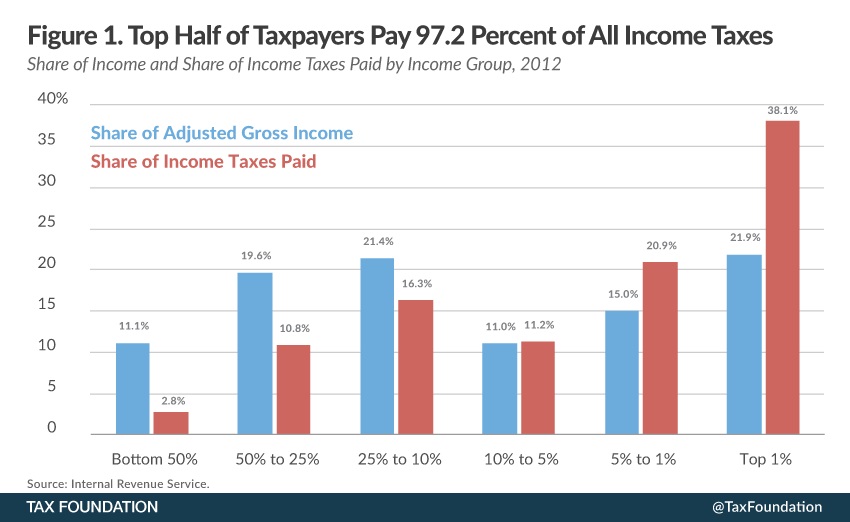





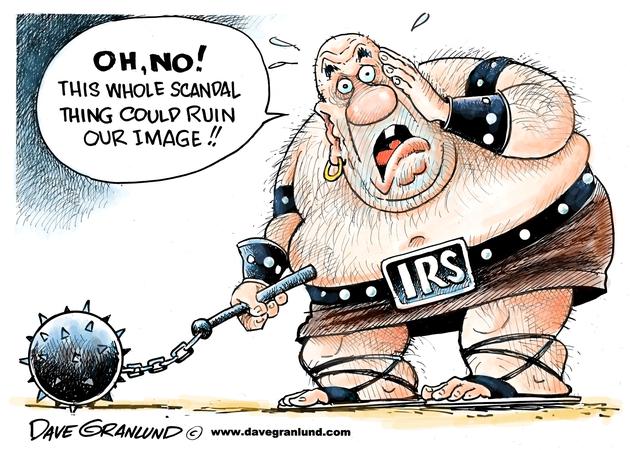


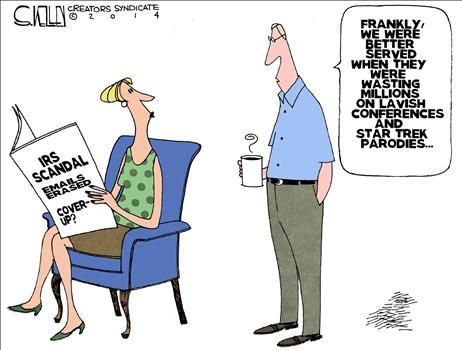


 International Liberty
