Back in 2018, I wrote about Trump’s foolish protectionism backfiring against American farmers. But rather than reverse the mistake of higher taxes on trade, Trump decided to take more money from taxpayers and give it to farmers.
Sadly, Trump didn’t learn from that blunder in his first term. He’s once again imposed higher taxes on trade. Once again, that foolish step has backfired against America’s agricultural sector.
And, once again, Trump is compounding his mistake with more farm welfare.
Here are some details from a report in the New York Times by Alan Rappeport, Ana Swanson, and Kevin Draper.
President Trump rolled out a $12 billion bailout for struggling farmers on Monday as he looks to shore up the finances of some of his most loyal supporters whose financial fortunes have been hurt by his trade war. The rescue package, which was unveiled at an event with farmers at the White House, comes as Mr. Trump’s trade policies have hurt America’s agriculture sector. While Mr. Trump’s plan to raise tariffs was intended to spur domestic production and open export markets it has actually closed off sales for many U.S. farmers. …the money will go to producers of corn, cotton, sorghum, soybeans, rice, wheat and other row crops. The payments to the farmers will be made by the end of February. The Trump administration will initially distribute $11 billion and is reserving another $1 billion to support growers of fruits and vegetables as needed. …A $12 billion bailout would cover only a third of farmers’ losses.
Because we’re going to cite an absurd example of lunacy by the European Commission. So our new series will be Great Moments in Supranational Governance.
It involves Greece and agriculture subsidies, so you can automatically assume spectacular corruption and graft.
And you’d be right. Here are some excerpts from an exposé by Nick Squires for the U.K.-based Telegraph.
Greek farmers claimed to be growing bananas on the slopes of snow-covered mountains as part of a massive fraud costing the European Union tens of millions of euros. …The most creative scams included claiming subsidies for phantom flocks of sheep and goats, as well as for non-existent banana plantations on 9,570ft-high Mount Olympus, which is covered in snow for much of the year. …Landowners claimed subsidies for olive groves in a high-security military airport and for pastureland that extended into the sea. …Government officials were allegedly complicit in the massive fraud, which has claimed the scalps of four ministers. The motivation appeared to have been securing votes in return for turning a blind eye to, or colluding in, the theft of EU funds. …In some cases, farmers claimed money for land and livestock that they did not own, while other cases involved people with no links to farming cashing in on the EU subsidies. …Police scrutinised more than 6,000 out of 800,000 applications and discovered that hundreds of farmers had misappropriated EU subsidies.
In other words, these amazing but disgusting examples of fraud were uncovered after investigating less than 1/10th of 1 percent of potential cases.
So imagine how much more fraud actually exists?
And I’m sure that similar types of fraud exist in other European Union nations.
Sadly, American taxpayers also get raped and pillaged by agriculture subsidies, with some of the worst examples being sugar (see here and here), milk (see here and here), and corn (see here, here, and here).
Earlier this month, I shared some research about the economic cost of ambiguous laws, which I called clutter.
Today’s column will do something similar, except the term used will be “anti-competitive market distortions.”
Here’s a visual from a new report by the Growth Commission.
The authors (13 economists from all over the world) explain that bad government policies create distortions that make hinder growth and dynamism.
The report measures the impact of these distortions and also ranks the world’s 20 most-cluttered and least-cluttered economies.
Here are the most laissez-faire nations. The chart is confusing because countries are listed based on their 2010 scores. But if you look at the 2019 scores in Appendix B, the top-3 nations are Singapore, New Zealand, and Denmark (some of you may be surprised by Denmark, but this confirms my assertions that Nordic countries are very pro-market when looking at variables other than fiscal policy).
Based on Appendix B, the United States is #7, which is an improvement compared to 2010. Though, as the authors note, the U.S. score is “essentially unchanged” while other countries dropped.
Now let’s look at the worst nations (at least among the ones that were ranked since hellholes such as Cuba, North Korea, and Venezuela otherwise would be the worst of the worst). In this case, the authors did rank nations based on 2019 scores, so no need for any mental gymnastics.
Chad wins the booby prize, followed by Madagascar and Bolivia.
Though Appendix B lists Chad, Zimbabwe, and Madagascar as the three worst, so the report could still use a bit of copy-editing.
I’ll close with four final observations.
The report speculates that Trump’s protectionist policies may have a positive effect because they will encourage nations to get rid of their “anti-competitive market distortions.” I hope that is correct, but I’m very skeptical.
Ukraine isn’t actually one of the 20-worst nations if you look at Appendix B, but it is still very bad, which is why I hope western nations eventually will demand radical pro-market reforms as a price of economic and military aid.
Argentina was also one of the worst nations based on 2019 scores, ranking only a few spots above Ukraine. This underscores the huge economic barriers that Javier Milei needs to overcome to help his country prosper.
The report lists 16 Findings, one of which is that nations should use “mutual recognition” for international economic relations to enhance regulatory competition. My only complaint is that this should have been the #1 finding.
P.S. I should do a new version of my Laissez-Faire Index. I’m guessing it will track closely with the results of this report.
My argument, as captured by this cartoon, has nothing to do with left-wing bias.
Instead, I favor limited government.
And I’m hoping that Elon Musk’s Department of Government Efficiency will be more receptive to the message that there’s no reason to have government media outlets.
In a column for the Washington Post, George Will explains why taxpayer money should not be squandered in this fashion. Here are some of most important passages.
The lowest of the low-hanging fruit for budget-cutters is the Corporation for Public Broadcasting… Last year’s appropriation of $535 million brought spending on the CPB to over $15 billion since its 1967 founding. …The federal subsidy is about 15 percent of the funding for all public broadcasting. If the viewers, listeners and others who volunteer the other 85 percent enjoy the CPB’s offerings as much as they say, surely they will provide the other 15 percent. They should know that government’s share is a regressive transfer of wealth: The average American household income is less than that of the average income of PBS viewers and listeners to the CPB’s NPR. …CPB is like the human appendix — vestigial, purposeless and susceptible to unhealthy episodes. In 2025, it is a cultural redundancy whose remaining rationale is, amusingly, that government should subsidize its programing because so few want it. …If Republicans mean a syllable of what they say about pruning federal functions, they will begin with the Corporation for Public Broadcasting.
A couple of years ago, Mike Gonzalez pointed out the bias of government media in an article for National Review.
Here are some excerpts.
Public broadcasting ceased long ago to reflect the views of the American public. Today, in fact, it serves coastal elites who disdain the public. …PBS and NPR reflect only the views of either the administrative state or the identitarian Left — regularly using, for example, the term “Latinx,” which is embraced by 2 percent of Americans of Latin background but offends 40 percent. ….NPR and PBS routinely air views that are stomach-churning to at least half of America, propounding the idea that America is systematically racist, that whites enjoy “privilege” no matter what their station in life, and that slavery is at the very center of our national narrative, constituting our sole origin story. They use your dollars, in other words, to change your country through the use of critical race theory as well as woke gender ideology. …the Corporation for Public Broadcasting has requested half a billion dollars from Congress. Time to spend that money elsewhere.
Given the focus of his column, I’m sure Mike will appreciate this bit of satire.
Let’s close by going back a few years more and looking at these excerpts from Bill Wirtz’s column for the Foundation for Economic Education.
He explains that the market should determine the success of media outlets.
In the effort of maintaining “quality journalism,” publishers and journalists around the world make the case for press subsidies. …But is the state really needed to produce quality content? …With public ownership or subsidization, the stations lose their independence when it comes to critically analyzing a government’s policies. …PBS and NPR actually wouldn’t disappear if government funding were cut. They simply would be forced to operate under the same economic pressures as other U.S. media. …Should it be left up to a roomful of bureaucrats to establish a collective standard of quality information? …diversity of choice…makes the consumer pick winners and losers in the marketplace of media. We should not let the established media tell us that this is the best it can get and that we need public money to sustain it.
My thoughts today are the same as they were in 2011 and 2017.
Government-financed media is bad fiscal policy and bad journalism policy. All handouts should end immediately. And if DOGE and/or Republicans actually go after NPR and PBS, they should eliminate rather than cut. That would at least make it harder to reinstate funding in the future.
P.S. Since America is stumbling toward a Greek-style fiscal crisis, I may as well point out that there was a fight over government-subsidized media when Greece suffered its fiscal collapse. Somehow, I doubt American politicians will learn any lessons.
In Part III, I shared central government spending data to reveal that Milei has been outstanding rather than merely impressive.
For today’s column, I’m going to pour a bit of cold water on the enthusiasm by pointing out some major obstacles that still exist.
We’ll start with this chart comparing the number of “makers” and “takers” in Argentina. As you can see, there are 8 million private-sector taxpayers in the country and they are expected to support 20 million people who live off of government.
Milei’s performance has been spectacular so far, but his ability to resuscitate Argentina will be limited if he can’t alter that worrisome ratio of more than 2 people riding in the wagon for every 1 person pulling the wagon (as shown in this set of cartoons).
Now let’s look at a second chart to further understand why he faces an uphill climb. These numbers come from an article by Ivan Cachanosky, an Argentinian economist (he’s also the source for the above chart). It shows how much consumers are being subsidized for their purchases of utilities and public transportation.
The good news is that Milei reduced the subsidies earlier this year (the change between may-24 and sep-24).
The bad news is that taxpayers are still paying more than half the cost of energy and gas and more than two-thirds of the cost of transportation.
I don’t know whether Milei has executive authority to further reduce the subsidies or whether he needs approval from the Peronists who control the legislature.
Regardless, there are two reasons why it would not be easy to take away goodies from people (as explained in the Second Theorem of Government).
Eliminating the subsidies would show up as higher prices, which would weaken the pro-Milei argument that he has conquered inflation.
Getting rid of subsidies also might cause public protests (the movement that resulted in a leftist president in Chile began as protests against a fare hike for public transport).
In other words, even if Milei has executive power, he probably needs to be judicious in how quickly he tells people that taxpayers no longer will be subsidiizing their purchases of utilities and transportation.
The bottom line is that voters will reward Milei if he produces an economic turnaround. And we know his policies will produce good results. But the open issue is how quickly those positive outcomes materialize. The fate of Argentina hangs in the balance.
Kudos to Rand Paul for addressing this issue. It’s a textbook case of “moral hazard” when government rewards people for making imprudent choices.
Heck, even Crazy Bernie understands that these subsidies are misguided (though I wonder whether he would be on the right side if Vermont had lots of flood plains, just as I wonder whether Sen. Kennedy would be bad on the issue if he was from Vermont).
The left-leaning Washington Post also understands there’s a problem. Here are some excerpts from a new editorial.
Hurricane Helene likely caused more than $30 billion worth of damage. Less than two weeks later, Hurricane Milton inflicted almost $50 billion more. …Who pays for all of this? …Because private home insurers generally find this sector of the business unprofitable, the federal National Flood Insurance Program shoulders the burden of providing homeowners inundation coverage — and it has problems. The NFIP is managed by the Federal Emergency Management Agency… The program provides nearly $1.3 trillion in coverage to more than 5 million policyholders. It’s funded by the premiums collected from policyholders but borrows from the U.S. treasury when claims it’s obligated to pay outpace revenue, as is often the case. …And yet Congress has made no fundamental reforms to the program since its inception nearly six decades ago. That cannot continue. …Moral hazard took hold…as developers and other real estate interests gamed the system to suppress premiums and permit building in low-lying areas and beachfronts exposed to storms. …Heavily lobbied by the interested industries, Congress has taken little action to rectify these long-standing issues, which have been festering for decades. …The one attempt at genuine reform in recent history — the Flood Insurance Reform Act of 2012 — would have ended subsidized rates for second homes and properties that repeatedly flooded. After Hurricane Sandy, however, coastal-state representatives reversed even these modest improvements. …It’s simply unfair to ask the entire population to provide deep subsidies for properties that, by definition, only a portion of Americans can occupy and enjoy.
I’ve only said this a handful of times, but the Washington Post is correct.
Federal flood insurance is a way for some rich people to shift costs on to the rest of us. And it’s a way for insurance companies to shift their risks on to taxpayers.
The entire programs should be eliminated. Though, like Rand Paul, I’m willing to start by getting rid of the subsidies for rich people’s vacation homes.
But let’s not forget that Europe has foolish agriculture subsidies (as does the United States), and this is leading the wine-loving French to actually destroy wine.
Here are some excerpts from a Washington Postreport by Caroline Anders.
France is about to destroy enough wine to fill more than 100 Olympic-size swimming pools. And it’s going to cost the nation about $216 million. Ruining so much wine may sound ludicrous, but there’s a straightforward economic reason this is happening…people are drinking less of it. That has left some producers with a surplus that they cannot price high enough to make a profit. …In June, the European Union initially gave France about $172 million to destroy nearly 80 million gallons of wine, and the French government announced additional funds this week. …Costs are so high and demand is so low that some producers cannot turn a profit. While this year’s subsidy is getting a lot of attention, French government intervention is not a new phenomenon… The nation has long regulated the wine market intensely, in some cases telling producershow many vines they can grow and how far apart they have to be, in an effort to prevent the market from being flooded.
I can’t resist complaining about a bit of that wording.
There is not “a straightforward economic reason” for destroying the wine. After all, the free market does not lead people to do crazy things or make inefficient choices.
The article should be changes to say that there’s “a straightforward political reason” for destroying the wine.
In that column, I shared some research showing big economic gains if the handouts were eliminated.
The bad news is that the cost of these subsidies is now even higher.
And the cost of the program doesn’t just hit consumers. It’s also destroys jobs.
Here are some excerpts from a column by George Will in the Washington Post.
Limiting sugar imports transfers wealth from 335 million Americans who consume sugar and products containing it to, primarily, about 4,000 producers of beet and cane sugar. …import quotas make the U.S. price of sugar two to three times the world market price, a boon to U.S. confectioners’ foreign competitors. …The Agriculture Department can also prop up U.S. sugar prices by buying domestically produced sugar, thereby keeping it off the market. The department “then sells this sugar to U.S. ethanol (of course) producers, often at a big loss (of course).” …A 2006 Commerce Department study concluded that for every job in sugar production that was saved by protectionism, nearly three jobs were lost in the confectionary industry. And the cost to the economy of each sugar production job saved was $826,000 in 2002 dollars ($1.4 million today).
But there’s more damage.
In addition to hurting consumers and workers, Professor Mark Thornton explains that sugar subsidies are bad for the environment.
Here are some excerpts from his column for the Foundation for Economic Education.
The red (or maroonish) tide is truly a nasty problem that I have experienced first-hand in the form of a ruined vacation. …The algae are a natural phenomenon that has been known of for almost two centuries. However, the harmful “blooms” have occurred much more often and in more places in recent decades. …Though other factors play a role in the algae bloom crises, one of the most significant involves the sugar industry. A combination of federal sugar subsidies, federal regulations on pollution, and federal control of Lake Okeechobee (a giant lake in southern Florida) runoff guidelines have created a recipe for disaster. …The federal sugar subsidy has created a massive increase in fertilizer use in agriculture in southern Florida and in other states, such as Louisiana. The EPA protects farmers and others who dump chemicals into the water by setting protection “limits,” and then federal officials dump excessive pollutants into our waterways and we have no recourse against them. I think the solutions are simple and straightforward. End the sugar subsidies.
P.S. George Will mentions that sugar subsidies overlap with ethanol subsidies. If there’s also an overlap with the Export-Import Bank, that would create a connection for three of the most corrupt programs in a town that has made corruption an art form.
For years, I’ve been explaining that students have been hurt rather than helped by government programs to allegedly make higher education more affordable.
How can this be true?
For the simple reason that colleges and universities dramatically boosted tuition in response to all the government subsidies.
Did students somehow benefit?
Hardly. In addition to much higher tuition and fees, the higher-education sector became more bloated, with much more bureaucracy and much lighter workloads.
So the people working for colleges and universities were big beneficiaries.
Students, by contrast, got put on a backwards treadmill featuring more loans, higher tuition, and more debt.
Given this background, I was interested to see a column in the New York Times describing how students at Bennett College (and elsewhere) have been disadvantaged by the current system.
Here’s the headline from the piece, which was written by Tressie McMillan Cottom.
While I certainly sympathize with students who are now trapped in this system, I was left unsatisfied by both the above headline and the actual details of Ms. Cottom’s column.
But even I might be willing to embrace loan forgiveness if something was being do to solve the underlying problem of the government-caused tuition spiral.
Needless to say, that’s not part of the discussion in Washington.
But I want to focus today on a different aspect of this issue.
Biden on his allies in Congress are pushing a policy that will redistribute money from lower-income people to higher-income people.
Let’s look at some of the findings of a new study by Professor Sylvain Catherine at the University of Pennsylvania and Professor Constantine Yannelis at the University of Chicago.
…on average, those who graduate with a post-secondary degree earn more than those who do not, so student debt forgiveness plans, by definition, are geared toward higher-wage earners. Further, many holders of high loan balances completed graduate and professional degrees and thus earn even higher incomes. …universal debt forgiveness policies would disproportionately benefit high earners. …universal and capped forgiveness policies are highly regressive, with the vast majority of benefits accruing to high-income individuals.
Peter Suderman of Reason is unimpressed by this backwards form of redistribution.
The single largest source of student loan debt is MBA programs, as Brookings Institution Senior Fellow Adam Looney has noted, and MBA grads average more than $73,000 in earnings their first year out of school. “The five degrees responsible for the most student debt are: MBA, JD, BA in business, BS in nursing, and MD,” Looney wrote in 2020. “That’s one reason why the top 20 percent of earners owe 35 percent of the debt, and why most debt is owed by well-educated individuals.” Technically, it’s true that well-paid professional school graduates fall into the category of “working people.” But..what Biden appears to be considering, is a massive program of government aid that would disproportionately benefit doctors, lawyers, well-paid medical specialists, and comfortably salaried individuals with advanced business degrees. …a trillion-dollar bailout for the upper-middle class.
This is disgusting and reprehensible.
I don’t think it is a proper role of the federal government to redistribute money. But it is especially grotesque and misguided when politicians use the coercive power of government to shift resources from lower-income Americans to higher-income Americans.
For what it is worth, there already are many policies and programs in Washington that – on net – shift money from the poor to the rich.
It’s almost as if it is okay to have policies that benefit rich people, so long as they mostly live in blue states.
P.S. It is possible to design loan forgiveness to reduce the level of poor-to-rich redistribution. The aforementioned study by Professors Catherine and Yannelis includes data showing how various income deciles will (or will not) benefit depending on different types of forgiveness rules.
At least sort of. Matthew Walther wrote a satirical column (or was it semi-satirical?) for the New York Times about how politicians should take over baseball to save it.
It pays to be honest up front about what nationalizing baseball would entail. While I like to think the Biden administration could seize all 30 teams and dissolve the league by executive order, citing language buried somewhere in the text of the Patriot Act, it’s more realistic to assume that Congress should be involved. . The legislation would allow teams to be purchased at their current (and absurdly inflated) market value. Players, coaches and other staff would become federal employees. The general manager would be appointed by the governor of the state in which the team plays its home games; manager would be a statewide office that citizens vote for every six years. There would be no term limit. …Revenues, though reduced, would be more equitably distributed. I imagine gate receipts and merchandise sales are being given en bloc to local authorities in cities where teams play, bolstering the coffers of many struggling municipalities. Public funding of stadiums would continue, but instead of being a cynical grab of money by destitute owners, it would be a noble enterprise, accepted by indifferent citizens as one of those worthwhile cultural enterprises like the Smithsonian Institution that governments are obliged to support.
The lesson the rest of us should take from this column is that baseball may be declining in popularity…and a government takeover would be the surest way of completely killing the sport.
Matt Welch of Reasonunderstands. He responded to Walther’s column with a serious point about the baleful impact of government-subsidized stadiums.
…both the essay and the spectacle of an ambivalent Opening Day are timely reminders that much of what plagues the sport is not solvable by government, it emanates from government. …Giving out subsidies and tax breaks for sports business owners is self-evidently terrible enough, as have concluded virtually every non-corrupted economist who has ever studied the issue. …Self-funders are also incentivized to stay put, rather than jilting the local fan base. “When governments become landlords,” I wrote last year, “sports businesses, no matter how deep their pockets, start acting like tenants: always eyeing the exits for a potentially better deal. If you build it, they will leave.” Baseball doesn’t need to be nationalized, it needs to be privatized—no more subsidies, no more finger-wagging congressional hearings, no more State of the Union address moralizing, no more unique-to-this-one-sport carve outs from federal law. It’s time for these welfare queens to pull themselves up by the bootstraps, and compete for audience share as if their bottom lines depended on that as much as it does on the ribbon-cutting innumeracy of dull-witted politicians.
Amen.
P.S. Back in 2012, I waxed poetic in a TV interview about politicians investigating steroid use.
A column in the New York Times, authored by Spencer Bokat-Lindell, suggests that the United States needs to increase government spending on child care to “shrink the gap” with other nations.
The main evidence for this proposition is a chart showing the United States at the bottom.
The obvious goal is to convince readers that the United States is doing something wrong.
And that comes across in the text of the article.
If you’re active on social media there’s a decent chance you came across this chart…about how much less the U.S. government spends on young children’s care than other rich countries. The infrastructure and family plan that President Biden proposed and that’s now being negotiated in Congress is an attempt to shrink the gap through four key policies: a federal paid family and medical leave program, an extension of the child tax credit (in the form of a monthly payment) that debuted this year, subsidized day care, and universal pre-K.
But why is it bad to be at the bottom of this list when all the nations above the U.S. have lower living standards?
I’ve repeatedly made the point that we don’t want to “catch up” to nations that have lower levels of prosperity.
Household consumption is 50 percent higher in the United States than the average of other developed nations.
The bottom 10 percent of Americans enjoy better lives than the average citizens of OECD nations.
But maybe this isn’t just about living standards.
The article also suggests that childcare subsidies are needed to avert demographic decline.
…Why does the United States have such an exceptional approach to family and child care benefits…? European and Latin American countries began enacting these policies…the end of World War II accelerated the process, particularly in Europe… “Part of it had to do with fears of demographic decline…the need to recover from those years and to ensure that there was a strong work force going forward,” Siegel told the BBC.
For what it’s worth, I agree that demographic decline is a major issue.
Falling birth rates and increased life expectancy are a very worrisome combination for government budgets.
Which leads to the hypothesis that childcare subsidies can help deal with this problem by enabling higher levels of fertility.
That’s theoretically possible, I’ll admit, but we certainly don’t see it in the data. Here’s the chart from the New York Times, which I’ve augmented by showing fertility rates.
As you can see, the United States has a higher fertility rate than almost every other nation on the list, which certainly suggests that childcare subsidies are not an effective way of encouraging more babies.
Moreover, U.S. fertility of 1.71 is higher than the OECD average of 1.61.
And when you compare the United States to peer nations (“OECD rich nations” and “EU-15 nations”), the fertility gap is even larger, 1.71 to 1.52.
One moral of the story is that government handouts are not an effective way of increasing fertility.
And the other moral of the story is that it’s not a good idea to copy nations that are economically weaker.
Unless my memory is more faulty than usual, I don’t think I’ve written a single favorable article about any of Joe Biden’s policies. Which isn’t a surprise considering his knee-jerk embrace of higher taxes and bigger government.
But it’s now time to praise the President.
Why?
Because his administration is taking some long-overdue steps to reduce the damaging impact of federal flood insurance.
Darryl Fears and Lori Rozsa explain what’s happening in an article for the Washington Post.
…8 million Americans…moved to counties along the U.S. coast between 2000 and 2017, lured by the sun, the sea and heavily subsidized government flood insurance that made the cost of protecting their homes much less expensive, despite the risk of living in a flood zone near a vast body of water. …the Federal Emergency Management Agency willincorporate climate risk into the cost of flood insurance for the first time, dramatically increasing the price for some new home buyers. Next April, most current policyholders will see their premiums go up and continue to rise by 18 percent per year for the next 20 years. …wealthy customers with high-value homes will see their costs skyrocket by as much as $14,400 for one year. About 3,200 property owners — mostly in Florida, Texas, New Jersey and New York — fall in that category. …Homeowners in inland states such as Iowa, Missouri and Nebraska, where creeks, streams and rivers overflow during heavy rains, will also see price increases in their government-backed flood insurance. …“It is now going to say if you’re in a risky place, you’re going to get charged more for it, and other people aren’t footing the bill,” VinZant said. …As of last year, the National Flood Insurance Program (NFIP) run by FEMA was $20 billion in debt from massive payouts to customers.
And here’s some of what the Wall Street Journal reported, in an article by Arian Campo-Flores.
Chris Dailey and his wife are building a new home in coastal St. Petersburg, Fla., that will sit 7 feet above the flood level expected during a major storm. So he was stunned to learn that under the federal flood insurance program’s revamped pricing, his annual premium is slated to soar to $4,986 from $441. …he plans to go through with the project, which is about a block and a half from a canal that leads to Tampa Bay, but worries about the ability to sell it in the future. The National Flood Insurance Program—the main provider of flood coverage in the U.S., with more than five million policies—is rolling out an overhauled pricing method starting Friday in an effort to reflect more accurately the flood risk that individual properties face. …Under the new system, dubbed “Risk Rating 2.0,” some policyholders in especially vulnerable areas will face big premium increases while others in less-exposed spots will see smaller increases or even decreases. …Developers may rethink where they build, and coastal real-estate markets could take a hit. “There is no greater risk-communication tool than a pricing signal,” said Roy Wright, president of the Insurance Institute for Business and Home Safety… Some members of Congress, mainly from coastal states, are urging a delay in implementing the new rating system. Senators including Chuck Schumer (D., N.Y.) and John Kennedy (R., La.) wrote a letter last week to the FEMA administrator expressing concern about sharp premium increases.
The most important sentence in the above excerpt was Roy Wright’s observation about the role of prices.
In a free market, by contrast, prices force people to internalize costs and benefits.
Indeed, in an article for Reason, Ronald Bailey points out that private insurers use prices to – gasp – reflect actual risk.
“Insurers cherry-pick homes, leave flooded ones for the Feds,” runs a very odd headline over at E&E News. The article goes on to explain, “Taxpayers could be forced to spend billions of dollars to bail out the federal government’s flood program as private-sector insurers begin covering homes with little risk of flooding while clustering peril-prone properties in the indebted public program.” Well, yes. …The E&E News article strangely claims that “an increased number of people with flood coverage could help reduce flood damage by making homeowners more aware of their risk.” Of course that’s right, but not being able to purchase any flood insurance at all would be a much more effective and compelling way to make homeowners aware of their risks. …Instead of decrying private insurers for sensibly refusing to cover houses located in high-risk flood zones, the E&E News article should instead have been arguing for ending the government’s National Flood Insurance Program altogether.
Let’s close by looking at how Canada handles this issue.
In a 2019 article for the New York Times, Christopher Flavelle explains that Canada recognized years ago that it doesn’t make sense to subsidize homeowners who make risky decisions.
Unlike the United States, which will repeatedly help pay for people to rebuild in place, Canada has responded to the escalating costs…by limiting aid after disasters, and even telling people to leave their homes. …In 2015, Canada made it harder for lower levels of government to get federal money after disasters. The next year, British Columbia said flood victims who had chosen not to buy private flood insurance would be ineligible for government aid. This year the federal government went further still, warning that homeowners nationwide would eventually be on their own. If people deliberately rebuild in danger zones, at some point “they are going to have to assume their own responsibility for the cost burden,” Public Security Minister Ralph Goodale told reporters in April. “You can’t repeatedly go back to the taxpayer and say, ‘Oh, it happened again.’” …Quebec also limited disaster aid, and not just inside the special zone. After this spring’s flooding, the province said it would set an upper threshold for assistance at $100,000 over the lifetime of the house. After that, homeowners face a choice: They can sell to the government, which will pay no more than $250,000, regardless of market value. Or they can get money to rebuild one last time — but in doing so, they forfeit any future financial assistance.
Two cheers for the Canadians. They’ve been more rational than policy makers in the United States (the ones at FEMA, at least in the past, have been especially incompetent).
But not three cheers. In a column for the Wall Street Journal, Professor Walter Block explains how our neighbors to the north are still imperfect.
The best policy is…laissez-faire capitalism. Treat people as adults—allow them to take whatever flooding risks they choose, but on their own nickel. They should be free to build wherever they want, and to indemnify themselves against risk by buying insurance on the open market. But they should not receive a dime of taxpayers’ money for rebuilding.
I’ve written nearly 6,100 columns for International Liberty, but only one of those columns has focused on Lebanon.
That was back in 2018, when I explained how the nation could have avoided a fiscal crisis with a spending cap.
Now it’s time to once again write about Lebanon, though maybe today’s column is actually more about media bias.
That’s because this story in the Washington Post, authored by Sarah Dadouch, shows how journalists have far too little understanding of economics.
Lebanon’s worsening financial meltdown has been accompanied by a dire shortage of imported fuel. Roads in cities like Beirut and Tripoli are now lined with cars queuing for hours to get their allotted amount of gasoline, at most a third of a tank. …smugglers have discovered there’s good money to be made by buying gasoline in Lebanon at the heavily subsidized price and then selling it on the black market in Syria, which has a debilitating fuel crisis of its own. …Many Lebanese politicians blame the gasoline crisis partly on smuggling… In April, Lebanon’s caretaker energy minister said the disparity in gasoline prices between Lebanon and Syria means smugglers can make huge profits next door. …The Lebanese army, which has received more than $2.5 billion in aid from the United States since 2006, has made concerted efforts to curb the illicit commerce.
The smugglers aren’t the cause of Lebanon’s energy crisis. They’re merely a symptom of the real problem, which is that the country’s politicians buy votes from motorists by subsidizing gasoline.
Get rid of those subsidies and smuggling will disappear overnight.
The moral of the story is that bad things happen when politicians interfere with prices. We have forty centuries of evidence showing price controls don’t work. When politicians try to curry favor by rigging prices, bad things happen.
And the second moral of the story is that journalists don’t understand the first moral of the story (not that I’m surprised, given the shaky track record of the Washington Post).
P.S. I’m flabbergasted that American taxpayers have sent $2.5 billion of foreign aid to Lebanon’s army, which gives the government fiscal leeway to pursue bad policies such as gasoline subsidies!
P.P.S. While gasoline subsidies are an insanely foolish policy for a nation enduring a fiscal crisis, fiscal policy isn’t even Lebanon’s biggest problem. As noted in this video, the country does even worse on trade policy, regulatory policy, and rule of law.
P.P.P.S. The post-war German economic miracle was triggered by the removal of price controls.
While I freely self-identify as a libertarian, I don’t think of myself as a philosophical ideologue.
Instead, I’m someone who likes digging into data to determine the impact of government policy. And because I’ve repeatedly noticed that more government almost always leads to worse outcomes, I’ve become a practical ideologue.
In other words, when looking at at an issue, I now have a default assumption that government is going to be the problem, not the solution.
I think more people will share my viewpoint if they peruse this chart from Mark Perry.
It shows changes in prices for selected goods and services over the past 21 years, and the inescapable conclusion (as I noted when writing about the 2014 version of his chart) is that we get higher relative prices in sectors where there’s the most government intervention.
By contrast, we see falling relative prices (and sometimes falling absolute prices!) in sectors where there is little or no government intervention.
Here’s some of Mark’s description of what we can learn from his chart.
I’ve updated the chart above with price changes through the end of last year. During the most recent 21-year period from January 2000 to December 2020, the CPI for All Items increased by 54.6% and the chart displays the relative price increases over that time period for 14 selected consumer goods and services, and for average hourly wages. …Various observations that have been made about the huge divergence in price patterns over the last several decades… The greater (lower) the degree of government involvement in the provision of a good or service the greater (lower) the price increases (decreases) over time, e.g., hospital and medical costs, college tuition, childcare with both large degrees of government funding/regulation and large price increases vs. software, electronics, toys, cars and clothing with both relatively less government funding/regulation and falling prices.
We find that prices have skyrocketed in areas of the healthcare sector where government plays a big role, especially hospital care.
By contrast, prices have been steady (or even falling!) in areas of the healthcare sector where competitive markets are allowed to operate, most notably for cosmetic procedures.
It’s almost as if it makes sense to have a default assumption that government is the problem rather than the solution.
P.S. While the data in Mark’s chart tell a depressing story about the harmful effect of government intervention, he shares one bit of good news in his article.
The annual increase in college tuition and fees of only 1.4% last year was the smallest annual increase in the history of the CPI for college tuition and fees going back to 1978, and the only annual increase ever below 2%. That increase is far below the average annual increase in college tuition of nearly 7% over the last 42 years. So perhaps the “higher education bubble” is finally starting to show signs of deflating?
It’s Halloween, which means trick-or-treaters are beginning to flood the streets of cities and towns all across the country in a beloved tradition. Children joyously knock on doors and receive candy at most of the houses in their neighborhood—most of the houses, that is, except for that of Bernie Sanders. …he pulls out his large bowl of candy, reaches his hand out, and takes from the children who have a lot of candy, placing their “donations” into his bowl for later redistribution to the less fortunate. …Of course, the senator doesn’t provide his redistribution services for free: he takes a “small tax” out of his collection before carefully redistributing the candy based on his fair and equitable Candy Plan, which he draws up every year. At publishing time, Sanders still couldn’t figure out why kids kept avoiding his front door altogether.
We’ll close with a more serious point about Halloween, courtesy of Kerry McDonald’s column for the Foundation for Economic Education.
Several cities and counties have placed an outright ban on children’s trick-or-treating due to COVID-19 fears, while others are strongly urging families to forgo the practice. The US Centers for Disease Control and Prevention (CDC) advises individuals and families to spend this Saturday at home, alone (masks optional). …Springfield, Massachusetts was one of the first places in the US to ban trick-or-treating. In September, the mayor canceled all trick-or-treating in the state’s third largest city, saying it was a “no-brainer.” …The Republican governor of Massachusetts, Charlie Baker, pointed out the potential unintended consequences of banning trick-or-treating… Baker explained that “the reason we’re not canceling Halloween is because that would have turned into thousands of indoor Halloween parties, which would have been a heck of a lot worse for public safety.” …bans and restrictions also punish children and young people whose mental health and emotional well-being are increasingly deteriorating under dystopian isolation policies. This year, these policies are the spookiest things about Halloween.
P.S. I can’t tell if this is a pro-Trump or anti-Trump cartoon, but it’s definitely appropriate for today.
P.P.S. If you click here, here, and here, you’ll see that there were lots of clever Halloween-themed cartoons during Obama’s presidency.
When I wrote yesterday that Trump’s overall rating on economic policy was “bad,” a few people wrote to complain.
I did acknowledge in the column that it may be too soon to give the current president a grade, but it’s not looking good. He not only has a bad record on big issues such as spending and trade, but he also is prone to cronyist policies in other areas.
And goodies for corn growers, which is the topic of today’s column.
But we’re not going to look at traditional agriculture subsidies (which are awful in their own right). Instead we’re going to focus on government handouts that bribe corn growers and others into turning crops into fuel.
This is a policy that’s bad for taxpayers, bad for consumers, bad for the environment, and probably bad for motherhood and apple pie.
The Competitive Enterprise Institute wrote last year about this boondoggle.
President Trump has again sought changes to the Renewable Fuel Standard (RFS)… The previous reform effort granted ethanol producers and corn growers their request to raise the amount of ethanol allowed year-round in gasoline from 10 to 15 percent (E-15)… But this did not create peace. Pro-RFS forces soon demanded both E-15 and fewer small refinery waivers. Now, the administration has announced that, while it will still grant small refinery exemptions, it will reallocate the waived amounts to non-exempt refineries and thus preserve the 15 billion gallon maximum set out in the law. It will also ease the labelling requirements for gas stations selling E-15. …Lost in the debate between the biofuels industry and the petroleum industry is what the RFS means for consumers. Gasoline prices are relatively low right now, but not because of the RFS. And we are always one bad corn crop away from an ethanol-induced price spike. …The proposed changes can only add to the upward pressure on pump prices.
The year before, the Independent Institute criticized Trump’s approach.
…instead of terminating the Renewable Fuel Standard (RFS) — which mandates a sharp increase in renewable fuel consumption by 2022 — the Trump administration has doubled-down on biofuels. President Trump has said that he supports ramping up ethanol production even further by allowing gasoline containing 15 percent ethanol to be sold year-round. Doing so would expand ethanol use and encourage the EPA to ratchet that percentage up in subsequent years. …a comprehensive meta-analysis in the American Journal of Agricultural Economics found the greenhouse gas benefits of ethanol to be almost zero. For other pollutants like nitrogen oxides (NOx) and ozone, ethanol actually is worse than gasoline. Because 40 percent of the nation’s corn crop is used in the production of biofuels, ethanol production also raises food costs. As a result, consumers pay higher prices for beef, milk, poultry and pork, among other items. …Because the RFS moved corn growing to areas that require more water, more fertilizer, and more acreage, prairies and other wild-lands are disappearing, soil is eroding, groundwater is being depleted, and ocean dead zones are expanding. …If ethanol truly were a good substitute for gasoline, no E10 or E15 mandate would be necessary.
Ironically, Trump’s misguided handouts aren’t necessarily buying him any friends.
As reported by Bloomberg, one of the big recipients says it may diversify away from ethanol unless subsidies are increased.
American ethanol makers have for years been reliant on a government policy that mandates biofuel use. But industry stalwart Green Plains Inc. wants to break away from that dependence… The Omaha, Nebraska-based company has lost faith that the ethanol industry will get the support it needs from parts of the Trump administration, said Chief Executive officer Todd Becker. …“We are going to spend half a billion dollars transforming this company to be not dependent on government policy,” Becker said in an interview. The EPA is “no friend of ethanol. They’ve done everything they can to destroy the market for us. They’ve done everything they can to destroy this industry.” …The U.S. ethanol industry was born out of government support. In the 1970s, President Jimmy Carter asked agribusiness leaders to make biofuels… The industry got another boost in 2007, when the Renewable Fuels Standard expanded the mandate to blend ethanol into gasoline.
This takes chutzpah. Ethanol arguably could be the most subsidized product in the United States, yet beneficiaries say they may exit the industry without ever-increasing handouts.
I’m not sure how to react to this supposed threat.
Should I say, “Here’s your hat, what’s your hurry”?
Should I channel Clint Eastwood and say, “Go ahead, make my day”?
Or should I simply say, “Don’t let the door hit you on the way out”?
The bottom line is that ethanol handout were bad policy when they were first created and they are bad policy today. These handouts are misguided when Democrats are in charge, and they’re misguided when Republicans are in charge.
I’d like Trump to switch his position because of a newfound appreciation for free enterprise, but I’ll be happy if he shifts in the right direction simply because he doesn’t appreciate greedy complaints from the ethanol industry.
As part of National Education Week, I’ve looked at the deterioration of K-12 government schools and also explained why a market-based choice system would be a better alternative.
The good news is that we have a choice system for higher education. Students can choose from thousands of colleges and universities.
The bad news is that federal subsidies are making that system increasingly expensive and bureaucratic.
That’s today’s topic.
The underlying problem is “third-party payer,” which is a wonky term to describe what happens when students are buying education with money from somebody else. When this happens, they tend to not care about the price, which then makes it possible for colleges and universities to increase tuition so they become the real beneficiaries of the subsidies.
So nobody should be surprised that college costs are skyrocketing upwards, both in absolute terms and relative terms.
It’s a bubble, but one that probably won’t pop because of the ongoing stream of subsidies.
Jon Miltimore has a very good summary of the perverse incentives created by government.
Federal loans have made tuition far more expensive. Universities get paid up front—so whether students graduate, drop out, or default on the loan doesn’t matter. Departing students are easily replaced. Confident that students have access to cheap money (which can be expensive in the long run), colleges have no incentive to control or cut back the prices of housing, tuition, fees, and meals. …The best solution is to get the federal government out of the loan business altogether. If universities themselves offered loans, incentives would push them toward controlling costs and maximizing student success after graduation. Another option is income share agreements, which allow potential employers or independent organizations to pay tuition in exchange for a percentage of the students’ future earnings. …When markets seem to falter—recent, painful examples include the student loan bubble and housing crisis—the culprit is often government intervening in a way that warps incentives.
In a study for the Mercatus Center, Veronique de Rugy and Jack Salmon compile numbers and analyze studies.
The evidence broadly suggests that institutions of higher education are capturing need-based federal aid and responding to increased federal aid generosity by reducing institutional aid. …federal and state student aid funding expanding significantly over time, from just under $3 billion in 1970 to just under $160 billion in 2017. …Increased eligibility over time has led to a large and growing proportion of college students who receive federal financial aid. …there is a growing strand of economic literature examining the relationship between federal aid and tuition prices. …A study by Bradley Curs and Luciana Dar…finds that…institutions actually raise tuition levels and reduce their institutional aid when the state increases need-based awards. …A study by Stephanie Cellini and Claudia Goldin…finds that for comparable full-time nondegree programs in the same field over 2005–2009, institutions that are eligible for federal aid raised tuition by about 78 percent more than institutions that are ineligible. …Grey Gordon and Aaron Hedlund…develop a quantitative model for higher education to test explanations for the steep rise in college tuition between 1987 and 2010. …These results reveal that increased federal aid is responsible for more than doubling the cost of tuition over a 23-year period.
Here’s a chart from the study showing the explosion of federal subsidies.
By the way, Paul Krugman actually thinks taxpayers have been “starving” higher education.
Let’s get back to exploring the analysis of more sensible economists. Professor Antony Davies and James Harrigan make two key points in their FEE column.
First, subsidies are producing consumers who don’t make sensible education purchases.
…total student debt in the United States passed the $1.5 trillion mark. …the total has been growing at around $80 billion per year. …Around 11 percent of student debt is either delinquent or in default, which is more than four times the delinquency rates for credit cards and residential mortgages. …the problem with making college “free…” that a student must repay a college loan gives him tremendous incentive to at least consider what jobs he could obtain with the college education he must pay for after graduation. A student who is unencumbered by the need to repay a college loan faces little cost when choosing to major in something with little to no future value. …It’s well worth taking out tens of thousands of dollars in loans to pay for a degree that increases a student’s expected lifetime earnings by millions of dollars. But taking out tens of thousands in loans to pay for a degree that increases a student’s expected lifetime earnings by the same tens of thousands or less is, financially, a terrible investment.
Here’s a chart from their article, which looks at the value of various majors.
Second, the problems are caused by bad government policy.
We are in the midst of a college loan bubble for almost all of the same reasons that, a decade ago, we found ourselves in the midst of a housing loan bubble. …In both bubbles, the government interfered in markets in two critical ways. First, the government stepped in as a lender. Second, it shielded private lenders from the consequences of making bad loans. …Making college “free” will simply double-down on the very problem we already face. With “free” college, not only will colleges not have to care whether students can repay their loans, but the students themselves will also not have to care. Meanwhile, taxpayers will be on the hook for the numerous imprudent decisions by both colleges and students. It will bring about the worst of all possible worlds.
Victor Davis Hanson of the Hoover Institution used to be a Classics Professor at California State University. So he’s well positioned to provide a then-now comparison.
Here’s what he experienced in his early years.
Overwhelmingly liberal and often hippish in appearance, American faculty of the early 1970s still only rarely indoctrinated students or bullied them to mimic their own progressivism. Rather, in both the humanities and sciences, students were taught the inductive method of evaluating evidence… As an undergraduate and graduate student at hotbeds of prior 1960s protests at UC Santa Cruz and Stanford, I don’t think I had a single conservative professor. Yet there were few faculty members, in Western Civilization, history, classics, or mandatory general education science and math classes, who either sought to indoctrinate us with their liberal world view or punished us for remaining conservative. …Administrators in the 1960s and 1970s were relatively few. Most faculty saw administration as a temporary if necessary evil that took precious time away from teaching and research and so were admired for putting up with it. …Professors taught large loads—four or five classes a semester for California State University faculty. …The result was that both college tuition and room and board stayed relatively inexpensive.
And here’s what it’s become.
What went wrong? …Politics increasingly infected courses as competence eroded—logical for faculty and students since the former required far less of the latter. Across the curriculum, race, class, and gender studies found their way into art, music, literature, philosophy and history classes. Deduction now replaced the old empiricism. Grades inflated… Universities emulated the ethos of loan sharks and shake-down businesses. The con was as simple as it was insidiously brilliant. Academic lobbyists pressed the government for billions in guaranteed student loans… The federal government-backed student loans. That guarantee greenlighted cash-flush universities to pay inter alia for diversity czars, assistant provosts of “inclusion,” and armies of woke aides and facilitators, to reduce teaching loads, and to open more race/class/gender “centers” on campus—by jacking up college costs higher than the rate of inflation. Student debt soared. …A new generation owes $1.5 trillion in student debt… One’s 20s are now redefined as the lost decade, as marriage, child-rearing, and home buying are put off, to the extent they still occur, into one’s 30s. …The result was reduced teaching, a bonanza of release time, administrative bloat, Club Med dorms, gyms, and student unions, and epidemics of highly paid but non-teaching careerist advisors, and counselors.
So what’s his solution?
Universities should be held responsible for repaying a large percentage of the loans they issued and yet in advance knew well could not and would not be repaid. The government should get out of the campus loan insurance business.
Amen.
As I said at the end of this recent TV interview, colleges and universities need to have some skin in the game.
Daniel Kowalski explains for FEE that government policy is causing ever-higher costs.
Student loans did not exist in their present form until the federal government passed the Higher Education Act of 1965, which had taxpayers guaranteeing loans made by private lenders to students. While the program might have had good intentions, it has had unforeseen harmful consequences. …Secured financing of student loans resulted in a surge of students applying for college. This increase in demand was, in turn, met with an increase in price because university administrators would charge more if people were willing to pay it… According to Forbes, the average price of tuition has increased eight times faster than wages since the 1980s. …The government’s backing of student loans has caused the price of higher education to artificially rise…the current system of student loan financing needs to be reformed. Schools should not be given a blank check, and the government-guaranteed loans should only cover a partial amount of tuition. Schools should also be responsible for directly lending a portion of student loans so that it’s in their financial interest to make sure graduates enter the job market with the skills and requirements needed to get a well-paying job. If a student fails to pay back their loan, then the college or university should also share in the taxpayer’s loss.
All this government-fueled debt has real consequences. Three economists from the Federal Reserve found it hinders home ownership.
To estimate the effect of the increased student loan debt on homeownership, we tracked student loan and mortgage borrowing for individuals who were between 24 and 32 years old in 2005. Using these data, we constructed a model to estimate the impact of increased student loan borrowing on the likelihood of students becoming homeowners during this period of their lives. We found that a $1,000 increase in student loan debt (accumulated during the prime college-going years and measured in 2014 dollars) causes a 1 to 2 percentage point drop in the homeownership rate for student loan borrowers during their late 20s and early 30s. …According to our calculations, the increase in student loan debt between 2005 and 2014 reduced the homeownership rate among young adults by 2 percentage points. The homeownership rate for this group fell 9 percentage points over this period (figure 2), implying that a little over 20 percent of the overall decline in homeownership among the young can be attributed to the rise in student loan debt.
For those interested, here are some of their empirical findings.
Professor Richard Vedder explains for the Wall Street Journal that this subsidized system has resulted in an environment in which neither students nor faculty work very hard.
One reason college is so costly and so little real learning occurs is that collegiate resources are vastly underused. Students don’t study much, professors teach little, few people read most of the obscure papers the professors write, and even the buildings are empty most of the time. …Surveys of student work habits find that the average amount of time spent in class and otherwise studying is about 27 hours a week. The typical student takes classes only 32 weeks a year, so he spends fewer than 900 hours annually on academics—less time than a typical eighth-grader… As economists Philip Babcock and Mindy Marks have demonstrated, students in the middle of the 20th century spent nearly 50% more time—around 40 hours weekly—studying. They now lack incentives to work very hard, since the average grade today—a B or B-plus—is much higher than in 1960… Sociologists Richard Arum and Josipa Roksa have demonstrated, using the Collegiate Learning Assessment, that the typical college senior has only marginally better critical reasoning and writing skills than a freshman. Federal Adult Literacy Survey data, admittedly somewhat outdated, shows declining literacy among college grads in the late 20th and early 21st centuries. …the typical professor is in class around one-third fewer hours than his 1965 counterpart. …The litany of underused resources goes on. In 1970 at a typical university there were perhaps two professors for each administrator. Today, there are usually more nonteaching administrators than professors.
That’s what Hillary Clinton did in 2016 and it’s what politicians – most notably Elizabeth Warren and Bernie Sanders – are doing for 2020.
But that will make a bad situation even worse.
Paul Boyce, writing for FEE, explains that free college will lower standards and make college degrees relatively meaningless.
…college enrollment rates reached more than 40 percent in 2017. Of those, nearly one in three (31 percent) drop out entirely. Why should the average taxpayer subsidize this? …If college is free, it is likely that this rate will increase further. Students won’t have any skin in the game because they won’t be picking the tab up at the end. This effects efficient decisionmaking. In France, for example, the dropout rate is as high as 50 percent. …Government has a track record of underfunding. …This is demonstrated in France, which runs a “free” system. Its universities are heavily underfunded and unable to satisfy student enrollment. …As college enrollment has increased, standards have fallen to accommodate for this. …it defeats the goal of creating a well-educated workforce. …it dilutes the importance and value of a degree. …Undergraduate degrees will become the norm, and the financial return will become negligible.
And the experience of other nations isn’t a cause for optimism.
Andrew Hammel, an American who taught for many years at a German university, is not overly impressed by that nation’s free-tuition regime.
…in their early teen years, the brightest German students are sent to the most prestigious form of German high school, the Gymnasium. Currently, over 50 percent of German students earn this privilege (this number has jumped in the last 30 years, prompting charges of grade inflation). Gymnasium graduates with reasonable grades are guaranteed a place in a German university; there is no entrance exam. 95 percent of German students attend public universities, where they are charged fees, but not formal tuition. All professors at public universities are civil servants. …Supporters of the tuition-free system note that 65 percent of Germans say university should be tuition-free, “even if this means the quality of education is slightly worse.” …The system also gives students extra freedom: you can study art history or sociology, knowing that you won’t be hounded by creditors if you later find only spotty employment. …one-third of all students who enroll in German universities never finish. A recent OECD study found that only 28.6 percent of Germans aged between 25 and 64 had a tertiary education degree… German universities punch below their weight in international rankings… Gather any group of German professors, and talk will immediately turn to the burgeoning bureaucracy which distracts them from teaching and research. …Americans who teach ordinary classes in Germany find average German students somewhat less motivated than their dues-paying American counterparts. The top third of motivated students would succeed anywhere, and the bottom third, as we have seen, drop out.
I’ll close with an observation about inefficiency in higher education.
Here’s a chart I shared a few years ago. I’m sure the problem is even worse today.
The bottom line is that student debt, administrative bloat, and expensive tuition are all predictable consequences of federal subsidies.
P.S. If you’re worried about political correctness in higher education (and you have the appropriate subscriptions), I recommend this column in the Wall Street Journal and this George Will column in the Washington Post.
P.P.S. Here’s a video interview with Richard Vedder about high costs and inefficiency in higher education. And I also recommend this video explanation by Professor Daniel Lin.
It’s basically a welfare scam for politically connected farmers and it undermines the efficiency of America’s agriculture sector.
Some of the specific handouts – such as those for milk, corn, sugar, and even cranberries – are unbelievably wasteful.
But the European Union’s system of subsidies may be even worse. As reported by the New York Times, it is a toxic brew of waste, fraud, sleaze, and corruption.
…children toil for new overlords, a group of oligarchs and political patrons…a feudal system…financed and emboldened by the European Union. Every year, the 28-country bloc pays out $65 billion in farm subsidies… But across…much of Central and Eastern Europe, the bulk goes to a connected and powerful few. The prime minister of the Czech Republic collected tens of millions of dollars in subsidies just last year. Subsidies have underwritten Mafia-style land grabs in Slovakia and Bulgaria. …a subsidy system that is deliberately opaque, grossly undermines the European Union’s environmental goals and is warped by corruption and self-dealing. …The program is the biggest item in the European Union’s central budget, accounting for 40 percent of expenditures. It’s one of the largest subsidy programs in the world. …The European Union spends three times as much as the United States on farm subsidies each year, but as the system has expanded, accountability has not kept up. …Even as the European Union champions the subsidy program as an essential safety net for hardworking farmers, studies have repeatedly shown that 80 percent of the money goes to the biggest 20 percent of recipients. …It is a type of modern feudalism, where small farmers live in the shadows of huge, politically powerful interests — and European Union subsidies help finance it.
By the way, the article focused on the sleaze in Eastern Europe.
The problem, however, is not regional. Here’s a nice visual showing how there’s also plenty of graft lining pockets in Western Europe.
P.S. I imagine British politicians will concoct their own system of foolish subsidies, but the CAP handouts are another reason why voters were smart to vote for Brexit.
P.P.S. The CAP subsidies are one of many reasons why the European Union has been a net negative for national economies.
But the silver lining to that dark cloud is that Fannie and Freddie were placed in “conservatorship,” which basically has curtailed their actions over the past 10 years.
Indeed, some people even hoped that the Trump Administration would take advantage of their weakened status to unwind Fannie and Freddie and allow the free market to determine the future of housing finance.
Those hopes have been dashed.
Cronyists in the Treasury Department unveiled a plan earlier this year that will resuscitate Fannie and Freddie and recreate the bad incentives that led to the mess last decade.
This proposal may be even further to the left than proposals from the Obama Administration. And, as Peter Wallison and Edward Pinto of the American Enterprise Institute explained in the Wall Street Journal earlier this year, this won’t end well.
…the president’s Memorandum on Housing Finance Reform…is a major disappointment. It will keep taxpayers on the hook for more than $7 trillion in mortgage debt. And it is likely to induce another housing-market bust, for which President Trump will take the blame.The memo directs the Treasury to produce a government housing-finance system that roughly replicates what existed before 2008: government backing for the obligations of the government-sponsored enterprises Fannie Mae and Freddie Mac , and affordable-housing mandates requiring the GSEs to encourage and engage in risky mortgage lending. …Most of the U.S. economy is open to the innovation and competition of the private sector. Yet for no discernible reason, the housing market—one-sixth of the U.S. economy—is and has been controlled by the government to a far greater extent than in any other developed country. …The resulting policies produced a highly volatile U.S. housing market, subject to enormous booms and busts. Its culmination was the 2008 financial crisis, in which a massive housing-price boom—driven by the credit leverage associated with low down payments—led to millions of mortgage defaults when housing prices regressed to the long-term mean.
Wallison also authored an article that was published this past week by National Review.
He warns again that the Trump Administration is making a grave mistake by choosing government over free enterprise.
Treasury’s plan for releasing Fannie Mae and Freddie Mac from their conservatorships is missing only one thing: a good reason for doing it. The dangers the two companies will create for the U.S. economy will far outweigh whatever benefits Treasury sees. Under the plan, Fannie and Freddie will be fully recapitalized… The Treasury says the purpose of their recapitalization is to protect the taxpayers in the event that the two firms fail again. But that makes little sense. The taxpayers would not have to be protected if the companies were adequately capitalized and operated without government backing. Indeed, it should have been clear by now that government backing for private profit-seeking firms is a clear and present danger to the stability of the U.S. financial system. Government support enables companies to raise virtually unlimited debt while taking financial risks that the market would routinely deny to firms that operate without it. …their government support will allow them to earn significant profits in a different way — by taking on the risks of subprime and other high-cost mortgage loans. That business would make effective use of their government backing and — at least for a while — earn the profits that their shareholders will demand. …This is an open invitation to create another financial crisis. If we learned anything from the 2008 mortgage market collapse, it is that once a government-backed entity begins to accept mortgages with low down payments and high debt-to-income ratios, the entire market begins to shift in that direction. …why is the Treasury proposing this plan? There is no obvious need for a government-backed profit-making firm in today’s housing finance market. FHA could assume the important role of helping low- and moderate-income families buy their first home. …Why this hasn’t already happened in a conservative administration remains an enduring mystery.
I’ll conclude by sharing some academic research that debunks the notion that housing would suffer in the absence of Fannie and Freddie.
A working paper by two economists at the Federal Reserve finds that Fannie and Freddie have not increased homeownership.
The U.S. government guarantees a majority of mortgages, which is often justified as a means to promote homeownership. In this paper, we estimate the effect by using a difference-in-differences design, with detailed property-level data, that exploits changes of the conforming loan limits (CLLs) along county borders. We find a sizable effect of CLLs on government guarantees but no robust effect on homeownership. Thus, government guarantees could be considerably reduced,with very modest effects on the homeownership rate. Our finding is particularly relevant for recent housing finance reform plans that propose to gradually reduce the government’s involvement in the mortgage market by reducing the CLLs.
For those who care about the wonky details, here’s the most relevant set of charts, which led the Fed economists to conclude that, “There appears to be no positive effect of the CLL increases in 2008 and no negative effect of the CLL reductions in 2011.”
And let’s not forget that other academic research has shown that government favoritism for the housing sector harms overall economic growth by diverting capital from business investment.
The bottom line is that Fannie and Freddie are cronyist institutions that hurt the economy and create financial instability, while providing no benefit except to a handful of insiders.
The great French economist from the 1800s, Frederic Bastiat, famously explained that good economists are aware that government policies have indirect effects (the “unseen”).
Bad economists, by contrast, only consider direct effects (the “seen”).
Let’s look at the debate over stadium subsidies. Tim Carney of the American Enterprise Institute narrates a video showing how the “unseen” costs of government favoritism are greater than the “seen” benefits.
In a column for the Dallas Morning News, Dean Stansel of Southern Methodist University discussed some of his research on the topic.
While state and local economic development incentives may seem to help the local economy, the offsetting costs are usually ignored, so the overall effect is unclear. Furthermore, from the perspective of the nation as a whole, these policies are clearly a net loss. …In a new research paper, my colleague, Meg Tuszynski, and I examined whether there is any relationship between economic development incentive programs and five measures of entrepreneurial activity. Like the previous literature in this area, we found virtually no evidence of a positive relationship. In fact, we found a negative relationship with patent activity, a key measure of new innovation. …A recent study by the Mercatus Center found that 12 states could reduce their corporate income tax by more than 20 percent if incentive programs were eliminated. That includes a 24 percent cut in Texas’ business franchise tax. In six states, it could either be completely eliminated or reduced by more than 90 percent. These are big savings that would provide substantial tax relief to all businesses, both big and small, not just those with political influence. …That would provide a more level playing field in which all businesses can thrive.
And here’s a Wall Street Journaleditorial from earlier the year.
Amazon left New York at the altar, turning down a dowry of $3 billion in subsidies. Foxconn’s promised new factory in Wisconsin, enticed with $4 billion in incentives, has fallen into doubt. …Now add General Electric , which announced…it will renege on its plan to build a glassy, 12-story headquarters on Boston’s waterfront. …The company reportedly…pledged to bring 800 jobs to Boston. In exchange, the city and state offered $145 million in incentives, including tax breaks and infrastructure funds. GE’s boss at the time, Jeff Immelt, said not to worry: For every public dollar spent, “you will get back one thousand fold, take my word for it.” …two CEOs later, a beleaguered GE won’t be building that fancy tower at all. There won’t even be 800 jobs. …GE will lease back enough space in two existing brick buildings for 250 employees. …what a failure of corporate welfare.
Let’s wrap this up with a look at some additional scholarly research.
Economists for the World Bank investigated government favoritism in Egypt and found that cronyism rewards politically connected companies at the expense of the overall economy.
This paper presents new evidence that cronyism reduces long-term economic growth by discouraging firms’ innovation activities. …The analysis finds that the probability that firms invest in products new to the firm increases from under 1 percent for politically connected firms to over 7 percent for unconnected firms. The results are robust across different innovation measures. Despite innovating less, politically connected firms are more capital intensive, as they face lower marginal cost of capital due to the generous policy privileges they receive, including exclusive access to input subsidies, public procurement contracts, favorable exchange rates, and financing from politically connected banks. …The findings suggest that connected firms out-rival their competitors by lobbying for privileges instead of innovating. In the aggregate, these policy privileges reduce…long-term growth potential by diverting resources away from innovation to the inefficient capital accumulation of a few large, connected firms.
For economics wonks, here’s Table 2 from the study, showing how subsidies are associated with less innovation.
Shocking, but true. The Vermont socialist actually understands that it makes no sense to subsidize new homes in flood-prone areas.
"If people want to rebuild in an area which will be devastated by the next storm, they're certainly not going to get federal assistance from my administration." -Sen. Sanders on changing FEMA rules to spur a retreat from properties suffering repeated losses. #ClimateTownHallpic.twitter.com/BC47QBZupm
I’ll probably never again have a chance to write this next sentence, so it deserves an exclamation point. Bernie is completely correct!
Flood insurance encourages people to take on excessive risk (i.e., it creates moral hazard). And the subsidies often benefit rich people with beachfront homes (which may explain why Senator Sanders is on the right side)
If nothing else, politicians are very clever about doing the wrong thing in multiple ways.
So we’re not merely talking about luring people into flood-prone areas with subsidized insurance.
Sometimes government uses rental subsidies to put people in flood-prone areas.
Here are some excerpts from a story in the New York Times.
When a deadly rainstorm unloaded on Houston in 2016, Sharobin White’s apartment complex flooded in up to six feet of water. She sent her toddler and 6-year-old to safety on an air mattress, but her family lost nearly everything, including their car. When Hurricane Harvey hit the next year, it happened all over again: Families rushed to evacuate, and Ms. White’s car, a used Chevrolet she bought after the last flood, was destroyed. …But Ms. White and many of her neighbors cannot afford to leave. They are among hundreds of thousands of Americans — from New York to Miami to Phoenix — who live in government-subsidized housing that is at serious risk of flooding… But the Department of Housing and Urban Development, which oversees some of the at-risk properties, does not currently have a universal policy against paying for housing in a designated flood zone. …Nationwide, about 450,000 government-subsidized households — about 8 to 9 percent — are in flood plains…
While FEMA and government-subsidized flood insurance wouldn’t even exist in my libertarian fantasy world, I’m willing to acknowledge that government sometimes does things that aren’t completely foolish.
For instances, it’s better to subsidize people to move out of flood-prone areas instead of subsidizing them to rebuild in those areas.
Nashville is trying to move people…away from flood-prone areas. The voluntary program uses a combination of federal, state and local funds to offer market value for their homes. If the owners accept the offer, they move out, the city razes the house and prohibits future development. The acquired land becomes an absorbent creekside buffer, much of it serving as parks with playgrounds and walking paths. …While a number of cities around the country have similar relocation projects to address increased flooding, disaster mitigation experts consider Nashville’s a model that other communities would be wise to learn from: The United States spends far more on helping people rebuild after disasters than preventing problems. …research shows that a dollar spent on mitigation before a disaster strikes results in at least six dollars in savings. There are many reasons more people end up rebuilding in place than moving away. Reimbursement is relatively quick, while FEMA’s buyout programs tend to be slow and difficult to navigate.
While it’s encouraging to see a better approach, we wouldn’t need to worry about the issue if government got out of the business of subsidizing flood insurance.
Which helps to explain why the Wall Street Journalexpressed disappointment last year when Republicans blew a golden opportunity to fix the program.
One disappointment you can count on is a GOP failure to fix one of the worst programs in government: taxpayer subsidized flood insurance. …The Federal Emergency Management Agency’s flood insurance program was set to expire on Nov. 30, and Congress rammed through a temporary extension to buy more time. Congress was supposed to deal with the program as part of the end-of-the-year rush. The program runs a $1.4 billion annual deficit, which comes from insurance priced too low to compensate for the risk of building homes near water. Congress last year forgave $16 billion of the program’s $24 billion debt to Treasury, not that anyone learned anything. The program then borrowed another $6 billion. …If Republicans can’t fix this example of failed government because it might upset parochial interests, they deserve some time in the political wilderness.
In other words, Bernie Sanders is better on this issue than last year’s GOP Congress.
I’ve criticized Republicans on many occasions, but this must rank as the most damning comparison.
But let’s set aside politics and partisanship.
What matters is that the federal government is operating an insanely foolish program that puts people at risk, soaks taxpayers, and destroys wealth.
It seems like every Democrat in the country plans to run against Trump in 2020 and presumably all of them will feel compelled to issue manifestos outlining their policy agendas.
Today, let’s review the two big ideas that have been unveiled by Kamala Harris, the Senator from California who just announced her bid for the White House.
We’ll start with her idea to create a federal subsidy for rent payments. I wrote about this new handout last year, and warned that it would enrich landlords (much as tuition subsidies enrich colleges and health subsidies enrich providers).
Here’s some of what Professor Tyler Cowen wrote for Bloomberg about the proposal.
One of the worst tendencies in American politics is to restrict supply and subsidize demand. …The likely result of such policies is high and rising prices, restricted access and often poor quality. If you limit the number of homes and apartments, for example, but give buyers subsidies, that is a formula for exorbitant prices. That is what makes early accounts of Senator Kamala Harris’s economic plans so disappointing. …Consider Harris’s embrace of subsidies for renters, as reflected by her recent sponsorship of the Rent Relief Act of 2018. Given the high price of housing in many parts of the U.S., it is easy to see why the idea might have appeal. But the best and most sustainable way of producing cheaper housing is to build more homes and apartments. The resulting increase in supply will cause prices to fall… That is basic supply and demand, with supply doing the active work. The Harris bill, in contrast, calls for tax credits to renters. …There is an obvious problem with this approach. If you subsidize renters, that will push up the price of apartments. Furthermore, economic logic suggests that big rent increases are most likely in those cases where the supply of apartments is relatively fixed, a basic principle of what is called “tax incidence theory.” In sum, most of the gains from this policy would go to landlords, not renters.
In other words, this is a perfect plan for a politician who understands “public choice” theory.
Ordinary voters think they’re getting a freebie, but the benefits actually go to those with political influence and power.
Now let’s look at her $2.7 trillion tax cut. I believe that people should be allowed to keep the lion’s share of any money they earn, so my gut instinct is to cheer.
But it’s always good to be skeptical when a politician is offering something that sounds too good to be true.
Kyle Pomerlau of the Tax Foundation has done the heavy lifting and looked closely at the details. He has a thorough explanation of her plan and its likely impact.
The “LIFT the Middle-Class Act” (LIFT) would create a new refundable tax credit available to low- and middle-income taxpayers. …LIFT would provide a refundable credit that would match a maximum of $3,000 in earned income ($6,000 for married couples filing jointly). …The credit would begin to phase out for single taxpayers starting at $30,000 of adjusted gross income (AGI) and $80,000 for single taxpayers with children, and begin phasing out for married taxpayers at $60,000 of AGI. The phaseout rate for all taxpayers would be 15 percent. …LIFT’s impact on the economy is primarily through its effect on the labor force. LIFT phases in from the first dollar of earned income to the maximum credit of $3,000 per tax filer. It then phases out starting at different levels of income, depending on a tax filer’s marital status and whether they have children. These phase-ins and phaseouts create implicit marginal subsidies and tax rates that impact individuals’ incentive to work.
And that means some taxpayers get subsidized for working and some taxpayers get penalized.
For taxpayers in the credit phaseout range, tax liability would increase by 15 cents for each additional dollar earned. This means that these taxpayers would face an additional implicit marginal tax rate of 15 percent, which would reduce these taxpayers’ incentive to work additional hours. In contrast, taxpayers in the phase-in range of the credit would get $1 for each additional $1 of income they earn. As such, these taxpayers would benefit from an effective marginal subsidy rate, or negative marginal tax rate, of 100 percent. A negative tax rate of 100 percent would increase the incentive for these taxpayers to work additional hours.
Kyle crunches the numbers to determine the overall economic impact.
While the positive labor force effects of the phase-in of the credit could offset the negative effect of the phaseout, we find that, on net, the size of the total labor force would shrink under this policy. This is primarily due to the large number of taxpayers that would fall in the phaseout range of the credit relative to the number of individuals that would benefit from the phase-in. …We estimate that the credit…would reduce economic output by 0.7 percent and result in about 825,906 fewer full-time equivalent jobs.
Here’s the relevant table from the Tax Foundation’s report.
This is remarkable. It would seem impossible to design a $2.7 trillion tax cut that actually hurts the economy, but Sen. Harris has succeeded in that dubious achievement.
For all intents and purposes, she has figured out how to have an anti-supply-side tax cut.
And there are two other problems that deserve attention.
First, as noted in Kyle’s paper, the tax cut is “refundable.” This means that money goes to people who don’t pay taxes. In other words, it is government spending being laundered through the tax code. So Harris claims to be cutting taxes, but part of what she’s doing is expanding redistribution and making government bigger (and encouraging more fraud).
Second, Harris is very cagey about how the numbers work in her proposal. Does she want the tax cuts (and new spending) financed by more borrowing? By printing money? By offsetting class-warfare tax increases? Some combination of the three? Whatever the answer, the negative economic damage will be substantially higher if financing costs are included.
Considering the poor design and upside-down economics of the rent subsidy scheme and the new tax credit, the bottom line is rather obvious: Kamala Harris wants to buy votes, and she has decided that it is okay to hurt the economy in hopes of achieving her political ambitions.
But I confess that I was unaware of Big Cranberry.
The Wall Street Journalopines about the nonsensical nature of cranberry intervention.
As you dip into the Thanksgiving cranberry sauce, here’s a tart story that may make you want to drain the bog. This fall the U.S. Agriculture Department gave cranberry growers its approval to dump a quarter of their 2018 crop. Tons of fruit and juice—in the ballpark of 100 million pounds—will be turned into compost, used as animal feed, donated or otherwise discarded. The goal is to prop up prices.
Needless to say, there’s nothing about propping up cranberry prices in Article 1, Section 8, of the Constitution.
This is also a common-sense issue, as the WSJ explains.
The USDA rule caps growers’ production based on their historical output, with some exemptions. Small cranberry processors aren’t covered, and neither are those that don’t have inventory left over from last year. The trouble is that this reduces everyone’s incentive to downsize… Among the many economic perversities of agricultural policy, this is merely a vignette. Still, America is growing 100 million pounds of cranberries and then throwing them away to raise prices per government order. Wouldn’t it be better—and easier—to let the market work?
President Trump’s trade war hasn’t helped. About a third of production usually goes overseas. But in June the European Union put a 25% tariff on U.S. cranberry-juice concentrate in retaliation for U.S. steel tariffs. A month later, China bumped its tariff on dried cranberries to 40% from 15%. Mexico and Canada also added duties.
A typical Washington cluster-you-know-what.
Though I don’t recommend thinking about it too much, lest you get indigestion.
There are just two principles you need to understand.
When Washington subsidizes something, you get more of it, and the federal government subsidizes building – and living – in risky areas.
When Washington provides bailouts, you incentivize risky behavior in the private sector and “learned helplessness” from state and local governments.
If I wanted to be lazy (or to be merciful and spare readers from a lengthy column), this satirical image is probably all that’s necessary to explain the first point. The federal government’s flood insurance program gives people – often the very rich, which galls me – an incentive to build where the risk of flooding and hurricanes is very high.
But let’s look at additional information and analysis.
We’ll start with this excellent primer on the issue from Professor William Shughart.
Disaster relief arguably is, in short, something of a public good that would be undersupplied if responsibility for providing it were left in the hands of the private sector. If this line of reasoning is sound, the activity of the Federal Emergency Management Agency (FEMA) or something like it is a proper function of the national government. …even if disaster relief is thought of as a public good—a form of “social insurance” against fire, flood, earthquake, and other natural catastrophes—it does not follow that government provision is the only or necessarily the best option. …both economic theory and the historical record point to the conclusion that the public sector predictably fails to supply disaster relief in socially optimal quantities. Moreover, because it facilitates corruption, creates incentives for populating disaster-prone areas, and crowds out self-help and other local means of coping with disaster, government provision of assistance to disaster’s victims actually threatens to make matters worse. …Government agencies are created by legislation, overseen by elected officials, and operated by huge bureaucracies. Public employees’ fear of being blamed for doing something wrong (or failing to do something right) produces risk aversion…the people who set priorities and make decisions are often separated by multiple layers of management from those on the ground who know what really needs to be done.
FEMA has been shown to be responsive more to the political interests of the White House than to the needs of disaster victims on the ground. …federal emergency relief funds tend to be allocated disproportionately to electoral-vote-rich states that are important to the sitting president’s reelection strategy. …The term moral hazard refers to the reduction in the cost of carelessness… The prospect of receiving federal and state reconstruction assistance after the next hurricane creates an incentive for others to relocate their homes and businesses from inland areas of comparative safety to vulnerable coastal areas. …The expectation of receiving publicly financed disaster relief may explain why 69 percent of the residents of Mississippi’s Gulf Coast did not have federal flood insurance when Katrina hit. …the immediate reactions of for-profit businesses, nongovernmental organizations large and small, and countless individual volunteers amply demonstrate that the private sector can and will supply disaster relief in adequate and perhaps socially optimal quantities
Barry Brownstein has a sober assessment of the underlying problem.
…federal flood insurance was amplifying the impact of storms by encouraging Americans to build and rebuild in areas prone to flooding. …the case against subsidized flood insurance is not a case against growth; it is a case against distorted growth. Federally supported insurance overrides the risk-reducing incentives that insurance premiums provide and results in building in vulnerable areas. …In a free market, insurance premiums on cars, for instance, tend to settle toward an “actuarially fair price.” …If you have a history of drunk driving, that increases the chances you’ll make an insurance claim on your car – so your premiums will be higher, and that encourages you not to drive in the future (or to drive sober in the first place). …Getting the government out of the flood insurance business and having insurance companies determine actuarially sound premiums is the only way for homeowners, businesses, and builders to know the real risk they are assuming.
And here are excerpts from a column by David Conrad and Larry Larson.
…the Great Flood of 1993 in the upper Midwest. After that disaster, the Clinton administration directed an experienced federal interagency task force to report on the flood and its causes. That report…made more than 100 recommendations for policy and program changes… The government found that many policies were encouraging — rather than discouraging — people to build homes and businesses in places with increasingly high risks of flooding… That often compounded the costs and problems caused by floods. …Experts and policymakers have known for a long time that we need to change the way we approach flood mitigation and prevention, but that hasn’t stopped the nation from making the same mistakes over and over. …substantial benefits for property owners and taxpayers could be gleaned by simply removing damaged buildings, rather than repairing them only to see them flooded out again. …many flood insurance policies were heavily subsidized and underestimated risk, leading to premiums that were far too low. …Americans facing some new devastation in the future will be looking back at Harvey and wondering why we didn’t act now.
National Flood Insurance Program…an…increasingly dysfunctional program. Enacted 50 years ago…, the program made a certain sense in theory…in return for appropriate local land-use and other measures to prevent development in low-lying areas and for actuarially sound premiums. Politics being what they are, the program gradually fell prey to pressure from developers and homeowners in the nation’s coastal areas. Arguably, the existence of flood insurance encouraged development in flood zones that would not have occurred otherwise. …Ideally, more of the costs of flood insurance would be shouldered by the people and places who benefit most from it; modern technology and financial tools should enable the private sector to handle more of the business, too. Such radical reform is not on Congress’s agenda, of course.
The National Flood Insurance Program, created in 1968 under LBJ on the theory that the private insurance market couldn’t handle flood damage, presumed that Washington could. Like many of his Great Society initiatives, it has turned out to be an expensive tutorial on the perils of government intervention. …A house outside of Baton Rouge, La., assessed at $56,000, has soaked up 40 floods and over $428,000 in insurance payouts. One in North Wildwood, New Jersey has been rebuilt 32 times. Nationally, some 30,000 buildings classified as “severe repetitive loss properties” have been covered despite having been swamped an average of five times each. Homes in this category make up about one percent of the buildings covered by the flood insurance program—but 30 percent of the claims. Their premiums don’t cover the expected losses. But as National Resources Defense Council analyst Rob Moore told The Washington Post, “No congressman ever got unelected by providing cheap flood insurance.” …The root of the problem is a familiar one: the people responsible for these decisions are not spending their own money. They find it easier to indulge the relative handful of flood victims than to attend to the interests of millions of taxpayers in general.
Now let’s look at some of the perverse consequences of federal intervention.
Brian Harmon had just finished spending over $300,000 to fix his home in Kingwood, Texas, when Hurricane Harvey sent floodwaters “completely over the roof.” The six-bedroom house, which has an indoor swimming pool, sits along the San Jacinto River. It has flooded 22 times since 1979, making it one of the most flood-damaged properties in the country. Between 1979 and 2015, government records show the federal flood insurance program paid out more than $1.8 million to rebuild the house—a property that Mr. Harmon figured was worth $600,000 to $800,000 before Harvey hit late last month. …Homes and other properties with repetitive flood losses account for just 2% of the roughly 1.5 million properties that currently have flood insurance, according to government estimates. But such properties have accounted for about 30% of flood claims paid over the program’s history. …Nearly half of frequently flooded properties in the U.S. have received more in total damage payments than the flood program’s estimate of what the homes are worth, according to the group’s calculations.
Disaster legislation, Rachel Bovard explained, is often an excuse for unrelated pork-barrel spending.
In 2012, President Obama requested a $60.4 billion supplemental funding bill from Congress, ostensibly to fund reconstruction efforts in the parts of the country most impacted by Hurricane Sandy. However, that’s not what Congress gave him, or what he signed. Instead, the bill was loaded up with earmarks and pork barrel spending, so much so that only around half of the bill ended up actually being for Sandy relief. Consider just a handful of the goodies contained in the final legislation…$150 million for Alaska fisheries (Hurricane Sandy was on the east coast of the US; Alaska is the country’s western most tip)…$8 million to buy cars and equipment for the Homeland Security and Justice departments (at the time of the Sandy supplemental, these agencies already had 620,000 cars between them)…$821 million for the Army Corps of Engineers to dredge waterways with no relation to Hurricane Sandy (the Corps never likes to waste a disaster)…$118 million for AMTRAK ($86 million to be used on non-Sandy related Northeast corridor upgrades). …the Sandy supplemental represented the worst of special interest directed, unaccountable, pork-barrel spending in Washington.
And as seems to always be the case with government, Jeffrey Tucker explains that disaster relief subsidizes corrupt favors for campaign contributors.
Look closely enough and you find corruption at every level. I recall living in a town hit by a hurricane many years ago. The town mayor instructed people not to clean up yet because FEMA was coming to town. To get the maximum cash infusion, the inspectors needed to see terrible things. When the money finally arrived, it went to the largest real estate developers, who promptly used it to clear cut land for new housing developments. …It does seem highly strange that this desktop operation in Montana would be awarded a $300 million contract to rebuild the electrical grid in Puerto Rico. That sounds outrageous. But guess what? …Zinke claims that he had “absolutely nothing to do” with selecting the company that got the contract, even though the company is in his hometown and his own son worked there. And yet there is more. The Daily Beast discovered that the company that is financing Whitefish’s expansions, HBC Investments, was founded by its current general partner Joe Colonnetta. He and his wife were larger donors to Trump campaign, in every form permissible by law and at maximum amounts. …FEMA has long been used as a pipeline to cronies.
The ideal solution is to somehow curtail the role of the federal government.
Which is what Holman Jenkins suggests in this column for the Wall Street Journal, even though he is pessimistic because rich property owners capture many of the subsidies.
What’s really missing in all such places is…proper risk pricing through insurance. …Now we wonder if it can even be ameliorated. …our most influential citizens all have one thing in common: a house in Florida. An unfortunate truth is that the value of their Florida coastal property would plummet if they were made to bear the cost of their life-style choices. A lot of ritzy communities would shrink drastically. Sun and fun would still attract visitors, but property owners and businesses would face a new set of incentives. Either build a lot sturdier and higher up. Or build cheap and disposable, and expect to shoulder the cost of totally rebuilding every decade or two. Faced with skyrocketing insurance rates, entire communities would have to dissolve themselves or tax their residents heavily to invest in damage-mitigation measures. …With government assuming the risk, why would businesses and homesteaders ever think twice about building in the path of future hurricanes?
Katherine Mangu-Ward of Reason offered some very sensible suggestions after Hurricane Harvey.
Many of the folks who take on the risk of heading into an unstable area do so because they are driven by the twin motivations of fellow-feeling and greed. These people are often the fastest and most effective at getting supplies where they are most needed, because that’s also where they can get the best price. This is just as true for Walmart as it is for the guy who fills his pickup with Poland Spring and batteries. Don’t use the bully pulpit to vilify disaster entrepreneurs, small or large. …by trying to control who gets into a storm zone to help, governments can wind up blockading good people who could do good while waiting for approval from Washington in a situation where communications are often bad. Ordinary people see and know things about what their friends and neighbors need and want that FEMA simply can’t be expected to figure out. …Emergency workers and law enforcement shouldn’t waste post-storm effort rooting around in people’s homes for firearms. Law-abiding gun owners do not, by and large, turn into characters from Grand Theft Auto when they get wet.
Amen to her point about so-called price gouging. The politicians who demagogue against price spikes either don’t understand supply-and-demand, or they don’t care whether people suffer. Probably both.
Sadly, FEMA, federal flood insurance, and other forms of intervention now play a dominant role when disasters occur.
That being said, let’s wrap up today’s column with some examples of how the private sector still manages to play a very effective role. We’ll start with this article from the Daily Caller.
Faith-based relief groups are responsible for providing nearly 80 percent of the aid delivered thus far to communities with homes devastated by the recent hurricanes… The United Methodist Committee on Relief, which has 20,000 volunteers trained to serve in disaster response teams, not only helps clean up the mess and repair the damage inflicted on homes by disasters, but also helps families… The Seventh Day Adventists help state governments with warehousing various goods and necessities to aid communities in the aftermath of a disaster. …Non-denominational Christian relief organization Convoy of Hope helps to provide meals to victims of natural disasters by setting up feeding stations in affected communities.
And I strongly recommend this video by Professor Steve Horwitz, my buddy from grad school.
The famous “Cajun Navy” is another example, as noted by the Baton Rouge Advocate.
The Pelican State managed Sunday to avoid most of Harvey’s fury. But around Baton Rouge, Lafayette and other parts of the state, members of the Cajun Navy sprung into action… Many who spent last August wading around south Louisiana’s floodwaters in boats packed them up Sunday and headed west to help rescue Texans caught in the floods. …”I can’t look at somebody knowing that I have a perfect boat in my driveway to be doing this and to just sit at home,” said Jordy Bloodsworth, a Baton Rouge member of the Cajun Navy who flooded after Hurricane Katrina when he lived in Chalmette. “I have every resource within 100 feet of me to help.” Bloodsworth was heading overnight on Sunday to Texas to help with search and rescue. …Others arrived in Texas earlier on Sunday. Toney Wade had more than a dozen friends…in tow as he battled rain and high water to get to Dickinson, Texas. Wade is the commander of an all-volunteer group of mostly former law enforcement officers and former firefighters called Cajun Coast Search and Rescue, based in Jeanerette. They brought boats and high-water rescue vehicles with them, along with food, tents and other supplies.
Here’s another good example of how the private sector – when it’s allowed to play a role – acts to reduce damage.
Increasingly, insurance carriers are finding wildfires, such as those in California, are an opportunity to provide protection beyond what most people get through publicly funded fire fighting. Some insurers say they typically get new customers when homeowners see the special treatment received by neighbors during big fires. “The enrollment has taken off dramatically over the years as people have seen us save homes,” Paul Krump, a senior executive at Chubb, said of the insurer’s Wildfire Defense Services. …Tens of thousands of people benefit from the programs. …The private-sector activity calls to mind the early days of fire insurance in the U.S., in the 18th and 19th centuries before municipal fire services became common. Back then, metal-plaque “fire marks” were affixed to the front of insured buildings as a guide for insurers’ own fire brigades.
It’s also important to realize that armed private citizens are the ones who help maintain order following a disaster, as illustrated by this video of a great American (warning: some strong language).
I imagine that guy would get along very well with the folks in the image at the bottom of this column.
Last but not least, here’s some analysis for history buffs of what happened after the fire that leveled much of Chicago in the 1800s.
…does the current emphasis on top-down disaster relief favored in the US and beyond represent the best strategy? Emily Skarbek, a professor at Brown University, approached this question by studying one of the most famous catastrophes of the 19th century, the Chicago fire of 1871. …scholars and laypeople alike are convinced that there is no substitute for the resources and direction that centralized governments can provide in the wake of a disaster. …This maxim was apparently inconsistent with the Chicago fire, however, as the Midwestern city was reconstructed in a remarkably short period of time, and without the supervision of an overbearing central government. …in 1871 there was no analogue to the present-day, Federal Emergency Management Agency (FEMA), meaning that relief efforts had to be decentralized. Moreover, there was no institutionalized source of government financial aid…it was up to Chicago’s residents to develop solutions to the calamity that they faced. …The Chicago Relief and Aid Society was founded, and set about coordinating the funds and efforts, including sophisticated bylaws regarding who merited support, and at what level. …the society exhibited the flexibility and adaptability necessary for it to expand dramatically immediately after the fire…and to subsequently contract once the needs for its services fell. This latter feature distinguishes Chicago’s relief efforts from those of 21st century government agencies.
Since I started with an image that summarizes the foolishness of government-subsidized risk, let’s end with another visual showing the impact of government.
Sadly, I predict that politicians will ignore these logical conclusions and immediately clamor after Hurricane Florence for another wasteful package of emergency spending, most of which will have nothing to do with saving lives and have everything to do with buying votes. Trump, being a big spender, will be cheering them on.
Which will then encourage more damage and risk more lives in the future. Lather, rinse, repeat.
Of all the senseless things that happen in Washington, farm subsidies are especially foolish. They are a classic example of “public choice” in action, with a handful of rich (and well-connected) producers getting big bucks by ripping off consumers and taxpayers.
If we first need a show trial, dairy subsidies could be the main example.
Investor’s Business Dailyopines about the program.
In what other industry would you find producers continuing to ramp up production while demand slides, and then stuffing the growing pile of surplus into warehouses, hoping the federal government will buy some of it? What makes the dairy industry different is decades of government efforts to “support” dairy farmers with various subsidy schemes. …By interfering with pricing signals, the effect of these subsidies has been to encourage production, almost regardless of market demand. …Dairy farmers say they need these programs to survive. We doubt that. Like every other industry, they’d learn to adapt to market changes. In the meantime, ask yourself this question: Why should taxpayers hand over their hard-earned money to protect other people’s jobs in a declining industry?
Here’s a one-minute video from the American Enterprise Institute that gives a quick overview of how government doesn’t allow markets to function.
Congress currently is contemplating a new farm bill. As you might expect, there’s pressure from agriculture lobbyists for further subsidies and handouts.
Fortunately, there is also some opposition, including a recent column in the Hill.
Like spoiled milk, market-distorting dairy industry handouts need to be thrown out. …Washington doles out enormous subsidies to the largest conventional animal agriculture industries through the farm bill. …The dairy industry…receives their millions as a straight-up handout, with no strings (or string cheese) attached. The USDA should not pick winners or losers. The government should not distort the market or continually prop up non-competitive businesses. …American taxpayers don’t need to prop up a system of socialized cheese. American consumers deserve to make their choices in a fair and equitable marketplace. This next farm bill should remedy clear instances of government waste and distortion and move beyond funneling taxpayer handouts into conventional agribusiness.
The United States is not the only nation with a corrupt and distorting system of subsidies. Similar handouts exist in Canada and have become part of NAFTA negotiations, as reported by the Wall Street Journal.
U.S. farmers are treated unfairly by the complex “supply management” system that governs Canada’s dairy market, under which the government sets milk prices and imposes quotas on domestic producers to keep supplies in check. As part of this system, Canada limits dairy imports and imposes steep tariffs of more than 200% on products that exceed those limits. President Trump has called Canada’s dairy protectionism a disgrace. …Critics say Canada’s system unfairly limits market access and distorts prices. …Canada’s 11,000 commercial farms hold substantial political sway. The bulk of them are in vote-rich pockets of rural central Canada, especially French-speaking Quebec. …Dairy farming “is a motherhood issue here,” said Jon Johnson, senior fellow at Toronto-based C.D. Howe Institute and former government trade negotiator.
There’s no question the Canadians are guilty, but the United States is hardly in a position to throw stones.
Milk supply in the U.S. has in the past been seen as a national security interest, important to the well-being of babies and children. The U.S. government, for that reason and others, has had a long and historic involvement in domestic dairy farming, with a pricing system whose roots go back to the Great Depression. U.S. dairy imports are restricted through quotas, tariffs and licensing requirements. Prices are regulated through a complex system managed by the USDA, which sets minimum prices. When prices fall below regulated minimums, farmers can apply for federal assistance.
I suppose one silver lining to all this nonsense is that dairy farmers on each side of the border now have an incentive to calculate the subsidies received by their competitors.
…the American government continues to provide massive levels of support to its agri-food sector at federal, state, and local levels. …in 2015, the American government doled out approximately $22.2 billion dollars in direct and indirect subsidies to the U.S dairy sector. …said Mr. Clark. “When it comes to farm support, the U.S. has the deepest pockets; deeper even than the European Union…” in 2015, the support granted to U.S dairy producers represented approximately C$35.02/hectolitre – the equivalent of 73% of the farmers’ marketplace revenue. …While the American dairy industry has repeatedly pointed fingers and demanded increased access to Canada’s dairy market, the extent of subsidies to the U.S. dairy industry is an 800-pound gorilla in the room.
My hope, needless to say, is that taxpayers in both nations look at these numbers and conclude that we follow the example of New Zealand and get rid of farm handouts.
Not just for dairy. Abolish the entire Department of Agriculture.
P.S. It’s a close race, but I suspect that sugar subsidies are even more corrupt than dairy subsidies.
A couple of days ago, I shared a segment from a TV interview about trade and warned that retaliatory tariffs were a painful consequence of Trump’s protectionism.
I also was asked in that interview about the negative effect on farmers. I speculated that farmers (and many other groups) were giving Trump the benefit of the doubt in hopes that this process might actually lead to trade liberalization – sort of like what Trump suggested at the G7 meeting.
While I was depressed and glum in that interview, it turns out that things are worse than I thought.
Instead of keeping their fingers crossed for trade liberalization, farmers may be nonplussed by protectionism because President Trump’s expansion of bad trade policy may also wind up being the pretext for an expansion of bad agricultural policy.
The Wall Street Journalopines on the upside-down logic of Washington.
When pork prices collapsed amid a global trade war during the Great Depression, the Roosevelt Administration in 1933 had an idea—slaughter six million piglets. Put a floor under prices by destroying supply. It didn’t work. Now the Trump Administration may try its own version of Depressionomics by using the Commodity Credit Corporation (CCC) to support crop prices walloped by the Trump tariffs: Hurt farmers and then put them on the government dole.
Given the economic misery of the 1930s, it should be obvious that copying the awful policies of Hoover or Roosevelt is never a good idea.
But that’s not stopping the crowd in Washington.
In 2012 Congress put limits on CCC purchases of surplus commodities and on price supports after the Obama Administration used it for a costly 2009 disaster program without Congressional approval. But then out of the blue this year, Congress lifted the limits on CCC’s power to remove surplus crops from the market to support prices. Republicans made that change because the Trump Administration wants to use the CCC to mitigate the damage to U.S. crop prices from the Trump trade war. In a June 25 USA Today op-ed, Agriculture Secretary Sonny Perdue wrote that the Administration is ready to “begin fulfilling our promise to support producers, who have become casualties of these disputes.” Too bad these U.S. casualties were caused by friendly fire.
And don’t be surprised if today’s handouts wind up becoming permanent entitlements.
The bigger danger is that the need for Mr. Perdue’s “help” is unlikely to be temporary. …With the higher tariff, Beijing will turn even more to Brazil and Argentina for soy and grains; Australia and Chile for fruit, nuts and wine; and Canada and the European Union for some or all. …The CCC is a relic of Dust Bowl America. Today the American farmer is high-tech, productive and eager to compete. Mr. Trump’s trade policy is creating a problem that didn’t exist and next he may create another one to ease the pain he has caused.
In other words, one bad government policy is being used the justify another bad government policy.
This is a classic example of Mitchell’s Law, otherwise known as the lather-rinse-repeat cycle of government failure.
We see it when government over-spending is used as an excuse for big tax increases.
We see it when government-run healthcare is used as an excuse to impose nanny-state policies.
We see it when government drug-war failures are used as an excuse to push for gun control.
And now we’re seeing it when bad trade policy is leading to more bad farm subsidies.
I realize this is pure fantasy, but wouldn’t it be nice to have the reverse approach? How about we simultaneously eliminate trade barriers and get rid of the Department of Agriculture?
Government intervention is not good for economic prosperity. That general observation is both accurate and appropriate, but it might also be helpful to contemplate what sector of the economy suffers the most damage and distortion because of government.
In terms of perverse results, it’s hard to imagine a more convoluted sector than higher education, where government intervention causes higher tuition and transfers wealth from the poor to the rich.
Speaking of agriculture, let’s commemorate Valentine’s Day by exploring how politicians shower sugar producers with undeserved wealth every time one of us buys something sweet for a sweetheart.
Vincent Smith of the American Enterprise Institute shares some grim news on who is reaping unearned benefits.
Valentine’s Day is here again, and still the US sugar lobby has its hand in everyone’s wallet when they buy chocolate and other candy for their friends and families. For over four decades, the sugar lobby has managed to persuade Congress to maintain a Soviet-style supply control program that, by sharply limiting imports and curtailing domestic production, keeps US sugar prices well above free market levels. The program costs US consumers an average of about $3.4 billion every year, effectively a hidden annual tax of over $40 for a typical family of four, all to benefit fewer than 5,000 farm businesses. Further, the program raises production costs for the US food processing industry, damaging the food industry’s ability to compete in export markets and causing them to sacrifice a share of the domestic market to exporters from other countries. The impact of the US sugar program on employment for US citizens consistently has been estimated to be negative, costing the US economy between 10,000 and 20,000 jobs on a net basis. While the program creates employment for some workers in sugar refineries, it destroys far more employment opportunities in the US food processing sector by making the sector less competitive.
Two of his colleagues, John C. Beghin and Amani Elobeid, produced a detailed study on the topic for AEI. Here are the key findings.
The sugar program is a protectionist policy, which increases the domestic price of sugar above the corresponding world price. It restricts imports of raw and refined sugar, depresses world sugar prices, and substantially changes the mix of sweeteners used in processed food. Domestic markets are distorted, sugar users are effectively taxed by the program, and sugar producers are subsidized by it. The welfare transfer to sugar growers and processors is quite large in the aggregate, hovering around $1.2 billion. Losses to households are diffused, about $10 per person per year but large for the population as a whole, in the range of $2.4–$4 billion. …Gains to producers are concentrated in a few hands, especially in the cane sugar industry. Labor effects from lost activity in food industries are between 17,000 and 20,000 jobs annually.
For those who like the quantitative details, here’s a table with the most important numbers in the study.
Writing for the Federalist, Eric Peterson explains the high costs and inefficiency associated with this bit of central planning.
The history of candy canes dates back over 300 years… While this iconic symbol of Christmas saw its first mass production in America, Washington politicians have too often behaved like Scrooge, enacting policies that have sent all but one maker of this holiday classic fleeing abroad. One reason for the mass exodus is the little known U.S. sugar program. …Government interference in the sugar market comes in four flavors: Price supports, marketing allotments, import quotas, and the Feedstock Flexibility Program. …Although programs such as price supports (which mandate domestic prices for sugar at nearly double the world price) are fairly straightforward, programs such as Feedstock Flexibility are far more opaque. It allows sugar producers to sell sugar to the government at above market value, which the government then sells to ethanol producers at a loss. …Companies that need sugar for their products…can’t even import cheaper sugar from abroad thanks to import quotas that strictly limit foreign sugar. It’s no one wonder that some companies like Atkinson Candy Co have responded by moving some of their peppermint-candy production to Guatemala, where sugar is cheap and plentiful. …Consumers pay higher prices on everything from chocolate to cranberry sauce thanks to these big-government mandates, with the estimated annual costs to consumers and food manufacturers adding up to a whopping $3.5 billion annually. …Since 1997, for example, over 120,000 jobs have been lost in the sugar industry. It’s estimated for every job subsidies prop up, three are destroyed.
Notice, by the way, the consistent theme that subsidies and protectionism result in fewer jobs. This is not a surprising result for anybody who has looked at the fourth item in this column.
Let’s continue with some more analysis. The Foundation for Economic Education has a column by Ted Ellis on the program.
…for taxpayers, …sweetness doesn’t come cheap. For decades, domestic sugar producers have been protected from fair competition. In recent years, their influential lobby has ensured producers’ inflated profits through $260 million worth of federal subsidies and restrictions on fairly priced imported sugar. …these handouts rarely accrue to anyone but the industry’s largest and most well-connected players. …The National Confectioners’ Association, a trade group, agrees…that “the benefits of sugar subsidies and protections go directly to just 14 sugar beet and sugarcane producers in a few states.” …inflated prices disrupt domestic supply chains, threatening thousands of well-paying American manufacturing jobs, all while nibbling away at American taxpayers’ wallets. …the sugar program costs American businesses and consumers more than $3 billion every year. …the cost of special-interest lobbying in the sugar industry is felt most heavily by US workers laid off by companies that have been forced to move abroad, where sugar prices are cheaper. A 2006 report by the US International Trade Administration found that as many as 10,000 American jobs were lost as confectioners such as Hershey Co. and Lifesavers were forced by government-inflated domestic sugar prices to move plants out of the US. The same report found that the many jobs lost on account of federal intervention in sugar production far outweigh the few jobs saved for growers. In fact, it found that “for each one sugar growing and harvesting job saved through high US sugar prices, nearly three confectionery manufacturing jobs are lost.”
If you’re tired of reading about the senselessness of sugar subsidies, here’s a video on the topic from Reason. It has a Halloween theme instead of a Valentine’s Day theme, but that doesn’t change anything.
Let’s conclude with some hard-hitting analysis by Jim Bovard, who explains the tangled web of cronyism for CapX.
…the federal government has maintained an array of sugar import quotas and/or tariffs for most of the last 200 years. The regulatory regime has provided windfalls for generations of politicians and jobs for legions of bureaucrats while destroying more than a hundred thousand private, productive jobs. …The sugar program illustrates why politicians cannot be trusted to competently manage anything more complex than a lemonade stand. In 1816, Congress imposed high tariffs on sugar imports in part to prop up the value of slaves in Louisiana. In 1832, a committee of Boston’s leaders issued a pamphlet denouncing sugar tariffs as a scam on millions of low-paid American workers to benefit fewer than 500 plantation owners. …Despite perpetual aid, the number of sugar growers has declined by almost 50% in recent decades to fewer than 6,000. Federal policy failed to countervail the fact that the climate in the mainland U.S. is relatively poorly suited for sugarcane production. …Federal sugar policy costs consumers $3 billion a year and is America’s least efficient welfare program. In the 1980s, sugar import restrictions cost consumers $10 for each dollar of sugar growers’ income. …producing candy and many other food products is far more expensive here than abroad. Since 1997, sugar policy has zapped more than 120,000 jobs in food manufacturing… More than 10 jobs have been lost in manufacturing for every remaining sugar grower in the U.S. …The sugar lobby showers Congress with money, including almost $50 million in campaign contributions and lobbying between 2008 and 2013. In return, members of Congress license sugar growers to pilfer consumers at grocery checkouts and rob hardworking Americans of their jobs.
That last segment is the key. Sugar subsidies are a class case of “public choice,” with special interests and politicians both benefiting while ordinary people pay the price.
I explained back in 2013 that there is a big difference between being pro-market and being pro-business.
Pro-market is a belief in genuine free enterprise, which means companies succeed of fail solely on the basis of whether they produce goods and services that consumers like.
Pro-business, by contrast, is a concept that opens the door to inefficient and corrupt cronyism, such as bailouts and subsidies.
It basically means big business and big government get in bed together. And that’s going to mean bad news for taxpayers and consumers.
But state politicians also like giving money to rich insiders.
A report in the Washington Post reveals how states are engaged in a bidding war to attract Amazon’s big new facility, dubbed HQ2.
Maryland Gov. Larry Hogan (R) will offer more than $3 billion in tax breaks and grants and about $2 billion in transportation upgrades to persuade Amazon.com to bring its second headquarters and up to 50,000 jobs to Montgomery County. …It appears to be the second-most generous set of inducements among the 20 locations on Amazon’s shortlist. Of the offerings whose details have become public, either through government or local media accounts, only New Jersey’s is larger, at $7 billion.
Richard Florida, a professor at the University of Toronto, explains to CNN why this approach is troubling.
…there’s one part of Amazon’s HQ2 competition that is deeply disturbing — pitting city against city in a wasteful and economically unproductive bidding war for tax and other incentives. As one of the world’s most valuable companies, Amazon does not need — and should not be going after — taxpayer dollars… While Amazon may have the deck stacked in picking its HQ2 location, the mayors and elected leaders of these cities owe it to their tax payers and citizens to ensure they are not on the hook for hundreds of millions and in some cases as much as $7 billion in incentives to one of the world’s most valuable companies and richest men. …The truly progressive thing to do is to forge a pact to not give Amazon a penny in tax incentives or other handouts, thereby forcing the company to make its decision based on merit.
It’s not just a problem with Amazon.
Here’s are excerpts from a column in the L.A. Times on crony capitalism for Apple and other large firms.
State and local officials in Iowa have been working hard to rationalize their handout of more than $208 million in tax benefits to Apple, one of the world’s richest companies, for a data facility that will host 50 permanent jobs. …the Apple deal shows the shortcomings of all such corporate handouts, nationwide. State and local governments seldom perform cost-benefit studies to determine their value — except in retrospect, when the money already has been paid out. They seldom explain why some industries should be favored over others — think about the film production incentives offered by Michigan, Louisiana, Georgia and, yes, Iowa, which never panned out as profit-makers for the states. …the handouts allow big companies to pit state against state and city against city in a competition that benefits corporate shareholders almost exclusively. Bizarrely, this process has been explicitly endorsed by Donald Trump. …politicians continue to shovel out the benefits, hoping to steer their economies in new directions and perhaps acquire a reputation for vision. Nevada was so eager to land a big battery factory from Tesla Motors’ Elon Musk that it offered him twice what Musk was seeking from the five states competing for the project. (In Las Vegas, this is known as “leaving money on the table.”) Wisconsin Gov. Scott Walker gave a big incentive deal to a furniture factory even though it was laying off half its workforce. He followed up last month with an astronomical $3-billion handout to electronics manufacturer Foxconn for a factory likely to employ a fraction of the workforce it forecasts.
And here’s an editorial from Wisconsin about a bit of cronyism from the land of cheese.
The Foxconn deal…should be opposed by Democrats and Republicans, liberals and conservatives. There are no partisan nor ideological “sides” in this debate. The division is between those who want to create jobs in a smart and responsible way that yields long-term benefits and those who propose to throw money at corporations that play states and nations against one another. The Foxconn deal represents the worst form of crony capitalism — an agreement to transfer billions of dollars in taxpayer funds to a foreign corporation. …Walker offered the company a massive giveaway — discussions included a commitment to hand the Taiwanese corporation nearly $3 billion in taxpayer funds (if it meets hazy investment and employment goals), at least $150 million in sales tax exemptions…the Legislative Fiscal Bureau, which analyzes bills with budget implications…pointed out that Foxconn would receive at least $1.35 billion and possibly as much as $2.9 billion in tax incentive payments even if it didn’t owe any Wisconsin tax… This is a horrible deal.
I don’t feel guilty ordering most of my family’s household goods on Amazon. …But when a mail truck pulls up filled to the top with Amazon boxes for my neighbors and me, I do feel some guilt. Like many close observers of the shipping business, I know a secret about the federal government’s relationship with Amazon: The U.S. Postal Service delivers the company’s boxes well below its own costs. Like an accelerant added to a fire, this subsidy is speeding up the collapse of traditional retailers in the U.S. and providing an unfair advantage for Amazon. …First-class mail effectively subsidizes the national network, and the packages get a free ride. An April analysis from Citigroup estimates that if costs were fairly allocated, on average parcels would cost $1.46 more to deliver. It is as if every Amazon box comes with a dollar or two stapled to the packing slip—a gift card from Uncle Sam. Amazon is big enough to take full advantage of “postal injection,” and that has tipped the scales in the internet giant’s favor. …around two-thirds of Amazon’s domestic deliveries are made by the Postal Service. It’s as if Amazon gets a subsidized space on every mail truck.
In this last example, the real problem is that we’ve fallen behind other nations and still have a government-run postal system.
The way to avoid perverse subsidies is privatization. That way Amazon deliveries will be based on market prices and we won’t have to worry about a tilted playing field.
And it’s both economically harmful and morally harmful to create a system where the business community views Washington as a handy source of unearned wealth.
For what it’s worth, I also think it should be a legal issue. For those of us who believe in the rule of law, a key principle is that everyone should be treated equally. Heck, that principle is enshrined in the Constitution.
So I’ve always wondered why courts haven’t rejected special deals for specific companies because of the equal-protection clause?
Then again, maybe I shouldn’t wonder. After all, the Supreme Court twisted itself into a pretzel to miraculously rationalize Obamacare.
But none of this changes the fact that it’s time to wean big business off corporate welfare.
P.S. Just in case you harbor unwarranted sympathy for big companies, remember that these are the folks who are often keen to undermine support for the entire capitalist system.
I have an even bigger fantasy of shrinking the size and scope of the federal government to what America’s Founders intended, in which case Washington wouldn’t need any broad-based tax.
But in the real world, where I know “public choice” determines political behavior, I have much more limited hopes and dreams.
Now let’s add a fourth item to my wish-list. The House version of tax reform actually does a decent job of curtailing some of the egregious distortions that line the pocket of companies that peddle so-called green energy.
I know it must be a decent job since the GOP plan is causing angst for leftist journalists.
The Republican-controlled House of Representatives…bill would slash incentives for renewable energy and the electric car industry. Environmental groups are frantic. …The House provision raising the most ire are proposed changes to the renewable electricity production tax credit, which benefits producers of wind, solar, geothermal and other types of renewable energy. …The House GOP plan would also repeal the Investment Tax Credit for big solar projects that start construction after 2027. House Republicans also propose eliminating the $7,500 credit for electric vehicle purchases. …the Senate bill may not include all of the House’s cuts to clean energy.
It is true that the Senate bill is very timid. But given that there will be a lot of pressure to find “offsets” in any final deal, I’m vaguely hopeful that some of the good provisions in the House bill will survive.
Let’s explore why that would be a very good outcome.
Veronique de Rugy of the Mercatus Center is not a fan of cronyist subsidies to solar energy.
Under President Barack Obama, green energy subsidies were given out like candy. The failure of solar panel company Solyndra is well-known, but the problem extends well beyond the shady loan deal and its half-billion-dollar cost to taxpayers. Between 2010 and 2013, federal subsidies for solar energy alone increased by about 500 percent, from $1.1 billion to $5.3 billion (according to the U.S. Energy Information Administration), and all federal renewable energy subsidies grew from $8.6 billion to $13.2 billion over the same period. …However, that didn’t stop the largest U.S. solar panel manufacturer, SolarWorld, from filing for bankruptcy earlier this year despite $115 million in federal and state grants and tax subsidies since 2012, along with $91 million in federal loan guarantees. SolarWorld and fellow bankrupt manufacturer Suniva are now begging for even more government assistance, in the form of a 40-cent-per-watt tariff on solar imports and a minimum price of 78 cents (including the 40-cent tariff) a watt on solar panels made by foreign manufacturers.
Mark Perry of the American Enterprise Institute explains that wind energy is reliant on taxpayer handouts.
…government data shows that offshore wind power cannot survive in a competitive environment without huge taxpayer subsidies. Today, wind power receives subsidies greater than any other form of energy per unit of actual energy produced. …public subsidies for wind on a per megawatt-hour basis are 26 times those for fossil fuels and 16 times those for nuclear power. …The tax credit gives $23 for every megawatt-hour of electricity a wind turbine generates during the first 10 years of operation. …Yet, even with these incentives, only 4.7 percent of the nation’s electricity is currently supplied by wind power and that is entirely wind power from on-land turbines. …Think about it: Four large power plants could produce as much electricity as offshore wind turbines placed side by side along the entire Atlantic seaboard from Maine to Florida. Moreover, power plants last longer than wind turbines. A British study found that turbines need to be replaced within 12 to 15 years, and they must be imported from Europe.
In any event, Senator Alexander of Tennessee agrees that wind subsidies are a bad idea.
As we look at all the wasteful and unnecessary tax breaks that are holding us back, I have a nomination: At the top of the list should be ending the quarter-century-old wind production tax credit now — not two years from now. This giveaway to wind developers was meant to end in 1999 but has been extended by Congress ten different times. While the wind production tax credit is scheduled to be phased out by the end of 2019, we should do better and end it at the end of this year, and use the $4 billion in savings to lower tax rates. …Congress needs to stop its habit of picking winners and losers in the marketplace. Twenty-five years of picking wind developers over more-reliable sources of electricity hasn’t paid off. Imagine what innovation we might unleash if we used the billions wasted on wind energy to invest in research to help our free-enterprise system provide the abundance of cheap, clean, reliable energy we need to power our 21st-century economy.
A recipient of tax preferences discusses his undeserved benefits in a Wall Street Journal column.
…it’s only appropriate that I express appreciation for the generous subsidy you provided for the 28-panel, four-array, 8,540-watt photovoltaic system I installed on my metal roof last year. Thanks to the investment tax credit, I slashed my 2016 federal tax bill by $7,758. …thanks to the incentives for rooftop solar, I’ve snared three subsidies. …fewer rooftop solar projects are being installed in low-income neighborhoods. …According to a study done for the California Public Utility Commission, residents who have installed solar systems have household incomes 68% higher than the state average. Ashley Brown, executive director of the Harvard Electricity Policy Group, calls the proliferation of rooftop solar systems and the returns they provide to lucky people like me, “a wealth transfer from less affluent ratepayers to more affluent ones.” It is, Mr. Brown says, “Robin Hood in reverse.” Do I feel bad about being a solar freeloader? Yes, a little. …the local barista or school janitor—people who likely can’t afford solar panels—are paying incrementally more for the grid’s maintenance and operation. And the more that people like me install panels, the more those baristas and janitors have to pay.
By the way, the United States is not the only nation with green-energy boondoggles (remember Solyndra?).
I’ve previously written about the failure of such programs in Germany.
Britain is wasting hundreds of millions of pounds subsidising power stations to burn American wood pellets that do more harm to the climate than the coal they replaced, a study has found. Chopping down trees and transporting wood across the Atlantic Ocean to feed power stations produces more greenhouse gases than much cheaper coal, according to the report. It blames the rush to meet EU renewable energy targets… Green subsidies for wood pellets and other biomass were championed by Chris Huhne when he was Liberal Democrat energy and climate change secretary in the coalition government. Mr Huhne, 62, who was jailed in 2013 for perverting the course of justice, is now European chairman of Zilkha Biomass, a US supplier of wood pellets.
In a perverse way, I admire Mr. Huhne, who didn’t follow the usual revolving-door strategy of politician-to-cronyist. He apparently went politician-to-prisoner-to-cronyist.
…the blackmailing, money-printing sausage factory is a wind farm in Scotland. There are currently about 750 wind farms north of the border, with roughly 3,000 wind turbines. …The wind farms are distributed across Scotland, sometimes in very remote regions, so there is a real problem in getting their energy down to the English border – let alone getting it across. …Why has so much been built? Partly, it is because of income-support subsidies. This top-up of nearly 100 per cent over the wholesale price – funded, of course, from consumer bills – makes wind farms very attractive… Subsidies to onshore wind in the UK now cost a little under £600 million a year, with Scottish wind taking about half, yet the Scottish government continues to ignore the protests and consent to new wind farms as if they cost almost nothing at all. Which as far as Holyrood is concerned, is in fact true. Part of the attraction for Scottish politicians is that the subsidies that pay for Scottish wind farms come from consumers all over Great Britain. Scottish consumption is about 10 per cent of the British total – so when the Scottish government grants planning permission to the wind industry, it is simply writing a cheque drawn overwhelmingly on English and Welsh accounts. …The result is that there is a perverse incentive to locate wind farms in Scotland, even though they aren’t welcome and the grid can’t take their output.
You won’t be surprised to learn, by the way, that taxpayers in the U.K. have been subsidizing green groups.
From an economic perspective, the bottom line is that green energy is more expensive and it requires subsidies that line the pockets of politically connected people and companies. That’s true in America, and it’s true in other nations.
Which is unfortunate, because it gives a bad name to energy sources that probably will be capable of producing low-cost energy in some point in the future.
Indeed, my long-run optimism about green energy is one of the reasons why I’m such a big believer in capitalism and private property. I just don’t want politicians to intervene today and make it harder to achieve future innovation.
 This was a tragic example of Mitchell’s Law.
comes as Mr. Trump’s trade policies have hurt America’s agriculture sector. While Mr. Trump’s plan to raise tariffs was intended to spur domestic production and open export markets it has actually closed off sales for many U.S. farmers. …the money will go to producers of corn, cotton, sorghum, soybeans, rice, wheat and other row crops. The payments to the farmers will be made by the end of February. The Trump administration will initially distribute $11 billion and is reserving another $1 billion to support growers of fruits and vegetables as needed. …A $12 billion bailout would cover only a third of farmers’ losses.


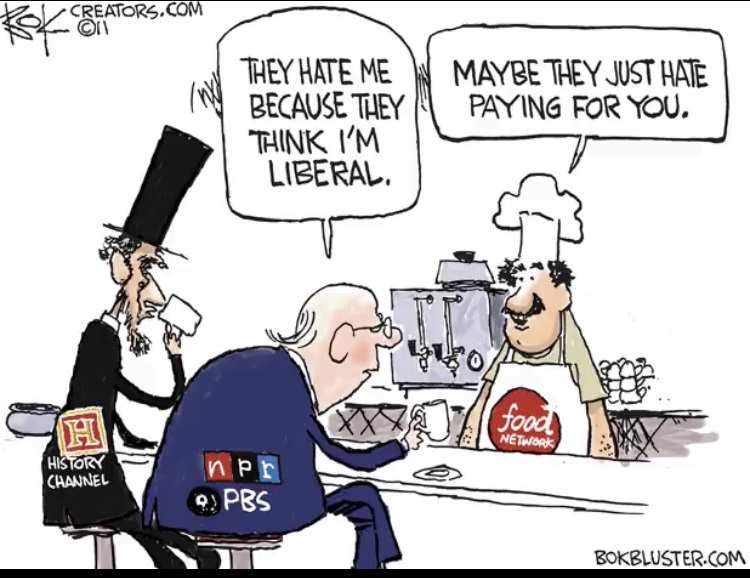


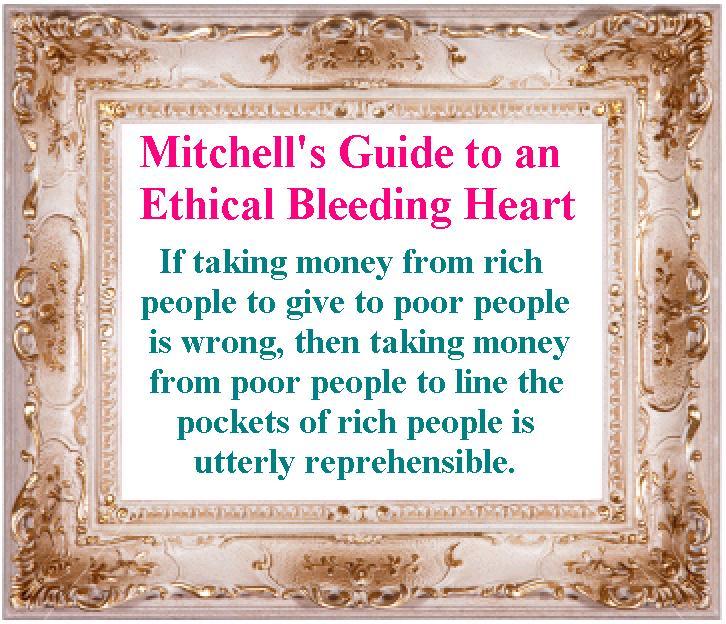


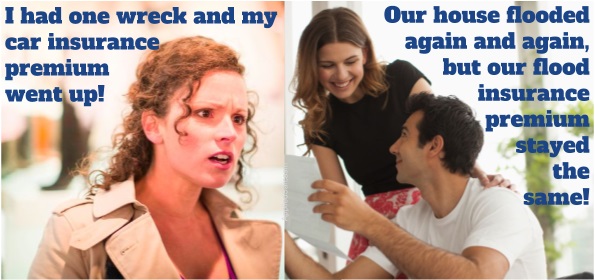


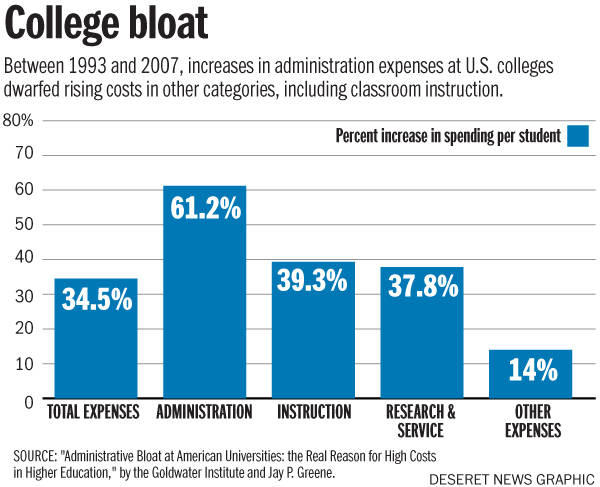





 International Liberty
