-
-
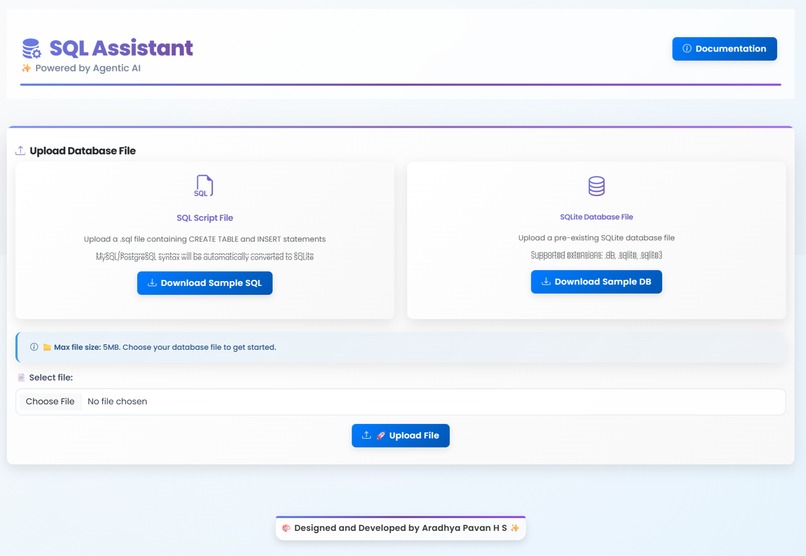
SQL Assistant Project Page
-
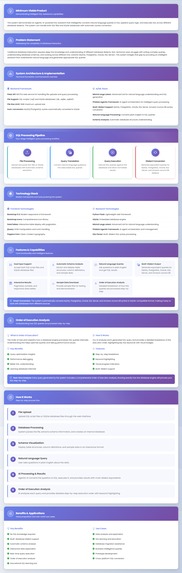
Documentation
-
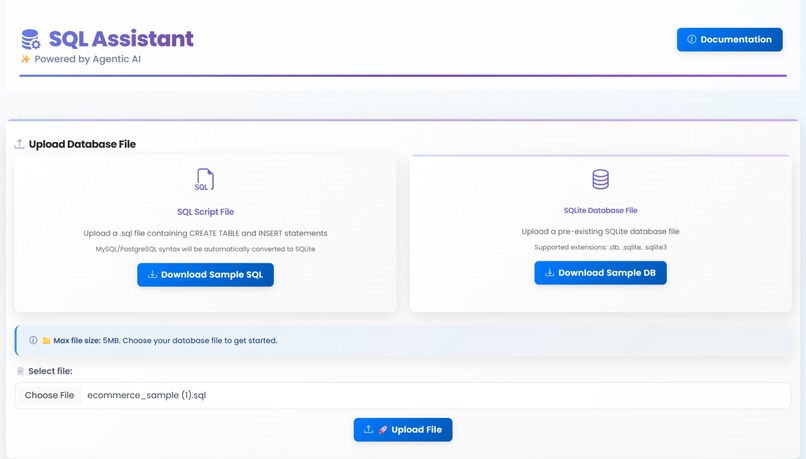
Download & Upload Section
-
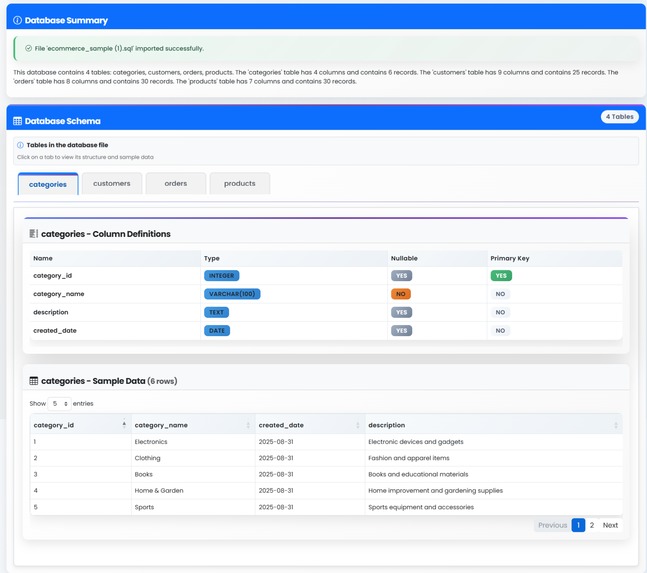
ploaded File Schema & Sample Display
-
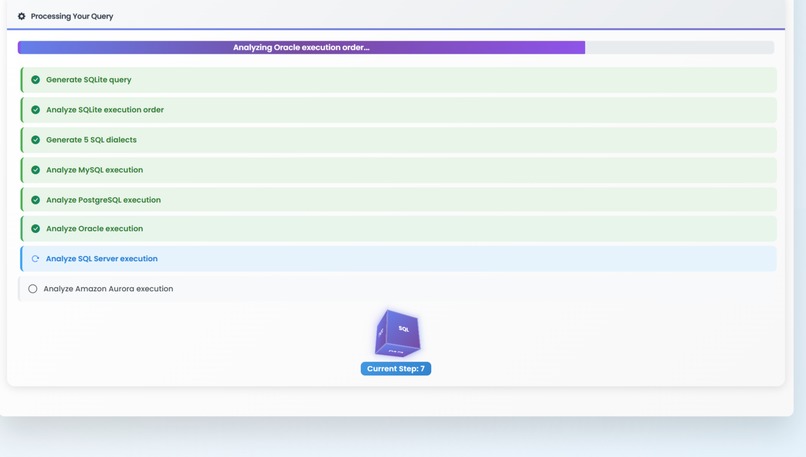
Sql Query Generation And Execution
-
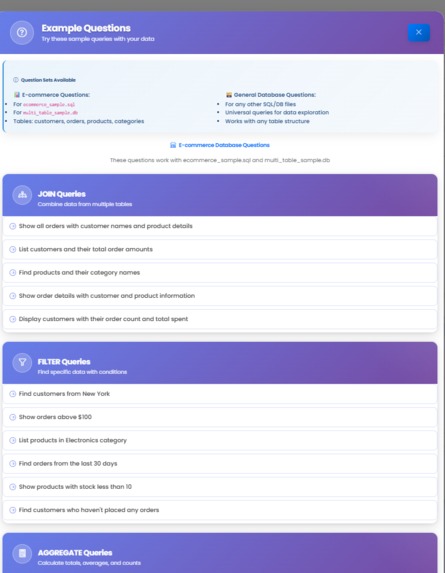
Example Queries
-
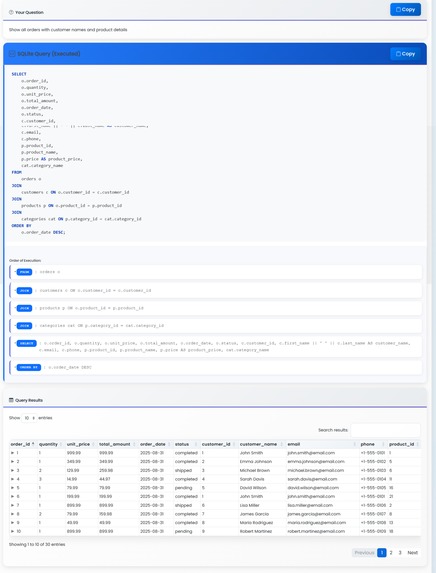
Generated & Executed SqlLite Query
-
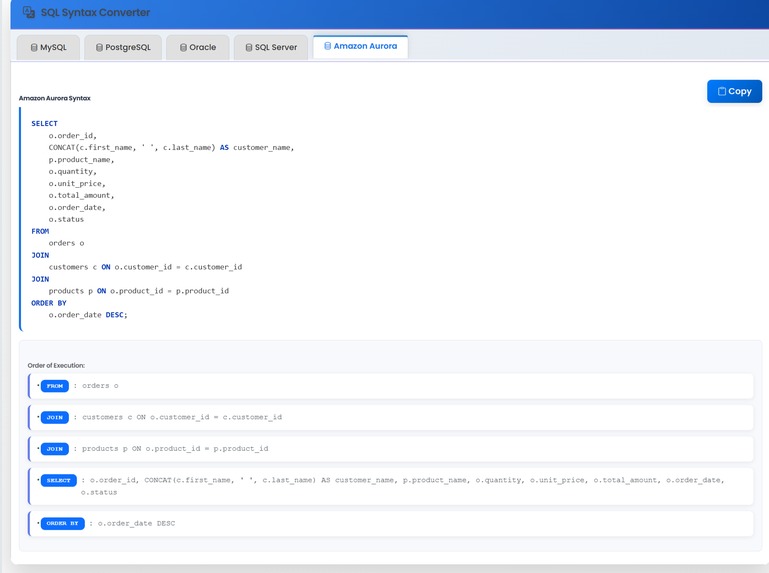
Mysql Query With Order of Execution


Inspiration
The inspiration for Agentic Multi-Dialect SQL Assistant came from witnessing the daily struggles of developers, data analysts, and business users who face the complexity of SQL syntax and multi-database environments. Traditional SQL writing requires deep knowledge of different database dialects, and the learning curve is steep for non-technical users. We wanted to democratize database access by creating an intelligent assistant that could bridge the gap between natural language and SQL across multiple platforms.
What it does
Our application transforms natural language questions into executable SQL queries across five major database dialects: MySQL, PostgreSQL, Oracle, SQL Server, and Amazon Aurora. Users simply upload their database files (SQL scripts or SQLite databases) and ask questions in plain English. The system automatically analyzes the database schema, generates optimized SQL queries, provides detailed Order of Execution analysis, and displays results in interactive tables. It's like having a personal database expert who speaks multiple SQL dialects.
How we built it
We built the system using a modern tech stack centered around Agentic AI principles:
Backend Architecture:
- Flask Framework: RESTful API for handling file uploads and query processing
- Mistral Large LLM: Advanced language model for natural language understanding and SQL generation
- PhiData Agentic Framework: Intelligent agent orchestration for context-aware processing
- SQLAlchemy ORM: Database abstraction layer for multi-database support
- SQLite Engine: Primary database for query execution and testing
Frontend Technologies:
- Bootstrap 5.3: Modern responsive UI with Material Design principles
- DataTables: Interactive table display with pagination and sorting
- JavaScript/jQuery: Dynamic frontend interactions and AJAX handling
- Custom CSS: Enhanced visual design with animations and hover effects
AI Processing Pipeline:
- File Processing: Parse SQL files and extract schema information
- Context Preparation: Combine schema data with user queries
- AI Generation: Use Mistral LLM to convert natural language to SQL
- Dialect Conversion: Generate equivalent queries for multiple database systems
- Execution Analysis: Provide step-by-step Order of Execution breakdown
- Result Display: Present formatted results with interactive features
Challenges we ran into
Technical Challenges:
- Multi-Dialect Syntax Conversion: Converting between different SQL dialects while maintaining query accuracy was complex. Each database has unique syntax features and functions.
- Schema Analysis: Automatically understanding database structures from uploaded files required sophisticated parsing and validation logic.
- AI Prompt Engineering: Crafting effective prompts for the LLM to generate accurate SQL queries across different contexts was iterative and challenging.
- Order of Execution Analysis: Creating a system to analyze and visualize SQL execution order required deep understanding of database internals.
Integration Challenges:
- Agentic Framework Setup: Configuring the PhiData framework for optimal performance with our specific use case required extensive experimentation.
- Real-time Processing: Balancing response times with query complexity while maintaining accuracy was a constant optimization challenge.
- Error Handling: Implementing robust error handling for various edge cases (invalid queries, malformed files, API failures) required careful planning.
Accomplishments that we're proud of
Technical Achievements:
- Successfully implemented multi-dialect SQL support across 5 major database systems
- Created an intelligent Order of Execution analysis system with visual breakdowns
- Built a responsive web interface that handles complex database operations seamlessly
- Achieved real-time query generation with high accuracy rates
User Experience:
- Designed an intuitive interface that makes database interaction accessible to non-technical users
- Implemented comprehensive error handling and user feedback systems
- Created interactive data tables with advanced features like pagination and sorting
- Developed a robust file upload system supporting multiple formats
Innovation:
- Pioneered the use of Agentic AI for multi-dialect SQL generation
- Created a unique Order of Execution visualization system
- Built a comprehensive solution that bridges the gap between natural language and database operations
What we learned
Technical Insights:
- Agentic AI Potential: We discovered the immense potential of agentic frameworks for complex problem-solving tasks
- Multi-Dialect Complexity: Learned about the subtle differences between SQL dialects and how to handle them systematically
- LLM Optimization: Gained deep understanding of prompt engineering and context management for large language models
- Database Internals: Explored the inner workings of SQL execution and optimization strategies
Development Lessons:
- Iterative Design: The importance of continuous testing and refinement in AI-powered applications
- User-Centric Approach: How focusing on user experience drives better technical solutions
- Scalability Planning: The need to design systems that can handle growing complexity and user demands
AI/ML Insights:
- Context Management: The critical role of proper context preparation in AI query generation
- Error Handling: How to gracefully handle AI model limitations and edge cases
- Performance Optimization: Balancing AI model capabilities with real-time application requirements
What's next for Agentic Multi Dialect SQL Assistant
Immediate Enhancements:
- Query Explanation: Add detailed breakdowns of generated SQL queries with explanations
- Performance Optimization: Implement AI-powered query performance suggestions
- Auto-Completion: Add intelligent suggestions while users type natural language queries
- Query History: Learn from user patterns to improve suggestions over time
Advanced Features:
- MCP Server Integration: Implement Model Context Protocol for standardized AI model connections
- SDK Transition: Migrate from Mistral SDK to OpenAI SDK for broader compatibility
- Local AI Support: Add support for Small Language Models compatible with Ollama, Msty, Jan.ai, LM Studio, and Llama.cpp
- Advanced Analytics: Implement query performance analytics and optimization recommendations
Platform Expansion:
- Mobile Application: Develop native mobile apps for iOS and Android
- API Services: Create public APIs for third-party integrations
- Enterprise Features: Add team collaboration, query sharing, and advanced security features
- Cloud Deployment: Scale to handle enterprise-level workloads and multi-tenant environments
Educational Initiatives:
- SQL Learning Platform: Create interactive tutorials and learning modules
- Community Features: Build a community of users sharing queries and best practices
- Certification Program: Develop SQL proficiency certification through the platform
The future is bright for democratizing database access through intelligent AI assistance!
Built With
- ajax
- amazon-aurora
- css3
- datatables
- flask
- git
- github
- gunicorn
- heroku
- html5
- javascript
- jquery
- markdown2
- mistral-large-llm
- mysql
- oracle
- phidata-agentic-framework
- postgresql
- python
- restful-apis
- sql-server
- sqlalchemy
- sqlite




Log in or sign up for Devpost to join the conversation.