-
-
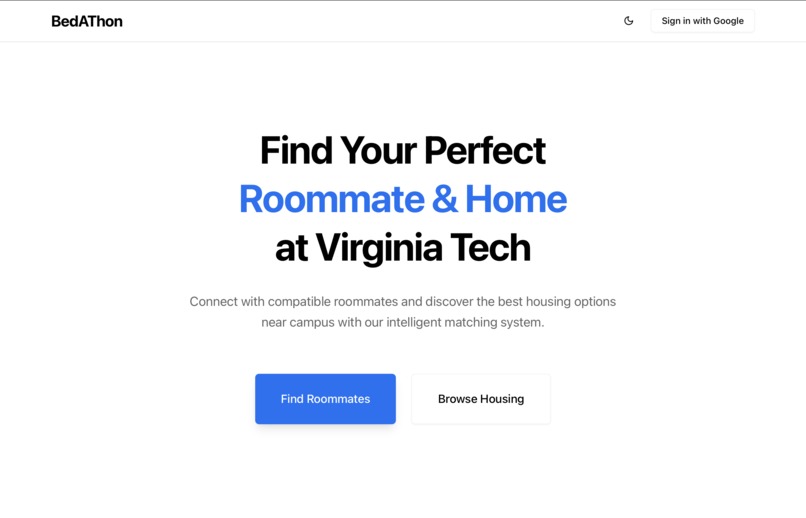
Landing Page
-
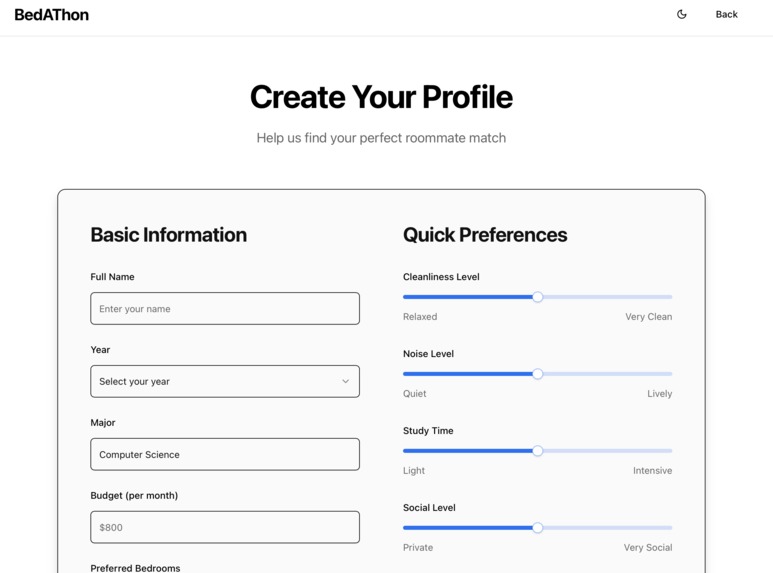
Profile Creation
-
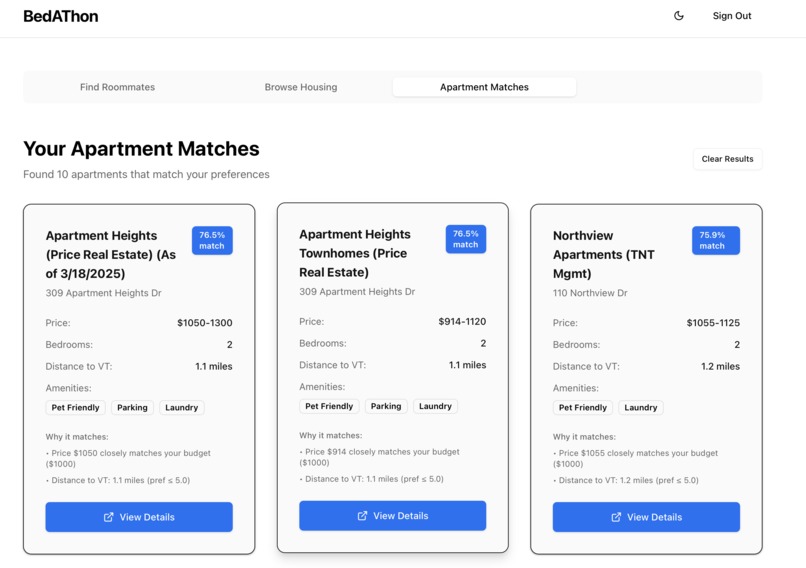
Housing Matches
-
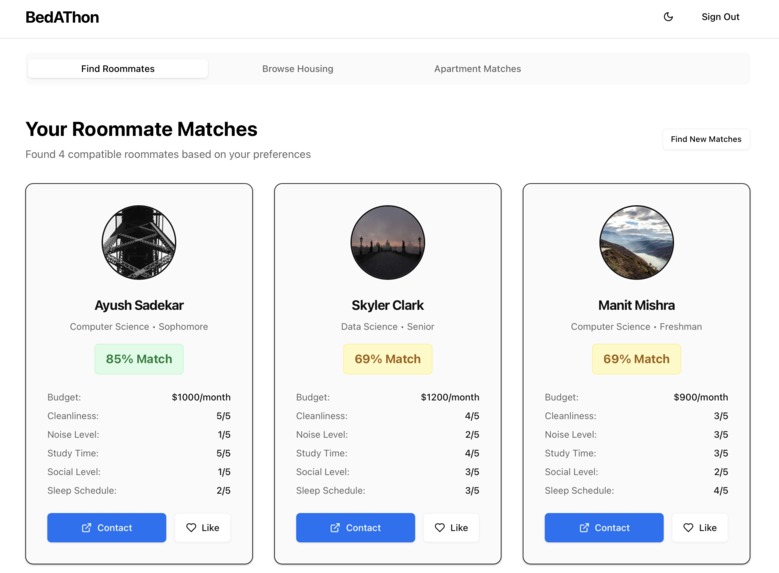
Roommate Matches
-
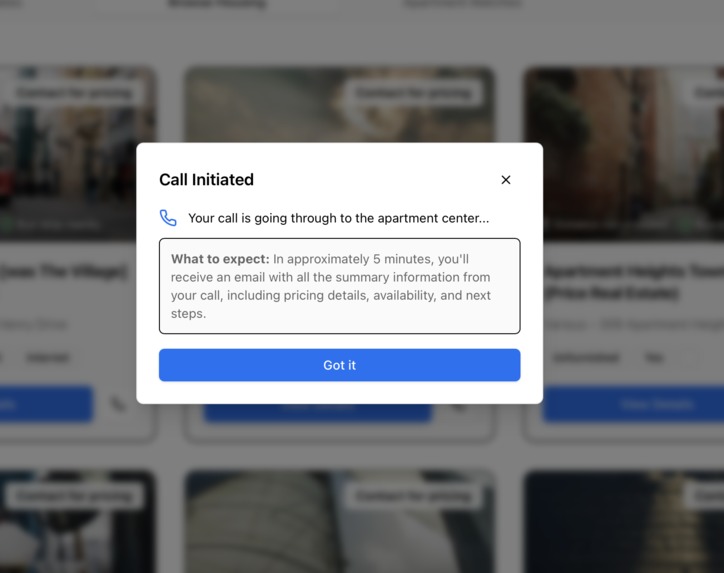
Voice Agent
-
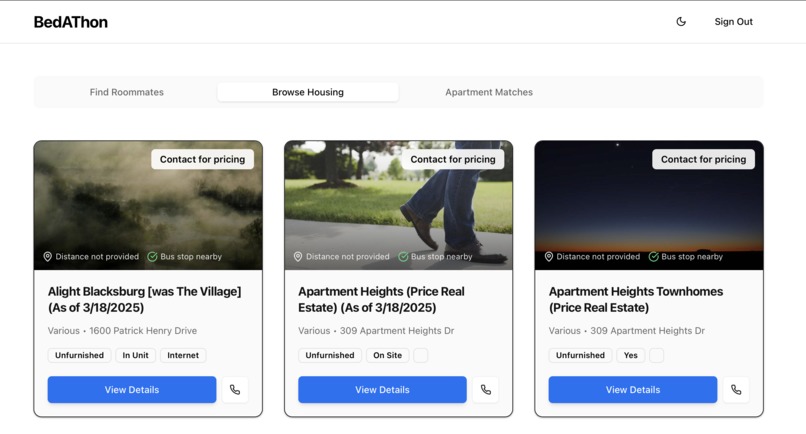
Housing Options


Inspiration
One of the most stressful parts of college life is finding housing and roommates. We want to streamline the process so applying for housing and connecting with potential roommates is as simple as possible.
What it does
Our project collects the housing preferences of any college student in the Blacksburg area (budget, location, lifestyle, amenities, etc.).
An AI model analyzes those inputs to surface the most compatible roommate matches. After a group forms, the model recommends apartments that best fit the group’s combined criteria and needs.
When the roommates pick a place they like, our AI agent calls the apartment leasing office to schedule tours, ask common questions (pricing, availability, utilities, lease terms), and—when appropriate—negotiate or request specials. This removes the back-and-forth so students can move faster.
How we built it
We encode each student’s answers as a simple numeric “preference vector,” then compare vectors to score compatibility.
- Frontend: Next.js with React, TypeScript, and Tailwind CSS for a modern, responsive interface
- Backend: Python FastAPI with SQLModel ORM for a clean, type-safe API
- Database: Supabase PostgreSQL with real-time sync so matches update instantly
- Authentication: Supabase Auth with Google OAuth for seamless sign-in
- Matching Algorithm: Custom statistical distance using Euclidean distance between normalized preference vectors, with light weights for “nice-to-have” vs. “must-have” items
Challenges we ran into
It was everyone’s first time using Supabase, so we had to learn its Auth, Realtime, and database features quickly. We also hit some frontend ↔ backend connection issues mid-hack; we fixed these by simplifying our API responses and adding stricter request/response validation.
Accomplishments we’re proud of
We are very proud of how effective our AI Agent is at conversing with leasing offices and getting the information students need—tour times, price breakdowns, and lease details—without manual phone calls.
What we learned
We learned how to:
- Manage and transform survey inputs into meaningful numbers (a clear compatibility score students can understand)
- Build a small but reliable matching pipeline with normalized vectors and simple weighting
- Integrate and prompt an AI Agent to carry out real calls and reply appropriately
What’s next
We want to deploy a web-based platform and expand to multiple campuses across the country. Short term, we’ll add clearer “why you matched” explanations, calendar integrations for auto-booking tours, and basic safety features (verified profiles and reporting).
Built With
- css
- fastapi
- html
- next.js
- openai
- postgresql
- python
- react


Log in or sign up for Devpost to join the conversation.