-
-
Mechanics
-
Mechanics
-
Mechanics
-
Robot custom animation
-
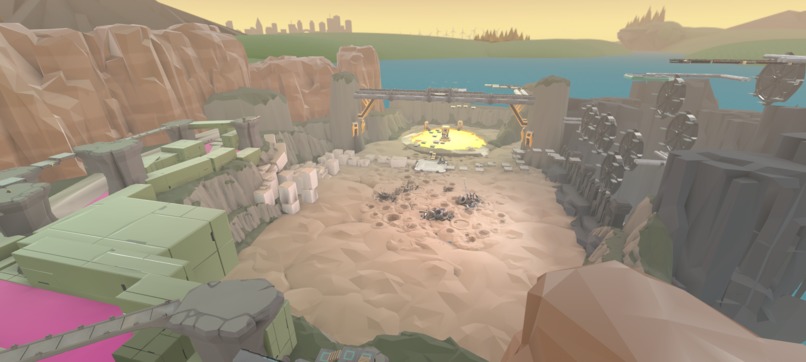
Huge world


Inspiration
I’ve always been a fan of the genre-defining 3D platformers—from the whimsical worlds of Super Mario 3D World to the imaginative sci-fi thrills of Ratchet & Clank, and the tight, inventive platforming challenges of Split Fiction. My goal was to capture that golden era of exploration and discovery while pushing the envelope on scale and performance. Enter Robot Mayhem, a high-octane mobile platformer (also playable in VR) where a rogue robot has run amok—and only you can stop it.
How I Built It
- Workflow & Tools: I crafted all meshes, textures, and baked lighting in Unity, then imported them into the Horizon Worlds Desktop Editor for assembly and scripting.
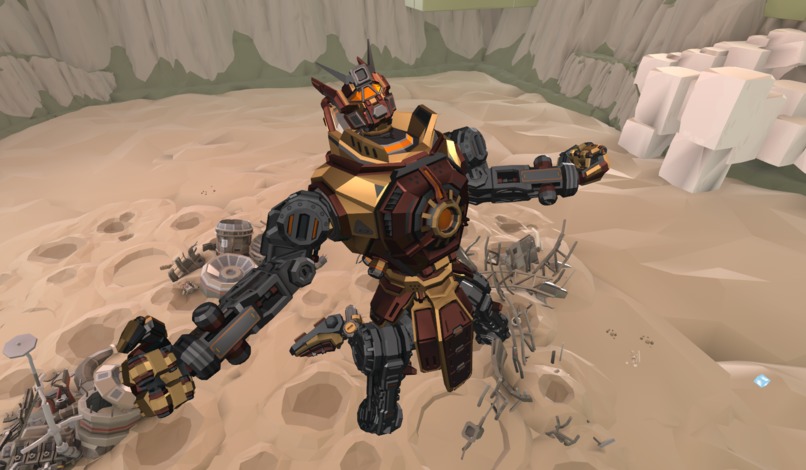
- Custom Animation System: I built an in-house animation pipeline that supports smooth blending, procedural tweaks, and real-time mesh baking. This keeps the robot’s movements fluid and sets the stage for future characters.
- Material Economy: To stay within Horizon Worlds’ geometric and material limits, I limited the entire world to just three core materials—ensuring consistent visuals and optimal performance.
- Optimized for Mobile: Every asset, shader, and effect was tuned to hit target framerates on phones. In VR, it still looks great, but mobile was always the primary focus.
Challenges
- Geometry & Material Constraints: The biggest hurdle was keeping the world’s geometry under Horizon Worlds’ limits. By using only three materials and baking all complex details into meshes and textures, I maintained visual richness without exceeding capacity.
- Mobile Performance: Delivering a rich, expansive environment on handheld devices required aggressive mesh and texture optimization, plus careful bake settings.
- Animation Flexibility: Designing a system that handles dozens of independent robot parts in sync—and stays adaptable for future content—took extensive iteration.
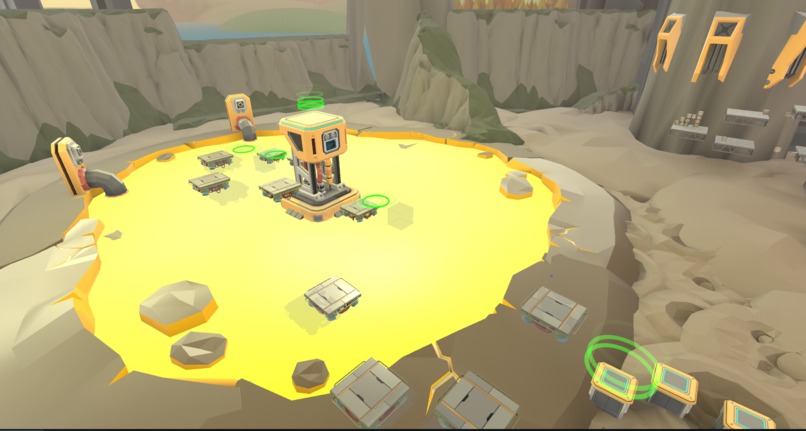
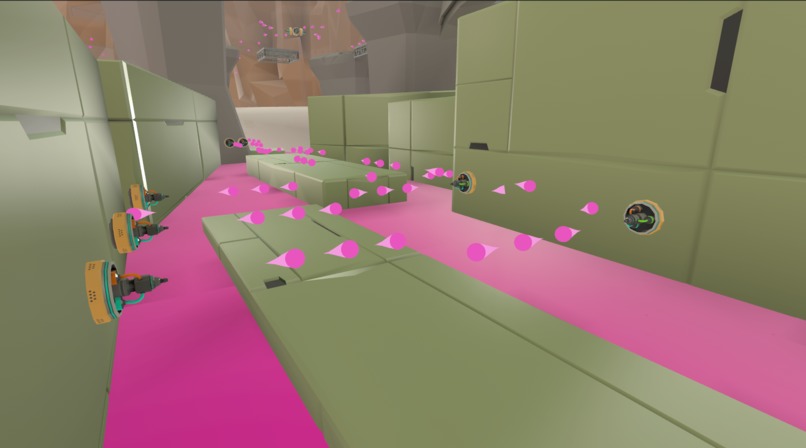
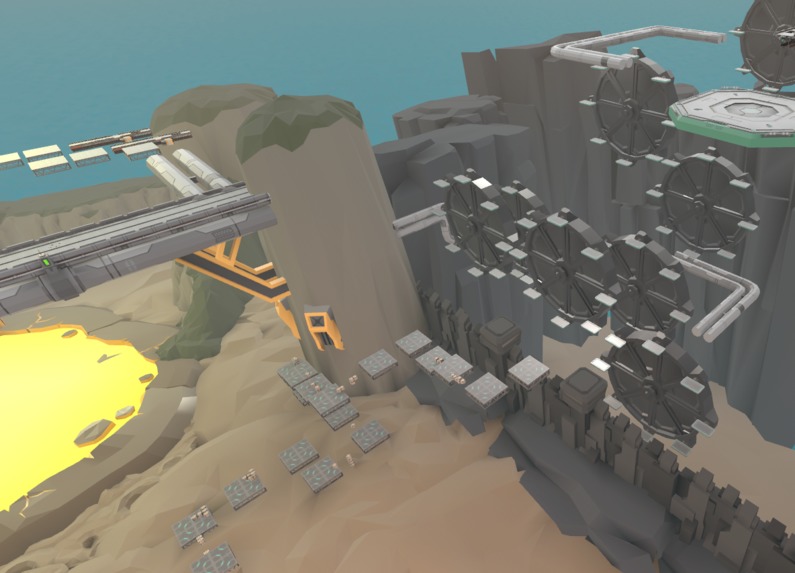
- Diverse Gameplay Mechanics: Balancing a variety of mechanics—including three-stage missile launches, precision jumps, bullet-dodging zones, acid-sinking floors, flying platforms, giant wheels, and trampolines—required careful tuning to ensure a cohesive and engaging experience.
- Solo Developer Role: Managing every aspect—from asset creation and animation to optimization and scripting—as a single-person team added complexity but ensured a unified vision.
Accomplishments
- Large-Scale Environment: Assembled approximately 2 km² of explorable spaces (baked entirely in Unity) that run smoothly on smartphones.
- Robust Animation Pipeline: Established a practical toolchain for animating complex rigs and baking meshes, ready for new enemies or allies.
- Upbeat Action Soundtrack: Licensed and integrated a legally cleared, high-energy score that complements the fast-paced gameplay.
- Engaging Platforming: Refined three-stage missile-launch sequences that blend puzzle, timing, and classic platforming thrills.
- Varied Gameplay Zones: Includes zones with dodging bullets, acid-sinking floors, flying platforms, giant wheels, precision jumps, and trampolines to keep players on their toes.
Next Steps
- New Foes & Bosses: Extend the animation system to introduce varied robotic enemies, soldiers, and aerial drones.
- Narrative Layers: Weave in environmental storytelling and short cutscenes to deepen the world’s backstory.
- Live Events & Updates: Plan seasonal content using Horizon worlds event system and drops—new levels and mechanics.
- More Platforming Scenarios: Generate additional levels with different platforming challenges.




Log in or sign up for Devpost to join the conversation.