-
-
Product Overview
-
Product Deck 01
-
Product Deck 02
-
Product Deck 03
-
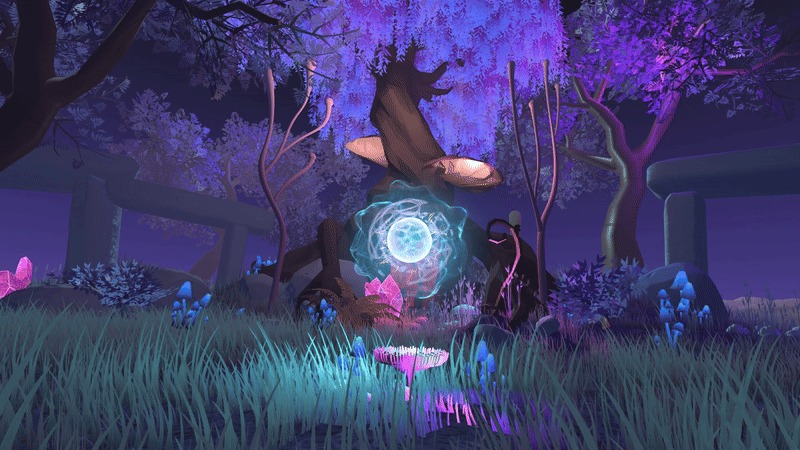 GIF
GIF
Practice deep breathing with Flo, our AI companion
-
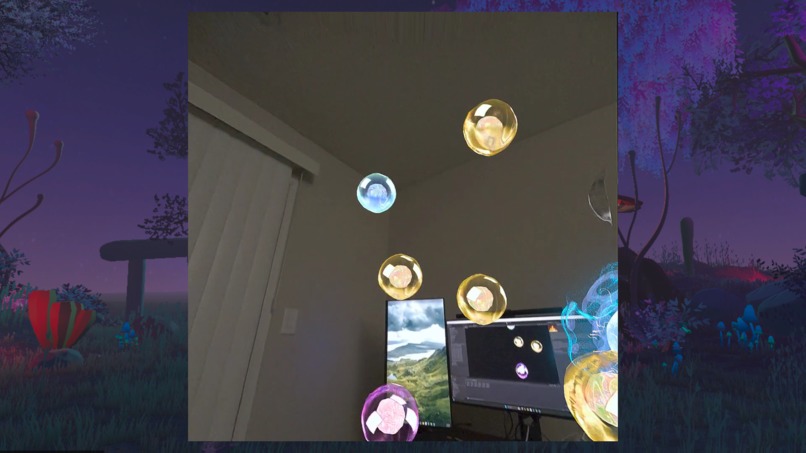
Stage 1: Flo visualizes positive emotions as bright color bubbles
-
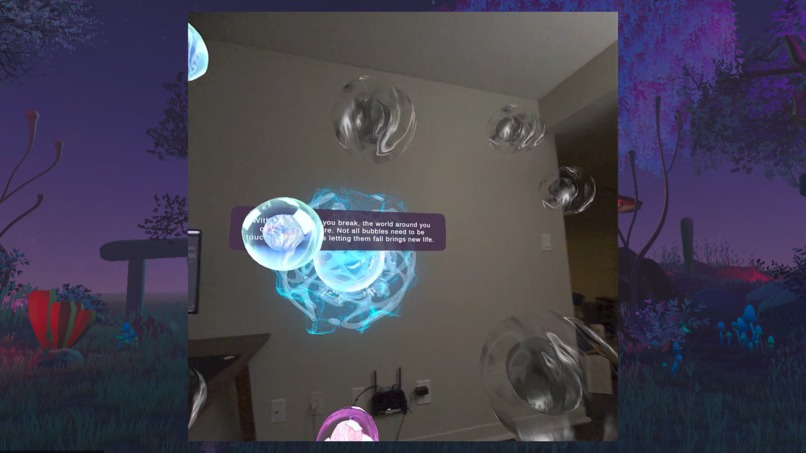
Stage 1: Flo visualizes negative emotions as dark color bubbles
-
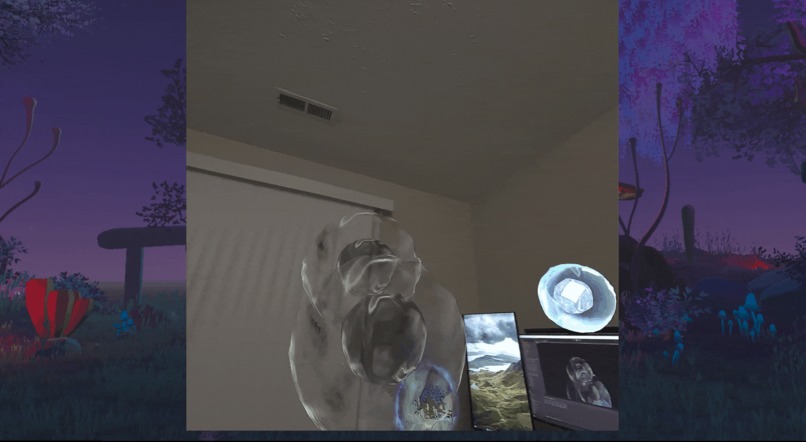 GIF
GIF
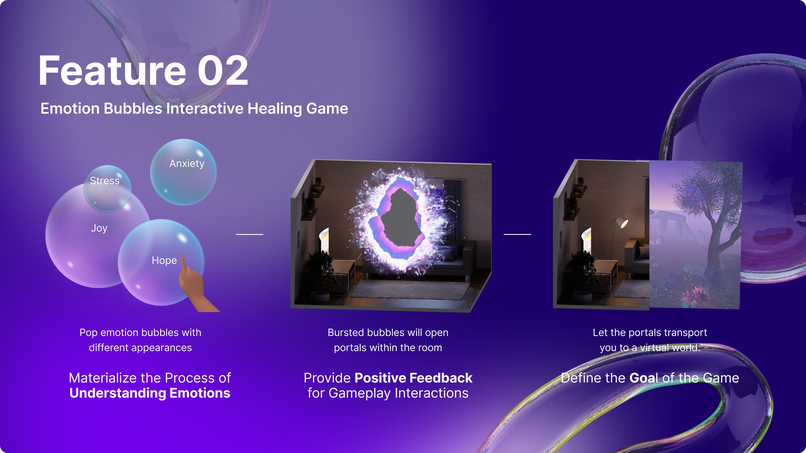
Stage 1: Poke emotion bubbles to open portals into the healing forest
-
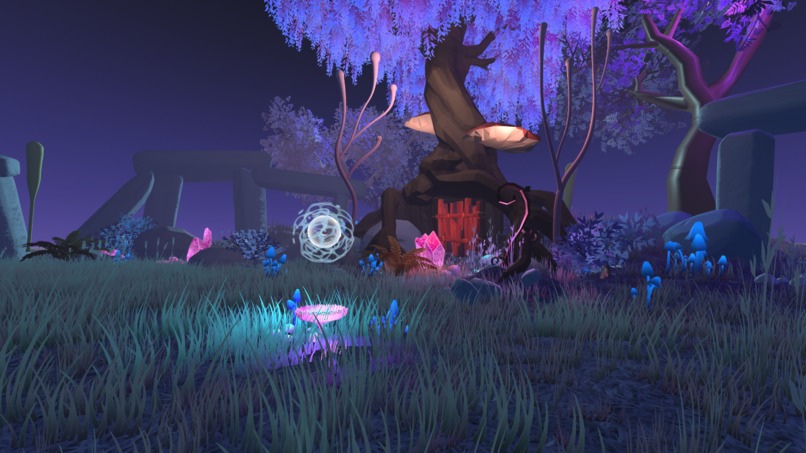
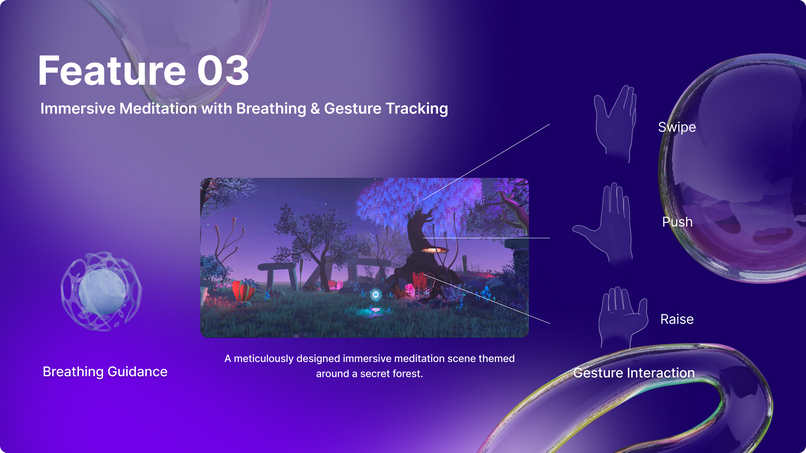
Stage 2: Meditation Scene
-
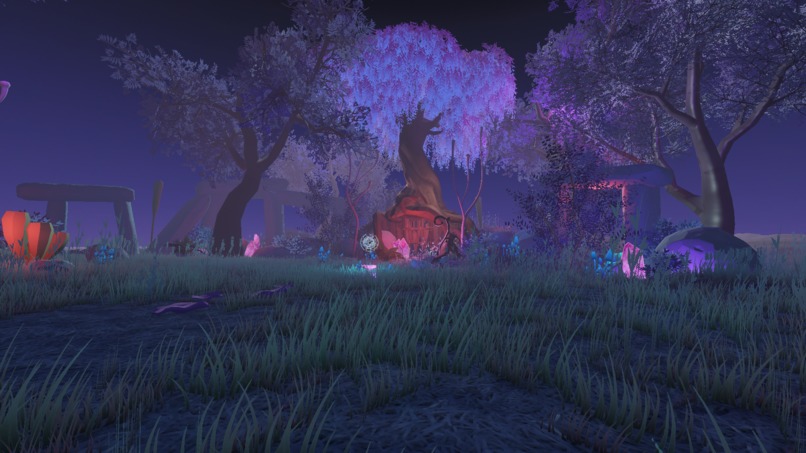
Stage 2: Meditation Scene
-
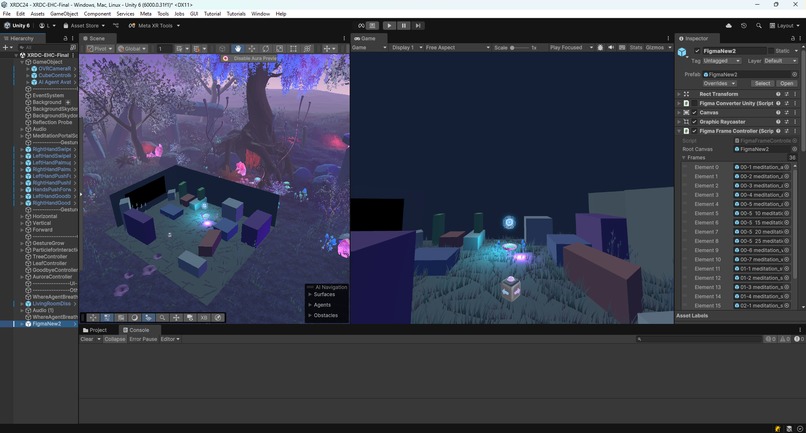
Stage 2: Development WIP
-
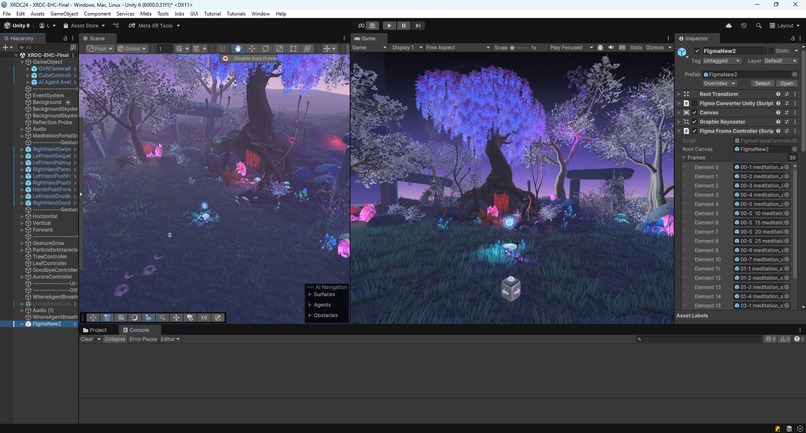
Stage 2: Development WIP
-
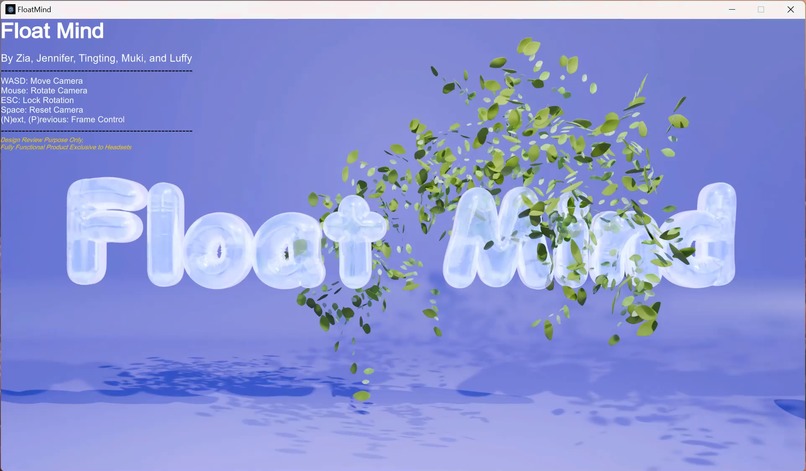
Windows Build for Demo [Full video available at the 2nd link below; downloadable from the last link below]
-
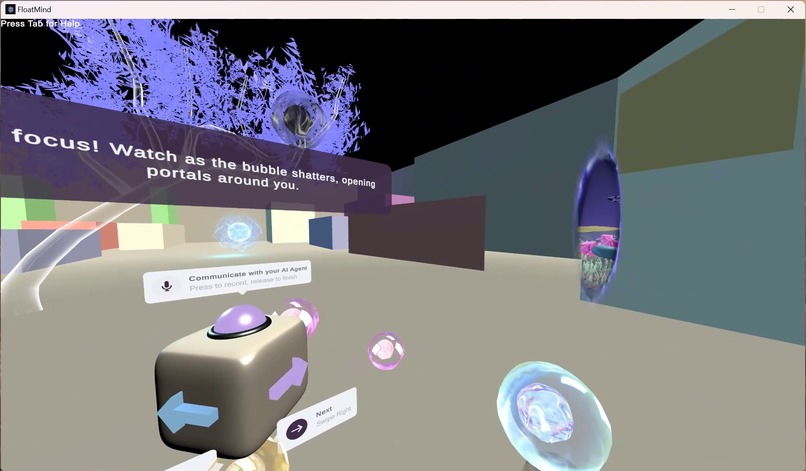
Windows Build for Demo - Stage 1 [Full video available at the 2nd link below; downloadable from the last link below]
-
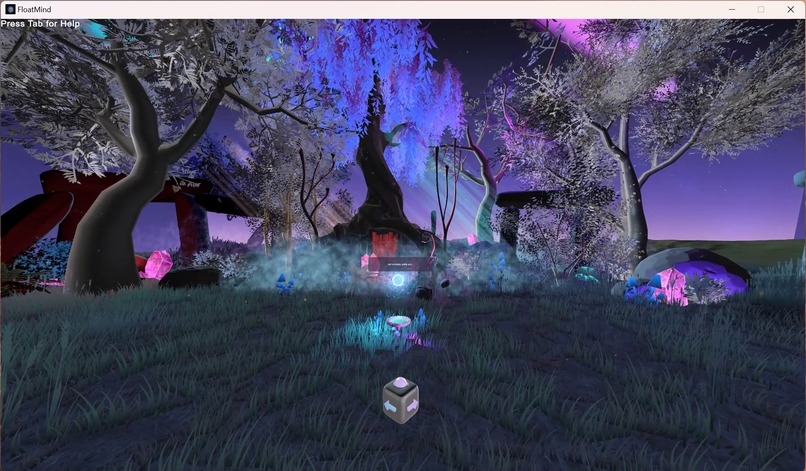
Windows Build for Demo - Stage 2 [Full video available at the 2nd link below; downloadable from the last link below]
-
Thank you for stopping by!


Float Mind
Inspiration
In our fast-paced world, stress and emotional disconnect are widespread. To address this, we explored how new technologies could help stressed individuals relax and recharge quickly. Inspired by mindfulness and visual-based meditation, our team developed a gamified meditation approach. This helps users relax their bodies and minds while visualizing and overcoming emotional challenges. Our solution blends gamification, AR/VR, and AI to make mental wellness practices more engaging and impactful.
What it does
Float Mind is an AI-powered AR/VR meditation tool designed to help stressed individuals effectively relax and reconnect with their emotions through an immersive mindfulness experience. With a seamless, controller-free interface on Meta Quest, it offers a unique combination of AI-driven emotional insights and interactive meditation practices.
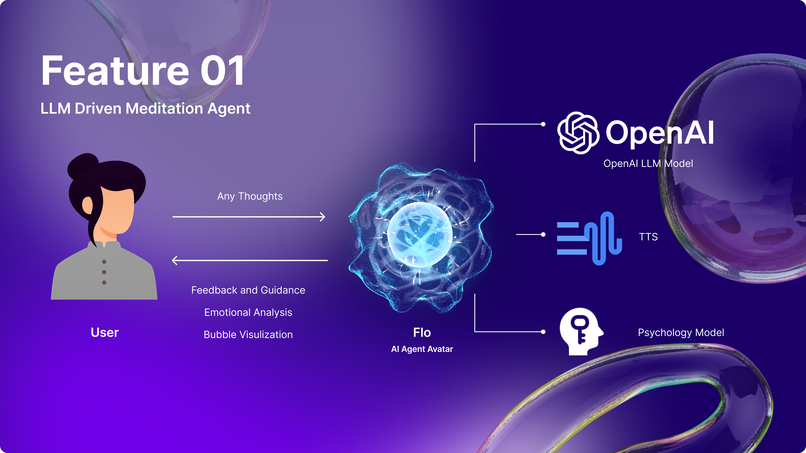
The experience begins with Flo, an empathetic AI companion that analyzes users’ thoughts and visualizes their positive and negative emotions as interactive 3D bubbles. Through intuitive hand gestures, users engage with these bubbles, dynamically shaping their virtual environment. This transitions seamlessly into a guided meditation phase, where calming breathing exercises, soothing animations, and interactive elements like growing auroras and nurturing trees promote mindfulness and relaxation.
Why it matters
Float Mind integrates cutting-edge AI with immersive technology to redefine traditional mindfulness practices. It provides a trusted, science-backed mental wellness solution, offering busy professionals an accessible and impactful way to manage stress and enhance emotional well-being, whether at work or at home.
How we built it
Float Mind was developed using Meta Quest 3/Pro, Unity 6, and advanced AI technologies such as scene understanding, speech-to-text (STT), text-to-speech (TTS), and large language model (LLM). The emotional analysis feature leverages LLM Agent (GPT-o1 mini model) to detect positivity and negativity in user input, while the AR/VR experience was crafted using Meta XR All-in-One SDK. Our team combined expertise in AI, UI/UX design, and immersive 3D environments to create a seamless and engaging user journey. Rigorous testing ensured the interactivity and flow worked smoothly without the need for controllers.
Challenges we ran into
1. Device constraints. For example, eye tracking feature is only available on Meta Quest Pro headset.
Solution: Change the design and refrain from applying eye tracking.
2. Inhaling and exhaling breath effect.
Solution: Utilize VFX Effect Graphics Editorto dynamically adjust particle density and motion paths, aligning seamlessly with the rhythmic flow of meditation breathing.
3. Portal effect to bridge the virtuality and reality.
Solution: Develop a custom shader to create a see-through render texture for virtual scenes, incorporating rotating and edge-dissolving effects with an albedo material and alpha texture. Adjust scene layers and camera culling settings to achieve a portal effect.
4. Blender geometry node animation compatibility with Unity.
Solution: Utilize MDD exporting format to remap Blender's geometry node effects into frame-based animation clips, enabling seamless integration with the Unity Animator.
5. Unity plugin Figma Converter for Unity compatibility issues and bugs.
Solution: Dive into the source code and fix them.
6. Frame layout offset issue when switching frames via enabling/disabling.
Solution: Use
RectTransform.sizeDeltaproperty to realize switching, i.e., set it toVector2.zeroto hide.
Accomplishments that we're proud of
We're proud to create an immersive and gamified meditation solution that embraces cutting-edge AI and AR/VR technology, grounded in the science of mindfulness and psychology. We crafted a visually stunning 3D environment with intuitive spatial interactions and audio-reactive animation.
Significant technical achievements include the successful integration of LLM-driven emotional analysis with AR/VR interactions and the delivery of a seamless controller-free VR headset experience. The core immersive interactions rely on hand tracking, combined with hand gesture detection.
1. Bridge AR and VR through User Actions
Through thoughtful UX design, we empowered users to seamlessly bridge the gap between AR and VR experiences, amplifying participatory joy.
2. Interactive 3D CTA
We innovated by replacing traditional 2D CTAs with a 3D cube, allowing users to proceed, revert actions, or engage with the AI agent all within a single interactive element.
3. Meditation Therapy LLM Agent
We developed an LLM-powered agent designed specifically for meditation therapy, providing dynamic, personalized guidance and emotional support.
4. Multi-Modal Input via Hand Gesture Detection
Using advanced hand tracking, we recognized gestures—such as index-finger poking, double-hand waving, and pushing—to enable intuitive, controller-free interactions.
5. Audio-Driven Prompting and Mood Detection
By feeding audio input to the LLM agent, we gauged positive or negative user moods in real time, generating responsive, interactable “bubbles” to enhance engagement.
6. Seamless Scene Blending with Meta Scene API
We harnessed the Meta Scene API to capture physical-world meshes, effortlessly merging real-world surroundings with the virtual scene during the bubble interaction phase.
7. Dissolving Transition Effect
A gradual dissolving effect transitions users from the real world to the virtual environment, maintaining immersion and ensuring a smooth user experience.
8. AI Agent Avatar with Real-Time Audio
We incorporated text-to-speech for the agent’s GPT-generated responses, supported by real-time audio reflection to enrich interactivity and bring the avatar to life.
What we learned
1. XR + UX
Bridging XR and UX with the help of fine-tuned plugins and customized scripts.
2. XR + AI
Applying scene understanding to sense user's surroundings, generating seamless virtual-real world blending, and employing LLMs capacities to process context (e.g., user's emotion) to facilitate personalized immersive experience.
3. Multidisciplinary Integration
Integrating diverse multidisciplinary tools from design to development, 2D to 3D, text to audio, and vice versa. Creating immersive experience with environment, animations, sounds, visuals, and interactions.
What's next for Float Mind
- Expand Float Mind’s emotional analysis capabilities to recognize a broader range of sentiments and introduce more interactive meditation elements.
- Integrate biofeedback mechanisms to make the experience even more personalized.
- Explore partnerships with mental health professionals and wellness organizations to bring Float Mind to a wider audience.
Team
- Zia (Zihan Li), Game Designer & Product Designer, AI Agent Game Developer, UPenn Architecture Student, Personal Website
- Jennifer (Yan Zeng), Product Design, XR/UX/UI Design, User Flow, Wireframing, Prototyping, 3D Design & Modelling Product Designer specializes in SaaS+AI | Mixed Reality Creator | 3D Artist | Gaming Enthusiast | Architectural Designer | Cat Lover @UPenn, LinkedIn
- Tingting Luo, UX Designer & Researcher, 3D Animation Artist, LinkedIn
- Muki (Shuqi Liao), XR Developer, CS PhD Student, Personal Website
- Luffy (Liuchuan Yu), Developer & Bug Fixer, CS PhD Student Dedicated to AI + XR, Personal Website
Update after Judging Time Frame (January 20 at 5:45PM EST) The original GitHub repository (https://github.com/luffy-yu/XRDC24) is private now. The new repository is at https://github.com/luffy-yu/FloatMind.





Log in or sign up for Devpost to join the conversation.