-
-
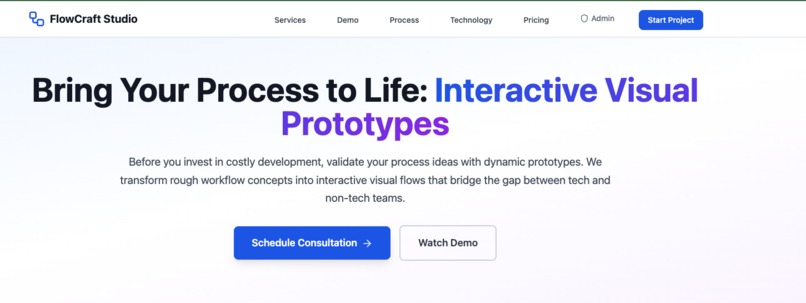
Home page

Inspiration
We noticed a growing disconnect between technical workflow automation and the clarity non-technical stakeholders need. Inspired by the worlds of UI/UX prototyping, game design, and visual storytelling, FlowCraft was born to make workflow design as expressive, interactive, and intuitive as building with Lego. It's a creative response to friction—between humans and their tools, and between ideas and execution.
What it does
FlowCraft is a visual workflow prototyping studio built on Node-RED that empowers teams to:
Rapidly map and test ideas using modular flow components
Integrate real-time data for dynamic decision-making
Present workflows with user-friendly narration and tooltips
Export production-ready Node-RED JSONs
Add human-in-the-loop logic with approvals and feedback capture
How we built it
We leveraged:
Node-RED subflows for modular design
Custom UI templates via node-red-dashboard
MongoDB Atlas for storing dynamic flow metadata
Draw.io for prototyping pre-build logic
Postman + custom scripts for API stubbing and testing
Git-based version control using Node-RED Projects Everything was stitched together using an iterative process—prototyping, user feedback, and gradual scaling.
Challenges we ran into
Ensuring dynamic payload adaptability across varying nodes
Managing flow state and rollback without overcomplicating logic
Keeping the visual interface clean while embedding business logic context
Avoiding edge-case errors in nested subflow executions
Balancing backend performance with frontend interactivity during simulations
Accomplishments that we're proud of
Created a reusable workflow boilerplate that slashes prototyping time
Enabled non-technical stakeholders to validate automation logic visually
Built internal debugging dashboards with actionable error trails
Successfully integrated Postman and MongoDB validation flows seamlessly
Reduced onboarding time for new contributors with visual story mode
What we learned
Visual clarity is as critical as logic accuracy in workflow automation
Teams collaborate better when logic has narration and context
Subflows are powerful, but require discipline to prevent nesting chaos
Real user feedback during prototyping improves the final flow quality exponentially
What's next for FlowCraft
A “FlowChoreography” mode to narrate each step as a process story
Natural language input to auto-generate flow skeletons
Integration with tools like Slack, Webflow, and Make.com
A deployable SaaS version with team management, audit trails, and flow sharing
Optional AI assistant (yours truly!) to recommend optimizations and catch anti-patterns
Built With
- and-simulating-integrations-draw.io-?-to-blueprint-and-visually-plan-flows-before-implementation-custom-scripting-(javascript
- angular.js
- grep
- human-in-the-loop-systems
- jsonata)-?-for-dynamic-payload-handling-and-logic-refinement-node-red-projects-?-git-based-version-control-for-flows-and-collaborative-development-yt-dlp
- mongodb
- nest
- node-red
- node.js
- postman
- react
- scripting-utilities-?-for-flexible-data-and-media-handling-in-test-scenarios-workflow-design-principles-?-inspired-by-ui/ux-prototyping
- validating-endpoints


Log in or sign up for Devpost to join the conversation.