-
-
GameAssets AI — the magical forge where assets are transformed into endless fantasy creations.
-
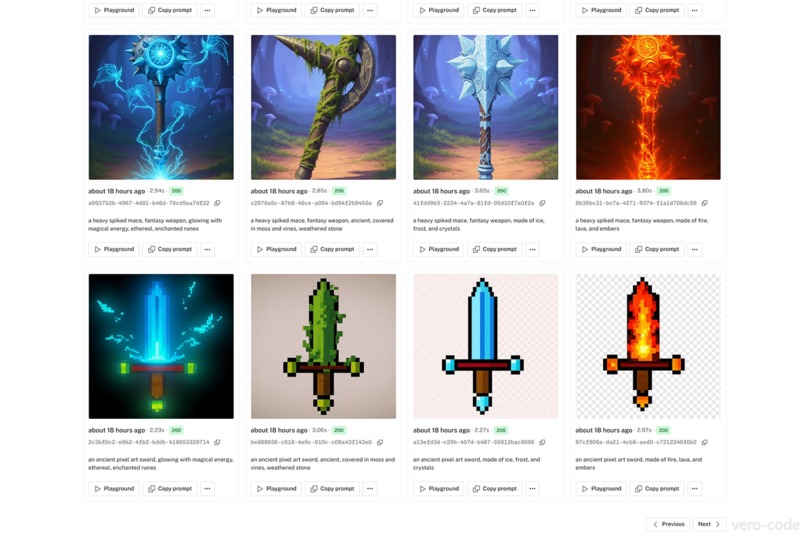
My Fal gallery — a collection of assets generated with the FLUX.1 Kontext model.
-
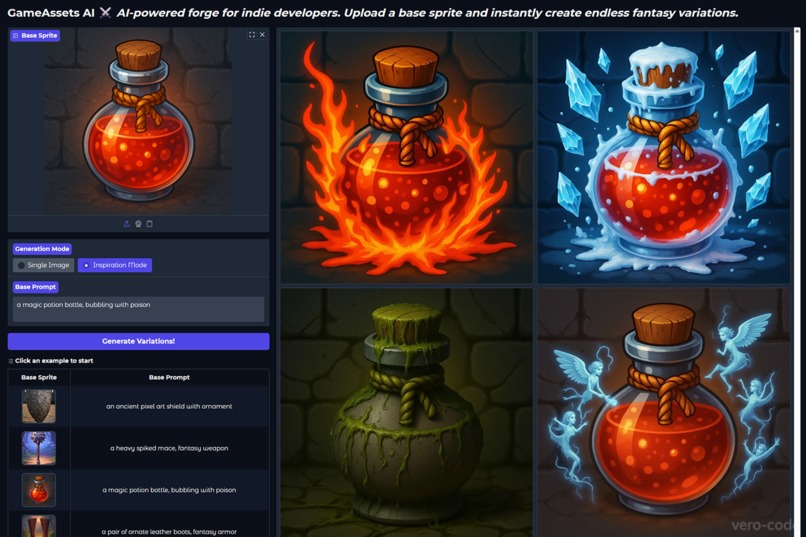
Every potion tells a story — burning fire, frozen ice, poisonous decay, or enchanted spirits.
-
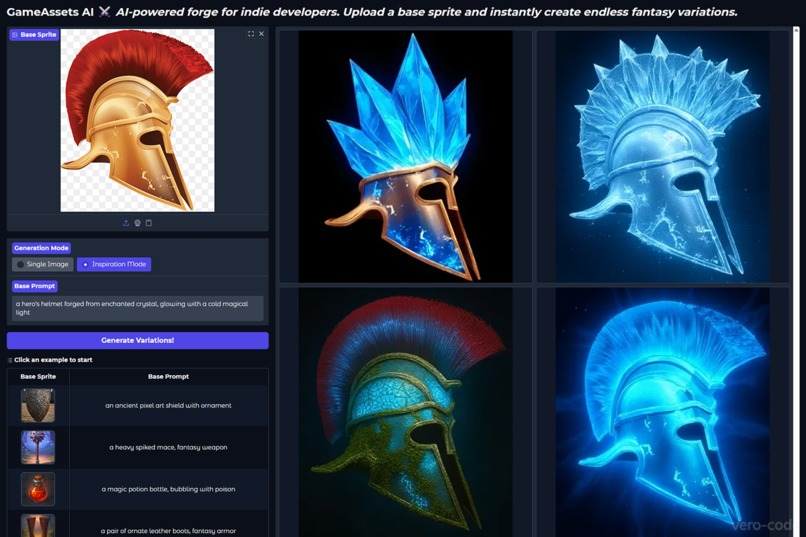
Hero’s helmet reborn — from ancient bronze to crystal, ice, coral, and futuristic visions.
-
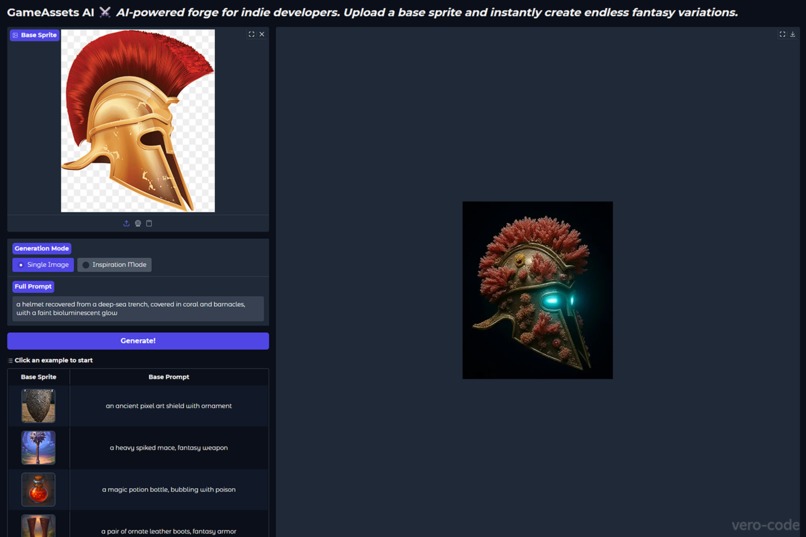
From the deep sea trenches: a helmet covered in coral and glowing with bioluminescent magic.
-
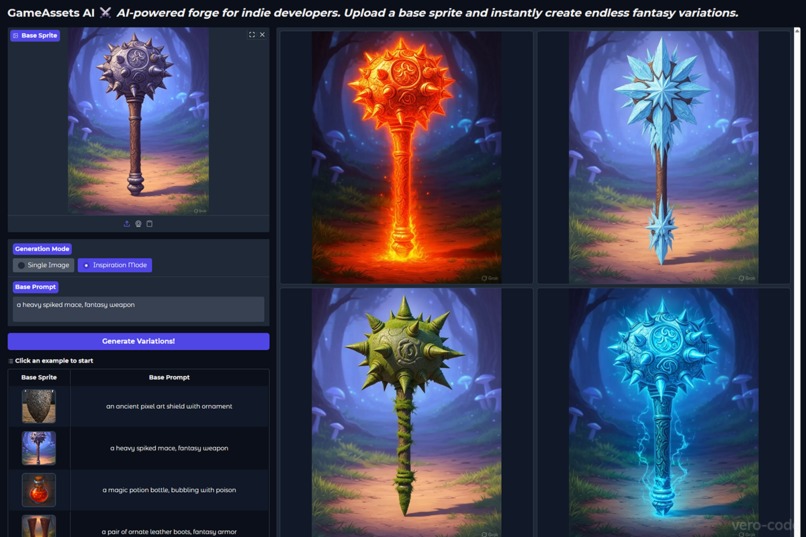
One base mace, infinite destinies: fire, ice, nature, and pure magic.
-
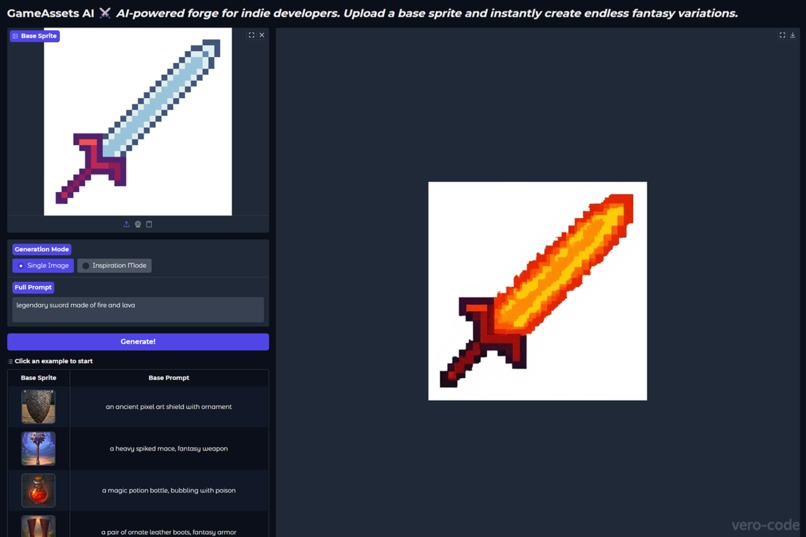
Simple pixel sword forged anew into a legendary blade of fire and lava.
-
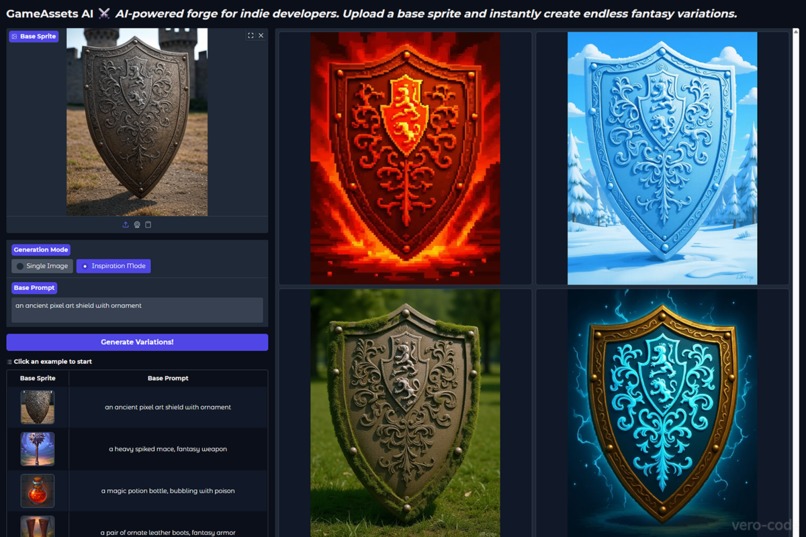
From pixel art to epic variations — shields of fire, frost, nature, and lightning.


Inspiration
The biggest bottleneck for indie developers: a lack of high-quality, unique game assets. Hiring artists is expensive, and free asset packs are often overused. The Black Forest Labs Hackathon was the perfect inspiration to tackle this problem head-on. I was inspired by the idea of an "AI Forge"—a tool where developers could bring a basic sprite and "forge" it into countless epic variations. The release of FLUX.1 Kontext [dev], a model specifically designed for editing and transformation, was the final piece of the puzzle.
What it does
GameAssets AI is a web-based tool that empowers indie developers to create stunning game assets with ease. It features two powerful modes:
🎨 Inspiration Mode: Perfect for brainstorming. A user uploads a base asset (like a simple sword), and the AI instantly generates four unique, stylized variations based on fantasy themes: Fiery, Icy, Ancient, and Magic. This helps quickly find a creative direction for an item set.
🎯 Single Image Mode: Designed for precise control. A user can upload an asset and write a detailed text prompt to transform it into exactly what they envision—from turning a hero's helmet into a steampunk contraption to making a sword look like it was recovered from the deep sea.
The entire experience is wrapped in a simple, interactive Gradio interface with clickable examples to get started immediately.
How I built it
GameAssets AI was built with speed and accessibility in mind.
The Core: The project is powered by the FLUX.1 Kontext [dev] model, which was the main requirement of the hackathon.
API & Inference: To avoid complex local GPU setup and get running quickly, I used the fal.ai API. This allowed me to send image and prompt data to their servers and receive the generated assets in seconds.
Frontend: The entire user interface is built with Gradio. Its simplicity and power were perfect for creating a functional and good-looking web app in a very short amount of time.
Backend & Logic: The application logic is written entirely in Python, using libraries like Pillow for handling image data and Requests to process the API responses.
Challenges I ran into
The biggest challenge was surprisingly not the AI, but the UI layout. Gradio is fantastic for speed, but getting a responsive, two-column layout where components dynamically resize without breaking the grid was tricky. Initially, equal_height worked, but adding images of different sizes would stretch the parent column and ruin the balance. I experimented with fixed heights and CSS, but the final, most stable solution was to combine equal_height=True on the Row with a fixed height on all the image/gallery components to ensure they never expanded unexpectedly.
Accomplishments that I'm proud of
I'm incredibly proud of creating a fully functional and genuinely useful tool in just a single day. The dual-mode system ("Inspiration" vs. "Single Image") is a feature I believe truly addresses the different creative needs of a developer. Seeing the incredible quality and creativity of the images generated by FLUX.1 Kontext was a constant source of motivation. Most of all, I'm proud of the core concept of the "AI Forge," which feels like a powerful and fitting metaphor for what this technology can do.
What I learned
This hackathon was a fantastic learning experience. I learned firsthand how incredibly powerful FLUX.1 Kontext is for transformative work, not just generation from scratch. It truly excels at taking an existing concept and reimagining it. I also deepened my skills in rapid prototyping with Gradio, learning the nuances of its layout system.
What's next for GameAssets AI
This project has huge potential! The next steps would be:
Adding more thematic styles to the "Inspiration Mode" (e.g., Cyberpunk, Steampunk, Demonic).
Allowing users to upload their own fine-tuned LoRA models to use their unique styles.
Implementing batch processing to apply a style to an entire folder of assets at once.
The ultimate dream: creating a plugin for game engines like Unity or Godot for direct in-editor asset generation.

Log in or sign up for Devpost to join the conversation.