-
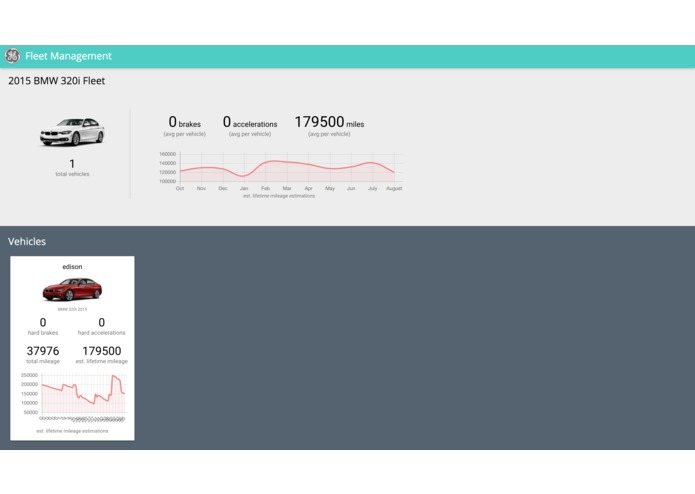
UI with one car
-
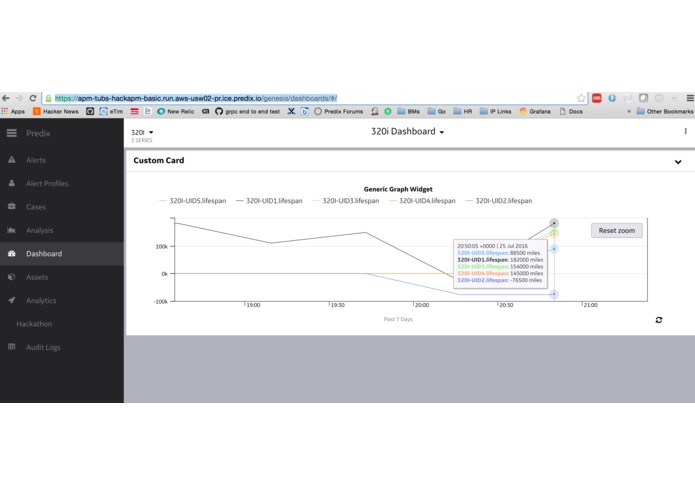
APM timeseries graph for fleet
-
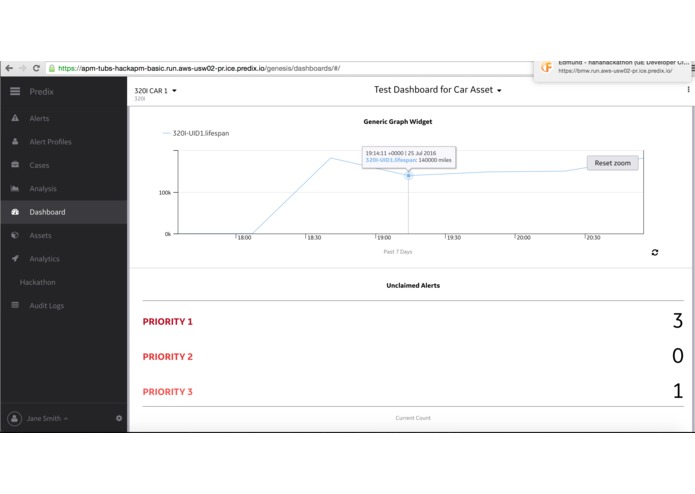
APM Single Asset timeseries
-
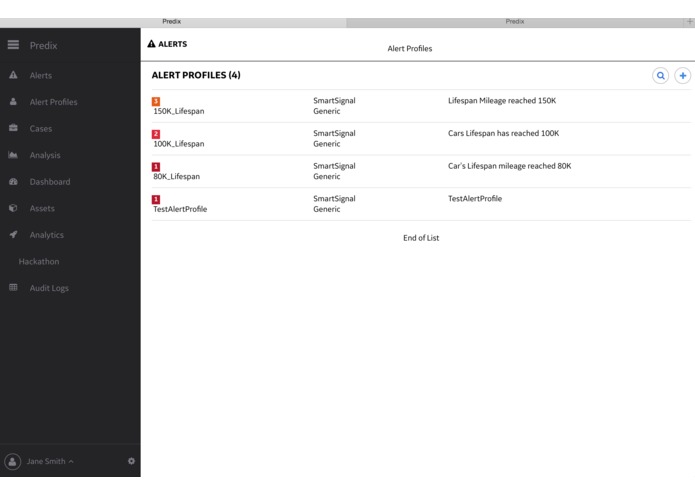
Alerts


Inspiration
Connected cars roam our streets today and will be everywhere in the years to come. Car Manufacturers have many incentives to make their cars connected and many of them have already started to get data back from most of their fleet, but they are not utilizing this data to its potential yet. This introduces a new opportunity for GE with its expertise in industrial asset management to come in and help extract insights from vehicular data to decrease operational costs, detect and predict faults to avoid large scale recalls and reduce operational and safety risks.
What it does
In this hackathon we focused on building the initial version of a digital twin for a vehicle. We have focused on only one sensor, the accelerometer to represent acceleration and deceleration of a vehicle. We made the *assumption that there is a correlation between these two metrics and the expected lifespan (in miles) of a car.
We have built stage one of a digital twin for a car focusing on one of over 250 sensors that will send data back from a car. We have a UI to show real time and timeseries accelerometer data and how that affects the lifespan of a car. The initial car is going to be our Intel Edison board with an accelerometer sensor and we will be able to dynamically add car by allowing people to visit a link to register their phone as a car for which we will create a new asset and use the phone's accelerometer to predict the lifespan.
We also have the asset fully represented in APM, from asset model to Timeseries data through tags and even and alert.
Using APM to manage a car brought some challenges. 1) Cars are manufactured and added to fleets more frequently than most industrial assets managed in APM. We needed to allow for dynamic creation of assets both in our backend and in our UI. 2) Cars produce upwards of 25GB of data and that will be an issue with transmitting and storing of data. We have started to implement what we see as "smart ingestion." We selectively aggregate, ignore, and analyze some variables before ingesting them into our asset to reduce traffic and size. We specifically did this for how we calculate when a hard acceleration or hard brake event has occurred based on the accelerometer data.
*This assumption was used as an example of the many correlations a digital twin would help highlight but we wanted to show end to end the impact of a software like this.
How we built it
Technologies: Frontend- Polymer Backend- Go
Predix Service: APM Timeseries APM Asset APM Alerts APM UI
Hardware: Intel Edison board Accelerometer Everyone's phones
We have built a smart ingestion service in Go that takes data from the Intel Edison board as well as the phones that visit our webpage to create digital representations of those assets as tho they were vehicles. We also have built the UI in polymer that will allow our customers to view individual car performance as well as aggregate fleet level performance.
Challenges we ran into
APM UI was very laggy and slow at times.
Accomplishments that we're proud of
We were able to have the UI and Asset update dynamically!
What we learned
How to use APM and Edison Board.
What's next for GE Fleet Management
There is a lot of potential with this idea, with the proper domain knowledge and building out this concept further to ingest more data from different sensors on a car we can easily build out a full digital twin. We want to see if we can take this idea further and partner with a Car OEM, preferable one that is already partnered with Intel for connected car such as BMW, to build out a tool for them to be able to manage their fleet from a model and individual car specific perspective. We can help them, improve their vehicles from year to year based on specific performance numbers and understanding of how customers are using the cars. We can also help them detect and predict faults early and help them avoid large scale recalls.
Built With
- apm-asset
- apm-timeseries
- apm-ui
- chart.js
- cloud-foundry
- go
- polymer
- predix


Log in or sign up for Devpost to join the conversation.