-
-

Subscription page with Ecocash and Paynow API
-
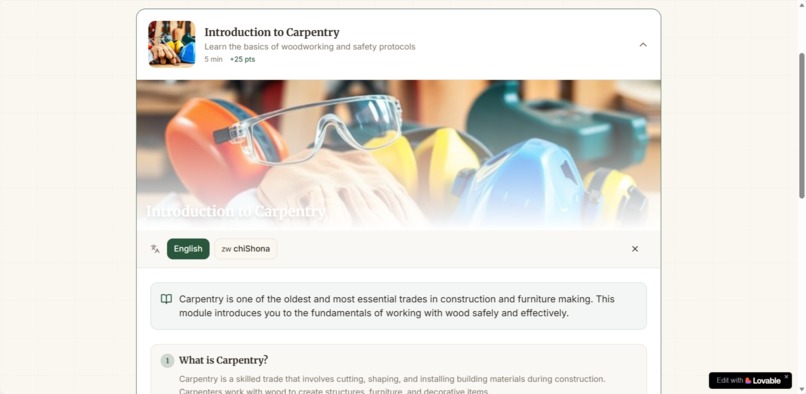
learning platform, can be translated to any language
-
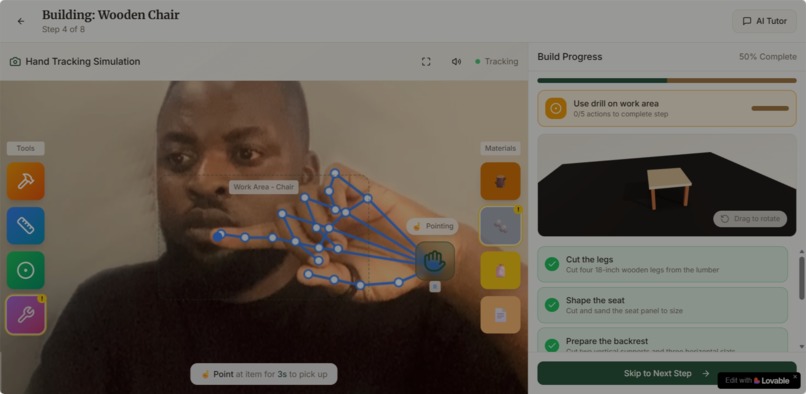
3D simulation building a table with no experience


Inspiration
Developing the Glove Ai was derived from the success project that us as kumbacare team, have developed a telemedicine platform using vibe code systems and integrating APIs in the kumbacare Telemedicine Solution, with no background in computer science or any technical programming language.
Building the project inspired us that we can change the narrative that is currently available on many educations e-learning platforms to help non-technical and students without a pass in ordinary level to learn, design, build 3D products in carpentry, bakery, computer use, for a living, thereby creating employment for themselves.
What it does
Glove Ai allow non technical and students who do not have academic background to be able to learn in any language, design, build and ship products people love such as carpentry products, design in backery etc. It gives a virtual reality to users and experience the same situation with those who are learning course physically involved.
How we built it
We structured the project into the following pillars, 3D tech, Feedback loop using Ai and input interface. the 3D engine utilised gaming algorithms to have better interaction with the product, the ai is for instructing and analyzing the glove user against force applied, speed, movement, angle of cut. It also helps in real time corrections using ML to calculate error score,
Challenges we ran into
Haptic Latency (The Immersion Breaker): The biggest challenge was ensuring the haptic feedback felt instantaneous. If the time delay between the user's action and the glove's tactile response was too high, the immersion was broken, and the simulation felt "laggy" and unusable for building muscle memory.
Accomplishments that we're proud of
We are proud of developing Glove Ai into 70% functional and be able to present it to audience.
What we learned
Building Glove Ai was a huge learning curve, taking imagination in your hand, taking physics formulas on computer, researching the APIs, . We learned that coming up with the solution require team work to participate in design thinking. We could value every contribution made with the time in identifying problems in the e-learning environment and walk through all the problems on design thinking mode, until we find the right solution for Zimbabweans.
We learned the power of ask, we gathered information from my twin brother who did physics to understand the collision detection algorithm. For instance, in woodworking, the simulation must model the material removal rate $(R)$ based on the tool-surface interaction.
What's next for Glove Ai
Glove Ai must be executed in all schools of remote area, and we believe there is a huge need for such project, started at hackathon and we are going to launch it during our pitch and put it into real practice. We are going to develop more training modules in bakery, human anatomy for nurses and doctors to help with their practical education, caregiving skills learning etc.


Log in or sign up for Devpost to join the conversation.