-
-
spec-driven-development
-
logo
-
overview
-
how it works
-
anatomy
-
spec-driven-dev


Inspiration
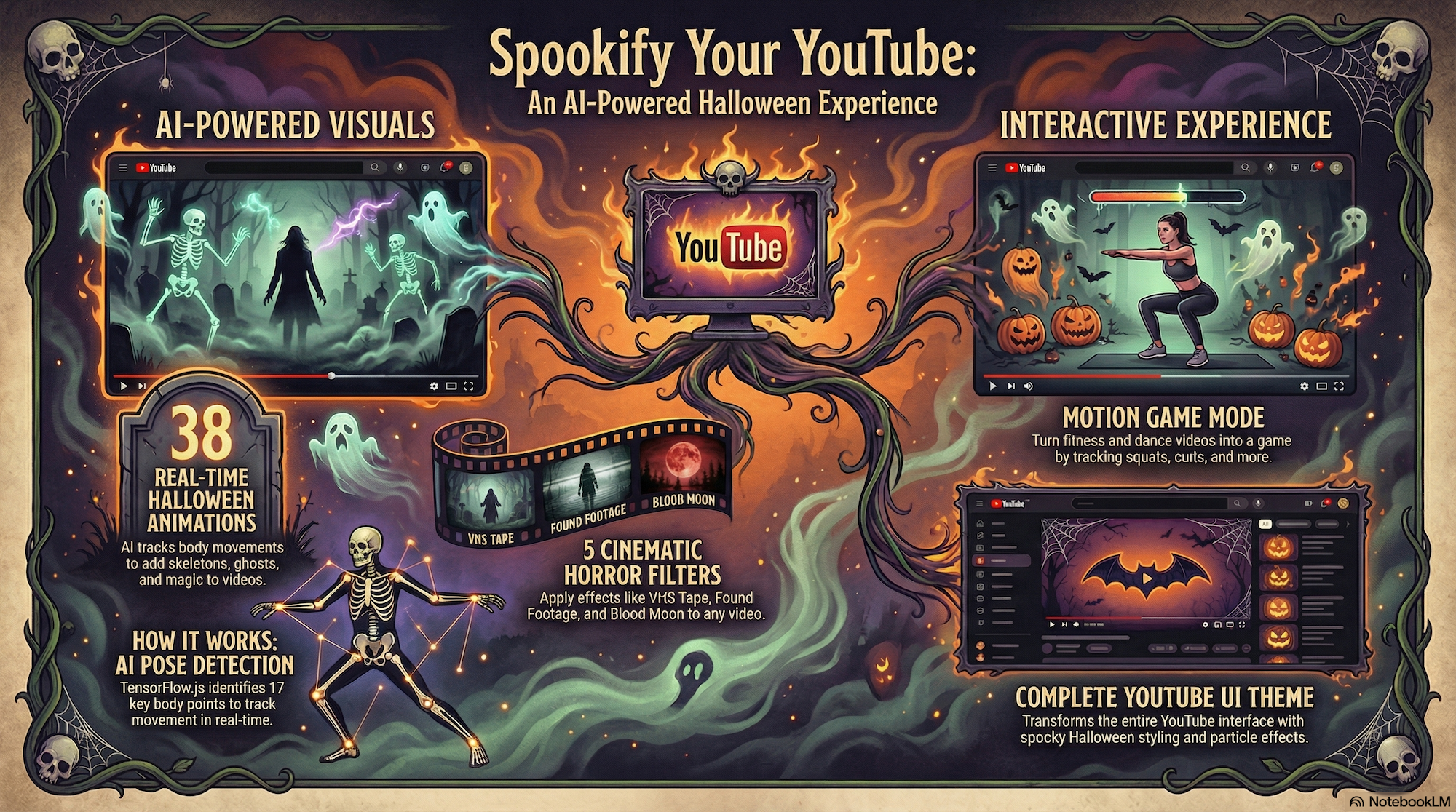
I wanted to put Kiro to the test by reviving an old project of mine. Spec-driven development had piqued my curiosity, and I saw this as the perfect opportunity to explore it through a hands-on example. The Halloween transformation struck me as an exciting canvas—an ideal foundation for incorporating fresh ideas and pushing the extension further.
This video shows the original feature set from three years ago.
What it does
How we built it
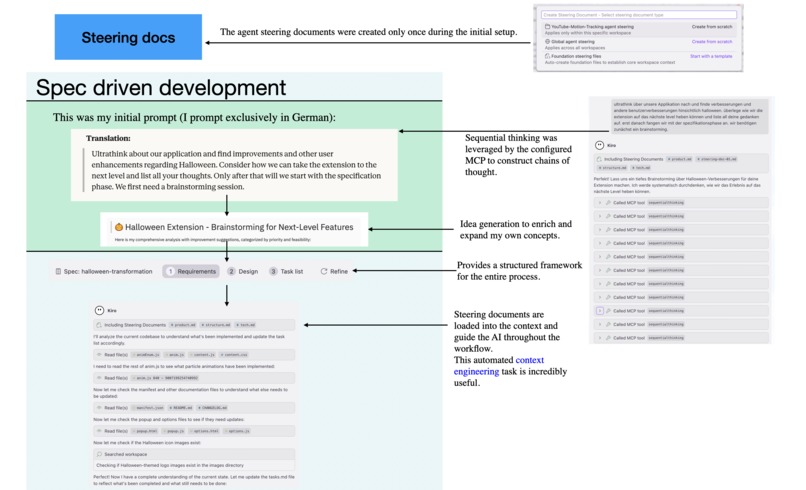
I began by enriching the existing repository with steering documents. From there, I executed a complete rebuild of the application using spec-driven development.
Here is a compact summary:
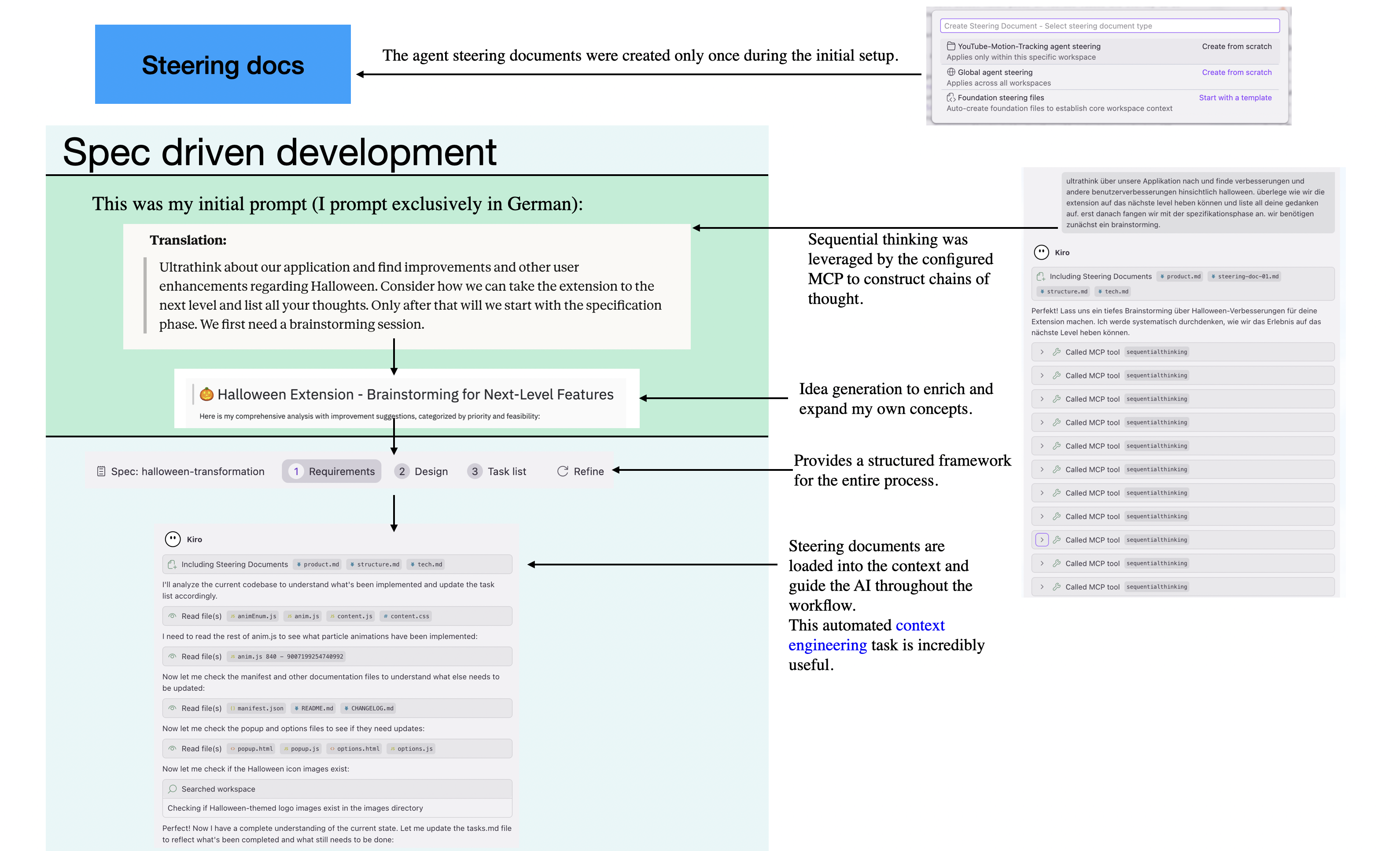
While prompting in German, I strategically use Claude trigger words like "ultrathink" to maximize output quality.
Initially, one aspect of Kiro frustrated me: having to manually start or queue approximately 20 tasks. That changed when I discovered that prompts could control this process directly. While the official guidance can-i-execute-all-the-tasks-in-my-spec-in-a-single-shot advises against this approach, my recommendation differs: craft your prompts to grant the agent complete autonomy and full project responsibility. Since the context engineering is established (or compiled), Kiro can tackle the tasks effectively on its own. Naturally, this doesn't always yield perfect results—but that's not an issue. The next prompt simply redefines the context and objectives, referencing the previously created documents. This workflow allows me to steer the AI with precision while avoiding the need to micromanage every step.
Beyond spec-driven development, I leveraged vibe coding sessions for rapid implementation. The project ultimately comprised 10 specs and over 40 chat windows.
After testing each feature, I committed the working version immediately:
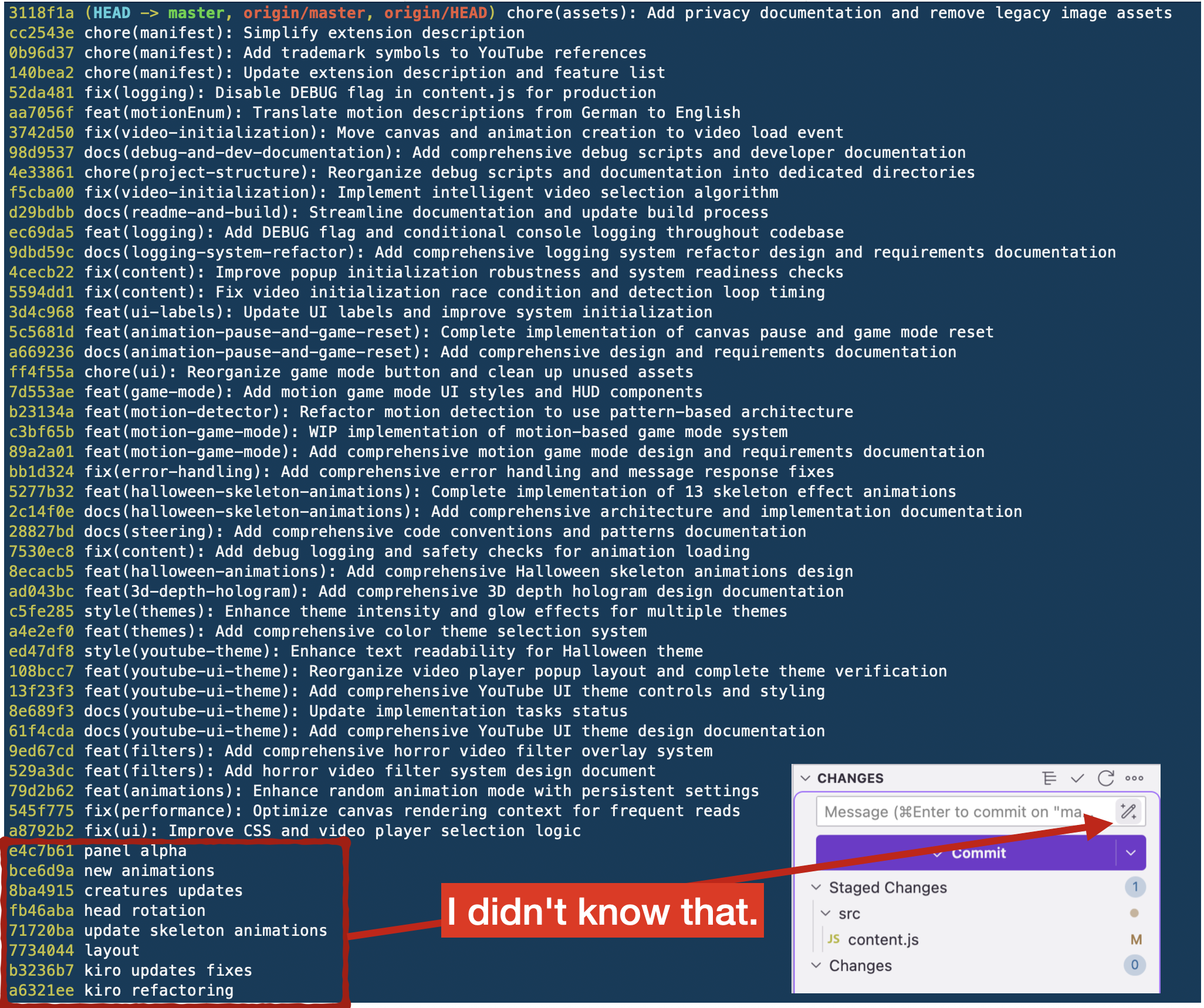 Once I discovered the "Generate Commit Message" function, my workflow transformed entirely. Crafting commit messages by hand became obsolete—a surprisingly liberating relief that I didn't know I needed.
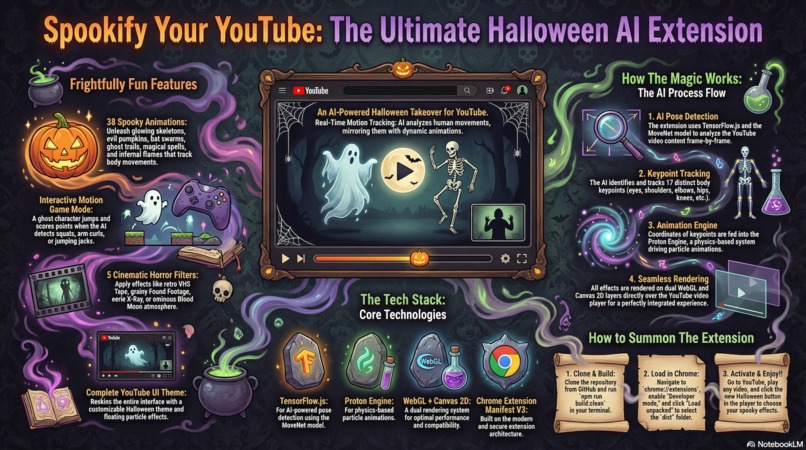
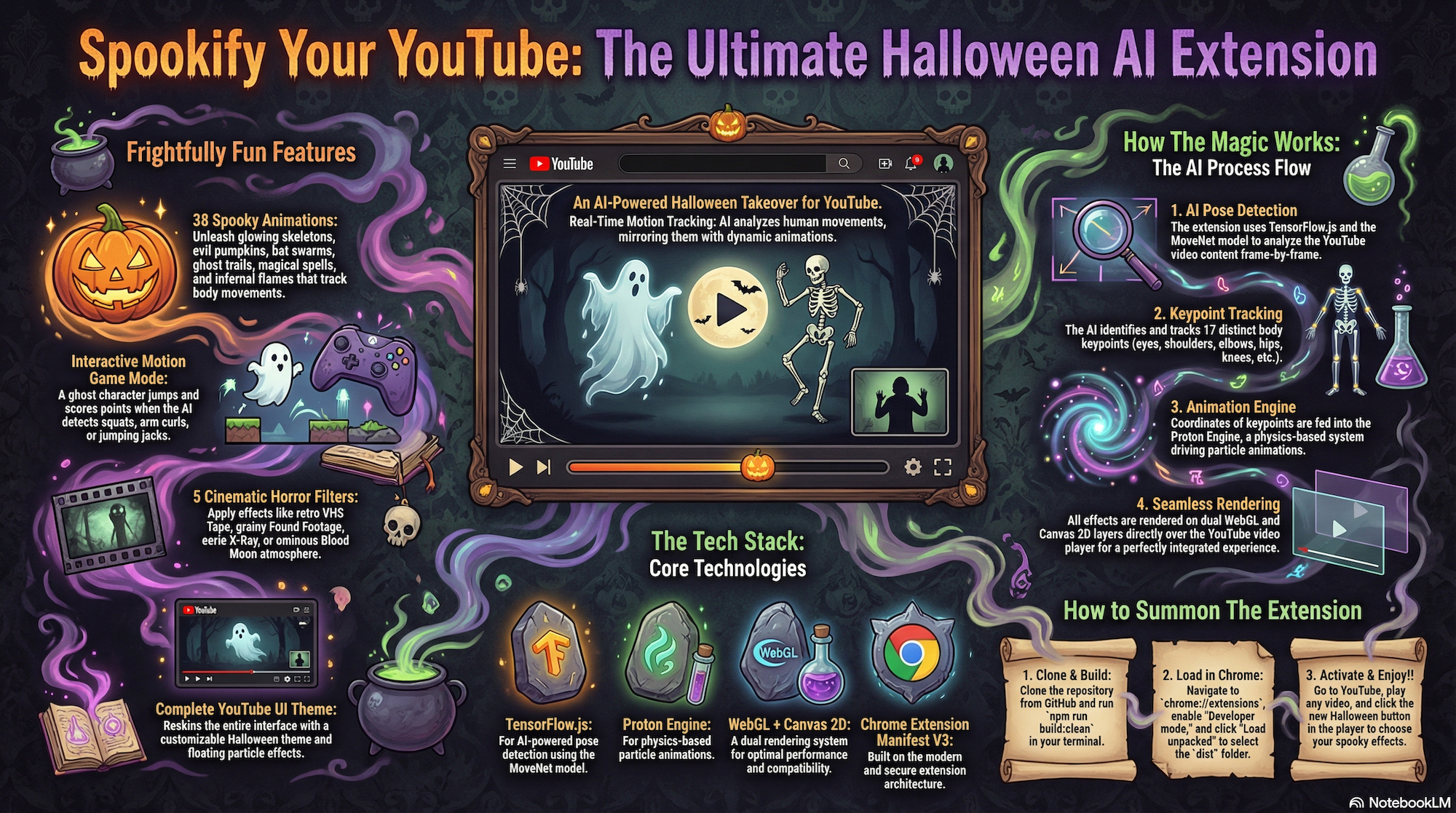
How the magic works:
Challenges we ran into
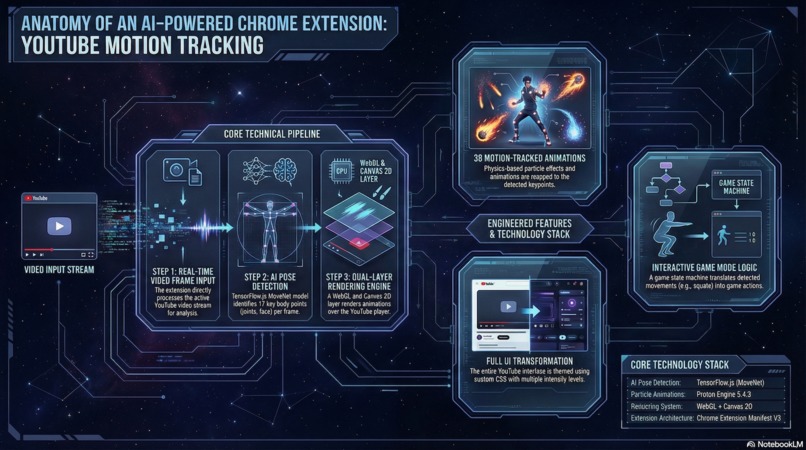
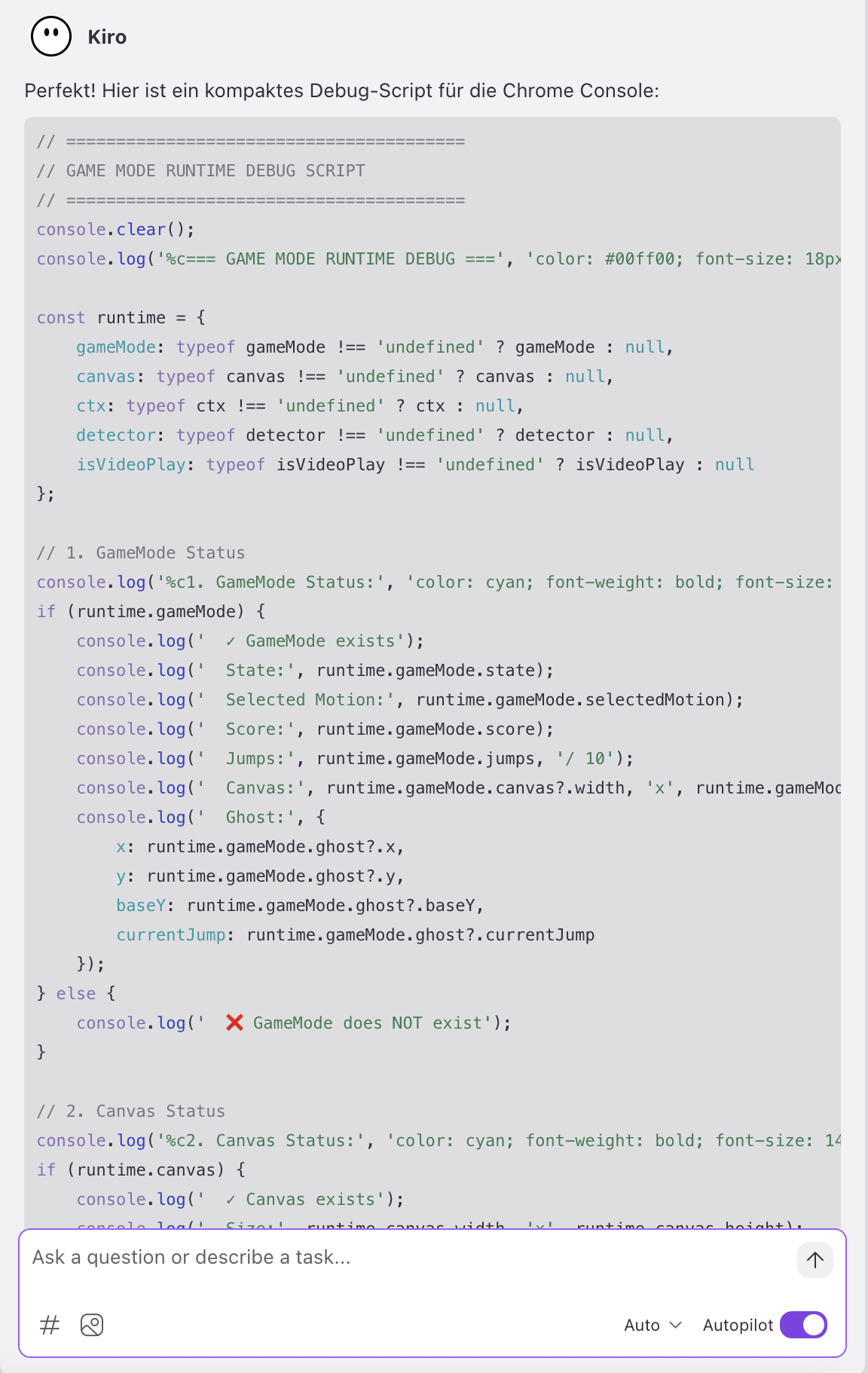
I chose to test the Chrome extension manually, deliberately accompanying the process hands-on rather than relying on MCPs—trust, but verify. Since YouTube operates as a single-page application, handling events proved challenging, and manual reloads were constantly required. To streamline debugging, I had Kiro generate custom debug scripts that I executed directly in Chrome's developer console. The results fed back into Kiro, enabling iterative implementation of the functions. While this approach wasn't always necessary, it proved invaluable as a tool for guiding context engineering and maintaining a clear flow of information.
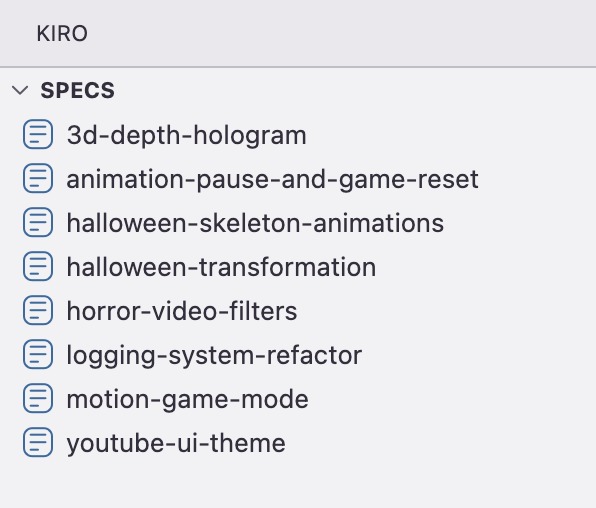
Here you can see my specs:
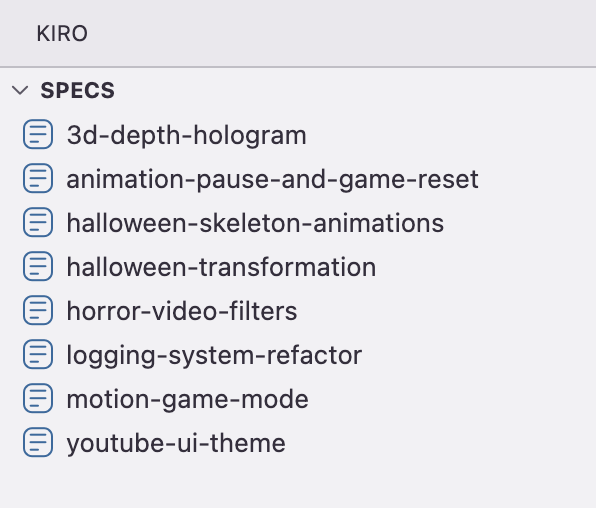
With "3D Depth Hologram," I aimed to create a visually striking effect. Unfortunately, performance constraints made it impractical for real-world use. To achieve this properly, I would have needed to integrate a dedicated depth estimation model—adding another layer of complexity that wasn't feasible within the current scope. Similarly, multi-pose detection encountered the same bottleneck—the computational overhead proved too demanding, which is why multi-pose support is not included in the current version.
Accomplishments that we're proud of
I truly enjoy using the extension myself—particularly for animating music videos. Seeing it published in the Chrome Web Store is something I take great pride in. The extension has passed Google's review process and is officially approved for public distribution.
What we learned
Working with Kiro was a genuinely enjoyable experience. Spec-driven development provided the structure, while vibe coding added the creative spark that brought it all together. A small but impactful discovery: the "Generate Commit Message" function completely transformed my workflow—one of those quality-of-life improvements you don't realize you needed until you have it.
What's next for KIROWEEN POSE
Going forward, this project will evolve exclusively in collaboration with Kiro. Perhaps an Easter Bunny special edition is on the horizon—who knows what seasonal twist comes next. The code is open source and freely available. I'm excited to see what you, together with Kiro, will create from this foundation.


Log in or sign up for Devpost to join the conversation.