-
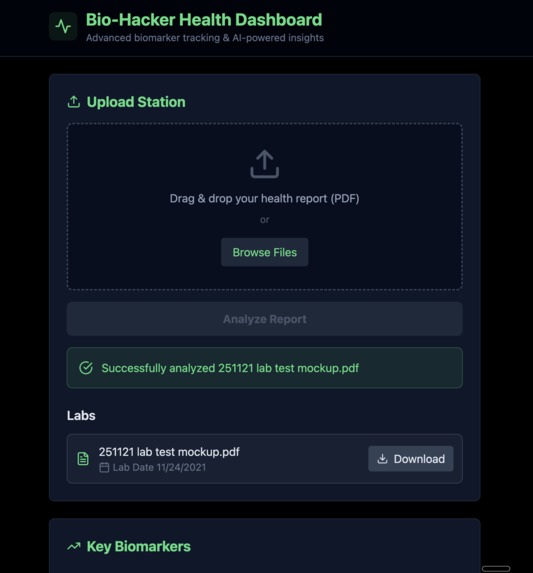
Upload Health Record
-
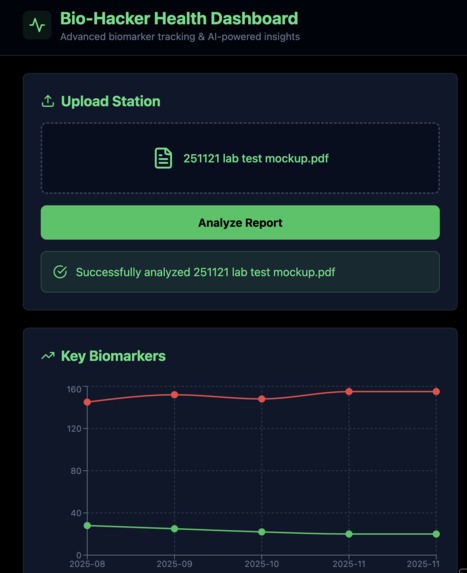
Biomarker Trend
-
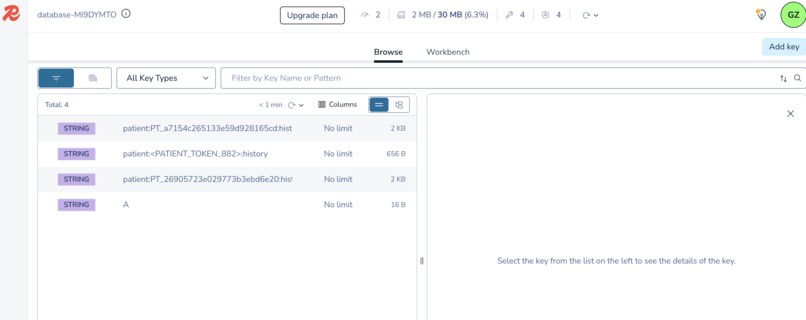
Redis Database and PII Tokenization
-
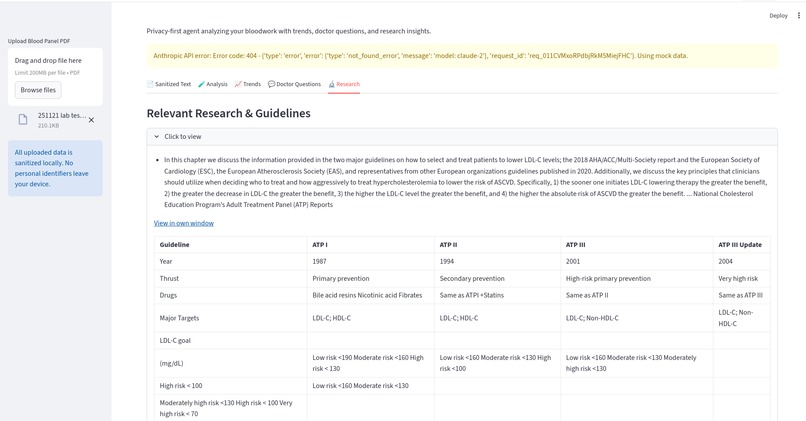
Insights
-
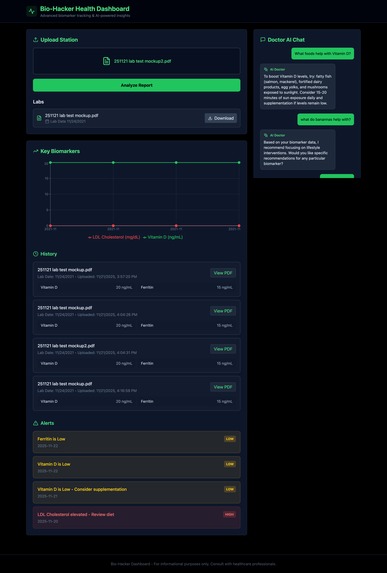
Chat with your Biomarker Health Data


Project Story: BioTrend
Inspiration
We were inspired by a simple but critical problem: people have access to medical data (blood panels, lab results, wearable devices) but often don’t know what it actually means. Many feel overwhelmed during doctor visits and don’t trust AI systems with sensitive health data.
Our goal was to empower individuals to understand their health trends over time while ensuring privacy. The idea: build a privacy-first AI assistant that can analyze medical data, track trends, suggest actionable improvements, and even help prepare questions for a doctor.
What it does
BioTrend allows users to:
- Upload lab results (starting with blood panels, expandable to wearable data).
- Extract biomarkers, flag abnormalities, and track trends over time.
- Fetch the latest research for abnormal values, ensuring advice is up-to-date.
- Generate personalized recommendations and questions to bring to a doctor.
Example Output: Vitamin D: 18 ng/mL (Low) | Trend: Down 40% from last year. LDL Cholesterol: 160 mg/dL (High) | Trend: Stable. 🤖 Questions for Doctor: Could my Vitamin D drop relate to magnesium absorption? Should I consider an ApoB test since LDL is high? Is a weekly 50,000 IU D3 supplement appropriate?
How we built it
We split the system into modular components:
- Ingestion: Users upload a PDF blood panel. We extract text using
pdfplumber. - PII Scrubbing (The Shield): Skyflow replaces names, DOBs, and IDs with tokens (
<PATIENT_882>), ensuring privacy before data analysis. - Analysis (The Brain): Anthropic Claude extracts structured data, flags abnormalities, compares trends from Redis, and generates doctor questions.
- Trend Tracking (The Memory): Redis stores previous lab results for each patient token and calculates improvements or declines.
- Research (The Researcher): Parallel.ai browses the latest clinical research for abnormal biomarkers.
- Output: Postman endpoints and a simple UI generate a "Doctor Cheat Sheet" and Q&A interface for follow-up questions.
We used a privacy-first pipeline where no sensitive data leaves the user’s environment unencrypted.
Challenges we ran into
- Data privacy vs usability: Ensuring PII was fully scrubbed while keeping the data useful for analysis was tricky.
- Unstructured PDFs: Blood panels come in many formats; extracting clean data reliably was challenging.
- Trend analysis: Comparing historical lab results required standardizing units and handling missing values.
- Time constraints: Integrating Redis, Parallel.ai, and Claude in just 4 hours forced us to prioritize MVP features.
Accomplishments that we're proud of
- Built a working prototype that ingests PDFs, scrubs PII, and outputs actionable insights.
- Automated trend detection and personalized question generation for doctor visits.
- Designed a privacy-first architecture that could scale to wearable data.
- Demonstrated real-time research integration using Parallel.ai for actionable advice.
What we learned
- Privacy-first AI is feasible for personal health monitoring without sacrificing insights.
- Structuring unstructured medical data is harder than it seems, but libraries like
pdfplumber+ Redis make it manageable. - Combining multiple AI services (Claude + Parallel.ai) can create a holistic health assistant.
- Even a short hackathon sprint can produce a real, usable tool with meaningful outputs.
What's next for BioTrend
- Expand beyond blood panels to wearables, imaging, and genomics.
- Add longitudinal dashboards for users to visualize trends over years.
- Improve the Q&A interface to handle more complex questions interactively.
- Integrate dietary, exercise, and lifestyle recommendations based on biomarker trends.
- Continue exploring fully local PII processing so users never risk leaking sensitive data.


Log in or sign up for Devpost to join the conversation.