-
-
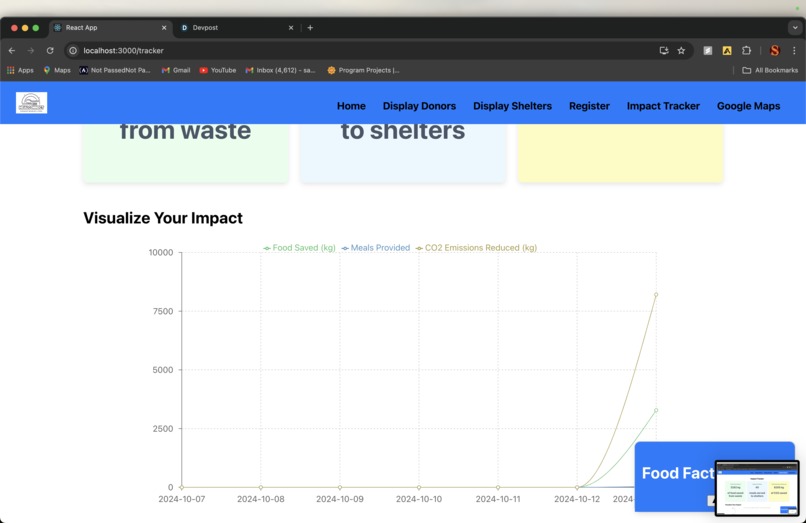
Graph-visual
-
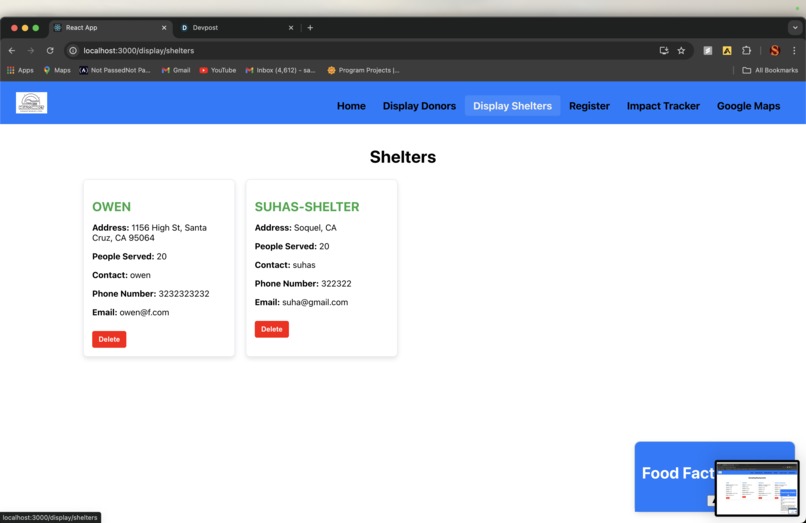
Display
-

Registration
-
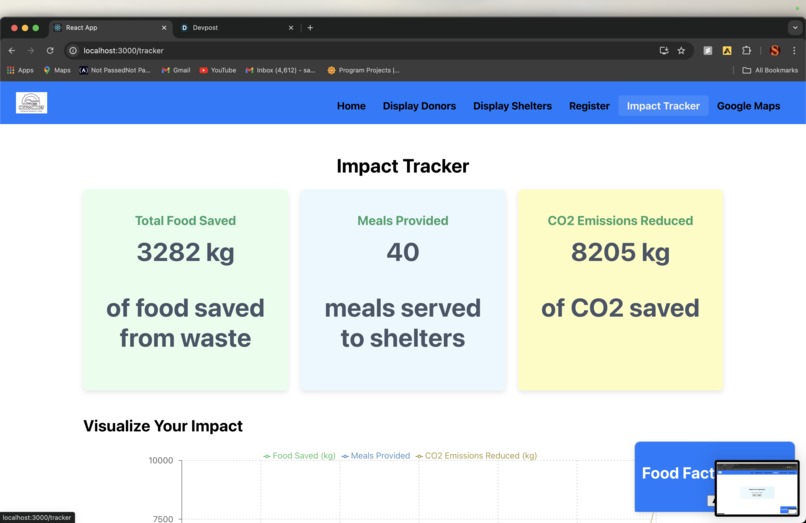
impact-numbers
-
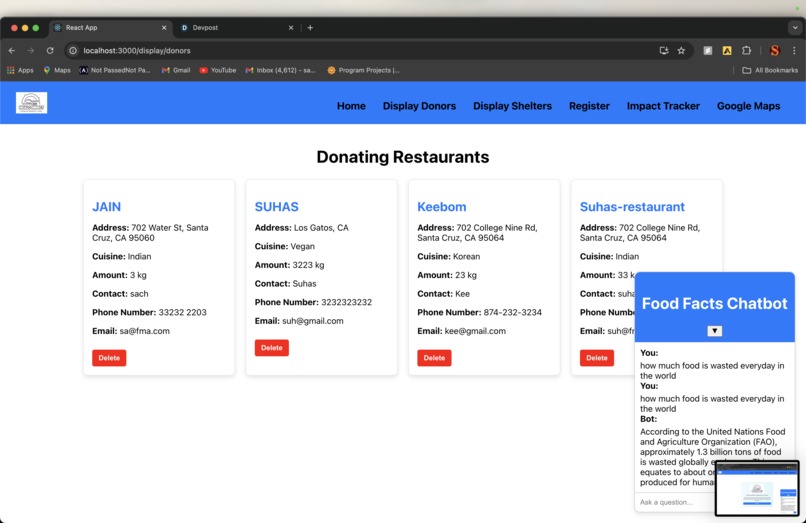
Display
-
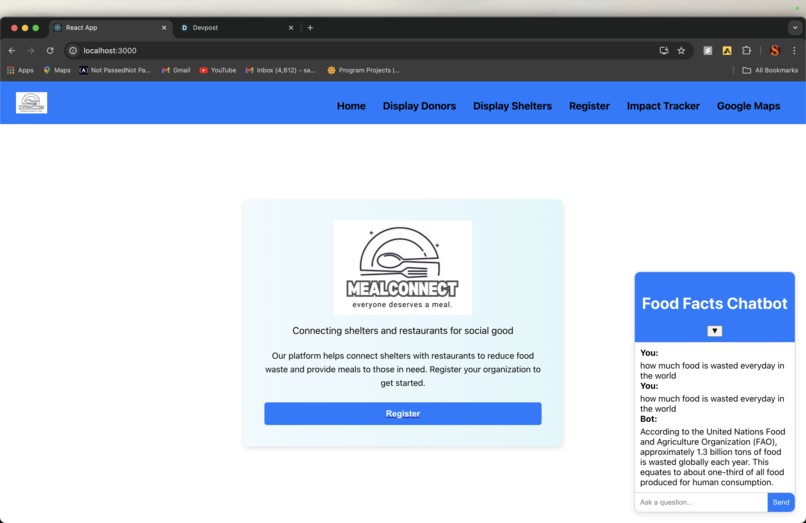
GeminiAI
-

Google maps
-
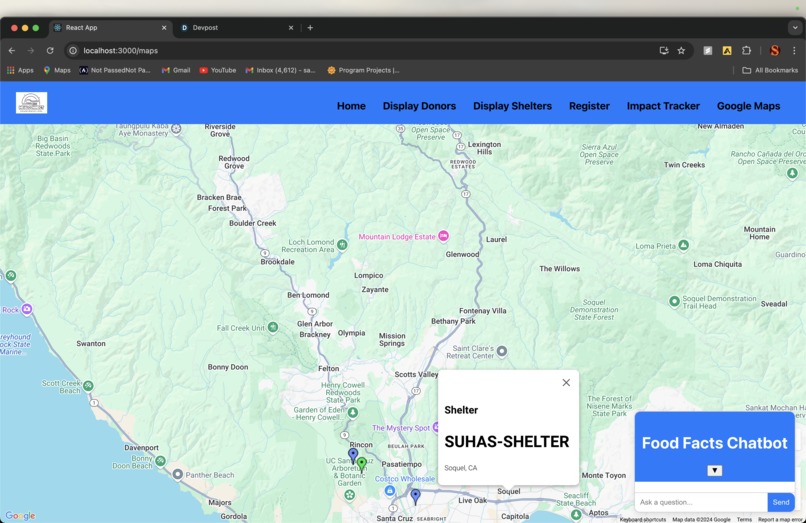
MAPS-INFO


Inspiration
Approximately one-third of the world’s food supply goes to waste. Not only could this food help meet the needs of around 720 million hungry people worldwide, but food waste also has significant environmental consequences. In fact, it accounts for nearly 8% of global greenhouse gas emissions. Restaurants are major contributors to this issue. While they must comply with health regulations, substantial amounts of food are discarded due to leftovers or not meeting a restaurant's quality standards.
What it does
To address this issue, we created MealConnects—a platform that connects food providers with homeless shelters, ensuring that perfectly good food reaches people in need instead of landfills. The application allows donors and shelters to register by providing essential information such as their name, location, contact details, food availability, and the number of meals or people they serve. Once registered, their information is displayed on a centralized page, and their location is pinned on a Google Maps interface, making it easy for others to connect with them. To measure the impact of the project, we implemented a tracking system that quantifies and visualizes key metrics, including the amount of food saved, the number of meals served, and the reduction in CO2 emissions. We also implemented Google- GEMINI chatbot to give users more insights to food wastage.
How we built it
The user interface was built using React.js, a frontend JavaScript framework. This encompasses all visual elements, including text, tabs, buttons, and color schemes, to ensure intuitive navigation and enhance user comprehension of our application. On the backend, we implemented Express to manage server-side logic, which includes storing organizational data in a MongoDB database, displaying all registered organizations, and calculating impact metrics. The line graph that visualizes impact over time was developed using the React library Recharts, and we integrated the Google Maps API to display the locations of all registered organizations on an interactive map. Google Gemini for LLM chatbot.
Challenges we ran into
We ran into several problems, including Google MAPS integration and displaying locations using Places API from google and converting it into Geo-coordinates and then getting the JSON file from google api. Another one was Gemini-API implementation, but after reading documentation we were able to integrate it. We also ran into some server problems while visualization of graph but were together able to figure it out.
Accomplishments that we're proud of
We are all extremely proud of being able to create a full-stack application in the span of 36 hours. This application can have immediate real world impact ensuring that there is no food waste and no empty stomachs.
What we learned
We learned how to use MongoDB to create instances of shelter and food organizations. We also learnt how to set up and connect the frontend and backend servers so that database changes are done live and the changes are displayed to the page as well. We also learned crucial DevOps skills and working with other developers we just met
What's next for MealConnects
We plan to expand to the Santa Cruz area to actually have an impact in our community and then hopefully branch out to larger areas. We hope we can start locally at UC Santa Cruz and coordinate the food waste the school has and create change, we want to start by contacting local various vendors & donors who are willing to help provide meals to those in need.


Log in or sign up for Devpost to join the conversation.