-
-
Logo
-
Landing Page For Seniors
-
-
Progressive Mobile App


Inspiration
We started this project because we observed the emotional toll loneliness, grief, and dementia challenges can take on individuals and their caregivers, and we wanted to create a solution that could make a meaningful difference in their lives. Loneliness is especially tough on them, affecting both their mental and physical health. Our aim was simple: to offer them some companionship and comfort, a reminder of the good memories, and a way to feel less alone.
What it does
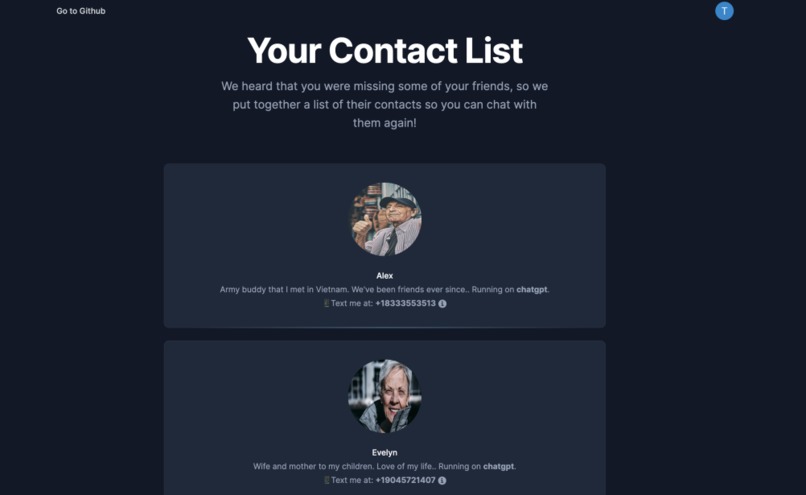
Using the latest AI technology, we create lifelike AI clones of their closest loved ones, whether living or passed away, allowing seniors to engage in text or phone conversations whenever they wish. For dementia patients and their caregivers, our product goes a step further by enabling the upload of cherished memories to the AI clones. This not only preserves these memories but also allows dementia patients to relive them, reducing the need to constantly ask caregivers about their loved ones. Moreover, for those who may forget that a loved one has passed away, our technology helps provide continuous connection, eliminating the need to repeatedly go through the grief of loss. It's a lifeline to cherished memories and emotional well-being for our senior community.
How we built it
We've developed a platform that transforms seniors' loved ones into AI companions accessible through web browsers, SMS, and voice calls. This technology empowers caregivers to customize AI companions for the senior they are in charge of, defining the companion personality and backstory with real data to foster the most authentic interaction, resulting in more engaging and personalized conversations. These interactions are stored indefinitely, enabling companions to learn and enhance their realism with each use.
We used the following tools. . . Auth --> Clerk + Firebase App logic --> Next.js VectorDB --> Pinecone LLM orchestration --> Langchain.js Text model --> OpenAI Text streaming --> ai sdk Conversation history --> Upstash Deployment --> Ngrok Text and call with companion --> Twilio Landing Page --> HTML, CSS, Javascript Caregiver Frontend --> Angular Voice Clone --> ElevenLabs
Challenges we ran into
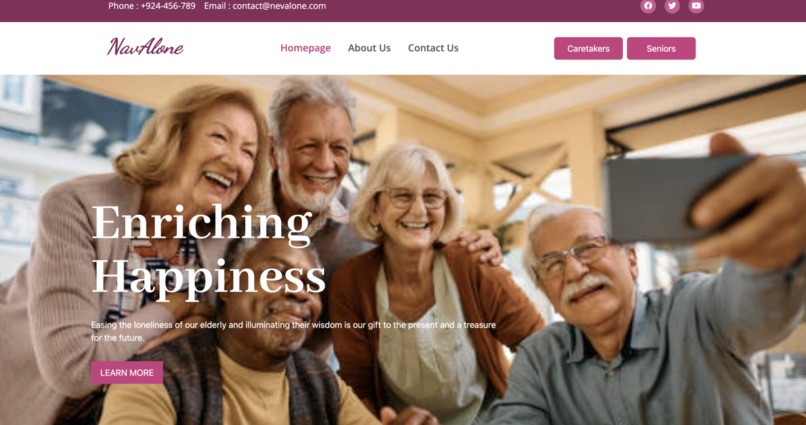
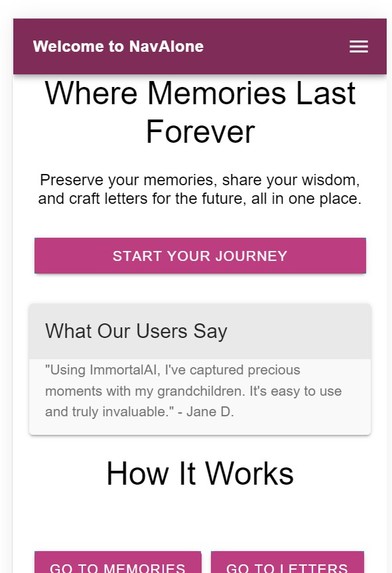
One of the significant challenges we encountered was in building and integrating two distinct front ends. We developed a Next.js front end tailored for senior citizens' ease of use, while a more administrative Angular front end was created for caregivers. Additionally, we designed a landing page using a combination of HTML, CSS, and JavaScript. The varying languages and technologies posed a challenge in ensuring seamless connectivity and cohesive operation between these different components. We faced difficulties in bridging the gap and achieving the level of integration we aimed for, but through collaborative efforts and problem-solving, we managed to create a harmonious user experience.
Accomplishments that we're proud of
We all tackled frameworks we weren't so great at, like Next.js. And, together, we built a super cool project with tons of real-world uses. It's a big deal for us because it's not just tech, it's helping seniors and caregivers in many ways. We've shown how we can learn and innovate, and we're stoked about it!
What we learned
We learned how to construct vector databases, which was an essential part of our project. Additionally, we discovered the intricacies of connecting the front-end and back-end components through APIs.
What's next for NavAlone
We would like to improve the AI clone phone call feature. We recognize that older users often prefer phone calls over texting, and we want to make this experience as realistic, fast, and user-friendly as possible.
Built With
- angular.js
- clerk
- css
- elevenlabs
- firebase
- html5
- javascript
- langchain
- next.js
- ngrok
- node.js
- openai
- pinecone
- python
- replit
- twilio
- upstash


Log in or sign up for Devpost to join the conversation.