-
-
Logo
-
UI Screenshots
-
Gameplay Screenshots 1
-
Gameplay Screenshots 2


Inspiration
The competition inspired me to create a mobile focused world that uses portrait mode, a single-touch movement control, and the new Noesis UI capabilities. A primary design goal was to build a game that wouldn’t be affected by input delays introduced by the current streamed nature of mobile gameplay. That led me to the lander concept, where velocity changes gradually and helps mask input lag while still feeling responsive.
What it does
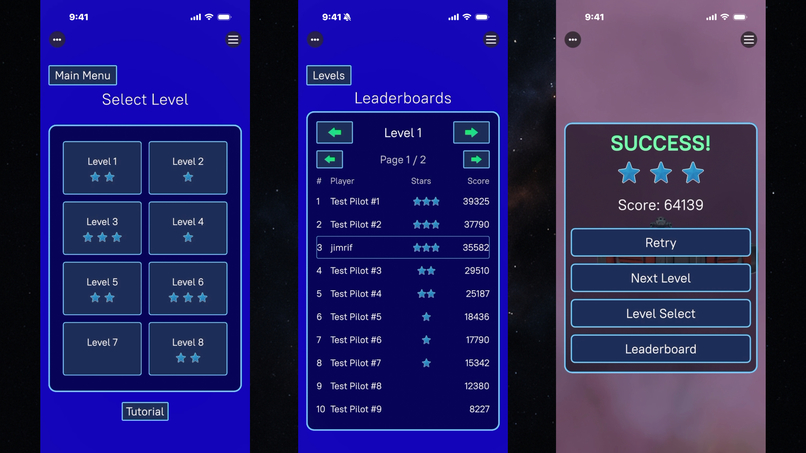
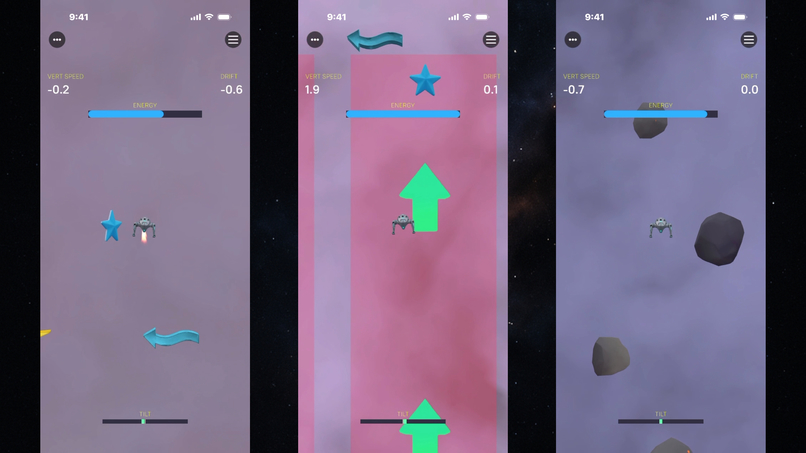
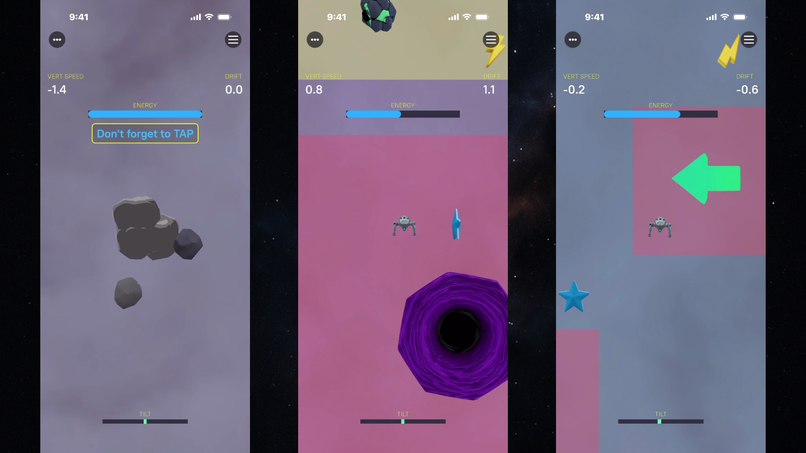
Nebula Lander is an arcade-style game where the goal is to successfully land on platforms inside a vibrant nebula while collecting Stars and gaining Points along the way. Various effectors—like zones that push the drone left, right, up, or down—are a core part of the experience, creating a blend of strategy, timing, and puzzle-like decision making. Custom leaderboards track the top 50 player’s highest stars plus score for every level and provide social connectivity. Alongside the core handcrafted levels, there is an endless dodge mode where players can continue to enjoy a challenge on a regular basis.
How I built it
The world was built in the Horizon Worlds Desktop Editor and scripted in TypeScript, with most audio and 3D models generated using Meta’s GenAI tools.
What I learned and challenges I ran into
Noesis turned out to be the most challenging part of the project, but I learned a lot from it. Building the custom leaderboards was more challenging than using the built in leaderboards, but it resulted in a flexible system that supports more than ten leaderboards, multiple tracked metrics, and the ability to remove entries if needed—all with low system impact. As with each new project, I continue to expand my knowledge of the Horizon Worlds Desktop Editor and TypeScript.
What’s next for Nebula Lander
- More levels
- New effectors
- Endless mode enhancements
Built With
- gimp
- horizon


Log in or sign up for Devpost to join the conversation.