-
-
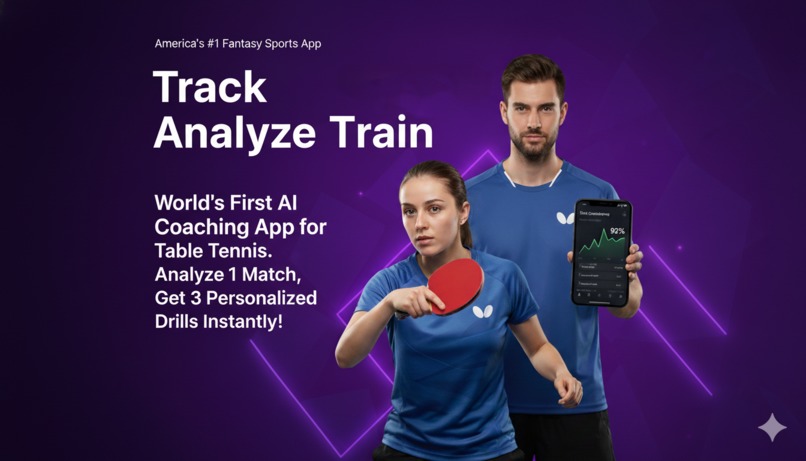
landing_image
-

Homepage of our website
-
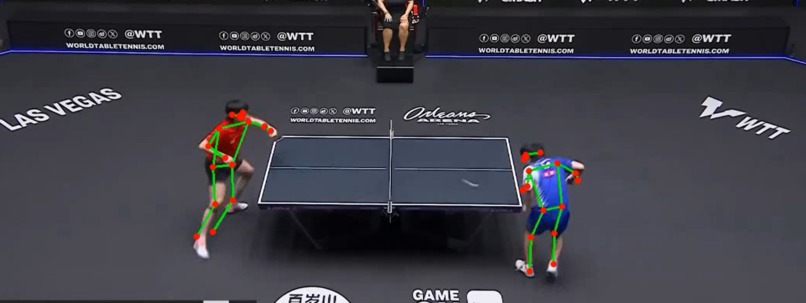
A real table tennis game being analyzed
-
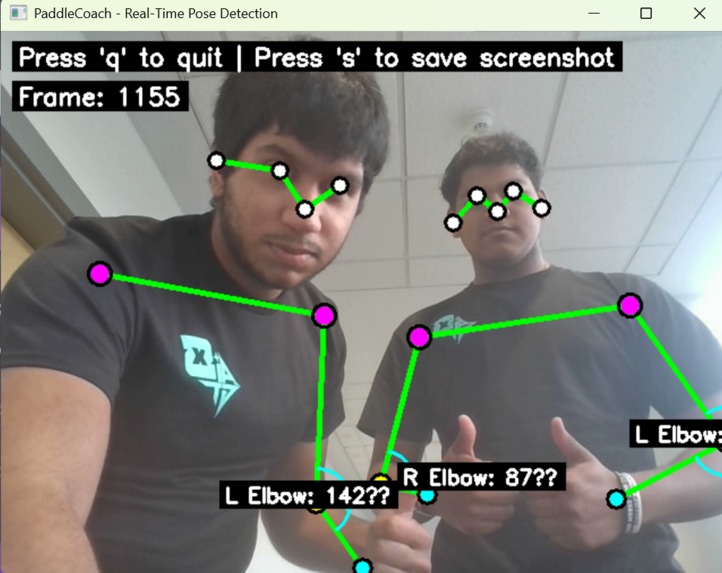
real-time feedback from the body detection model
-
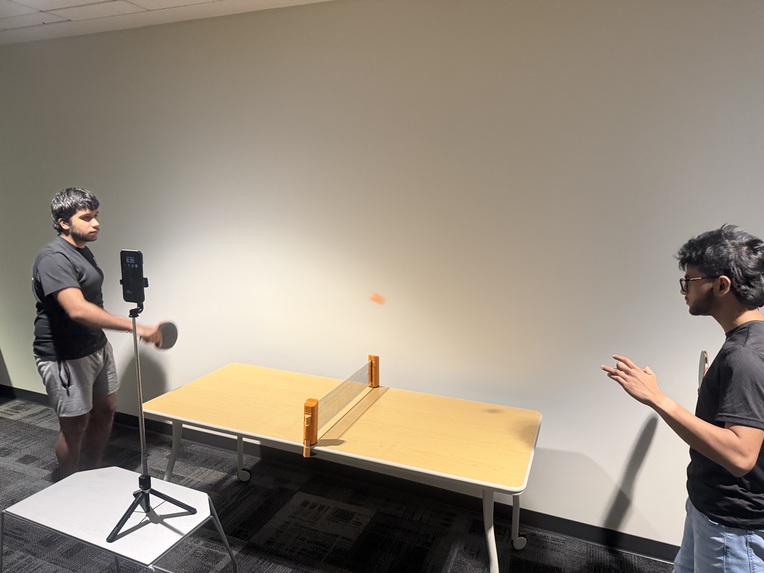
our setup to collect data for model training
-
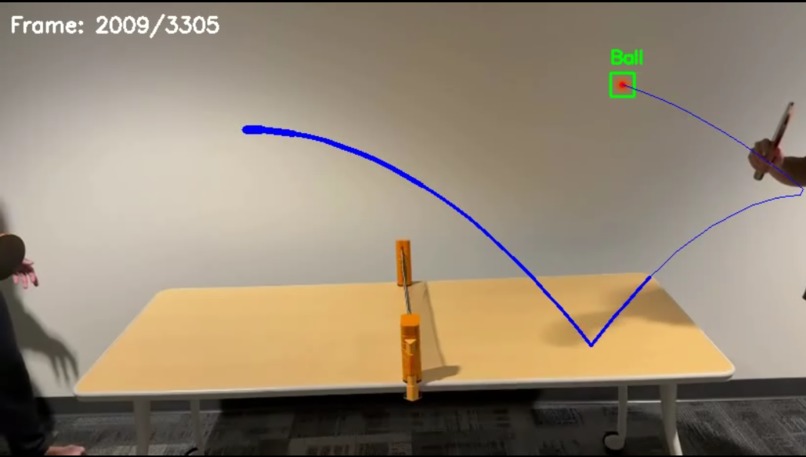
the ball being tracked using our custom model
-
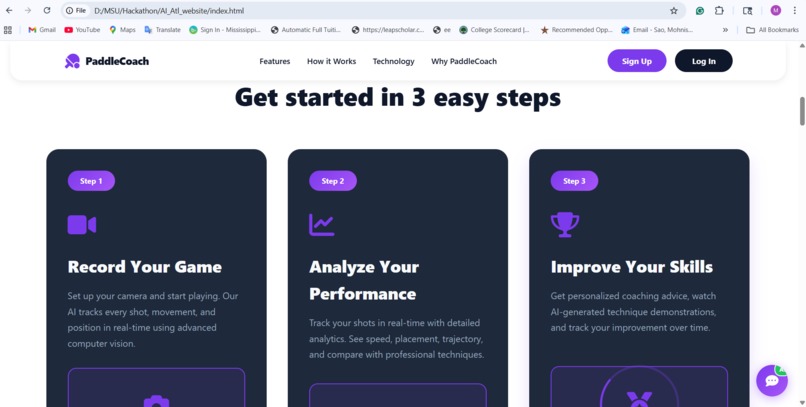
Getting Started
-
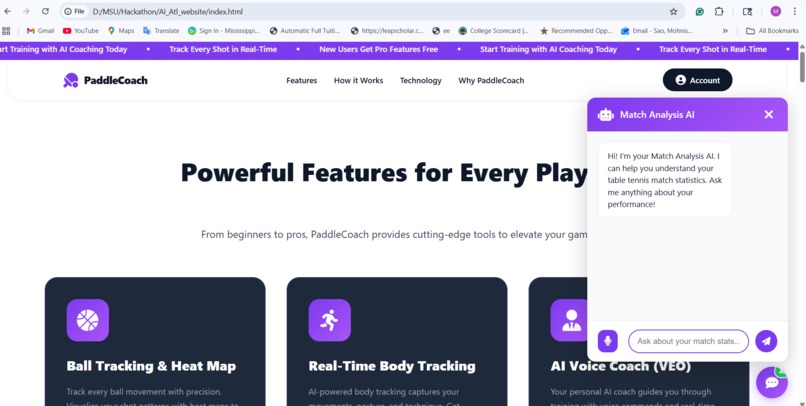
AI chatbot with voice chat option
-
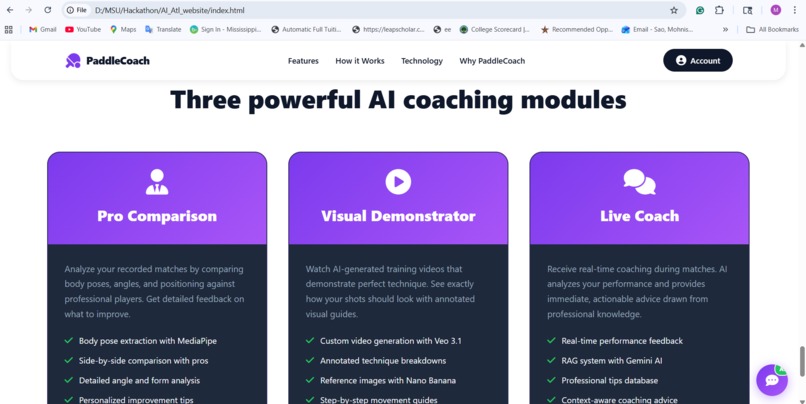
Website
-
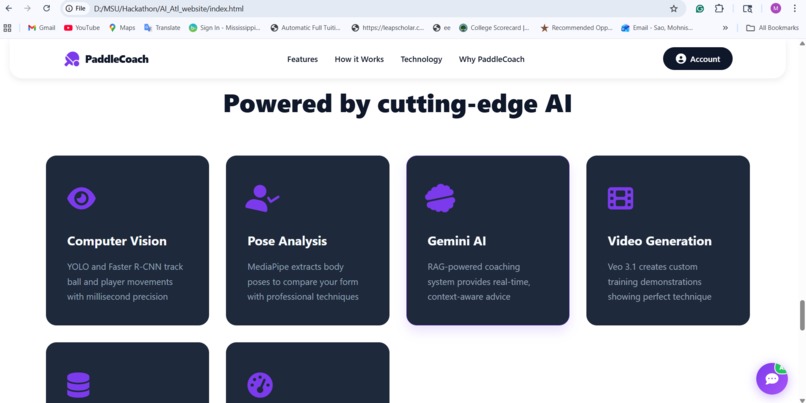
Tech Stack and how it works
-
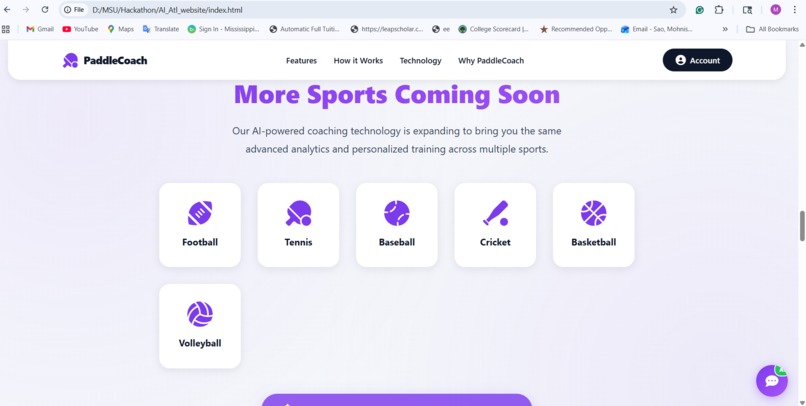
Future plans ( we already got it working for many other sports )


Inspiration
As avid ping pong players ourselves, we noticed a glaring gap in the amateur table tennis world: while professional players have access to coaches, video analysis, and performance tracking, recreational players have virtually nothing. We saw friends plateau in their skills, unable to identify what they were doing wrong or how to improve. This inspired us to democratize sports analytics and coaching by creating PaddleCoach—a system that brings professional-level insights to every player, regardless of skill level or budget.
What it does
PaddleCoach is an AI-powered table tennis analytics and coaching platform that transforms how players train and improve. The system uses computer vision to track live ping pong matches in real-time, capturing ball trajectories, shot types, player movements, and rally patterns. As games unfold, our AI generates dynamic, professional-quality commentary using Google's Gemini API and converts it to natural speech with ElevenLabs, creating an engaging viewing experience. Beyond entertainment, PaddleCoach analyzes player performance, identifies strengths and weaknesses, compares techniques to professional players, and delivers personalized coaching insights through an intuitive web dashboard. Players can review match statistics, track improvement over time, and receive actionable feedback—all without needing a human coach.
How we built it
We built PaddleCoach using a modular architecture that combines AI-driven analytics with a clean, web-based user experience. The frontend was developed with HTML5, CSS3, and modern JavaScript (ES6+), following a responsive, mobile-first design. Core functionalities like user authentication, video uploads, and interactive dashboards were implemented using localStorage and dynamic DOM manipulation. For the AI layer, we designed the system to integrate computer vision models for ball and body tracking, with support for future backend APIs to handle real-time video processing and data analysis. Our design philosophy focused on scalability, allowing PaddleCoach to expand beyond table tennis into multiple sports using the same AI framework.
Challenges we ran into
One of the biggest challenges was simulating realistic AI and video analysis features without a full backend or trained computer vision models during early development. Implementing a seamless authentication system using only frontend tools like localStorage also required careful planning to ensure data persistence and user experience consistency. Balancing rich animations and responsive design with lightweight performance constraints posed additional hurdles. Moreover, designing a scalable structure that could later integrate AI APIs, live coaching sessions, and multi-sport analytics demanded careful modularization and architectural foresight.
Accomplishments that we're proud of
We’re proud of building a fully functional, visually appealing prototype that captures the vision of an AI-powered coaching assistant. From implementing an interactive and responsive user interface to integrating video uploads and user authentication, the team successfully brought together multiple components into a unified experience. The addition of the Voice-Enabled Coach (VEO) concept, multi-sport adaptability, and the chatbot for match insights reflects the creativity and ambition behind the project. Seeing PaddleCoach evolve from an idea into a working web platform capable of transforming sports coaching through AI was a major milestone for the team.
What we learned
Throughout the development process, we learned how to design and build scalable frontends that can later support advanced AI integrations. We gained valuable experience in structuring modular systems, managing authentication and user sessions without a backend, and optimizing UI responsiveness across devices. The project also deepened our understanding of how AI, computer vision, and sports analytics can intersect to create intelligent, user-centered solutions. Most importantly, we learned the importance of teamwork, planning, and adaptability in turning ambitious ideas into tangible, functional products.
What's next for PaddleCoach
Next, we plan to integrate real AI and computer vision models for live ball and body tracking, leveraging platforms like TensorFlow and OpenCV for video analysis. We aim to develop backend APIs to handle user data, real-time feedback, and performance storage securely. Features such as WebRTC live coaching sessions, payment gateways for premium users, and mobile app versions for iOS and Android are also on the roadmap. Additionally, PaddleCoach will expand its capabilities to analyze multiple sports—including football, tennis, and cricket—using the same AI-driven insights, moving closer to becoming a universal smart coaching ecosystem.


Log in or sign up for Devpost to join the conversation.