-
-
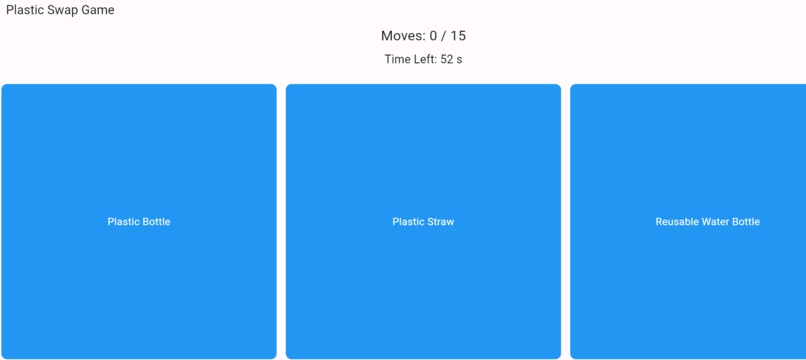
Playground
-
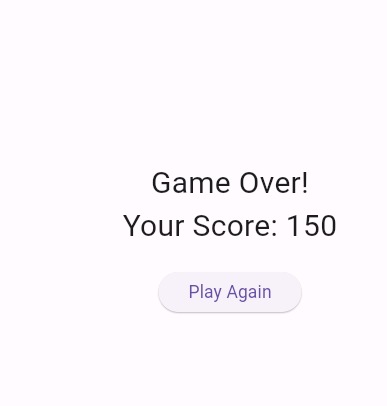
Game Over Screen


Inspiration
- The inspiration for this project came from the growing awareness and concern about single-use plastics and the environmental impact they have. I wanted to create a fun and educational game that encourages players to make swaps to reduce their reliance on single-use plastics.
## What it does
- Gameplay: The game presents players with a grid of items, including both single-use plastics (e.g., plastic bottles, straws) and their reusable alternatives (e.g., reusable water bottles, metal straws).
- Objective: The objective of the game is to swap the items on the grid strategically to create matches of reusable items. Players aim to align reusable items vertically or horizontally to eliminate them from the grid.
- Limited Moves: Players have a limited number of moves to achieve the goal. They must use their moves wisely to complete the level.
- Time Limit: Additionally, there's a time limit within which players must complete the level. Failing to do so within the allotted time results in a game over.
- Tutorial Mode: The game features a tutorial mode that guides players through the game mechanics, helping them understand how to play effectively.
- Game Over Screen: When the game ends, a game over screen displays the player's final score and provides an option to reset the game for another playthrough.
- Scoring: The player's score is calculated based on their remaining moves and time left when they complete the level. Higher scores are achieved by completing the level with fewer moves and more time remaining.
- Resizability: The game features resizable grid items, allowing for a flexible layout that adapts to different screen sizes and orientations.
How we built it
 - UI Design: I started by designing the UI layout for the game screen, including the game grid, score display, and timer.
  - Game Logic: I implemented the game logic, including shuffling the items, tracking moves and time, checking for valid swaps, and determining the game outcome.
  - Tutorial Mode: I added a tutorial mode to guide players through the game mechanics and objectives, ensuring a smooth learning curve.
  - Game Over Screen: I created a game over screen to display the final score and provide an option to reset the game for another playthrough.
  - Testing and Refinement: I thoroughly tested the game for bugs and usability issues, refining the user experience and addressing any issues encountered.
Challenges we ran into
     - Resizable Boxes: Implementing resizable grid items while maintaining a consistent layout across different screen sizes required careful adjustment of widget properties and aspect ratios.
     - State Management: Managing the game state, including moves, time, and game outcome, posed a challenge, particularly ensuring that UI updates were synchronized with changes in the game state.
     - Tutorial Implementation: Designing an effective tutorial mode that effectively guides players through the game mechanics without overwhelming them required thoughtful planning and iteration.
Accomplishments that we're proud of
 - Gameplay Dynamics: Balancing the gameplay dynamics, including limited moves and a time limit, to create challenging yet enjoyable gameplay. Achieving a balance between difficulty and engagement ensures that players remain motivated to achieve the game's objectives.
 - Scoring System: Implementing a scoring system that rewards players based on their performance, encouraging replay ability and competition among players. Providing feedback in the form of scores reinforces positive behavior and incentivizes players to improve their skills.
What we learned
- Game Development Principles: Developing the Plastic Swap Game provided hands-on experience with game development principles, including game mechanics, user interface design, and gameplay balancing. Understanding these principles is crucial for creating engaging and enjoyable gaming experiences.
- Flutter Framework: The project served as an opportunity to enhance our proficiency in the Flutter framework for cross-platform app development. We learned how to leverage Flutter's widgets, state management techniques, and platform integrations to create interactive and responsive mobile applications.
What's next for reduction_singleuseplastics
- Enhanced Gameplay Features: Continuously improve the gameplay experience by introducing new levels, challenges, and power-ups. Incorporate feedback from players to enhance game mechanics and increase engagement.
 - Expanded Educational Content: Develop additional educational resources and content within the game to further educate players about the environmental impact of single-use plastics. This could include informative articles, quizzes, and interactive learning modules.
  - Partnerships and Collaborations: Collaborate with environmental organizations, educational institutions, and government agencies to amplify the project's impact. Partnering with stakeholders can broaden the reach of the project and facilitate greater awareness and action on plastic reduction initiatives.
  - Research and Advocacy: Research to understand the effectiveness of gamification in promoting sustainable behavior change and reducing single-use plastics. Use insights gained from research to advocate for policy changes and corporate responsibility initiatives aimed at reducing plastic pollution.
  - Continuous Improvement: Regularly update and maintain the project to address bugs, optimize performance, and incorporate new features based on user feedback and technological advancements. Stay abreast of developments in the field of environmental conservation and adapt the project accordingly.


Log in or sign up for Devpost to join the conversation.