-
-
Devices
-
RFID
-
-
-
-
-


Inspiration
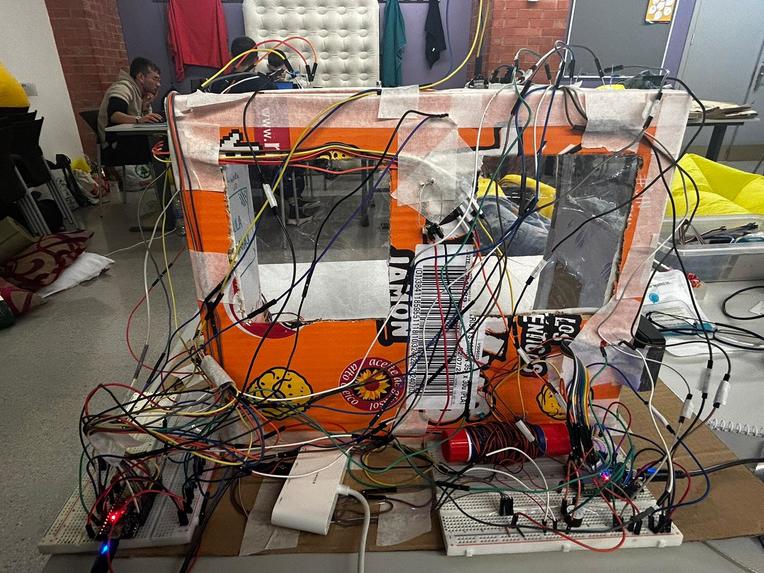
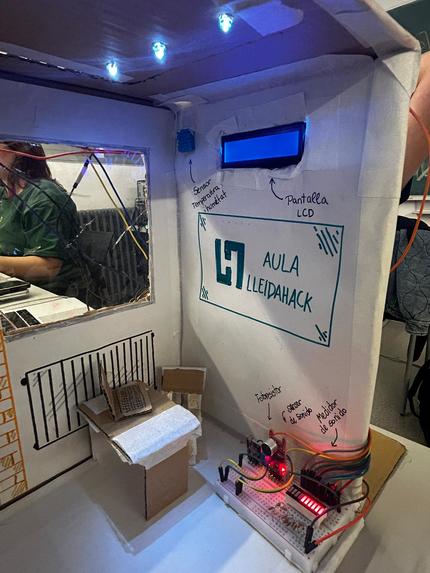
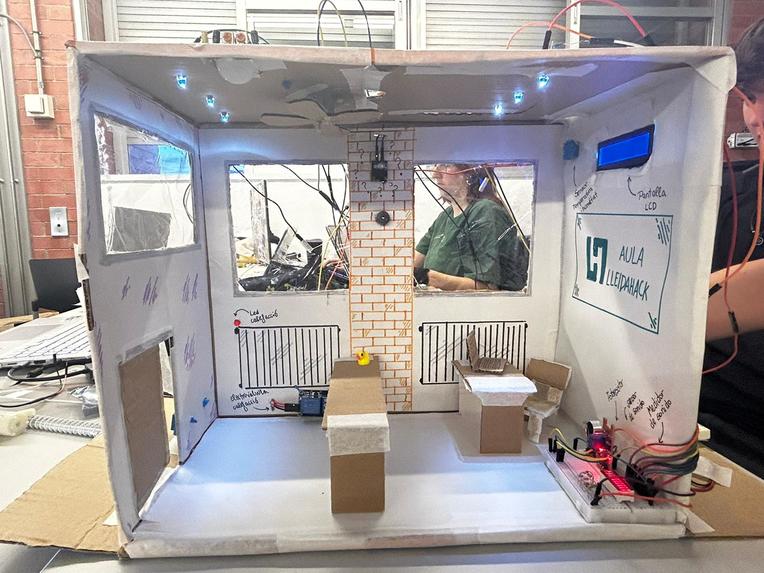
Sensorize was inspired by our desire to simulate and optimize the very environment we occupied during the HackUPC—a classroom turned into a hacker space. We sought to merge physical and digital elements to create a dynamic model that reflects and controls the environment of our hackathon setting.
What it does
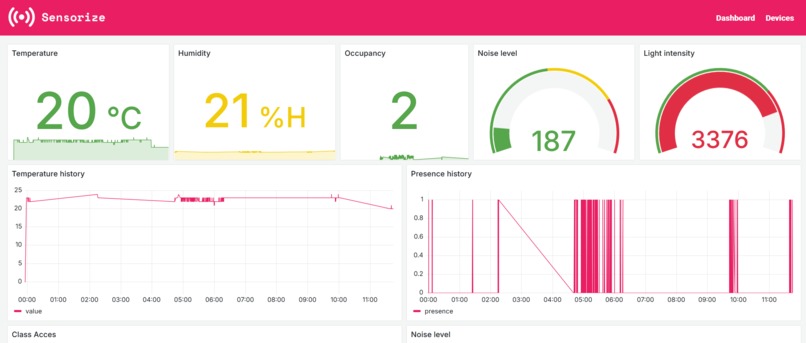
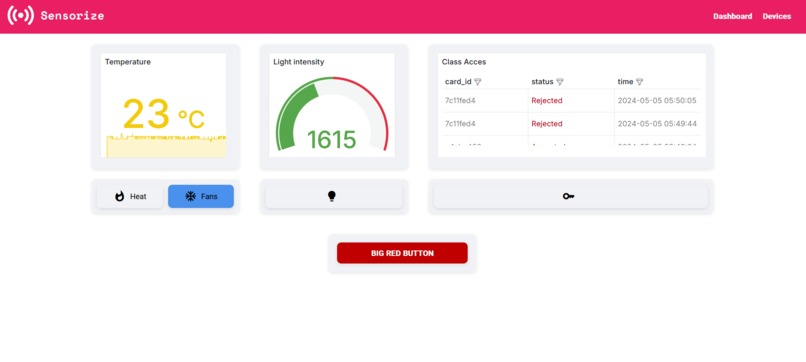
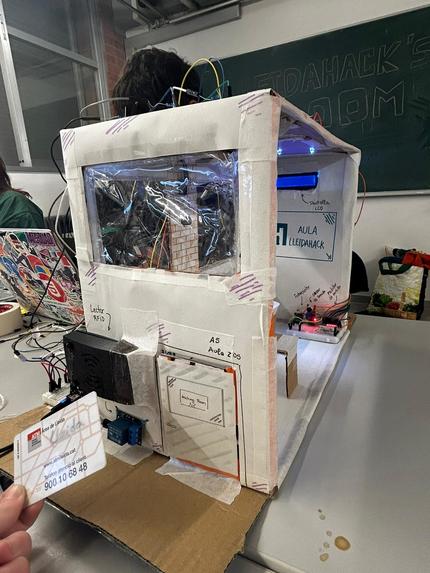
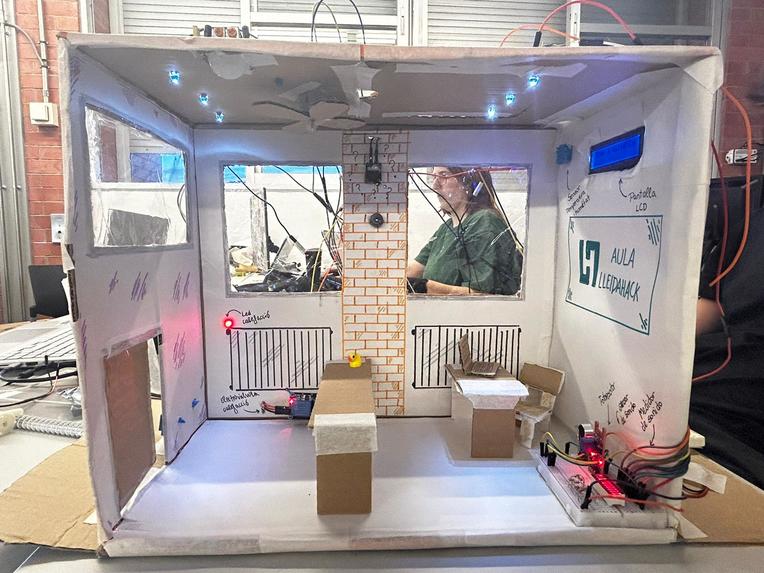
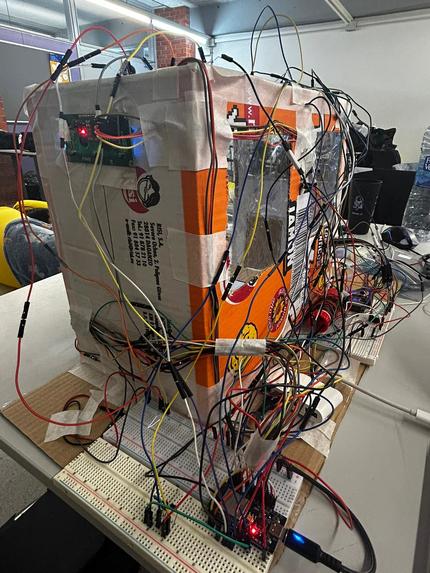
Sensorize is an IoT solution that automates environmental management using real-time data. It consists of a scale model of our hackathon classroom, built from a recycled cardboard box from the cafeteria, and equipped with various sensors and actuators. This setup allows users to monitor and control elements like lighting, temperature, and door access. The system includes a webcam using a YOLOv model to detect and count the number of people present, all accessible via a responsive web app and Grafana dashboards.
How we built it
Our project is built around an IoT infrastructure using ESP-32 microcontrollers to collect data from environmental sensors and control actuators. The microcontrollers communicate via MQTT to transmit sensor data and receive commands. All data is stored in a PostgreSQL database, allowing us to track and analyze various environmental parameters over time. The frontend of the application is developed using Angular, while a FastAPI backend acts as an intermediary, handling communications between the frontend and MQTT broker.
Challenges we ran into
Integrating various technologies was our biggest challenge. Ensuring seamless communication between ESP-32 microcontrollers, MQTT brokers, the PostgreSQL database, and the Grafana dashboards required meticulous configuration and debugging. Additionally, achieving real-time responsiveness in the web app while maintaining a user-friendly interface posed significant hurdles.
Accomplishments that we're proud of
We are proud of creating a functioning miniature model of our hackathon space, particularly using sustainable materials. Implementing the YOLOv model for accurate, real-time people counting and integrating it with the IoT setup was a standout achievement. Moreover, the ability to control this micro-environment through a simple web interface was immensely satisfying.
What we learned
The project deepened our expertise in IoT configurations, especially in handling real-time data processing with MQTT and integrating complex machine learning models like YOLOv in a constrained environment. Our full-stack development skills were also sharpened, from managing databases and servers to crafting user-centric interfaces.
What's next for Sensorize
Future enhancements for Sensorize include refining the AI components to predict occupancy trends and further automating environmental adjustments. We also plan to adapt our model to other settings, such as offices or event spaces, broadening the impact of our IoT and AI integration.
Built With
- angular.js
- arduino
- c++
- fastapi
- grafana
- python
- yolov


Log in or sign up for Devpost to join the conversation.