-
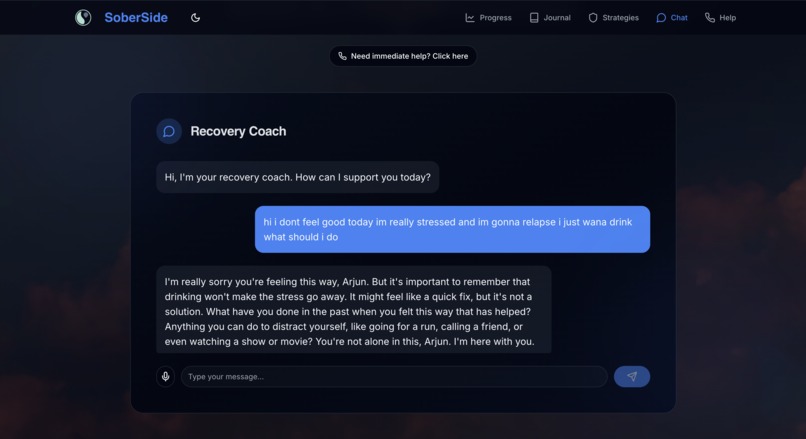
Recovery Coach
-
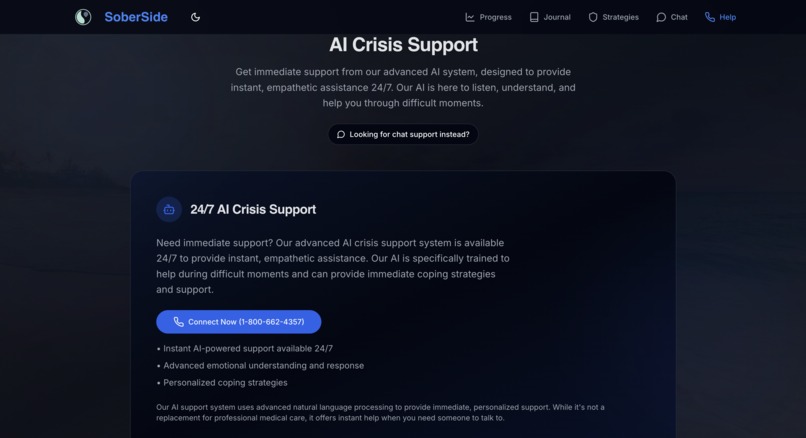
Recovery Personalized AI Therapist
-
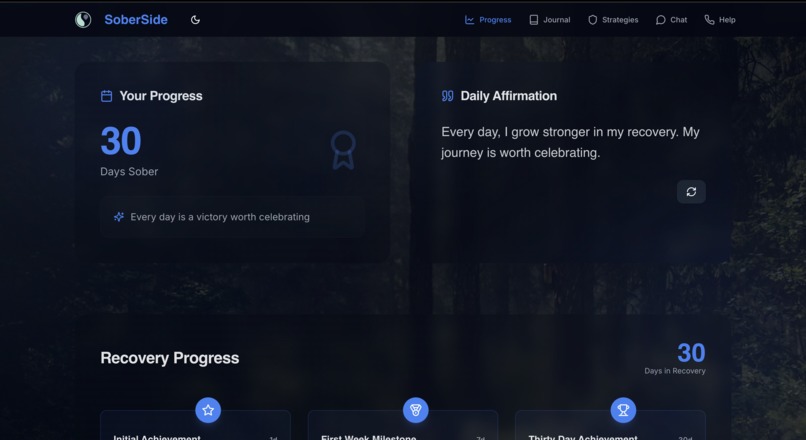
Home Page - Logged In
-
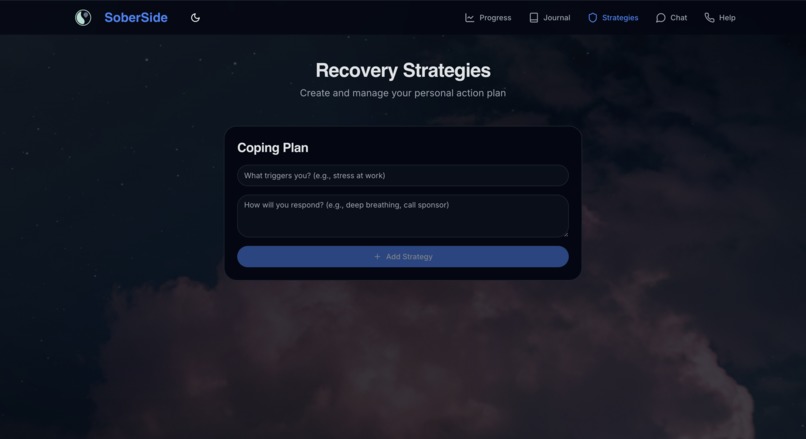
Recovery Strategy
-
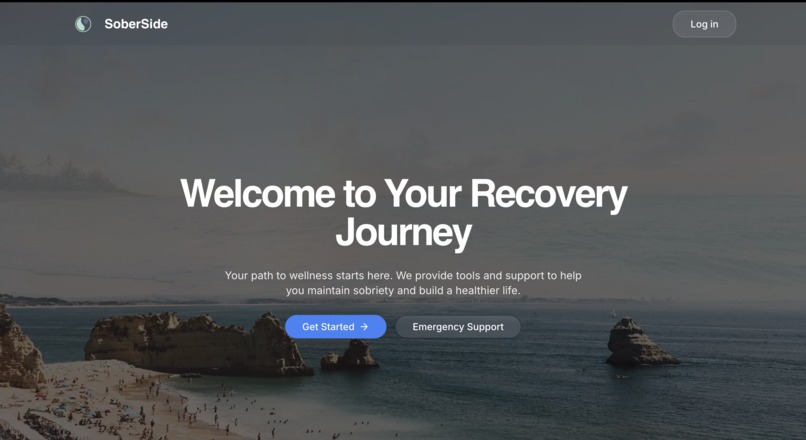
Home Page
-
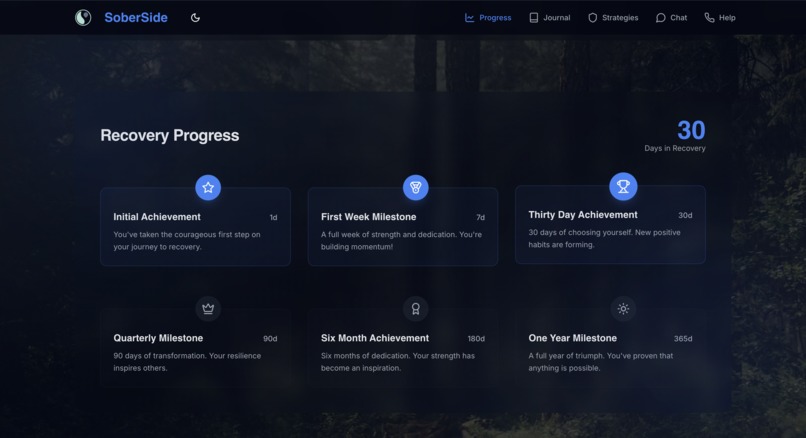
Recovery Progress
-
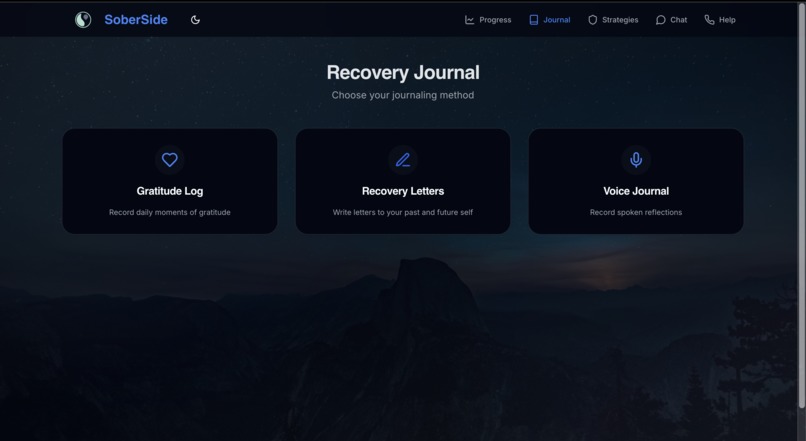
Recovery Journal


About SoberSide
Inspiration
SoberSide was born from a very personal place. During our freshman year, we witnessed first-hand the damaging effects of substance addiction on some of our closest friends. We saw peers struggle with the harsh realities of addiction—watching vibrant lives slowly deteriorate under the weight of substance abuse. The pain of seeing brilliant, talented individuals lose their spark and direction deeply affected us. We knew there had to be a better way to support those fighting the same battles.
We wanted to create something more than just a generic self-help guide. SoberSide is our attempt to harness technology to provide compassionate, personalized support for individuals on the journey to sobriety—helping them understand their patterns, track their progress, and ultimately rebuild their lives with dignity and hope.
What We Learned
Throughout the development of SoberSide, we learned a great deal about:
Full-Stack Development:
Building the backend with Node.js, Express, and MongoDB taught us how to manage data in real time.API Integration:
Using OpenAI's API pushed us to explore how AI can be tailored to provide empathetic responses on sensitive topics like addiction.Humanizing Technology:
We discovered that the true value of technology isn’t just in its ability to perform tasks but in its capacity to understand and support human emotions.Interdisciplinary Challenges:
Combining mental health awareness with advanced technical solutions is challenging—especially when working on such delicate subjects—but it’s also profoundly rewarding.
How We Built the Project
We started by setting up a robust Node.js backend that integrated three core components:
Data Management:
Using MongoDB Atlas with Mongoose allowed us to persist user profiles and chat logs, capturing details such as sobriety start dates, moods, and personal coping strategies.Artificial Intelligence:
OpenAI’s API powers our chatbot that provides thoughtful, personalized responses based on historical data, ensuring that each interaction feels uniquely tailored to the individual.Voice & Messaging Integration:
Twilio is used to enable both text and voice communications, making sure that help is accessible regardless of the user's situation.
We meticulously crafted system prompts and data storage schemas to ensure that the AI could learn over time and offer more personalized insights with each conversation.
Challenges Faced
Building SoberSide wasn’t without its hurdles:
Emotional Toll:
Seeing how addiction impacted our friends during our freshman year made this project more than just a technical challenge—it became a personal mission for our small team.Technical Integration:
Integrating OpenAI, MongoDB, and Twilio into a cohesive application was complex. Each system came with its unique challenges and required careful error handling.Privacy & Sensitivity:
Handling sensitive personal data and ensuring that our AI responded in a safe, non-judgmental manner required intensive testing and iterative refinement of both our prompts and logic.Context Management:
Since GPT is inherently stateless, designing a mechanism to feed historical data back into the conversation so that the AI "remembers" past interactions was one of the most challenging aspects.
Final Thoughts
Building SoberSide has been a labor of love—a fusion of technical innovation and deep personal commitment to helping those who struggle with addiction. The experiences and observations from our freshman year, filled with both heartbreak and resilience, inspired us to build a tool that not only supports sobriety but also learns and adapts to each individual. SoberSide is our ongoing journey towards better technology, better support, and ultimately, a brighter future for everyone fighting for a sober life.
Built With
- javascript
- next
- openai
- react
- twilio


Log in or sign up for Devpost to join the conversation.