-
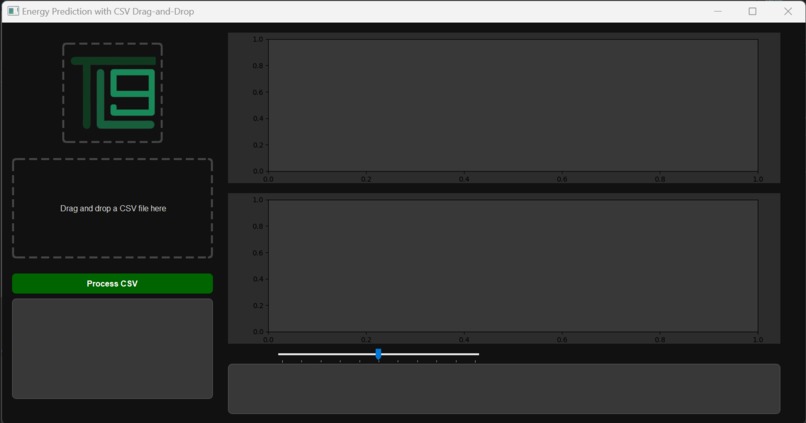
GUI Landing Page
-

Logo
-
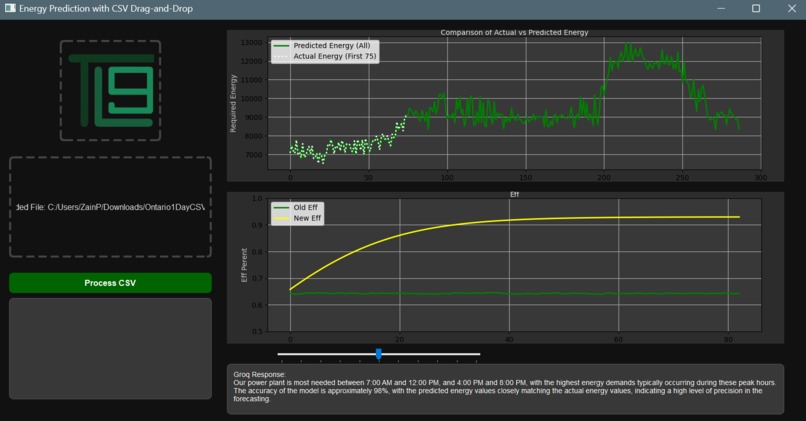
Populated GUI
-
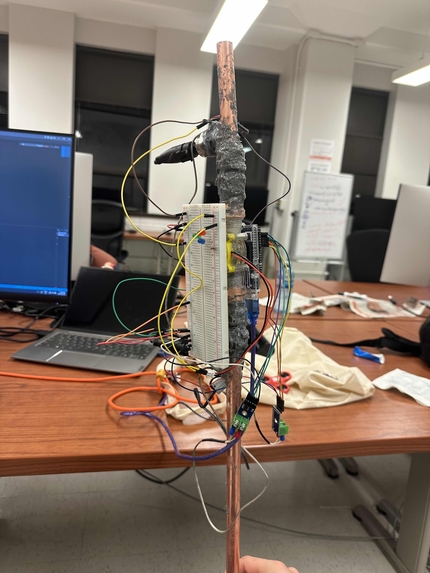
Model2
-
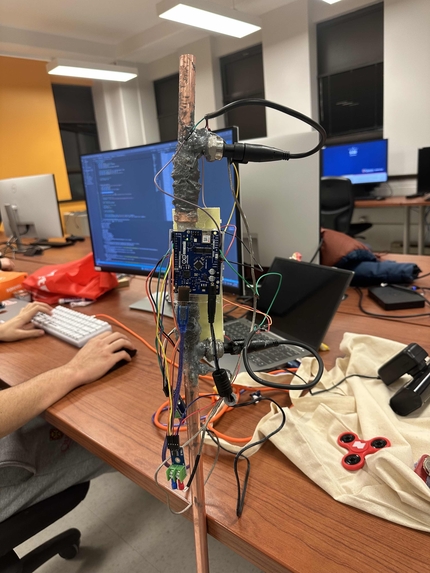
Model1


ThermoLogic: Hackathon Project
Inspiration
ThermoLogic was inspired by the urgent need for efficient and sustainable energy management. While the goal of achieving 100% renewable energy is vital, this transition cannot happen overnight. Non-renewable energy systems still play a critical role during periods of high demand or low renewable availability. ThermoLogic bridges this gap by helping organizations optimize their non-renewable systems to operate as efficiently as possible. By minimizing energy and fuel waste, we aim to create a smarter and more sustainable path toward renewable adoption.
Innovation
As the world transitions from older, non-renewable plants toward renewable energy, it is crucial to recognize the continued importance of these plants in providing affordable power to millions of people globally. Immediate shutdowns are impractical, which is why ThermoLogic is necessary for driving sustainability within the energy industry. Our technology introduces closed feedback loops to enhance system efficiency while targeting energy supply to reduce environmental impact without jeopardizing affordable energy access.
What it does
ThermoLogic is a Software-as-a-Service (SaaS) platform designed to optimize the performance of non-renewable power plants. Its core functionalities include:
Energy Demand Prediction:
- A gradient-boosted forest model predicts future electricity demand using historical energy data and weather forecasts, allowing plants to better anticipate usage.
Real-Time IoT Data Integration:
- ThermoLogic integrates an IoT device within the plant to collect real-time operational data and transmit it to a central server for analysis.
Turbine Optimization:
- An autonomous optimization program uses real-time data to adjust turbine settings, maximizing efficiency and minimizing waste.
How we built it
Demand Prediction Model:
- Developed with a gradient-boosted forest algorithm, the model combines historical energy data and weather forecasts to predict electricity demand and renewable energy outputs like solar and wind.
IoT Device Integration:
- A hardware component located in the plant collects real-time turbine performance and environmental data, which is transmitted to a central server for continuous monitoring and analysis.
Turbine Optimization Program:
- Leveraging IoT data, the system autonomously adjusts turbine settings to improve efficiency and reduce energy waste.
Platform Design:
- A user-friendly SaaS platform provides actionable insights, visualizations of performance metrics, and real-time alerts to streamline plant management.
Challenges we ran into
IoT Data Integration:
- Ensuring reliable communication between the plant's IoT device and the server required addressing stability and low-latency challenges.
Balancing Complexity and Usability:
- Simplifying the optimization program’s outputs for operators while retaining critical insights posed significant challenges.
Time Constraints:
- Developing and testing both the demand prediction model and the turbine optimization system within the hackathon’s timeframe required focused prioritization.
Accomplishments that we're proud of
- Integrating an IoT device with the SaaS platform to enable real-time operational feedback.
- Developing an autonomous turbine optimization program that enhances power plant output efficiency.
- Creating a demand prediction model with accurate forecasts using real-world data and weather conditions.
- Delivering a functional and cohesive prototype within the hackathon deadline.
What we learned
- The importance of IoT devices for real-time data collection and system optimization.
- Balancing technical complexity with user-focused design for practical implementation.
- Combining predictive modeling with real-time optimization to build scalable solutions.
- Effective teamwork and resource management under strict deadlines.
What's next for ThermoLogic
Currently, ThermoLogic is tailored for local use, particularly in Ontario. Our next step is to use location-based APIs to generalize the software for global availability. Climate change is a worldwide challenge, and ThermoLogic aims to support global sustainability efforts by optimizing non-renewable energy systems everywhere.


Log in or sign up for Devpost to join the conversation.