-
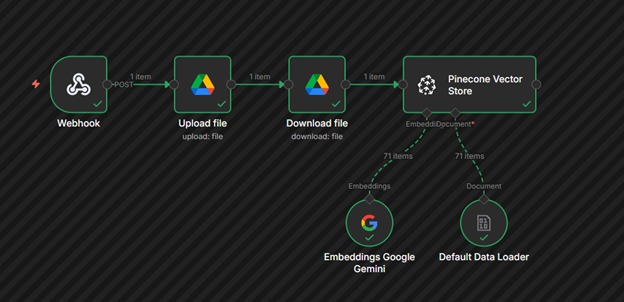
n8n knowledge base pipeline
-
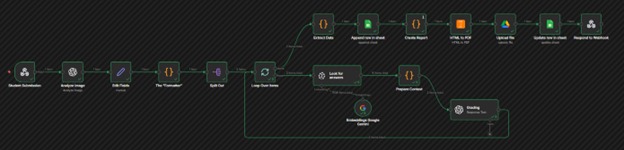
digitization and grading pipeline
-
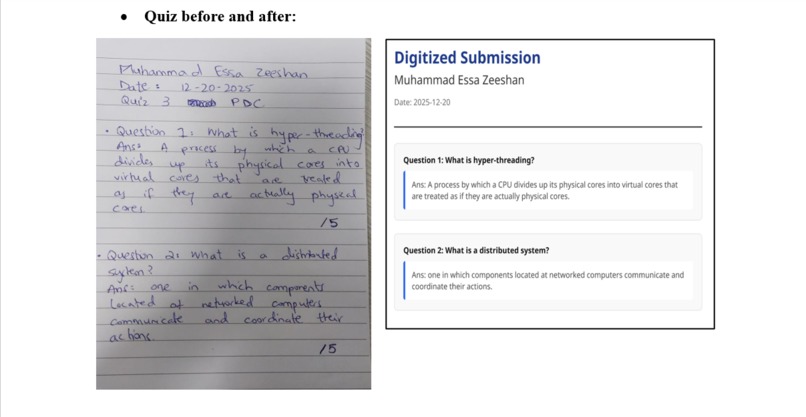
quiz before vs after
-
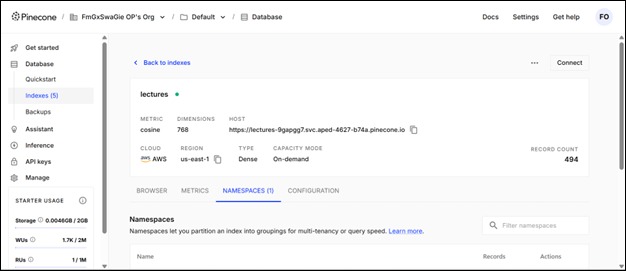
pinecone
-
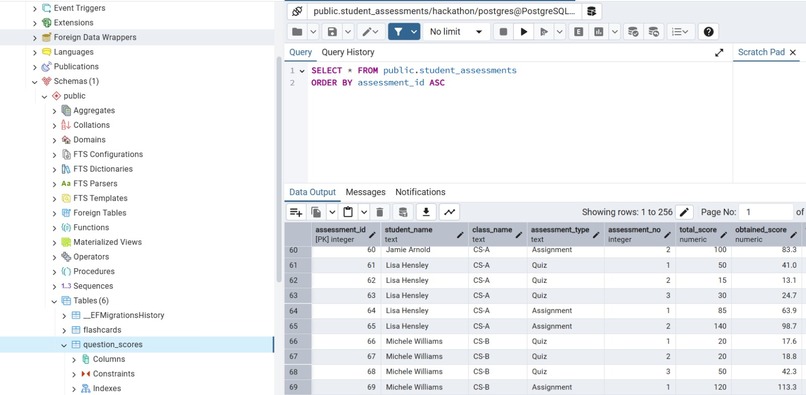
postresql table 1
-
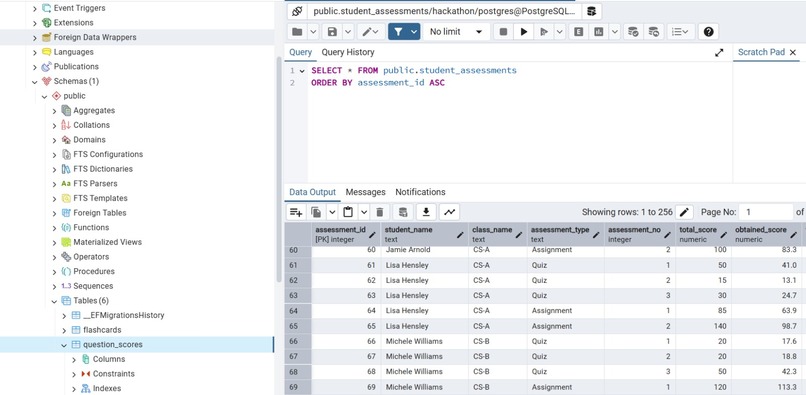
postgresql table 2


Current Learning Management Systems are merely "Digital Filing Cabinets" that store files but understand nothing of the content. They are often disconnected from the physical classroom, unable to process traditional pen-and-paper assessments. We wanted to create a system that links "what is taught" (slides) to "how it is understood" (answers).
Ustaad Pro is an academic ecosystem that "reads" lecture slides and "sees" student handwriting. Ingestion: Converts raw PDFs into a Vector Knowledge Base (Pinecone). AI Grading: Uses Retrieval-Augmented Generation (RAG) to grade digitized handwritten answers against specific lecture concepts. Analytics: Tags every question with a topic (e.g., "Recursion"), generating "Skill Shape" radar charts for students and "Glass-Box" insights for teachers.
How we built it: We utilized a scalable Service-Oriented Architecture (SOA): Orchestration: n8n handles the AI pipeline, managing ingestion and vectorization without brittle code. Database: PostgreSQL uses a Master-Detail schema to store granular concept data. Backend: .NET Core API executes complex aggregations for the dashboard. Frontend: React and Tailwind CSS render the diagnostic visualizations.
Challenges we ran into: JSON Structure: Adapting to different LLM outputs (e.g., Gemini's nested "parts" structure) required building robust "Deep Search" scripts in our workflow. Context Management: Preventing "context amnesia" in n8n loops where question data would be lost during vector retrieval. Digitization: Bridging the gap between physical paper exams and digital grading logic.
Accomplishments that we're proud of: The "Glass-Box" Effect: Moving beyond "Who passed?" to identifying exactly "What failed?" at a concept level. Granularity: Successfully tagging every lost mark with a specific topic derived directly from lecture material. Resilience: Decoupling AI logic from the backend, allowing us to switch models (e.g., GPT-4 to Claude) by simply updating the n8n diagram.
What we learned: Data over Logistics: We learned that the value of EdTech lies in diagnostic data, not just file management. Micro-Analytics: We discovered that "Total Marks" hide the real story; normalizing data by topic unlocks actionable insights for intervention.
What's next for Ustaad Pro: Predictive Analytics: Running regression models to predict final grades based on early topic mastery. LTI Integration: Plugging directly into Canvas or Blackboard. Automated Remediation: Automatically emailing students specific slide pages to review based on their weak topics.
Built With
- dotnet
- google-drive
- googlesheets
- grok
- n8n
- openai
- postgresql
- react


Log in or sign up for Devpost to join the conversation.