-
-
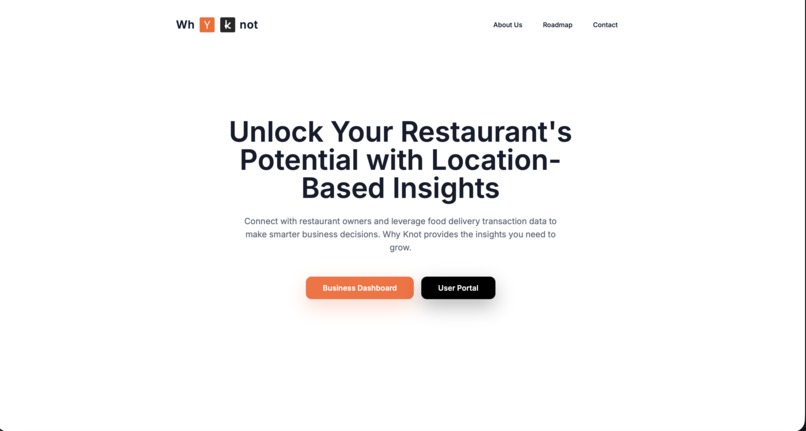
Landing Page
-
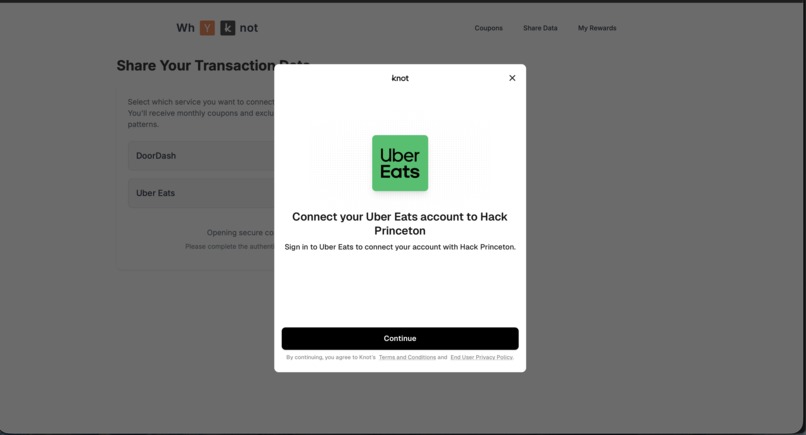
KnotApi
-
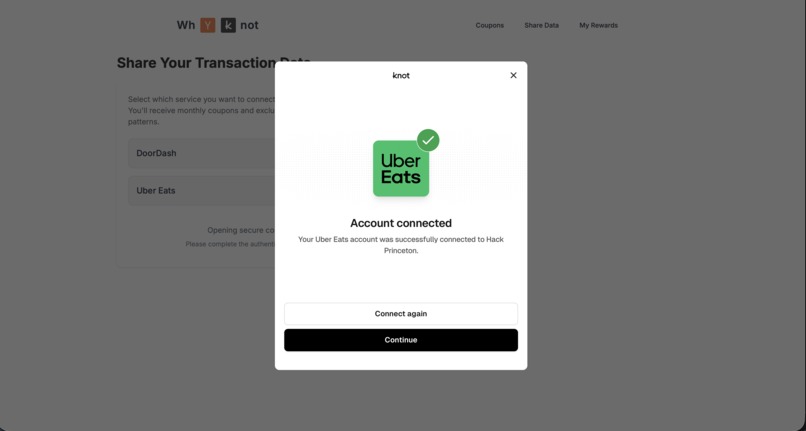
KnotApi Success
-
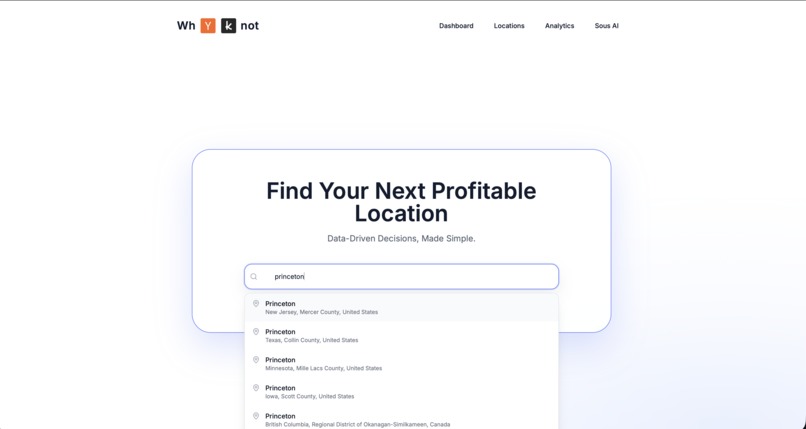
Searching locations
-
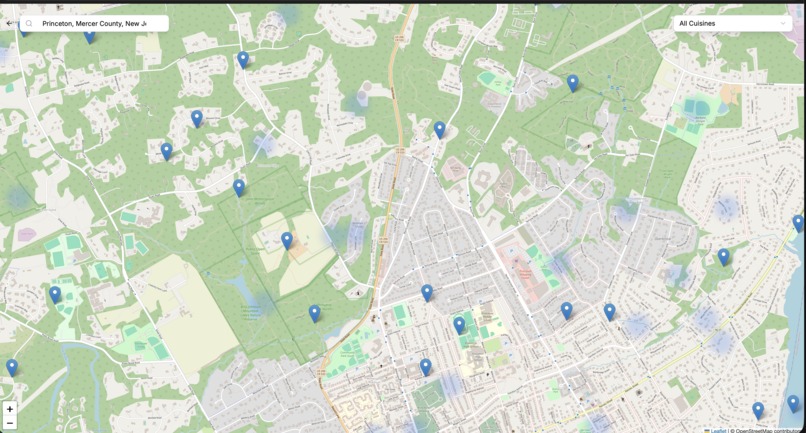
Heatmap of transaction data of food orders
-
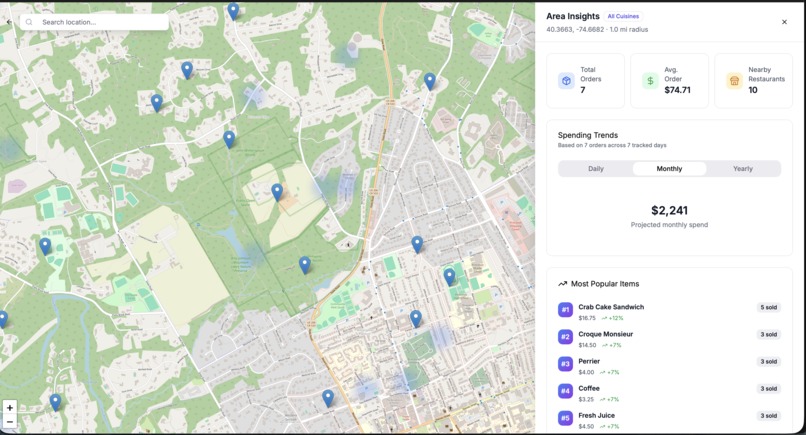
Data analysis
-
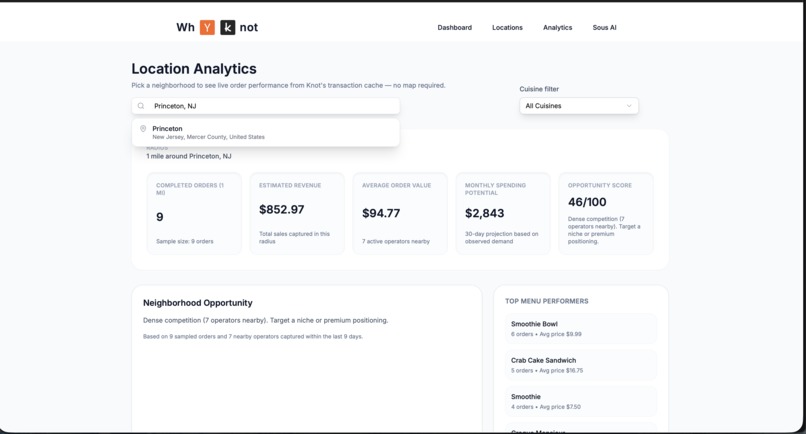
Detailed Analysis
-
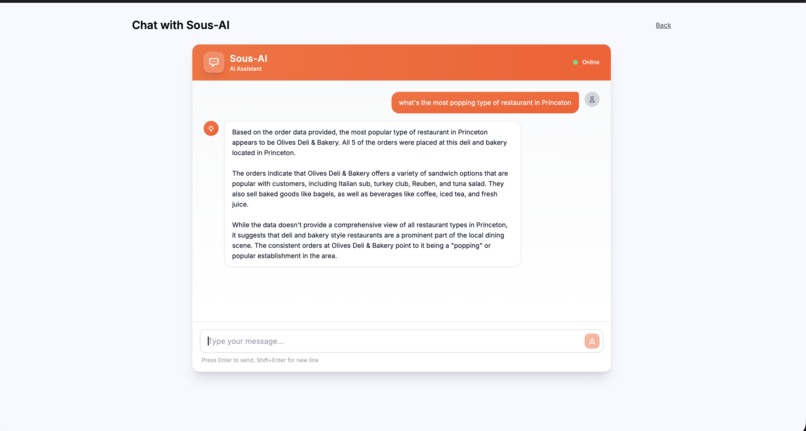
Speaking with Ai on recommendation for menu and locations


Inspiration
Restaurants often struggle to decide what dishes to offer and how to price them competitively when opening or expanding in new areas. During this hackathon, we noticed that while platforms like DoorDash and Uber Eats hold tons of valuable delivery data, restaurant owners rarely get direct insights from it. We wanted to make that data useful. So our idea was to build a tool where owners can simply enter a location and instantly see what’s trending nearby along with which dishes sell the most, how customers are spending, and how their pricing compares. The goal is to help small and local businesses make smarter, data-driven decisions without needing a data science team.
What it does
WhyKnot helps restaurant owners make smarter business decisions using real-world delivery data. Simply by entering any location, they can instantly access insights from DoorDash and Uber Eats orders in that area. The app gives them a heat map of the orders and their type of food order. Also they get insights such as average order, most ordered dish, timely stats, and ask our ai about the any location they seem interested in
With WhyKnot, owners can see local demand patterns, identify potential menu gaps, and price their offerings more competitively all in one simple dashboard.
How we built it
Our main source of the transaction data were possible due to our very friendly sponsors KnotApi and using their product we were able to fetch Doordash and Ubereats order details of costumers. We created a backend using FastApi and stored all the data into our MongoDB database. For the frontend we made use of Nextjs, and using a javascript library for generating interactive maps - Leaflet we were able to allow the businesses to visually data relevant for their business growth. To create some extra mock data we needed in a pinch we used Dedalus Labs exa-search-mcp to webscrape restaurants.
Challenges we ran into
Knot api integrating into our prod was a challenge so we approached the sponsors and asked for advice. Also, coming up with an idea overnight made us realize that this hackathon pushed us to the maximum limit. While there were workshops and so much distractions (amazing campus and food), we had to dial in and make sure we met our deadlines.
Accomplishments that we're proud of
We're proud that we built a functional prototype of WhyKnot within the hackathon timeframe that actually connects real data to meaningful insights. Getting reliable delivery data from multiple sources was challenging, but we managed to design an end-to-end flow that aggregates and visualizes it cleanly. Another highlight was seeing how useful the app could be during live testing. When we plugged in different city locations, the data revealed clear trends in pricing and dish popularity that matched real-world intuition. It felt great to see an idea turn into something practical that small business owners could actually use.
What we learned
Building WhyKnot taught us how powerful raw data can be when it’s structured around a real business problem. We learned how to fetch and process location-based delivery data efficiently, deal with noisy or incomplete datasets, and use clean visualization to make insights actually understandable.
We also realized that simplicity matters. Restaurant owners don’t want complicated dashboards, they want quick, clear answers. This shaped how we designed our interface and made us focus on showing only the most relevant insights.
Lastly, working under hackathon time pressure reminded us how much can be achieved with teamwork, clear goals, and a good idea that solves a real-world need.
What's next for WhyKnot
We want to grow WhyKnot into a tool that more restaurant owners can rely on, beyond the hackathon. Next steps include expanding our data sources, making the dashboard even easier to use, and adding features like recommendations for new menu items and price optimization. We’re also interested in working with restaurants directly to get feedback and test the app in real-world settings. Our long-term goal is to give every small business owner access to the same smart insights that big chains use, helping level the playing field with better data and clearer decisions.


Log in or sign up for Devpost to join the conversation.