e-Training for Dogs

Online Dog Training Class | Puppy Dog Training Online | Search and Rescue Dog Training

  • Home
  • About
    • History of e-Training
    • Faculty
    • Guest Lecturers
    • Students
  • Online Learning
    • For the Dog Professional
      • Canine Professional Programs
      • Individual Courses for Professionals A-Z
      • Individual Courses for Professionals-By Interest
      • Lecture Series
        • Ethology and Canine Behavior Lecture Series
        • Service Dog Training Lecture Series
      • CCPDT CEU Approved Courses
      • IAABC CEU Approved Courses
      • NADOI Accredited Courses for CEUs
    • For the Dog Enthusiast
      • Individual Courses A to Z for the Dog Enthusiast
      • Individual Courses by Interest for the Dog Enthusiast
    • Pet-Sitting Courses
    • Animal Wellness and Animal Hospice
    • Veterinary Professional Courses
    • Equine Enthusiasts Online Courses
  • FAQ
  • Blog
  • Contact
  • Links
You are here: Home / Blog

Training the Retrieve
December 20, 2025 By Cheryl Aguiar | Leave a Comment

Training the Retrieve

Retrieve objectsInstructor:  Pamela Leland KPA CTP, CPDT-KSA

Course Description:  In this course you will teach your dog a functional retrieve.   This step-by-step approach uses positive reinforcement to teach the different components of the retrieve (Take,  Lift, Hold, Give, Fetch and Deliver, etc.)  Later in the course we will look at examples of specific applications.

Goal:  After the successful completion of this course, students should be able to apply this retrieve skill to elements of Competition Obedience, Service Dog training, Helper Dog training, Trick Dog training, and pet dog training.  They should also be able to teach this skill to their students.

Prerequisites:

  • Students should have a basic understanding of operant conditioning, shaping, luring, and reinforcement strategies.
  • Students should be skilled at using a clicker or verbal marker.
  • The dog should understand and trust that a reinforcer follows the click/verbal marker.
  • The dog should be willing to work in close proximity to you.

Equipment needed:

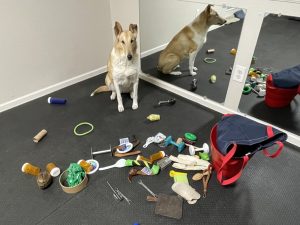
  • An assortment of items that your dog can hold in his mouth. Look at the picture above.  Not toys or tennis balls.
  • An area where you can train without interruptions or distractions.
  • A chair for you.
  • A bucket, basket, or tub.
  • Two stools. One approximately the height of your knee, and another the height of your shin.
  • A place where you can keep your treats within easy reach. For example, a Klimb, a chair, or a counter.

Here’s an example of my set-up during training.  Notice the red bucket.  You might use a basket or small tub. 
 Training Set Up

Textbook: “Training the Retrieve” by Pamela Leland.  Available on Amazon and Dogwise.

Assumptions:

  • Your dog is physically able to hold something in his mouth.
  • The dog is willing to engage with you during training sessions.
  • You have time set aside to train these behaviors.
  • You are motivated to learn a method that might be different from what you learned, heard of, or read about in the past.

Instructional Methods:

  • A three lesson, 90 minutes each, PowerPoint presentation with many supporting pictures.
  • There are five quizzes.
  • One video demonstrating the retrieve.
  • This is an entirely web-based course with no face-to-face meetings.
  • You will work at your own pace within the time limit permitted for this course.

Continuing Education Units: 

CCPDT- KA – Pending
CCPDT- KSA – Pending
KPA – Pending
IAABC – Pending

Course Cost –

For Credit: $150.00 USD

Image

For Audit:  $75.00 USD (Same content as the “For Credit” except there are no CEUs or certificate.)

Image


Length of time to access this course: Access to this course will be allowed for 6 months.

You must also read and agree to the E-Training for Dogs, Inc. Standard Terms and Conditions prior to taking a course: Click HERE to read these. You will be asked when you register if you have read them and will not be allowed to take the course if you do not agree to the terms.

Please read our policy on refunds. Click HERE


Filed Under: Blog |

Emotional and environmental enrichment with scent

December 17, 2025 By Cheryl Aguiar | Leave a Comment

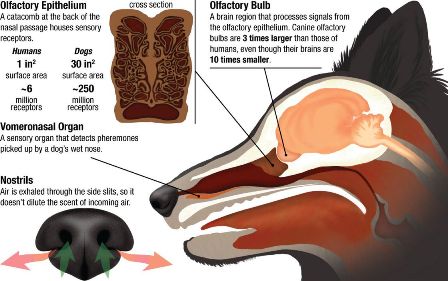
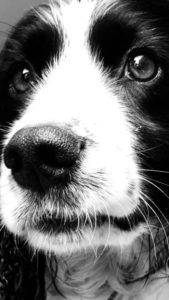
ImageSeeing Through a Dog’s Nose – Canine Nose Lecture #1
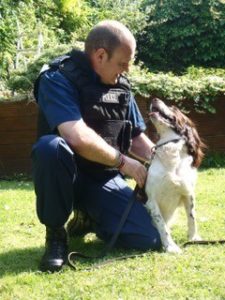
Title: Emotional and environmental enrichment with scent work for dogs

Speaker: Dr. Robert Hewings BSc MA (see bio below)

Description: We cannot ignore the benefits of the emotional and environmental enrichment with scent work for dogs.  Join us to learn how to ignite one of the most powerful instinctual, and emotional systems within the canine brain. The natural instincts that empowered our dogs to search, and investigate its surroundings for food, friends and foe will be used to bring about behaviours that ‘Just feel good!’

In this informative webinar, Rob will show you how to introduce that wonderful exciting, euphoric anticipation that our dogs feel during search and find. He will demonstrate how we, as dog trainers and dog enthusiasts, can recreate the thrill of exploration, the pleasure of anticipation and the sheer indulgence within the eagerness of ‘The find.’ In this webinar, you will learn how to bring scent work into the classroom, training room and at home if ever required. How canine nose work can be incorporated into behavioural consultations, rehabilitation and recuperation exercises, and how this will benefit both dog and owner. We have all experienced the joy of shopping, looking forward to acquiring new goods, and the simple ‘feel good factor’ that this can bring about. This feeling can benefit our dogs in the same way.

Learning Objectives:  Canine scent work is becoming more and more popular, we have learnt a great deal with our dogs and observed how they benefit from this fantastic pastime. Let us examine, the seeking system and the natural predatory behaviours that are essential to our dogs well being.

The learner will –

  • The emotional and environmental enrichment with scent work for dogs
  • Receive an insight into the olfactory system
  • Understand the benefits of scent-work
  • Know why ‘searchy’ dogs are happy dogs

Access to the recording is for 32 days after the webinar and is available for both Live and Recorded attendees.

Cost: $25.00 USD

Image


****NOTE: Due to the nature of these webinars being recorded live – at the speakers home or office – there will/may be some technical issues that can not be helped or edited without losing important portions of the lecture.

CEU’s Available:
2 IAABC CEU’s
2 CCPDT CEU’s
2 ABCDT-L2 CEU’s
2 NADOI CEU’s
2 PPAB/PPG

***Note on CEUs-All participants of the Live webinar will receive CEUs on request. Those who view the recorded version only, will need to take and pass a 5 question quiz after viewing the recording.

ImageSpeaker: Dr Robert Hewings, BSc MA, the author of the soon to be published ‘Introduction to Canine Scent-Work’ and head of learning and development for the UK College of Scent Detection, Dr Robert Hewings is a highly experienced Canine Trainer. He retired from the Metropolitan Police after 30 years’ exemplary service, 25 of which was as a Police Dog Handler.  The final nine years as a full-time trainer with the Metropolitan Police Dog Training Establishment. He has enhanced this experience with a BSc (Canine Training and Behaviour) MA (Professional Practice Police Dog Training) and a Doctorate of Professional Practice (PhD) Canine Scent Detection. Rob has instructed all police canine-search disciplines including explosive search and narcotics, supporting this with practical experience gained in London UK where he has supported many large events, the 2012 Olympics, Wimbledon Tennis and protecting our Royal Family.

During his time at the prestigious Metropolitan Police Dog Training Establishment (2007-2016) Rob headed the training for SWAT dogs, and was active in the instruction and development in all aspects of Police Dog and Handler Training. He played an active role in the instruction and development of the ‘Canine Training Instructor’ authoring two training manuals, and designing coaching programmes that have enhanced the effective performance of operational dog handlers.

ImageAfter his retirement in 2016 Rob, took on new challenges to complete his desire to learn, lecturing at university (BSc Canine Behaviour and Training) where he specialised in ‘Assistance Dog Training’, writing his recently published book, and practical assistance dog training using scent-work within epilepsy alert, diabetes alert and Post Traumatic Stress Disorder alert. He also attended Bergin University of Canine Studies where he gained a valuable insight into assistance dog training, particularly for PTSD sufferers.

Rob is now head of learning and development with the UK College of Scent Detection where he has been invited to share his knowledge world-wide, lecturing in USA, Australia and Europe. He is presently engaged in writing two academic papers for enhancing scent detection and emotional learning in our dogs.

Finally, Rob truly understands the importance of a positive training schedule with the dogs he trains and the people he coaches. He wishes to share his love and experience of search training with you and your dog. Witnessing the enjoyment, enthusiasm and excitement the dogs get from being engaged in the natural process of ‘nose-work’ has been his guilty pleasure for the last 25 years, long may this continue!!


Filed Under: Blog |

Backing and Pivoting

December 14, 2025 By Cheryl Aguiar | Leave a Comment

PictureBacking and Pivoting

Instructor:  Pamela Leland KPA CTP, CPDT-KSA

Course Description:  In this course you will work on two distinct behaviors: backing and pivoting.  The two are related in that you are teaching the dog to move their back legs in a manner that contributes to more advanced movements.  Your dog should be clicker savvy (marker savvy), have good focus, and a willingness to learn.

Goal:  After the successful completion of this course, students should be able to apply these training skills to other interesting and challenging behaviors.

Prerequisites:

  • Students should have a basic understanding of operant conditioning, shaping, luring, and reinforcement strategies.
  • Students should be skilled at using a clicker or verbal marker.
  • The dog should understand and trust that a reinforcer follows the click/verbal marker.
  • Students should know how to create and submit videos for the homework assignments if wanting credit for CEUs.

Equipment needed:

  • A set of training gates or X-pens that are long enough to be set up as a chute.
  • A mat to be used as a rear foot target. (A 24” bathmat works great!)
  • A sturdy pivot bowl that is approximately 4” high and wide enough for your dog’s front feet.
  • A camera.
  • An area where you can train off-leash.

Training gates:

If you chose to use training gates as pictured above, you can make your own.  The gate panels are actually wire cubicle bookshelves held together by spirals that one would use to make a spiral notebook.  Training gates are an invaluable piece of training equipment.

The panels and spirals can be found on Amazon.

  • C&AHOME Wire Cube Storage, 8-Cube Organizer Metal C Grids Storage, Storage Bins Shelving, Modular Shelves
  • GBC Binding Spines/Spirals/Coils, 16mm, 125 Sheet Capacity, 4:1 Pitch, Color Coil, Black, 100 Pack (9665070)

Textbook:

“Backing and Pivoting” by Pamela Leland.  Available on Amazon and Dogwise.

Assumptions:

  • Your dog is physically able to use their back legs in both backing and lateral movements.
  • The dog is skilled at working with you in heel position.
  • You have time set aside to train these behaviors.
  • You are motivated to learn!

Instructional Methods:

  • A PowerPoint presentation covering each behavior with supporting pictures, as well as a video of each behavior.
  • Two quizzes: one for Backing and one for Pivoting.
  • A final exam at the end of the course.
  • This is an entirely web-based course with no face-to-face meetings.
  • You will work at your own pace within the time limit permitted for this course.

Homework for CEUs:

Students will submit a total of six individual videos for the behaviors they’ve trained: three for Backing and three for Pivoting.

What I expect from you: 

  • Follow the steps taught for each behavior. Don’t skip steps.
  • Maintain momentum in working through this course.
  • Pace yourself. The dog will need breaks to rest their muscles and for latent learning.

What you can expect from me:

  • Prompt reviews of the videos you submit within 24-48 hours (excluding weekends and holidays.)
  • Responses to your questions, as needed.

Continuing Education Units:

CCPDT- KA (Pending)

CCPDT- KSA (Pending)

KPA –(Pending)

IAABC -(Pending)


Course Cost –

For Credit: $200.00 USD

Image

For Audit:  $100.00 USD (Same content as the “For Credit” except there are no CEUs, certificate, nor homework videos required.)

Image


Length of time to access this course: Access to this course will be allowed for 6 months.

You must also read and agree to the E-Training for Dogs, Inc. Standard Terms and Conditions prior to taking a course: Click HERE to read these. You will be asked when you register if you have read them and will not be allowed to take the course if you do not agree to the terms.

Please read our policy on refunds. Click HERE

Filed Under: Blog |

The Science of Olfactory Perception and Learning

November 2, 2025 By Cheryl Aguiar |

Seeing Through a Dog’s Nose – Canine Nose Lecture #2

Title: The Science of Canine Olfactory Perception and Learning

Canine olfactory perception

Speaker: Dr. Simon Gadbois (see bio below)

Description:

Olfactory processing from an integrative perspective: Neurobiology, evolution, ecology, and psychophysics

Olfaction, in the evolutionary context, has two main functions: Finding food and finding mates. It is not surprising that olfaction is consequently closely tied to the reward and anticipation systems of the brain. Olfaction is also multidimensional, and from a “cognitive” perspective (strange word to use for a post-cognitivist, but bear with me), it comprises a number of different processes that are arguable tapping into different parts of the brain and tackle different survival functions. We will start by discussing the biological foundations of olfaction (neurobiology, evolution, ecology) and will then proceed to discuss the rarely discussed (and yet very active) field of olfactory psychophysics and the methods that are relevant (and also mostly ignored) to olfactory processing. Examples from Gadbois’ areas of research in olfaction (with canines particularly, but also with molluscs, fish, and reptiles) will be discussed in the context of wildlife conservation canines and biomedical detection and diagnosis canines.

Learning Objectives:

  • The neurobiological foundations of olfaction: The brain systems
  • The ecological foundations of olfaction: Finding food and finding mates
  • Olfactory motivology: How learning and olfaction are tied
  • The old olfactory psychophysics meets the needs of the modern scent dog
  • Advanced section: Signal Detection Theory

Cost: $25.00 USD

Image

CEU’s: 
CCPDT – 2
IAABC – 2
KPA – Pending

Image

Simon Gadbois, Ph.D.is a researcher in animal behaviour and behavioural neuroscience at Dalhousie University, Halifax, Canada. Early in his academic career he integrated biology (ethology), experimental animal psychology and neuroscience within a post-cognitivist perspective. A true generalist, he has studied olfaction, learning/memory and social behaviour in species of insects, molluscs (slugs and snails), fish, reptiles, birds (pigeons) and mammals (rats, dogs, red foxes, coyotes and wolves). He has studied wild canids for over 20 years and established the Canid and Reptile Behaviour and Olfaction lab at Dalhousie in 2006, a year before the closure of the Canadian Centre for Wolf Research. There he had studied the behavioural endocrinology of social behaviour in wolves and behaviour patterns in foraging behaviours comparatively in foxes, coyotes and wolves. Since 2007 his lab is engaged mostly in research on biomedical detection, diagnosis and assistance as well as tracking and trailing of species-at-risk with his wildlife conservation canines. The lab has a strong applied and methodological focus.

Filed Under: Blog, Lecture Series |

Five Unique and Awesome Tricks!

October 10, 2025 By Cheryl Aguiar |

Five Unique and Awesome Dog TricksFive Unique and Awesome Tricks!

Instructor:  Pamela Leland KPA CTP, CPDT-KSA

Course Description:  Teach your dog Five Unique and Awesome Tricks! This course will equip students with the skills needed to train tricks that range from moderate to challenging difficulty.  These Five Unique and Awesome Tricks can be found in many trick dog courses, Freestyle routines, and Rally-Free competitions.  Many components of these tricks can serve as foundation behaviors for other canine sports and Service Dog training.  Tricks #4 and #5 are more advanced and will take more time to train.  Your dog should be at a level of training to support these: they should be clicker savvy (marker savvy), have good focus, and a willingness to learn. For the For Credit option, you will need to send in videos of you and your dog demonstrating each of the five tricks for feedback and assistance from the Instructor.

The five tricks are: 

1.) Forward and Walkback Weaves

2.) Four Circle Moves Around the Handler

3.) Figure of 8 (without the handler)

4.) Back Around the Handler (challenging)

5.) Turn Back Thru (most challenging)


Goal:  After the successful completion of this course, students should be able to apply these training skills to other interesting and challenging behaviors.

Course length:  5 Lessons  (Approximately one hour each)

Prerequisites:

  • Students should have a basic understanding of operant conditioning, shaping, luring, and reinforcement strategies.
  • Students should understand how to use a clicker or verbal marker.
  • The dog should understand and trust that a reinforcer follows the click/verbal marker.

Equipment needed:

  • Target Stick or something similar like a long-handled spatula.
  • Training gates (or an X-pen) that is long enough to be set up in a circle around the handler.
  • Two cones or something similar (small upside down waste baskets would work.)
  • A training platform (or something similar) that is long enough for a standing dog.
  • For the For Credit/CEU option, students will need to send videos of you and your dog performing each trick to your Instructor.

Textbook:

“Five Unique and Awesome Tricks” by Pamela Leland.  Available on Amazon and Dogwise.

AmazonBook

Assumptions:

  • You and your dog are physically able to perform the tricks.
  • You are tall enough, and/or your dog is short enough to move between your legs for the leg weave trick.
  • You are motivated to learn!

Instructional Methods:

  • A PowerPoint presentation covering each trick with supporting pictures, as well as a video of each behavior.
  • A quiz at the completion of each trick for a total of five quizzes.
  • A final exam at the end of the course.
  • This is an entirely web-based course with no face-to-face meetings.
  • You will work at your own pace within the time limit permitted for this course.

Homework:

Students will submit individual videos for the five tricks they’ve trained (for the For Credit option only).

What I expect from you: 

  • Follow the steps taught for each trick. Don’t skip steps.
  • Maintain momentum in working through this course.
  • Get the first three tricks done early in the course because Trick #4 and #5 take more time to train.

What you can expect from me:

  • Prompt reviews of the videos you submit within 24-48 hours (excluding weekends and holidays.)
  • Responses to your questions, as needed.

Continuing Education Units:

CCPDT- KA-12.5 CEUs (5.00 Knowledge and 7.50 Skills) for trainers and 0 CEUs for behavior consultants
CCPDT- KSA-7.5 CEUs
IAABC – 7.5 CEUs
KPA – Pending

Course Cost –

For Credit: $200.00 USD (Choose this option if you need CEUs, a Certificate or Instructor feedback. Video homework will be required for CEUs and a Certificate of Completion)

Image

For Audit:  $100.00 USD (Same content as the “For Credit” except there are no CEUs, certificate, nor homework videos required.)

Image


Student Information:

Access to this course will expire in 6 months. Therefore, you have 6 months to complete this course from the date of registration.

You must also read and agree to the E-Training for Dogs, Inc. Standard Terms and Conditions prior to taking a course: Click HERE to read these. You will be asked when you register if you have read them and will not be allowed to take the course if you do not agree to the terms.

Please read our policy on refunds. Click HERE

Filed Under: Blog |

  • 1
  • 2
  • 3
  • …
  • 17
  • Next Page »

Search this site:

SIgn up for our Newsletter

Sign up for our newsletter: Sign up for our newsletter

Follow Us

  • Facebook
  • LinkedIn
  • RSS
  • Twitter
  • YouTube

Link to Discounted Courses for Professionals

Link to Discounted Courses for Professionals

Link to Classroom For Current Students

Link to classroom: Student Classroom Link This link will work for current and registered students ONLY.

Lecture Series

Seeing Through a Dog's Nose-Canine Nose Lecture Series ALSO, Please check out our ethology and canine behavior lecture series, over 100 lectures Ethology and Canine Behavior Lecture Library Also available is our lecture series: Service Dog Training Lecture Series

What is E-Training for Dogs and how does it work?

What’s NEW?

Training the Retrieve

Emotional and environmental enrichment with scent

Backing and Pivoting

The Science of Olfactory Perception and Learning

Five Unique and Awesome Tricks!

Pay Later Now Available

What’s NEW?

Training the Retrieve

Emotional and environmental enrichment with scent

Backing and Pivoting

The Science of Olfactory Perception and Learning

Five Unique and Awesome Tricks!

Copyright © 2025 e-Training for Dogs | Privacy Policy

Advertisement