
The Unified Voice
of Energy Storage


Energy Storage Europe Association is actively shaping the legal and R&D funding framework for energy storage at EU level. Members gain direct influence in the European decision-making process.

Members benefit from the Energy Storage Europe Association’s expertise and technical know-how, and they can participate in EU-funded research projects.
The Energy Storage Europe Association is currently involved in many EU-funded projects.
Energy Storage Europe Association gathers knowledge, information and data about future market developments that can help the energy storage stakeholders to adapt to the changing business environment.

Featuring in Energy Storage Europe Association’s publications and events, such as the Energy Storage Global Conference, gives you visibility and the opportunity to strengthen your network among storage experts.
European Commission published the Battery Booster Strategy as part of the European Automotive Action Plan. The strategy includes a Battery Booster Facility to support battery manufacturing in the European Union, and measures to strengthen the European battery supply chain.
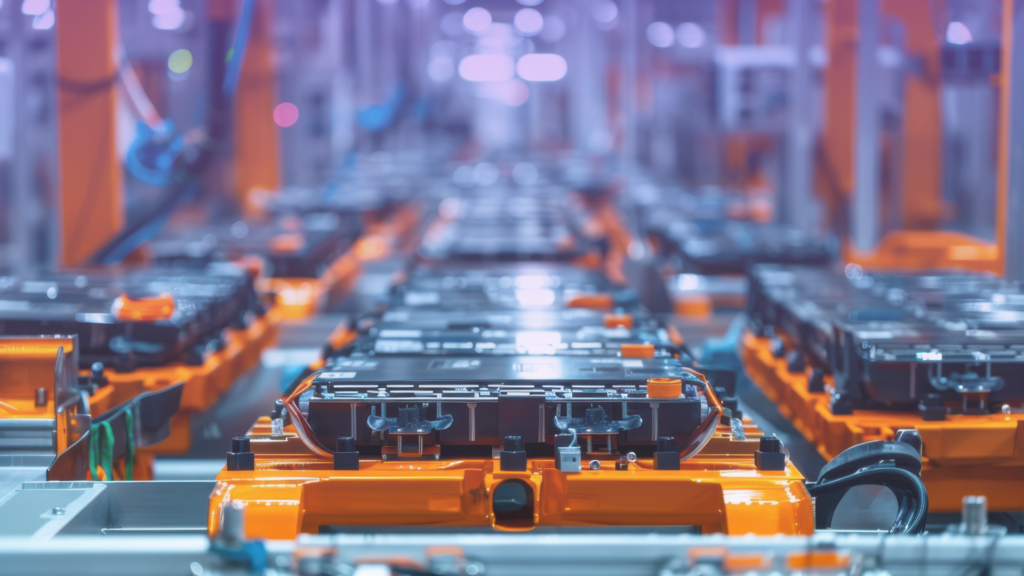
On 17 December, Hyperion Renewables launched construction of its first battery energy storage projects in Portugal, in Estremoz and Évora. The 16 MW / 64 MWh solar-plus-storage projects will support grid stability and advance the country’s energy transition.
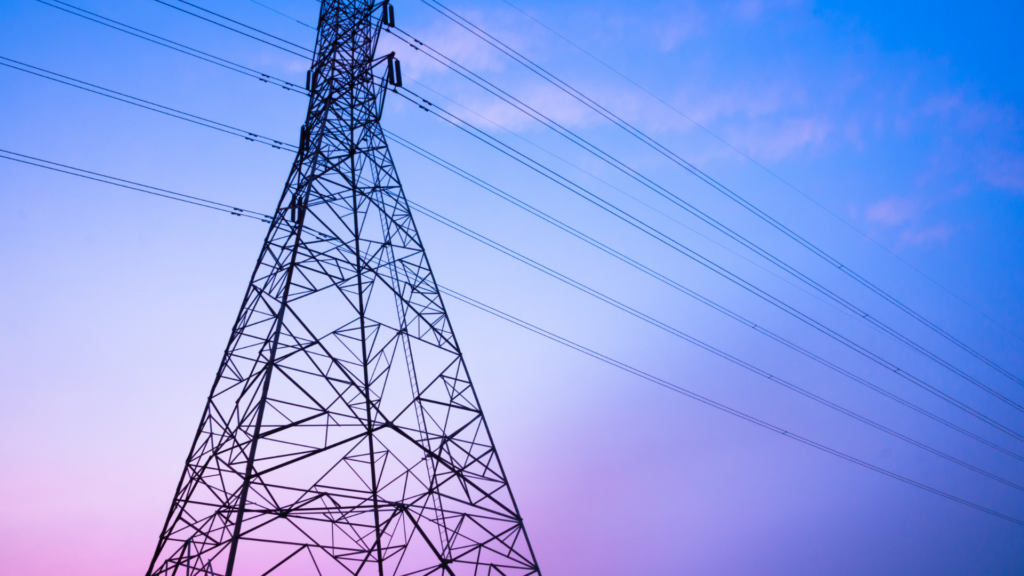
European Commission published the Grids Package, addressing critical bottlenecks in grid connections, permitting, and infrastructure planning. These issues have hampered energy storage deployment and slowed the EU's decarbonisation and affordability ambitions.
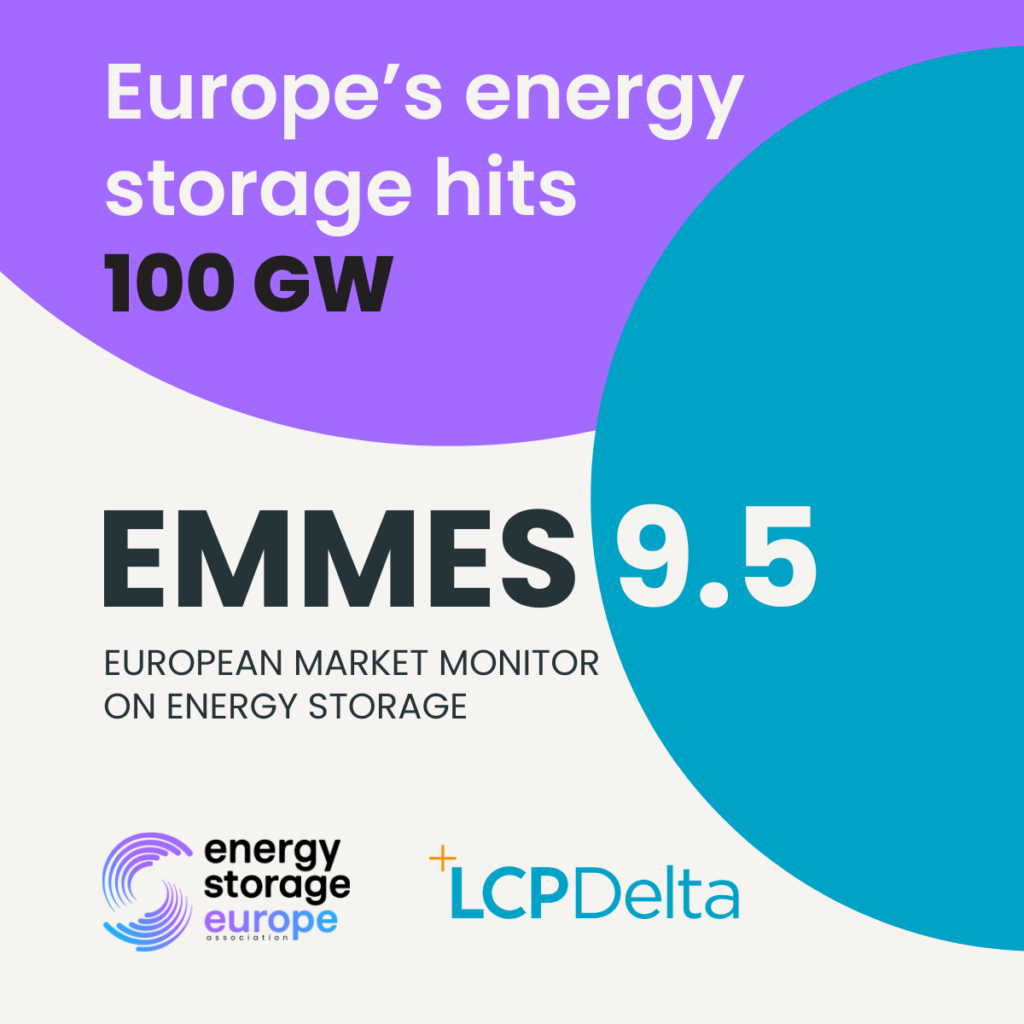
The EU, UK, Norway, and Switzerland together are expected to reach 100 GW of installed energy storage later this month, according to new analysis launched at the Enlit Europe conference by LCP Delta and Energy Storage Europe. This milestone represents enough capacity to meet the peak electricity demand of Germany and the Netherlands. With storage capacity forecast to grow by a further 115% by 2030, this will play a crucial role in Europe’s energy transition, creating more space for renewables on the grid.
Energy Storage Europe Association joins industry, civil society, and research organisations in calling on the European Commission to ensure the Industrial Accelerator Act includes strong, binding measures to create lead markets for clean industrial products made in the EU








































































In this position paper, the Energy Storage Europe Association calls for a shift from today’s “first-come, first-served” queue system to a more efficient, strategic, and transparent framework that recognises the unique value of energy storage for reducing congestion, enhancing flexibility, and making better use of existing grid infrastructure.

Energy Storage Europe Association has published its Position Paper on Improving Permitting Procedures, highlighting the urgent need to streamline, harmonise, and modernise permitting frameworks for energy storage across the EU. Europe needs a fast, fair, and future-proof permitting framework to unlock the estimated 200 GW of energy storage required by 2030.

Energy Storage Europe Association responds to the European Commission’s Public Consultations on the Electrification Action Plan and the Heating and Cooling Strategy, highlighting the need for stronger recognition of storage as a central enabler of electrification and heating decarbonisation. This requires clearer policies to integrate storage into planning and investment pathways, along with measures to remove persistent barriers such as high upfront costs, slow permitting, unfavourable taxation, and weak market signals. Storage should be treated as a default element of a cost-effective, system-friendly transition and reflected accordingly in planning frameworks, financing tools, and flexibility market design.
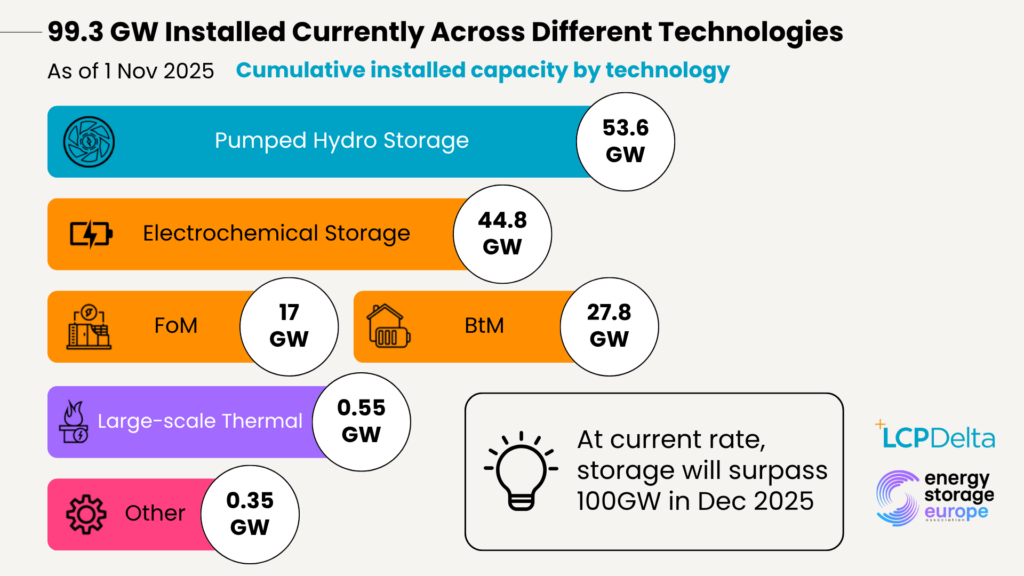
The 9.5 edition of the European Market Monitor on Energy Storage (EMMES) by the Energy Storage Europe Association and LCP Delta, is now available. The EU, UK, Norway, and Switzerland together are expected to reach 100 GW of installed energy storage in November 2025. This milestone represents enough capacity to meet the peak electricity demand of Germany and the Netherlands. With storage capacity forecast to grow by a further 115% by 2030, this will play a crucial role in Europe’s energy transition, creating more space for renewables on the grid.

