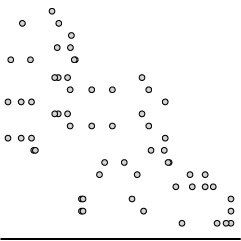
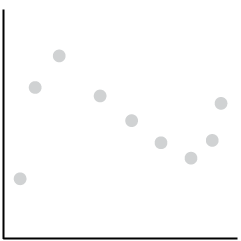
This week we sort the dots and look closer at the things we can control.

Housing in California costs about three times more than in Mississippi. Utilities in Hawaii cost nearly twice the national average. Clearly, the cost of living varies across the United States, depending on what you’re buying. See the differences in this chart.
This week we sort the dots and look closer at the things we can control.

There’s been a lot going on and we almost forget that the federal government is approaching its third week of shutdown. The administration has used the time to cancel and pause billions in grants in the places you might guess. Tony Romm and Lazaro Gamio for the New York Times have the analysis.
The Times conducted its analysis by examining federal funding records, which include details about the city and state where each grant recipient is based. The projects include new investments in clean energy, upgrades to the electric grid and fixes to the nation’s transportation infrastructure, primarily in Democratic strongholds, such as New York and California.

For the Washington Post, Craig Whitlock, Lisa Rein, and Caitlin Gilbert examine court records and disability claims.
“One inherent problem [VA] must contend with, is that it operates on an honor system with its veterans,” Justice Department prosecutors wrote in a 2021 court filing for a case involving an Army veteran who defrauded VA of more than $200,000. “… The result is that some veterans can, and unfortunately some veterans do take advantage.”
While most claims are probably legit, there seems to be an alarming increase over the last few years for hay fever, irritable bowel syndrome, and penile deformity.

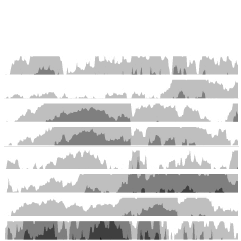
When there is an excess of solar energy during the day, it can be stored in batteries for use in the evening when the sun goes down. Financial Times, in a chart forward piece, describes how this applies at scale, using California as a prime example.
Here in California it’s become more common to have home batteries than not in some places. During really hot days, you can send energy to the grid and receive reimbursements, which is nice. But the main selling point for me is when there is an outage. The battery kicks in and you don’t even notice.
I’m a fan. Of the battery approach and the hatching in the FT charts.

The cost of driving an electric vehicle varies by where you charge and how much drive. It’s a lot cheaper to charge a car at home during off hours than it is to charge on the road during peak times. For NYT’s the Upshot, Francesca Paris made a straightforward calculator to estimate the true cost of going electric versus driving a gas car.

The big AI companies are making deals with each other, promising and distributing hundreds of billions of dollars over the next few years. It’s difficult to keep track, but Bloomberg has this network diagram that shows the moves.
And from today, add Broadcom to the mix dealing with OpenAI, because sure why not.
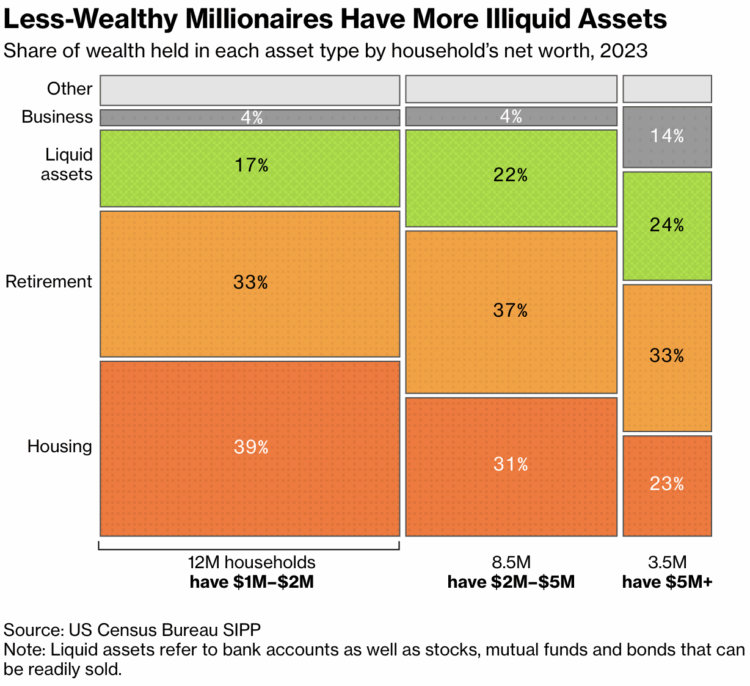
Everyone loves reading about millionaires who don’t have enough liquidity to buy things, but the seven-figure status is not what it once was. For Bloomberg, Andre Tartar, Ben Steverman, and Stephanie Davidson show the increasing number of millionaire households who have most of their net worth tied up in housing and retirement accounts.
The mosaic plot above breaks down assets by millionaire income groups. About half of households fall within the $1M to $2M range and only 17% of their net worth counts as liquid assets (in green). The liquid share increases with net worth.
Cue the violins.
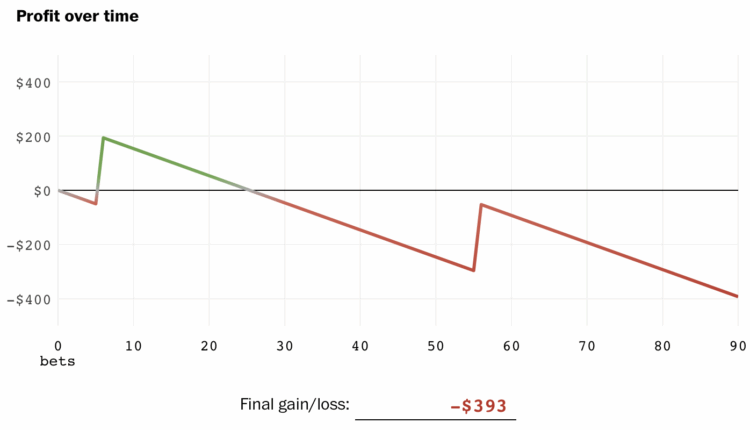
Parlays in sports betting are booming and people are losing billions of dollars to online sportsbooks, like FanDuel and DraftKings. For the Washington Post, Emily Giambalvo, Kati Perry, and Aaron Steckelberg show how the bets work with playable simulations.
Like most gambling games, the odds are completely against you in the long run and virtually guarantee that sportsbooks get all your money.
So instead of tossing your money into the sports machine, you can just run simulations. It’s not nearly as fun, but at least you’ll be able to watch sports again for the spirit of competition and love of the game.

Kurzgesagt, popular for illustrative explainer videos on YouTube, describes the current situation with generative AI slop. There is a flood of random, fake videos on the rise.
It is all fun and games at first, but when there is no way to distinguish between fake and real online, this useful internet thing turns into something else.
Read More

Hi everyone. Nathan here. I write to you from the United States, where…
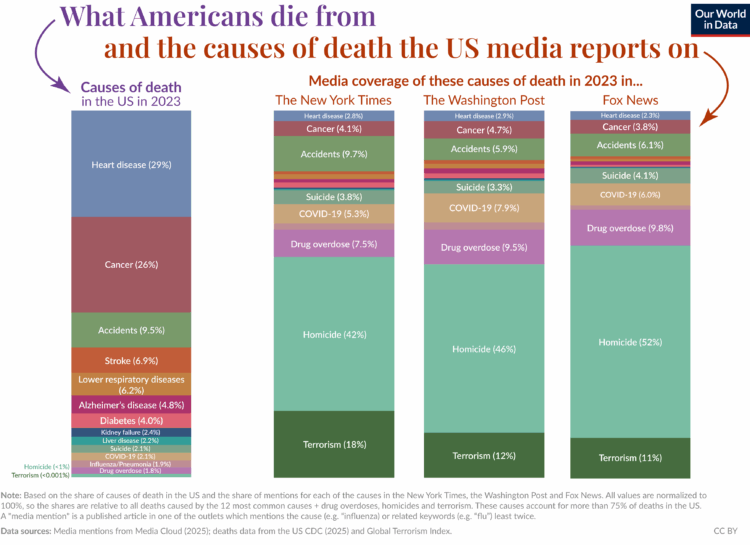
Our World in Data compared causes of death in the United States against how much those causes are covered by the New York Times, Washington Post, and Fox News. The results are about what you would expect, based on coverage data from Media Cloud.
Rarer events, like homicide and drug overdose, are reported more heavily, whereas everyday causes, like cancer and heart disease, are reported less.
This, of course, is because the news covers things that are out of the ordinary, which is what readers and viewers are looking for on a by-the-minute timeline. Not many people care that mortality rates, which take more time to estimate than reporting on single events, are the same as yesterday.
But, as residents of this planet, it is beneficial to know that life is not always getting worse. It’s good to get a reminder sometimes.
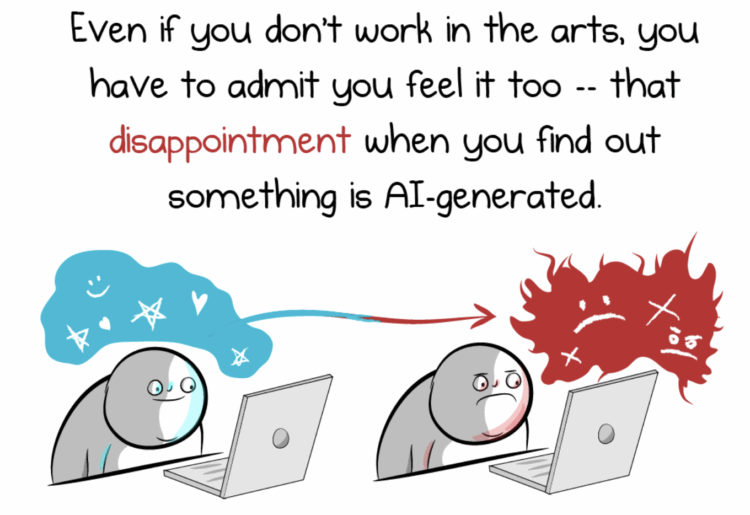
Matthew Inman, the cartoonist who illustrates The Oatmeal, breaks down his feelings towards AI-generated art. When you remove the work, pain, mistakes, intention, and ultimately, the person from the art, the true value is lost.
OpenAI released Sora, which lets users easily generate videos with a prompt. The videos present in a TikTok-like feed and provides us with another source of endless scroll. Thank you, internet gods for your benevolence. Casey Neistat, known for his YouTube-ing, voices his concerns.
Read More
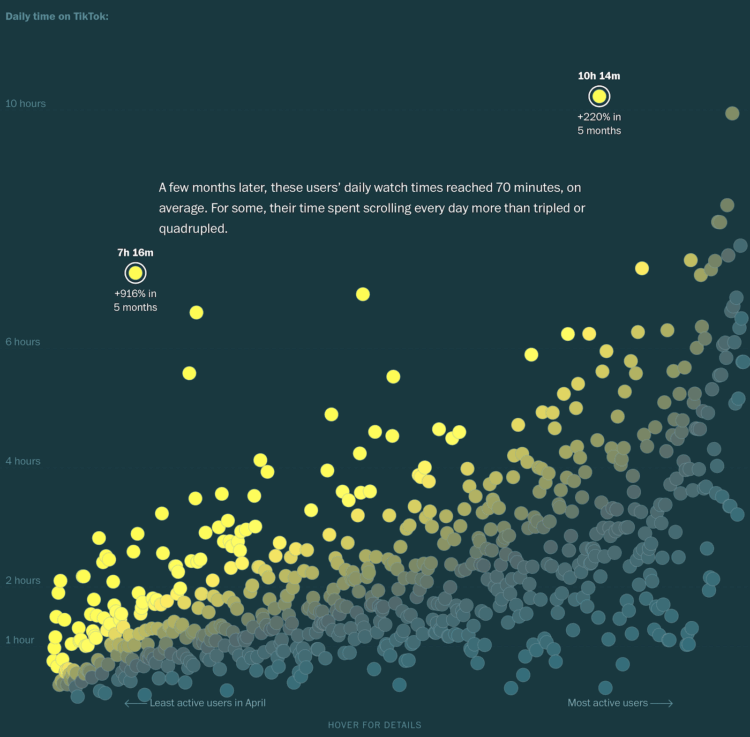
As many of us have learned first-hand, TikTok (and its scrolling video ilk) is addictive and can pull people in to stare at their phones for hours. However, TikTok is secretive about how their viewing algorithm works. So the Washington Post recruited readers to track usage and send the data, which gave WaPo a sample of how the infinite scroll kept people watching over a six-month period.
New users start with general music videos and the feed grows more specific. A few minutes per day can easily increase to hours. Your brain craves the dopamine all the time. It gets harder to interact with others. You can’t concentrate on bigger tasks. All in all, pretty amazing.
Check out the full project, and then maybe delete TikTok.
Dell Cameron, for Wired, on the system currently in its planning phase:
Throughout, ICE has leaned on Palantir’s Investigative Case Management system to combine disparate streams of data into a single investigative platform. Recent contract updates show the system lets agents search people using hundreds of categories, from immigration status and country of origin to scars, tattoos, and license-plate reader data. Each surveillance contract ICE signs adds another layer—location trails, social networks, financial records, biometric identifiers—feeding into Palantir’s hub. ICE’s new initiative is about scaling up the human side of the equation, stationing analysts around the clock to convert the firehose of data into raid-ready leads.
I hope people really are realizing that our gift of data and attention to social media is not in our best interest.
Suzanne Smalley reporting for The Record:
Social media giant LinkedIn on Thursday filed a lawsuit against a company which it says operates a network of millions of fake accounts used to scrape data from LinkedIn members before selling the information to third parties without permission.
ProAPIs, a software company, and its CEO Rahmat Alam allegedly run an operation which LinkedIn says charges customers up to $15,000 per month for scraped user data taken from the social media platform.
Millions.
I drop in to LinkedIn sometimes, and it often feels like bots talking to bots or people using bot-generated “content” to fill the void. I wonder how much data ProAPIs scraped was bot-generated, which was then flipped for a monthly fee so that other bots can push more “content” into the LinkedIn machine. That seems like a terrible feedback loop to get stuck in.
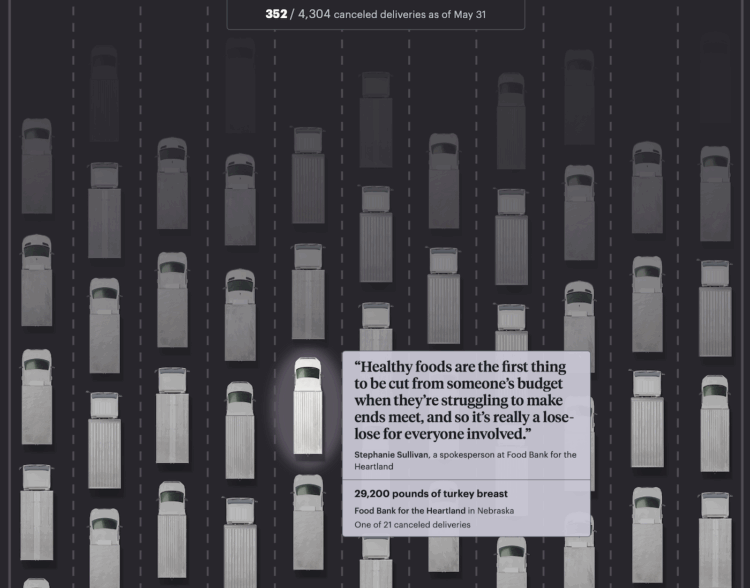
The administration cut $500 million of aid to U.S. food banks earlier this year, which amounts to 94 million pounds in 4,300 deliveries. This is based on data from the Department of Agriculture. For ProPublica, Ruth Talbot and Nicole Santa Cruz illustrated each canceled delivery with a truck.
The data is itemized down to pounds of food and where it would’ve gone, so each truck represents something tangible. A counter on the top shows how many cancellations you’ve scrolled through.
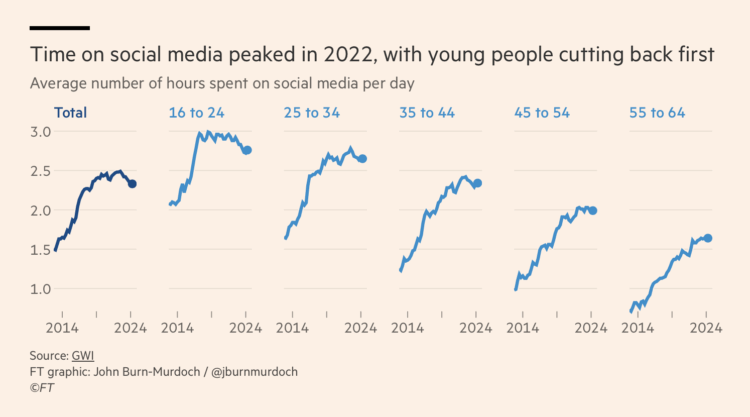
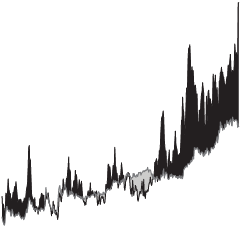
As we descend towards slop-based social media, where the videos are fake and the people are bots, we might be rounding up our time with algorithmically generated feeds. For Financial Times, John Burn-Murdoch shows time spent on social media over the past decade.
The key signal seems to be in young people’s usage. It looks like usage plateaued for 16- to 24-year-olds and has been inching its way down. Although usage over two and a half hours per day is still a lot. Also when broken out by continent, North American usage still looks like it’s going up.
So I guess we’ll see. Bookmarked for later.
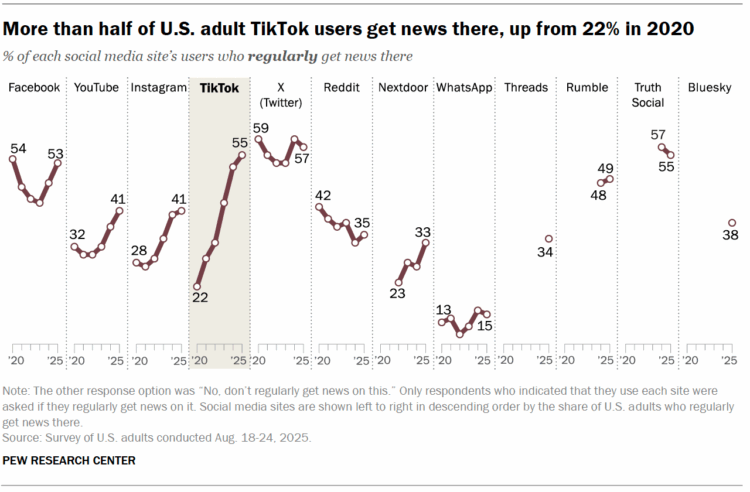
Pew Research surveyed U.S. adults about news consumption on social media and found a steep increase for TikTok users.
When looking at adult TikTok users specifically, news consumption has also increased sharply in recent years. More than half of TikTok users (55%) now say they regularly get news on the platform, up from 22% in 2020. TikTok is now on par with several other social media sites – including X (formerly Twitter), Facebook and Truth Social – in the share of its adult users who regularly get news there.
From 22% to 55% is indeed a big jump. I wonder how much of that jump is from TikTok users’ shifting preferences and how much is from a shifting TikTok feed algorithm.
 Visualize This: The FlowingData Guide to Design, Visualization, and Statistics (2nd Edition)
New tools, refined process.