Fifty years after the publication of her first book, ‘The Great School Wars’, author and historian Diane Ravtich has released her long awaited memoirs. In ‘An Education: How I Changed My Mind About Schools and Almost Everything Else’ Ravitch takes us through her life from her childhood in Houston through the ups and downs of a long and productive life driven by truth and integrity.
What makes this book a ‘must read’ is that it has the three elements that a great autobiography should. First, her life story is interesting on an objective level. Anyone picking up the book and reading over the book jacket will know that Ravtich is someone who achieved fame and notoriety through the unlikely passion of the history of Education in America. But in this book we learn about the sorrow she had to endure between her great triumphs. So her story, even if it weren’t so well written, would make a very good book. A second component of a great autobiography is the author’s ability to reflect on 80 plus years of life and find the pivotal moments that changed the course of her life. But for an autobiography to be ‘great’ it must be infused and brought to life with excellent precise writing. As ‘An Education’ has all three aspects, this is a book you are going to want to read and then keep to re-read over the years when you are in need of inspiration.
If you have read any of Ravitch’s education books, you know that she is a master of absorbing decades of events and processing them and creating an insightful, and incredibly efficient, thesis which she develops over the course of a book. As she explains in this book, she learned her craft while writing as a journalist for The Wellesley News and then for The New Leader magazine. In all her books she exhibits this efficient technique that would make Strunk and White beam. But, by design, Ravtich’s books on Education are stripped of emotional language. Those books educate you through a series of well chosen facts that lead you to understand the implications and big moments without having to spell out every detail. The big question, which this new book answers with an emphatic ‘Yes’ is whether or not her kind of writing can be used to evoke the joy and the sorrow she experienced through her full 87 years of living.
When I started reading this book, I would bookmark interesting passages that show her talent for memoir. Eventually I realized that I was bookmarking almost every page. So after the first 50 of so pages, I had to slow down on the bookmarking. Here are some of my favorite moments (I will try not to give away too much).
Since Ravitch can write a full tale in the span of five or six lines, there are so many interesting stories in this book. As a writer she reminds me of one of those painters, I don’t know so much about painting to know what this is called – maybe impressionistic? – who, rather than producing a full photographic quality image, instead just does the minimal with the paint and brush to convey the emotion and ideas. This is something that is very difficult to do yet she makes it look easy.
Here’s one I liked: “The only Sunday school teacher I remember was a strapping guy who discussed Bible stories and the Jewish religion with us. He told us that when he was our age he had run away with the circus.” Ah, see how great this is? In the first sentence she sets up the scene. And then in just a few words tells us the perfect thing to understand this guy. No more is needed and no more is said.
A few pages later, Ravitch relays an amusing story about how as a teen she found a pearl in an oyster and ended up in the newspaper for it and also got food poisoning from eating the oyster: “The next day, after the newspaper appeared with a photograph of me in short shorts, identified by name, strange men began calling the house, asking for me and saying impudent things. That went on for days, along with the vomiting. My mother was not amused.” This is so efficient, not a word wasted and it does convey the absurdity and the humor with a minimal delivery reminiscent of maybe Bob Newhart.
Throughout the book, Ravitch takes stories and moments that could easily fill several pages and finds a way to convey them in a few words. For the reader, this has the effect of injecting all the humor and sometimes the sorrow of these moments directly into our brains without it having to be processed and translated in our minds.
Though these two examples are fun and convey the innocence of childhood, Ravitch is similarly terse in her telling of some of the deepest tragic moments of her life. When these happen in the book, the descriptions are so efficiently written that, like sometimes when bad things happen in life unexpectedly, we find ourselves pausing and wondering if that really just happened. The matter of fact telling of memorable moments of life, both big and small, happy and tragic, has a powerful effect on the reader.
The book really gets rolling when Ravitch enters college in 1956 at Wellesley. In one sense she is a fish out of water and then she eventually completely at home with the lifelong friends she made there. This was a really fun chapter to read as Ravitch has the first of her many brushes with fame, like her friend Maddy – eventually Madeleine Albright. Just as always, Ravitch perfectly sets up the matter of fact description of her friend’s background and then, in an instant it is revealed who she became known as. The Madeleine Albright story was less than one page long.
One of my favorite parts was the description about a satirical musical Ravitch and her friends wrote for the Wellesley Junior Show. It was hilarious. I kind of want to see the full script but her description of it, as all her descriptions, gave us just enough that we feel like we saw the whole show but forgot some of the missing details.
After college, Ravitch starts domestic life but isn’t quite content. She then goes on a lifelong quest for love and for purpose. As she goes through different eras in her life, she meets a new cast of colorful characters, some famous, some not, but always relevant to her story.
In this book we learn how she went from being the wife of an influential New York City figure to the influential Dr. Ravitch the Education guru of this country. As she rises in the ranks, she finds herself in the company of so many famous people — even several presidents, yet she conveys in her telling of these encounters that, to her, it wasn’t such a big deal. They are all just people. Anyone who has gotten the chance to meet her in person and see her interact with so many people who are not famous will see that she treats non famous people like they are special and is always asking them questions rather than talking about herself.
One of the funniest anecdotes in the book is when she inadvertently got Isaac Asimov angry with her over small talk related to word processors. Again, this is only a few lines, but another interesting adventure in Ravitch’s full life that put her often in the room with all kinds of famous people.
While married to her husband, Diane unexpectedly meets her soulmate who happens to be a woman. In the chapter about the genesis and growth of her relationship, they have now been together for almost 40 years, she is able to convey what it means to finally experience the joy of true love.
In the last chapters of the book we learn about the Washington years in the Department of Education and how that came about and what she tried to accomplish there. We also learn about what it took to renounce much of her work and to follow the evidence into a more evolved system of beliefs about what can improve education in this country. She lost a lot of friends and titles in the process but she kept her personal integrity and commitment to the truth.
Throughout the book, the theme is that Ravitch is never just one thing or the other. Is she a education conservative or an education liberal? Is she straight or gay? Is she a southerner or a north easterner? Is she an introvert or an extrovert? Is she a socialite or a homebody? And throughout her life she is sometimes one and sometimes the other. She is someone who defies categorization. And though in the subtitle she says she ‘changed her mind about schools and almost everything else’ she never changed her core belief that you don’t just stay in the same place just because you are comfortable there.
And like with her, this book is a lot of different things. On one level it is an amusing and interesting read about someone whose choices led her on an unlikely adventure ending with her being, in some circles, a huge celebrity. But it is also an inspirational tale of how having values and staying true to them can help you overcome some of the unfortunate obstacles you have to deal with in life. And though I doubt it was intended to accomplish something else, I think that for many readers they will want to write down their own memoirs after reading this. Ravitch makes it look so easy to analyze your life, find the key moments in it and write some succinct prose – though of course it isn’t so easy but still a worthwhile task.
After finishing this book, I had an experience that only a few people were also able to have. In the acknowledgements in the ‘friends’ section, among sixteen other names, there was my own. I got a chill seeing this, never expecting it. But this made me think something else, also a lesson, though maybe unintended from this great book. This book reminds us of the importance of relationships. Everyone you know has a story to tell. Some people’s lives may not have the highs and lows of Diane Ravitch’s but for each person, their joys and sorrows are meaningful to them. And even if they don’t have the capability to write the way Ravitch can, if they could, you might find yourselves in the acknowledgement page for that friend or family member. So enjoy the relationships you have while you can and remember that you are an important person in many people’s lives.
So pick up a copy today and take a ride through the ups and downs of a well lived life. Though she has made a career of writing about education and teaching, through this book she educates and teaches us that if you keep an open mind and are committed to learning and following the facts, you might end up in a comfortable home a long way from where you started.
It has been 20 years since Hurricane Katrina wiped out the New Orleans schools system causing it to be replaced with all charter schools. And it has been over 15 years since former Secretary of Education Arne Duncan said, based on what he considered early evidence of the success of those charter schools that Katrina was “the best thing that happened to the education system in New Orleans.” And it has been also about 15 years since educational researchers have been continuously debunking the New Orleans educational miracle.
So I was quite surprised to see that The Washington Post just published an opinion piece with the headline “‘Never seen before’: How Katrina set off an education revolution — Twenty years after the hurricane, taking stock of the miracle in New Orleans Schools.”
Reading this Op Ed was a strange experience for me. Supposedly based on recent research, it basically trotted out all the old bogus claims that I hadn’t heard anyone claim in at least ten years. Since it was The Washington Post, I figured it had to be Jay Matthews who has been known to write puff pieces (and books) about KIPP and Michelle Rhee. But these talking points were so antiquated that it would have been odd even for him to use them. No, this anachronistic Op Ed was not from any of the usual suspects but from a name I had never seen before: Ian Birrell.
Reading up on the biography of Ian Birrell, things made a bit more sense. Ian Birrell is a British journalist who has mainly written about international affairs. I’m sure he is a very competent journalist but this is his first foray into education reporting. So he heard about the New Orleans ‘miracle’ for the first time, got a totally biased ‘research’ report from Doug Harris supporting the miracle and, not knowing that there has been an ongoing battle over education reform in this country where the ‘reformers’ have all kinds of tricks for misrepresenting data to advance their agenda. So, thinking he has discovered something incredible, of course he wants to write something about it. But what he writes is completely naive since he doesn’t know the right questions to explore to get to the truth. It’s kind of like if I decided to become a nature reporter and wrote a thing about Big Foot based on just photoshopped images and unreliable first hand accounts.
The New Orleans Miracle is pretty easy to debunk if you know the right questions to ask.
So the first thing to look at is the Louisiana AP scores. Even though AP tests and the way they are sometimes misused, are not the only thing that matters in looking at a state’s education quality, colleges do look at AP scores so it is a bit of a measure of ‘college readiness.’ From the College Board website, it can be seen that Louisiana has the third worst AP passing rate in the country.
In the Washington Post Op Ed, Birrell describes the interventions after Katrina as follows: “They fired all 7,000 teachers, sidelined unions, invited ambitious experts to run the schools and offered parents almost total freedom over where to send their children.”
If he knew the full history of this he would know that the “ambitious experts to run the schools” included KIPP, the famous charter chain created by two Teach For America alums. So to measure the size of the miracle twenty years later, just check to see how the KIPP Booker T. Washington High School students are doing academically. For this I went to the recent US News & World Report data.
So the gold standard charter network in the miracle city of New Orleans has an 11% Math proficiency, a 21% Reading proficiency, and a 10% Science proficiency.
As far as AP scores at the top charter chain in the miracle city of New Orleans, the exam pass rate is just 2%.
But maybe you think I am cherry picking a KIPP school that was never mentioned in the Op Ed. In it Birrell writes about a specific ambitious expert “Among those watching the horrific Katrina news footage 20 years ago was a former corporate financier with Boeing who was planning to move into education. Ben Kleban told me in a 2010 interview how, soon after the disaster, at age 26, he moved to the city from New York to set up a school, starting in a refurbished building with 120 pupils ages 11 to 15. His venture grew fast, took over a nearby failing school, improved proficiency tests and won a national medal for its successes. “For too long,” he said, “the public school system found excuses rather than being properly accountable to parents.” He explained how he relied on “basic business practices” with a daily flow of data on attendance, discipline and classroom performance.”
So I looked up Ben Kleban to see how his school was doing. It is a little confusing but it seems like the entire charter chain he created was shut down in 2018 except maybe one school which is called Walter L. Cohen High School. For them, there are no AP passing scores reported. For their test scores, they are a little better than KIPP for math and reading but lower on science.
So what evidence did Birrell see that convinced him that the New Orleans miracle was authentic? Doug Harris has some nice graphs that shows test scores in New Orleans scores now compared to test scores in New Orleans 20 years ago. But of course this is not the proper comparison to make. The way a scientific experiment works is that if you want to measure the impact of an effect, you try to take a group and split it in half and apply the impact to half of the subjects and make the rest the ‘control group.’ So in this situation, had they not made all the New Orleans schools into charter schools but instead randomly picked half the schools and made them charters and left the other half under local control, then you could compare the results of the two groups after 20 years and, as long as the groups continued to be randomly distributed, that could be a useful way to make a comparison.
But that is not what happened since unfortunately there is no control group to compare to. It is quite possible that the scores now are lower than they would have been had Katrina never happened and the New Orleans charter experiment had never happened. But even without anything to compare to, the data from that one gold standard KIPP is, in my opinion, pretty good evidence against the miracle. Just like the way you can check the temperature of a Thanksgiving turkey by putting a meat thermometer into one spot of the Turkey, looking at what is supposed to be the best charter school is a good measure of all the schools since the KIPP is surely better than the average school there.
I thought I’d never have to debunk the New Orleans miracle again, but I guess I’m going to have to every five or ten years for each milestone anniversary of “the best thing that happened to the education system in New Orleans.”
Strangely, a different New York City KIPP High School is ranked 682nd.
How can there be such a discrepancy between the two KIPPs? How can one of their schools be so good while the other is so bad? It’s simple. I know because this is a scam that they have been pulling off and on for the past 8 years. And in 2017 they would have gotten away with it if it weren’t for this meddling blogger. In 2023 they did get away with it despite this meddling blogger. Whether they get away with it this year, only time will tell.
Here’s the way it works: There is only one KIPP high school in New York City and it is called KIPP NYC College Prep. So what are these two schools, KIPP Academy and KIPP Infinity? Those are two middle schools. The main statistic US News uses to rank high schools is the percent of students at that school who passed at least one AP test with a 3. So what KIPP does is it takes all the students from KIPP College Prep who pass an AP test and say they are enrolled in the middle school called KIPP Academy. Then they take the majority of their students who don’t pass an AP test and say they are enrolled in KIPP Infinity. This way KIPP Academy middle school becomes a high school with 100% of their 50 students passing an AP while KIPP Infinity middle school becomes a high school where 0% of their 216 students passed an AP.
It’s actually pretty ingenious. As I mentioned, they got caught in 2017 and got disqualified that year. I haven’t checked every year but I also checked in 2023 and they were not disqualified that year. You can check out the links to those previous posts if you want more details.
Now I don’t know if KIPP is using this fraudulent data to get people to donate to them. I also don’t know if their teachers are even aware of this. But if anyone who works for KIPP NYC College Prep is aware of this (maybe by reading this right now) and you don’t speak up about this, you are teaching your students that it is OK to cheat and to lie, so try to think about that as you teach each day.
And if anyone knows of any way to report this fraud to US News & World Report, feel free to do so.
From 1990 until 2013, the CEO of TFA was the founder, Wendy Kopp. Under her leadership the program grew from a small organization that struggled to make payroll into a powerful player in the education world. When Wendy left in 2013, Teach For America was at an all time high in popularity. They even had about 5 TFA alumni serving as state commissioners. When she left, there was no reason to believe that TFA would not continue to ascend.
In 2013 TFA named two co-CEO’s, one was a TFA alum named Elisa Villanueva-Beard and the other was never a teacher at all, Matt Kramer. I wrote a few posts about them back in the day and even had an uncomfortable meeting with them, and others, during their ‘listening tour.’ By 2015, Matt Kramer stepped down and for the past ten years the sole TFA CEO was Elisa Villanueva-Beard (known as EVB sometimes).
In the twelve years since Wendy left, TFA has plummeted in its popularity. I believe they still raise a lot of money, their budget, I believe, is something like $300 million a year. The CEO makes about $500k. But TFA has struggled to find a way to regain the magic it once had. They started having a lot of trouble recruiting. Then they laid off many of the employees. And in the world of education, most of those TFA alum state education commissioners have resigned. Most of those seem to have disappeared, though if you search enough you can find that they have gotten good jobs at different foundations and things like that.
I do not think that it is really EVB’s fault that TFA now resembles what happened to Pride Rock in The Lion King during Simba’s absence. The reason I don’t really blame her is that I don’t know that she had much power to make big decisions at TFA. I suspect that she did what The Board told her to. Maybe I’m wrong and, in that case, the fall of TFA is her fault.
The reason TFA is struggling so much in recent times is that they don’t have a great sense of what their identity should be in a changing educational landscape. In the beginning (starting in 1990) it was easy — they were sending students from top colleges in the country to teach in states that are suffering teacher shortages. Then, around 1997 some alumni started charter schools and that became a big part of TFA’s identity. They helped staff these charter schools and they also spread the PR that the charter schools were superior to the district schools. A spin off organization called The New Teacher Project was formed, sort of a regional TFA program that would train teachers to teach in a specific state. The head of The New Teacher Project was a Baltimore TFA alum named Michelle Rhee.
Charters continued to propagate as did charter PR. If charter schools are so great and the main difference between charter schools and district schools is that it is easier to fire the non unionized teachers there, then, some started to argue, unions must be the reason that schools are not performing better than they do. In 2003 Michelle Rhee became the first TFA alum to lead a district when she was named the Chancellor of D.C. schools. It is not an exaggeration to say that Michelle Rhee was to education what Donald Trump was to politics.
She was brash and outspoken and often less than truthful. But she had a type of charisma and when the documentary ‘Waiting For Superman’ came out, she was the hero who led the fight against the big bad teachers’ union. When the incumbent mayor lost the D.C. reelection campaign, Rhee resigned and started a nonprofit called StudentsFirst. During Trump’s first term he offered the position of Secretary of Education to Michelle Rhee, I was surprised she did not accept.
Other TFAers followed in her footsteps using the ‘education reform’ playbook that was supported by President Obama and his Secretary of Education Arne Duncan. Race To The Top gave grant money to states that promised to open more charter schools and to find ways to evaluate schools and teachers by standardized test scores. The idea that teacher quality can be measured easily by standardized test scores and that giving bonuses to the most effective teachers by this metric and by firing the teachers who are least effective by this metric was driven by a research paper developed by none other than The New Teacher Project (by then, renamed TNTP) with a paper called ‘The Widget Effect’ in 2009.
One of the next state Education leaders was none other than Michelle Rhee’s ex-husband, Kevin Huffman, who was also a TFA alum. He became the commissioner of Tennessee where he shut down the lowest performing schools and replaced them with charter schools and put those into the ASD (Achievement School District). Using the education reform model, the idea was that the schools in the ASD would rise from the bottom 5% to the top 25% in 5 years time. Fifteen years later, the schools that still exist are still in the bottom 5% and the ASD is soon to be terminated as well.
In about 2015 the education reform bubble began to burst. I think the main thing was that charter schools and rock star superintendents were not able to deliver on their promises. They had their chance to show what they could do if given the power, but they ended up just upsetting a lot of families, making teachers miserable, and creating a big mess. In Louisiana, Newark, and anywhere TFA alumni had power, people were losing patience. The TFA superintendents left and for the past few years, at least, districts have invested their money and energy away from charter schools and costly and inaccurate data systems to measure teacher output and have tried to have a more holistic view of what was going on. The oversimplified ‘teachers union ruined schools’ wasn’t going to be enough anymore.
But TFA didn’t seem to get the memo on this. So in every interview you hear from EVB, even now, you get the same reformer talking points. There is an implication that non-TFA teachers are so lazy they cannot even bring themselves to have high expectations for their students. Though it is not direct teacher basing anymore, it is still a more subtle type of teacher bashing. EVB will also quote statistics from the TFA lore like ‘2/3 of TFA alumni are still teaching while 80% are involved in a profession that impacts education or low income communities’ or that ‘research shows that the teacher is the most important in school factor for a child’s education’ or ‘research on TFA shows that TFA teachers are more effective at teaching math and equally effective at teaching reading as non TFA teachers.’ And most of the examples of schools that are demonstrating what can be done are, of course, still charter schools. In this way, the messaging from TFA has not really evolved, they are functioning like it is still 2013.
Sorry for the long intro, but all of this is relevant to understanding the background of the newly named CEO of Teach For America Aneesh Sohoni.
When I saw the press release that Aneesh Sohoni was named the new CEO, I thought, “Who is that?” I hadn’t heard of him before. So I did some research and as I located all the pieces, like a jigsaw puzzle, I was disappointed by the picture that seemed to be emerging. I found at least 7 ‘red flags’ that suggest that Aneesh Sohoni was, and perhaps still is, a direct disciple of the TFA education reform club from the 2010s.
Red Flag #1: He only taught for two years from 2009 to 2011
I know that this is better than not teaching at all, but even Michelle Rhee did three years. EVB also did three years. I just feel like someone who gets out of the classroom as quickly as possible after finishing the TFA two year commitment is a red flag.
Red Flag #2: He went to work for the Department of Education of Tennessee working on teacher evaluation metrics from 2011 to 2013
This was during the heyday of Race To The Top which means that he was hired by Kevin Huffman (ex-husband of Michelle Rhee) and involved in implementing the ideas in ‘The Widget Effect’ (produced by Michelle Rhee’s TNTP program). Though the idea of trying to evaluating teachers is not a bad thing at face value, the methods of doing so-called ‘value-added’ have been shown to be very unreliable. Most states stopped using them after a few years when they realized how inaccurate they were. The Tennessee model he helped implement was brought to court by the union and even though the case was dismissed on a standing issue, I think, the system was eventually dropped anyway. In Aneesh’s defense, at the time, in 2011, this was considered a cutting age game changer in eduction and he was just a young guy in his early 20s.
Red Flag #3: He went to work for TNTP from 2014 to 2016
So then he went to work for the organization that Michelle Rhee started, that produced the influential report ‘The Widget Effect’ that promoted the ‘Waiting For Superman’ myth about how we need a way to fire the bad teachers.
Then, between 2016 and 2024, he did other things that I don’t consider ‘red flags’ so much. He spent five years as the executive director of TFA Chicago, which is not a bad thing necessarily. Chicago dealt with a lot of destructive ed reform, with the closing of 50 schools once. There was also a teacher’s strike in Chicago while he was there, so I tried to see what sorts of public comments Aneesh might have made about some of these conflicts but could not find any.
From 2021 until now he has been the CEO of a non-profit called One Million Degrees which seems like a good program that helps low income students to get into and to persist through college. So for the past 10 years it seems like he’s been doing things that are pretty good. So I was thinking maybe all the ed reform Michelle Rhee disciple stuff might have just been in his past and he has evolved beyond that oversimplified and somewhat destructive ideology.
(potential) Red Flag #4: He won the TFA Peter Jennings award
I know this sounds like a good thing. But you need to know that for the first 8 years of the Peter Jennings award the recipients from 2007 to 2014 were so of the most destructive TFA alumni I can think of. 2007 Michelle Rhee, 2008 Cami Anderson (the embattled chancellor of Newark), 2010 Tim Daly (He was the head of TNTP when the published ‘The Widget Effect’), 2012 Kira Orange Jones (who did a lot of damage in New Orleans), 2014 Kevin Huffman (for causing havoc in Tennessee) and Kaya Henderson (Michelle Rhee’s nicer successor who tried to continue the same policies). Now the good news is that Aneesh got his award more recently, just in 2024 and since 2014 the recipients of the Peter Jennings awards have been more deserving of them so maybe this one is not a red flag.
Red Flag #5: He has been a guest speaker with all the different teacher bashing groups that have popped up over the years. These include Democrats For Education Reform (DFER), Educators For Excellence (E4E), and Leadership For Educational Equity (LEE).
Red Flag #6: As recently as 4 years ago, he was spreading ed reform and TFA propaganda in a public interview
To see what Aneesh is like, I found this interview he did with podcaster Michael Golden. Since I saw no writing from Aneesh I really had no idea what he really values or thinks. Based on just his resume, I wasn’t optimistic but to see him speak for 40 minutes I could get a sense of what he chooses to say or not to say and how he responds to spontaneous questions. Here are the notable moments for me:
5:15 “The biggest thing I took away from being a teacher is that our students are incredible. They will rise to the level of expectations that you put in front of them.” This is something that EVB also says in most of her interviews. I know I might get accused of being a curmudgeon here but while I do agree that teachers should not disrespect their students with expectations that are beneath them, a skilled teacher knows how to set expectations that are just beyond where the student thinks they can meet. So, no, they don’t just rise to whatever level you set. There is no real teacher who believes that. To say that some people underestimate the intelligence of the students is accurate, but if the biggest thing he took away from being a teacher is not true, that’s a problem. It’s also a problem to spread this idea when you are in charge of a teacher training program. Because if you tell someone who never taught before something like this and they assume you are telling them the truth then the new teacher is never going to consider “is this lesson too much for one period” and they will lose the respect of their class. There is a balance between expectations being too low and being too high and the best teachers find that sweet spot.
6:16 “Now when you look at the research and the data it’s actually very straightforward and clear. The teacher is the most impactful person on a young person’s life outside of the family they live with.” So this one is pretty bad. Back in around 2009, Michelle Rhee would always include in her talks a phrase like “The research is clear that the teacher is the largest in school factor impacting a child’s learning.” As misleading as the Rhee saying is, what Aneesh says is much less accurate. The claim that a teacher is the most important ‘in school factor’ is based on some pretty old research that has mostly been debunked. Even if true, it has been estimated that other school factors are very close and that the combination of all the school factors is very small compared to all the other factors that impact a child’s learning. So to so quickly in the interview pull out the sound bite and say something like this really makes me wonder. Is this what he believes from his experience? Is this just what he believes because he has heard people like Michelle Rhee and those who followed her saying it for the past 15 years? And I’m not saying teachers are not important. But I think when you inflate their importance you also implicitly scapegoat them.
6:47 “Raj Chetty” OK so 2010’s ed reformers love Raj Chetty. He did a study that seemed to conclude that teachers whose students got higher test scores went on to earn $50,000 a year more a year or something like that. I’m not going to get into it, but that research is hardly mentioned anymore because it was kind of silly.
9:09 The interviewer said that he was pro union on the teacher’s strikes in Chicago and Aneesh ignores the question and instead answers about the problems of remote learning during COVID-19
17:43 “When you look at Teach For America broadly somewhere between 15 and 20 percent of people start their time with Teach For America thinking this will be something they’ll do for 2 years and then go back to a different plan but if you look at the back end you see that 2/3 remain working in education and 85% remain working either in education or another field or sector that impacts low income students and families” OK, so this 2/3 statistic is something that has been around for at least 15 years. I first wrote about it in 2011 and most recently I wrote about it again in 2019. Basically the statistic is not true because the data collection process was biased. It’s not like they tracked down 60,000 people and counted how many were in education and how many were in careers affecting education. Not only did alumni have to opt-in to the survey but they also self reported whether they considered themselves currently “in education” or “in a career impacting low income communities.” The reason I make a big deal about this is that I wonder if Aneesh knows that he’s spreading lies or if he thinks that these are true. If he knows he’s spreading lies, that’s pretty bad since this is a lie that is so unnecessary. Honestly, even if 25% of TFA alums are still in education, that would be pretty impressive. But to have to say crazy numbers like 2/3 and 85%, I just wonder if he might actually believe those numbers. If he doesn’t realize that he’s spreading lies, I’m going to encourage him to be more skeptical. You’re taking a $500K job where your actions are supposed to help kids learn. In this day of false claims, do you really want to be guilty of spreading them?
I know that some might think I’m making too big a deal over this 2/3 thing but it hits home with me. I very nearly was a first year corps member who didn’t make it through my first year. About 20% of corps members, don’t complete their first year. Those people aren’t even part of the survey. And hardly anyone I know who I did TFA with are still in education. I’d say that out of the 300 people I knew, maybe 30 are still in education, if that many. So saying 2/3 is just crazy to me. It makes TFA seem like it’s a lot more effective at making people like teaching than it really does.
21:40 Repeats the claim that the teacher is the second most important adult in a child’s life outside of their family. I think part of the reason that I cringe when I hear a TFA person say this is that if they really believed that was true, how could they sleep at night knowing that they continue to send new corps members into the classroom with almost no training at all. Ever since the pandemic, TFA has been doing a hybrid institute where they only come to a school setting for practice teaching for something like two weeks. I got a message recently from a corps member who said that the student teaching involved six student teachers working with six students. So TFA is very hypocritical to say, on the on hand, that teachers are nearly as important as parents in their impact on a child’s learning and on the other hand to say that it is not worth investing energy, time, and money into training these new teachers so they can be as effective as possible.
24:40 In response to a bizarre story by the host that he had read that TFA examined their model 10 years ago and decided they were doing things wrong and they made all kinds of changes. I’ve been tracking TFA for 34 years and I have not noticed much improvement in the training and, most recently, the training getting worse. Every teacher will tell you that nothing can substitute the experience you get when you are in front of a class of 30 students and student teaching. That is just not at all what’s happening in training anymore. Aneesh says to this that “One of our core values is learn continuously. It’s been part of our DNA from the beginning. … On learn continuously it means we’re humble … You actually have no choice if you want to really achieve your vision and you mission than to be humble.” I’m glad I wasn’t sipping cranberry juice when I listened to this part. In my 34 years of being involved with TFA, I don’t think that I would ever describe anything they’ve ever done as ‘humble.’ Over the years when I have criticized some of their decisions, especially the decision to not adequately train their teachers, they get very defensive. Sometime I’ve even had to contend with TFA militia, guys on Twitter who rise to the defense of TFA any time they are criticized. Other than someone inside the organization, I don’t think anybody would ever use the word ‘humble’ to describe TFA. That’s why they have hardly improved their model in the past 30 years.
26:16 Says that a Vanderbilt study says that TFA teachers are more effective than teachers from other training programs. He says that he’s proud of the preparation that TFA does. But even if this study is accurate, it does not mean that TFA does an adequate job preparing the teachers. It could be just that they have $300 million to spend on recruitment of people which the other programs don’t have. So if TFA tried to use it’s nearly nonexistent training model on the teachers in training from the other programs and if the other programs got to work with the TFA recruited teachers in training, there would likely be a different result.
28:00 “At one point we had seven state education commissioners who were TFA alum” That’s true but, as I described already, they all resigned and disappeared like grifters. He says it was “incredible” that 7 out of 50 states had TFA alumni in charge, but remember these people were despised by their constituents. Cami Anderson was booed off the stage during a town hall in Newark. Michelle Rhee was embroiled in a possible cheating scandal. Currently I think there is still one in Baltimore and there’s about to be a Trump appointed Deputy Secretary Of Education who is a TFA alum so of course TFA has a reason to celebrate the Trump re-election.
In general, the podcast host often says pro-teacher things really just giving Aneesh an opportunity to agree with him, but he just won’t do it.
29:59 “And we actually think we are making the education system and the perception of the system stronger” Unless he is really deadpan, I don’t think he was trying to be funny here. From 2000 to 2015 teachers were bashed by the reformers who included so many TFAers and TFA also benefited from this type of bashing. Waiting For Superman and Won’t Back Down are two examples of films that supported the basing of teachers. Bill Gates, Republicans, and most Democrats got behind the teacher bashing. And now nobody wants to be teachers anymore, who would have predicted such a thing?
32:15 The host actually brings up Waiting For Superman and how it scapegoated teacher’s unions but how the anti-union sentiment in the country has changed now with families supporting teachers during strikes then from 34:14 to 37:22 After the host explains that he tends to side with the teachers’ union, he asks Aneesh to respond. He says “As an organization and a rep of TFA we don’t take a stance on unions” He calls the unions vs TFA debate ‘bizarre’ because TFA members are often at unionized schools so they are in the union. He also says that he doe not ascribe to the pro-union or anti-union rhetoric. Fine people on both sides, he must be suggesting.
Honestly, how hard is it to say that unions in this country have helped the middle class and that teacher’s unions have protected the rights of a primarily female profession over the years? That unions have made working conditions better for teachers and made the teaching profession a stable choice for a college graduate. But no, he just can’t say that the union is good. It just goes against what he knows he’s not supposed to say as a representative of TFA. At one point he says that you have to distinguish between the things the union want that are part of working conditions and the other things and he wants to focus on which things help kids. This is typical anti-union nonsense, like if I have a union contract that says I can leave at 3:47 PM every day and cannot be made to stay beyond that, that I’m some kind of selfish monster if my supervisor knows not to plan anything mandatory after 3:47 PM. Or if I want to get a raise to match inflation, that’s somehow not really ‘for kids’ but for myself. Well, not all of us are going to be making $500K a year as a CEO for the next 10 or so years so excuse us for wanting a little bit of stability and comfort.
Red Flag #7: He deleted his Twitter account
I know he used to have one because I see him on some Twitter threads I was on. But I don’t see any responses from him so I don’t know if just didn’t say a lot on Twitter or if he did and just scrubbed it all.
I found some remnants of portions of conversations he had, and one involved me. Ironically this was in 2015 after Matt Kramer ‘stepped down’ from being co-CEO of TFA. I suggested that he was probably asked to step down by the board which prompted a flurry of attacks from the TFA watch dogs that used to troll me. For whatever reason, this guy felt the need to add Aneesh to this personal attack tweet so he would see it. I don’t know if he responded to it or not.
Well, there it is. As probably the only person alive who cares enough and knows enough about TFA to write something like this, I’m glad I did it. Whether or not there are any readers who care enough to read it, that I can’t say. I guess it would be great if Aneesh Sohoni himself read it and reflected on some of my points and concerns. If he is as humble as he believes TFA is and striving for continual improvement he will not dismiss me as a guy with a tinfoil hat.
What started with the question “Who is the New TFA CEO?” really is only answered with a first and last name and a lot more questions. We know who he ‘was’ — basically an ed reformer from the Michelle Rhee lineage. We don’t really know who he ‘is’ right now and most importantly, we don’t know who he will be when he takes over in April and beyond.
Questions I would have for him are: Does he believe it is hard to assess whether teachers’ unions are a net positive? Does he understand that sometimes organizations like TFA produce PR that stretches the truth? Soon he will have the ability to find out what the ‘internal’ statistics say. Is a quit rate in some regions of up to 50% acceptable in any way? Is a student teaching experience with 6 teachers with 6 students defensible in any way? Are you willing to be open to the possibility that TFA has been negligent in their training for a lot of years now and it has been disrespectful to the students who have to suffer with these ill prepared teachers, not to mention the mental health of those teachers themselves? So many questions he will have to face.
Or was he picked not to ask the tough questions but to recite the TFA lore and the canned responses like he did throughout that podcast? If the goal is to turn the TFA ship around, I don’t think that more of the same old thing is going to work. I guess only time will tell.
So this will conclude this edition of ‘Who is the new CEO of TFA?’ Presumably Aneesh will be there for at least 10 years which means that for the next CEO I will be at least 65 years old and if I’m still able to write about the ins and outs of TFA this intensely at that age, I hope my children or maybe even my grandchildren take away my internet access.
According to Teach For America, the average teacher in this country is pretty bad. The main deficiency of the average teacher, they say, is that the average teacher in this country does not believe in kids as much as Teach For America teachers do and therefore have lower expectations which then become a self-fulfilling prophecy.
There have been a lot of studies about TFA over the past 25 years. Generally they use end of the year state test scores and compare TFA teachers to other teachers who have the same amount of teaching experience. Back in 2004 Mathematica did a study which concluded that TFA teachers were slightly more effective at teaching math and slightly less effective at teaching reading compared to comparable non-TFA teachers.
Most of the studies have what might be a critical form of bias called ‘survivorship bias.’ What this means is that these studies don’t include the teachers who quit midyear before their students get to take those assessments. And, yes, there are also teachers in the comparison group who quit, but for the studies I have looked at, I haven’t seen any try to adjust for this. In some TFA regions, over 50% of the first year teachers don’t make it through their first year. I have to think that those teachers caused a lot of damage to their classes (and to themselves) before they quit but that damage is not factored into the studies, I believe.
Recently a large ‘meta-analysis’ was released in which the American Institutes for Research (AIR) somehow put together the results of 23 different studies over 24 years and came up with some conclusions based on this averaging. According to the TFA press release which had the title ‘Meta-Analysis Shows Teach For America Teachers Have Consistent and Significant Impact on Student Learning’, the results were positive.
I clicked on the link to the study and found that there were more conclusions than that. One thing about these studies, I’ve noticed, is that sometimes they average the results of the first year corps members, the second year corps members, and the alumni. So in the early days there were a lot more corps members than there were alumni teachers. But now there are more alumni teachers, I would expect, than there are corps members. So it is hard to know exactly how much to weigh the different groups. On average, the amount of time that a typical TFA teacher stays in the classroom is probably about 2.5 years (I’m just guessing, but it is what I think). Whatever the actual number is, it would be most accurate in judging TFA to weigh the alumni based on that statistic.
But fortunately this ‘meta-analysis’ does do a breakdown of TFA corps members (at least the ones who did not quit during their first year) and alumni. Here are the two charts that summarize their conclusions:
As you can see, the alumni bring up the results a lot. If those alumni are disproportionately represents in the averaging, it would skew the results.
So looking at these result and trying to be ‘data driven’ what are the important things that jump out?
Well the first thing is that before the pandemic, TFA training was mostly in person but during it they went remote and then when the pandemic ended the TFA training became a hybrid model with a lot of training being done online. So this could explain the big -0.13 in the postpandemic row of the math chart and the -0.04 in the postpandemic row of the ELA chart. If TFA considers this study to be authentic enough to spread on social media, they should take these postpandemic results seriously and restore the in person training. (Oh, and you can’t say that everyone did worse postpandemic because these negative numbers are in comparison to the non-TFA teachers with similar experience.)
Other things to notice, in general, even including the alumni data, elementary results are just slightly positive meaning that the TFA teachers are about the same as the non-TFA teachers with the same number of year in elementary schools. I’ve always had concerns about TFA placing teachers in elementary schools. At least with a middle or high school a teacher who is really struggling can only do so much damage in the one subject they are teaching. But with the responsibility of being the only teacher in an elementary setting, it is probably too much for a short summer training. In my opinion, TFA should have two tracks: A two year track for people in secondary schools and a three year track for people who want to do elementary where the first year they are teachers-in-training. Seeing the results of this ‘meta-analysis’ would support this idea.
Also I think it is fair to mention that in the four different group (corps member ELA, alumni ELA, corps member math, alumni math) the corps member ELA is actually a negative -0.01. Yes that’s the smallest negative you can have so it is basically 0, but I’m sure if all four numbers were positive, TFA would be eager to point that out so I’m pointing out that one of the 4 is actually negative.
So I don’t think this study is something for TFA to really write home about. Because TFA only highlighted the numbers where the alumni are averaged in (possibly disproportionally) with the corps members, two of the three citations in Elisa Villanueva-Beard’s post have “perform better” rather than “perform similarly” though it would be more accurate that say that corps members do not “perform better” than other non-TFA novices in any of the categories according to the conclusions of the study. And if, as TFA, would want you to think, the average teacher isn’t very good, then the average TFA corps member must not be very good either.
Before getting into the details of this curriculum and what my issues are with it, it is important to look at the recent history of math initiatives in New York City.
What students have to learn in the different grade levels is something that has evolved over the years. Generally what happens is that textbook companies update their books to reflect the different priorities and then teachers use those textbooks. In the 1950’s elementary school math was mainly about how to calculate with fractions, decimals, and percents, for example. But if you look at a 4th grade math textbook now, you will see some basic statistics and interpreting pie charts and bar graphs. You will also see problems that allow students to use calculators to do problems that are less about calculation and more about thinking about what exactly needs to be calculated. New York City teachers have generally been using textbooks that come from a very short list of approved books so it isn’t really true that math teachers around NYC are all doing their own thing. There’s a state test to prepare for and there are a list of topics that have to be covered and there isn’t so much room for doing your own thing.
Every Chancellor tries to improve math instruction. I remember about 20 years ago, the new thing was called ‘The Workshop Model’ which was a way for students to have more opportunity to experiment and to make their own observations and conclusions about math before the teacher tells them how to do it.
I was not so impressed by EngageNY since most of the lessons were too long and there wasn’t enough opportunity for students to practice their skills. EngageNY was a K-12 curriculum and an issue at the time was whether it was possible to have all students switch to it or was there an issue with 8th graders trying to do it when they hadn’t done the 7th grade EngageNY the year before. But they rolled it out anyway and teachers had to adjust and try to use those materials as best as they could. Sometimes this meant supplementing by teaching topics that were needed as prerequisites. Sometimes this meant leaving out lessons or shortening lessons that were too long.
Ironically, in the most updated EdReports review of Eureka! they give them pretty low marks.
What EdReports will say about Illustrative Math 10 years from now is unknown. But one thing that I do know is that Illustrative Math will fail to raise test scores for many of the same reasons that EngageNY failed.
A funny thing about EngageNY and also this new one, Illustrative Math is that the lessons are all freely available on their websites. I suppose that for extra money you can get various assessments and supplemental materials but I’m wondering how much of the $34 million is going to Illustrative Math and how much is going to internal people working on implementing it.
I’ve spent a lot of time going through the Illustrative Math Algebra lessons this summer and thinking about this. I’m hoping that my insights will help all those thousands of teachers to find a way to navigate this new directive. I also hope that Math supervisors and principals who are the ones who will be directing the teachers will read this and get some context to help them lead their teachers in a way that won’t be counterproductive.
Problem #1: Illustrative Math is not aligned to the NY State Algebra Regents
Illustrative Math has a lot of topics that would never be on the Algebra Regents. An example is how they begin the course with students looking at statistical scatter plots and differentiating between bell curve shapes and other types of distribution. While this is a kind of interesting thing, it isn’t even something that comes up on the NY State Algebra II Regents. There are other topics, like rewriting exponential expressions in equivalent form (like changing interest rate from annual to monthly) that are part of Algebra II two years later, but not needed in Algebra I. There are two days of teaching the statistical concept of standard deviation which is on the Algebra II Regents. Then there are other things that are on the Algebra I Regents but aren’t part of Illustrative Math at all, like things with sequences and series. The current Algebra Regents is kind of a weird test that sometimes is more about reading than it is about math and sometimes about trying to interpret some real life situation into math language. I could imagine a new Regents exam that would be based on the Illustrative Math course and maybe that would be a good test, but the reality is that the effectiveness of this course is going to be based mainly in whether Regents scores go up or not and unfortunately this topic list, if followed faithfully, would likely make Regents scores go down.
Problem #2: Illustrative Math requires that students have already mastered prerequisites that NYC students have not.
The Illustrative Math Algebra curriculum seems to assume that the students are already very familiar with a lot of Algebra. A big thing in Algebra is when you solve what’s called a ‘linear equation’ like 2x+1=11. This is a staple of Algebra and if a student does not master a problem like this, there is no way he or she can go very far with using equations like this to analyze real world situations. But I challenge any math teacher to look through the first six lessons of unit 2 and find where students would master and practice this ‘bread and butter’ skill. This is supposed to be the heart of solving equations, a fundamental skill and it is lost in a vague idea about rewriting equations and then there’s a lesson about graphing kind of thrown in the middle of all this. I think maybe the idea is that students who have been through the 8th grade Illustrative Math will have already learned how to do basic Algebra equations, but that won’t be the situation especially next year. I think that if a New York student truly knew all the math that Illustrative Math assumes they do in the beginning of this course, they would already know enough to get a passing grade on the Algebra Regents on the first day of the course.
Problem #3: The Illustrative Math lesson lack ‘levity’
Students generally do not look forward to coming to math class. So a math teacher has to be aware of this and find a way to ‘sell it’ so that students want to learn it. This means that a math teacher often has to be, at times, entertaining. It is the only way to get kids to pay attention. This entertainment factor needs to be be baked into the lessons. There simply must be something fun about it. It can’t just be that we expect kids to get excited because there are multiple ways to solve the same quadratic equation.
Even though this is not one of the categories that EdReports uses to gauge the quality of a math curriculum, they should. Because without some kind of fun energy, students will tune out of lessons that are too ‘serious.’ And any teacher looking through the Illustrative Math lessons will see that these lessons lack that component. They just don’t have much ‘heart’ (again, this is hard to measure, but a teacher knows it when they see it).
Here are some examples of what I mean:
The very first activity of the curriculum, Unit 1 activity 1 is this:
Only in some imaginary world are students going to get excited by this question. This is an example where the correct answer is “Who cares?” And this is supposed to be the ‘hook’ that gets kids excited to learn about this topic.
And here is the first activity from the second unit:
Again, this is not something that would grab an actual student’s attention. It is the kind of thing that maybe the author of the lesson thinks will inspire kids but it is actually a really dull opening activity. Throughout this course the ‘voice’ of the lessons is like this. It is boring yet the authors aren’t aware of how boring they are.
Problem #4: Illustrative Math Algebra is geared toward the wrong audience.
If I was in charge of a district where most of the students were getting about 80% correct on the Algebra end of year tests, this might be a very good curriculum for getting students that extra depth and getting the average from 80% up to about 85% or even 90%. But that is not what we are dealing with here in NYC.
If you look at the state data you might think that 56% of the students in NYC are ‘proficient’ on the Algebra Regents. But if you look more closely at the data you will see that 35% of the test takers only passed with a ‘level 3.’ And if you look more closely to see what it takes to get a ‘level 3’ you will learn that there is a massive curve on the Algebra Regents. Actually you only needed a raw score of between 27 and 51 out of 86 which means that you only needed between 31% and 51% of the possible points to be scaled up to passing the Regents.
So to me, the percentage of students actually ‘passing’ the Regents is about 21% of the students overall and, for Black and Latino students it is about 11%.
So the Illustrative Math lessons that assume that students are already pretty good at math and that students just need math to be more challenging for them are going to lead to a lot of frustration for students and for their teachers too.
I know that there is an adage that students will always rise to the level that you challenge them with. As nice as that sounds, a talented teacher knows how to craft lessons that are challenging but not so challenging as to make students totally confused and dejected. I feel like telling anyone who says that students always rise to the challenge and that teachers need to not hold students back to try to teach a week’s worth of material in one day and see how that goes for them. They will have to spend the next two weeks trying to undo the damage that they did that one day. This is true for adults trying to learn things too. When people go on their Pelaton bikes, they choose a program that is just the right level for them. If it is too hard you are going to get discouraged. And kids are even more like this. They want to learn but they don’t like the feeling of utter confusion and trying to digest too much. The idea that making the math harder is the cure for the low Algebra Regents is something that could only be believed by someone who never taught math before.
Problem #5: Many of the ‘Problem Based Learning’ activities from Illustrative Math are not high enough quality
Illustrative Math is not a ‘bad’ curriculum. The authors obviously know a lot about math and they have a good sense of what topics are essential and how to connect topics together. Just because it is not appropriate for current high school students in NYC or, for a lot of reasons, most places, does not mean that there are not some good ideas in it.
For example, I like the way they utilize thought provoking questions to get students trying to really think about the essential problem they are going to learn about that day. Sometimes this is called ‘Problem Based Learning’ sometimes it is called ‘Inquiry Based Learning’ and it is something that over the years I have used very effectively. The way it works is that when the class starts, there is some question the students have to work on. It is not a review question but maybe something that they haven’t learned yet but that there are some hints to get them started.
I try to include this kind of thing in each of my lessons so that math becomes a bit of a mystery each day where there is a challenge which gets eventually resolved. Maybe 25% of a class period, I challenge students like this and give them time to ponder. Then during my actual lessons I try to sprinkle plenty of little questions, things to get them thinking more. There are some teachers who don’t do enough of this and you often hear that too many math teachers just show algorithms and that the students don’t get to think enough. On the other hand, there is such thing as too much of a good thing and in a class where they attempt to do this type of open ended exploration 90% of the time, it can lead to many students learning very little. I think I’d rather have my own child in a class where they do too little of this than too much.
An extreme version of this is a current math fad called ‘Building Thinking Classrooms’ by Peter Liljedahl where the author starts with a very good premise, that students are not thinking enough on their own in math classrooms, but then his solution is to create a classroom that is so student-centered that there is not obvious ‘front’ to the classroom – in theory students are working together and they are writing on their vertical white boards and the teacher is monitoring all this. This is a risky thing strategy to overuse, especially with students who are behind in their skills. Like everything in education, you need to have some balance in your methods. (Here is some skepticism about how valid the research is for the Building Thinking Classrooms philosophy.)
In my opinion Illustrative Math goes too far toward the Building Thinking Classrooms model. Some of the lessons seem to consist only of various prompts that students are supposed to go though and essentially figure out all the techniques themselves. (There is even a webinar on the Illustrative Math website where Peter Liljedahl is the featured speaker.) And many of the tasks are just OK so if a teacher is forced to use those, it can lead to a very inefficient use of valuable time.
Here’s an example of one of those warm up activities. I kind of think I know what they’re getting at here but even I’m not 100% sure. You can judge for yourself how many minutes you could see yourself pondering this question before you just dismiss it as a waste of time.
(In case you are curious, I suppose that the thing that students are supposed to eventually notice is that the black arrow has the same endpoint as the blue arrow and the same other endpoint of the green one so that this shows that -4 + 7 + 9 = 12. I would like to see a video of any class of math students in the country getting motivated by this prompt.)
And here is the way they suggest you teach a fairly obscure method of solving certain quadratic equations (which, again, would never be on the Regents for Algebra I or Algebra II). I’m familiar with this one so I appreciated that they even knew this technique but I defy Algebra teachers who are not familiar with this technique to try to follow this lesson.
Wrapping up
EdReports should have had in their grading metrics something about how likely it is that a curriculum would work if you tried to teach it to real kids. Again, it is not that these lessons are total gibberish. It’s just that there is no way they can be used effectively without massive adaptations.
In a Chalkbeat article they write about how teachers are concerned they will have to stick to some kind of pacing calendar where every teacher is supposed to be on the same lesson on the same day. But the article contradicts itself in two conflicting paragraphs:
“Education Department officials are holding teachers to a pacing guide, reminding teachers when they should wrap up units, according to communications reviewed by Chalkbeat.
Several educators said the pacing expectations are unrealistic and have made it harder to adjust to the new curriculum. An Education Department official said the pacing guide is “not a mandate” and teachers have freedom to spend longer on individual lessons if they need.”
So one official, at least, did say that the pacing guide is not a ‘mandate’ which means that teachers may not have to follow Illustrative Math 100% faithfully. But surely for $34 million they want this to be followed by some minimum percent. But what does that look like? I know it is hard to quantify but I’d say that this curriculum should be followed maybe 20%. This means that teachers try to incorporate at least some warm up activities that get kids thinking and anticipating. And maybe some of the ways that they develop some of the concepts in Illustrative Math are interesting and can be adapted. The question is whether something like 20% will be enough. I’m not optimistic that the NYC DOE is willing to give that kind of flexibility. What will the reaction be from the higher ups when teachers tell them “It is not possible to follow these lessons.” Will the DOE see it as just teachers complaining about change or will they trust that the teachers have their students’ best interests in mind?
“Banks, however, argues that as a citywide policy, curricular autonomy has produced mediocre and inequitable results.
“Everybody is not ready for that level of autonomy,” he recently told reporters. “Because if they were, we would have much better results than we have.” “
My concern is that some of the administrators who are directing those teachers, particularly the newer teachers, will insist that they follow the pacing calendar. Those administrators might not understand why it would be negligent for a teacher to try to follow this too faithfully. Surely if you take all the supervisors in the 420 schools that are supposed to use Illustrative Math next year and you sorted those administrators by what percent of Illustrative Math they want their teachers to try to accomplish next year, there is some administrator at the top of that list and the teachers who work for that administrator and the students who have those teachers are all going to suffer next year for all the reasons I outlined here.
I don’t fault Chancellor Banks for wanting to improve math scores and math instruction. The issue with the low Algebra Regents scores is definitely a symptom of something. Yes, teaching can be improved. Different strategies with encouraging more thinking are definitely needed. And maybe there is a better curriculum and collection of teaching strategies that can be started in the early grades so that by the time students get to 9th grade Algebra they can learn it from a curriculum like Illustrative Math. But to think that the main problem was that the Algebra curriculum was not standardized enough and was not hard enough is wishful thinking and short sighted.
I would love to hear from teachers who are switching over to Illustrative Math next year and to hear about what kind of guidance or directive they have been given for how to use these materials. Is your supervisor saying “We are all going to use this now (wink, wink)” or are they taking this thing really seriously like these are the 10 commandments brought down by Moses?
Unfortunately good intentions to improve math instruction is not enough. There needs to be excellent decision making and thinking through all of the ‘what can go wrong’ scenarios. It does not seem that the NYC DOE has thought that far ahead. It’s going to be rough.
About four months ago I received an unusual DM in my Twitter account. Though over the years several different Success Academy parents have reached out to me, this was from someone who claimed to be either a current employee or a former employee. They used an anonymous name and to this day, I have no idea who this person is. But they reached out to me because they had a story to tell and felt, I guess, that I was the best person to tell it to.
Over the months they have provided various internal Success Academy documents, screen shots from internal Success Academy message boards, and so much information about what is truly going on at Success Academy, that I have no reason to doubt their authenticity.
Much of the information was about chaos that is going on behind the scenes at Success Academy. Like how they are struggling to convince elementary students to remain at Success Academy for middle school and to convince middle school students to remain at Success Academy for high school. I even got to see an internal document with talking points to tell families in order to convince they to stay.
The document had the title “Grade 4 Teacher Selling & Persuading Talking Points” and began with the words: “Framing: Unfortunately, over the years we see that after all the hard work of our elementary school teachers and schools, some of our 4th graders leave us and end up attending failing middle schools. We cannot let this happen. And so for the first time really we want to invest our scholars in the “why” behind SA’s magical middle schools. We want our scholars and parents to make truly informed choices about the next leg of their educational journey.”
I had already known based on enrollment numbers that Success Academy was having trouble getting families to continue to trust them after all the years of shady practices, but my source says that things are very dire, especially in the Brooklyn high school, which nearly had to be shut down for low enrollment.
I got a lot of other good insider information from my source. Their description of the morale of the staffs at several of the schools and the extreme turnover definitely made me feel bad for the teachers there but even worse for the students who have to endure such instability. The picture was worse than I had expected. But still I didn’t get what I considered to be a ‘smoking gun’ — something that the school was doing that was illegal.
A topic that this insider kept returning to was something that, at first, I didn’t have much interest in. It is well known that Success Academy used to not have a very high percent of students requiring special education services. My sense was that Success Academy did not want many students requiring special education services because those students would require attention which could take away resources from their test prep gaming system. But my insider often returned to something that really seemed to bother them, and it is about the way that Success Academy identifies students for special education services. The program is called SPRINT.
The way most schools work, a special education referral is initiated by a parent or sometimes a teacher in consultation with a parent and the school administration which might include guidance counselors and social workers will start the process. As a parent of a student who was diagnosed with various learning issues, I know that this is a very difficult time for a parent when they learn that their child qualifies for special education services.
But the way it works at Success Academy is unlike anything I’ve ever heard of at any school before. And according to the insider, many people who work for SPRINT or who used to work for SPRINT feel that they are working for a corrupt division of a corrupt organization. Whether what the SPRINT team is doing is illegal or just immoral or neither will be up to state investigators to decide if they ever have the desire to check into this, but this is the little that I understand about it.
According to my insider, the SPRINT staff are given quotas of special education referrals that they have to meet each week. It is something like five referrals per week. I don’t have all the details, but this is a big numbers game where referrals are driven by these quotas. If this is true and this team is pressured to find students to refer, this would mean that some students and their families go through the arduous referral process unnecessarily.
I asked the insider why would Success Academy want to inflate their special education numbers. The insider wasn’t sure about the motive. They felt it might have had to do with finances as having more special education students enables them to hire more teachers for ICT classes. But they weren’t certain about the motive, just the fact that special education referrals are done to fulfill quotas and not driven by what parents or teachers are noticing.
I asked the insider what the harm is from over referring for evaluations. Isn’t it better to have too many referrals and some students are denied services than to have too few and have students who would qualify but who never get evaluated? The source admitted that it is hard to pinpoint exactly what the malicious intent is but made it seem like this whole SPRINT quota system was very shady. Like they were gaming the system to get some students to qualify for services even if they really didn’t need them. But even if getting supports for student who might not need, the issue is that Success Academy seems to be doing this from a business point of view and not to truly help struggling students.
I know all this is kind of vague and my insider is going to wonder why I didn’t include more of the specific details of the color coding for the different levels of referrals. But they made it clear that to meet these quotas the staffers on the SPRINT team have to be very aggressive. In order for a team to make five referrals a week, they have to hound the families and if the families are resistant they have to step up the pressure. The insider even says they were encouraged once to call ACS on a family that would not agree to go through the referral process.
For sure there is a lot more detail to be filled in on this story. If you are working for SPRINT right now and are having trouble sleeping at night because of it, feel free to reach out to me, I can help you out.
Here is a post on an internal Success Academy message board from an actual employee:
In my first book ‘Reluctant Disciplinarian’ I made a big deal about how it is risky for a teacher to be too nice or too fun or, in some ways, too ‘human’ as it might cause students to lose respect for the teacher and lead to discipline problems.
But that was 25 years ago and over the years I have found opportunities to lighten up. Now my reasoning is that some fun can actually increase teacher effectiveness — just don’t over do it. So each year I make a spectacle of myself with involved halloween costumes which the students at my school really seem to enjoy usually.
About three weeks ago, the Stuyvesant student union announced there would be a faculty talent show on April 19 after school. When I was in 4th grade I started playing the trumpet and that was a big part of my identity all through high school and even college. For the past 20 years I have been messing around on the piano. I never got very good at it, though I do like playing Billy Joel songs a lot. As far as singing goes, I have never practiced singing.
So I thought maybe I’d play some kind of Scott Joplin ragtime song. But then I thought that students wouldn’t find ‘The Entertainer’ so entertaining so I decided instead to play a Billy Joel song and to do my best to sing it too. But once I got comfortable with the idea that I would sing in public for the first time in my life, I thought about what other song might I sing that would be fun for the students to see. And in a flash of insight I came up with either the best or the worst (you will have to decide) song I could think of, Olivia Rodrigo’s ‘Vampire’ about a really bad ex-boyfriend. If you are not familiar with the song you might want to listen to it here first.
So for about two weeks I set to practicing. I knew it would never be ‘good’ but the plan was to be sincere in my effort and not just try to make a joke out of it. For about 3 hours a day I worked on this. I also got coaching from various musicians I know including some of my students. By the day of the performance I had the lyrics and the chords down and the tempo and all that.
When it came time for the actual performance I was feeling confident. But then I made a little mistake in the first verse and then in the first chorus I skipped a chord so the music was off. I still powered through so it ended up generating a lot more laughs than it was intended to. After I started to relax, the last half of the song was about as good as I was capable of doing it.
The original song has some curse words in it, so I used her ‘clean’ lyrics though you will see at the end I made it almost seem like I was going to give them the opportunity to hear a teacher say a curse word. That ended up being the best moment of the performance and I think it will excuse all the musical mistakes.
I do hope that I gave students a memorable experience seeing their nerdy math teacher attempt this power ballad.
[Note: This post draws from an interview I conducted with an anonymous source who identifies as a KIPP alum from the late 1990s. I consider this person credible based on the evidence they provided. Additionally, the post relies on publicly available legal documents supplied by the same anonymous source. (https://iapps.courts.state.ny.us/nyscef/Login) It’s important to note that I am not a lawyer or, technically, a journalist and that my access to legal documents related to these cases may be limited. I welcome input from anyone, including KIPP officials, former KIPP students, or readers who have researched the cases, to provide additional context if needed.]
Until recently, I had only heard about this disturbing case in passing, choosing not to delve into its specifics, assuming that the judicial system would thoroughly investigate any potential involvement of the school or others implicated.
However, a few days ago, I received an email from an anonymous individual claiming to be a KIPP alum from the late 1990s, shedding light on an unreported aspect of the scandal. According to this source, there are allegations involving another former orchestra teacher, Charles Randall, preceding Concepcion. Randall started the KIPP orchestra program and was the leader from 1995 until 2000. According to a New York Times profile from 2001, Randall was actually Concepcion’s music teacher back when Concepcion was in 6th grade.
There seem to be three pending cases in the South Bronx involving KIPP Academy. The legal case that led to Concepcion’s imprisonment was identified as Jane Doe One v KIPP Academy Charter School. While I lack legal expertise, additional documents implicate Randall for similar offenses against Jane Doe 2 and 3 vs KIPP Academy. Notably, these latter cases were redirected to the New York Department of Education due to the timeframe predating KIPP’s official charter approval.
The source, claiming to have firsthand knowledge, alleges that multiple witnesses, including numerous KIPP teachers and leaders, observed Charles Randall’s misconduct but did not report the egregious behavior exhibited by both Randall and Jesus Concepcion.
One account from the source states, “Randall would frequently arrive at school intoxicated. He kept a bottle of Johnnie Walker Black in the orchestra room and even offered us shots.” Additionally, the source mentioned, “He would often make sexually suggestive remarks about our bodies, accompanied by licking his lips, and the teachers witnessed this behavior but never intervened. It seemed as though no one cared until he began harassing the teachers. It was only then that he was eventually removed from KIPP Academy and reassigned to a national position.”
Charles Randall left his Orchestra leader position at KIPP Academy in 2000 and was placed in a new position where he interacted with a larger number of children within the KIPP network to establish music programs at newly established KIPP schools. The music program at KIPP gained significant attention and funding for the organization. Part of Randall’s new position also included him visiting KIPP alumni at their high schools or at college. My source says that they were visited by Randall at college.
Despite Randall’s inclusion in subsequent lawsuits against the New York City Department of Education, my source asserts with certainty that any pursuit of justice for Randall is now impossible, as he reportedly passed away at his Florida residence roughly two months ago.
Success Academy is the largest charter school network in New York State. Starting in 2006 with one school, there are now around 40 Success Academy schools with around 20,000 students. And with a recent $100 million grant from Bloomberg Philanthropies, it might seem that Success Academy will continue to grow at an exponential rate. But there is some evidence that growth at Success Academy is slowing down. In one case it seems that one of their schools, Fort Greene Middle School has shut down completely.
According the New York State public data site, in 2022-2023, Success Academy Fort Greene was a middle school on Park Avenue in Brooklyn with 180 students from 5th to 8th grade. In classic Success Academy fashion, the 27 eighth graders is significantly fewer than the 55 fifth graders.
But when you look at the December 2023 enrollment data, suddenly Success Academy Fort Greene is no longer a middle school, but an elementary school located at 3000 Avenue X in Brooklyn. The enrollment of this school is 75 kindergarteners and 41 1st graders. I know that Success Academy is supposed to be capable of miracles, but turning 180 middle schoolers into 116 elementary schoolers is not one of them.
On the charter institute website, they say that Success Academy Fort Greene was chartered to enroll 253 students. On the recent charter renewal application, it said that the school had already moved Fort Greene’s elementary school students to merge with another school and had brought the middle school students from one of their other schools into Fort Greene for the 2022-2023 school year. So it seems that if a charter network like Success Academy has enough schools to shuffle students into and out of, they can hide their attrition patterns pretty easily.
So what seems to have happened is that Success Academy had to close down their Fort Greene school because of low enrollment. Why in the New York database, they let the new elementary take the name of the old middle school, maybe this is something they have to do for the charter cap, but I wouldn’t know. Still, any Success Academy school closing down is something that seems pretty newsworthy considering that they thrive on a reputation that they have cultivated that they must continually expand because of the demand for their schools.
Strangely, the Fort Greene middle school that no longer exists had their charter renewed last July. It’s all very confusing, some very basic information about this very famous and powerful charter network is unclear. They say they have 48 schools but in the state database, there are only 33 listed. If Success Academy can move kids around from school to school and change the locations and the grade levels, how is anyone supposed to keep track of whether or not Success Academy is thriving or if it is struggling to attract and retain families?
Special thanks to Leonie Haimson who provided much of the research used in this post. She provides even more detail in her own recent post on this topic here.


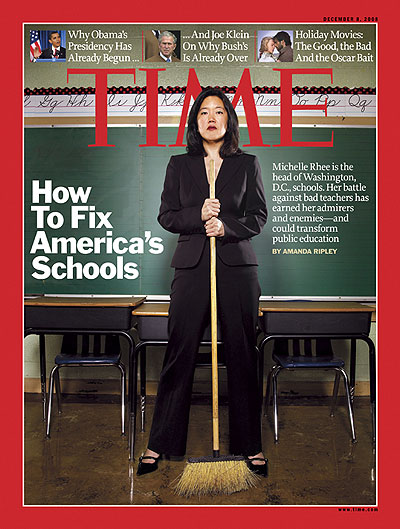






 Gary Rubinstein's Blog
