Stuffed Crocodile

A blog (mostly) about tabletop roleplaying games

Elves can see in the dark…

John Duncan - Riders of the Sidhe

depicting four ornate riders of unearthly quality

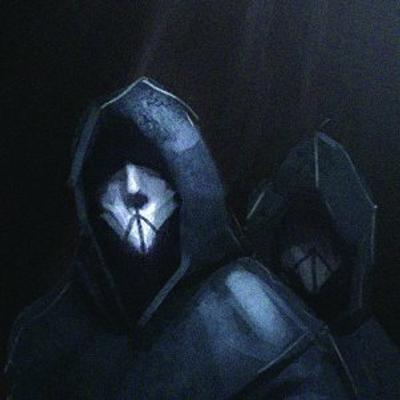
Elves are well known to be able to see in the dark… because they glow.

Infravision and darkvision to me never made that much sense for Elves. Why would they be able to see in complete darkness. Every picture of an elf in the woods has them lit by some unearthly glo…. ooooooh.

Yeah, so elves faintly glow from the inside in an unearthly light. Not much, not really that noticeable during the day. But any elf gives enough light to navigate a forest and/or cave. (in other words, about the same range and fidelity as a dwarf’s darkvision)

Benefit: elves (and their companions) don’t necessarily need light sources to navigate complete darkness, although the effect is more like using your phone screen to find your way to the bathroom than a proper light source. Not enough to properly search a room with, but better than nothing.

Drawback 1: Elves are visible in complete darkness. Even extinguishing your torch isn’t gonna make the elf stop glowing unless properly covered. This also means elvish thieves have a -20% on Hide in Shadows unless covered.

Drawback 2: Their glow messes up the darkvision of others. You wonder why dwarves don’t like elves? Well, lots of reasons, but one is that when they are near they can’t use their darkvision properly.

Corollary: Dark elves are dark elves (or shadow elves) because they cast a natural darkness the same way that surface elves glow

A Miscellany of Links pt. XXV

Triassic Life in Germany by Benjamin Waterhouse Watkins

Random Tables

d100 – Hireling Hobbies or PC Pastimes (d4 Caltrops)

D20x5 Great Grails (Archons March On)

d100 Woefully Encysted Creatures (Blog of Forlorn Encystment)

Farmer Drama 2 Ethyria Farm Life + (Elfmaids & Octopi)

Resources

10 Reasons Why the Guild has a Partial Map (Rise Up Comus)

Who feeds all these monsters? Monster Keepers & Menageries (Elfmaids & Octopi)

DOWNTIME DEMANDS OF SENTIENT WEAPONS: Or The Care & Feeding of Excalibur (I Cast Light)

Tireless Antagonisms (English Civil War campaign rules) (The Stronghold Rebuilt)

Encounters

Friday Encounter: Powder Keg (Tales of the Lunar Lands)

Thought

where are psionics from? (Blog of Holding)

What does Protection from Evil protect us from? (Chgowiz’s Hobbies)

Pulp Heroes and Damage (Akratic Wizardry)

Dead Gods Waiting to be Reborn: Ruined Shrines and the Syncretist Cleric in AD&D (Blog of Forlorn Encystment)

There’s a Road to the Dungeon, and It’s Paid for by Adventurers (Blog of Forlorn Encystment)

Action-Oriented Interaction (Aboleth Overlords)

DM Aid

Building Bhakashal – Sandbox Style Open World Gaming (Dweller of the Forbidden City)

Monstrous Mondays: Guardians of the Library (The Other Side)

Yaksha’s Hexfill Method (Part 1) (Seed of Worlds)

Gygaxian Democracy: 100+ more reasons the guild has a partial map (Rise Up Comus)

Curses (DMiurgy)

Against the Elements (Among Cats and Books)

5 Tropes that Make Exciting Stories But Ruin D&D Games (DM David)

Smoking Gun (Magical Revolvers) (dungeonfruit)

Monstrous Mondays: Ghost Lights (The Other Side)

The Smaug Dragon (The End Of All Things)

What it takes to get a drink around here (Town Scrier)

Super simple XP system, take 2 (Methods and Madness)

Props

Scratch Off Dungeon Maps! (glorified notepad)

Hobby History

When did People Start Referring to RPGs as TTRPGs? (Taskerland)

Ruins (Grognardia)

HârnMaster

Map K3: Anoth Delta (lythia.com)

Tashal: Buckthorn House (lythia.com)

Other

Why Knights Fought Snails in Medieval Illuminated Manuscripts (Open Culture)

The Oldest Unopened Bottle of Wine in the World (Circa 350 AD) (Open Culture)

Men with Fangs! (The Horrors Of It All)

Random Weird

[zine] Grenzland No. 6 – Domain Games II

Image

Grenzland no. 6 appeared in my mailbox last week, and now can also be downloaded from archive.org. A harcopy can be purchased for 5 Euros from Wanderer Bill (as long as copies last that is). It features a mix of mostly English and partially German articles concerning OSR topics, including an expanded article on Campaign Events.

Information and Reconaissance in Domain Games by lkh is a meditation on information gathering in domain games, based on the experience in the Grenzland diplomacy game (see below).

Campaign Events by me (kyonshi): a longer article regarding Campaign Events, very much inspired by the tables from Oriental Adventures, but reworked for my own purposes.

Notes on a ShipCrawl Game by RThom: ideas on creating a ship-based campaign.

Bericht über die letzten Ereignisse in und um Akan-Lai by Mellen Darg by kiki: a game report about a more or less regular Worlds Without Number game (article in German)

The Grenzland Diplomacy Game by lkh: the rules and faction sheets for the concluded Grenzland Diplomacy Game (faction sheets are a mix of German and English)

Recently on Discord by cidney: struggling with the machine

A Miscellany of Links pt. XXIV

The fight with the dragon.
Hermann Freihold Plüddemann, from "Deutsches Balladenbuch," collective work, Leipzig: 1852

Random Tables

d100 – Vignettes for Faerie & Other Unseen Lands (d4 Caltrops)

d100 – Pecuniary Problems, Awful Arrears, & Delinquent Debts (d4 Caltrops)

D6x6 Grimy Grimlocks (Archons March On)

Relationship Complications (Traverse Fantasy)

1d100 Things in the Wizard’s Tower (Dice in the North)

Resources

More Shrine Fluff (Elfmaids & Octopi)

The Forgotten Hermitage (Dyson’s Dodehecadron)

A funny thing happened on our Shrine Pilgrimage (Elfmaids & Octopi)

The Hole in the Wall Lounge (Blog of Forlorn Encystment)

Player Aid

d100 Gnome Youth Gone Wrong (Elfmaids & Octopi)

Encounters

Friday Encounter: Drinking with Satyrs (Tales of the Lunar Lands)

Friday Encounter: Star Metal (Tales of the Lunar Lands)

Thought

d&d is anti-medieval (Blog of Holding)

GP instead of XP? (Methods and Madness)

Lessons From Running a Hybrid Megagame (Son of Sun Tzu)

Diplomacy in FKR and open-strategy matrix games (Dozens and Dragons)

The Game Master is neither a God nor a Judge (Shadows of NyOrlandhotep)

Rulings, Not Rules: A Foundation, Not an Oversight (Bat in the Attic)

Adventurers Are a Threat to the Established Order (Blog of Forlorn Encystment)

DM Aid

Super simple XP system, take 2 (Methods and Madness)

The Twenty Unspeakable Substances (Whose Measure God Could Not Take)

In Search of Better Travel Rules (Rise Up Comus)

The Scavenger’s Deep (Dyson’s Dodehecadron)

Your PCs Are Superman: What Big Blue Can Teach Us About Level 20 Characters (Gnome Stew)

Generating Maps for Heart: The City Beneath (Mediums and Messages)

AD&D 2e reaction table (Methods and Madness)

Calendar Chronicles (Among Cats and Books)

duopost: gift economy / tablefill resolution (400 independent bathrooms)

Running Mythic Bastionland (Among Cats and Books)

Avoid Removing Player Agency (Sly Flourish)

Older and Fouler Things (Forgotten Beast Generator) (The Red Lantern)

Take it Easy (Sly Flourish)

Props

Period Telegram Blank (Propnomicon)

Customizable Radiogram Telegram (Propnomicon)

Period Western Union Telegram (Propnomicon)

Papercraft

Retro Papercraft From The Early Web – Modular Space Toys Revisited (papermau)

Pendragon

“The Faerie Queene” (a Pendragon scenario) (Fabled Lands)

Other

Albrecht Dürer’s Apocalypse ({ feuilleton })

Revisiting Skaro (From the Sorcerer’s Skull)

Brett Allen Johnson Harnesses the Glow of the American Southwest in Dreamy Oil Paintings (Colossal)

[Boot Hill] The Lost County of El Dorado

screenshot from Red Dead Redemption 2 showing the protagonist ride through St. Denis in morning mist

I have been playing Red Dead Redemption 2 the last few weeks, which spurred me on (see what I did there!) to give Boot Hill a look again, especially as RDR2, like other Rockstar Games titles, is using alternate American states instead of actual places. Instead of any actual American state this game starts in the mountain state of Amberino, then proceeds to the midwestern state of New Hanover, and then the Southern state of Lemoyne (and then further on). No actual states were harmed in the production of this game… Although one of course can see what they’re meant to be. The largest city might be called St. Denis, but it’s New Orleans in all but name, size, and actual historicity. In fact the geography doesn’t make any sense at all the more you think about it, but it’s fine for a video game.

map of the game Red Dead Redemption 2, showing the various locales

This made me think about the setting for Boot Hill, which I remembered had a made up area as a campaign base as well.

Well, sort of.

For one, neither the 1st edition (which barely was more than a wargame) nor the 3rd edition (which went more into skills and messed up the combat system) actually seem to have had a given setting besides “the old west”.

Cover of Second Edition Boot Hill, tagged Role-Playing Game of the Wild West

2nd edition, the one that most people are interested in, and which basically was the main edition, that one did have… something.
This edition also was also the only that had a line of supporting books, in the form of 5 scenarios (the BHseries). Now the Boxed set of the game had a map of Promise City, and on the reverse side a map of El Dorado County.* And at least some of the scenarios were set in El Dorado county as well. The problem being: not necessarily the same El Dorado county.
Boot Hill went with the toolbox approach of building a campaign so much that the maps that were included and the few scant descriptions of what might be in El Dorado county, were in fact entirely optional. The wilderness map was unmarked, and the rules even gave instructions how to orient it for specific settings. Want El Dorado County to be in Texas? Then the bendy river goes to the south. Want it to be in Colorado? Then the river goes North-South instead and ignore the Mexican-influenced parts we just mentioned.

photo of the map of El Dorado county, courtesy of RPGeek


The scenarios are also written with that assumption. Sure, they fit on the same wilderness map, but exactly how they fit is another question. Both BH3 Burned Bush Wells and the BH5 Promise City from Range War! are supposed to be on the same map, but North is different in each. and the Promise City, AZ of BH3 Ballots and Bullets, is not the Promise City, OR from Range War! even if the name’s the same and, in fact, the same map (the one in the boxed set that is).


El Dorado and Promise, it seems, are everywhere and nowhere.

Map of Promise City from the Boot Hill boxed set (photo from RPGG)

The idea is of course that you can just place it wherever it suits your campaign, I guess as long as you don’t want to move between locations too much, you always start with Promise City in El Dorado County.
I have to wonder if this was one of the reasons for the lackluster reception of the game. Sure, you can make this game your own, by just adapting the maps to your own campaign, but at the same time there is no actual sense of place. It all depends on the GM to make a campaign that their players feel is interesting. Unlike the experiences in, lets say, Greyhawk or the Forgotten Realms, there was not really any shared experiences between players.

On the other hand, it did manage three editions, so some people were actually buying it. If for the quality of the game, or because they were buying everything from TSR is another question.

Addendum: A few years ago Kellri made a campaign map that includes all the El Dorado locations referenced in Boot Hill products on one map, and while that one is quite the feat the map as a few glaring problems: The places with Spanish names and presumably Mexican origin are in the North, places with colder climate are in the South, and it doesn’t actually follow some of the locations as established in the modules.

*Note: I might have to mention that none of the variations of El Dorado County in Boot Hill is anything like the actually existent El Dorado county in California

Campaign Events: Meandering about Maidens

frame from manhua Master Vilainess the Invincible showing the MC pretending to be a shirking maiden while having subdued her opponent and asking "do you accept defeat?"

It might have been visible in my post from yesterday, but I don’t actually like Oriental Adventures. The original ’85 AD&D book that is. The book purports to give rules for an “oriental” setting that wildly and inappropriately mixes together East Asian cultures and doesn’t even have the decency to genericize the concepts used like it did in the main books. Being Oriental, it seems to say, is all the same anyway.

But even mechanically none of the rules really feel necessary. Why play any of the new classes, when any role imaginable really could be filled with a class from the main book? Sure there’s small differences between Assassin’s and Ninjas, between Magic-users and Wujen, etc. But are those classes REALLY needed? Are those Martial Arts rules necessary? Every time I read it I come away disappointed.

But as I mentioned there was one section I felt was useful, that being the Campaign event tables.

Mind you, not even all of those. The Daily Events feel quite superfluous, and even the yearly and monthly events are sometimes written in a way too geared toward the implied “oriental” setting where the characters are supposedly established retainers of a lord.

Oh there’s a conspiracy at court? Well, there’s a chance the PCs get implicated, which makes sense when they actually have connections there, but not if they are just murderhoboing their way through Jianghu.

But what takes the cake is the monthly event “Maiden of Virtue”. This shows up in the Other table, meaning at any time that’s not in times of political strife or during a natural disaster there’s a chance people in the region start talking what a great catch that one girl is.

text from Oriental Adventures under Yearly and Monthly Events:

Maiden of Virtue: A young woman of exceptional grace, wit, and beauty has appeared in the region. She may be the daughter of a powerful noble (50%), a maiden of mysterious and magical origin (30%), an exiled princess (10%), or simply a commoner (10%). She charms and impresses all who meet her. She has an exceptionally fine writing style that reveals her pure nature. She is skilled in the playing of musical instruments and other artistic accomplishments. She is properly respectful of her parents (if she has any). If the maiden is any but the daughter of a powerful noble, she can be courted (and possibly wed) without the full formalities. How¬ ever, being aware (but not vain) of her own qualities, she does not accept just anyone. Her accepted suitor must possess exceptional qualities of his own. He must also be a model of virtue and likewise skilled in the arts. He must possess heroic qualities. To even attract her notice, he must produce some artistic item of quality—a poem, painting, exceptional handwriting, etc. He must also have a Comeliness and Charisma of at least 13 each. Maidens of mysterious origin or princesses may set impossible tasks as a condition for any successful suitor. The social rank of the character is not as important as the qualities mentioned above. The handling of the court¬ ship, the degree of attraction between the two, and the final result of any courtship are left in the capable hands of the DM.

And… I hate to say it, but for the implied setting of the book it makes sense. If your character is in fact the retainer of a noble lord, then they might in fact be looking for a suitable partner to wed. And that’s what that entry is for. Mind you it also tells you that this Maiden of Virtue has standards. You gotta show you can do some art. Also no ugly guys need apply, if you don’t have the Comeliness (another odd bird of a rule) she won’t spare you a second glance. Comeliness by the way is AD&D’s stat to quantify actual physical attractiveness, as opposed to Charisma. which always was defined more as the raw magnetism as person can have.

The way it’s written of course betrays the author: what if the players had chosen female characters? Doesn’t matter, I guess, because despite written for a game where you can be anything, why would you want to be a… girl?!

Sigh.

Now it would be interesting to just switch this to allow for… I guess Grooms of Virtue? But the question is if this makes any sense at all for a more genericised campaign event table as the one I am working on right now. The whole entry mostly makes sense as a way to introduce romanceable characters into the setting, but where building your family might be a campaign goal for a retainer, the usual murderhobo might have different ideas.

Birth: Should any of the player characters be married, the character learns at this time that he or she is to have a child. The actual birth will occur in nine months. If this does not apply, a local noble or government official has a child (95%) or there are reports of the miraculous birth of a child to a peasant family (5%). Should the child be born of a noble, it is an occasion for feasting and celebration for the noble and his retainers. If the birth is a miraculous one, it is an event of great wonder. The child springs from a piece of cut bamboo, appears from the waters of a spring, is found in a local shrine, etc. The peasant family is always hard-working, honest, and pious. As the child grows through the years, he will prove to be excep¬ tional in some way—great strength, cleverness, magical ability, etc. Meanwhile, the fortunes of the peasant family will rise and they will become leaders of their community.

The same table also has Birth as an entry, which indicates that a married character is to have a child. This time at least it takes into account there might even be female characters.

(Unless nobody’s married, in which case some noble just got another kid). Mind you, this result is only for married characters. No children out of wedlock here, which feels like it squanders some opportunities for drama here.

The question if you want to deal with the implications of forcing a pregnancy on a player character by roll of a die is also interesting and might lead to some bad blood in a group.

Anyway: Maidens of Virtue. I guess they make sense as tropes. The young lady with accomplishments is a trope not only in East Asian media, but could easily work in a European milieu. In fact if there was a similar campaign structure with the players being retainers to a lord, this still might work (think Pendragon). Even the gender should not be an issue. It easily might be the Maiden in question is in fact a groom. A scholar in his own right, or a successful knight. But that’s not the point. The point is that this would need a campaign where romancing that person can result in codified game outcomes, and do I want to introduce that in my campaign event tables? Also I feel like matters of the heart are not something that should be done in game rules, but I also don’t want to spend a large part of game time playing out the courtship between a PC and an NPC.

Throwback: On the Edge

Image

Remember those heady days just after Magic: The Gathering came out, when all of a sudden any TTRPG related publisher decided to push out their own trading card game?

Well, so does Atlas Games it seems, who have been sitting on unopened “On the Edge” boxes for the last 30 years and are still selling them, for pennies on the dollar by this point.

I’m not sure why I thought it was a good idea to order them, but now I would have enough to I don’t know, run a draft tourney or build a cube or something.

On the Edge is the trading card game for Over the Edge, a rather surreal conspiracy RPG set on an island somewhere in the Med. It’s basically X-files crossed with Burroughs’ Interzone.

Image

Now Over the Edge was a popular but definitely niche RPG in the 90s, but it hardly was what I would have called ripe material for a trading card game. Back in the days it had 2 editions, and a few years ago they published and updated version for the 21st century. But back then was a weird time, and so trading card games popped out from everywhere. There was a Deadlands TCG after all, there even was a Das Schwarze Auge one which seemed to miss the whole point of what made Magic work so well.

Still, the On the Edge game managed to get a main set and 4 expansions. Unfortunately it never seems to have sold all that much, but unlike other companies Atlas Games seems to be unwilling to let go of a good idea that easy (and I didn’t say the game wasn’t good, just that the property wasn’t all that ready for a TCG and it definitely got lost in the shuffle). So they are still selling it. In 2025!

Quick calculation: I bought the big packages for 20 bucks each. They sold in 1995 for $117, which equals about $247 in 2025 money. Which means they were basically marked down to $10 in ’95 money.
At one point you have to wonder if AG isn’t losing money storing these things for three decades.

Image

“The object of the game is now to arrange 6 or more cards in a row so that the first letters of their first names spell out an English word. First player to do so wins, […]”

This is from the The Cut-Ups Project expansion, which tries to gamify surrealism.

Now of course the issue is that I might need someone to actually play this game with me. At least thanks to the low price I have enough cards to actually do that, something I can’t say for my unsuccessful ventures into the Star Trek: TNG and Babylon 5 Trading Card Games.

WIP: Yearly Campaign Events

The celestial phenomenon over the German city of Nuremberg on April 14, 1561, as printed in an illustrated news notice in the same month

I have been thinking of making this table for a while, and right now am working on it for the Grenzland zine. The inspiration for this is of course the Campaign Event table in Oriental Adventures, which I have to say is one of the few parts of that book that can stand on it’s own. Nevertheless, while it is in general the most useful part of the book, it also is too long, too wordy, and slightly too focused on the “oriental” setting presented in that book. This is a table more geared towards a generic fantasy setting (yes, even though I added Kaiju). The table in the book also had a monthly chart, which I am still working on, and a Daily chart, which I found a bit superfluous. The results of the monthly table are nested in the yearly one, and both can interact with one another.
This table is meant to create a sort of background chatter for a campaign. No, in a lot of places player characters might not have to actually deal with what’s happening, but the rest of the region is dealing with it and talking about it.
As always, don’t see the results of this table as holy writ, but use it to flesh out the background of your campaign with events, stories, and rumors. In my experience you get the best results if you trust your dice, but if something just does not fit, don’t make it fit by force.

Procedure
1. Roll 2d6 to determine yearly event
2. Roll 1d12 (or an appropriate other die, depending on how many months are in your campaign to determine when in the year this takes place.
3. Some events take longer, roll how many months this event takes. This influences which table to roll on to determine monthly events.

2d6 Yearly Campaign Event Table

  1. Good Omen
  2. Birth
  3. Envoy
  4. Death
  5. Marriage
  6. Religion
  7. Disaster (roll Disaster Subtable)
  8. War
  9. Rebellion
  10. Political Plot
  11. Other (Roll Other Subtable)

1d8 Disaster Subtable

  1. Volcano
  2. Undead
  3. Inferno
  4. Famine
  5. Flood
  6. Earthquake
  7. Kaiju

1d6 Other Subtable

  1. Visitation
  2. Incursion
  3. Comet
  4. Miracle
  5. Strange Phenomenon
  6. Dungeon!

Explanations:


Birth: a high-ranking person in the region or beyond (in a larger realm) has a child, this is cause for public celebrations and feasting (1d6 days)

Comet: a comet apears in the sky, roll again. New yearly event will happen within 1d6 months.

Death: a high-ranking person in the region dies, either naturally (1-4/6) or by assassination (5-6/6). This involves kings, dukes, high-priests, and other personages of at least regional importance. This causes disorder in the court for 1d6 months, or with 20% likelhood a violent struggle due to an unclear inheritance situation (treat like result for War/Rebellion)

Dungeon!: The location of a heretofore unknown dungeon full of treasure, traps, and dangerous monsters becomes known.

Earthquake: takes only a few hours, but causes destruction in 50 mile radius. 70% causes Fire, Major. 40% causes plague. (compare Earthquake spell)

Envoy: an envoy is sent to another country (1-3/6) or received in the local country (4-6/6). This can be an ambassador or an important other figure that will stay in the host country for 1d10 months to talk about matters. There is a 1/10 chance the envoy is from a very exotic location and a 1/20 chance the envoy is in fact a conman.

Famine: Famine due to drought, war, or other reasons. Lasts 1d6+1 months, food prices double each passing month and will take the same amount to recover (Plague and Rebellion extend this). Marauders raid for food. 60% chance of Rebellion (see result Conflict, Internal), 20% chance of Plague following Famine. Every month of famine reduces population by 5%.

Flood: major flooding hits region, population reduced by 1-10%, 40% of famine at harvest season, 20% of plague

Good Omen: an omen generally seen as a good one appears, a new star in the sky, a dead tree lives again, etc. The harvest is bountiful. Population in the area grows by 5% over the next year.

Incursion: A large number of creatures enters the region from outside, driven to migrate either peacefully or aggressively.

Inferno: a major city is partially destroyed 2d4x10% by a huge fire. This can cause famine (20%) and plague (10%). Prices are doubled for a month, building material is 10x as expensive for 1d6 months.

Kaiju: a giant monster (e.g. the Tarrasque) or multiple ravage the land for 1d3 months. Effect like Earthquake, but repeat each month.

Marriage: the ruler of the land or his children are married in a political alliance. This is cause for public celebrations and feasting (1d6 days)

Miracle: if a disaster was ongoing it is either completely undone (1/6) or significantly reduced in results. If completetly undone treat results like Visitation

Political intrigue (5-6/6) causes tumult for 1d6 months, or assassionation (5-6/6), see entry for Death. There is a 20% chance an intrigue will develop into a rebellion per month which adds to the time it takes.

Rebellion: A rebellion (1-4/6) or political intrigue (5-6/6) causes tumult for 1d6 months. There is a 20% chance an intrigue will develop into a rebellion per month which adds to the time it takes. There is a 5% chance per month it causes a Civil War. Treat like Conflict (external) except without foreign enemy.

Religion: A new religion appears, or a notably different sect of an established one shows itself. There is a 75% chance this causes strife with established cults/religions. Establishment of the new faith takes 1d6 months. 50% chance they convert the local ruler.

Plague: a deadly disease scours the land for 2d6 months. Population of region decreases by 5% each month of plague. Prices of goods quadruple.

Strange Phenomenon: Something very notable but otherwise hard to categorize happens

Undead: The dead rise again, either by the hand of necromancy or just due to ill fate (50% chance of each)

Visitation: A god, angel, demon, or other being of considerable power is encountered at a location in the region. If seen as positive this causes a new place of worship to come in existence (20% of new religion/sect), if seen as negative this causes everyone to move away and the whole surrounding hex becomes a place of bad reputation.

Volcano: dormant (1-3/4) or new (4/4) volcano erupts, destroying everything in 5 mile radius. Volcano stays active for 1d12 months. Every month 10% chance of new eruption.

War!: War erupts for reasons to be determined. Either local country against other country/tribe/polity, or the other way around (50% chance). If affected causes famine in 1/3rd of cases. The war lasts 1d8 months. A war that lasts more than 4 months will not end this year, but will flame up again during the next spring.

Plate VI from Campi Phlegraei: observations on the volcanos of the Two Sicilies as they have been communicated to the Royal society of London, 1776, by Sir William Hamilton (1730-1803)

[Shadowrun] Retrospective: Dreamchipper (1989)

Image

Y…eah. I mean, I have been doing these things for old DSA scenarios already, so now I get to do them for old Shadowrun ones as well. And Dreamchipper definitely is one of the oldest ones on the block, technically the second of independent scenarios after DNA/DOA (and the fourth after the venerated Food Fight in the rulebook and Silver Angel which was a pack in with the GM screen).

And it’s not even such a bad start. Unlike the previous scenarios this one is the first REAL Shadowrun scenario. Meaning: this is the first one that has all the common tropes that would become the stock in trade for future Shadowrun scenarios. Silver Angel already had part of this, but was organized differently, while DNA/DOA was very railroady in some parts, more so than a lot of later scenarios. It also tried too hard. Not that Dreamchipper…

But no, lets go through other parts first.

Image

The main topic in Dreamchipper are dreamchips, or what later would be mostly known as BTLs (Better-Than-Life SimSense chips) in the setting. The chips in this case are a specific prototype of chips for military use that override the user’s personality with another, i.e. they are what later canon would come to know as persona-fix chips.

Here we have this part of Shadowrun canon in it’s infancy, these chips are meant to be some of the first ones in the setting, and to show off the possibilities of the technology they have been fixed with three very distinctive personalities: Genghis Khan, Cleopatra, and Jack the Ripper. I think it makes sense if you just assume these never were intended to be actually used and only there to show prospective buyers how and how well the technology works.

In any case the chips have been stolen as part of some internal power struggle, and the runners are hired to retrieve them. We get some basic information about where to start investigating, and then we are let loose at the world. Of course the chips are currently in use. While they were stolen, the reason for the theft was to give bad press for the CEO of the company, so the chips stayed with the thieves.

There are a lot of interesting things in this scenario that have not been kept for later scenarios. Some of this makes for intriguing design, some of it just comes across as annoying.

Image

There are “random” encounters/rumors which we can encounter when traveling from location to location. There is a very interesting story progression happening where the different story lines are slowly revealed in small encounters. Early on one might find a guy spraying over a gang tag with a new one, while later a whole bunch of gangers from different gangs might pass by together without fighting. Both indicate how the guy with the Genghis personafix slowly is uniting the biker gangs of Seattle.

There are some real possibilities for giving the world additional texture. Unfortunately the way it is presented (every journey outside gets a random encounter) doesn’t feel very natural. Not to speak about the way the encounters tend to take away player agency. An encounter might tell you what happens, but also how the player character reacts. In game I also simply didn’t get around presenting them as they were intended.

Obviously outside a dungeon, descriptions of actions have a tendency to assume too much. You are given some leeway in how players might want to approach the scenario, i.e. there’s no actual fixed order how to get back the chips from the people that have them, but once you get into the details I found I got tripped up by descriptions that simply assumed too much. The PCs enter an apartment, and the descriptions tell you exactly how the characters are doing it. You enter a party and the text will tell you how the characters feel and behave. That’s… not good. This also shows up with the encounters mentioned above. Your character meets a ganger doing something illegal. You just watch. Then you walk on.

I mean, yes, most likely a runner would do that to keep out of trouble, but what if they don’t want to keep out of trouble?

Image

The descriptions also don’t fit some of the maps we get in my opinion. The later section with the party for example shows a flat that is at odds with what is written in the text. Here we have the feeling of a big crowded place with hundreds of people milling about, with distinct types clustering in certain places, and the flat… is a flat. Just a normal flat. In no way is there space enough for what is described in the text unless everybody is really, really cuddly or there’s way less people at the party than what the text claims.

The mystery part is all a bit thin, and most of it is cleared up in the middle when the person you thought was the big bad tries to kill you in a meeting with your Johnson, and his personal pocket secretary contains evidence for someone behind the scenes. There is a good story in there, but the way it was presented just wasn’t it.

Altogether a valiant attempt for such an early adventure, but it really could have been better. I think this needs someone putting a lot of cuts in before it really is usable.

Random Notes:

  • This module has what might be a very early gay couple. Tee Hee is hiding away… in a small apartment with only one bed. In the apartment of the only person he seems to have had a positive connection with in university. It’s never mentioned, but that’s what I got out of it.
  • That scene on the cover with the Cleo being surrounded by two orc guards? Striking, and totally doesn’t happen in the scenario.
    • unlike what might be assumed in the scenario my players took a dislike to Cleo from the beginning and ended executing her and her paramour on the quay. Interestingly they took pains to keep her bodyguard out of trouble. Players sometimes are weird.
  • The Jack the Ripper part was maybe the blandest of the three scenarios. Once the players figure out what persona-fix is in play it becomes a chore to improvise anything that keeps them from rolling over the guy.

Glimmermark, the first year

Image

Last week we had the 26th session of my Glimmermark Labyrinth Lord game, which makes for a game about every 2 weeks on average since I started in July 2024.

Unfortunately sometimes it’s just not possible to find enough people to play, even if I offered the game as an open table game. We decided early on that we play with at least 2 players around, although we had a few times when we decided to just go ahead with just one. Unfortunately it can be quite frustrating to me as the DM to carve out one evening a week for the game, and then it turns out nobody shows up. On the other hand the last few months I have been feeling under the weather, so I wasn’t all too broken up when we cancelled the last few sessions. Only these last two weeks I am getting back into the grove I had before.

Unlike other games I run (Shadowrun…) this particular game does not demand too much work week to week, and it wasn’t intended to. This is a simple dungeon and wilderness crawl game with no larger story threads… that is, the players have yet to pick up on some threads that I laid out… based on the Keep in the Borderlands, with additional dungeons scattered all around.

For what it’s worth my experience in here is informing my house rules, which I want to roll out at one point soon, to use in my game. Still, these are mechanically so close to house-ruled Labyrinth Lord that the switch should be easy.

Here’s a few developments from the campaign.

  • the players are in general experienced dungeon crawlers, even if their characters aren’t, which means some of the encounters turn out to be much less deadly than I expected them to be. If you have experience with LL or at least other DnD retroclones you tend to expect certain things, like monster behavior. This is ok, but I do wonder what a group of complete neophytes would make of the same environment
    • In particular the use of the Splintering Shield rules makes for some markedly less deadly game than what I expected in the beginning. So far no player character and only 4 NPC retainers have died during the ventures into the dungeons. Management of the shields as basically extra lives has become an essential part of the resource management in the game.
  • I planned to have multiple groups have adventure in the same region and have their exploits influence what the others encountered. I didn’t yet branch out though. I think maybe I should run some con games with people to get into that.
  • Goblins have turned out to be more important than I thought, slowly establishing themselves as a faction in charge of the ruins of Castle Dyson (that is, the top levels of Dyson’s Delve). So far there was a single additional character class which was, appropriately, the goblin. Not that the PCs aren’t ready to kill any goblins that aren’t directly involved with them.
  • The Caves of Cha… ehm, The Stygian Caves have been taken over mostly by hobgoblins who now have basically driven out the orcs (with the help of the PCs) and kobolds (despite help from the PCs). The goblins in the caves were previously killed by the PCs or migrated to Castle Dyson, where they then were killed by the PCs. The goblins now in charge of Castle Dyson do not know this, they were originally cut off from the goblins on the upper levels.
  • Encounter tables and reaction checks make for interesting worldbuilding. Sometimes stuff becomes important to the game that you didn’t even think about before. I think it’s really these unexpected developments that make the game for me as a DM, this moment when the campaign world takes on a life of its own and goes in a way I didn’t even expect
Design a site like this with WordPress.com
Get started