SOURCE: RAUNAK KUNDE / NEWS BEAT / IDRW.ORG

The Aeronautical Development Agency is increasingly focusing on the incorporation of artificial intelligence into aircraft design, with plans to develop its own proprietary AI algorithms to support research into next-generation combat aircraft, including future sixth-generation fighter platforms. This initiative reflects ADA’s intent to move beyond conventional design methodologies and adopt data-driven, intelligent design tools that can address the growing complexity of modern and future air combat systems.
Formed in 1984 under the Department of Defence Research and Development, Ministry of Defence, ADA was established to manage India’s Light Combat Aircraft programme, which eventually culminated in the development of the HAL Tejas fighter jet. Over the decades, the agency has evolved into the country’s principal design authority for combat aircraft, building institutional experience across aerodynamics, structures, flight control systems, and systems integration.
Continue readingSOURCE: RAUNAK KUNDE / NEWS BEAT / IDRW.ORG
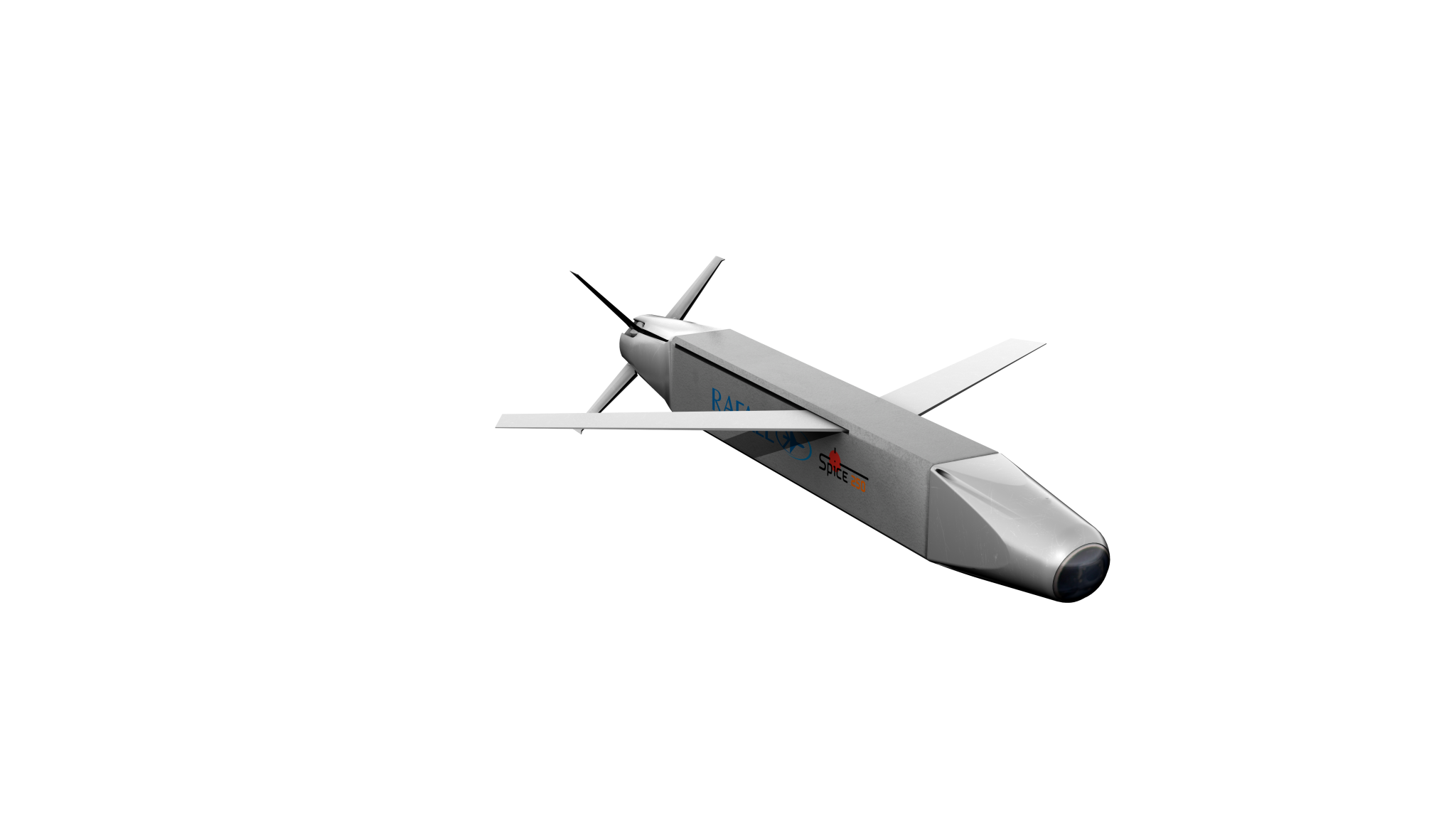
According to Israeli officials, the Indian Air Force has shown interest in the SPICE 250, a member of the SPICE family of air-to-surface precision-guided munitions, as it looks to enhance its stand-off strike capabilities against a wide spectrum of targets. The SPICE 250 belongs to the 125 kg weapon class and offers a stand-off range of up to 100 km, making it well suited for precision engagements while keeping launch aircraft outside hostile air defence envelopes.
One of the key attractions of the SPICE 250 is its ability to operate effectively in GPS-denied or heavily jammed environments. The weapon relies on a sophisticated Electro-Optical seeker combined with advanced homing modes such as Automatic Target Acquisition, Moving Target Detection, Automatic Target Recognition, and a dedicated Maritime Attack mode. This enables multiple, simultaneous precision strikes against fixed, relocatable, moving, and maritime targets, significantly expanding operational flexibility for the IAF in contested battlespaces.
Continue readingSOURCE: RAUNAK KUNDE / NEWS BEAT / IDRW.ORG

In a significant development for India’s fifth-generation fighter jet ambitions, British engine manufacturer Rolls-Royce has reaffirmed its proposal to co-develop a completely new jet engine core for India’s Advanced Medium Combat Aircraft (AMCA) program. Speaking to idrw.org, Rolls-Royce officials confirmed that the engine core being offered will be an entirely new design — not based on any existing Rolls-Royce engine family — providing India with a scalable propulsion architecture capable of supporting future upgrades.
This engine, intended to be developed in collaboration with India’s Gas Turbine Research Establishment (GTRE) under the Defence Research and Development Organisation (DRDO), will initially target a thrust class of 73kN dry thrust and 120kN wet thrust (afterburning) — suitable for the twin-engine configuration of the AMCA Mk2 variant.
Continue readingSOURCE: AFI

Israel-based freelance defence journalist Arie Egozi has reported that India has also placed orders for the Air LORA and ICE BREAKER missile systems in recent months, coinciding with the Indian Air Force’s procurement of SPICE-1000 guidance kits for air-dropped bombs. While official confirmation from Indian authorities remains absent, the report has added fresh momentum to long-running speculation about the IAF’s interest in advanced Israeli stand-off strike weapons.
The report comes in the context of a major approval granted on December 29, 2025, when India’s Defence Acquisition Council, chaired by Defence Minister Rajnath Singh, cleared an acquisition package worth approximately $8.7 billion. This package included the procurement of SPICE-1000 precision guidance kits from Rafael Advanced Defense Systems, significantly expanding the IAF’s inventory of precision-guided munitions for deep strike roles.
Continue readingSOURCE: AFI

Moving ahead with efforts to significantly enhance aerial surveillance, airspace management, and network-centric warfare capabilities, the Indian Air Force has issued a Request for Information (RFI) to the domestic and global defence industry for the procurement of six Airborne Early Warning and Control aircraft, along with associated ground segment equipment and supporting infrastructure. The RFI, issued on January 5, marks an important step toward expanding the IAF’s airborne sensor and command-and-control footprint at a time of rapidly evolving aerial threats.
According to the RFI, the primary role of an Airborne Early Warning and Control platform is long-range radar detection, but the system is defined as far more than just an airborne radar. The AEW&C is described as a “system of systems,” integrating radar, Identification Friend or Foe (IFF), Electronic Surveillance Measures (ESM), Communication Support Measures (CSM), command and control functions, a battle management system, and secure networking through high-capacity data links. Together, these elements are intended to provide the IAF with a comprehensive real-time air picture and the ability to direct both offensive and defensive air operations.
Continue readingSOURCE: AFI

India’s push for self-reliance in naval aviation has received a significant endorsement from Chief of the Naval Staff Admiral Dinesh K Tripathi. The Admiral emphasized that niche technologies mastered during the development of Light Combat Aircraft (LCA) Navy prototypes, along with the robust industrial ecosystem built around the program, are now directly contributing to accelerated timelines for the Twin Engine Deck Based Fighter (TEDBF).
The LCA Navy program, though positioned as a technology demonstrator rather than a full operational fighter, has proven invaluable in validating critical carrier-based operations. Prototypes like NP1 and NP2 successfully demonstrated ski-jump take-offs, arrested landings on shore-based facilities, and real carrier operations aboard INS Vikramaditya and INS Vikrant. These milestones established indigenous expertise in areas such as reinforced landing gear, arrestor hook systems, foldable wings for hangar storage, and specialized flight control modes for short take-off but arrested recovery (STOBAR) configurations.
Continue readingSOURCE: AFI

The Mahindra Armado Armored Light Specialist Vehicle (ALSV) has been observed in an advanced configuration fitted with a Battlefield Surveillance Radar (BFSR) and an unmanned aerial system (UAS), underscoring the Indian Army’s growing emphasis on sensor-integrated, network-centric ground platforms. The sighting points to an evolving operational concept where light armored vehicles are no longer limited to mobility and protection roles but are increasingly being used as mobile surveillance and reconnaissance nodes.
Developed by Mahindra Defence Systems, the Armado ALSV is designed as a high-mobility, armored platform capable of operating in diverse terrains ranging from deserts and plains to mountainous regions. Its compact size, high power-to-weight ratio, and modular architecture make it well-suited for specialist roles such as reconnaissance, convoy escort, quick reaction forces, and special operations support. The integration of BFSR and a drone significantly enhances its situational awareness envelope, transforming it into a force multiplier for units operating at the tactical edge.
Continue readingSOURCE: PTI
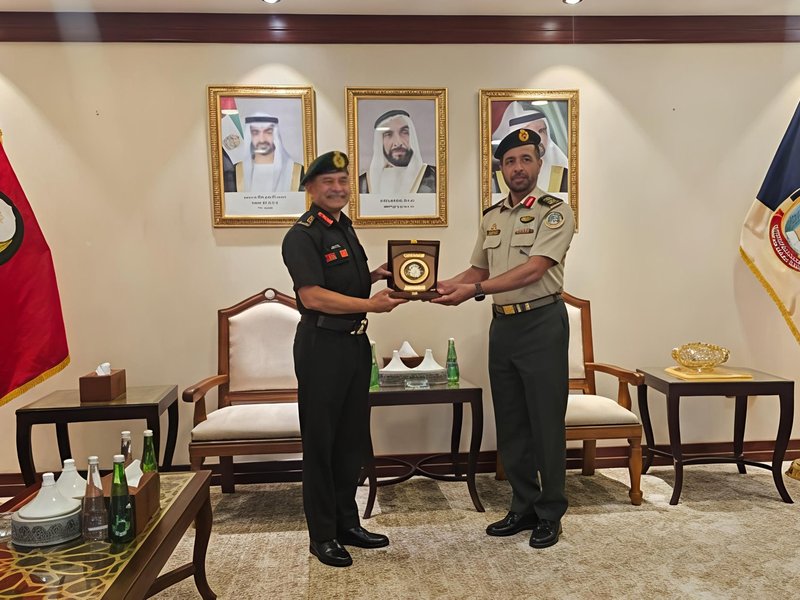
Indian Army Chief General Upendra Dwivedi on Tuesday emphasised the evolving global security landscape and the changing character of modern conflicts, underscoring the importance of technology in today’s warfare.
The Army chief is currently on an official visit to the UAE. “General Upendra Dwivedi, COAS, today addressed officers of the UAE National Defence College (NDC). In his address, the COAS highlighted the evolving global security landscape and the changing character of modern conflicts, underscoring the impetus to technology in modern warfare,” the Indian Army said in a post on X.
Continue readingSOURCE: IANS
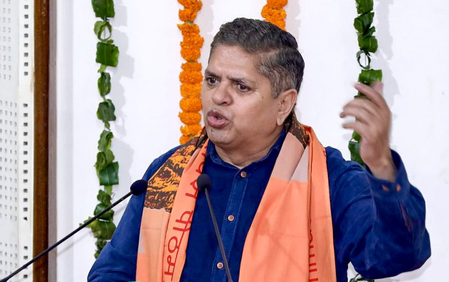
The organisation of displaced families from Pakistan-Occupied Jammu and Kashmir (PoJK), on Tuesday, appealed to the Prime Minister Narendra Modi to liberate the region citing the recent US intervention in Venezuela.
Rajiv Chuni, Chairman of the organisation of PoJK displaced families, appealed PM Modi to take decisive military action for liberation of PoJK, citing recent US action in Venezuela against narco terrorism. The organisation representing displaced persons from PoJK has sent an urgent appeal to the Prime Minister Modi seeking military intervention to liberate the region, destroy terrorist infrastructure and drug trafficking networks, and honour India’s longstanding Parliamentary commitment.
Continue readingSOURCE: PTI

US President Donald Trump on Tuesday said that Prime Minister Narendra Modi is “not that happy with me” because of the tariffs imposed by Washington on Delhi for its purchases of Russian oil. Trump, delivering remarks at the House GOP Member Retreat, claimed that “Prime Minister Modi came to see me, ‘Sir, may I see you please’. Yes.”
“I have a very good relationship with him. He’s not that happy with me because you know they’re paying a lot of tariffs now because they’re not doing the oil, but they are, they’ve now reduced it very substantially, as you know, from Russia,” Trump said.
Continue readingSOURCE: PTI
)
India imported about 144 billion euros’ worth of crude oil from Russia since the start of the Ukraine war, a European think tank said on Tuesday, estimating the Kremlin’s cumulative earnings from global oil sales since February 2022 at around 1 trillion euros.
India has been the second-largest buyer of Russian oil behind China, according to the Centre for Research on Energy and Clean Air (CREA). China bought Euro 210.3 billion worth of Russian oil since the start of the Ukraine war in February 2022, and another Euro 42.7 billion worth of coal and Euro 40.6 billion worth of gas. China’s total buy from the beginning of the war until January 3, 2026, was Euro 293.7 billion.
Continue readingSOURCE: IANS
)
The ongoing geopolitical tension between the United States and Venezuela does not pose any immediate risk to India and that the country’s oil import bill is unlikely to rise under present conditions, a report said on Tuesday.
The report from Bank of Baroda said the import bill will remain unchanged as “global crude supplies are likely in a glut mode”, and Venezuela’s share of global production is marginal at about 1 per cent. The bank maintained that Venezuela’s proven reserves are large, at roughly 19.4 per cent of the world total. Market conjecture that the reserves could be tapped by US to increase supplies has already softened crude prices in today’s trading.“Given the current global supply scenario and surplus conditions, the report does not foresee any upside risk to India’s oil import bill in the near term,” it said.
Continue readingSOURCE: AP
)
Israel’s air force struck areas in southern and eastern Lebanon on Monday and early Tuesday, including in the country’s third-largest city. A strike around 1 a.m. Tuesday leveled a three-story commercial building in the southern coastal city of Sidon, a few days before Lebanon’s army commander is scheduled to brief the government on its mission of disarming militant group Hezbollah in areas along the border with Israel.
An Associated Press photographer at the scene said the area was in a commercial district containing workshops and mechanic shops and the building was uninhabited.
Continue readingSOURCE: PTI
)
Cuban Ambassador to India Juan Carlos Marsan Aguilera on Monday strongly condemned the US military operation in Venezuela that led to the capture of President Nicolas Maduro and his wife, terming it a “criminal act” and a “terrorist act” that violates the United Nations Charter and international law.
In an exclusive interview with PTI Videos here, Aguilera emphasised that no single nation can stop the United States from such unilateral actions and called for the world to unite forces to counter what he described as Washington’s “madness” in international policy.
Continue readingSOURCE: IANS
External Affairs Minister (EAM) S Jaishankar said on Tuesday that India and Luxembourg can collaborate much more productively in fintech, space, digital world and Artificial Intelligence (AI). In his opening remarks during his meeting with Luxembourg Deputy Prime Minister and Foreign Minister Xavier Bettel, EAM Jaishankar said that he looked forward to the talks and expressed confidence that both nations can benefit from the discussions.
“I could see that we have a very active community here. I will be meeting them later in the evening. But, other than you know very solid trade account that we have, I think many of the interesting issues of our times, fintech, space, the entire digital world, AI… These are all issues where I think we can collaborate much more productively than we’ve done. So, I look forward today to our meeting, to our discussions. I think the state of the world is also particularly interesting at this time. So, I’m sure we both profit from very open discussion on that. So, I know that we won’t hold back on that score,” said EAM Jaishankar.
Continue reading