SOURCE: RAUNAK KUNDE / NEWS BEAT / IDRW.ORG

Once India finalises and inks the deal with France for the joint development of a new 120 kN-class aero-engine, plans are set to move rapidly toward establishing a comprehensive engine and component testing ecosystem within India. The initiative, backed by French technical assistance, is expected to address one of the most critical gaps in India’s long-standing quest for self-reliance in high-thrust military jet engines.
According to sources familiar with the programme, the joint development effort will go beyond engine design and manufacturing, placing strong emphasis on creating end-to-end testing and validation infrastructure domestically. This infrastructure is essential not only for the 120 kN engine itself but also for future indigenous engine programmes, upgrades, and derivative variants over the coming decades.
Continue readingSOURCE: RAUNAK KUNDE / NEWS BEAT / IDRW.ORG

The Indian Navy is examining the possibility of equipping future surface combatants, beyond the planned Project-18 class destroyers, with nuclear propulsion based on a high-power 100 MW dual-reactor setup, idrw.org has been told by sources familiar with long-term naval planning. The move reflects growing concern within naval circles that conventional fossil-fuel-based propulsion places inherent limits on range, endurance, and sustained high-tempo operations, while also becoming increasingly expensive and strategically uncertain over the coming decades.
Fossil fuel dependency is now being reassessed globally, as several countries explore alternative power options for major combat platforms amid projections that fuel availability, cost stability, and secure supply chains may not remain assured over the next 30 to 40 years. For a blue-water navy with expanding operational commitments across the Indo-Pacific, nuclear propulsion offers virtually unlimited endurance, sustained high-speed transit, and greater operational flexibility without the logistical burden of frequent refuelling.
Continue readingSOURCE: RAUNAK KUNDE / NEWS BEAT / IDRW.ORG
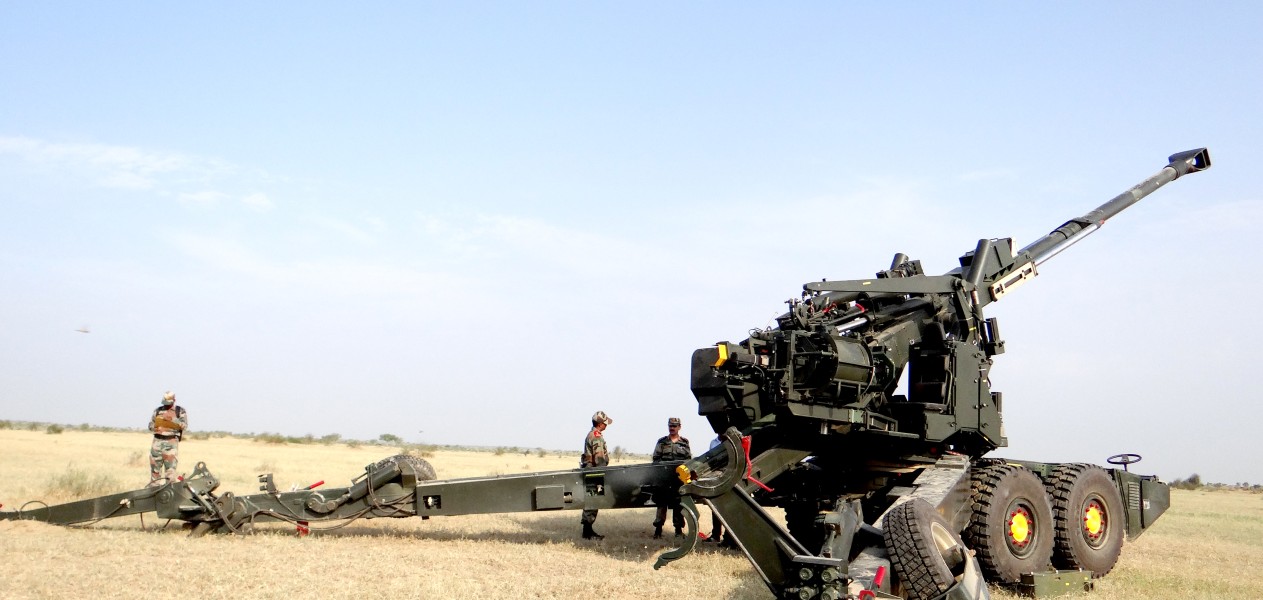
India’s defence export momentum continues to build, with the successful delivery of the indigenous Advanced Towed Artillery Gun System (ATAGS) to Armenia sparking significant interest from several Middle Eastern countries. The combat-proven performance and advanced capabilities of Indian-made artillery have positioned New Delhi as an emerging player in the global arms market, particularly for cost-effective, high-performance systems.
The ATAGS, developed by the Defence Research and Development Organisation (DRDO) in collaboration with private partners like Bharat Forge and Tata Advanced Systems, has demonstrated superior range, accuracy, and mobility. Armenia’s acquisition, including initial batches and follow-on orders, has served as a strong endorsement, validating the system’s reliability in diverse operational environments.
Continue readingSOURCE: AFI

The year 2026 will be shaping up to be a decisive inflection point for India’s defence modernisation roadmap. Several long-pending acquisition programmes and strategic capability projects are expected to either receive formal clearances or move into the contract-signing stage.
Collectively, these decisions will define India’s air, naval, and air-defence posture well into the 2040s, while also setting the tone for indigenous development and global partnerships.
Continue readingSOURCE: AFI

India’s Defence Research and Development Organisation (DRDO) is preparing for a significant milestone in its hypersonic weapons program with the planned maiden flight test of the Dhvani Hypersonic Glide Vehicle (HGV) in the first quarter of 2026. This boost-glide system, designed to travel at speeds exceeding Mach 5, represents a major advancement in India’s strategic deterrence capabilities, placing the nation alongside global leaders like the United States, Russia, and China in mastering maneuverable hypersonic technology.
Dhvani operates on a boost-glide trajectory: a rocket booster launches the vehicle to high altitudes, where it separates and glides through the atmosphere at hypersonic speeds, performing sharp maneuvers to evade missile defenses. Advanced thermal protection systems, incorporating ceramics and composites, allow it to withstand extreme re-entry temperatures.
Continue readingSOURCE: AFI

The Government of India has approved the procurement of an indigenous Integrated Air Defence Weapon System (IADWS) worth ?5,181 crore to significantly enhance aerial security over the highly restricted VIP-89 zone in the Delhi-NCR region. According to information accessed by CNN-News18, the decision marks a major step in strengthening protection for one of the country’s most sensitive no-fly zones, which includes key political, administrative, and strategic assets.
The Air Force-centric system has been developed by the Defence Research and Development Organisation and is designed to provide multi-layered air defence coverage against modern and emerging aerial threats. With an effective protective envelope extending up to a 30-kilometre radius around the national capital, the system is intended to counter a wide spectrum of risks, including hostile aircraft, unmanned aerial systems, and other advanced aerial threats expected to proliferate over the next decade.
Continue readingSOURCE: AFI

The Defence Acquisition Council (DAC) has approved the Indian Air Force’s request for the procurement of additional Meteor beyond-visual-range air-to-air missiles, granting Acceptance of Necessity (AoN) even as the long-pending follow-on contract remains under negotiation. The move is seen as a strong endorsement of the IAF’s operational assessment of the missile’s combat value and a signal that the government is keen to avoid capability gaps in India’s air dominance arsenal.
According to officials familiar with the decision, the IAF is expected to procure more than 36 additional Meteor missiles over and above the numbers contracted under the 2016 deal for 36 Rafale fighter jets. The original package included a limited stock of Meteors intended to provide a qualitative edge in beyond-visual-range combat, but operational planning and evolving threat perceptions have since driven the requirement for a substantially larger inventory.
Continue readingSOURCE: PTI
Ambassadors of the Quad nations, consisting of the US, India, Australia and Japan, held a rare publicised meeting in Beijing. The meeting took place on Tuesday at the US Embassy in Beijing, according to a post on X with a photo by the American Ambassador to China, David Perdue.
“The Quadrilateral Security Dialogue (Quad) is a force for good in maintaining a free and open Indo-Pacific region,” Perdue said in his post.
Continue readingSOURCE: PTI

Operation Sindoor stands as a “resounding testament” to India’s unwavering resolve against terrorism, and with precision and professionalism, the Indian armed forces struck deep into the heart of Pakistan’s terror infrastructure delivering a “calibrated and decisive blow”, the defence ministry said on Wednesday.
The operation sent an “unambiguous message” to the world — “India will not tolerate terror, and those who sponsor it will face the full force of retribution”, it said. “This operation would be remembered as a defining moment in India’s military history and as a symbol of military precision and national resolve,” the ministry said in a year-end review statement.
Continue readingSOURCE: PTI

Bunty Jahagirdar, one of the accused in the 2012 Pune serial blasts case, was allegedly shot dead by unidentified assailants in Shrirampur town in Ahilyanagar district on Wednesday, police said. Jahagirdar, in his mid-50s, was attacked by two bike-borne persons when he was returning from a burial ground on Borawake College Road, along with another person on a two-wheeler, around 2 pm.
He sustained bullet injuries and was rushed to a hospital, where he succumbed to injuries, said Ahilyanagar Superintendent of Police Somnath Gharge.
Continue readingSOURCE: IANS
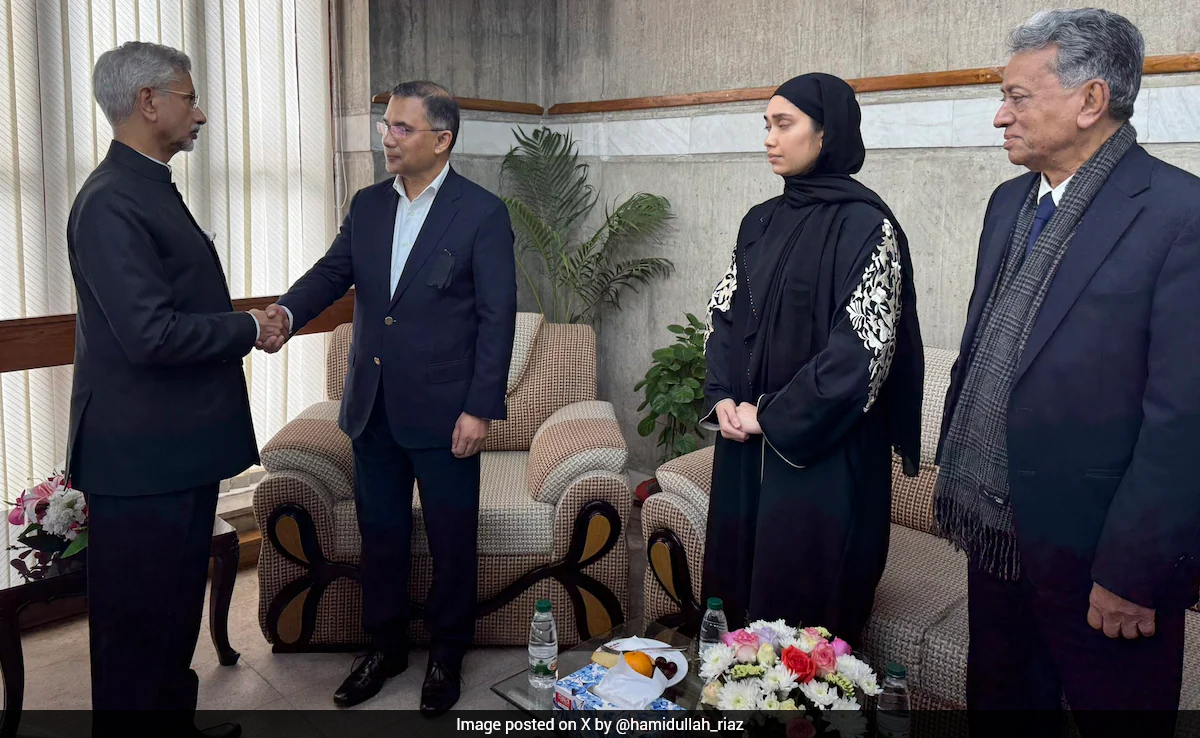
As External Affairs Minister (EAM) S Jaishankar wrapped up his flying Dhaka visit, Bangladesh’s High Commissioner to India, Riaz Hamidullah, on Wednesday underscored the scope for deepening Bangladesh-India relations, guided by shared interests, pragmatism and mutual interdependence.
His remarks came after EAM Jaishankar concluded a four-hour long visit to Dhaka, during which the future trajectory of ties was discussed in a brief meeting between the EAM and Bangladesh Nationalist Party (BNP) Acting Chairperson Tarique Rahman.
Continue readingSOURCE: UNI

Exercise DESERT CYCLONE–II, the second edition of the India–UAE Joint Military Exercise, concluded with a closing ceremony at Al-Hamra Training City in Abu Dhabi on December 30, marking the successful completion of intensive joint training between the Indian Army and the UAE Land Forces.
Held from December 18 to 30, the exercise focused on enhancing interoperability and operational synergy in urban warfare and sub-conventional operations under a United Nations mandate.
Continue readingSOURCE: PTI
)
A Naxalite carrying a reward of Rs 50,000 on his head was killed in an encounter with security personnel in Bihar’s Begusarai district on Wednesday, police said. The deceased has been identified as Dayanand Malakar, secretary of the north-Bihar Central Zonal Committee of the outlawed CPI-Maoist. Two of his associates were arrested, they said.
According to a statement issued by the Special Task Force (STF) of Bihar Police, “Malakar alias Chotu, a Naxal who was wanted by the police in more than 14 criminal cases, died following an encounter with a joint team of STF and district police in the Teghra area of Begusarai on Wednesday evening.” “Acting on a tip-off, security personnel reached the spot where Malakar was hiding along with his associates. After noticing the police personnel, Malakar tried to escape and fired at police. Security personnel retaliated in self-defence. The Naxal was injured in the encounter and two of his accomplices were arrested,” the statement said.
Continue readingSOURCE: PTI
Sadanand Vasant Date, a soft-spoken yet tough taskmaster and a decorated officer of the 26/11 terror attacks, was on Wednesday appointed as the new DGP of the Maharashtra Police. A 1990 batch IPS officer, the 59-year-old Date will succeed Rashmi Shukla, who retires on January 3. He will have a fixed tenure of two years as the head of the over two lakh strong Maharashtra Police force.
Date’s appointment follows his recent premature repatriation from central deputation where he was heading the National Investigation Agency (NIA).
Continue readingSOURCE: PTI
A man has been sentenced to life imprisonment for raising a module of Pakistan-based terror outfit in Assam to carry out terrorist activities, the National Investigation Agency said on Wednesday.
Md Kamruj Zaman alias Kamaruddin was awarded three separate punishments under provisions of an anti-terror law, with the maximum of life imprisonment, by an NIA special court in Guwahati, Assam, it said, adding, the sentences will run concurrently.
Continue reading