


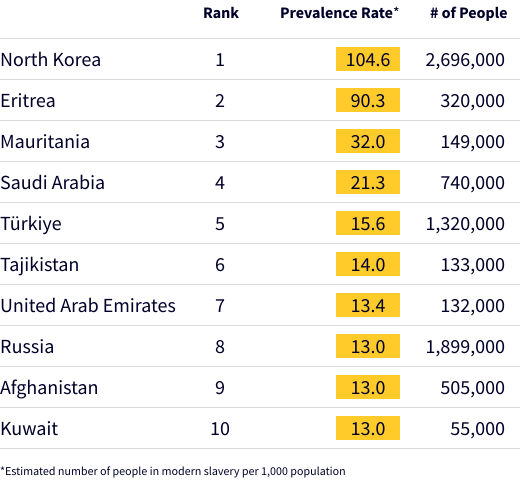
![The Countries With The Most People Living In Slavery [Infographic]](https://blogs-images.forbes.com/niallmccarthy/files/2016/05/20160531_Slavery.jpg)


Penny Lane is in my ears and in my eyes There beneath the blue suburban skies… Paul McCartney (1967)
In America you’ll get food to eat Won’t have to run through the jungle And scuff up your feet You’ll just sing about Jesus and drink wine all day It’s great to be an American Ain’t no lions or tigers ain’t no mamba snake Just the sweet watermelon and the buckwheat cake Everybody is as happy as a man can be Climb aboard little wog sail away with me. Randy Newman
I wrote about slave trade from the view of the recruiter from the slave trade. He is talking, you know, come to America and then talks about using that and I didn’t see another way to do it. I mean, you could say the slave trade is bad, horrendous or a great crime of the nation, but I chose to do differently. Randy Newman
I had this idea of a slave ship and a sea shanty – this guy standing in a clearing, singing to a crowd of natives. These people in my songs don’t know they’re bad. They think they’re fine. I didn’t just want to say, ‘Slavery is awful.’ It’s too easy. I wasn’t doing Roots. Randy Newman
Leur seule défense, c’est que pendant qu’ils agissent ici contre la Lumière et la Conscience, ils n’osent pas venir à cette Table sainte de sorte que tant que je resterai dans ces terres éloignées, cette partie de mes devoirs ne sera jamais exercée en public. Philip Quaque (premier pasteur anglican noir, 28 septembre 1766)
Aujourd’hui on repère les boucs émissaires dans l’Angleterre victorienne et on ne les repère plus dans les sociétés archaïques. C’est défendu. René Girard
Nous sommes entrés dans un mouvement qui est de l’ordre du religieux. Entrés dans la mécanique du sacrilège : la victime, dans nos sociétés, est entourée de l’aura du sacré. Du coup, l’écriture de l’histoire, la recherche universitaire, se retrouvent soumises à l’appréciation du législateur et du juge comme, autrefois, à celle de la Sorbonne ecclésiastique. Françoise Chandernagor
D’abord, il m’est un peu difficile de prendre ça au sérieux quand personne ne réclamait de réparations à l’époque où cela aurait pu avoir un sens – à l’époque où il y avait encore des personnes vivantes qui avaient été esclaves, et des personnes vivantes qui avaient été propriétaires d’esclaves. Maintenant, nous parlons de transférer de l’argent de personnes qui n’ont jamais été propriétaires d’esclaves à des personnes qui n’ont jamais été esclaves. Et puis il y a toute la question : Qui doit quoi à qui ? L’esclavage a été courant dans le monde entier pendant des milliers d’années. Ce n’est qu’à la fin du XVIIIe siècle que les gens ont commencé à penser que l’esclavage était mal, et le premier mouvement abolitionniste est apparu dans la civilisation occidentale. Les États-Unis n’étaient pas le seul pays à avoir l’esclavage, mais c’est le seul pays où l’on parle de réparations. Le nombre de Blancs, par exemple, qui ont été réduits en esclavage en Afrique du Nord par les pirates barbaresques a dépassé le nombre d’Africains réduits en esclavage aux États-Unis et dans les colonies américaines avant cela, réunis. Des esclaves blancs étaient encore achetés et vendus dans l’Empire ottoman des décennies après la Proclamation d’émancipation qui a libéré les Noirs aux États-Unis. Donc, si vous allez avoir des réparations, vous allez avoir des réparations qui iront dans tous les sens à travers le monde pour toujours, parce que virtually tous les groupes ont été réduits en esclavage à un moment de l’histoire. (…) La plupart des Américains aujourd’hui n’ont aucun lien avec l’esclavage – leurs ancêtres sont arrivés après la guerre de Sécession. Et même parmi les Américains noirs, il y en a beaucoup dont les ancêtres n’étaient pas esclaves aux États-Unis. Thomas Sowell
Vous pouvez imaginer quelqu’un dont les parents ou grands-parents sont arrivés ici dans les années 1880, après la guerre de Sécession, qu’on lui demande de payer des réparations (…) Même dans le Sud d’avant la guerre de Sécession, la plupart des Blancs n’avaient pas d’esclaves. Le coût d’un esclave mâle adulte était supérieur à ce que gagnait une personne blanche moyenne en une année entière, donc ils ne vivaient pas tous à Tara avec ça. Il y avait des plantations et tout le reste. C’est insensé. (…) L’esclavage a existé dans le monde entier pendant des milliers d’années, chez toutes sortes de peuples, aussi loin que remonte l’histoire de l’espèce humaine. C’est l’un des nombreux maux que la gauche essaie de localiser alors qu’en fait c’est un mal universel. (…) Autant l’esclavage est répudié dans le monde entier aujourd’hui, avant le XVIIIe siècle, je ne connais aucun effort sérieux pour abolir l’institution nulle part – nulle part – nulle part. Ni en Afrique, ni en Arabie, ni en Asie. Ce qu’a écrit Adam Smith en 1776 : le seul endroit au monde où l’esclavage avait été complètement aboli était l’Europe occidentale. Et cela aussi tard que l’année où ce pays a été fondé. Oui, et donc l’idée que c’est quelque chose que les États-Unis avaient et que personne d’autre n’avait – ou tous les autres pays qui ne l’avaient pas… On estime qu’il y a plus d’esclaves en Inde que dans tout l’hémisphère occidental, et cela avant et après que Colomb n’y soit arrivé. (…) La dernière nation occidentale à mettre fin à l’esclavage, le Brésil, l’a fait en 1888 et la première dictature totalitaire est apparue en Russie en 1917. Il y a à peine une génération entre la suppression d’une forme de soumission monumentale et brutale des êtres humains et la création d’une autre. Ces dictatures déshumanisantes étaient souvent fondées sur une rhétorique émouvante et des visions élevées qui résonnaient auprès de nombreux intellectuels de premier plan dans les pays du monde entier. Il pouvait difficilement y avoir un exemple plus clair du besoin de l’avertissement historique selon lequel la vigilance éternelle est le prix de la liberté. Thomas Sowell
L’esclavage a été une institution universelle pendant des milliers d’années, aussi loin que l’on puisse remonter dans l’histoire humaine. Et ce que nous examinons, c’est si l’esclavage est quelque chose qui est arrivé à une race de personnes dans un pays, alors qu’en fait il s’est répandu dans le monde entier. En 1776 – l’année où Adam Smith a publié La Richesse des nations, ainsi que l’année où les États-Unis ont commencé – il a dit que l’Europe occidentale est le seul endroit au monde où il n’y a pas d’esclavage. Et même les Européens occidentaux avaient un vaste nombre d’esclaves dans l’hémisphère occidental, oui, mais pas en Europe occidentale elle-même. Et donc si vous allez avoir des réparations pour l’esclavage, cela va être le plus grand transfert de richesse dans un sens et dans l’autre, et en entrecroisement, comme on dit dans les chemins de fer, parce que le nombre de Blancs, par exemple, qui ont été réduits en esclavage en Afrique du Nord par les pirates barbaresques a dépassé le nombre d’Africains réduits en esclavage aux États-Unis et dans les colonies américaines avant cela, réunis. Mais personne ne va en Afrique du Nord pour demander des réparations parce que personne ne sera assez fou pour leur en donner. Ici, nous avons des intellectuels qui peuvent imaginer une histoire différente du reste du monde, même si elle est si similaire au reste du monde. Thomas Sowell
Malgré le titre général, en effet, dès l’article 1, seules la traite transatlantique et la traite qui, dans l’océan Indien, amena des Africains à l’île Maurice et à la Réunion sont considérées comme « crime contre l’humanité ». Ni la traite et l’esclavage arabes, ni la traite interafricaine, pourtant très importants et plus étalés dans le temps puisque certains ont duré jusque dans les années 1980 (au Mali et en Mauritanie par exemple), ne sont concernés. Le crime contre l’humanité qu’est l’esclavage est réduit, par la loi Taubira, à l’esclavage imposé par les Européens et à la traite transatlantique. (…) Faute d’avoir le droit de voter, comme les Parlements étrangers, des « résolutions », des voeux, bref des bonnes paroles, le Parlement français, lorsqu’il veut consoler ou faire plaisir, ne peut le faire que par la loi. (…) On a l’impression que la France se pose en gardienne de la mémoire universelle et qu’elle se repent, même à la place d’autrui, de tous les péchés du passé. Je ne sais si c’est la marque d’un orgueil excessif ou d’une excessive humilité mais, en tout cas, c’est excessif ! […] Ces lois, déjà votées ou proposées au Parlement, sont dangereuses parce qu’elles violent le droit et, parfois, l’histoire. La plupart d’entre elles, déjà, violent délibérément la Constitution, en particulier ses articles 34 et 37. (…) les parlementaires savent qu’ils violent la Constitution mais ils n’en ont cure. Pourquoi ? Parce que l’organe chargé de veiller au respect de la Constitution par le Parlement, c’est le Conseil constitutionnel. Or, qui peut le saisir ? Ni vous, ni moi : aucun citoyen, ni groupe de citoyens, aucun juge même, ne peut saisir le Conseil constitutionnel, et lui-même ne peut pas s’autosaisir. Il ne peut être saisi que par le président de la République, le Premier ministre, les présidents des Assemblées ou 60 députés. (…) La liberté d’expression, c’est fragile, récent, et ce n’est pas total : il est nécessaire de pouvoir punir, le cas échéant, la diffamation et les injures raciales, les incitations à la haine, l’atteinte à la mémoire des morts, etc. Tout cela, dans la loi sur la presse de 1881 modifiée, était poursuivi et puni bien avant les lois mémorielles. Françoise Chandernagor
Les « traites d’exportation » des Noirs hors d’Afrique remontent au VIIe siècle de notre ère, avec la constitution d’un vaste empire musulman qui est esclavagiste, comme la plupart des sociétés de l’époque. Comme on ne peut réduire un musulman en servitude, on répond par l’importation d’esclaves venant d’Asie, d’Europe centrale et d’Afrique subsaharienne. Olivier Pétré-Grenouilleau
A la différence de l’islam, le christianisme n’a pas entériné l’esclavage. Mais, comme il ne comportait aucune règle d’organisation sociale, il ne l’a pas non plus interdit. Pourtant, l’idée d’une égalité de tous les hommes en Dieu dont était porteur le christianisme a joué contre l’esclavage, qui disparaît de France avant l’an mil. Cependant, il ressurgit au XVIIe siècle aux Antilles françaises, bien que la législation royale y prescrive l’emploi d’une main-d’oeuvre libre venue de France. L’importation des premiers esclaves noirs, achetés à des Hollandais, se fait illégalement. Jean-Louis Harouel
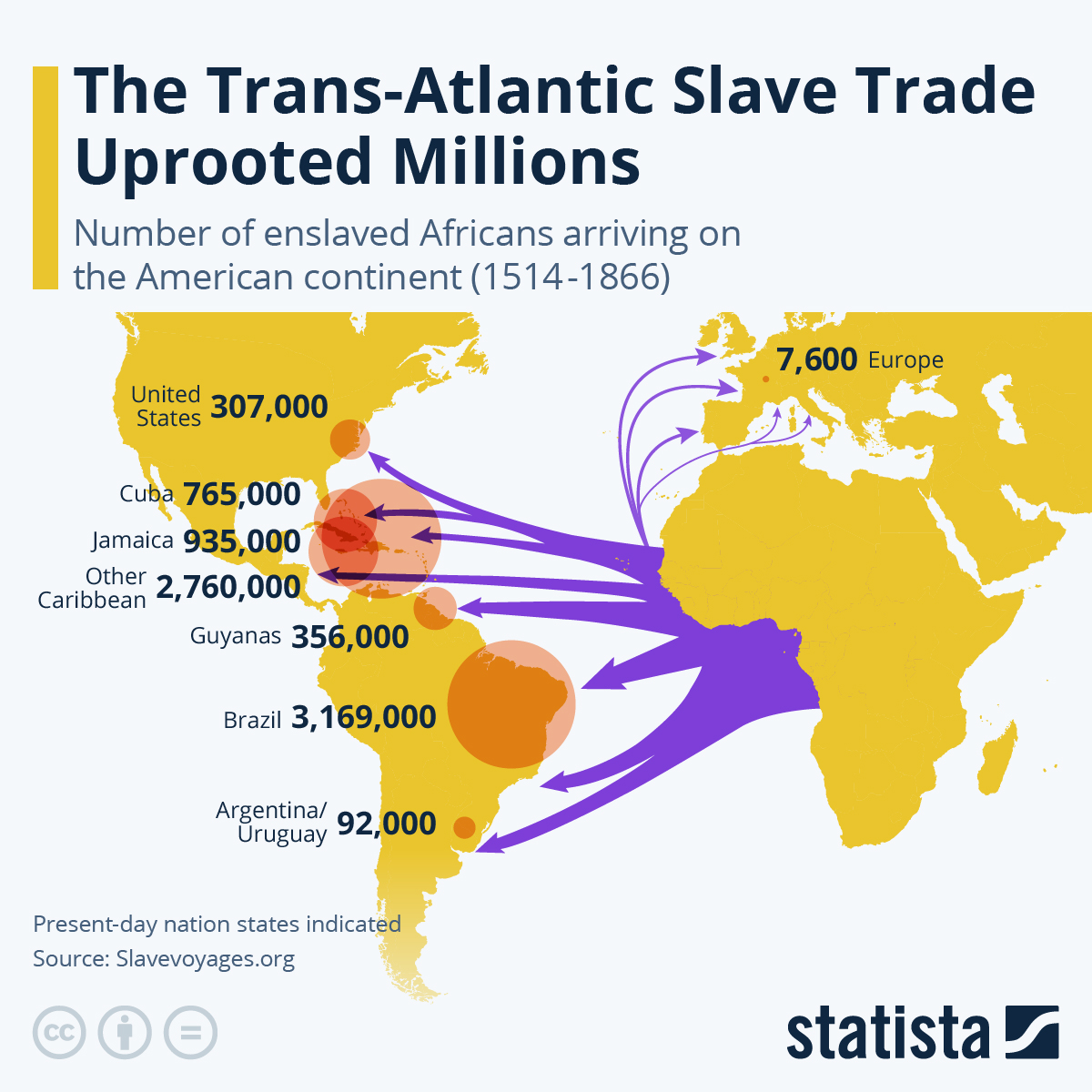
En fait, il y a eu beaucoup de chiffres fantaisistes qui ont été avancés ici et là, mais en faisant une synthèse des travaux existants, il faut dire qu’on se situe dans une fourchette entre 9, 6 millions et 11 millions de déportés. Ce qu’on sait en revanche, c’est que pour un déporté, il y a eu trois morts. Ce qu’on appelle les dégâts collatéraux, des morts par des guerres d’approvisionnement, incendies de villages, des greniers et les épidémies qui ont suivi. Ce qu’il faut aussi dire, et qui est très important pour ces traites, c’est que 70 millions d’individus, qui sont des descendants ou des métis africains, peuplent aujourd’hui le Nouveau monde, des Etats-Unis au Brésil en passant par les îles de la Caraïbe. Autrement dit, certains qui avancent l’idée qu’il s’agissait de génocide, c’est totalement faux. La volonté de détruire un peuple n’y existait pas. Un esclave, même dans des conditions extrêmement terribles, avait une valeur vénale pour son maître, contrairement à l’autre traite. (…) Elie Wiesel disait: “Qui ignore son passé s’expose à ce qu’il revienne”, d’où la nécessité donc du travail de mémoire. (…) Si les pouvoirs publics, si la communauté internationale s’intéressent à la question (…) tout ce qu’on appelle l’ esclavage moderne. Par exemple, en Afrique du nord, la route trans-saharienne est toujours opérationnelle, mais la communauté internationale regarde ailleurs. C’est bien de commémorer, mais il faut agir aussi sur le terrain. (…) Vous avez aujourd’hui dans les pays du Golfe, il y a un esclavage moderne, qui touche les cinghalais, qui touche les Indiens. Et les bonnes, les servantes africaines se voient reconfisquer leurs passeports et subissent des mauvais traitements. C’est une forme d’esclavage. (…) Et l’actualité nous apprend qu’on organise en ce moment des marchés d’esclaves noirs en Libye. C’est très grave. (…) Quand on a découvert les horreurs de l’univers concentrationnaire à la fin du second conflit mondial, le monde avait pris la mesure exacte de la cruauté de l’homme, et surtout de la fragilité de sa condition. On avait dit: on n’aimerait plus revoir ça. Eh bien, une chose qui paraîtra tellement absurde aux historiens futurs est qu’on assiste à la même chose. Ca continue. (….) On a raison de dénoncer, et commémorer mais d’aussi agir par derrière. (…) Il y a la misère, il y a d’autres réseaux qui sont derrière, des réseaux économiques. Vous savez quand quelqu’un est bien, il reste chez lui. Ces migrants, s’ils avaient eu ce qu’ils désiraient sur place, ils ne se seraient jamais risqués à aller mourir dans le désert ou dans la mer. Il faut donc traiter les causes. (…) En fait, il n’y a pas de degrés dans l’horreur, ni de monopole de la cruauté, mais on peut dire sans risque de se tromper que effectivement la traite négrière arabo-musulmane a été beaucoup plus dévastatrice que la traite transatlantique. (…) La France a voté une loi reconnaissant l’esclavage de la traite transatlantique comme crime contre l’humanité, alors que de l’autre côté, c’est-à-dire dans le monde arabo-musulman, le débat n’est toujours pas ouvert. Alors qu’en réalité, les chiffres ont été beaucoup plus énormes. On parle de 17 millions. Rien que pour le Sahara, on évalue à 9 millions le nombre de captifs transportés dans des conditions absolument inhumaines, dont 2 millions ont péri ou sont restés en bordure du Sahara. (…) Pour ce qui est de ce qu’on appelle la traite orientale, c’est-à-dire celle qui s’est déroulée dans les régions proches de la Mer rouge et de l’Océan indien, on évalue à environ à 8 millions de victimes. Donc, dans l’estimation haute, on arrive à 17 millions de castrés et de déportés ou qui sont morts au cours des transports. C’est énorme par rapport à la traite atlantique. (…) Cette traite aurait débuté au VIIe siècle, au cours de la première expansion islamique. Les Arabes, qui étaient sur le sentier de la guerre, avaient décidé d’envahir l’Egypte. Après avoir occupé ce pays, ils avaient décidé aussi d’envahir la Libye, la Libye voisine. Et c’est à la suite d’une campagne militaire particulièrement sanglante que le général et émir Abd Allah Bensaïd avait imposé en 652 déjà ce qu’on appelle le bakht. C’est-à-dire, c’est un accord par lequel le monarque africain vaincu s’engageait à livrer annuellement un lot de 360 captifs qui étaient destinés à être asservis dans le monde arabo-musulman. Et aussi une précision, qui est très importante. J’utilise souvent dans cette étude, comme vous l’avez vu, le vocable d’arabo-musulman. Ce n’est pas pour présenter les pays musulmans comme une entité historiquement homogène. (…) Ce n’est pas une approche essentialiste de l’histoire, qui voudrait réduire des peuples à leur religion, à leur culture. Je le fais parce que les négriers qui ont trempé dans cette tragédie n’étaient pas seulement des Arabes. Ils étaient aussi des Maghrébins, des Maghrébins qui sont généralement berbères. Ils étaient turcs, les Turcs ne sont pas des arabes. Ils étaient iraniens . (…) [africains] oui, mais ça, c’est la traite interne. Nous en reparlons si vous voulez. Alors ces négriers là étaient aussi iraniens, donc des Perses. Et on a trouvé même des Asiatiques puisque on a trouvé que le roi du Bengale possédait 8000 esclaves africains au milieu du 15e siècle. Et comme le seul point commun que je trouve entre tous ces peuples négriers était la religion, voilà pourquoi j’emploie le vocable parents musulmans. (…) L’islam, toutes les religions monothéistes, ont hérité de l’esclavage. (…) après la controverse de Valladolid en Espagne (…) pour les Indiens d’Amérique, Monseigneur Salvatore Roncieri, représentant du pape, et qui avait arbitré cette controverse avait autorisé la mise en esclavage des Noirs. C’est beaucoup plus tard qu’ils ont dénoncé. (…) Ces razzias au tout début, c’était des négriers étrangers qui les faisaient, des Arabes. Par la suite, il y a eu la complicité de certains monarques locaux. Car il ne faut pas le cacher non plus, s’il y a eu des acheteurs, c’est qu’il y a eu des vendeurs quelque part. Lorsque les négriers arabo-musulmans ou occidentaux ne faisaient pas le travail, il y avait tout un ramassis de renégats sur place qui allaient raser les villages, incendier des villages et pour capturer des captifs, contre des bricoles en fait venant de Nantes ou d’ailleurs. (…) [Ils prenaient] surtout les enfants au début puisque pour les Arabo-musulmans, la castration était légèrement moins risquée pour les enfants. Mais d’une manière générale, cette opération emportait entre 70 et 80% des cas. (….) [c’est-à-dire des enfants entre 8] jusqu’à 12 ans (…) jusqu’à 13 and au max. (…) C’est la différence entre la traite transatlantique et la traite négrière arabo-musulmane. Elle nous apparaît aujourd’hui, avec le recul, comme une sorte d’extinction ethnique programmée, mais par castration massive. C’était ça, le sort qui était réservé. (…) C’est cela qui est étonnant, c’est-à-dire que des voix, des voix fortes, puissantes se sont élevées dans l’Europe des Lumières pour dénoncer cette barbarie. Alors que dans le monde arabo-musulman, les voix qu’on entendait étaient comme celle de Ibn Khaldoun. Cet homme avançait l’idée selon laquelle les seuls peuples adaptés à l’esclavage sont les nègres en raison d’un degré inférieur d’humanité. Et (…) dans l’inconscient collectif des arabo-musulmans aujourd’hui, pour dire noir, ils disent “abd”(…) “abd” veut dire esclave. (…) Forcément, puisque le débat n’a jamais eu lieu. Au cours de la traite négrière arabo-musulmane, à l’inverse de l’Europe des Lumières, où je disais tout à l’heure que des voix fortes se sont élevées, dans le monde arabo-musulman, les intellectuels, dans leur quasi-totalité, étaient marginalisés sur la question. Il avaient abdiqué face aux obscurantistes et autres doctrinaires de la foi. Et dans un tel contexte, les peuples arabo-musulmans finissaient par accepter le sort réservé au Noirs. (…) Le voile, en fait, qui entoure cette triste page de notre histoire commune est due simplement à une sorte de solidarité religieuse. Vous avez entre 400 et 500 millions de musulmans en Afrique aujourd’hui. On a l’impression d’assister à une sorte de syndrome de Stockholm à l’africaine où les intellectuels musulmans refusent d’ouvrir le débat. (…) Il y a des tares dans la colonisation mais l’approche scientifique, c’est de traiter l’histoire exactement comme une science qui ne rapporte que des faits avérés, que des faits avérés. Vouloir réduire la colonisation africaine à une série de crimes contre l’humanité je pense que ce ne serait pas honnête puisque la démarche historique ne s’en trouverait pas éclairée. (…) la colonisation a mis fin à l’esclavage arabe-musulman. L’esclavage transatlantique, il y a eu l’abolition, par la France, en 1848. Ca, ça a été officiel, qui a mis fin à la traite et à l’esclavage. (…) Et en Tunisie, aussi particulièrement, la France a mis fin à l’esclavage arabo-musulman. Non, en Afrique centrale, ce sont les troupes de Léopold II qui l’ont fait. Ce qui ne veut pas dire que la colonisation a quelque chose de positif. Pas du tout. Il n’est pas question de parler comme ça. (…) [Les Anglais étaient les premiers] à abolir en 1803 (….) [Mais] ils avaient peur qu’on leur coupe la route des Indes, en fait. (…) ce qui fait que d’un côté, ils faisaient semblant de vouloir mettre un terme à l’ esclavage et de l’autre, ils fermaient les yeux sur le trafic de tous les émirats du coin (…) les Chinois ont un jeu qui s’appelle le jeu de go: il consiste à occuper le maximum de territoires possible. C’est à ce jeu là qu’ils jouent contre les Occidentaux. Et leur cheval de Troie, c’est qu’ils ont été colonisés, qu’ils ont été victimes comme les Africains, au même titre que les Afghans, victimes du colonialisme, etc. (…) [Aujourd’hui, Il y a] une prédation (…) leur problème, c’est d’éjecter les Occidentaux. (…) C’est la nature de cette prédation chinoise, ça veut dire qu’on ne met pas la dimension humaine au cours de l’opération, on ferme les yeux sur les dictatures, les droits de l’homme, c’est comme ceux des Chinois, ça n’existe pas. (…) J’avais dit qu’il n’y avait pas de degré dans l’horreur ni de monopole de la cruauté. Si on le dénonce la traite négrière pratiquée par les Occidentaux, il faut aussi dénoncer la traite négrière arabo-musulmane qui a été beaucoup plus longue puisqu’elle a duré plus de 13 siècles sans interruption et a déporté beaucoup plus de monde. (…) Alors, (…) parler d’une et oublier l’autre, faire le black out sur l’autre, je trouve que ce n’est pas une démarche scientifique. (…) Et surtout réécrire notre histoire. Jusqu’ici, une histoire de l’Afrique écrite par des Arabo-musulmans ou écrite par des Occidentaux, on se demande jusqu’à quand ça devait durer. Et je me suis dit qu’il était temps (…) C’est un proverbe qui dit: “tant que les lions n’auront pas leurs historiens, les histoires de chasse tourneront toujours à l’avantage des chasseurs.” Eh bien maintenant, les lions africains ont leurs historiens, donc les récits de chasse risque de prendre une autre tournure. Voilà en fait, la philosophie de l’affaire. Tidiane N’Diaye (2017)
Si Dieudonné plaçait l’Histoire au-dessus de son fantasme mémoriel, comment l’humoriste franco-camerounais, né dans la banlieue parisienne, pourrait-il se revendiquer « descendant d’esclave »? Géraldine Faes et Stephen Smith
Concernant le passé, les historiens s’inquiètent pour la vérité historique et pour leur liberté de recherche du fait de l’intrusion du législateur et du juge dans leur domaine. La loi Taubira procède en effet d’une lecture partielle en n’évoquant que «la traite négrière transatlantique ainsi que la traite dans l’océan Indien d’une part, et l’esclavage d’autre part, perpétrés à partir du XVe siècle, aux Amériques et aux Caraïbes, dans l’océan Indien et en Europe». D’une tragédie qui appartient à la longue histoire de l’humanité elle ne retient, sur une séquence courte, que les faits imputables aux seuls Blancs européens, laissant de côté la majorité des victimes de l’esclavage. La terrible traite transatlantique, du XVe au XIXe siècle, ne constitue malheureusement qu’une partie de l’histoire de l’esclavage, qui comprend également la traite arabo-musulmane, laquelle a duré du VIIe au XXe siècle, et la traite intra-africaine, toutes deux plus meurtrières. Le risque de voir cette histoire partielle, donc partiale, devenir histoire officielle a mobilisé les historiens quand l’un des meilleurs spécialistes actuels des traites négrières, Olivier Pétré-Grenouilleau, a été attaqué en justice au nom de la loi Taubira. Parce qu’il rappelait que la quasi-totalité des esclaves africains avaient été razziés non par des Blancs, mais par des négriers africains et que le commerce des esclaves était une routine sur le continent noir bien avant l’arrivée des négriers européens. Il lui était aussi reproché de réfuter l’application du terme de «génocide» aux traites négrières, contredisant ainsi le parallèle implicite entre l’esclavage et l’extermination des juifs qu’évoque l’exposé des motifs de la loi Taubira. (…) Les enjeux du présent expliquent ces relectures du passé. Christiane Taubira déclare sans ambages qu’il ne faut pas trop évoquer la traite négrière arabo-musulmane pour que les «jeunes Arabes» «ne portent pas sur leur dos tout le poids de l’héritage des méfaits des Arabes». Ces logiques communautaires influent aussi sur le projet mémoriel La Route de l’esclave, décidé en 1993 par l’Unesco: Roger Botte, chercheur au Centre d’études africaines du CNRS, constate qu’il privilégie également la traite transatlantique du fait de «la pression des représentants du monde arabe et des Etats africains». Les démarches identitaires d’associations revendiquant le statut de victimes de l’Histoire transforment les débats. Dieudonné et les Indigènes de la République ont ainsi avancé l’expression très problématique de «descendant d’esclave». Empruntée aux Noirs américains – chez qui elle correspond à une réalité historique – cette notion ne peut, avec des nuances, s’appliquer en France qu’aux populations originaires des départements d’outre-mer, mais pas à celles de l’immigration africaine, n’ayant aucun rapport généalogique avec l’esclavage, sinon une éventuelle filiation avec des marchands d’esclaves. (…) Que signifie en effet revendiquer une identité victimaire et invoquer une «souffrance» avec cinq ou six générations de décalage? Est-elle assimilable aux souffrances et traumatismes transmis ou vécus directement, d’une génération à l’autre ou entre contemporains, qu’ont connus juifs, Arméniens, Bosniaques, Rwandais ou victimes du communisme? Et à quoi correspond l’application, à des siècles de distance, de la notion de «crime contre l’humanité», définie en 1945? Là réside le paradoxe le plus gênant, quand l’obsession pour un passé réinventé sert de substitut aux urgences du présent: le concept de crime contre l’humanité est une catégorie pénale dont l’objet est la poursuite de criminels; elle a ainsi permis de pourchasser au bout du monde les derniers criminels nazis. Or les criminels esclavagistes n’appartiennent malheureusement pas tous au passé lointain. Si l’histoire des traites européennes, qui se caractérise par sa relative brièveté et par leur abolition, est terminée depuis plus d’un siècle et demi, l’esclavage s’est prolongé dans de nombreux pays (dont l’Arabie saoudite) jusqu’au milieu du XXe siècle – c’est pour le dénoncer qu’Hergé a publié Coke en stock, en 1958. Et il persiste de nos jours dans certains pays, dont le Soudan, le Niger et la Mauritanie, qui l’a pourtant aboli officiellement en 1960, et de nouveau en 1980. Selon le Haut-Commissariat des Nations unies aux droits de l’homme, il y aurait toujours plusieurs millions d’adultes en esclavage dans le monde et plusieurs associations humanitaires ont aujourd’hui pour objet le rachat d’esclaves: l’une d’elles a récemment racheté, au Soudan, un millier d’esclaves à raison de 50 dollars chacun dans la province de Bar el-Ghazal et, au Niger, les membres de Timidria continuent de lutter contre l’esclavage, malgré son abolition, en 1999 (…). Ces militants anonymes ont le tort de vouloir libérer les victimes oubliées d’une histoire qui écrase encore plutôt que d’instrumentaliser une histoire révolue. Eric Conan
Le traité d’Alcáçovas de 1479 divise l’océan Atlantique et d’autres parties du globe en deux zones d’influence, espagnole et portugaise. Les Espagnols obtiennent la partie ouest, comprenant l’Amérique du Sud et les Antilles, laissnt aux Portugais la partie est, comprenant la côte ouest de l’Afrique, ainsi que l’océan Indien au-delà. Les Espagnols comptaient sur les travailleurs africains asservis pour soutenir leur projet colonial américain, mais ils ne disposaient plus d’aucun point d’appui commercial ou territorial en Afrique de l’Ouest, principale source de main-d’œuvre esclave. Le contrat était généralement obtenu par des banques marchandes étrangères qui coopéraient avec des négociants locaux ou étrangers spécialisés dans le transport maritime. Différentes organisations et personnes soumissionnaient pour obtenir le droit de détenir l’asiento. À l’origine, l’importation d’Africains réduits en esclavage visait à soulager les habitants indigènes des colonies des besoins en main-d’œuvre des colons espagnols. L’influence de Dominicains tels que Bartolomé de las Casas ayant mis un terme à l’esclavage des Amérindiens, l’Espagne accorde des asientos individuels aux marchands portugais pour qu’ils amènent des esclaves africains en Amérique du Sud. Wikipedia
Les Espagnols ne pratiquaient pas la traite des Noirs directement ; ils avaient fait le choix de confier celle-ci à d’autres pays (Portugal, Provinces-Unies, France, Angleterre, Basques, Génois, etc.). L’importance de ce marché explique la concurrence entre les grandes compagnies européennes pour détenir ce privilège aux XVIIe et XVIIIe siècles. Les investissements extrêmement importants que nécessitait le commerce triangulaire, couplés à une mauvaise gestion des grandes compagnies font que l’asiento n’est plus vraiment rentable à partir des années 1720. On assiste ainsi à un assouplissement général des monopoles commerciaux, et à une montée des initiatives privées. La contrebande, de plus en plus importante, met à mal le système. En 1817, l’Espagne adhère à l’abolition de la traite des Noirs, ce qui marque la fin officielle de l’asiento, déjà en désuétude depuis plusieurs années. Wikipedia
Le but de l’esclavage n’était pas la mort des esclaves, ni même de les faire travailler jusquà la mort (bien que beaucoup mourussent) ; l’extermination d’une race n’a jamais été visée. Pourtant, comme le souligne l’écrivain William St Clair, d’une certaine manière, l’analogie avec les camps de la mort nazis fonctionne – dans « les fictions organisées, les hypocrisies et les auto-illusions qui permettaient à des gens autrement raisonnablement décents de tolérer, de participer et de profiter ». Pour la plupart des Européens, l’existence du commerce des esclaves, et l’esclavage lui-même, était à peine connue. En Angleterre, il n’y avait pas d’esclavage, donc aucune raison particulière pour que la plupart des gens affrontent la triste vérité. Les moyens par lesquels les morceaux de sucre arrivaient sur les tables de la société polie étaient soigneusement cachés. (…) Les sentiments de ces beaux messieurs étaient protégés de la réalité par des euphémismes prudents. Il n’y avait pas de marchands d’esclaves ; seulement des « aventuriers » dans le « commerce d’Afrique » ou de « Guinée ». Des gravures du magnifique Château blanc de Cap Coast le faisaient ressembler à un palais européen ; aucune allusion à son rôle réel. Les chaînes utilisées pour enchaîner les captifs ensemble n’étaient que des « colliers ». La « Compagnie des Marchands », qui gérait le commerce britannique des esclaves, avait sur son logo un éléphant et une ruche – symbolisant l’Afrique et l’Amérique – mais rien sur les esclaves. (…) Mais il y avait encore un sentiment persistant que, malgré tous les faux-fuyants, ceux qui étaient impliqués dans le commerce faisaient quelque chose de profondément mauvais. Dans la cour du Château de Cap Coast se trouve la tombe de Philip Quaque, chapelain des officiers et des hommes du château pendant 42 ans dans la seconde moitié du XVIIIe siècle. Pendant tout ce temps, il n’a jamais réussi à amener un seul officier à participer au rite chrétien de la Sainte Cène. Dans une lettre, il réfléchissait que cela n’avait rien à voir avec sa couleur de peau (noire), et plus à voir avec un sentiment de honte : « La seule excuse qu’ils ont, c’est que tant qu’ils sont ici, agissant contre la Lumière et la Conscience, ils n’osent pas venir à cette sainte Table. » Ce sentiment de culpabilité allait s’avérer être le talon d’Achille du commerce des esclaves en Europe. La tâche que les abolitionnistes s’étaient fixés était d’exposer la réalité du commerce à un public ignorant. Ils pensaient que le sens moral des gens ordinaires ferait le reste, et en partie ils avaient raison. Mais allumer l’étincelle de la conscience nécessite des individus courageux – comme Thomas Clarkson, le principal inspirateur de la fondation de la Société pour l’Abolition de l’Esclavage en 1787. Il avait été étudiant à l’Université de Cambridge deux ans plus tôt. Il s’était inscrit au concours d’essai de latin de l’université, fixé par un vice-chancelier qui était aussi un abolitionniste précoce. Le titre était : Est-il légal de faire des esclaves d’autrui contre leur gré ? Après deux mois de recherche, il n’a non seulement gagné le prix mais a consacré le reste de sa longue vie à la cause de l’abolition. (…) Même les Quakers, les premiers abolitionnistes, étaient impressionnés par son zèle. C’était essentiellement l’alliance de Clarkson, un Anglican, et des Quakers, avec leur réseau existant de prédicateurs et de fidèles, qui composait le mouvement abolitionniste ; dans un clin d’œil ironique à leur succès, les esclavagistes appelaient leurs navires le Quaker Enthousiaste et le Quaker Acompli. C’est Clarkson qui a fixé la stratégie de la campagne. Sa première tâche était de recueillir des preuves sur le commerce des esclaves, pas facile quand tout était fait pour dissimuler ces choses au regard du grand public. Il a passé de longues périodes à Liverpool et Bristol, essayant de recueillir des témoignages de capitaines ou de médecins de navires négriers, ou d’esclaves libérés. Très peu acceptaient de lui parler, mais au fil des ans, de petites brèches s’ouvraient dans le mur de silence. Un de ceux qui avait accepté de témoigner était John Newton, un ancien capitaine de négrier devenu prêtre anglican. Ses descriptions du commerce furent déterminantes. Tout aussi important était le rassemblement par Clarkson des preuves physiques du commerce des esclaves pour confirmer les récits oraux et écrits qu’il collectait. À Liverpool, il avait collecté des « colliers », des vis de pouce et un appareil pour forcer l’alimentation des esclaves, qu’il afficherait lors des centaines de conférences publiques qu’il donnait partout en Grande-Bretagne, et en France aussi. Mais le plus grand coup de Clarkson fut d’obtenir la « plaque », ou le schéma, du navire négrier Brookes, appartenant à une famille de Liverpool du même nom, qui opérait entre la Côte d’Or et la Jamaïque. Avec d’autres, il a retravaillé le dit schéma pour montrer le Brookes chargé de 482 esclaves, alignés en rangées et serrés ensemble. Comme toujours, Clarkson et les abolitionnistes étaient le plus précis possible; le navire avait autrefois transporté plus de 600 esclaves dans un confinement encore plus serré, mais ils ne voulaient pas être accusés d’exagération. En 1789, ils publièrent 700 affiches de cette image et cela fit sensation ; personne ne pouvait plus nier les horreurs du « Passage du milieu », pendant lequel de nombreux esclaves se suicidaient ou mouraient de maladie, de faim et de traitements cruels. Ce schéma est devenu l’image durable de la campagne, un peu comme les visages émaciés et hantés des nouveaux détenus libérés du camp de Belsen. Clarkson organisa aussi ce qui était probablement le premier boycott de biens de consommation de l’histoire, pour le sucre produit par des esclaves, pour faire comprendre aux Britanniques ordinaires le terrible prix en cruauté humaine qu’ils payaient pour leurs plaisirs gourmands à leurs tables de thé. À un moment, plus de 300 000 personnes ont rejoint le boycott, également conçu pour frapper les profits des propriétaires de plantations. Et il a inspiré le mouvement parlementaire contre l’esclavage, recrutant comme porte-parole un jeune Tory, William Wilberforce, qui a présenté projets de loi après projets de loi au Parlement pour l’abolition de la traite des esclaves jusqu’à ce que l’un d’entre eux passe en 1807. (…) Pour toute la ferveur de ses opposants, la traite ne se serait pas effondrée sans les révoltes des victimes. La plus importante éclata en 1791 à Saint-Domingue. En deux mois, les esclaves avaient pris le contrôle de l’île, menés par le remarquable Toussaint L’Ouverture. Ses guérilleros ont repoussé les deux plus grandes armées impériales de l’époque, les françaises et les britanniques ; cela a conduit à l’établissement de la république d’Haïti en 1804 et à l’émancipation d’environ 500 000 esclaves. Il était clair que les armées européennes auraient du mal à contenir beaucoup plus de tels soulèvements, ce qui fut confirmé à nouveau sur les îles britanniques de Grenade et de la Barbade. La révolte de Samuel Sharpe à la Jamaïque en 1831 fut réprimée à grand coût ; les Britanniques craignaient que si l’esclavage continuait, ils perdraient omplètement certaines colonies. Ainsi en 1833, l’esclavage fut aboli dans tout leur empire. La Grande-Bretagne ne fut pas la première à interdire la traite sur son territoire ; les Danois l’avaient fait en 1803, les Français temporairement en 1794 et plusieurs États américains du nord l’avaient aussi fait avant 1807. Mais comme la Grande-Bretagne était la grande puissance maritime de l’époque, elle seule pouvait faire respecter l’abolition dans le monde entier, comme sa marine a résolument essayé de le faire pour le reste du XIXe siècle. D’autres nations européennes, notamment les Portugais, ont persisté avec le commerce jusqu’aux années 1860. (…) La plupart des États européens ont essayé de faire face au passé, mais l’héritage de l’esclavage est d’une certaine manière encore plus empoisonné dans des endroits comme le Ghana moderne. Un écran de fumée couvre encore le rôle africain dans ce commerce pernicieux. C’est un fait embarrassant que le trafic n’aurait pas pu exister sans les chefs et commerçants africains. Les Européens s’éloignaient rarement de leurs forts ; les esclaves leur étaient amenés. En effet, quand les Européens sont arrivés, le commerce des esclaves et l’esclavage faisaient déjà partie intégrantes des économies tribales locales. Une des rares historiennes ghanéennes à avoir touché à ces questions, Akosua Adoma Perbi, écrit que « l’esclavage est devenu une partie importante de l’État Asante [le plus puissant de la Côte d’Or] dès sa création. Pendant trois siècles, Asante est devenu l’État le plus grand en commerce d’esclaves, possession et négoce d’esclaves au Ghana. » (…) La plupart des esclaves vendus aux Européens dans les siècles suivants étaient des hommes et des femmes capturés lors de guerres entre tribus comme les Asante et les Acan. Beaucoup des captifs étaient gardés comme esclaves par les vainqueurs, où ils étaient traités relativement bien et pouvaient gagner un certain statut social dans leurs nouvelles familles. Pourtant, la prolifération des guerres entre les tribus visait, comme l’écrit Ms Perbi, « en grande partie à acquérir des esclaves pour la vente aux compagnies européennes et aux marchands européens indépendants ». L’esclavage était devenu si lié au bien-être des chefs locaux que son abolition fut un coup dur. En 1872, longtemps après l’abolition, Zey, le roi des Asante, écrivit à la monarque britannique demandant que le commerce des esclaves soit relancé. Yaw Bedwa de l’Université du Ghana dit qu’il y a eu une « amnésie générale au Ghana sur l’esclavage ». Le rôle des chefs est particulièrement sensible, car ils jouent encore un grand rôle au Ghana. « Nous ne discutons pas de l’esclavage », a déclaré Barima Kwame Nkye XII, un grand chef dans la ville d’Assin Mauso. Il défend l’esclavage domestique du passé comme une institution généralement bienveillante, et insiste sur le fait que les chefs avaient peu à voir avec la traite. (…) M. Bedwa doit faire face à la colère des Afro-Américains qui viennent au Ghana rechercher leurs racines et se retrouvent confrontés au rôle des Africains dans la traite. M. Bedwa leur dit que les Africains qui n’ont pas souffert de l’esclavage furent aussi victimes du colonialisme, de la pauvreté et de la maladie. Mais, comme dans tout système d’exploitation, certains furent encore plus mal traités que les autres. The Economist
La déportation pénale est un procédure pénale consistant à transporter une personne condamnée hors d’un pays vers un bagne. La France a envoyé des condamnés à l’Île du Diable et en Nouvelle-Calédonie. Le Royaume-Uni, des années 1610 jusqu’aux années 1770, a aussi déporté des condamnés vers ses colonies américaines, puis vers l’Australie entre 1788 et 1868. Wikipedia
In the early years of America, one-fifth of the population within the 13 colonies struggled under a brutal system of slavery unlike anything that had existed in the world before. Chattel slavery was not conditional but racial. It was heritable and permanent, not temporary, meaning generations of black people were born into it and passed their enslaved status onto their children. Enslaved people were not recognized as human beings but as property that could be mortgaged, traded, bought, sold, used as collateral, given as a gift and disposed of violently. Nikole Hannah-Jones (The 1619 Project, NYT, 2020)
‘We’re the worst society ever. We’ve done things that no one else has ever done.’ Sometimes, there’s nothing wrong with acknowledging your historical mistakes. (…) Nothing wrong with acknowledging that. But it’s extremely odd to focus only on the negatives of your society and to exaggerate those.Between 10.7 million and 12 million slaves from Africa went to the New World—we got a little under 400,000. The extreme focus on slavery in the United States, why did that happen? One reason is that a lot of black people survived here. Slavery was harsh, but a lot less harsh than clearing the Brazilian jungle. (…) The harm is that pointing out how abusive white people were is not going to get black Americans any more capital. Most of the problems in the modern black community don’t have anything to do with historical ethnic conflict 160 years ago. (…) Crime in the black community – every time I’ve tried to break this down increased – about 800% between, say, 1963 and 1993. Racism didn’t increase between 1960 and the modern era. You’re looking at the impacts of the Great Society, the welfare programs. (…) The Arabs were history’s premier slave traders. The Muslims, many of whom were dark-skinned or even black, took so many blonde slaves out of this region that they gave the world “Slav,”slave, to the global slave population. (…) Sexual slavery was very much a part of slavery. Like if your group was defeated in war, the men would probably just be killed or they’d be sold as farmhands. The women would often be sold as harem girls or prostitutes. (…) The Arabs targeting Africa took out about 17 million people. (…) the British Navy, in a story almost no one now knows, sank 1,600 slave ships. They freed 150,000 people that were enslaved at the time. (…) Where there were no westerners, you’d have a lot of slavery for a long time. And you do. (…) The idea of generational slavery, the idea of slave trading, none of that was unique to America. You don’t need radicalism to critique the worst excess of an existing system. All you need is incrementalism and honesty. Wilfred Reilly (Kentucky state university)
Much of the social history of the Western world, over the past three decades, has been a history of replacing what worked with what sounded good. In area after area—crime, education, housing, race relations—the situation has gotten worse after the bright new theories were put into operation. The amazing thing is that this history of failure and disaster has neither discouraged the social engineers nor discredited them. » « Some things must be done on faith, but the most dangerous kind of faith is that which masquerades as ‘science.’ As the pretense of science has replaced commonsense experience, we have abandoned many old-fashioned practices that worked in favor of high-sounding innovations that have led to disaster. » « The assumption that spending more of the taxpayers’ money will make things better has survived all kinds of evidence that it has made things worse. The black family—which survived slavery, discrimination, poverty, wars, and depressions—began to come apart as the federal government moved in with its well-financed programs to ‘help.’ Worst of all, guilt has so furtively stolen into many hearts and minds that people feel apologetic about being civilized, educated, and productive when others are barbaric, uneducated, and parasitic. When civilization apologizes to barbarism, something has gone very wrong at a very fundamental level. Thomas Sowell (Is reality optional ?, 1993)
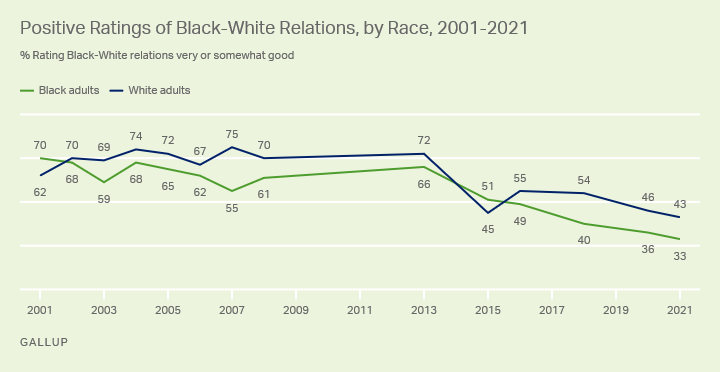
Schools dwelling on America’s evils, hasn’t helped Americans get over them. Gallup polls show after schools started focusing on oppression, race relations got worse. John Stossel
L’engagisme est à l’origine un concept juridique de l’Ancien Régime français et une réalité sociale, dans les colonies françaises et britanniques, notamment en Amérique du Nord et dans les Antilles, et apparenté au servage. Dans le cas de la France il fut pratiqué dans le peuplement européen de la Nouvelle-France et des Antilles. À la suite de son abolition pendant la Révolution française, c’est devenu une forme de salariat de travailleurs natifs des colonies (anciens esclaves) ou immigrés provenant principalement d’Afrique, d’Inde, ou du bassin asiatique pour les grands propriétaires terriens des Antilles françaises et des Mascareignes qui ont été confrontés à des problèmes de main-d’œuvre à la suite de l’abolition de l’esclavage en France en 1848. L’indenture est un système équivalent dans le monde anglo-saxon. Afin de fournir une main-d’œuvre qualifiée et à bon marché aux seigneuries de la Nouvelle-France, le Royaume de France fit appel à des engagés. On les appelait alors les « trente-six mois ». Cette méthode de recrutement fut très populaire au XVIIe siècle, puis redevint à la mode peu après le traité d’Utrecht. Le 20 mars 1714, une ordonnance royale ordonna aux capitaines de navires marchands de transporter aux Amériques « depuis trois engagés jusqu’à six suivant le port de leurs vaisseaux ». Une surveillance se faisait tant au départ de la France qu’à l’arrivée à Québec. Une fois la période de trente-six mois écoulée, les engagés étaient libres d’acheter des terres s’ils disposaient d’argent, de devenir censitaires, ou bien de retourner en France. Le nombre d’engagés vers la Nouvelle-France fut toutefois peu élevé, la majorité d’entre eux choisissant les Antilles comme destination. Wikipedia
From the early 1600s until the American Revolution of 1776, the British colonies in North America received transported British criminals. In the 17th century transportation was carried out at the expense of the convicts or the shipowners. The Transportation Act 1717 allowed courts to sentence convicts to seven years’ transportation to America. In 1720, an extension authorised payments by the Crown to merchants contracted to take the convicts to America. The Transportation Act made returning from transportation a capital offence. The number of convicts transported to North America is not verified – John Dunmore Lang has estimated 50,000, and Thomas Keneally has proposed 120,000. Maryland received a larger felon quota than any other province. Many prisoners were taken in battle from Ireland or Scotland and sold into indentured servitude, usually for a number of years. The American Revolution brought transportation to an end. The remaining British colonies in what is now Canada were close to the new United States of America, thus prisoners sent there might have become hostile to British authorities. British gaols became overcrowded, and dilapidated ships moored in various ports were pressed into service as floating gaols known as « hulks ». An experiment in transporting convicted prisoners to West Africa proved unsuccessful. As a result, the British Government decided to look elsewhere. In 1787, the « First Fleet » of convict ships departed from England to establish the first British settlement in Australia, as a penal colony. The fleet arrived at Port Jackson (Sydney) on 26 January 1788, a date now celebrated as Australia Day. Wikipedia
En 1620, quatre petits enfants, âgés de moins de huit ans, ont été amenés sur les côtes de la Nouvelle-Angleterre comme serviteurs sous contrat pour travailler comme planteurs en Virginie. Ellen More n’avait que huit ans ; Jasper avait sept ans, Richard six ans et Mary quatre ans. Les frères et sœurs étaient répertoriés comme serviteurs. Trois des enfants More sont morts pendant le froid glacial, un hiver à bord du Mayflower ancré dans le port, et Richard More, six ans, était le seul survivant des quatre frères et sœurs. (…) L’histoire de la façon dont ces quatre enfants sont arrivés sur le Mayflower est déchirante. Leur père s’est délibérément débarrassé des enfants en les bannissant pour travailler les champs de Virginie. Londres était un microcosme des maux sociaux de la Grande-Bretagne, des lois décrépites et de celles laissées à la suite de la poursuite de l’expansionnisme du XVIIe siècle. Les propriétaires fonciers gentrifiés payaient les ouvriers une misère, et la mort et la négligence des enfants non désirés étaient endémiques. Des épaves de mendiants ravageaient les rues et, pour débarrasser les villes du crime, les autorités rassemblaient les petits enfants et les condamnaient au travail dans les colonies. Mais les quatre enfants More à bord du Mayflower n’étaient pas de pauvres enfants de la rue, car leurs familles étaient de riches propriétaires terriens. (…) Lorsque Samuel More a découvert que sa femme, Katherine, avait commis l’adultère avec le locataire Jacob Blaskeway, il a nié que les quatre enfants étaient de sa famille, les reniant en revendiquant une forte ressemblance avec le père putatif, Jacob. Katherine a admis sa liaison illégale et a confirmé qu’ils étaient les enfants de Jacob. Enragé, Samuel a approché Lord Zouche, chef du Conseil privé et investisseur dans la Virginia Company en Amérique. Ils ont conçu un plan pour se débarrasser des quatre enfants «bâtards» en représailles contre la trahison de sa femme. Samuel More a également coupé les enfants de tout héritage et a nié leur existence même. (…) Les enfants More ont été confiés à quatre familles comme serviteurs sous contrat à bord du navire. Alive magazine
A Place Called Freedom is a work of historical fiction by Ken Follett. Set in 1767, it follows the adventures of an idealistic young coal miner from Scotland who believes there must be more to life than working down the pit. The miner, Mack McAsh, eventually runs away in order to find work and a new life in London. Eventually McAsh becomes a leader amongst the working classes of the city and becomes a target for those vested interest groups who do not share his point of view. McAsh is framed for a crime he did not commit and sent to serve seven years hard labour in the Colony of Virginia where he is forced to find a new life. The novel initially deals with subject of the Payment of Arles, a form of serfdom for miners in the 18th century which meant that once a miner started work in a coal mine he was bound to the mine for the rest of his life. It was a custom for the master or landowner of the mine to give a gift to parents at the time of a child’s baptism. The gift would then bind the child to work alongside the parents when they came of age. (…) After being caught in the middle of a riot, McAsh is captured and sentenced to transportation to America, a form of punishment which was often seen as an effective alternative to the death penalty during that period. Once arriving in the Colony of Virginia, McAsh is made to work as a field hand before escaping to the West. Wikipedia
Livar told HuffPost that Great Hearts staff invited his family and other concerned parents to a meeting on Thursday to discuss the matter, and that Manu was “commended for his action of bringing this to light and was even told he was ‘very brave.’” However, he noted that his son has been “attacked by many at his school” for supposedly harming its reputation. Livar, who said he and his family are Mexican-American and identify as Chicano, chalked the whole ordeal up to a lack of diversity at the school among the student body and staff. He added that he sees what happened as a sign of problems stemming beyond his son’s school. “These issues are not isolated to one school or one book,” Livar said. “These issues are systemic and continue up the chain all the way to the Texas School Board of Education”. Huffington Post
Relations between the rulers and the working class in the 18th century were so appalling that, even if you’re a modern conservative, you have to sympathise with the rebels. The main character, Mack McAsh, is a coal miner. At that time, coal miners were slaves in Scotland. Mack escapes to London and ends up in America. I set out to write an adventure story about a man coming from a very narrow environment, (a mining village in Scotland), and crossing the world to become a pioneer in America. The prologue, about finding an iron collar in a twentieth-century garden, is quite unusual and people often ask me if it’s true. It’s not. Many 18th century novels pretended to be real and the prologue uses the same literary device. It gives the reader a sense of how much time has elapsed since the historical period of the story. People who know me realise I couldn’t possibly have found a collar in a flower bed because I’ve never done any gardening in my life. I used a similar device at the end of The Man from St Petersburg, when I said that Charlotte is still alive and you can go see her. The idea is to remind the reader that someone who was a young woman in 1914 might still be alive today. Ken Follett
Defoe bluntly stated that the white servant was a slave. He was not. The servant’s loss of liberty was of limited duration, the Negro was [a] slave for life. The servant’s status could not descend to his offspring, Negro children took the status of the mother. The master at no time had absolute control over the person and liberty of his servant as he had over his slave. The servant had rights, limited but recognised by law and inserted into a contract. He enjoyed, for instance, a limited right to property. In actual law the conception of the servant as a piece of property never went beyond that of personal estate and never reached the stage of a chattel or real estate. The laws in the colonies maintained this rigid distinction and visited co-habitation between the races with severe penalties. The servant could aspire, at the end of his term, to a plot of land, though, as Wertenbaker points out for Virginia, it was not a legal right, and conditions varied from colony to colony. The serf in Europe could therefore hope for an early freedom in America which villeinage could not afford. The freed servants became small yeoman farmers, settled in the back country, a democratic force in a society of large aristocratic plantation owners, and were pioneers in westward expansion. Eric Williams (Capitalism and Slavery, 1944)
Unlike the slave the indentured servant was bound to labor for his master merely for the period of time expressly stated in his contract or, in the absence of a formal contract, as laid down by custom or statute. At the expiration of his service he was a free man. Richard B. Morris (Government and Labor in Early America, 1946)
Contemporary slavery is the complete control of a person, for economic exploitation, by violence, or the threat of violence. Kevin Bales
L’esclavage (…) l' »institution particulière », est l’une des plus anciennes de l’humanité. Elle a cependant évolué et s’est manifestée assez distinctement à différentes périodes de l’histoire. Contrairement aux visions historiques de l’esclavage associées à l’esclavage mobilier, de nombreuses formes relèvent du terme générique d’esclavage contemporain. Le Groupe de travail des Nations Unies (ONU) reconnaît des formes radicalement nouvelles telles que : le travail des enfants, les enfants en situation de conflit, la traite des personnes, l’exploitation sexuelle et la vente d’enfants. Le Bureau international du travail (BIT) aborde le sujet sous l’angle du travail forcé. L’OIT reconnaît l’esclavage et les enlèvements, la participation obligatoire à des projets de travaux publics, le travail forcé dans l’agriculture, les travailleurs domestiques, le travail servile, le travail forcé imposé par l’armée, le travail forcé dans la traite des personnes, ainsi que certains aspects du travail pénitentiaire et de la réhabilitation par le travail. (…) Les conditions économiques sont déterminantes dans la formation de l’esclavage. L’esclavage mobilier est apparu comme une manifestation inquiétante d’une poussée vers des biens à forte intensité de main-d’œuvre créés dans le nouveau monde. Les esclaves étaient considérés comme des biens, comme une forme d’investissement. La propriété qui en a résulté a créé une myriade de coûts pour les marchands et les propriétaires d’esclaves. Ces coûts comprenaient le fret, l’expédition et l’assurance lors de la livraison, ainsi que les coûts de maintien de l’investissement (nourriture, soins médicaux et vêtements) pour le compte du propriétaire de l’esclave. Près de quarante millions d’Africains ont perdu la vie en raison des conditions horribles sur les navires négriers (Anti-Slavery International 2005). Les insurrections massives d’esclaves ont considérablement augmenté les coûts encourus par les nations pour faire respecter le commerce. Ces réalités économiques, associées à une forte opposition nationale, ont finalement conduit les marchands d’esclaves et les politiciens de Grande-Bretagne à réévaluer l’opportunité du commerce. Cela a finalement conduit à l’abolition de l’esclavage en Grande-Bretagne et dans les pays suivants à travers le monde. Un nouvel ensemble de forces économiques est né des cendres du commerce transatlantique, alors que les marchands d’esclaves ont démontré leur capacité à s’adapter à un environnement changeant. Au cours de l’ère post-abolitionniste, les possessions coloniales des puissances impériales du monde ont commencé à afficher une évolution vers des pratiques esclavagistes. Le travail forcé par l’État, la servitude pour dettes et le travail pénitentiaire ont émergé pour remplacer l’esclavage mobilier. Ces formes étaient nettement différentes pour ce qui leur manquait exactement, à savoir les coûts immenses et l’implication légale directe dans un commerce qui avait été officiellement aboli. Les puissances impériales ont trouvé ces avantages économiquement et socialement attractifs. Cependant, deux guerres dévastatrices et l’ère de la décolonisation ont pratiquement mis fin à cette période dans les années 1970. (…) Les inégalités massives et la pauvreté ont ouvert la voie à la forme de traite des esclaves la plus rentable jamais vue. Les esclaves d’aujourd’hui sont, en termes purement économiques, des investissements à court terme et à faible capital avec des taux de rendement incroyablement élevés. Par exemple, les esclaves du Sud des aux États-Unis d’avant la guerre civile coûtent, en termes réels, environ 40 000 dollars ; aujourd’hui, un esclave vaut environ 90 dollars (…). Cela est dû à l’énorme offre d’esclaves sur le marché aujourd’hui. Contrairement à l’esclavage mobilier, la propriété est désormais officiellement évitée. Cependant, des contrats illégitimes sont utilisés pour maintenir les victimes dans l’assujettissement. Bien qu’un éventail vertigineux de pratiques esclavagistes soit reconnu, la forme dominante d’esclavage aujourd’hui est la servitude pour dettes. On estime qu’un nombre stupéfiant de quinze millions d’esclaves dans le monde se trouvent en Inde, au Népal, au Pakistan et au Bangladesh réunis (…) Le pouvoir économique exercé par le propriétaire d’esclaves de l’ère moderne est dû à l’offre apparemment illimitée d’esclaves dans le monde . Selon l’ONU, la moitié des six milliards et demi d’habitants de la planète survivent avec moins de deux dollars par jour. C’est sur cette masse innombrable de personnes désespérément pauvres que les esclaves du monde sont prélevés. Jamais dans l’histoire un segment de la société n’a été aussi vulnérable que les pauvres d’aujourd’hui. (…) Contrairement à la fin du XVIIIe et au début du XIXe siècle, lorsque l’esclavage était confiné aux colonies et aux possessions territoriales périphériques, l’esclavage contemporain a imprégné les pays à tous les niveaux de développement de l’économie mondiale. Des estimations conservatrices évaluent le nombre d’esclaves modernes vivants aujourd’hui à 27 millions (…). Certaines organisations de défense des droits de l’homme en comptent jusqu’à 200 millions (…). C’est plus que tous les esclaves capturés et réduits en esclavage pendant toute la durée de la traite transatlantique des esclaves. Justin Guay
Popular among racists, white supremacists, neo-Nazis, white nationalists and neo-confederate groups, the “Irish slave” trope is often accompanied by statements to the effect of, “Our ancestors suffered and we got over it, why can’t you?” According to Liam Hogan — a librarian and scholar who has tracked the myth — references to these “Irish slaves” are used to derail conversations about racism and inequity. “The principle aim of this propaganda, which aligns with that of the international far-right, is to empty the history of the transatlantic slave trade of its racial element,” says Hogan. The meme has become increasingly visible since 2013. Its trajectory has paralleled the rise of Black Lives Matter and has even used that movement’s language with graphics, t-shirts and Facebook groups that proclaim, “Irish Lives Matter.” (…) Those who traffic in this lie minimize and ignore the realities that made slavery distinct from other forms of servitude in the British colonies. African slaves were considered property; Irish indentured servants were not. And though they faced inhumane working conditions, Irish indentured servants could typically decide if they wanted to enter into their labor contracts. Unlike the Africans forced to come to the US as slaves, the servitude of Irish people in the US did not span their entire lifetimes, and did not bind their children to a life of servitude. The Irish-as-slaves meme has a curious anatomy that Hogan has traced back to self-published books, family genealogy blogs and white supremacist news sites. He attributes much of the misinformation behind the meme to an article published by the Centre for Research on Globalization, a Canadian-based organization that touts its focus on education and humanitarianism. (…) The Global Research article is illustrated by the cover of a book, “White Cargo: The Forgotten History of Britain’s White Slaves in America,” which was published by NYU Press in 2008. The book’s cover, dramatically illustrated with two white fists bound by rope manacles, often appears alongside articles that perpetuate the “Irish slave” myth. The authors of the book are British filmmakers Don Jordan and Michael Walsh, who argue that slavery is more a feeling than a system. “Slavery,” they claim, “is not defined by time but by the experience of the subject.” Scholars discredit this assessment. In a review in “The Historian,” Dr. Dixie Ray Haggard says the book uses sound primary sources to draw conclusions that are plagued by “fatal flaws.” The most egregious, he writes, is that it “deliberately conflates indentured servitude with slavery. … Rather than explore the complexity of labor and social relations in colonial America and increase our understanding of these institutions, these authors chose to oversimplify and confuse.” Still, the book was reviewed favorably in mainstream news outlets including The New York Times, Publishers Weekly and The New York Review of Books. Co-author Walsh qualified his claims in an interview with NPR that “We’re not saying the Whites ever suffered quite as much as the worst treated Blacks.” Yet the book helped popularize the idea that Irish indentured servants had it just as bad, if not worse, than African slaves. This “Irish slave” narrative is the latest in a long history of Irish Americans affirming their own group identity at the expense of black people. In his book, “How the Irish Became White,” Noel Ignatiev shows how in 19th century America, when racial identities had as much to do with national origin as skin color, Irish immigrants strove to be socially classed as white. In order to achieve this status and the privileges that came with it, they routinely and deliberately differentiated themselves from black people by — at times violently — forcing them into an even lower ranking in the American social order. They sought to minimize the horrors of slavery then too. Irish workers in antebellum America self-identified as “wage slaves,” claiming they had it far worse than actual slaves because they weren’t entitled to “benefits” like the material comfort and the assurance of work they said slaves enjoyed. Decades later in 1921, W.E.B. Du Bois wrote that Irish anti-blackness has been expressed so “continuously and emphatically” that “there can be no doubt of the hostility of a large proportion of Irish Americans toward Negroes.” PRI
High school American history classes present indentured servitude as a benignly paternalistic system whereby colonial immigrants spent a few years working off their passage and went on to better things. Not so, this impassioned history argues: the indentured servitude of whites was comparable in most respects to the slavery endured by blacks. Voluntary indentures arriving in colonial America from Britain were sold on the block, subjected to backbreaking work on plantations, poorly fed and clothed, savagely punished for any disobedience, forbidden to marry without their master’s permission, and whipped and branded for running away. Nor were indentures always voluntary: tens of thousands of convicts, beggars, homeless children and other undesirable Britons were transported to America against their will. Given the hideous mortality rates, the authors argue, indentured contracts often amounted to a life sentence at hard labor—some convicts asked to be hanged rather than be sent to Virginia. The authors, both television documentarians, don’t attempt a systematic survey of the subject, and their episodic narrative often loses its way in colorful but extraneous digressions. Still, their exposé of unfree labor in the British colonies paints an arresting portrait of early America as gulag. Publishers weekly
In my view the most damning feature of this book it that it does not inform the reader in a coherent or timely manner what the profound differences are between racialised chattel slavery and indentured servitude or penal servitude. I believe that this was purposefully done to gird support for the book’s thesis that “white slavery” preceded “black slavery” in Colonial America. Their narrative of a supposed transition from a system of “white slavery” to black slavery is not supported by the historical evidence and this narrative’s inherent false equivalence is as ahistorical as it is troubling. The transition that occurred was from white indentured servitude to black chattel slavery. It is worth noting that the transition is related to which bonded labour system dominated, not which preceded the other, for Africans were held in lifetime bondage in Anglo America from the very beginning and indentured servitude was reintroduced in the British West Indies after the abolition of slavery in the 1830s. To be sure, these institutions were interrelated; they existed on the same continuum of unfreedom and labour exploitation in colonial realms. But they are not interchangeable and they cannot be equated or conflated without doing enormous damage to the historical record. (…) The authors of White Cargo try to get around this by concluding that one should refer to indentured servants in Colonial America (both voluntary and involuntary) as “white slaves” by (1) redefining slavery in this context as a “feeling” and not a socio-legal status and (2) arguing that servants should be called “slaves” because Daniel Defoe said so. (…) as Williams clarified over seventy years ago, indentured servitude was never racialised, was mostly voluntary and always time-limited. Colonial Slavery in the Early Modern Atlantic world was perpetual, hereditary and was justified and sustained by anti-black racism. (…) Frustratingly the authors of White Cargo are all too aware of the fundamental differences between slavery and servitude. A closer review reveals that these differences are buried in an erratic fashion throughout the book but never explained in any detail. It must be immensely confusing for any reader (especially those unfamiliar with the issues) to follow what is going on when after approximately one hundred pages of conflation the authors redraw their definitions by explaining that “one of the fundamental differences drawn between white indentured servitude and black slavery [is that black slavery means forever].” While it is not until page 176 that they admit that there was no transition from “white slavery” to black slavery as instead they note that there was a “shift from time-limited servitude of Englishmen to the lifetime slavery of Africans” which of course contradicts the book’s central thesis. These inconsistencies are present at various points throughout the text. To put it bluntly, White Cargo’s simplistic “servants were slaves, convicts were slaves and slaves were slaves” rationale is historically and semantically insupportable. Such reductionism and lack of adequate qualification or nuance collapses the distinctions between these different forms of bondage by default. (…) This confusion is also reflected in some of the uncritical media coverage the book received when it was first published. NPR labelled their promotional piece “America’s First Slaves: Whites” and then concurred with the authors that “the slavery of Europeans was a prelude to the mass slavery of Africans in the Americas.” NPR thus used White Cargo to present this false equivalence of slavery and servitude to their audience as being historically legitimate, yet by the second sentence they refer to it as “white indentured servitude.” Liam Hogan
In April 1775, two days after the American War of Independence began, a notice appeared in the Virginia Gazette offering rewards for the return of 10 runaways. Two were « Negro slaves », but the other eight were white servants, including Thomas Pearce, a 20-year-old Bristol joiner, and William Webster, a middle-aged Scottish brick-maker. Whether they were ever found remains a mystery; almost nothing is known about them but their names. But their irate master was to become very famous indeed, for the man pursuing his absconding servants was called George Washington. Pearce and Webster were indentured servants, the kind of people often ignored in patriotic accounts of colonial America. In the 17th and 18th centuries, tens of thousands of men, women and children lived as ill-paid, ill-treated chattels, bound in servitude to their colonial masters. It is a sobering illustration of human gullibility that, in return for vague promises of a better life, men would sign away their lives for 10 years or more. Once in the New World, they were effectively items of property to be treated as their masters saw fit. Brutal corporal punishment was ubiquitous: every Virginia settlement had its own whipping post. One man was publicly scourged for four days with his ears nailed to the post. He had been flirting with a servant girl. Briskly written by Don Jordan and Michael Walsh, a pair of television documentary producers, White Cargo is harrowing reading. For while thousands of servants signed up for the colonies of their own will, thousands more were shipped across by force. We associate transportation with Australia but, by the time of independence, perhaps one in 100 Americans was a convict. English officials were open in their determination to send the « scum » of their booming cities to the colonies. During the Georgian era they exiled 1,000 prisoners across the Atlantic every year. Some of these people were hardened criminals, but not all. Hundreds of girls sent over in the 1620s were probably child prostitutes dragged off the London streets. James I ordered that 100 « rowdy youths » from Newmarket be shipped across to Virginia; in fact, they were just exuberant local lads whose horseplay had annoyed the king. Most shocking of all, thousands of poor London children were rounded up by the constables and thrown on to the nearest ship. Urchins as young as five were shipped to America, where they spent most of their lives in backbreaking service. Few lived long enough to reach adulthood. And yet this horrifying enterprise had some impressive advocates. « It shall sweep your streets, and wash your doors, from idle persons, and the children of idle persons, » declared the poet John Donne. Yet although Jordan and Walsh present their material in a breezy fashion, this is an unsatisfying book. (…) The book is subtitled and marketed as the « forgotten history of Britain’s white slaves in America ». Yet as the authors admit, indentured servants were not slaves. It is true that they were dreadfully treated; indeed, Barbados planters often treated their slaves better than their servants, because the former were so vital to their economic success. The authors are right to remind us that African slavery was one form of bondage among many, rather than a unique and unprecedented condition. All the same, it was almost always much better to be a European servant than an African slave. Not only were servants transported in better conditions, they could also hope to be free men, if they survived their term of service. Above all, they were white, which meant that they were automatically different from the West African slaves. As the servants would have pointed out, the racial codes of the American colonies were a lot more than window-dressing. Dominic Sandbrook
Attention: un esclavage peut en cacher un autre !
En ces temps étranges …
Où entre concurrence victimaire et mimétisme ambiant, il faut à nouveau pour réussir son suicide le djihadiser et entrainer avec soi le maximum de victimes …
Et en ce toujours plus étrange Occident …
Dont les racines sont issues, fait unique dans l’Histoire humaine, d’une culture se revendiquant fille d’esclaves affranchis …
Où entre esclavage sexuel et extortion de fonds, un mouvement sectaire peut prospérer, en plein coeur des Etats-Unis et dans la plus grande indifférence, pendant plus de 20 ans …
Mais où des enseignants peuvent se voir mis à pied pour avoir voulu faire réfléchir leurs élèves aux éventuels bénéfices de l’esclavage y compris pour ses victimes …
Retour en cette veille de commémoration de l’abolition, 15 ans après la Grande-Bretagne, de l’esclavage en France …
Où faisant l’impasse à l’instar de l’infâme loi Taubira sur les traites intra-africaine et arabe (barbaresque, ottomane et criméenne comprises) beaucoup plus importantes et prolongées dans le temps …
L’on va encore ne nous parler que de la seule traite transatlantique (14% du total quand même pour la seule partie française parquée discrètement dans ses DOMTOM, soit 1, 6 million vs. 500 000 pour les Etats-Unis) …
Sur ces écrivains et journalistes récemment mis au pilori eux aussi pour avoir qualifié d’esclavage (certes temporaire) les conditions de travail de certains mineurs de l’Europe de la Révolution industrielle …
Ou, censés nettoyer Londres ou Paris de leurs « classes dangereuses » (repris de justice mais aussi filles ou enfants de rue – Mayflower compris), d’ « engagés » et de « déportés pénaux » des Amériques …
Alors que contrairement à ce que nous présente la – compréhensible et nécessaire – propagande anti-esclavagiste, on ne voit pas bien l’intérêt de l’interminable série de sévices que leur vie était censée alors être quand les historiens nous apprennent qu’ils pouvaient représenter pour leurs propriétaires un investissement et un capital se chiffrant en dizaines de milliers de nos dollars actuels …
Et que les instances mêmes d’organisme internationaux comme les Nations unies parlent allégrement aujourd’hui d’esclavage moderne pour des victimes qui ne présentent pourtant pas la caractéristique jusqu’ici déclarée nécessaire pour le faire de transmission héréditaire de leur condition …
Mais dont on peut effectivement imaginer les conditions de vie quand on sait qu’entre l’augmentation exponentielle de leur nombre et la réduction drastique de leur coût de transport, la valeur a été ramenée à quelque 90 dollars …
The forgotten history of Britain’s white slaves
Dominic Sandbrook reviews White Cargo: the Forgotten History of Britain’s White Slaves in America by Don Jordan and Michael Walsh
The Daily Telegraph
03 May 2007
In April 1775, two days after the American War of Independence began, a notice appeared in the Virginia Gazette offering rewards for the return of 10 runaways. Two were « Negro slaves », but the other eight were white servants, including Thomas Pearce, a 20-year-old Bristol joiner, and William Webster, a middle-aged Scottish brick-maker. Whether they were ever found remains a mystery; almost nothing is known about them but their names. But their irate master was to become very famous indeed, for the man pursuing his absconding servants was called George Washington.Pearce and Webster were indentured servants, the kind of people often ignored in patriotic accounts of colonial America. In the 17th and 18th centuries, tens of thousands of men, women and children lived as ill-paid, ill-treated chattels, bound in servitude to their colonial masters. It is a sobering illustration of human gullibility that, in return for vague promises of a better life, men would sign away their lives for 10 years or more. Once in the New World, they were effectively items of property to be treated as their masters saw fit. Brutal corporal punishment was ubiquitous: every Virginia settlement had its own whipping post. One man was publicly scourged for four days with his ears nailed to the post. He had been flirting with a servant girl.Briskly written by Don Jordan and Michael Walsh, a pair of television documentary producers, White Cargo is harrowing reading. For while thousands of servants signed up for the colonies of their own will, thousands more were shipped across by force. We associate transportation with Australia but, by the time of independence, perhaps one in 100 Americans was a convict. English officials were open in their determination to send the « scum » of their booming cities to the colonies. During the Georgian era they exiled 1,000 prisoners across the Atlantic every year.Some of these people were hardened criminals, but not all. Hundreds of girls sent over in the 1620s were probably child prostitutes dragged off the London streets. James I ordered that 100 « rowdy youths » from Newmarket be shipped across to Virginia; in fact, they were just exuberant local lads whose horseplay had annoyed the king.Most shocking of all, thousands of poor London children were rounded up by the constables and thrown on to the nearest ship. Urchins as young as five were shipped to America, where they spent most of their lives in backbreaking service. Few lived long enough to reach adulthood. And yet this horrifying enterprise had some impressive advocates. « It shall sweep your streets, and wash your doors, from idle persons, and the children of idle persons, » declared the poet John Donne.Yet although Jordan and Walsh present their material in a breezy fashion, this is an unsatisfying book. For one thing, the narrative feels very disjointed, not least because chapters of six pages or fewer are too short for a work of this kind. There are some splendid anecdotes, but they never knit into a coherent story or argument. It is telling that the book ends with a perfunctory two-paragraph conclusion that vaguely wonders whether the « present-day American psyche » owes something to « the harsh conditions of those early settlements », but doesn’t really provide an answer.A more serious problem is the whole business of slavery. The book is subtitled and marketed as the « forgotten history of Britain’s white slaves in America ». Yet as the authors admit, indentured servants were not slaves. It is true that they were dreadfully treated; indeed, Barbados planters often treated their slaves better than their servants, because the former were so vital to their economic success. The authors are right to remind us that African slavery was one form of bondage among many, rather than a unique and unprecedented condition.All the same, it was almost always much better to be a European servant than an African slave. Not only were servants transported in better conditions, they could also hope to be free men, if they survived their term of service. Above all, they were white, which meant that they were automatically different from the West African slaves. As the servants would have pointed out, the racial codes of the American colonies were a lot more than window-dressing. Calling them slaves might be a marketing ploy, but it stretches the meaning of slavery beyond breaking point.
Voir aussi:
The curious origins of the ‘Irish slaves’ myth
Natasha Varner
PRI’s The World
March 17, 2017
Irish Americans were slaves once too — or so a historically inaccurate and dangerously misleading internet meme would have you believe.
The meme comes in many varieties but the basic formula is this: old photos, paintings and engravings from all over the world are combined with text suggesting they are historic images of forgotten “Irish slaves.”
The myth underlying the meme holds that the Irish — not Africans — were the first American slaves. It rests on the idea that 17th century American indentured servitude was essentially an extension of the transatlantic slave trade.
Popular among racists, white supremacists, neo-Nazis, white nationalists and neo-confederate groups, the “Irish slave” trope is often accompanied by statements to the effect of, “Our ancestors suffered and we got over it, why can’t you?” According to Liam Hogan — a librarian and scholar who has tracked the myth — references to these “Irish slaves” are used to derail conversations about racism and inequity.
“The principle aim of this propaganda, which aligns with that of the international far-right, is to empty the history of the transatlantic slave trade of its racial element,” says Hogan.
The meme has become increasingly visible since 2013. Its trajectory has paralleled the rise of Black Lives Matter and has even used that movement’s language with graphics, t-shirts and Facebook groups that proclaim, “Irish Lives Matter.”
In a six-part series on Medium, Hogan deconstructs the images and claims that have fueled the meme. That picture of “Irish slave” children? That’s actually a photo of young coal mine workers in Pennsylvania in 1911. The one of the “Irish” man being beaten to death in front of a crowd in the 1800s? That’s really a black man tied to a whipping post and being tortured in the 1920s.While there is a growing awareness that these arguments are based on misinformation, the fiction is now seen by many as fact thanks to a strange web of mutually reinforcing lies. The lies have also taken on a life beyond the internet.
At a Confederate flag rally in Mississippi in July 2015 one protester told a reporter, “There were more white Irish slaves then there were blacks. And the Irish slaves were treated a lot worse than the black slaves.”
Those who traffic in this lie minimize and ignore the realities that made slavery distinct from other forms of servitude in the British colonies. African slaves were considered property; Irish indentured servants were not. And though they faced inhumane working conditions, Irish indentured servants could typically decide if they wanted to enter into their labor contracts. Unlike the Africans forced to come to the US as slaves, the servitude of Irish people in the US did not span their entire lifetimes, and did not bind their children to a life of servitude.
The Irish-as-slaves meme has a curious anatomy that Hogan has traced back to self-published books, family genealogy blogs and white supremacist news sites. He attributes much of the misinformation behind the meme to an article published by the Centre for Research on Globalization, a Canadian-based organization that touts its focus on education and humanitarianism. Hogan says that their frequently referenced 2008 article, “The Irish Slave Trade — The Forgotten ‘White’ Slaves,” has an outsized impact but “does not contain a single historically accurate claim or sentence.”
Even so, the article has been cited by mainstream news sites like Scientific American, Irish Examiner and Irish Central. In response, more than 80 scholars and supporters have signed an open letter debunking the Global Research article and asking the media to stop their practice of uncritically citing it and related sources. Scientific American responded by heavily revising their story on the topic and the Irish Examiner removed theirs altogether. But Irish Central has made no such revisions and did not respond to a request to comment for this story.
Screenshots of an article on GlobalResearch.ca, as archived by the Internet Archive on January 31, 2017 and March 3, 2017, after PRI reached out to them for comment on the article.
The editor of Global Research, Michel Chossudovsky, defends their decision to keep the story on their website. He wrote in an email that it was, “originally published by OpEd News, we do not necessarily endorse it, we have also published critiques of that article by several historians with a view to promoting debate.”
Shortly after he replied to PRI’s questions, the article was updated with a lengthy editorial note and links to the articles that “promote debate” on the basis of long-since discredited claims.
The Global Research article is illustrated by the cover of a book, “White Cargo: The Forgotten History of Britain’s White Slaves in America,” which was published by NYU Press in 2008. The book’s cover, dramatically illustrated with two white fists bound by rope manacles, often appears alongside articles that perpetuate the “Irish slave” myth.
The authors of the book are British filmmakers Don Jordan and Michael Walsh, who argue that slavery is more a feeling than a system. “Slavery,” they claim, “is not defined by time but by the experience of the subject.”
Scholars discredit this assessment. In a review in “The Historian,” Dr. Dixie Ray Haggard says the book uses sound primary sources to draw conclusions that are plagued by “fatal flaws.” The most egregious, he writes, is that it “deliberately conflates indentured servitude with slavery. … Rather than explore the complexity of labor and social relations in colonial America and increase our understanding of these institutions, these authors chose to oversimplify and confuse.”
Still, the book was reviewed favorably in mainstream news outlets including The New York Times, Publishers Weekly and The New York Review of Books. Co-author Walsh qualified his claims in an interview with NPR that “We’re not saying the Whites ever suffered quite as much as the worst treated Blacks.” Yet the book helped popularize the idea that Irish indentured servants had it just as bad, if not worse, than African slaves.
This “Irish slave” narrative is the latest in a long history of Irish Americans affirming their own group identity at the expense of black people. In his book, “How the Irish Became White,” Noel Ignatiev shows how in 19th century America, when racial identities had as much to do with national origin as skin color, Irish immigrants strove to be socially classed as white. In order to achieve this status and the privileges that came with it, they routinely and deliberately differentiated themselves from black people by — at times violently — forcing them into an even lower ranking in the American social order.
They sought to minimize the horrors of slavery then too. Irish workers in antebellum America self-identified as “wage slaves,” claiming they had it far worse than actual slaves because they weren’t entitled to “benefits” like the material comfort and the assurance of work they said slaves enjoyed.
Decades later in 1921, W.E.B. Du Bois wrote that Irish anti-blackness has been expressed so “continuously and emphatically” that “there can be no doubt of the hostility of a large proportion of Irish Americans toward Negroes.”
Now, as the “Irish slave” myth festers online and beyond, there is no visibly Irish American movement to answer it. There is no Irish American equivalent to Asians for Black Lives. Irish Americans participate in movements for the rights of African Americans, but they do not announce their heritage as loudly as do proponents of the “Irish slave” myth.
Leaders within the Catholic church, which has historically served as the moral compass for many Irish Americans, are beginning to grapple with this legacy of anti-blackness. Dr. Kevin Considine, professor of theology at Calumet College of St. Joseph, called for direct responses to “implicit, insidious racism” in an essay for US Catholic last summer.
“Do black lives matter to white Catholics? If so, we need to do more than say the right words,” he wrote.
Voir également:
Liam Hogan
Jun 19, 2017
Academic criticism points towards a “Fatal Flaw”
I do not doubt that the authors’ hearts were in the right place and I’m convinced that White Cargo had the potential to be an important and accessible work about the broad history of unfree labour in British America and the exploitation of the poor and the vulnerable. Alas the fundamentally misguided decision to conflate the plight of its subjects with the history of racialised chattel slavery, while no doubt helping to garner greater media attention and sales, has critically damaged the book’s import. The American historian Dr. Dixie Ray Haggard noted this “fatal flaw” when he reviewed the book for The Historian journal in 2011 and he concluded how“This book deliberately conflates indentured servitude with slavery. The authors use a general definition of slavery, rather than an academic one, to prove their point that indentured servants were in essence slaves because of the way they were treated. They fail to acknowledge, or maybe understand, that each institution, slavery and indentured servitude, had its own purpose and position within the colonial economy and society.”Haggard also noted the book’s poor use of modern literature and scholarship and that the authors predominantly leaned on secondary sources, of which many were published in the mid-twentieth century.Prof Jerome Handler and Dr Matthew Reilly, scholars of the history of slavery in Barbados, singled out White Cargo in a recent academic article contesting the growing narrative of “white slavery” in the Caribbean. They argued that White Cargo has been “influential amongst transatlantic audiences in its central thesis” that slavery in British America was imposed “first for whites, then for blacks.” Handler and Reilly assessed that the book’s strategy to simplistically refer to white servants as slaves “deflects the experiences of millions of persons of African birth or descent.”Likewise the economic historian of slavery Dr. Stephen Mullen criticised the book’s “sensationalist interpretations” and he cited the American historian Michael Guasco who “recently suggested the text should be read in ‘conjunction with more analytical and thoroughly contextualised works’ — a diplomatic way of urging caution when considering the authors’ conclusions.” Mullen observed that some of the book’s sources were questionable, pointing out that the section about the transportation of Scottish Jacobites to the Americas in the 1700s relied almost exclusively on John Prebble’s “pseudo-historiographical victimology” rather than objective history. Correspondingly White Cargo lists Sean O’Callaghan’s pseudo-history To Hell or Barbados (2000) in its bibliography. I critiqued this work and found that O’Callaghan had jumbled history and fantasy together to help laminate a perfect victimology that equated indentured servitude with chattel slavery. Prof Don Akenson recently described O’Callaghan’s work as “an end-of-the-pier-act that is just a shade short of being hate literature” while Handler and Reilly delineated how To Hell or Barbados is
“…replete with historical inaccuracies, the frequent extension of documented information on enslaved Africans to all indentured servants without explanation or justification, distorted embellishments of historical incidents, reliance on questionable sources, and unsupported statements of alleged historical facts…”
British historian Dr. Dominic Sandbrook reviewedWhite Cargo for the Daily Telegraph and found it “unsatisfying” as it was built on “disjointed narratives” and anecdotes. He felt that its most “serious problem” was its decontextualisation of the term ‘slavery’ for polemical purposes. He concluded that “calling them slaves might be a marketing ploy, but it stretches the meaning of slavery beyond breaking point.”Although not referring to White Cargo directly, the Scottish historian Sir T.M. Devine also dealt with this increasingly popular conflation of servitude and slavery in the very first page of his introduction to Scotland’s Slavery Past: The Caribbean Connection (2015)
“Those modern skeptics who consider…the indentured white servants in the transatlantic colonies, to be just as oppressed as black slaves, fail to take into account that stark and fundamental distinction. Colonial servants were bondsmen, indentured to labour, often under harsh conditions, but their contracts were not for life but for specific periods, usually an average of four to seven years, and were enforceable at law.”
These are the only academic criticisms of White Cargo and its thesis that I could find and just one is a full length academic review. It was published four years after the book was available for sale and currently languishes behind a paywall. It is therefore understandable that so many people have been greatly influenced by this book in the wake of a subdued and much delayed critical response by professional historians.
A (brief) critique
In my view the most damning feature of this book it that it does not inform the reader in a coherent or timely manner what the profound differences are between racialised chattel slavery and indentured servitude or penal servitude. I believe that this was purposefully done to gird support for the book’s thesis that “white slavery” preceded “black slavery” in Colonial America. Their narrative of a supposed transition from a system of “white slavery” to black slavery is not supported by the historical evidence and this narrative’s inherent false equivalence is as ahistorical as it is troubling. The transition that occurred was from white indentured servitude to black chattel slavery. It is worth noting that the transition is related to which bonded labour system dominated, not which preceded the other, for Africans were held in lifetime bondage in Anglo America from the very beginning and indentured servitude was reintroduced in the British West Indies after the abolition of slavery in the 1830s.To be sure, these institutions were interrelated; they existed on the same continuum of unfreedom and labour exploitation in colonial realms. But they are not interchangeable and they cannot be equated or conflated without doing enormous damage to the historical record. Which is why Prof Gad Heuman and Prof Trevor Burnard, specialists of the history of plantation slavery in the Americas, take care to elucidate how
Slavery is a form of labour exploitation connected to, but significantly different from, other forms of labour exploitation, such as indentured servitude… (The Routledge History of Slavery, p. 7)
The authors of White Cargo try to get around this by concluding that one should refer to indentured servants in Colonial America (both voluntary and involuntary) as “white slaves” by (1) redefining slavery in this context as a “feeling” and not a socio-legal status and (2) arguing that servants should be called “slaves” because Daniel Defoe said so. The authors disagree with Dr Eric Williams who directly challenged Defoe’s view in Capitalism and Slavery (1944)
“Defoe bluntly stated that the white servant was a slave. He was not. The servant’s loss of liberty was of limited duration, the Negro was [a] slave for life. The servant’s status could not descend to his offspring, Negro children took the status of the mother. The master at no time had absolute control over the person and liberty of his servant as he had over his slave. The servant had rights, limited but recognised by law and inserted into a contract.”
Thus as Williams clarified over seventy years ago, indentured servitude was never racialised, was mostly voluntary and always time-limited. Colonial Slavery in the Early Modern Atlantic world was perpetual, hereditary and was justified and sustained by anti-black racism. Richard B. Morris, an economic historian and former president of the American Historical Association, also alluded to Defoe’s claim in Government and Labor in Early America, 1946.
“To the author of Moll Flanders white servitude and slavery were identical. In fact, the system of indentured servitude differed in certain important essentials from Negro slavery.”
In a prior section Morris spelled out one of these essential distinctions.
“Unlike the slave the indentured servant was bound to labor for his master merely for the period of time expressly stated in his contract or, in the absence of a formal contract, as laid down by custom or statute. At the expiration of his service he was a free man.”
Frustratingly the authors of White Cargo are all too aware of the fundamental differences between slavery and servitude. A closer review reveals that these differences are buried in an erratic fashion throughout the book but never explained in any detail. It must be immensely confusing for any reader (especially those unfamiliar with the issues) to follow what is going on when after approximately one hundred pages of conflation the authors redraw their definitions by explaining that
“one of the fundamental differences drawn between white indentured servitude and black slavery [is that black slavery means forever].”
While it is not until page 176 that they admit that there was no transition from “white slavery” to black slavery as instead they note that there was a “shift from time-limited servitude of Englishmen to the lifetime slavery of Africans” which of course contradicts the book’s central thesis. These inconsistencies are present at various points throughout the text.To put it bluntly, White Cargo’s simplistic “servants were slaves, convicts were slaves and slaves were slaves” rationale is historically and semantically insupportable. Such reductionism and lack of adequate qualification or nuance collapses the distinctions between these different forms of bondage by default. This extreme revisionist methodology inevitably leads to an unsustainable ahistorical narrative which explains why White Cargo repeatedly refers to “white slaves” as being “indentured servants” in the text. The irony is not lost on this writer that the only way the authors can clarify that they are referring to “white slaves” throughout the book (rather than actual slaves) is to refer to them as indentured servants, which they were to begin with.This confusion is also reflected in some of the uncritical media coverage the book received when it was first published. NPR labelled their promotional piece “America’s First Slaves: Whites” and then concurred with the authors that “the slavery of Europeans was a prelude to the mass slavery of Africans in the Americas.” NPR thus used White Cargo to present this false equivalence of slavery and servitude to their audience as being historically legitimate, yet by the second sentence they refer to it as “white indentured servitude.” Which is it, NPR? Is it not “white slavery”? If NPR already swallowed the false equivalence then why is there this immediate need to qualify it?

Sensationalism with sparse context = bad history
White Cargo contains a multitude of over-the-top declarations and bizarre anachronistic comparisons that only become possible when a writer is trying to string a narrative together rather than contextualise, interrogate and understand the primary sources. In one jaw-dropping case they find it necessary to follow the activist Theodore W. Allen down the rabbit hole by trawling back to thirteenth century Ireland in an attempt to equate the abuse of the Gaelic Irish by Anglo-Normans with the experience of racialised chattel slaves in Colonial America in the eighteenth century. This false analogy that spans half a millennium omits the basic historical context, which means that it’s not historical writing they are producing, it’s rhetoric.Their decision to include ‘Arbeilt [sic] Macht Frei’ in the text, implying that indentured servitude (whether voluntary or forced) in Barbados in the mid-seventeenth century could be as futile as the exterminating slave labour enforced at death camps during the Holocaust, is dramatic comparison at its most puerile. Indentured labour in Barbados was a brutal station, especially so when the plantations transitioned to the more labour intensive sugarcane. The various laws that were passed in the colonies to protect servants illustrates how many were abused. The very nature of this system of servitude meant that they were treated as a sort of commodity while bound and undoubtedly in the first few decades of settlement significant numbers of servants died of disease before their indenture had expired.But the author’s quip of “if only” in reference to the servant’s hope of being free goes way too far. The Cromwellian officer Colonel William Brayne wrote to Secretary Thurloe from Barbados on the 10 January 1657 and he noted that servants who had served out their time were being “continually made free” and that they were leaving Barbados on a daily basis to no doubt find paid work and possibly even some land in another colony. Underscoring this is the approximation that 17,000 whites voluntarily left Barbados between 1650 and 1666. Many of this number were undoubtedly former servants in search of better opportunities. This was a possibility that a slave could never have.
Voir de même:
The story of slavery in black and white
Val Hennessy
The Daily Mail
30 April 2007
Here’s a shock revelation: slavery was not confined to the black population. In fact, during the 17th and 18th centuries, thousands of white Britons were marketed like cattle and transported to Britain’s American colonies to work in the fields.With the aim of emptying England’s prisons and clearing up the city streets, the authorities rounded up vagrants, orphans, prostitutes, beggars and criminals, and sold them into servitude.In theory, they would be ‘indentured servants’ to their masters for four to ten years. In practice, many of those shipped abroad perished on the journey or within two years of beginning forced labour.As the authors make clear in their riveting history, ‘for decades this underclass was treated just as savagely as black slaves and, indeed, toiled, suffered and rebelled alongside them.’ The white slave trade was prompted by fears that England was in danger of being overwhelmed by the poor and lawless.During Elizabeth I’s reign, her favourites grew rich while recurring harvest disasters and land-grabbing left hordes of peasants and labourers on the edge of survival.In 1570, in Coventry alone there were 2,000 beggars on the streets. A desperate crowd of 20,000 hungry people congregated at a grand funeral begging for bread.What was to be done? Enter bloodstained villain Humphrey Gilbert, of whom your reviewer has never heard and who makes no appearance in school history books.Half-brother to Sir Walter Raleigh, he was sent to command English troops in Ireland. Ordered to seize Irish land for the Queen, he launched a gory ‘ethnic cleansing’ campaign to replace native Irish with England’s surplus peasants.As he gloated: ‘I slew all those that did belong to, feed, accompany or maintain any outlaws or traitors… putting man, woman and child to the sword.’ His victims’ heads were stuck on rows of pikes.Thousands died. Gilbert was knighted. Thus were seeded the Irish Troubles, as well as the practice of offloading the troublesome English to work the land in the Queen’s colonies.With information gleaned from contemporary letters, journals and court archives, White Cargo is packed with proof that the brutalities usually associated with black slavery were, for centuries, also inflicted on whites.For example, of 1,200 whites shipped to America in 1619, 800 perished in the first year, killed by native Americans, disease, beatings, starvation, and infections caught on ship.Particularly harrowing are details of the mass street roundups of vagrant children to be transported overseas.The city paid the masters £5 a head to take them off its hands as ‘apprentices’, ostensibly to learn a trade.In reality, most were destined for tobacco plantations. Few lived long enough to reach adulthood. Of the first 300 children shipped, only 12 were still alive four years on. Their sad fate is largely forgotten, yet they arrived on the plantations four months before the first shipload of West Indian slaves about whom book after book has been written.Those whites transported as ‘indentured servants’ or who volunteered as ‘good-willers’ after being promised better lives were, in theory at least, supposed to gain their freedom after completing their agreed stint.In practice, most of them died before their time was up, or had penalty years imposed for misbehaviour. Escape attempts or becoming a father, for example, meant three extra years.Becoming a mother meant your child became the plantation owner’s chattel until he or she was 21.The authors explain ‘the rape of a female slave was not a crime, but a mere trespass on the master’s property’. Discipline was barbaric – a mutinous servant, for instance, was sent to the pillory for four days, his ears nailed to the post and given daily public whippings.Libraries and archives are full of details of lashings and beatings. A white girl field worker was beaten to death in 1625. A youth died from a blow to the head by his master.By the 1640s, Irish and Scottish workers were being shipped to the Caribbean to clear tropical forests and plant sugar cane.Interestingly, by mid-1660, a high proportion of the working population in Barbados was Irish. To this day, people there have Irish names and are known as Red Legs, because of their blistering fair skin.This book will certainly make readers re-evaluate all the recent appeasement and hype about apologising for the slave trade.Where do you begin? How do you apologise to long-dead and exploited street children? It is sobering to remind ourselves that the wealth of America and Britain came about because thousands of powerless workers were made to sacrifice their rights and freedom so that others could become rich.Those workers hoped and believed that one day their turn would come, too. Sadly, for most of them, they died unremembered and in terrible servitude.
Voir aussi:
Master and Servant
Every schoolchild recognizes certain images of this nation’s darker side: slaves kidnapped from their native lands, shipped in disease-ridden holds, traded like animals, and then whipped and worked on America’s plantations.
Don Jordan and Michael Walsh, both of whom have made documentaries and both of whom live in London, retell that familiar tale — although the victims here are not Africans but English, Irish and Scottish people, sent to the colonies largely against their will in the 17th and 18th centuries.
A charter school network has apologized for an assignment asking students to list the positive and negative aspects of slavery, calling the worksheet a “clear mistake.”
“To be clear, there is no debate about slavery,” Aaron Kindel, superintendent of Great Hearts Texas, said in a statement posted on Facebook Thursday. “It is immoral and a crime against humanity.”
On Wednesday, Roberto Livar posted a photo of a worksheet he said his son, Manu, was asked to complete in his eighth-grade American history class at Great Hearts Monte Vista in San Antonio. The worksheet is titled, “The Life of Slaves: A Balanced View.”
Livar told HuffPost that his son was uneasy about the nature of the assignment and felt compelled to bring it home and show his parents. Livar said he was “pissed” as soon as he saw the worksheet.
“We are fully aware that there is a concerted effort by the far-right nationally to reframe slavery as being ‘not that bad’ and trying to revise the civil war as being about ‘states rights’ and not about slavery,” he told HuffPost in a Facebook message. “We were concerned that this assignment fell in line with that ideology and were naturally concerned, as well as other parents.”
Other families and members of the community upset about the worksheet began sharing Livar’s post, including Rep. Joaquin Castro (D-Texas). Castro called the assignment “absolutely unacceptable” in a tweet on Thursday.
Kindel said in his statement that the incident was “limited to one teacher at just one campus,” and that the teacher has been put on leave while Great Hearts “collect[s] all the facts.” He added that Great Hearts will “conduct an audit” of the book that inspired the worksheet to see if it should be permanently replaced.
Livar told HuffPost that Great Hearts staff invited his family and other concerned parents to a meeting on Thursday to discuss the matter, and that Manu was “commended for his action of bringing this to light and was even told he was ‘very brave.’”
However, he noted that his son has been “attacked by many at his school” for supposedly harming its reputation.
Livar, who said he and his family are Mexican-American and identify as Chicano, chalked the whole ordeal up to a lack of diversity at the school among the student body and staff.
He added that he sees what happened as a sign of problems stemming beyond his son’s school.
“These issues are not isolated to one school or one book,” Livar said. “These issues are systemic and continue up the chain all the way to the Texas School Board of Education.
The United Nations of Reparations Hypocrisy
Thomas Sowell
Capitalism
Sep 7, 2001

Within the United States, Jesse Jackson and others have repeatedly scared millions of dollars out of big corporations, just by threatening to use the magic word “racism.” Even the police have sometimes turned a blind eye to violations of the law, lest they be tarred with that magic word that will bring the whole liberal media crashing down on them. But letting criminal activity go on unimpeded and unpunished has hurt minority communities most of all.
Against this background, it was to be expected that some African and Arab nations would hope that invoking this magic word might scare some money out of the United States as “reparations” for slavery and get some kind of United Nations condemnation of Israel as a bonus. But this time the magic didn’t work.
Singling out Israel to blame for the Middle East’s problems was probably the straw that broke the camel’s back, leading both the U.S. and Israel to withdraw their delegations from the conference in Durban. Arab caricatures of Jews with big noses and bloody fangs were hardly a way of being against racism.
The real world-class chutzpah, however, was the demand of African and Arab nations for reparations of slavery. Just who do you suppose enslaved the millions of Africans who ended up in the Western Hemisphere? It was the Africans. And who enslaved the even greater number of millions of African slaves who ended up in the Islamic world? It was the Arabs.
During the era of African slavery, Europeans died like flies in tropical Africa, where diseases flourished for which they had no biological immunity and for which medical science had yet to devise a cure. Capturing people to sell into slavery was the work of Africans in West Africa and of Arabs and Africans in East Africa.
Europeans came in their ships, bought slaves from the Africans, and then left the scene quickly before they fell sick from African diseases. Even so, many white crewmen on the ships bringing slaves from Africa to the Western Hemisphere died on the way. The notion that it was white people who introduced slavery to Africa, or who captured most of the slaves themselves, may fit the mindset of those who thought that “Roots” was history, but this myth will not stand up to facts, logic or economics.
Since it was the Africans and the Arabs who actually caught and sold slaves, do the African and Arab nations plan to send reparations over here to the descendants of enslaved Africans living in the Western Hemisphere? Of course not. They want the United States to lay some of those American dollars on them! We have fallen for so many other sucker plays in the past, why not try this one on us?
When slavery is mentioned, too many people automatically think of whites enslaving blacks. That is not even one-tenth of the story of slavery, which existed on every inhabited continent. The very word “slave” derives from the word for some white people who were enslaved on a mass scale — the Slavs — for more centuries than blacks were enslaved in the Western Hemisphere.
Moreover, slavery existed in the Western Hemisphere before the first black or white person ever set foot on these shores. The indigenous peoples of this hemisphere enslaved one another, just as Asians enslaved Asians, Europeans enslaved Europeans, and Africans enslaved Africans. Attempts to limit the discussion of slavery to slavery in the United States or in Western civilization make sense only as a strategy to get money or political concessions.
Western civilization was the first civilization to regard slavery as morally wrong and it is the civilization with the most sense of guilt about it. To this very moment slavery continues in parts of Africa and the Islamic world. Very little noise is made about it by those who denounce the slavery of the past in the West, because there is no money to be made denouncing it and no political advantages to be gained.
If the American delegation walking out of the U.N. Conference Against Racism represented a belated waking up to the scams being played, that could be a very healthy sign for the future — not only on the international scene, but within the United States as well.
Debunking the imagery of the “Irish slaves” meme
Those that promote the myth of Irish perpetual hereditary chattel slavery in Colonial America use a variety of images entirely unrelated to indentured servitude to accompany their anti-history. I examined a selection of them.
(This is part one of my six-part series debunking the meme. See Part Two, Part Three, Part Four, Part Five and Part Six)
1. Sale of a Slave Girl in Rome by Jean-Léon Gérôme (1884)
The is the most common image that accompanies spurious “Irish: the Forgotten White Slaves” articles. It is cropped from a painting by Jean-Léon Gérôme. In this work, Gérôme imagined a scene in a Roman slave market from about two thousand years ago.


2. The “Redlegs” of Barbados
The “Irish slaves” meme has been embraced by racists and white nationalists. The meme below was shared by a Tea Party Leader in 2013. It accompanied her advice to African Americans to “move on” from slavery.

But this photograph is not from the U.S., nor does it depict “White Irish slaves.”

Historian Matthew C. Reilly has done extensive research on the “poor white” community of Barbados. This photo was taken in Barbados in 1908, and as Reilly has noted none of those pictured have Irish surnames and these families appear to have both African and European ancestry. Reilly writes
“Photograph locally known as “The ‘Redlegs’ of Barbados”. Pictured are fishermen residents of Bath in the parish of St. John taken in 1908. Photo courtesy of Mr. Richard Goddard.”
“The photograph is widely known amongst island history buffs as well as those interested in family genealogy. On several occasions I encountered individuals who had traced their ancestry to one of the impoverished men pictured in the 1908 portrait of the “Redleg” fishermen. Until my conversation with Fred Watson (Figure 7.2), however, I had never heard it referred to as a “family photograph”. Represented are members of the Watson, Goddard, King, and Haynes families, surnames popular amongst the “Redleg” population for several generations and still present in St. John today. Fred was able to identify several of his father’s and mother’s brothers that were pictured in the photograph including his mother’s brother Simeon Goddard found on the lower left and his father’s brother Joe Watson found in center of the back row. The revelation that the photograph depicts an extended matrilineal kinship network was made more significant by the realization that phenotypes indicate that this network involved Afro-Barbadian as well as “poor white” genealogies.”
3. Survivors of a Japanese POW camp during World War Two

4. Union Army soldier on his release from Andersonville Prison in May, 1865
Probably the most perverse co-option of all. Victims of the horror of the Confederate Andersonville prison appropriated by Neo-Confederates to support their racist meme. N.B. the Ferguson hashtag.


5. Child labourers on a Texan farm, 1913
This is another popular image. It is used here to promote an “Irish Slave Trade” movie idea. This photo of child labourers was taken in 1913 by the great Lewis Hine. The children were working on H.M. Lane’s farm near Bells, Texas. Their father (and uncle for some of the children) was working the plough nearby. This photo is sometimes used on Stormfront when discussing “white slaves.”

6. The East India Company logo
The ongoing “we were slaves too!” appropriation of the Atlantic Slave Trade led to this misfire. The East India Company logo tattooed as an “Irish slave” branding. I asked this tattooist about the relevance of the tattoo and he referred me to an inactive (and since deleted) Facebook page named “We Were Irish and Slaves”. This Facebook page was the source and inspiration for the tattoo design. The featured branding irons (first and second images) are from the Wilberforce Museum. The third image, the one that the tattoo is based on, is a stamp of the East India Company, not a branding iron. It goes without saying that indentured servants were not branded like slaves on their arrival in the colonies.


7. Former Enslaved Children in New Orleans, 1864
The comfort and ease at which some Irish and Irish-Americans appropriate the history of black chattel slavery is remarkable and disturbing. Guilty of the appropriation below is the “Ireland Long Held in Chains” Facebook page. They shared this photo of former “white” slave children in New Orleans and labelled it “Irish Slavery — Three Slaves”. This piece of anti-slavery propaganda during the American Civil War was aimed at a Northern white audience. These enslaved children were “the offspring of white fathers through two or three generations.” The fact that many slave owners in Louisiana were of Irish descent only makes this appropriation more reprehensible. In my review of Irish surnames and slave-ownership I found that 159 different Irish surnames were represented among slave owners in Louisiana in 1850. These included Brady, Burke, Carroll, Connolly, Collins, Cullen, Crowley, Darcy, Devane, Hickey, Hogan, Keane, Lynch, Mahoney, McCormack, and Murphy. You can read about the history of these photographs in Mary Niall Mitchell’s article in the New York Times.

8. Group portrait of child labourers in Port Royal, South Carolina (1911)

This “white slavery” meme (which appropriates the Zong Massacre) uses one of Lewis Hine’s photographs. Its caption reads “Group portrait of young girls working as oyster shuckers at the canning company at Port Royal, SC, 1911. From left to right: Josie, six years old, Bertha, six years old, and Sophie, 10 years old.”
Here is the original photograph.

This unbelievably ahistorical meme also suggests that in seventeenth Ireland “it was was no more [a] sin to kill an Irishman than a dog or any other brute.” This quote is not from the seventeenth century but the fourteenth, which makes it a full 300 years out of context. The original quote was made in 1317 in the Remonstrance of the Irish Chiefs to Pope John XXII. According to Diarmuid Scully (University College Cork) the Remonstrance described Domhnall, its author, as the ‘King of Ulster and by hereditary right the true heir to the whole of Ireland’ who “claims the support of the Irish élite and people, calls for papal backing against English rule and offers the kingship of Ireland to Edward Bruce of Scotland.” It wished to revoke the Laudabiliter. The Remonstrance accuses “the monks of the Cistercian order of Granard, in Ardagh diocese, so too the monks of Inch, of the same order, in Down diocese, shamelessly fulfil in deed what they proclaim in word. For, bearing arms publicly, they attack the Irish and slay them, and nevertheless they celebrate their masses.” This is to illustrate to the papal powers that some of the Christian orders in Ireland were murderous, heretical and did not warrant the Pope’s backing. This was a propagandic retort to Gerald of Wales’ infamous assertion that the English lay claim to Ireland as the Irish were not truly civilised or Christian. The Remonstrance inverts these slanderous justifications for the Cambro-Norman conquest of Ireland. William Petty alluded to this brutal 14th century colonial reality in the Political Anatomy of Ireland (1672)
“The English in Ireland before Henry the VII’s time, lived in Ireland as the Europeans do in America, or as several Nations do now upon the same Continent; so as an Englishman was not punishable for killing an Irish-man, and they were governed by different Laws; the Irish by the Brehon-Law, and the English there by the Laws of England…[then] English in Ireland, growing poor and discontented, degenerate into Irish; & vice versa; Irish, growing into Wealth and Favour, reconcile to the English.”
9. The HMS Owen Glendower, an anti-slave trade frigate
Irish Central decided to use a painting of the HMS Glendower to accompany their article about “forgotten white slaves”. It states that this ship was used to bring “human cargo to South American[sic] and the Indies.” This article repeats the absurd claim that an “Irish slave trade” ended in 1839. But the HMS Glendower was not a slave ship. In fact it was used from 1821 to 1824 to suppress the slave trade.

10. The Putumayo Atrocities, 1900s-1910s
The Ancient Order of Hibernians in Florida (State Board) appropriated an image of heavily chained Putumayo Indians, implying that they are “Irish slaves”.

11. Timucua men cultivating a field and Timucua women planting corn or beans (Florida, c. 1560)
This image of the Timucua people planting their fields appears on some “Irish slaves” and “white slaves” blogs. The Neo-Confederate Save Your Heritage website frames it as “white slaves” working in South Carolina.


12. An illustration of Elizabeth Brownrigg, a torturer and murderer who was executed in England in 1767.
This “Irish slaves” meme uses an illustration of the infamous Elizabeth Brownrigg taken from The New Newgate Calendar, a sensationalist periodical which was published in England in the 1860s. The text of the meme is ridiculous; the values are apparently an invention, and it almost goes without saying that slaves were generally more expensive than servants because they were slaves. Lifetime ownership vs. 4–7 years indentures and slave-owners also claimed their children as their property. Although rare, in times of shortage (when labour demand/wages were high in Britain and thus migration unattractive) white servants’ contracts could be more expensive than slaves. It was a crime to murder a servant, but whipping was allowed as long as it was “moderate correction.” The claim that “African slaves were treated much better in Colonial America” is racist propaganda.

Here is the original image.

13. ‘Mulatto’ slave being whipped in an anti-slavery novel
This illustration is appropriated from the 19th century anti-slavery novel The White Slave; or, Memoirs of a Fugitive by Richard Hildreth. The protagonist being whipped is a ‘mulatto’ slave. His mother was enslaved and his father the enslaver.

14. Breaker boys working in Ewen Breaker of Pennsylvania Coal Co. (1911)
This is the newest version of the racist meme. It appeared online during Black History Month 2016 and has been shared 102,000 times so far. The photo does not depict “Irish slaves” but breaker boys working in Ewen Breaker of Pennsylvania Coal Co., South Pittston, Pennsylvania. The original photograph was taken by Lewis Hine in January 1911. Hine was the principle investigative photographer for National Child Labor Committee (NCLC).

15. A black man being whipped in Delaware (1920s)
This image is used by Neo-Nazis on this website to depict “Irish slaves”

Somehow it has made it from here into the mainstream.

But this image is clearly not an “Irish slave” in the 1800s. It was taken in Delaware in the 1920s and it shows an unnamed black man, fastened to a whipping post, being tortured.
16. A promotional photograph for a performance of Dion Boucicault’s play “The Octoroon” in London (c. 1862)

Here is a link to the original photograph. This satirical image was intended to challenge the audience by reversing racial stereotypes and it was used to promote the play during it’s run at the Adelphi theatre in London. Dion Boucicault is one of Ireland’s most famous playwrights and The Octoroon was his anti-slavery production based on Thomas Mayne Reid’s novel The Quadroon.
17. A stock photograph of a “crying black man” and a photo of Kevin Cunningham.

This exceptionally racist meme features a stock photograph and a photograph of Kevin Cunningham, an Irish-American who became famous after he started an online petition on change.org calling for the prosecution of George Zimmerman, the man who shot Trayvon Martin.
18. English Women being imported and sold to Planters in Colonial Virginia (1620s)
This meme of the “selling of Irish women” appears on multiple “Irish slaves” websites (inc. the Ancient Order of Hibernians) and across social media.

This image is actually taken from Barnes’ popular history of the United States of America

The ratio of women to men was very low in the colony and so for the benefit of the colonial project, as Edmund S. Morgan describes it, a shipment was arranged by Virginia Company members “of a hundred willing maids, to be sold to the planters who could afford to buy a wife.” (American Slavery, American Freedom, p.95) So the image does not depict Irish women being sold into slavery. It depicts English women being sold into marriage. The planter was paying for the transport costs.
For more information about the role and limited rights of women in Colonial Virginia see Julie Richter’s overview.
19. Edwardian Servants, Byfield, Northamptonshire (c. 1920)
Some of these websites take the term ‘indentured servants’ literally…They turned this image of two maids photographed in a house in Byfield, Northamptonshire, sometime between 1896 and 1920….

…and made it into an awful “white slavery” meme.

20. Two women setting seed potatoes in Co. Antrim (1890s)

This is not an image of “Irish slaves” or indentured servants but of two women in Glenshesk, Co. Antrim planting potatoes. The photograph was taken by Robert J. Welch for the Congested Districts Boards in the late 1890s.

21. The Damm family, Los Angeles, 1987
The “Irish slaves” meme is also used to deny the existence of white privilege. It is often accompanied by an image of the Damm family taken by the photographer Mary Ellen Mark in Los Angeles in 1987.

22. Italian Miners in Belgium (c. 1900)
This photograph was recently published on the far-right “Against Globalist Agenda” Facebook page and appended with the title “Irish slaves imported to America”

But this photo actually depicts miners in Belgium in the early 20th century.
23. A photograph of the Cliffs of Moher

This meme uses a wistful photograph of the Cliffs of Moher. Here is the uncropped original.

24. An advert for two runaway Irish servants

“Make a toast to all the Irish Slaves who died making America great.”
“It says indented servants?”
“Shut up.”
25. An image from a Human Trafficking website and a photograph of President Obama’s visit to Moneygall, Ireland

This meme was created by conservative artist JP Hawkins in 2o13. https://twitter.com/jphawkins2009/status/615982442361413632
The caption reads “Obama visits Ireland, but fails to point out that the Irish were 1st slaves! Why?” The background image is a stock image taken from the Shutter Stock website and is tagged ‘Domestic Violence’.
26. A photo of the Irish actor Cillian Murphy

I know what you are thinking. I have no idea either.


 Publié par jcdurbant
 Un manifestant qui perturbe un discours n’est pas le problème. Mais s’il n’est pas puni, il donne l’exemple à des centaines d’autres comme lui. Pire encore, lorsqu’une loi n’est pas appliquée, toutes sortes d’autres lois sont affaiblies. Les centaines de « villes sanctuaires » n’ont pas seulement pour effet d’empêcher l’application intégrale de la législation sur l’immigration dans certaines juridictions. Elles indiquent également que les lois américaines sur l’immigration, et par extension d’autres lois, peuvent être ignorées. La présence d’au moins 12 millions de ressortissants étrangers vivant illégalement aux États-Unis sans aucune conséquence juridique envoie un message similaire. Le résultat logique est la caravane actuelle de milliers de Centraméricains qui se dirige vers le nord pour entrer illégalement aux États-Unis. (…) Les manifestations sur les campus tournent souvent à la violence. Les agitateurs font taire les orateurs avec lesquels ils ne sont pas d’accord et tentent parfois de les intimider physiquement. La plupart des perturbateurs sont des étudiants de la classe moyenne supérieure. Nombre d’entre eux ont investi jusqu’à 200 000 dollars dans leurs études supérieures, souvent pour s’assurer une carrière bien rémunérée à la fin de leurs études. Les manifestants partent du principe qu’ignorer les lois sur les rassemblements pacifiques n’entraîne aucune conséquence. En général, les étudiants perturbateurs ont raison. Les administrateurs des établissements d’enseignement supérieur haussent généralement les épaules face aux manifestations, même violentes, plutôt que d’appeler la police pour procéder à des arrestations. (…) Au cours des deux dernières années, un certain nombre de célébrités ont ouvertement fantasmé sur la possibilité de blesser physiquement le président des États-Unis. Madonna, Kathy Griffin, Johnny Depp, Robert De Niro, Snoop Dogg et d’autres stars ont exprimé leur souhait que Donald Trump soit battu, explosé, découpé ou abattu. Ils partent du principe qu’ils sont trop célèbres, influents ou riches pour s’attendre aux conséquences auxquelles les citoyens ordinaires pourraient être confrontés s’ils menaçaient la sécurité du président des États-Unis. (…) Chaque personne assume la liberté de manger en toute sécurité dans un restaurant, de se rendre à pied à son travail sans être dérangé et de se détendre sans craindre la violence. Or, ce n’est pas toujours le cas, du moins pas si l’on est considéré comme politiquement influent et conservateur. La secrétaire de presse de la Maison Blanche, Sarah Huckabee Sanders, les Sens. Ted Cruz et Mitch McConnell, et le député Devin Nunes doivent craindre que, lorsqu’ils s’aventurent en public, des manifestants leur crient au visage, tentent de leur barrer le passage ou de perturber leur repas – et ce, sans ramifications juridiques. Les causes du laxisme juridique actuel sont multiples. Trump est un président polarisant, et ses détracteurs ont décidé que des mesures extraordinaires et parfois extralégales étaient moralement justifiées pour l’arrêter. Des objectifs prétendument élevés sont considérés comme justifiant des moyens illégaux. Aider les immigrés sans papiers à échapper à la loi, empêcher la nomination de Brett Kavanaugh à la Cour suprême ou contrecarrer Trump d’une autre manière, tout cela justifie une immunité spéciale. Le problème de l’ignorance des lois est qu’elle est contagieuse – et peut avoir un effet boomerang. Les villes sanctuaires pourraient en théorie donner naissance à des zones sanctuaires conservatrices. Les manifestants d’aujourd’hui souhaiteraient-ils que d’autres juridictions annulent les lois fédérales et les décisions de justice concernant l’avortement, l’enregistrement des armes à feu et le mariage homosexuel ? Si les milliers de Honduriens d’une caravane sont considérés comme étant au-dessus des lois sur l’immigration, pourquoi ne pas exempter les futures arrivées massives d’immigrants chinois ou sud-africains ? Si Cruz et d’autres politiciens républicains ne peuvent pas manger en paix, Barack Obama, Dianne Feinstein et Nancy Pelosi seront-ils bientôt confrontés aux mêmes perturbations – l’illégalité justifiée par des préoccupations morales plus élevées ? Si les étudiants peuvent bloquer un orateur de droite ou prendre d’assaut un restaurant, s’opposeront-ils également à ce que des manifestants anti-avortement empêchent le passage d’un invité pro-choix sur le campus ?
















 « Ce texte exprime une position que je récuse fermement aujourd’hui »
 jcdurbant
