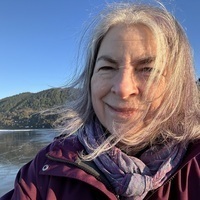
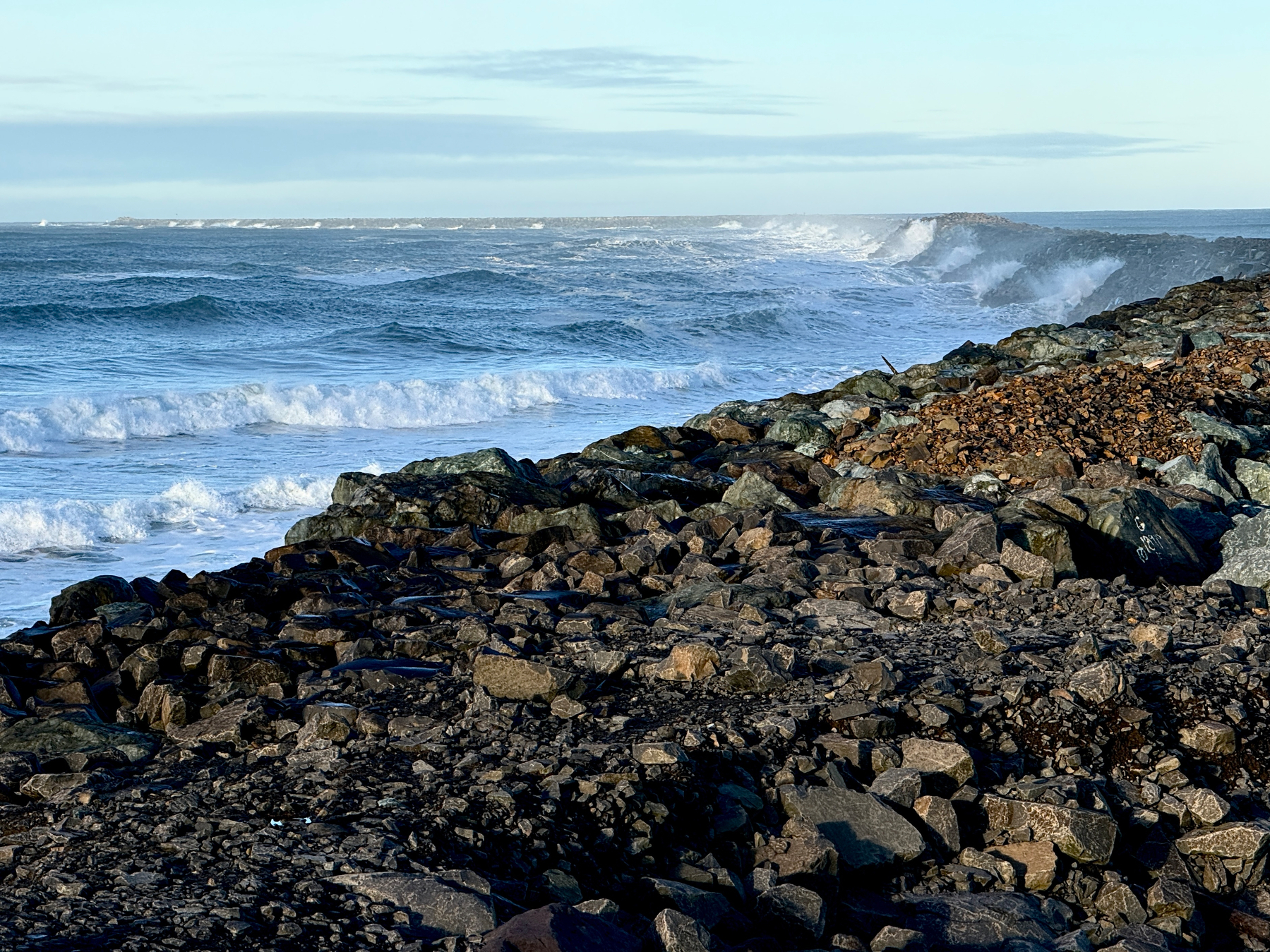
What a difference a day makes. The treacherous mouth of the Columbia on a sunny less windy morning. Clear enough to see how far the jetty goes. 😮
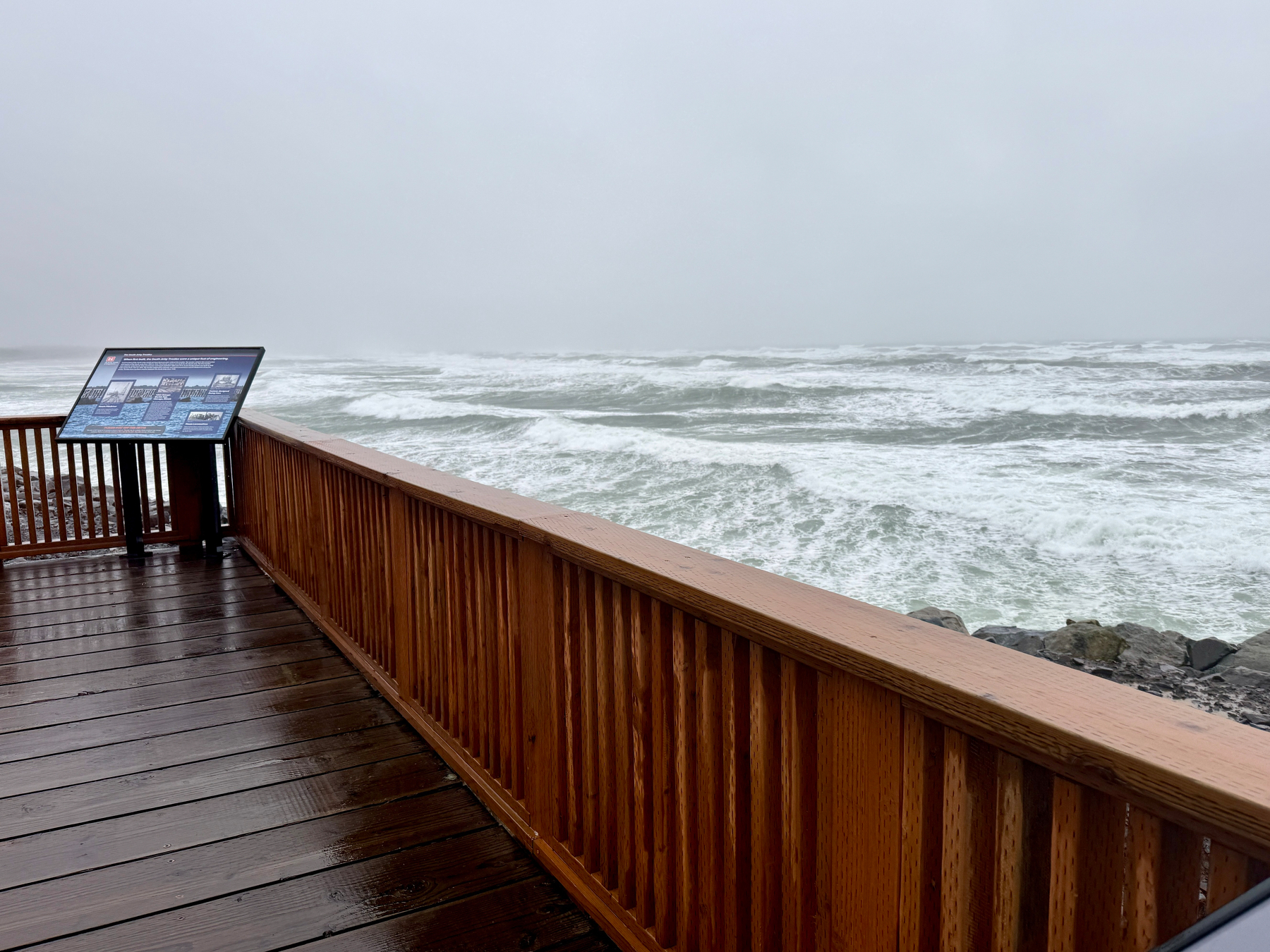
For the Pacific Wave Appreciation Society: the massive waves at the mouth of the Columbia River, “one of the most treacherous waterways in the world,” as the sign says.
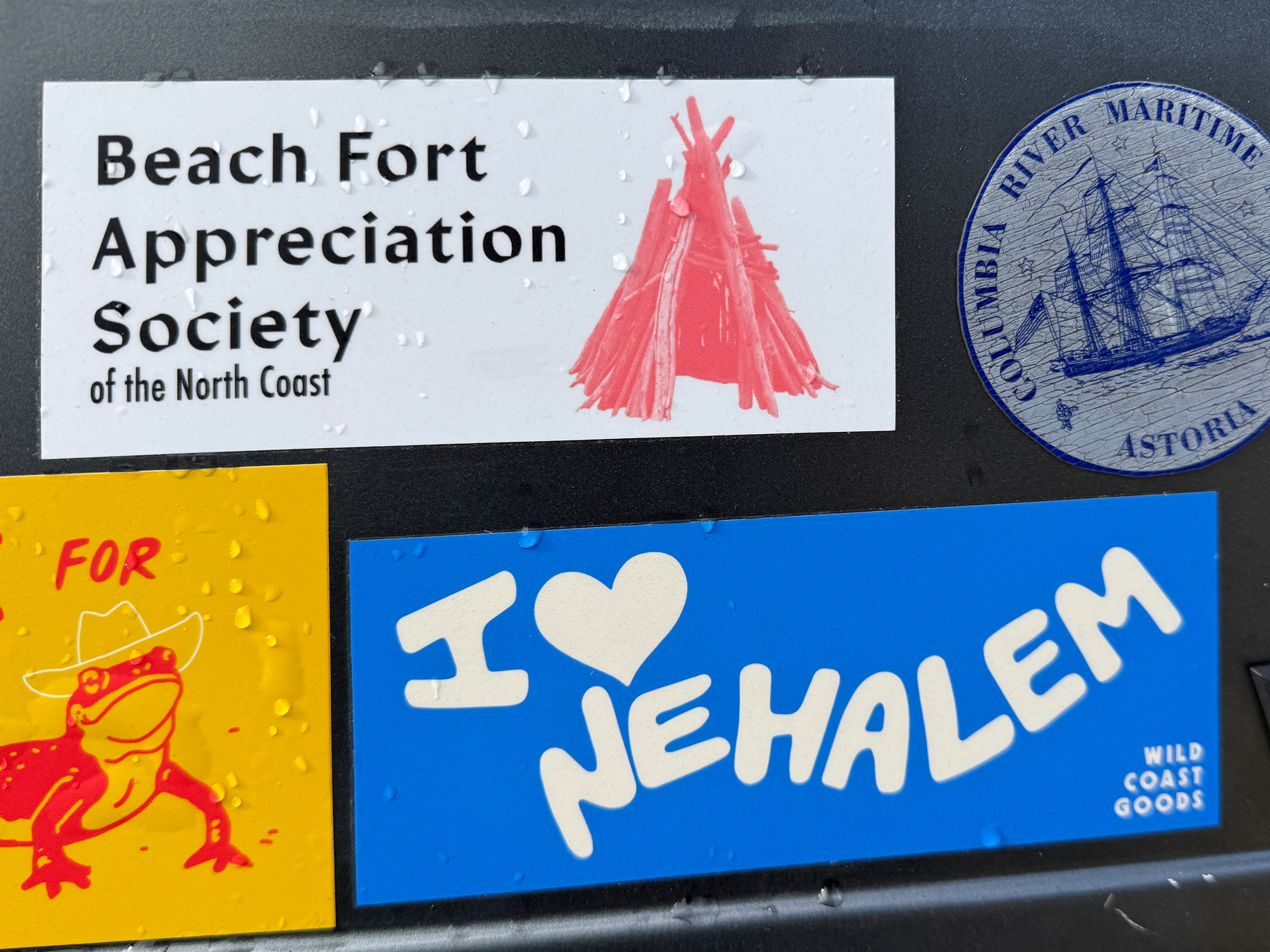
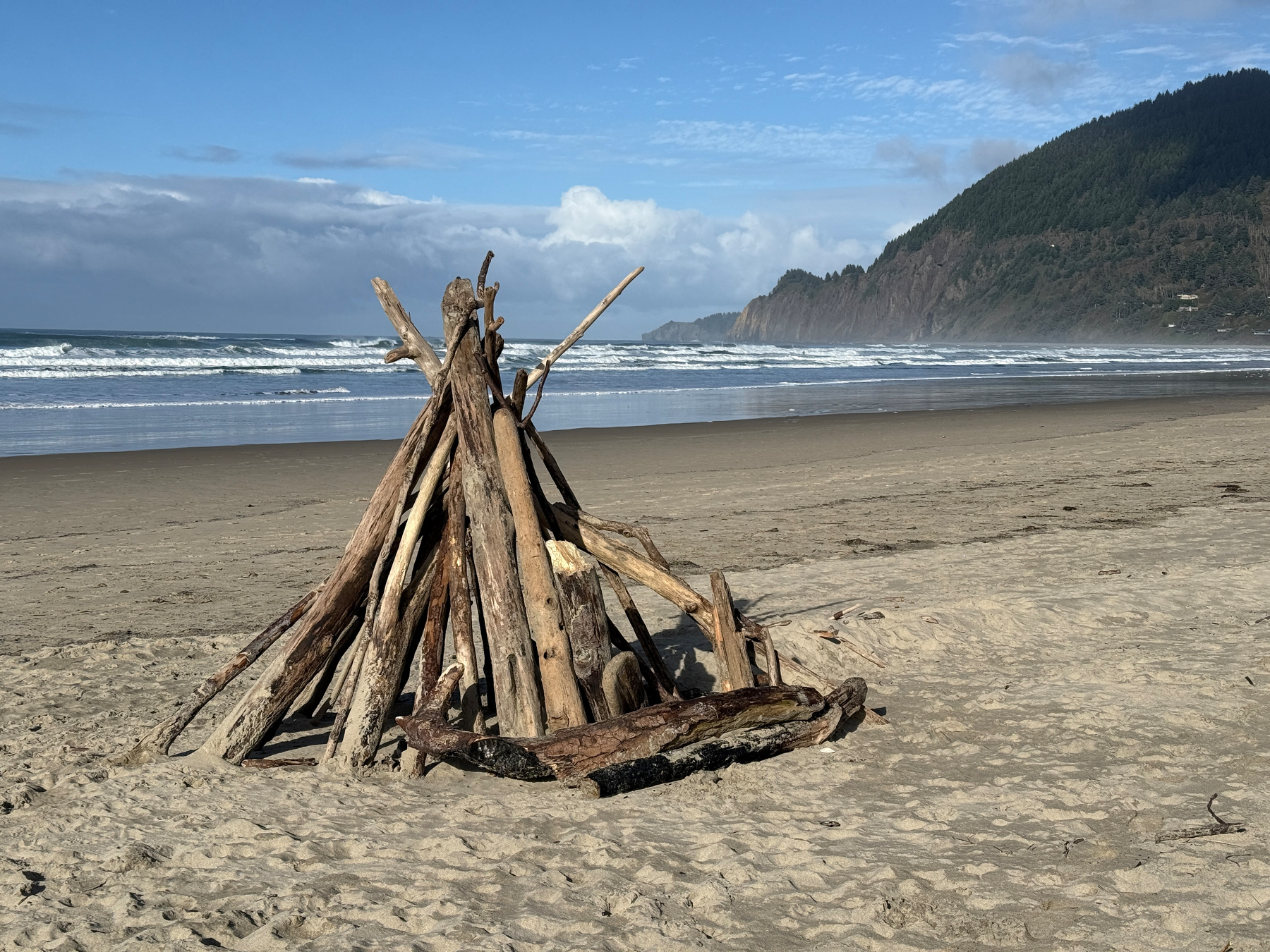
I saw this bumper sticker, and it made me think we need one for the Pacific Wave Appreciation Society. 🌊 (And, on the same walk I spotted a beach fort!)
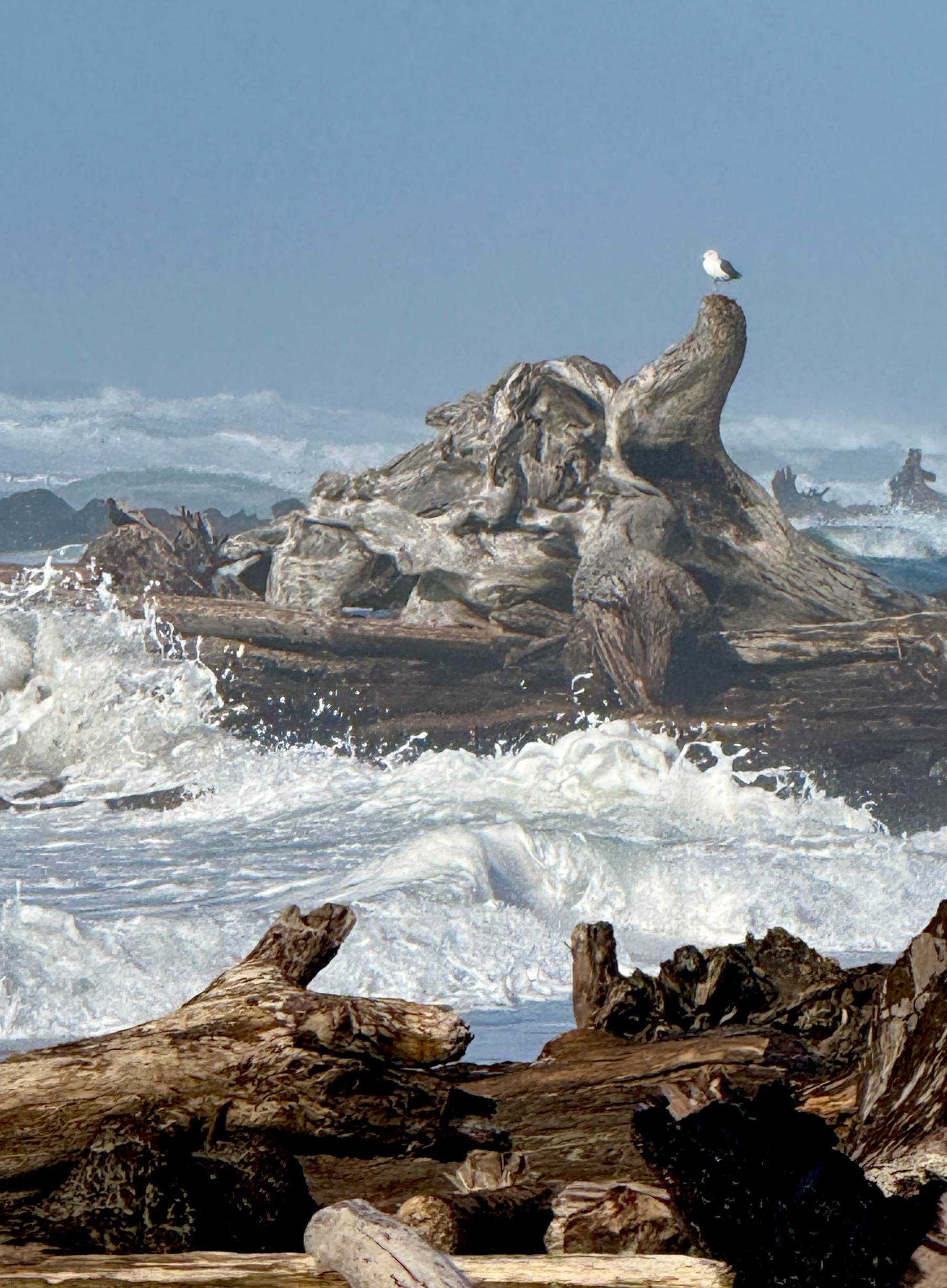
One of favorite photos from last week’s king tides. Unflappable Seagull is not perturbed by the wind, waves or driftwood. (Nedonna Beach, South Jetty of Nehalem Bay)
(I have to admit I wouldn’t mind getting a “real” camera and zoom for a shot like this.)
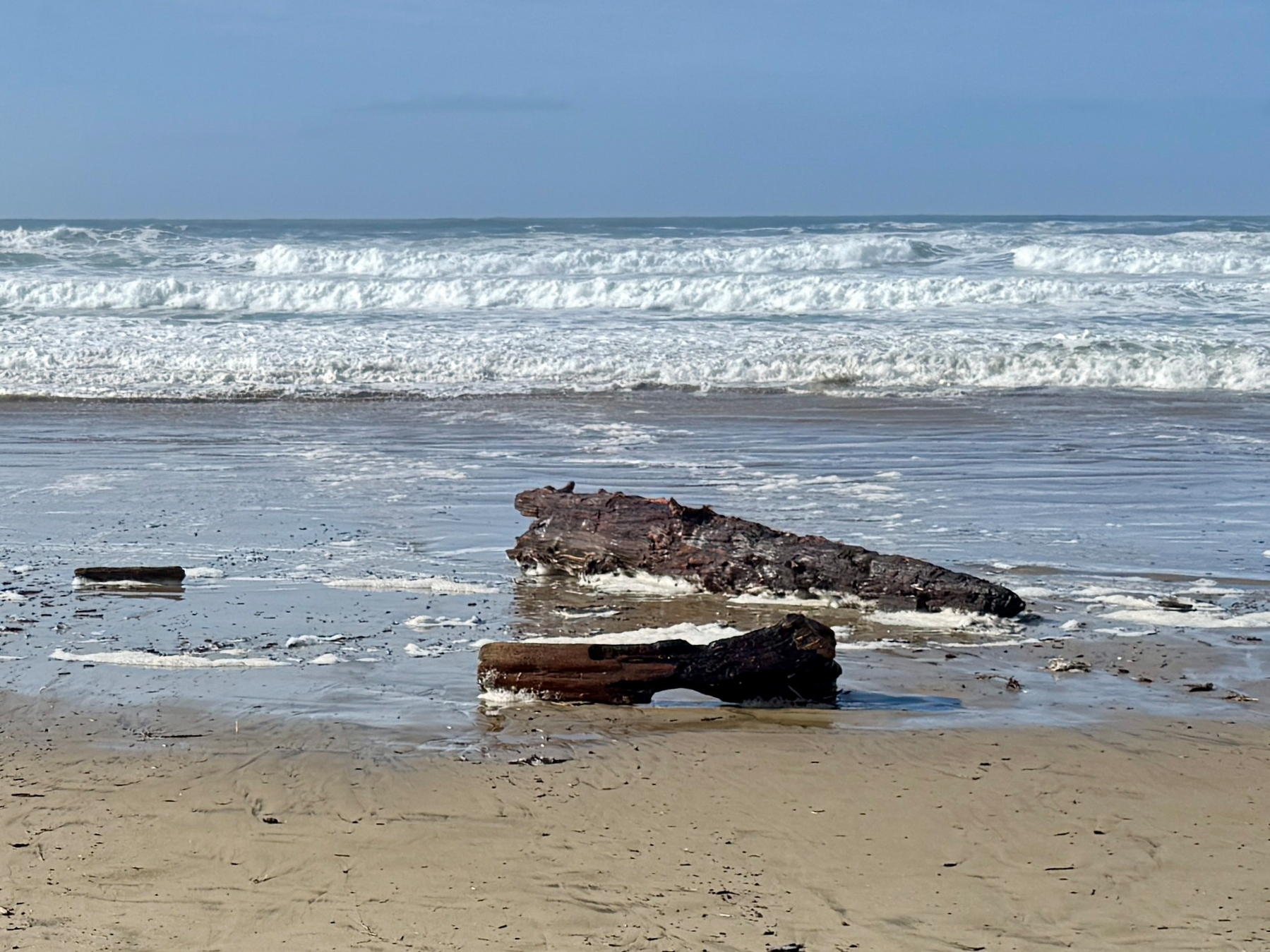
It’s King Tide season, keeping your intrepid Pacific Wave and Driftwood correspondent busy!
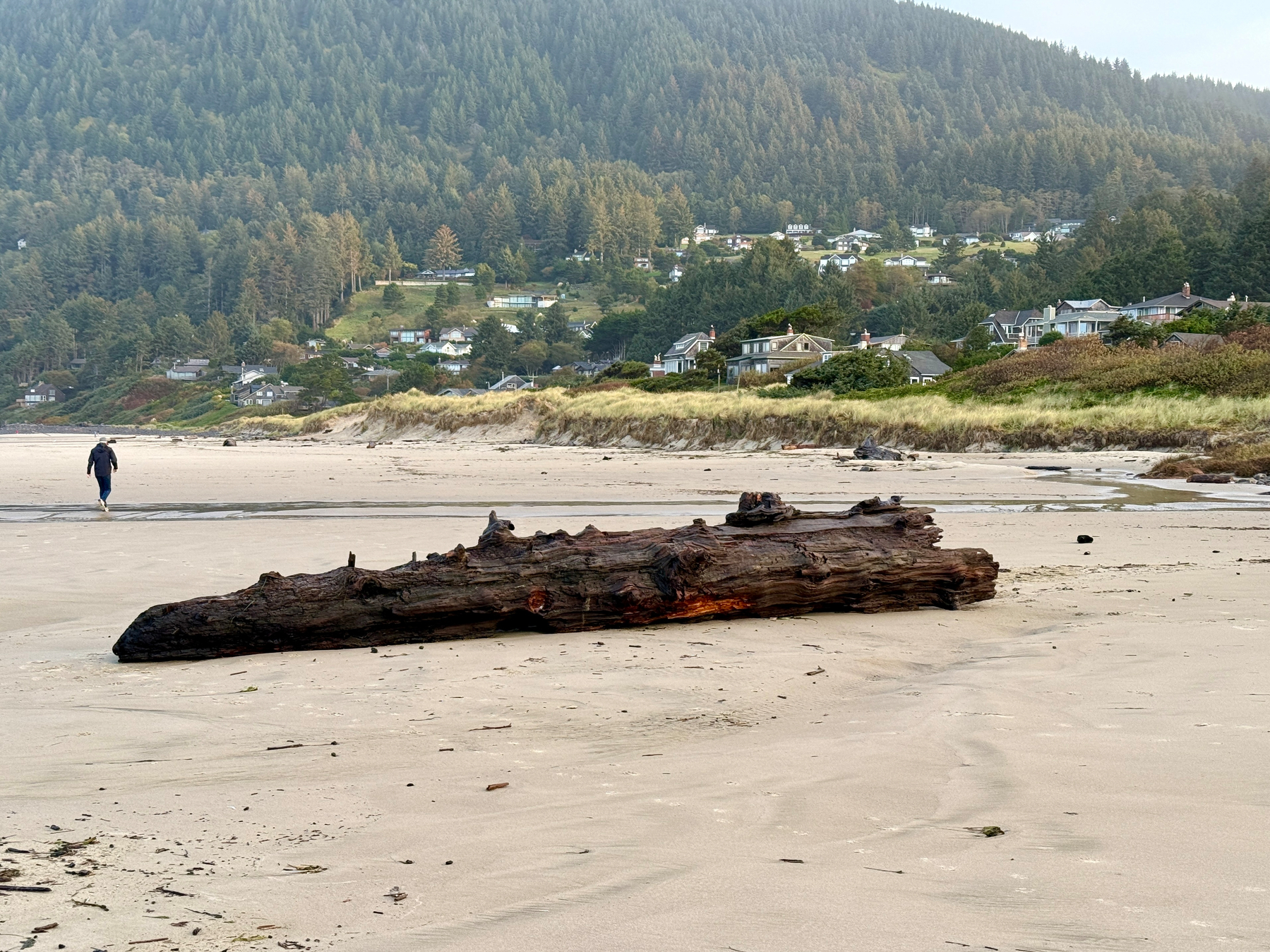
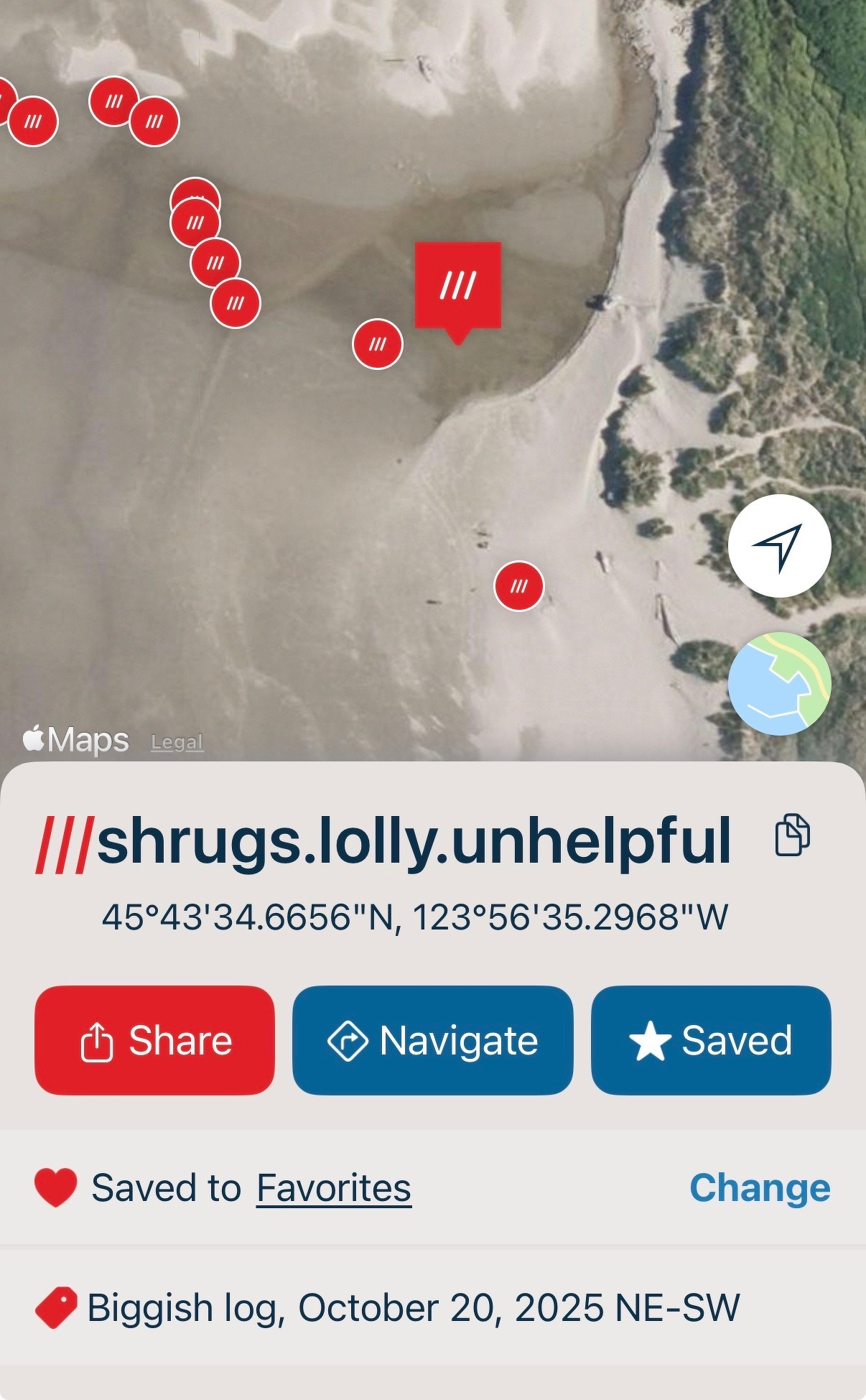
Here’s Biggish Log, getting tossed around. Despite my prediction, this week it moved another 150 ft. down the beach, not closer to the dune.
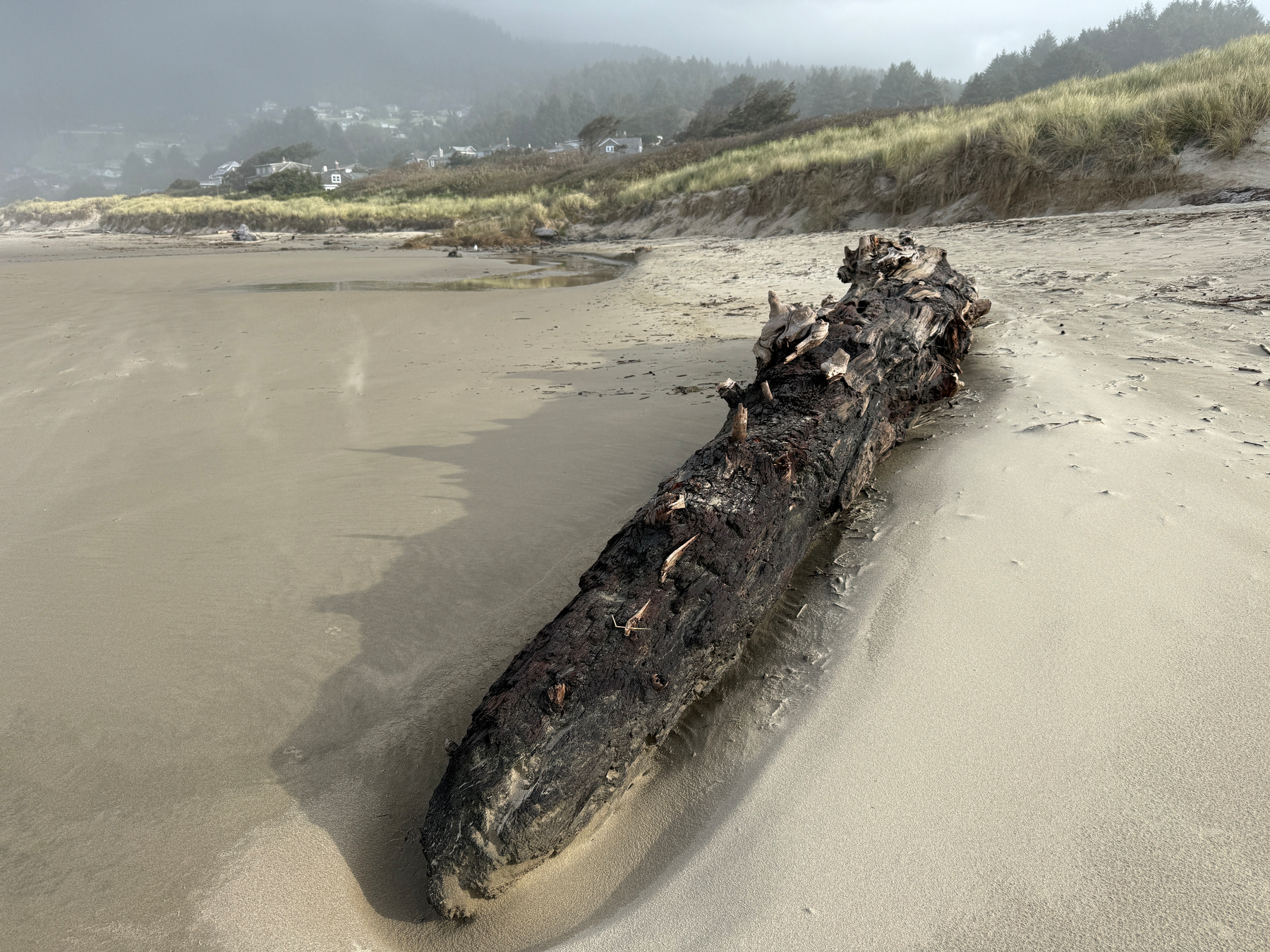
For those in the Driftwood Trackers subgroup of the Pacific Wave Appreciation Society, here’s Biggish Log yet another 50 ft. closer to the dunes after another day of sneaker wave alert-level surf. 🌊🌊🌊
An update on Biggish Log after a weekend of sneaker wave activity. It’s moved 110 ft from where it was last week. (You can see the path of What3Words pins.) There are bigger King Tides to come, and I predict it will end up buried in the dunes like Big Log.
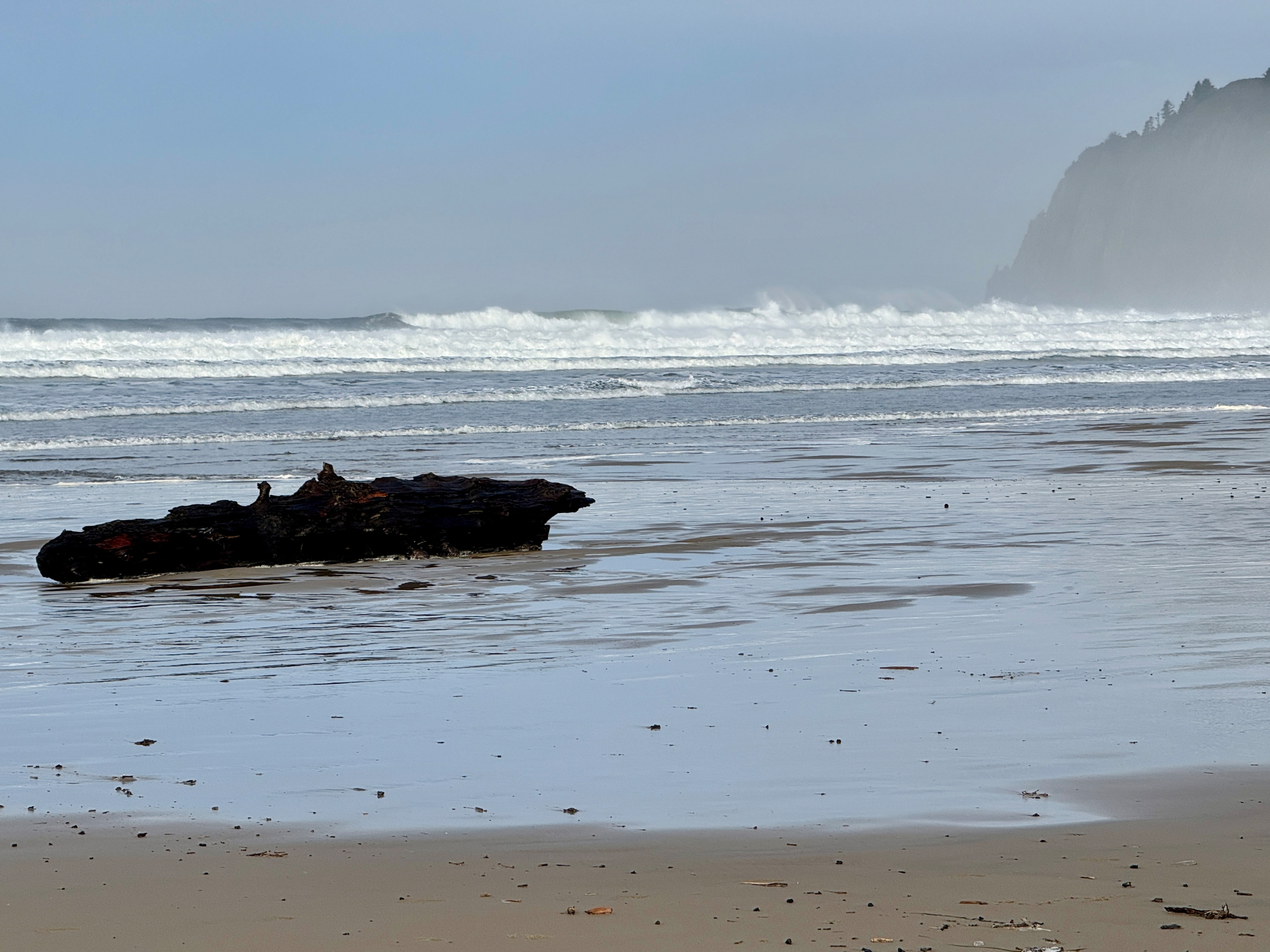
We’re coming up on wild winter wave season here on the Oregon coast so I wanted to offer this video + photo for the Pacific Wave Appreciation Society.
PS. That is Biggish Log, 25 ft. long, which hasn’t moved much since May. That’s why you stay away from driftwood during a sneaker wave alert.
Inundation: not the wave I was expecting
(This post is #34 in my Substack series, Metaphor Mondays.)
Late afternoon on July 29, an earthquake measuring 8.8 on the Richter scale struck eastern Russia. I was on my bed, taking a nap. I had spent another exhausting week in Portland with my 90-year-old dad, who was receiving hospice care. He’d been living with my sister and brother-in-law for a year, since his kidney cancer surgery. On that Tuesday, I had headed back to the coast for a few days rest, according to a break schedule my three siblings and I had agreed on.
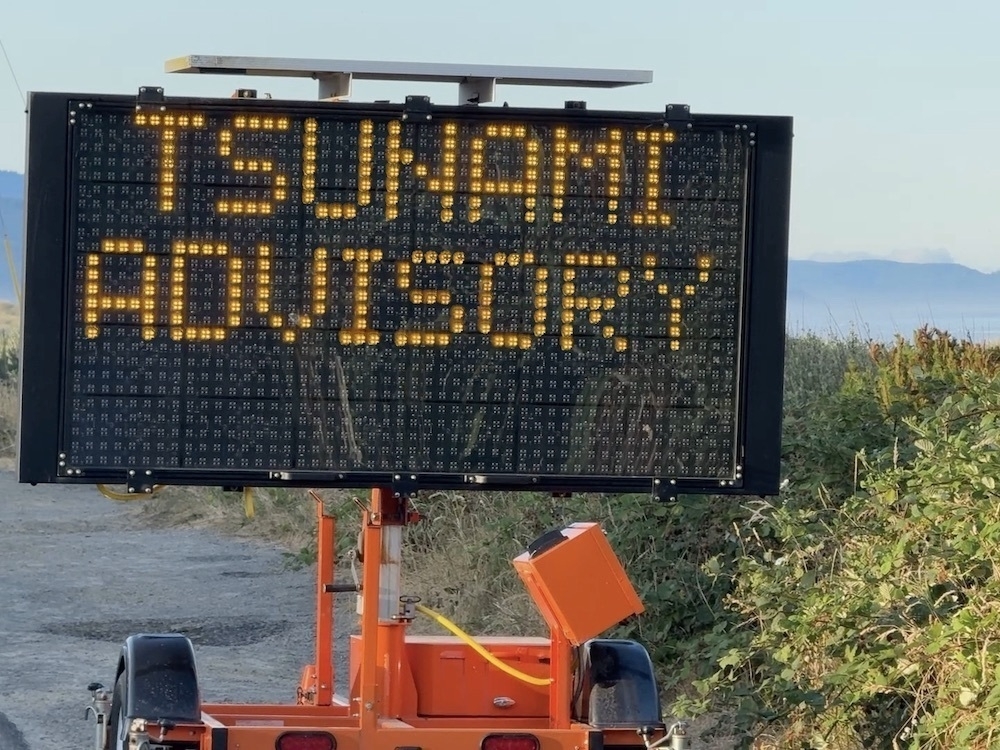
The earthquake struck at 4:24 pm Pacific time. I woke about an hour later to see the many earthquake alerts. I subscribed to these alerts ever since I first learned how close I live to the Cascade Subduction Zone (Metaphor Monday #12). This earthquake occurred on the Kuril-Kamchatka Subduction Zone. It resulted in a massive shift of water, a typical cause of tsunamis. We were warned hours in advance of the potential for a long distance tsunami to arrive on our coast. Eventually, there was some damage to the U.S West Coast in the early hours of July 30. I went out to the beach in the morning for a bit, which is when I got this photo of the advisory sign.
Even though I was supposed to stay home for a few days, I decided to leave again on that afternoon. My siblings had described a very rough night settling my father into a new hospital bed. I couldn’t relax being two hours away. I knew I wanted to be there for them all at the end. And it came on Thursday, July 31.
Ever since I moved to the coast, the tsunami as metaphor has loomed large. When I contemplate such great forces outside of my control, the fragility of existence is clear. But today I realized that a tsunami is a near perfect metaphor for grief.
Far out at sea, ships might not notice a tsunami. The waves don’t crest and the swells are spread out. But they are quietly moving very fast. When they approach the shore, they pick up height, and then the water is relentless. I’ve watched lots of footage of the recent Indian Ocean and Japanese tsunamis. Manzanita will have some warning before the arrival of the terrifying wave that will inundate our town. But the foreknowledge can’t stop it.
There’s been an undercurrent all the years that I’ve watched the decline in my dad’s vitality. A foreboding: a loss is on its way. I knew I would grieve, but I didn’t know what it would be like.
I’ve come through the initial inundation. The water has receded, exposing the flotsam and jetsam of feelings. Strong love and gratitude for my family. Confusing feelings of resentment and frustration that I didn’t have some kind of movie-quality breakthrough in mutual understanding with my father. Uncertainty and dread—and a hint of the freedom that comes when I am reminded that life is truly short and I need to stop second guessing myself.
Tsunamis come in a “wave train.” It is not one and done, and I know it’s the same for grief and me. But I’m ready to get back to my life.
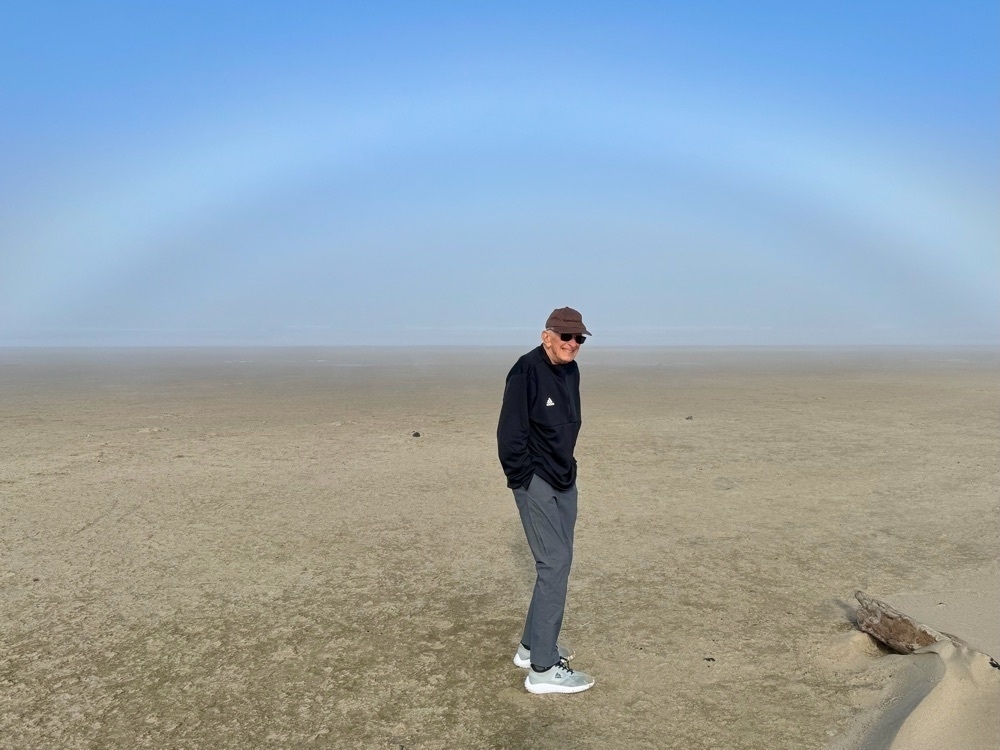
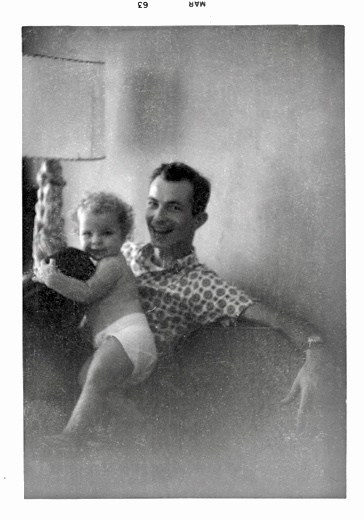
Above: Bob MacDonald, Sr., my dear dad, on a misty Manzanita Beach morning last summer when I saw my first fogbow. Below: the author with her 25-year-old father in Miami, soaking up the joy of being daddy’s girl and first child.
Metaphor Monday #34
Impermanence
It’s not impermanence that makes us suffer. What makes us suffer is wanting things to be permanent when they are not. – Thich Nhat Hanh

Big Log, pictured above, arrived on Manzanita Beach in January. It was an impressive presence at 32 ft. long and 2.5 ft. in diameter. Winter storms eventually pushed Big Log up next to the dunes in March.
Recently, the sand level has shifted. I have been away from the beach most of the summer, so I notice it during my brief visits home. Now Big Log is practically buried in new sand drifts. (below right)

The same thing is happening to Biggish Log (only 25 ft. long), which arrived in May and hasn’t moved much.

It’s driftwood. I know that impermanence is suggested right there in the name. But I’ll always be a little sad when familiar things change. Or disappear altogether.
Metaphor Monday #33
Life has been chaotic for me lately. I’ve been busy with family stuff in Portland most of July. But I did get back to the coast for a very misty morning, and wanted to to share some chaotic wave footage with the Pacific Wave Appreciation Society, plus a seagull who also appreciates the waves.
Obscured

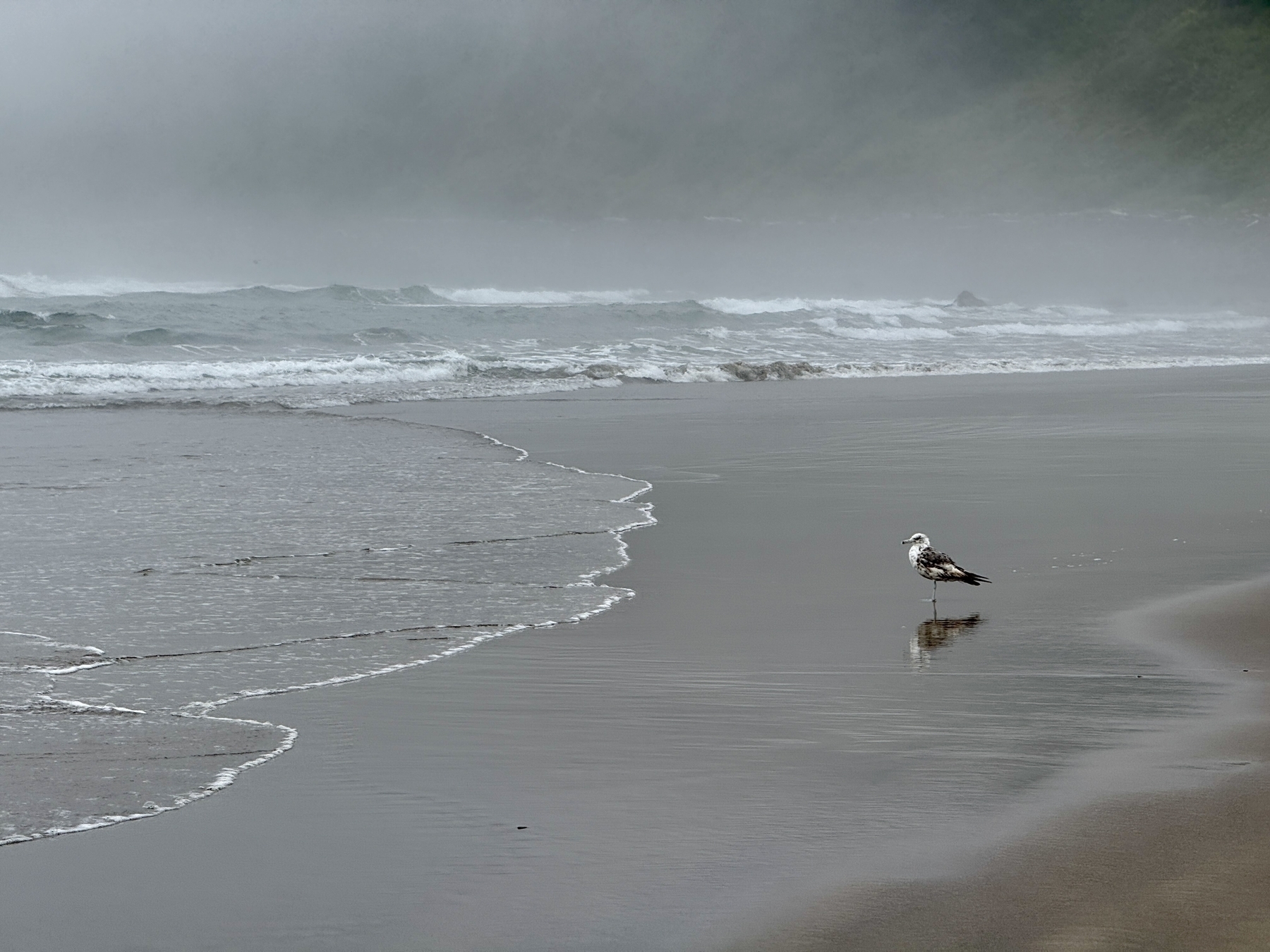
I am still in Portland, but I managed a quick overnight at the coast. I got out for a misty morning walk. It can be tricky to find enough contrast in the mist, but I was lucky to get a couple of good shots. This seagull cooperated by standing in profile and gazing out at the waves. I like to imagine the lone seagull is lost in contemplation, though it is probably just wondering what’s for breakfast.
I like the combination of serene and mysterious in the photo below, with just a hint of the mountain in the background. You don’t have to see it to know it’s there.

Metaphor Monday #32
Elk butts
A tale of serendipity

I’ve been away unexpectedly from the coast the last week and a half. I have no new photos, and I don’t have the energy to go exploring in Portland, where I’m staying. So I decided to have a look at my July 7 photos from last year. It turns out that it was a significant day for me as a photographer. I captured a photo of two elk in the morning mist that is one of the most popular photos I’ve ever taken.
But I also got a lot of elk butts, like the one above. I took 61 photos in five minutes when I saw the elk in the dune grass. One is pretty spectacular. The other photos are ok at best. I almost never delete photos, and I’m glad I didn’t delete these. It’s good to see what happened that morning. The spectacular photo wasn’t the first one I shot or the last. The conditions weren’t ideal, until they were.

PS. The elk pair photo (shown at the lower right) is available as a greeting card on my Etsy store.
Metaphor Monday #31
Return

I'm back home. Not planning any extended absences any time soon. Still recuperating from all the travel and socializing and learning. Figuring out how to re-establish my daily practices. I haven't written much while on the road. It will take me a little while to get back in the habit. I don't have anything profound to write about today.
PS. The starfish say “hi!”

Metaphor Monday #30
Where's your Walden?

“I went to the woods because I wished to live deliberately, to front only the essential facts of life, and see if I could not learn what it had to teach, and not, when I came to die, discover that I had not lived.”
Another week away from the Oregon Coast. I was on Cape Cod this weekend to meet some dear sober friends for the first time, four women who were part of the community I joined on my Day 1. That connection was magical.
Because I would be on the Atlantic coast, I assumed I would feature that ocean this week on Metaphor Monday. An impromptu visit to Walden Pond changed my plan. My niece’s boyfriend, a local, suggested it. I hadn’t given much thought to Walden since high school lit class. But as soon as he made the suggestion, I knew I had to go.
I recently got new insights into Thoreau’s calling when I read The Great Work of Your Life by Stephen Cope. As a young writer, Thoreau tried to break into the literary scene of New York City. It didn’t work out. He did not fit at the literary salons nor did his writing gain attention from publishers. He found his true calling at Walden. That journey to becoming a solitary observer of nature and devotee of simplicity feels familiar to me.
At the visitor’s center, there is a map of the world with markers where people have added the places in nature that are special to them. “Where’s your Walden?” the sign asks. I can answer that question so easily now. I entered my details for Neahkahnie Beach.

Photo above: A sign at the site of Thoreau’s 10’ x 15’ house, which is marked by small stone pillars in the background.
Metaphor Monday #29
Scene change

I went to the Columbia River Gorge to attend a training at the Menucha Retreat and Conference Center. I had always heard this property was beautiful, but never had the opportunity to see it before. The setting is spectacular, with vistas over the Gorge that face both east and west. I was a participant in The Hearth Community’s Transformational Community Storytelling training. It was intense. I am still processing everything that I learned and experienced.
The group, about 40 people from 17 states and 3 countries, took a break after dinner one night and went to nearby Multnomah Falls. I’ve been to Oregon’s most popular tourist attraction many times, but never in the evening. It was a treat to be there without the usual crowds. When I took some time away from the group, I was able to experience the power of this natural water wonder that reminded me of my walks by the Pacific Ocean: endless, always moving, radiating energy.

Metaphor Monday #28
Day 3 of the Micro.blog photo challenge. Prompt: shadow
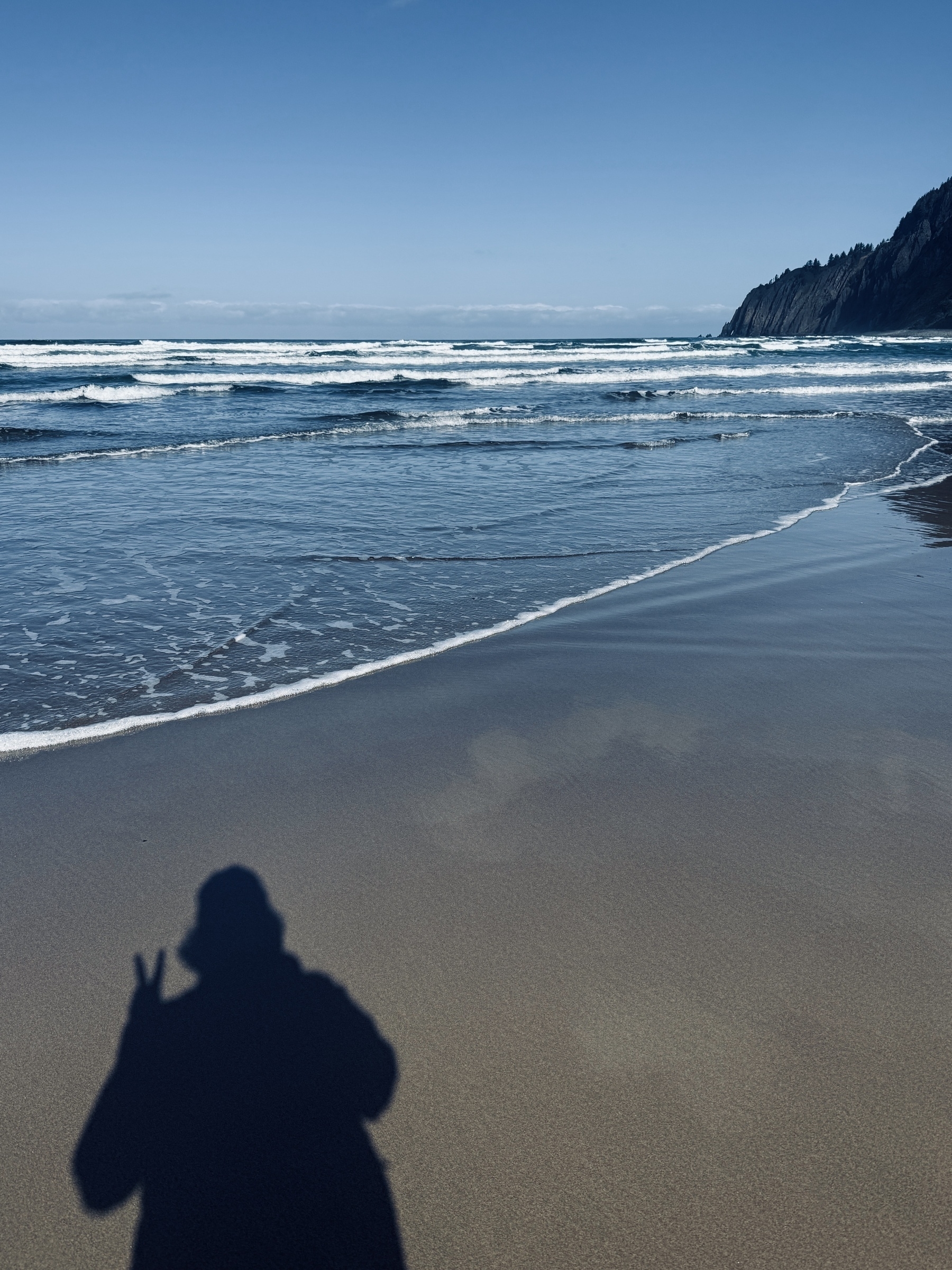
Day 2 of the Micro.blog photo challenge. Prompt: curve
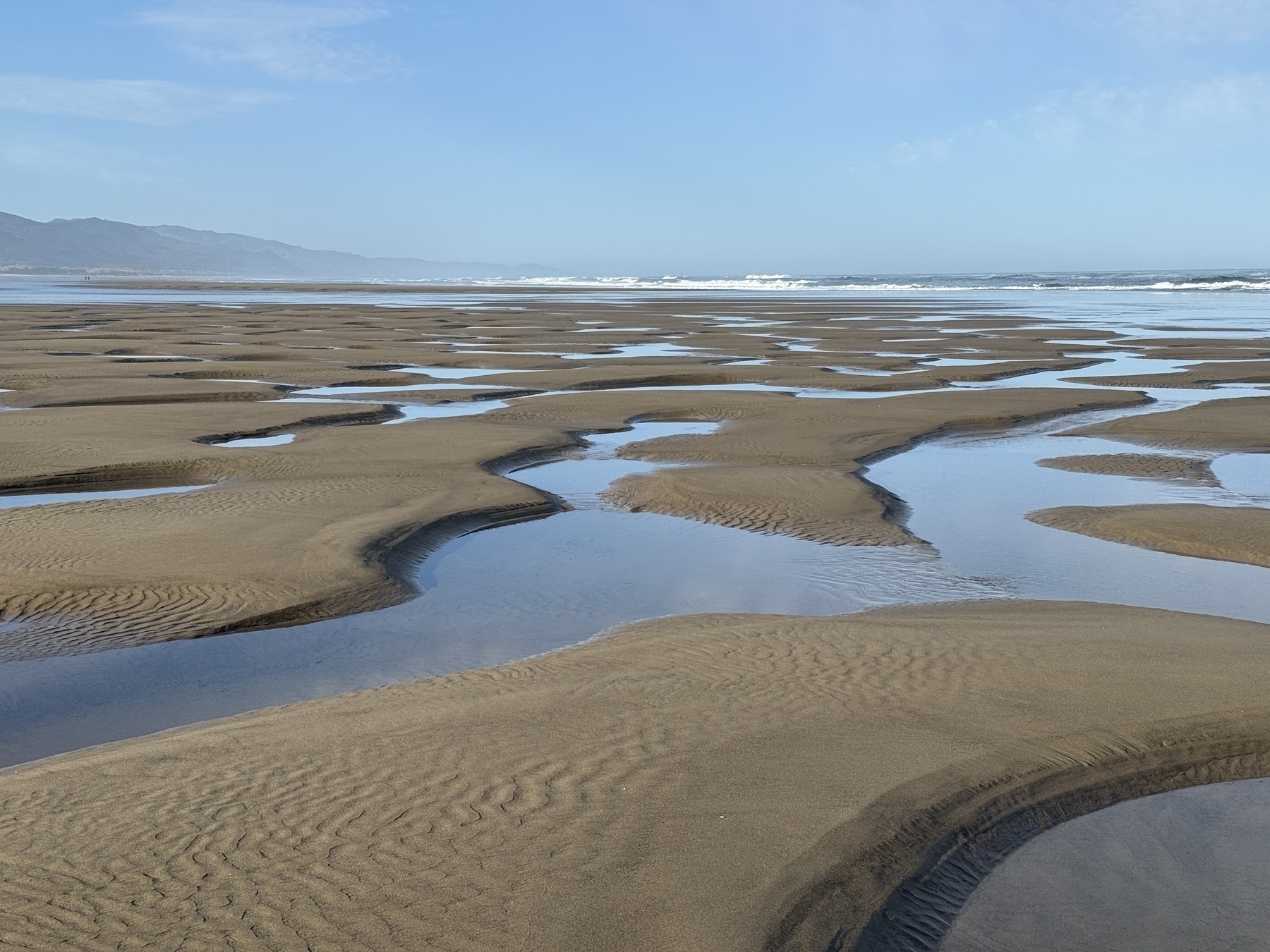
Very low tide reveals the curves in what I think of as the sand labyrinth.
Negative

When you find yourself researching statistics to explain what a negative tide level is, it’s time to step away from the internet.
I may not understand the difference between mean and average. I may scratch my head at the terms mean low water (MLW) vs. mean lower low water (MLLW). (Here are NOAA’s definitions, for your reference.)
What I know: it’s exciting when the tide level goes down into negative numbers. Last week on Tuesday and Wednesday, the level was – 2.9 ft, i.e. almost three feet below the average. Or the mean… The lowest tide we will have this year, I was told.
What it means: all the sand and rocks in these photos, usually underwater, are revealed. I can walk nearly an extra quarter mile north toward the rocky promontory of Neahkahnie Mountain. That is why negative tides are a positive on my calendar.

Metaphor Monday #27
Traces

I noticed these bright green patches in the sand on Sunday morning at low tide. Because I walk this stretch of beach regularly—because I pay close attention these days—I know these patches are algae attached to the ridges of an enchanting elongated basin-shaped rock that I have photographed before. (below)
Rocks like these have made me aware how much the sand shifts. (Metaphor Monday #11) I had never seen this basin during my first year on the coast. Maybe I had never noticed it, or maybe the sand level was too high. Now I look for it at low tide along with the other rocks. Even if I can’t see it, I like knowing it’s there.

Metaphor Monday #26
