27 Aug 2015
by minkrancher
in anti-art, anti-poetry, asemic poetry, asemic writing, calligraphy, collage, conceptual art, conceptual poetry, concrete poetry, events, experimental writing, found art, haptic poetry, mail-art, mail-art calls, object poetry, performance art, poetry, post-neo, Trashpo, visual poetry
Tags: asemic poetry, asemic writing, asemics, calligraphy, collage, concept art, conceptual art, conceptual poetry, conceptual writing, concrete poetry, correspondence, experimental writing, found art, haptic poetry, mail-art, object poetry, performance art, post-neo, trashpo, visual poetry

Mail art by Jim Leftwich and Evan Damerow (Roanoke, Virginia, USA)
This summer we received two large packages of mail art from visual poet Jim Leftwich in Roanoke, the first of which (chronologically) we are documenting in this blog. The vast majority of the pieces are collaborations between Jim Leftwich and Evan Damerow. (The exception is one very interesting asemic work at the end.) According to Facebook, Evan Damerow resides in New Zealand. His work was unknown to us before the arrival of this missive.
While Jim Leftwich seems to us inclined toward the prolific naturally, we attribute some of this outpouring of work this summer to the 2015 Marginal Arts Festival. The event seems to have been a great success and a perusal of the documentation will be rewarding to Tenderfoots, no doubt:
The Anti-Brain Rot mail art call and exhibition also accompanied the festival, which occurred in July (2015). Here is some partial documentation of the entries via C. Mehrl Bennett (Columbus, Ohio, USA):
The ANTI-BRAIN ROT mailart exhibit

Unless otherwise indicated, all the pieces shown here are Jim Leftwich-Evan Damerow collabs.
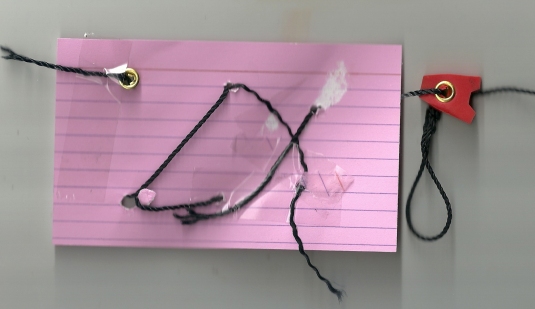
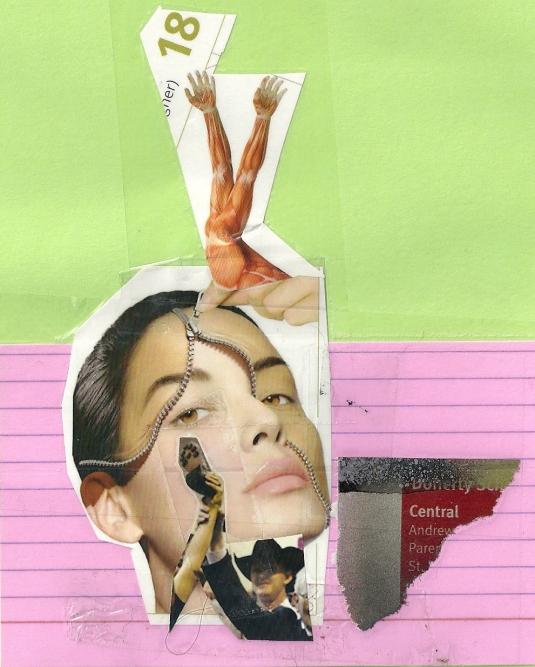
These Leftwich-Damerow collabs hold specific interest to the trashpoets and D-Kulters in the network (many of whom are rabid followers of our humble blog), as Jim Leftwich is acknowledged as having created some of the earliest Trashpo (2005). These pieces (the current work shown here) use found material, have the organic structure so recognizable in most Trashpo and also show the anti-art stance and the On the Road spontaneity of Trashpo composition.
Trashpo is a form of visual poetry. (Many current practitioners are either unaware of or disregard this fact). The pieces documented here make abundant and innovative use of text, text-image associations and juxtapositions, cut up, disruption, asemics and other approaches that are related to poetry and the poetic as well as the tenets of Trashpo rather than mere collage. In short, they are excellent examples. The work transcends Trashpo in many ways yet still offers insights into Trashpo theory and practice for the working trashpoet.




A bonus in the package was the piece below: “Spirit Writing” by Jim Leftwich (1997), a piece of historical significance because it was made so early in the context of the current thriving and burgeoning asemic movement. Jim Leftwich, however, and as many know, has reservations concerning the use of the term “asemic” and having his own work labeled as asemic writing. So we encourage Tenderfoots to consider the perspective of visual poetry here, although we believe the tide of history is very likely to identify Jim Leftwich as an asemic writer (among other designations):

A closer look:


Many thanks to Jim Leftwich and Evan Damerow!
23 Aug 2015
by minkrancher
in anti-poetry, asemic poetry, asemic writing, books, calligraphy, conceptual poetry, experimental writing, mail-art, poetry, visual poetry
Tags: asemic poetry, asemic writing, asemics, calligraphy, conceptual poetry, conceptual writing, correspondence, experimental writing, mail-art, visual poetry

Mail art by Jason Motsch (Conneaut Lake, Pennsylvania, USA)
The Tacky Little Pamphlet (TLP), a mail art staple, is an ideal vehicle for asemic writing projects. Certainly prize examples can be found in the massive body of John M. Bennett’s (Ohio, USA) work, among others. Now Jason Motsch has made another contribution to the genre with this wonderful piece he sent us. The opening scan is the cover. The pages are approximately 2 X 3 inches, and he faithfully follows the “official” TLP folding pattern. Here are the inside pages:

This is a very free form, calligraphy-based asemic writing, somewhat traditional compared to current, exotic methods for generating symbols.

This asemic TLP by Jason Motsch, as with most asemics that travel through the mail art network, is actually asemic-vispo hybrid work. The colorful triangles provide a useful continuity and anchors for the organic, apparently spontaneous writing.

And the back cover:

The TLP provides a brief yet sustained asemic cycle. As language is suggested, so is the structure of a lyric poetry cycle. We find the work interesting and engaging. Here is the envelope:

And the reverse:

Many thanks to Jason Motsch for sending more excellent asemic writing and vispo!
21 Aug 2015
by minkrancher
in calligraphy, collage, conceptual art, mail-art, post-neo, stamps, Trashpo
Tags: calligraphy, collage, conceptual art, correspondence, mail-art, post-neo, trashpo

Mail art by Rebecca Guyver, Figgy Guyver (Suffolk, UK) and Diane Keys (Elgin, Illinois, USA)
Rebecca Guyver’s DKult Doodle Therapy TLPs (Tacky Little Pamphlets) are becoming a phenom in the Eternal Network, especially among trashpoets and Kulters. The contributors’ list is growing and impressive. Even the legendary and enigmatic Meeah Williams (Brooklyn, New York, USA) has contributed to a new edition.
Creation of the doodles is highly collaborative and involves a process similar to the stalwart add-and-pass. Rebecca Guyver kindly sent us this packet of in-process doodles that we are thrilled to be able to share. We also look forward to seeing the completed TLP somewhere down the long & dusty trail. Rebecca Guyver’s note:

And back to the doodles:


The envelope is a wonderful bonus with wonderful colours and, apparently, handmade paper:

And the reverse:

A close-up:

Many thanks to Rebecca Guyver, Figgy Guyver, Diane Keys and others who might have contributed. Dark wall is experimenting with his own DKult Doodle Therapy, which he will pass along:

10 Aug 2015
by minkrancher
in calligraphy, conceptual art, Mail Art NoveauX, mail-art, performance art
Tags: calligraphy, conceptual art, correspondence, mail-art

Mail art by Thomas Brown (Baltimore, Maryland, USA)
Thomas Brown continues to perfect his visual-textual mail art in the tradition of Richard Canard (USA), David Stafford (USA) and perhaps even Ben Vautier (France). From our perspective, Thomas Brown seems to be gaining growing recognition for his humor that, at times, crosses into avant territory. Or at least he uses avant devices with alacrity when it suits his purpose. We are glad we remain on his mailing list and have these two (fairly) recent pieces to share. Here is the reverse side:

An engaging Thomas Brown persona is emerging as well. Mail art has certainly produced a cast of memorable characters, most of them partly fictional and partly based on genuinely eccentric artistic personalities. Thomas Brown joins the ranks.

Some Tenderfoots might wonder why we have nicknamed Thomas Brown “Space Monkey.” If recollection serves, it is based on a comment he posted on Facebook saying he wanted to be an astronaut. Commentary progressed from that starting point. In short, trust us. The “Space Monkey” moniker is perfect.

Many thanks to Thomas “Space Monkey” Brown!
07 Aug 2015
by minkrancher
in anti-art, anti-poetry, calligraphy, collage, conceptual art, conceptual poetry, Fluxus, mail-art, mail-art calls, poetry, stamps, Trashpo
Tags: calligraphy, collage, conceptual art, conceptual poetry, conceptual writing, correspondence, mail-art, poetry, stamps, trashpo

Mail art by Ruud Janssen (Breda, Netherlands)
This Richard Canardesque card we received from Ruud Janssen is very thought provoking in terms of some of the Eternal Networkers whose work we follow closely. Specifically, Diane Keys (Elgin, Illinois, USA) has founded the Museum of Bad Mail Art (MOBMA), which is very popular and consistently attracts work. Moan Lisa is currently inhabiting the Maria Marisot identity (Iowa City, Iowa, USA). Moan-Maria has a particular genius for founding movements and issuing mail art calls that generate widespread interest and responses. One of them is Bad Poetry:
https://www.facebook.com/groups/853769131332573/
http://iuoma-network.ning.com/group/badpoetry

We greatly appreciate more DKULTN and Trashpo stamps, and Trashpo is relevant to the current discussion. But back to the main topic: We have kept some distance from both the Bad Poetry and Bad Mail Art calls because we are perplexed about defining what is “good” and what is “bad” in the context of mail art, especially when anti-art and found art are factored in. We are not against Bad Poetry or MOBMA; we are just confused. Ruud Janssen’s card suggests to us that we are not the only ones trying to define “bad poetry.” Is it good bad poetry? Is it bad good poetry? We do not know. We do know we are pleased to receive a great deal of poetry from Moan-Maria. But is it good? Is it bad?

Mail art by Maria Morisot (Iowa City, Iowa, USA)


Mail art (plasticized) by Moan Lisa-Maria Morisot (Iowa City, Iowa, USA)

We can offer no insight in terms of helping to identify bad art or bad poetry. Perhaps the insinuation of the question is what is important. We will, however, conclude with the insights of Richard Canard that often address these issues:

Mail art by Richard Canard (Carbondale, Illinois, USA)

Many thanks to Ruud Janssen, Maria Morisot, Moan Lisa and Richard Canard.
05 Aug 2015
by minkrancher
in asemic writing, calligraphy, collage, conceptual art, Mail Art NoveauX, mail-art, neoism, post-neo, Trashpo
Tags: asemic writing, asemics, calligraphy, collage, conceptual art, correspondence, mail-art, neo, neoism, post-neo, trashpo

Mail art by Chepin (San Francisco, California, USA)
Chepin’s reputation as a gifted and active correspondence artist precedes – in our awareness – her arrival upon our most humble blog. We were surprised and very glad to receive this wonderful postcard-size piece from her. We are equally excited to share it with Tenderfoots. We are not sure about a horizontal or vertical presentation, but we like this angle best. Her kind notes on the reverse side add some interesting information:

Chepin is a member of the All Things Trashpo group at IUOMA-Ning, which geographically places her in DKULTNOCAL territory. We believe it is possible that this work, then, takes some inspiration from the doodle therapy developed by Diane Keys (Illinois, USA) and Rebecca Guyver (Suffolk, UK). Doodling is prevalent in Trashpo circles these days. Is it possible there was some thought of asemic writing on Chepin’s part? We would not rule it out. The work is at least asemic suggestive.
We will add Chepin’s work as a most original example to the contemporary doodle canon. As for the Great Confusion: That is a term associated with a number of cultural, religious and even political events. We have used it specifically in reference to Neoism. Perhaps Chepin is making that association as well.
Welcome and deepest thanks to Chepin for beautiful and intriguing mail art as well as cryptic and intriguing messages.
22 Jul 2015
by minkrancher
in anti-art, calligraphy, collage, conceptual art, mail-art, post-neo, Trashpo, zines
Tags: calligraphy, collage, conceptual art, correspondence, mail-art, post-neo

Mail art by Rebecca Guyver (Suffolk, UK)
Our faithful correspondent Rebecca Guyver sent us the fifth Tacky Little Pamphlet (TLP) in her stunning DKult Doodle Therapy series. This new installment is as innovative and entertaining as the previous editions we have received. The DKult Doodle Therapy concept is inherently collaborative. While Rebecca Guyver is unquestionably the guiding force behind these soon-to-be historic TLPs (we’re sure), many other artists have contributed doodles. Diane Keys (Elgin, Illinois, USA) and Figgy Guyver are given credit for contributing to TLP#5; we gather there are others as well. Rebecca Guyver is also a wonderful correspondent in terms of sending us generous envelopes stuffed with both art and news. These opening scans are of a card that accompanied TLP#5. Here is the reverse side:

Without further digression, we are very pleased to now present you – dearest Tenderfoots – with complete documentation of DKult Doodle Therapy TLP#5:

Cover of DKult Doodle Therapy TLP#5 by Rebecca Guyver with additional contributions by Diane Keys, Figgy Guyver and others.

(Click to enlarge)


Detail from Dkult Doodle Therapy TLP#5

Back cover Dkult Doodle Therapy#5
A wonderful production! Rebecca Guyver also included a wonderful example of her plasticized, sewn work.

And the envelope:

And the reverse:

As ever, thanks to Rebecca Guyver!
21 Jul 2015
by minkrancher
in calligraphy, collage, conceptual art, found art, Mail Art NoveauX, mail-art
Tags: collage, conceptual art, correspondence, found art, mail-art

Mail art by Babs Bird (London, UK)
“who vanished into nowhere Zen New Jersey leaving a trail of ambiguous picture postcards of Atlantic City Hall…”
– Allen Ginsberg in Howl
A biggy “Howdy” and a secret Mink Ranch handshake are extended to Babs Bird. This is her first appearance upon our humble page.
The postcard is a dominant form in contemporary mail art. Babs Bird’s reconfigurations of the postcard foundation through collage are fascinating and an interesting, self-reflective commentary on correspondence art. In this piece and in her work we have seen elsewhere, Babs Bird takes utilitarian, rote and often contrived postcard images and alters them so they express a different, sometimes contrary, narrative or message. The original model village/tin mining image in this piece received is, we believe, brilliantly deconstructed.

And as for the fave Allen Ginsberg quote that opened this humble blog
“who vanished into nowhere Zen New Jersey leaving a trail of ambiguous picture postcards of Atlantic City Hall….”
Babs Bird of London has been active on the IUOMA-Ning platform in recent weeks. Today when we went there to find some information about her, we found her gone. A click into her profile produced only a big paragraph of garbled code. Maybe it is a tech glitch at our end. Who knows? We have miles to go and promises to keep, as somebody once said.
Perhaps we will never encounter Babs Bird again. So many thanks for this wonderful mail art.
18 Jul 2015
by minkrancher
in calligraphy, collage, conceptual art, found art, mail-art, stamps, Trashpo
Tags: calligraphy, collage, concept art, conceptual art, correspondence, found art, mail-art, stamps, trashpo

Mail art by Lucky Pierre (Charleston, South Carolina, USA)
This is slightly convoluted. Queen of Trashpo Diane Keys (Elgin, Illinois, USA) posted a comment saying she might be losing her eyesight or at least we, representing DKult New York, thought that is what we read. So we began a campaign to raise funds to buy her a seeing-eye dog. This would not be just any seeing-eye dog. This would be a seeing-eye dog from Ireland. Somewhere we got the idea that Irish seeing-eye dogs were superior to all others. Any questions? The campaign is closed because DK did not lose her eyesight after all. Crisis averted.
The ever-compassionate and always resourceful Lucky Pierre responded quickly.
Mail artists have a fascinating tradition of printing fake currencies. Fluxus Bucks are probably the best-known example. Given the alternative art concept, exploration of alternative economies seems almost logical in the network. And DKulters have explored the idea of a D-Konomy (an alternative economy based on Diane Keys’ theories) although both theory and practice are vague at this point in time.

So, while Diane Keys’ brush with blindness – fortunately – proved to be a false alarm, the Lucky Buck – also fortunately – was born. We hope to see more and that they become a part of the various kinds of trash dollars (trash dolls) that are in circulation. Lucky Pierre put the Lucky Buck in what appears to be an old wedding invitation. Recycling, after all, is a core value of Trashpo:

Lucky Pierre’s kind message:

The Lucky Buck came in a FAB envelope:

And the reverse:

As ever, many thanks to Lucky Pierre!
A Note on Fluxus Bucks
Fluxus Bucks were created by Julie Jeffries (USA) in the 1990s. They are a world unto themselves or at least a mail art genre. Make sure to take a look:
http://iuoma-network.ning.com/group/fluxusbuckscreators
02 Jul 2015
by minkrancher
in calligraphy, collage, conceptual art, found art, Mail Art NoveauX, mail-art, stamps
Tags: calligraphy, collage, concept art, conceptual art, mail-art, stamps

Mail art by Lucky Pierre (Charleston, South Carolina, USA)
We open with this compelling self portrait Lucky Pierre sent us even though it is secondary to the concept that unites the components of this extraordinary piece of mail art. The image seems destined to become iconic. The art, however, is about sharks and seas, emanating outward from a single object (or talisman):

Yes, that is an authentic shark tooth, an unlikely choice to inspire a piece of conceptual art (although Damien Hirst worked in this area on a different scale). The tooth is mounted on one of two pieces of thick cardboard that seem – along with the other contents of the envelope – to want to be part of a boekie. But the pieces remain loose and thus are like ATCs (Artist Trading Cards). Here is the reverse side:

Here is the second card:

The slips of paper, when removed from the pocket, correspond to the theme.

The opposite side is blank. Like an earlier piece Lucky Pierre sent us, a paper clasp is included to hold the material together:

A narrative is provided by Lucky Pierre:

A great drawing on the other side:

This is very much “classic” and complex mail art. Some of the deeply thoughtful pieces made by CrackerJack Kid (Chuck Welch) involving the relationship of multiple objects come to mind as a comparison. This locates Lucky Pierre’s work in the conceptual art-based, Ray Johnson lineage. Yet this work is not simply a retro throwback to 70s and 80s styles. It reflects contemporary mail art as well with its links to folk art and representation. While Trashpo draws from anti-art and often invokes disruption with assemblages of incongruous objects, Lucky Pierre’s work seeks to construct a narrative, although complete coherence and closure are not achieved. The work is, then, more surrealist than DaDa. Most traditional mail art, ultimately, is rooted in DaDa. Lucky Pierre, we believe, has managed to create something appealing and interesting while embracing some conventions and discarding others. The piece is not an attempt to make mail art as it “should be” but a genuine human expression unafraid to approach the intangible.

And the other side:

- Many thanks to Lucky Pierre!
Previous Older Entries


 MinXus-Lynxus
