The Magic of Ink and Bleach
The simple yet stunning bright neon reaction between dye based fountain pen inks and bleach is undeniably intriguing. The process is so easy and quick, that anyone can achieve a visual result in a matter of minutes with simple patterning and handwriting with bleach on dye based fountain pen inks.
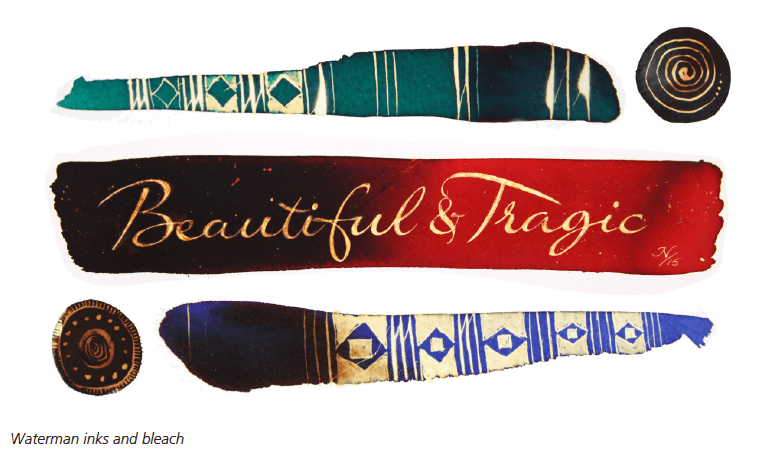
On a fundamental level this simple process could be identified as a bridge to link science, art and literature together in a visually impactive bond. Where chemistry and chromatography could become an art form and who knows… possibly a recognised genre of its own?
Swatch Testing (chromatography with bleach)
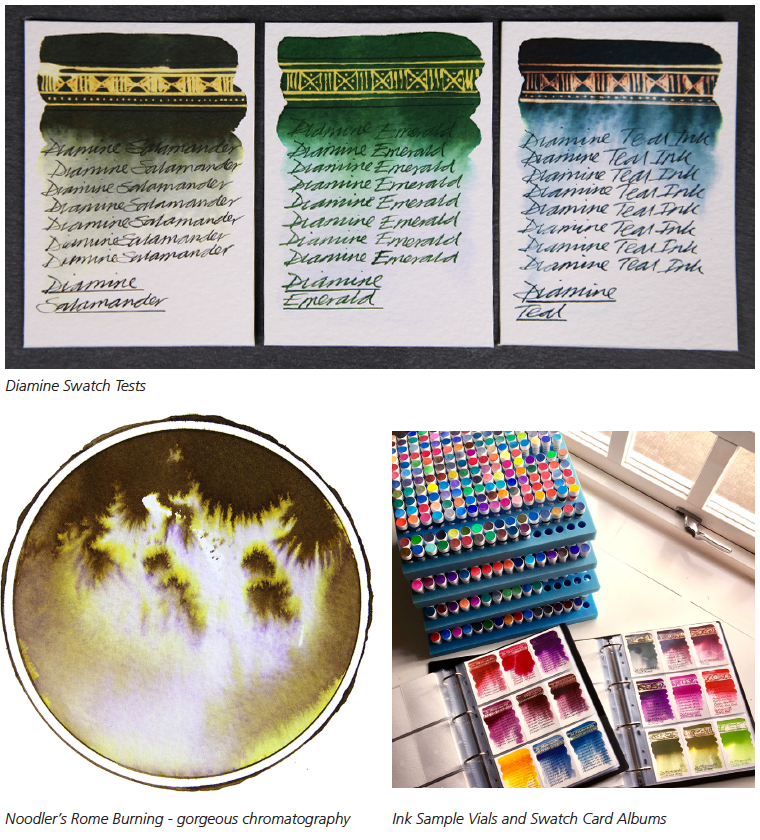
Chromatography explores the properties of dye based fountain pen inks. By saturating an area of heavy rough textured watercolour paper, typically a rough textured 200lb paper, and then adding a drop of ink into the wetted area, the ink blends with the water and reduces in concentration as it spreads away from the point of entry. As the ink comes out of solution the dyes that make up the ink can be observed in different areas as the paper dries. It’s taking chromatography into an art context.
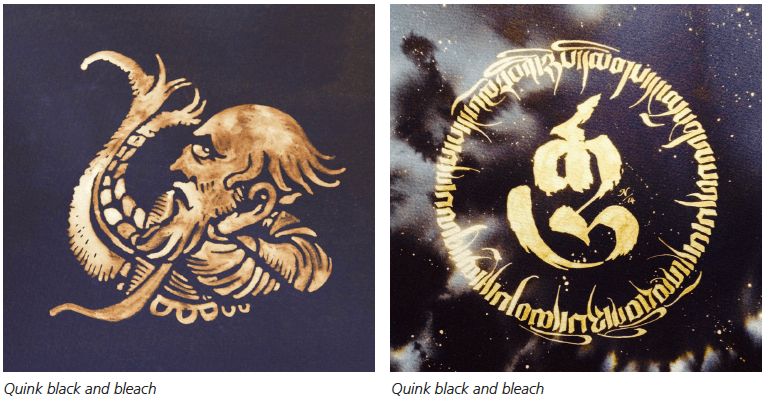
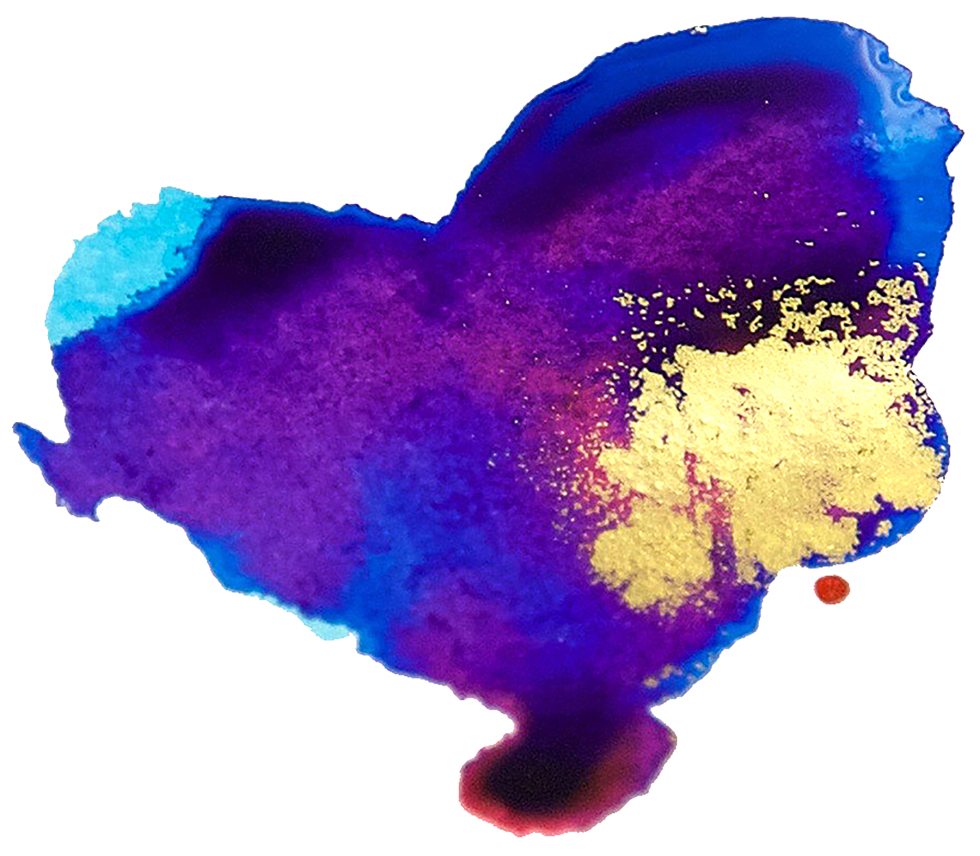
And once dry, one can write or paint on top of the swatch with bleach which reacts at a different intensity depending upon the density of the ink underneath. The reactions can vary from a dull gold over dense ink areas to a vibrant neon effect over less dense areas. But what is of key importance is that it is only with fountain pen inks that this bizarre reaction happens.

Each fountain pen ink is unique. Some inks don’t react while others reveal a whole range of unexpected behaviours, colours, reactions and creative possibilities. To-date I have subjected over 2,000 individual inks to my bleach swatch testing process and witnessed some interesting outcomes.
Water Based Techniques – Chromatography
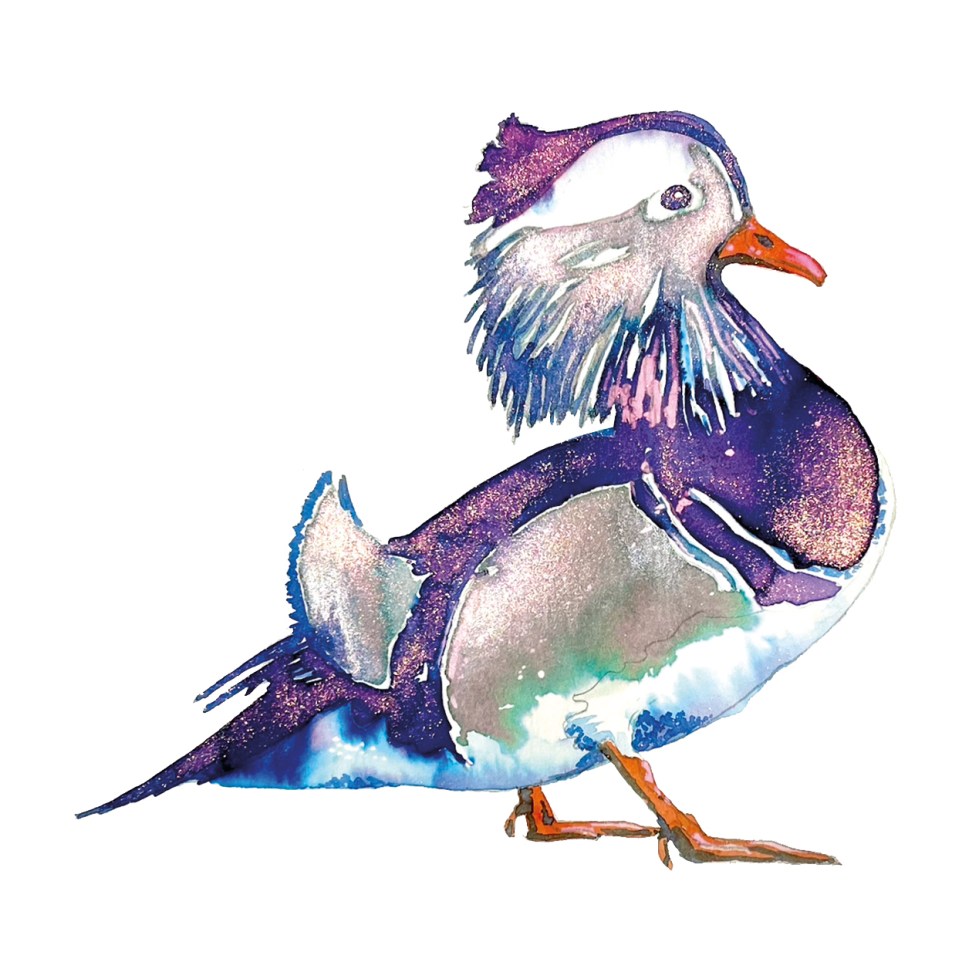
By employing water based techniques, one can achieve a convincing watercolour style painting by simply letting the inks do what they do. In the illustrations below, the sky and foregrounds have created themselves. The details in the foreground were achieved using simple marks applied with a dip pen.
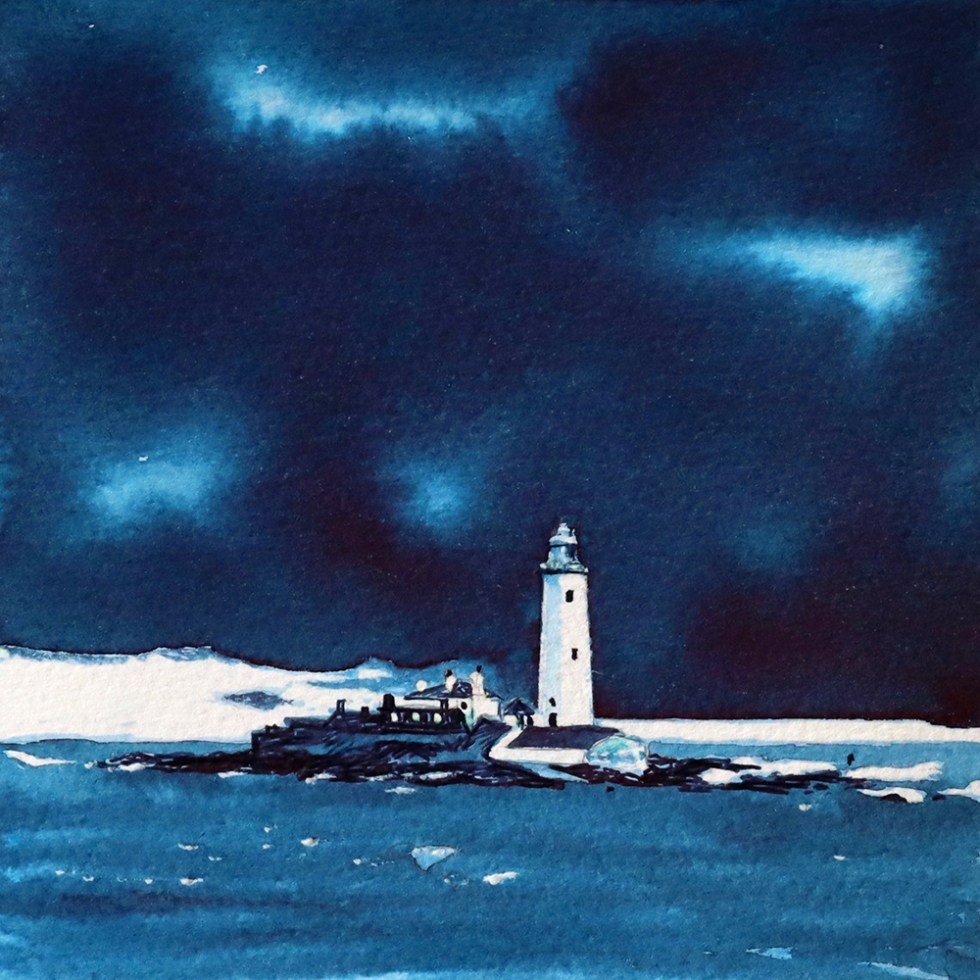
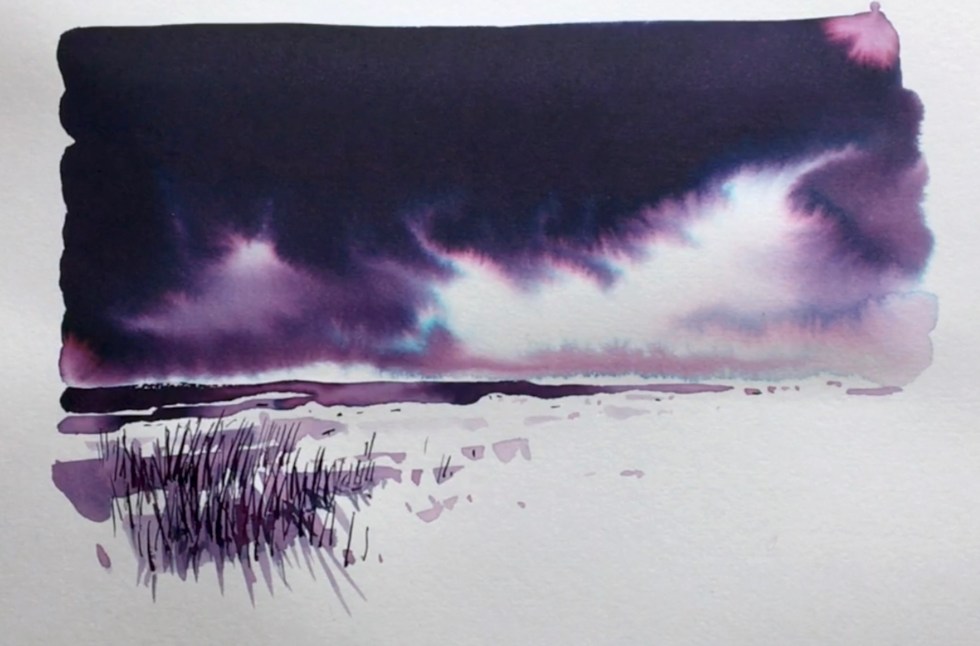


The wonderful thing is that this simple wet in wet technique is actually easier and quicker than watercolour painting! Without even touching upon the word ‘serendipity’ I think this would appeal to all amateur artists for this one reason alone.
Harking back to my mantra of ‘less is more’, the illustration above has been created with 2 inks although at first glance one might assume that 4 or 5 colours have been employed.
For enthusiasts of art journaling, diary keeping and sketching, this simple and natural process enables a simple and seamless visual continuity and a medium continuity between image and the written word.
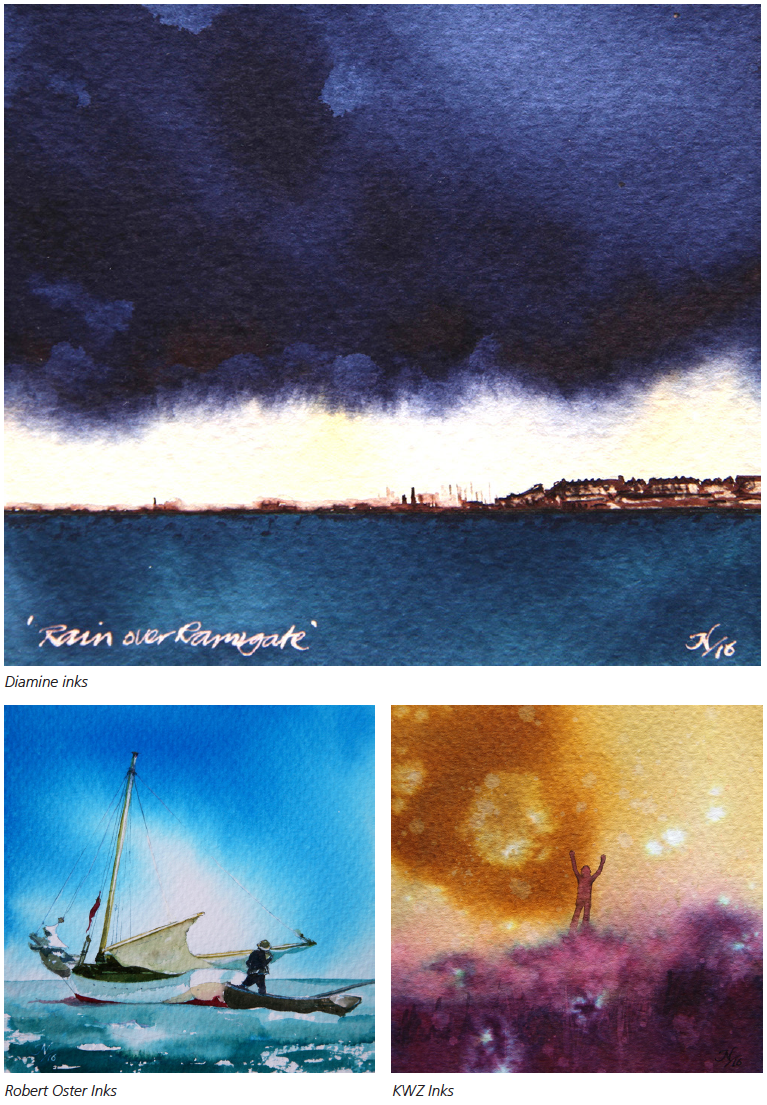
What is also of interest is that all fountain ink ink ranges are made differently. Each ink maker has their own and recipes and processes. So, one range of inks may suit a particular subject matter better than another. Robert Oster Signature inks are ideal for bright conditions. KWZ inks are more suited to soft focus. Diamine are great for more graphic use. Noodler’s are more experimental and abstract.
Bleed, Resist and Bleach Techniques
I have recently been testing fountain pen friendly pigmented inks. These are water resistant and agent resistant, which has thrown up a whole new area of experimentation and resist techniques when used in conjunction with dye based inks that have chromatic qualities and react to bleach.

The final effect is visually pleasing in many ways – as not only has the outcome been achieved using only two inks, adhering to my ethos of ‘less is more’, but because of the limited colour palette, the complex final image looks fresh and not overworked. The mottled gold areas where the bleach hasn’t obliterated the background colour add those magical serendipity effects unique to this process.
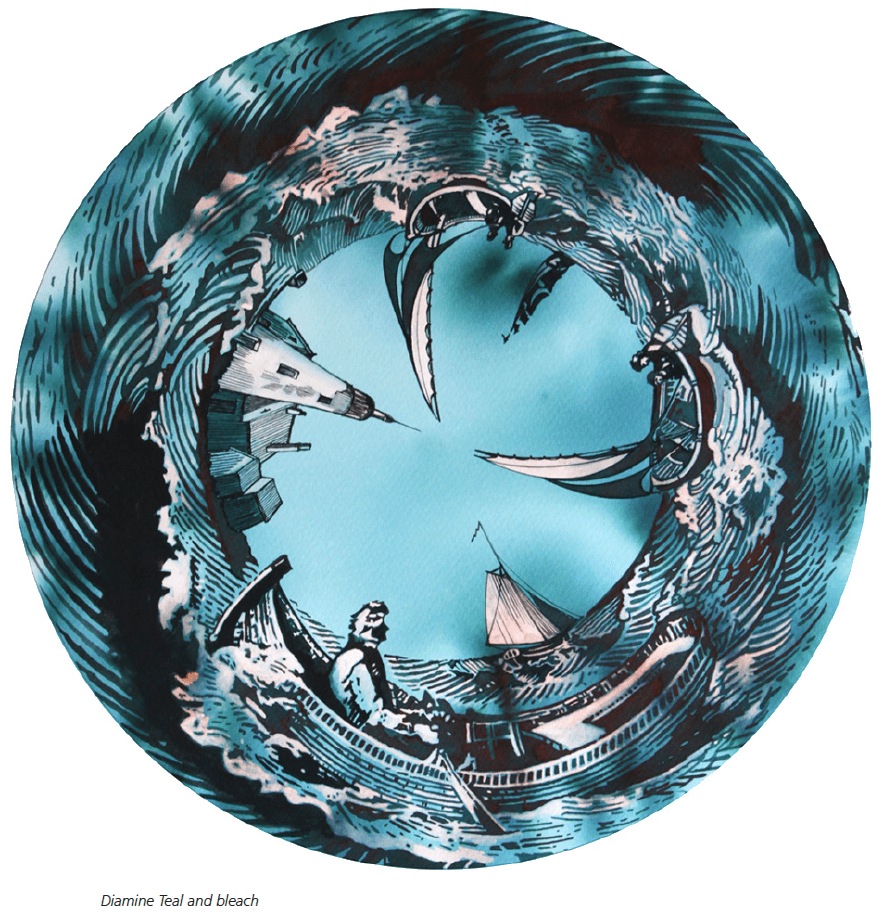
The above image takes inspiration from historical woodblock prints and incorporating a circular concept to evoke a sense of infinity, I have employed one of my own art techniques. I chose Diamine Teal ink not just for its colour. It bleeds easily with water on a Bockingford watercolour paper giving a range of mottled greeny blues and pinks at the breakdown of the wash and responds dramatically when subjected to bleach, revealing in some areas a pale salmon pink colour. The linework was applied once the background washes were dry, and was achieved using a fountain pen friendly pigment ink with a brush and dip pen. Below is an image created in the same way using only 2 Sailor Ink Studio inks – both dye based. Check out that chromatography!
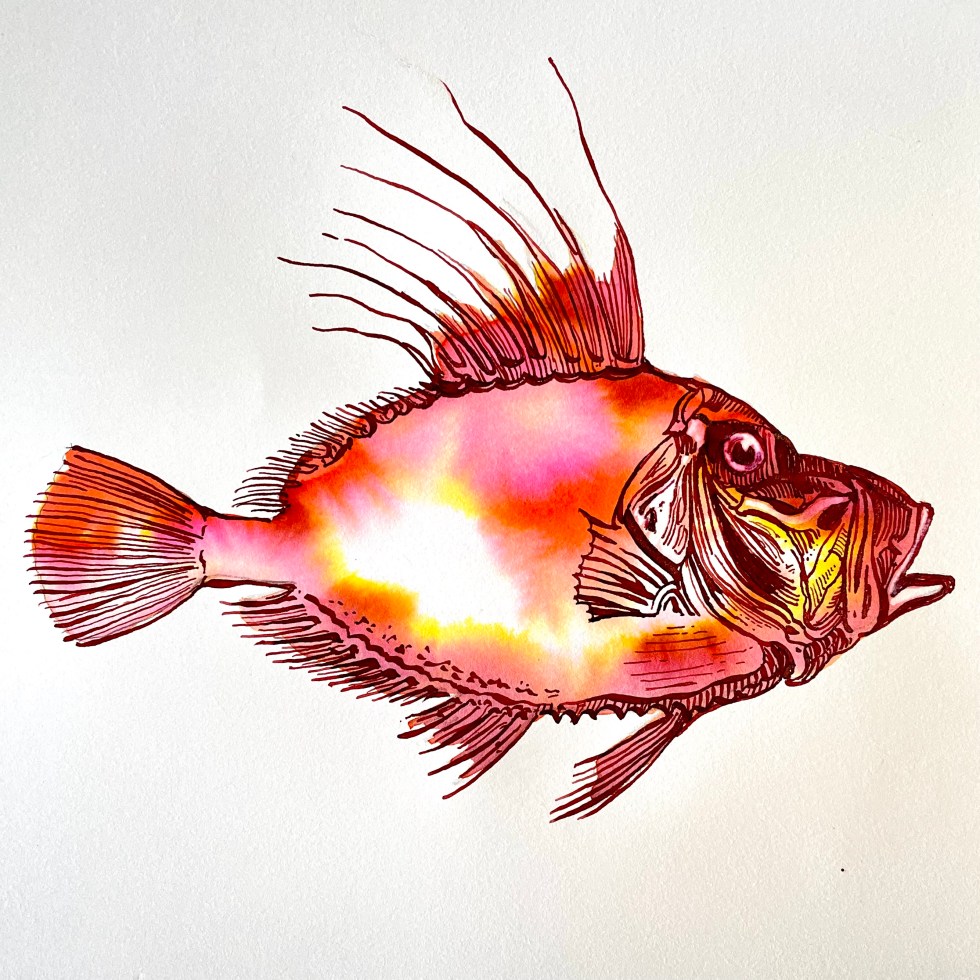
Bleed and Bleach Techniques
With more practice, the ink wash and bleach techniques, of working both dark into light and light into dark, start to take on a more complex, technical and recognisable genre look:
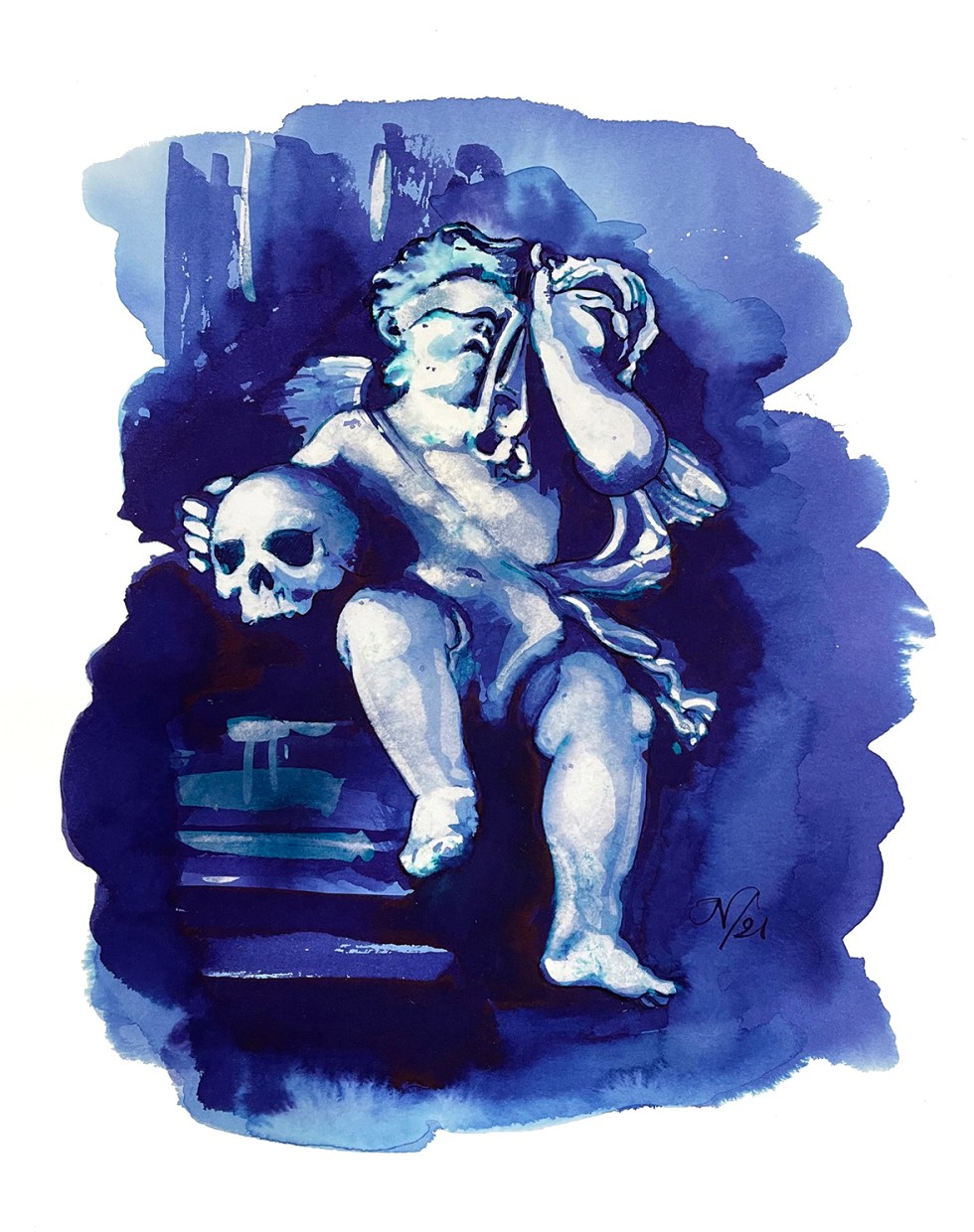
Robert Oster – Bishop to King
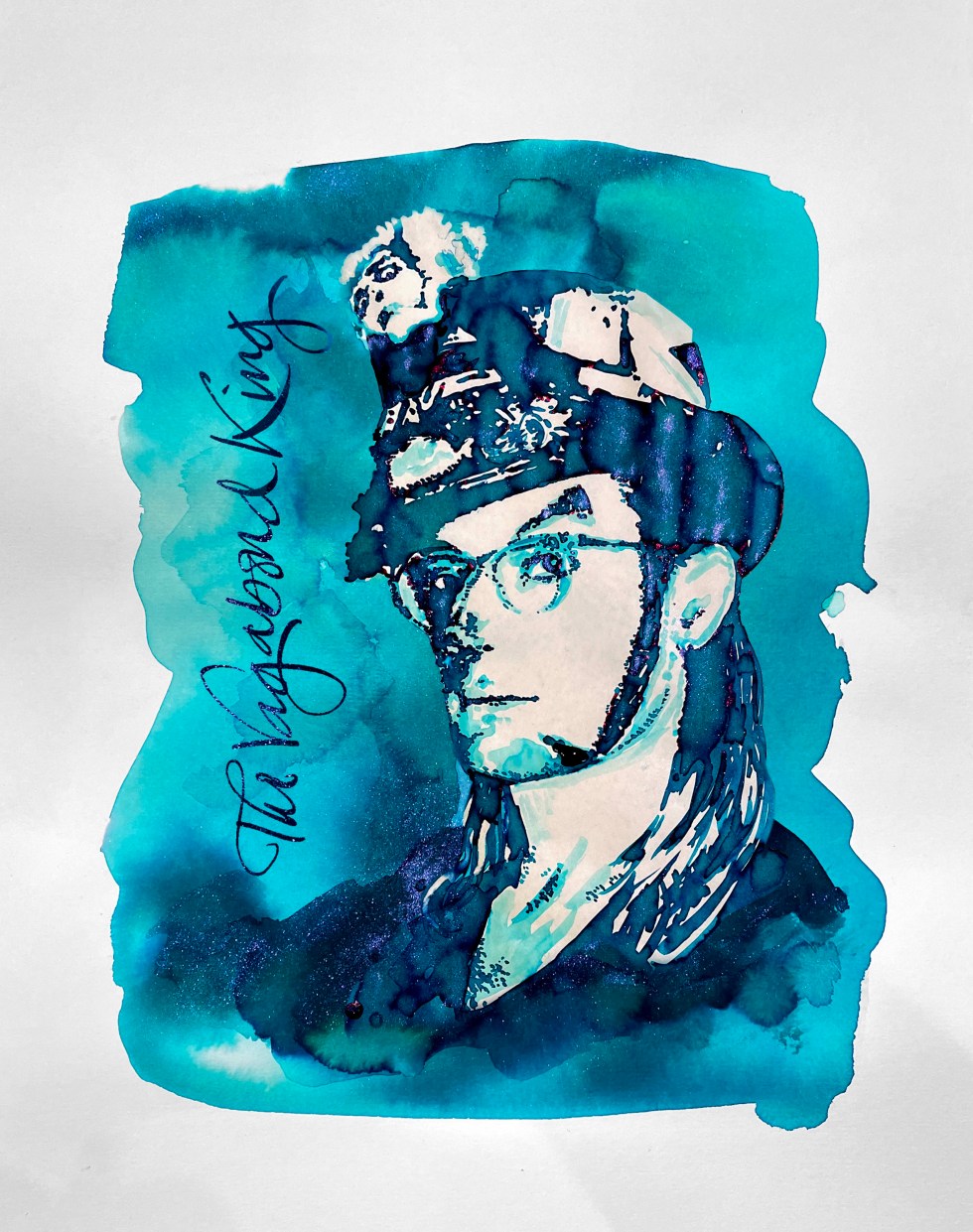 Wearingeul – Wayfarer
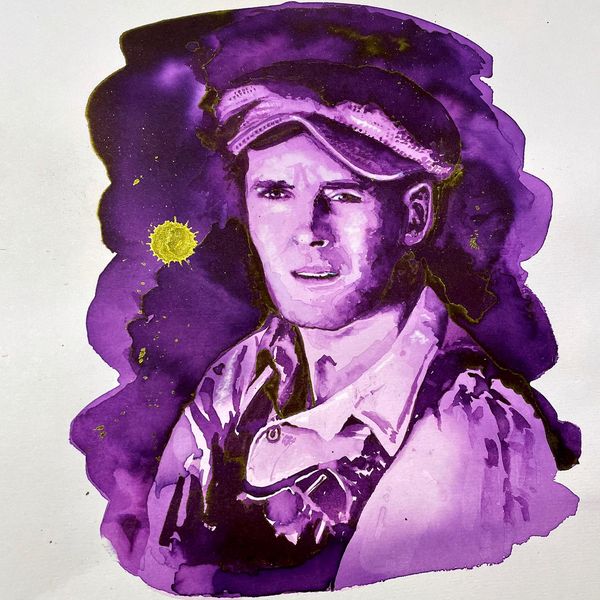
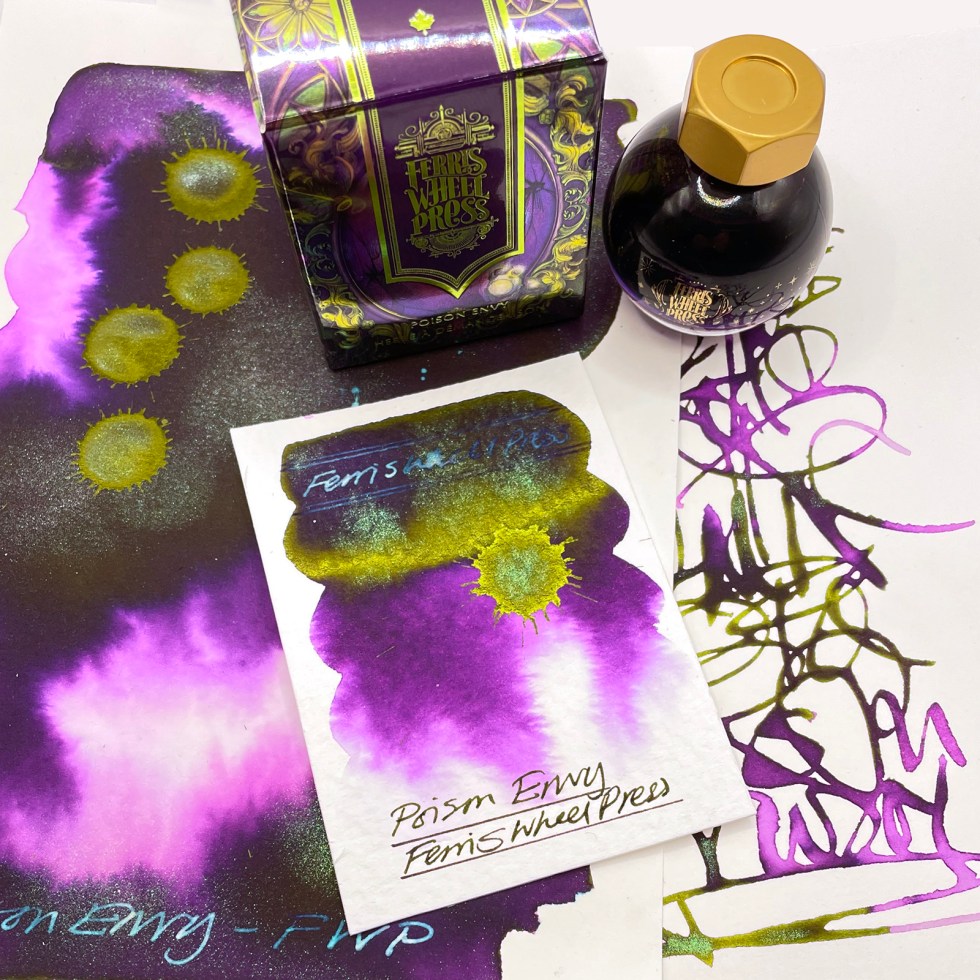
Ferris Wheel Press – Poison Envy

It’s this special combination of dye based inks, pigment inks and bleach that makes this project pop. It would appear to be a niche genre – immediate, unique and visually impactive – but more than anything else, it’s captivating and inspiring through its inherent serendipity.
Ink blending is easy and the vibrancy of the dye based inks make any artwork jump off the page.
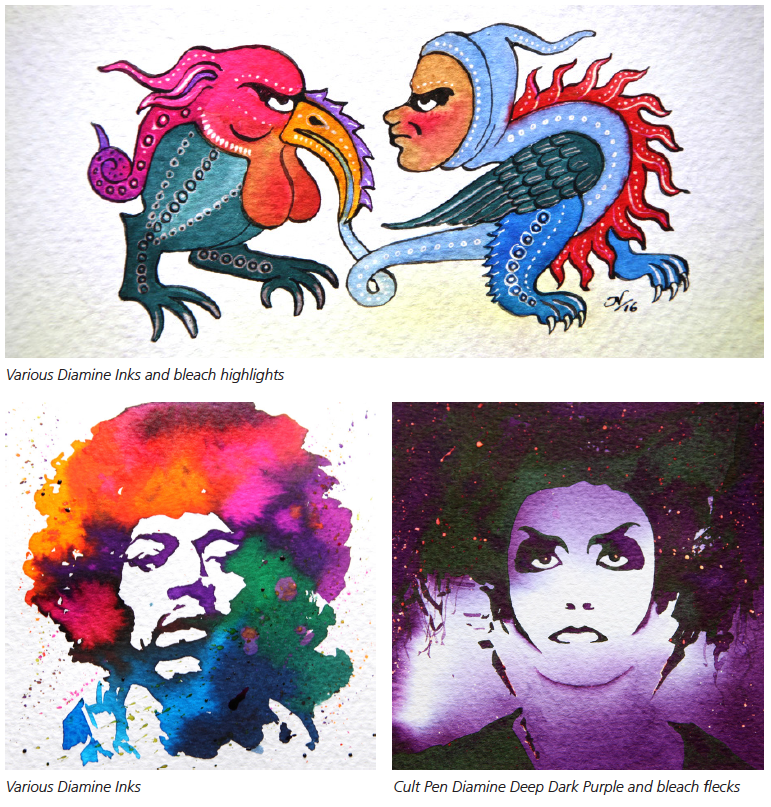
Sheen, Shimmer, Shimmer/Sheen and Chameleon inks
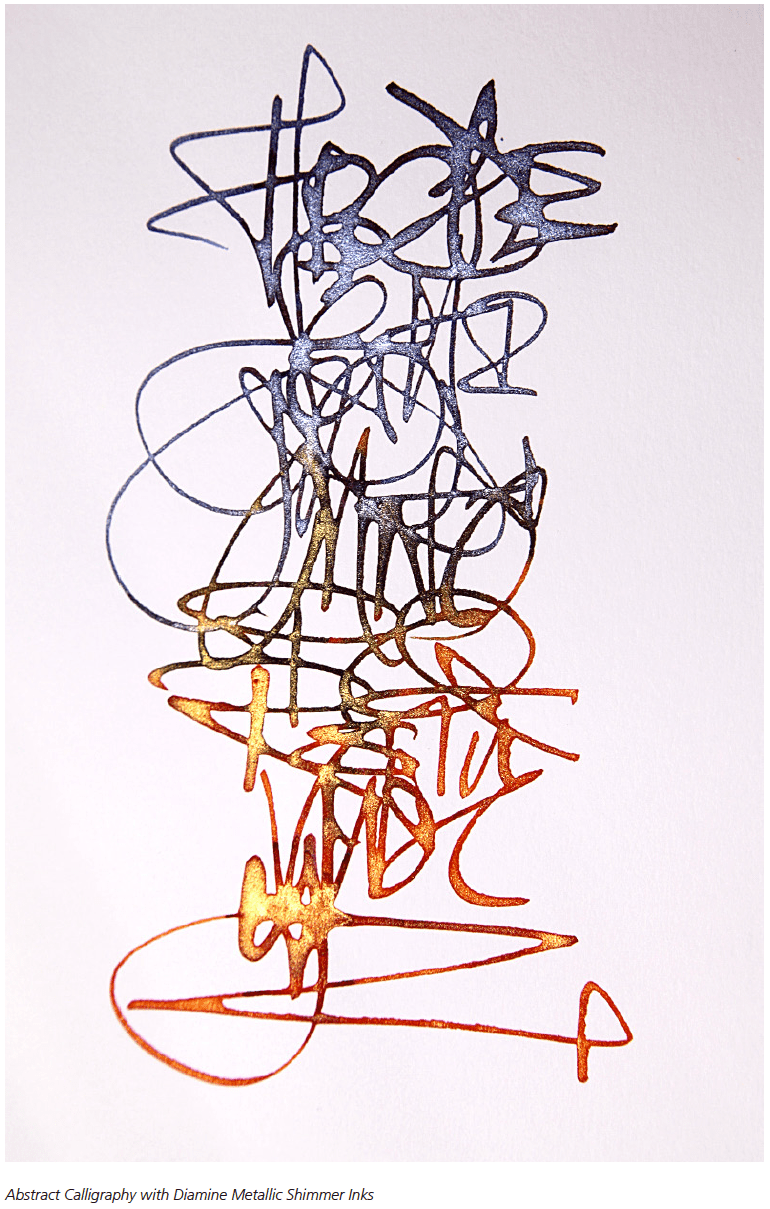
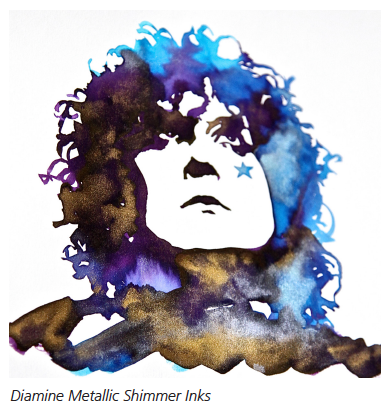 The relatively recent releases of sheening, shimmer, shimmer/sheen and chameleon dye based fountain pen inks plus a renewed interest in pigment based fountain pen inks further raises the breadth of visual possibilities for creatives wishing to engage with this fascinating medium.
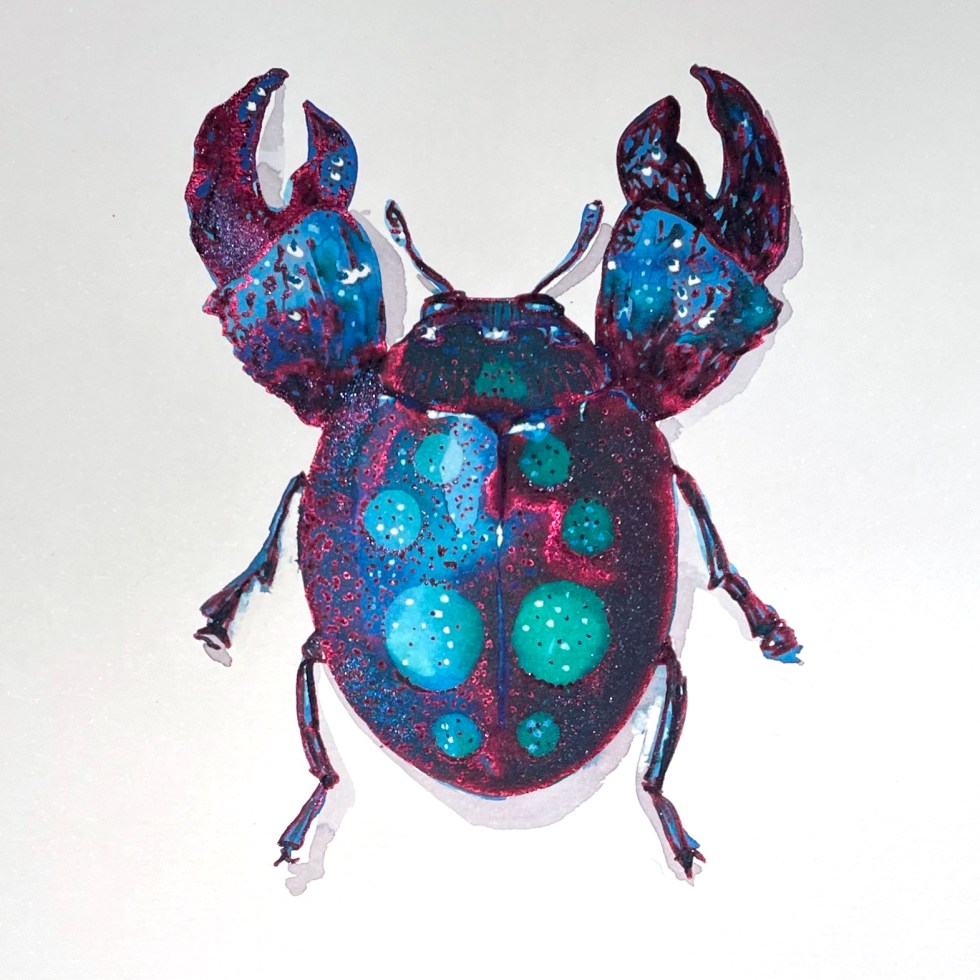
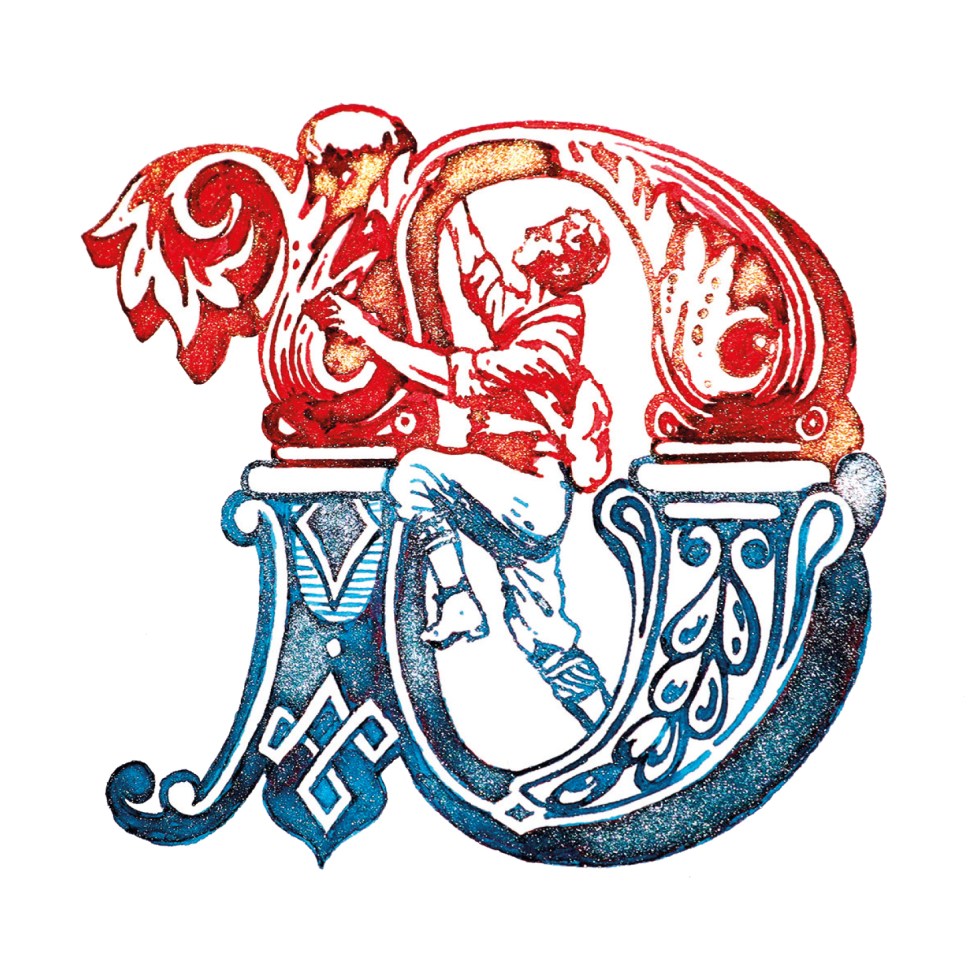
Four Colour (CMYK) Mixing
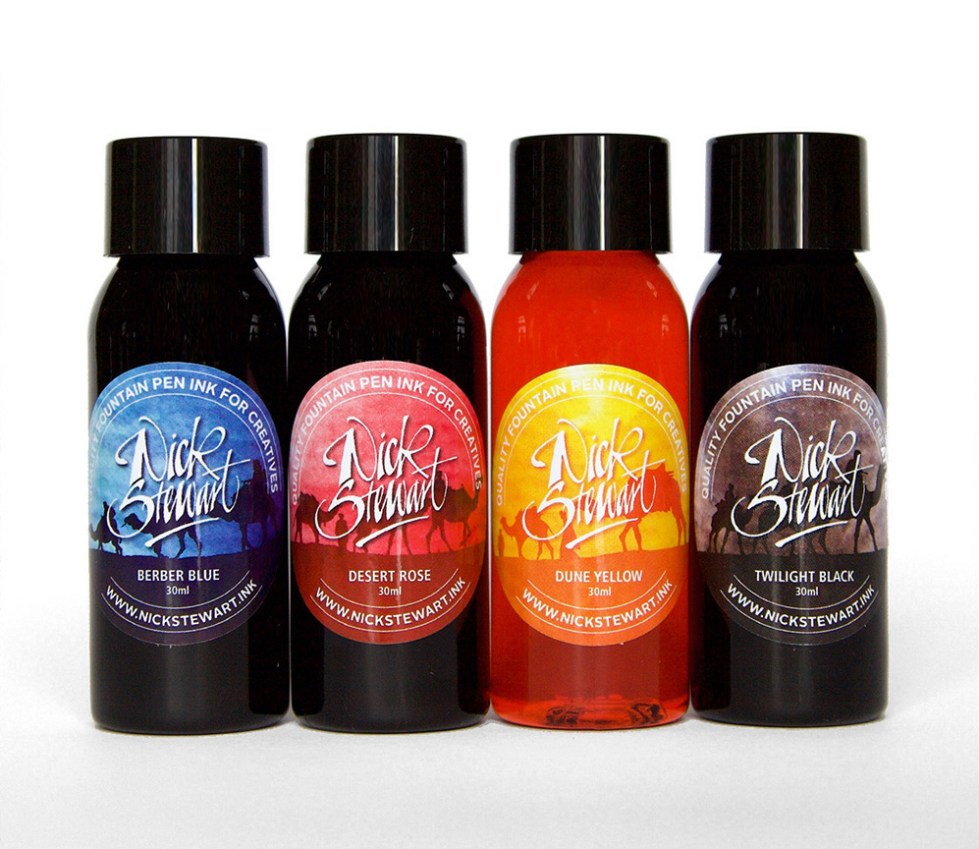
Another aspect of fountain pen ink art, is creating colours out of the four primary colours: cyan, magenta, yellow and black. Once a secondary or tertiary colour has been created it can be used for handwriting with a fountain pen. As well as for writing, these four colours can be used like watercolour paints for illustration and painting in the studio or plein air, plus, they all react with bleach, which can be used for erasing, highlighting and as a colour catalyst.
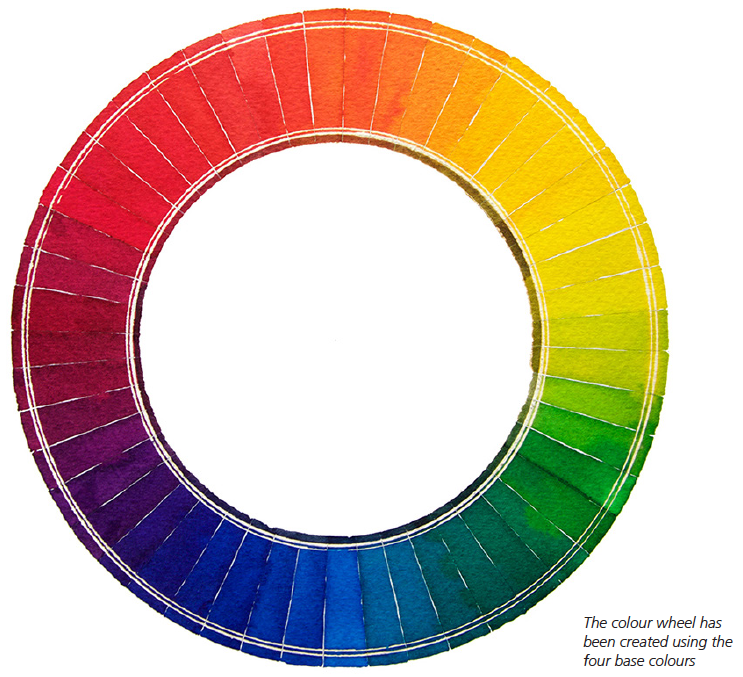

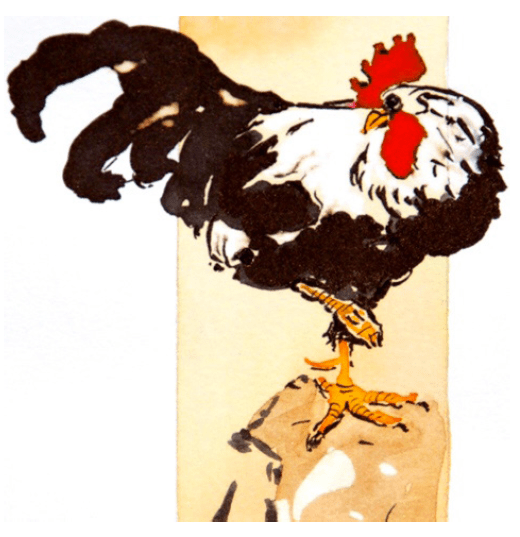 Spot the difference? The top 2 illustrations were created with individual inks. The bottom 3 illustrations were achieved making colours with the CMYK kit and bleach!
Abstract Marks
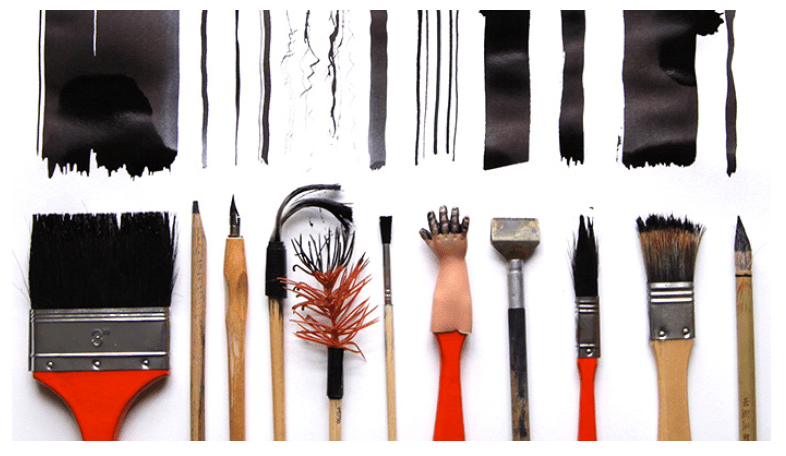
Fountain pens are the obvious tool for employing fountain pen inks but this doesn’t have to be the case any longer. Applying the inks is another area of investigation which this project covers and involves looking at pens and brushes which may deviate in concept and design from the accepted norms and can involve personal customisation.
Eager to know more? Why not check out my workshops or my online course?
 FOUNTAIN PEN INK ART
