Image

New to nonsite

Does ChatGPT refer with Names? Design Intention and Derivative Reference in Large Language Models

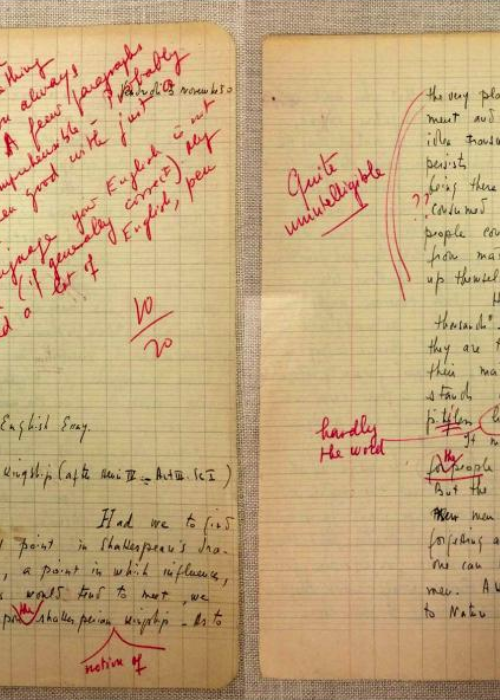
Many writers discussing Artificial Intelligence argue that what a Large Language Model produces are not sentences with truth-values but rather “stochastic parrotings” that can be interpreted as true or false, but in the way that Daniel Webster interpreted the Old Man in the Mountain as a sculpture by God with a message for humanity. Steffen Koch has argued that names used by LLMs refer in virtue of Kripkean communication-chains, connecting their answers to the intended referents of names by people who made the posts in the training data. I argue that although an LLM’s uses of names are not connected to human communication chains, its outputs can nonetheless have meaning and truth-value by virtue of design-intentions of the programmers. In Millikan’s terms, an LLM has a proper function intended by its designers. It is designed to yield true sentences relevant to particular queries.


Read More »

What the photographer does: Luc Delahaye in Conversation with Michael Fried

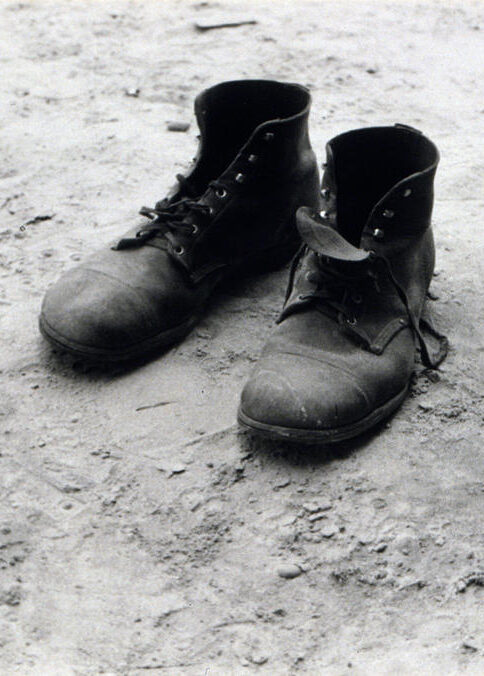
Photographing ordinary subjects with no particular drama was a response to what sometimes appeared to me as a limit: the fact that the photographs I made in the context of news events drew their strength from that of the situations themselves. I thought this was too simple, that ultimately a powerful subject weakens the image. What creates the irreducibility of the photograph is the mechanical trace of the experience, which gives it a value of enunciation. A photograph is the product of a gaze, a moment, and things; it’s the actualisation of presence. But the technical determination of the photographic tool on the one hand and the subordination to the contingencies of the real on the other reduce the perimeter of “making” and give the unconscious a major role. In a way, all that remains for the photographer is the unconscious.

Read More »

What Comes After Liberalism?

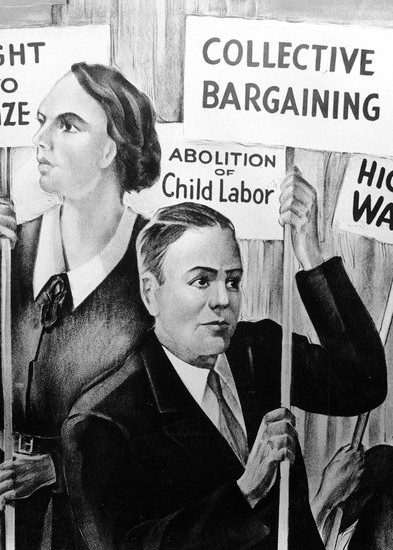
Justice Sotomayor’s dissent reflects some of the best principles, the most attractive values, of a liberalism—liberal capitalism—that we on the left have been criticizing for a century. And central to our critique has been the idea that the effort to reconcile labor and capital at the heart of this liberalism has been doomed to failure. What do we do now that we’re proven to be right?

Read More »

When the Investor Class Goes Marching In: Twenty Years of Real Estate Development, Privatization and Resiliency in New Orleans

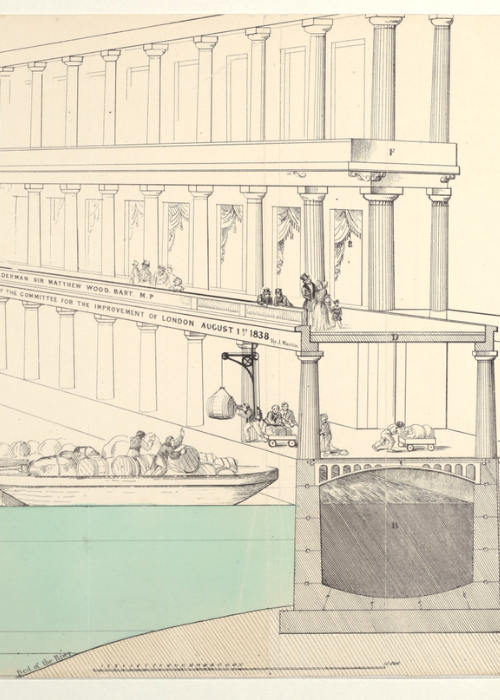
What the storm and the sheer devastation wrought in its wake made possible was the consolidation of this ideological transformation virtually overnight—as city boosters, public officials, wealthy developers, private contractors, multinational hotel chains, anti-poverty researchers, entertainment conglomerates, and charter school advocates coalesced to promote a vision of wholesale privatization.

Read More »

Charity, Philanthrocapitalism, and the Affect Economy (2013)

The seductive notion that private-sector movements will rectify or redress and respond to the larger problem of disenfranchisement of the poor and the underrepresented in America is powerful, especially for those who see their participation in such movements as a radical alternative to conventional infrastructures of social inequality and who reap the rewards of such action.

Read More »

Action/intention/interpretation/ambition—Timothy Bewes and Jensen Suthers

The worry that underlies the sense that both writers and readers can be irresponsible—the writer by failing to have the right relation to her intention, the reader by failing to attend to the writer’s attention—is incoherent. Everyone who produces a speech act produces a text that means what she means by it; everyone who reads one is understanding (or misunderstanding) what she meant by it. This is the force of the non-optional—the reason why intentionalism cannot be a choice—the reason, really, why there is no such thing as intentionalism.

Read More »

Neoliberal Hurricane: Who Framed New Orleans? (2007)

Fundamentally, the agenda of the new urban right is about setting the ‘ground rules’ for appropriate behaviour in cities, largely modeled on middle-class norms; establishing the preconditions for economic growth, largely through the kinds of minimalist supply-side interventions metaphorically represented, in this case, by the cat-5 levee; and maintaining social order through ruthless application of the force of law, facilitated by zero-tolerance policing.

Read More »

Blinded by Righteous Outrage: From the 1994 Crime Act to Trump 2.0

From the 1994 Crime Act through to the re-election of Donald Trump, liberal thought shapers and policymakers have tended to draw upon a moral righteousness that uncouples racial disparities from the material contexts that engender them, thereby obscuring neoliberalism’s inability to deliver for poor and working-class Americans—blacks being overrepresented among them. As the Trump administration aggressively moves to dismantle the gains that African Americans and other non-whites have made since the Civil Rights Movement if not Reconstruction, progressives should take seriously the counterproductive implications of a righteous, groupist social justice discourse that mistakes sermonizing for analysis while treating “races” as epigenetic identities (rather than ascriptive categories) with discrete interests.

Read More »

Past Issues

New to nonsite

Does ChatGPT refer with Names? Design Intention and Derivative Reference in Large Language Models

Many writers discussing Artificial Intelligence argue that what a Large Language Model produces are not sentences with truth-values but rather “stochastic parrotings” that can be interpreted as true or false, but in the way that Daniel Webster interpreted the Old Man in the Mountain as a sculpture by God with a message for humanity. Steffen Koch has argued that names used by LLMs refer in virtue of Kripkean communication-chains, connecting their answers to the intended referents of names by people who made the posts in the training data. I argue that although an LLM’s uses of names are not connected to human communication chains, its outputs can nonetheless have meaning and truth-value by virtue of design-intentions of the programmers. In Millikan’s terms, an LLM has a proper function intended by its designers. It is designed to yield true sentences relevant to particular queries.
Read More »

What the photographer does: Luc Delahaye in Conversation with Michael Fried

Photographing ordinary subjects with no particular drama was a response to what sometimes appeared to me as a limit: the fact that the photographs I made in the context of news events drew their strength from that of the situations themselves. I thought this was too simple, that ultimately a powerful subject weakens the image. What creates the irreducibility of the photograph is the mechanical trace of the experience, which gives it a value of enunciation. A photograph is the product of a gaze, a moment, and things; it’s the actualisation of presence. But the technical determination of the photographic tool on the one hand and the subordination to the contingencies of the real on the other reduce the perimeter of “making” and give the unconscious a major role. In a way, all that remains for the photographer is the unconscious.

Read More »

What Comes After Liberalism?

Justice Sotomayor’s dissent reflects some of the best principles, the most attractive values, of a liberalism—liberal capitalism—that we on the left have been criticizing for a century. And central to our critique has been the idea that the effort to reconcile labor and capital at the heart of this liberalism has been doomed to failure. What do we do now that we’re proven to be right?

Read More »

When the Investor Class Goes Marching In: Twenty Years of Real Estate Development, Privatization and Resiliency in New Orleans

What the storm and the sheer devastation wrought in its wake made possible was the consolidation of this ideological transformation virtually overnight—as city boosters, public officials, wealthy developers, private contractors, multinational hotel chains, anti-poverty researchers, entertainment conglomerates, and charter school advocates coalesced to promote a vision of wholesale privatization.

Read More »

Charity, Philanthrocapitalism, and the Affect Economy (2013)

The seductive notion that private-sector movements will rectify or redress and respond to the larger problem of disenfranchisement of the poor and the underrepresented in America is powerful, especially for those who see their participation in such movements as a radical alternative to conventional infrastructures of social inequality and who reap the rewards of such action.

Read More »

Action/intention/interpretation/ambition—Timothy Bewes and Jensen Suthers

The worry that underlies the sense that both writers and readers can be irresponsible—the writer by failing to have the right relation to her intention, the reader by failing to attend to the writer’s attention—is incoherent. Everyone who produces a speech act produces a text that means what she means by it; everyone who reads one is understanding (or misunderstanding) what she meant by it. This is the force of the non-optional—the reason why intentionalism cannot be a choice—the reason, really, why there is no such thing as intentionalism.

Read More »

Neoliberal Hurricane: Who Framed New Orleans? (2007)

Fundamentally, the agenda of the new urban right is about setting the ‘ground rules’ for appropriate behaviour in cities, largely modeled on middle-class norms; establishing the preconditions for economic growth, largely through the kinds of minimalist supply-side interventions metaphorically represented, in this case, by the cat-5 levee; and maintaining social order through ruthless application of the force of law, facilitated by zero-tolerance policing.

Read More »

Blinded by Righteous Outrage: From the 1994 Crime Act to Trump 2.0

From the 1994 Crime Act through to the re-election of Donald Trump, liberal thought shapers and policymakers have tended to draw upon a moral righteousness that uncouples racial disparities from the material contexts that engender them, thereby obscuring neoliberalism’s inability to deliver for poor and working-class Americans—blacks being overrepresented among them. As the Trump administration aggressively moves to dismantle the gains that African Americans and other non-whites have made since the Civil Rights Movement if not Reconstruction, progressives should take seriously the counterproductive implications of a righteous, groupist social justice discourse that mistakes sermonizing for analysis while treating “races” as epigenetic identities (rather than ascriptive categories) with discrete interests.

Read More »

Past Issues