
In the dying days of 2023, we came together to reflect on the best things that we read, watched, listened to and played this year. Tune in to the end for our “dishonourable mentions” as well, where we consider…the opposite.
A Preternatural Experiment

In the dying days of 2023, we came together to reflect on the best things that we read, watched, listened to and played this year. Tune in to the end for our “dishonourable mentions” as well, where we consider…the opposite.

We wrap up our 2023 book club with a recent release, The Terraformers (2023) by Annalee Newitz. This throwback to the fix-up novel explores a lot of big ideas about ecology, biology and society, but do all the many, many elements work together as a whole? And what’s up with all the references to Canada? We discuss.
Download the Podcast (archive.org page)
Mentioned in this episode:
Our Opinions are Correct podcast with Charlie Jane Anders and Annalee Newitz
Tech Won’t Save Us podcast

A working-class memoir? In this day and age? We sit down to discuss Ducks: Two Years in the Oil Sands (2022) by Kate Beaton.
Warning: Includes mentions of sexual assault and workplace harassment.

We talk about Parable of the Sower (1993) by Octavia Butler, which begins in the far-future year of 2024. And yet somehow, this still seems like a shockingly plausible representation of what next year could like.
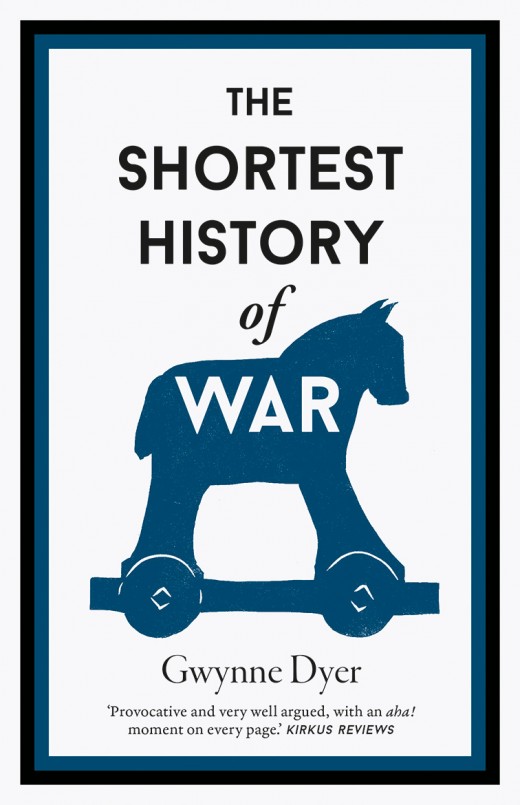
Gwynne Dyer, The Shortest History of War (2022)
Not long ago, I went to see a public lecture by military historian Gwynne Dyer called “War in the 21st century.” The title did not speak to the bulk of the talk, which ended up being a wide-ranging discussion of the human behavioural impulse towards violence. A good thing, because that ended up being a more interesting topic to sit through.
The talk came in the wake of Dyer’s most recent book, The Shortest History of War, which likewise has a broad-strokes approach to grappling with what this killing is all about. The title plays to the “Oxford very short introduction” style of content; the book is in fact quite short, and is more inclined towards conceptual arguments behind what motivates the act rather than a recount of all the times states have rubbed up against each other. That makes for a breezier read, and opens up a lot more questions.
The first part spends a while exploding that common wisdom that hunter-gatherer societies lived in peace and that war is a marker of the advent of civilization. Dyer recognizes hunter-gatherer societies of the pre-agriculture period as egalitarian but, strangely for all that, equally prone to murdering people outside the community. War-like behaviour appears in primates and predates humans as a species; the shape of society was different but the relative number of people killed in conflicts over resources and social faux pas between groups was pretty high. The invention of agriculture and state formation only increased the scale and level of organization, from isolating a few people in a different community and beating their heads in to the mass armies bristling with spears. The through line of escalating violence and weapons technology takes us through the ancient world and onward to the nuclear bomb, a length of time Dyer speeds through before moving on to more in-depth consideration of more recent warfare and how our species needs to abandon war or face mass extinction.
One of the statements from the lecture I hoped to see elaborated here wasn’t, that for a long time waging war was immensely profitable for states until about the mid-nineteenth century. Afterwards, that stopped being the case, and yet humans kept doing anyway. I would have liked to see that here, and I also found the examples used leaned heavily on European history, which becomes a problem when constructing a global argument. Another quibble: there are lots of diagrams sprinkled through the book I could have done without – the explanations in the text are clear enough that the visual representations feel redundant.
That said, Dyer is a very engaging writer, and once the book goes back to his wheelhouse of modern history and current affairs he provides a very succinct explanation of current projects to tamp down conflict and ensure that we don’t all end up starving during a nuclear winter, with a wry and realistic eye at how likely these efforts are to succeed. He also ties the long string of human conflicts to a central tension that I hadn’t really considered: it’s actually hard to get most people to kill someone else, and yet there remains an impulse to compel us to do it. The last chapters make a strong case for how and why we should stop.

We discuss Ficciones by Jorge Luis Borges, and marvel at how much literature you can pack into so few pages.

 One Last Sketch