Precuneus growth and development

Image

The precuneus is still an elusive element of the brain. It is the result of an anteroposterior functional gradient integrating body perception and vision, and a dorsoventral gradient integrating this visuospatial frame with episodic memory and autonoetic projections. The body is used as a sort of metric unit to “travel” through physical, chronological, mnemonic, and social spaces. It is like the “homunculus” we throw on Google Maps to explore a virtual environment, and run through imagined pixel-based landscapes. Namely, the precuneus is a key node for mental imaging, consciousness, and self-construction.

This week, we have published a still-missing study on this key cortical region: ontogeny. We have analyzed shape and size variations in the precuneus from birth to early adulthood. Here are the main results. First, its growth is largely associated with general brain growth, mostly in the first two years after birth, reaching a plateau before five years of age. Second, during this early period, there are only minor shape changes, which include a bit of dorsal extension. Therefore, the expansion of the precuneus (and its contribution to dorsal brain bulging) is distributed through the pre- and postnatal stages, although the former period is probably more relevant, in this sense. Third, the outstanding individual diversity can be detected in all age groups, since birth. This is particularly important, because it means that this pronounced diversity must originate prenatally, influenced by intrauterine or genetic factors. Fourth, although the precuneus dorsal extension represents the main feature involved in its variations, there are multiple factors involved in its morphology, likely due to the many topological influences of the neighboring regions. Fifth, the dorsal and ventral regions of the precuneus are not much integrated, as they belong to distinct morphological modules. The dorsal region fades into the superior parietal lobule, and should probably be interpreted as its hidden deep part. The ventral region fades instead into the posterior cingulate and retrosplenial areas, without a clear boundary. This separation is also relevant when dealing with aging. The subparietal sulcus could probably be used as a conventional and operational reference to separate these two morphological blocks. It is hence mandatory to keep these two regions separated, when analyzing structural and functional features of the posteromedial parietal cortex.

The precuneus displays a noticeable diversity in adult humans, mostly in its longitudinal proportions. These variations are due to differences in cortical surface area. Nonetheless, its variability also concerns the vertical extension, and the sulcal patterns. The main focus of diversity is localized in its dorsal and anterior region, the one most involved in somatic awareness. It is much more expanded in humans, when compared with apes. Probably, it is also more expanded in Homo sapiens, when compared with extinct hominids. Such evolutionary change could have occurred recently, say in the last 50-100 thousand years. The precuneus is also a hot target for neurodegeneration, possibly because of its functional and structural complexity. You can find a list of posts on the precuneus right here.

What is left? Well, surely many details, but the main mystery is still the complex (and unclear) association between anatomical and cognitive variability.

Tech and cognition

Image

In a detailed perspective review, Giovanni Federico and colleagues have recently presented a comprehensive proposal to disclose the neural structure supporting the human technological cognitive skills. Their model integrates those cortical regions associated with causal reasoning, semantic cognition, visuospatial skills, sensorimotor knowledge, and social learning. The journal (Cognitive Neuroscience) is collecting commentaries on this article, and the ongoing discussion is indeed stimulating. My commentary has now been published too, dealing with technological evolution, embodiment, extended mind, and cognitive archaeology. In my brief comment, I frame technological cognition within the hypothesis of a specialized prosthetic ability, which I have been proposing in several papers (e.g., Frontiers in Psychology 2019; Brain Structure and Function 2023), and in the recent book on body cognition and visuospatial integration. In my opinion, the great challenge to investigate human technological cognition is to understand how cognitive integration and extension do work. This would probably require a shift of attention from tool-making and tool-using to a previous and neglected step: tool-sensing. About human evolution and cognitive archaeology, I stress the necessity to rely on clear definitions, and experimental approaches. Finally, I discuss possible drawbacks: the fact that technological extension is a derived natural specialization of humans, does not mean that it is free from risks, limitations, or downsides. In this context, I recommend (once more) reading an old-and-gold book by Konrad Lorenz: The Waning of Humaneness. A technocratic society has pros and cons, mostly when evolutionary success and individual well-being come into conflict. Here you can find a dissemination article (in Spanish) on this topic.

Apeology

Image

Excellent paper published by Aida Gómez-Robles and colleagues on craniofacial divergences in apes. A dense landmark model has been used to compare evolutionary rates in lesser apes, great apes, and humans, through different cranial regions. Gibbons and humans share a globular braincase and small faces, and can therefore be interesting parallel alternatives in hominoids’ evolution. As expected, the species with the most striking changes and unusual evolutionary rates is … Homo sapiens! This result should (once more) call into question whether it really makes sense to group humans in the same family as chimps and orangs. Extremely different animal models, evolutionary histories, and cognitive niches. If we were snails, there would be no doubt about the decision.

Interestingly, beyond humans, gorillas display an accelerated evolution in many features. On the one hand, this could (once more) call into question whether genetic affinity tells us something about phylogeny, or simply about … genetic affinity! Different evolutionary rates are apparent in anatomy, but more elusive in molecular data. The current molecular dogma states that humans and chimps are sister groups because of their genetic proximity. But what if the genetic change is not linear or heterogeneous? There are still many features (anatomy, locomotion, physiology, ecology, biogeography) that can hardly be explained as parallelisms in chimps and gorillas. Could an evolutionary acceleration in gorillas (even in genetic terms) explain, in part, such a contradictory view between molecular conclusions and the rest of the biological landscape?

On the other hand, this analysis calls (once more) into question whether a huge number of surface landmarks introduces more information or more noise. The authors discuss this point in detail (and here is a commentary on this aspect). Among their results, for example, there is an unexpectedly poor divergence of the highly derived parietal morphology in humans, obscured by the noticeable morphological change of the parietal and occipital bones in gorillas, because of their … bony crests. Indeed, comparing neural influences with allometric effects of muscle biomechanics can be tricky (here is a study in which we tried to anchor a surface model to the parietal cortex, to investigate the bulging of the brain form in modern humans).  In many aspects, gorillas are but hypermorphotic chimps, so allometric rules and constraints can generate changes that are at the same time significant but scarcely informative in terms of derived features and evolutionary rates.

To me, the big message of this very comprehensive analysis is: human evolution rocks, but ape evolution rocks too! Gibbons are an amazing case-study for evolutionary zoology, and gorillas represent an astonishing primatological experiment. Most of the time (and beyond conservation issues), apes are investigated just as a comparison for humans. As derived and specialized taxa, they could be even misleading, in this sense. Additionally, this human-centered attention overshadows the importance of ape biology. Indeed, apes’ evolution should deserve more consideration, independently of their meaning in anthropology, because they represent a great evolutionary output, and intriguing alternatives of “how to be a hominoid”.

Tim Crow

Image

I have just realized that Timothy Crow passed away in November 2024. We collaborated some twenty years ago on a project aimed at investigating his hypothesis linking schizophrenia with brain asymmetries and the evolution of language. The photo above was taken in Crete, in 2007, during an amazing meeting with the people involved in the project. He was really an example of motivation and dedication: extremely calm, thoughtful, and unstoppable. I am extremely grateful to Tim for involving me in that project. Thanks to him, at that time I discovered evolutionary medicine, a field that still represents, after two decades, the main background of my research lines (see, for example, this perspective review, this recent book, this dissemination book, or this recent article). Thanks so much, Tim, for being such a clear and sincere reference. Here’s an obituary published in Nature.

The Tao of Taxonomy

ImageApparently, Georges-Louis Leclerc, Comte de Buffon, was a sort of hero of his time: noble in spirit, wise, brilliant, attractive, generous, uninterested in fame, supporting folk science and dissemination, his outstanding and pioneering achievements spanned many distinct fields of science and culture. He strongly supported human rights and equality. He proposed that “evolution” (the term was coined after an English translation of his transformism) was the mechanism generating the observed biological diversity. He was continuously encrypting and adjusting his inconvenient statements to swing between the restrictions of religious censorship and prosecution. He thought that taxonomy is a matter of conventional and useful naming, aimed at interpreting nature within the subjective vision of human culture. He died accompanied by the glory of his name. Carl Linnaeus lived a tricky life. Arrogant and deceitful, racist, classist, and sexist, obsessed, greedy for power and social recognition, and only competent in botany.  He thought that species are the product of God’s creation, and that he was here to reveal His plans. He aged and died tragically, leaving behind resentment and oblivion. You can read the whole story in this amazing book, a book that any biologist should read (and, here, a perspective summary). Then came the French Revolution, and human emotions reshaped, once more, history. Buffon represented the (complex and complicated) old aristocracy. Linnaeus, the (easier and simpler) new European frontiers. And the twist of fate did happen: the great hero forgotten and prohibited, and the shady botanic resurrected and gloriously mythologized. That’s how it works, those simple twists of fate. Buffon and Linnaeus were both born in 1707. They never met.

After three hundred years, things have developed further. Our current knowledge in taxonomy has definitely improved. Nonetheless, the roots are still fragile: no one knows what a species is. We have plenty of definitions, hundreds of mathematical models, thousands of papers and meetings on this topic, but no agreement. In some fields, things have been blurred further by mixing taxonomy with social, political, or personal interests. In paleoanthropology, naming species all too often means naming fossils, a sensible market for fossil hunters. More than ten years ago, I proposed to see taxonomy as a cognitive tool, more than a biological fact. Tools for thinking. I am still convinced this can be a good (in the sense of useful) approach and, beyond the disagreements, a complementary and transversal interpretation.

I have recently found this stimulating and motivating perspective review on taxonomy and Homo heidelbergensis, written by Sheela Athreya and Allison Hopkins in 2021. A very welcome lecture, indeed. The paper explores the limitations of a typological approach in a post-typological culture. In line with my above-mentioned proposal, they cite Marks 1997 on taxonomy and systematics: this is a cognitive task and, specifically, a cultural one. And Ernst Mayr, who reminded paleontologists, back in 1950, that “the formal application of generic and specific names simulates a precision that often does not exist”. A delicate warning in a field where naming (or even nicknaming!) fragments is a key business. Athreya and Hopkins also call (contra Groves) for a helpful stability in taxonomy, acknowledging its key function: communication. Consistency and clarity are also appreciated. Interestingly, they propose ethnobiology as a compass for identifying why and how we naturally name animals and plants. Western classifications are largely intellectual, while native cultures have a strong utilitarian component. Intellectual categories are more devoted to the storage and retrieval of information, while utilitarian terminology is mainly oriented to communication. Utilitarian approaches may look more arbitrary when compared with intellectual ones, but this is probably a mirage: as the story of Linnaeus clearly shows, the presumed objectivity of a real intellectual taxonomy is an illusion, entangled in a messy admixture of expectations, conceptual biases, methodological influences, and historical caprices. The many endless disputes in paleoanthropology are also an easy example that falsifies the hypothesis of an unblemished systematics. Naming things is always a contextual exercise, embedded in the actual ecology of the species (humans) that self-appointed the charge of naming. In this sense, ethnobiology can offer, at least, some frank clues to recalibrate our pedantic taxonomic competitions. I think that someone else before proposed a similar approach, even supporting the use of the local vernacular names instead of Western academic artificial labels. Oh yes, his name was … Buffon!

Neurology and evolution

Image

I have recently participated in a very interesting transdisciplinary review on human brain diseases and evolution. The article is an additional output to the book The Evolutionary Roots of Human Brain Diseases, in which I collaborated with a chapter on Alzheimer’s Disease. This new paper provides a general view of the relationships between neurology and evolution, investigating the ultimate causes of some neurological and psychiatric pathological conditions. Evolutionary mismatch (the imbalance between adaptations and changing environments) and antagonistic pleiotropy (good features associated with harmful ones) have a key role, in this sense. Drawbacks involve genes and cells, neurons and glia, metabolism and behavior, connections and topology. Adaptations are always the result of some trade-off between advantages and disadvantages, where the former are usually related to reproduction, and the latter deal with individual well-being. This review paper introduces many molecular and physiological details on several pathological mechanisms, then focusing on some specific case-studies like Parkinson’s, Huntington’s, and Alzheimer’s diseases.

Evolution can give a complementary view to neurology, psychiatry, and psychology. However, it is not only about molecules and genes, but also (and mostly) concerns a change of perspective. Hopefully, an evolutionary view can trigger a change in the mindset, at the personal and collective levels. Such multifactorial networks link evolution and medicine because they can have a major role in dysfunctional conditions at all biological scales, ranging from molecules to culture. Society is, in fact, particularly rooted in ecological aspects that include nutrition and lifestyle. In 1983, Konrad Lorenz published The Waning of Humaneness, a book on the (many) evolutionary mismatches associated with the transition from local hunter-gatherer groups to a globalized and technocratic society. Actually, changes in the environment do not only deal with the habitat, but also with the economic and psychological landscape. In this sense, adaptations can easily turn into dangerous constraints, generating what Erich Fromm considered the “pathology of normalcy”. When this happens, as mentioned by Jiddu Krishnamurti, “it is no measure of health to be well-adjusted to a profoundly sick society”. In the light of evolution, terms like “health” and “disease” may indeed have blurred boundaries, and uncertain meanings.

Precuneus and Alzheimer’s Disease

Image

The precuneus is still a black box for evolutionary neuroscience: it displays a remarkable individual variation, it is proportionally much larger in humans than in other primates, possibly larger in Homo sapiens when compared with extinct hominids, and is involved in somatic and visuospatial functions associated with embodiment, mental imaging, and consciousness. It is also a key region in many neurodegenerative diseases and, many years ago, we proposed that the evolutionary increase of its anatomical complexity might have triggered an increase in vulnerability to neuronal or vascular damage. This hypothesis has been developed further in a recent book on human evolution and brain diseases, focusing on the possible drawbacks of the topological, structural, and vascular constraints of the retrosplenial cortex.

This week, we have published a morphometric analysis to see what happens to the precuneus in normal aging and Alzheimer’s Disease (AD). In its dorsal region (the “real” precuneus), there are scarce topological constraints, and atrophy generates a reduction of gyral size. Consequently, the cortical gyri end up “floating” in the endocranial cavity, and the sulci are filled with cerebrospinal fluid (sulcal spacing). The dynamic of such “floating” in the aging brain would merit further attention, to understand the precise physical and histological interactions between brain, cerebrospinal fluid, and meninges, when the endocranial cavity … goes empty. The fact that the cortical mass is not in a firm position in these dorsal regions raises doubts about the results associated, in these cases, with methods like voxel-based morphometry, which are based on grayscale minimization without relying on any anatomical (homologous) references. Sucal spacing at the dorsal precuneus is generalized during aging, although with a remarkable individual variation. In AD patients, it is slightly more pronounced at the posterior (parieto-occipital) boundary.

The ventral regions (fading into the posterior cingulate and retrosplenial cortex) are definitely more entangled in terms of topological constraints and anatomical burden. In these areas, atrophy generates a sort of spatial “compression”, due to the pressure exerted by the (many) neighboring elements. This shape change, also generalized in aging and displaying an outstanding individual variation, is more pronounced in AD subjects. It is possibly here where spatial, thermal, metabolic, vascular, or drainage constraints can be key aspects of the pathological progression.

This study has been carried out thanks to the amazing resources of the CIEN Foundation.

***

Image
Journal of Anatomy 2026.248

Holes in the head

Image

In 1996, Zenker and Kubik described, through beautiful corrosion casts, hundreds of small vessels that bridge the inner cranial table, and connect the meningeal space with the diploe. They suggested these vessels can have a role in thermal regulation, and I think they were right. However, very recently, these microvessels have been hypothesized to be involved in something more: the immunological and inflammatory response of the brain. According to this perspective, the marrow of the vault bones is responsible for the molecular reactions associated with cerebral immune surveillance, injecting the necessary toolkit through these hundreds of microsyringes. The possible medical meaning is, simply, huge, opening to a brand-new research area in brain and blood biology.

One year ago, we published the first comprehensive anatomical description of the distribution of these new craniovascular traits in modern humans, by using computed tomography. The largest passages are concentrated along the superior sagittal sinus and the coronal region. Juveniles have fewer channels than adults, and females might have more channels than males. Now, I have published the first available survey on dry skulls, describing the appearance, distribution, and size of these channels in a sample of adult skullcaps. The individual variations are outstanding, and each subject has a unique pattern in terms of channel size and distribution. The regions with the largest and most concentrated microforamina are the posterior part of the sagittal sinus (corresponding to the posterior region of the midsagittal parietal bones) and the largest anterior branches of the middle meningeal arteries. On the parietal squama, the microforamina are very small, and generally follow the imprints of the minor branches of the meningeal vessels. The microforamina, detectable through visual inspection or with most standard lenses, range from 0.03 to 2.00 mm, although most of them have a lumen size smaller than 0.10 mm. Nonetheless, channels of 0.10 – 0.50 are also very common. This size range involves methodological considerations when dealing with the approaches available to investigate these traits. Medical scanners can only detect the larger channels, although they can provide crucial information on pathological samples. Microtomography can reveal the smaller ones, although it introduces methodological and logistical limitations in terms of database management and sample availability. Visual inspection, when available, is a good trade-off, taking into account the low costs and the possibility of working on museum collections.

These novel craniovascular traits open a brand-new research area in skull and brain biology, bioarchaeology, paleontology, forensic anthropology, and medicine. Ongoing steps: adult variation, ontogeny, more primate species, fossil hominids, and pathological conditions.

Skull thickness and Neandertals

Image

A new outstanding paper by the Max Planck’s team provides a comprehensive analysis of cranial thickness distribution in Neandertals and modern humans. Despite the importance of this feature in anthropology, current information on its values, variation, and patterns, are still scattered and spotted, including for modern humans. Now, this study supplies a detailed description of the value distribution and morphological patterns of the inner table, diploe, and outer table, in the two species. A much welcome reference, indeed. The modern sample has few females, and no sexual differences can be detected. Neanderthals display thicker vault bones than modern humans, but with a consistent overlap between the two taxa. However, differences are not homogeneously distributed: they depend on the region of the vault and on the layer involved. Apparently, there is no global trend, and hence the conclusion is that cranial thickness is not influenced by a single factor, but it is likely due to different causes (brain growth strains, muscle tensions, hormones, behaviour, etc.) with distinct regional consequences. Multiple factors and local effects: it makes sense.

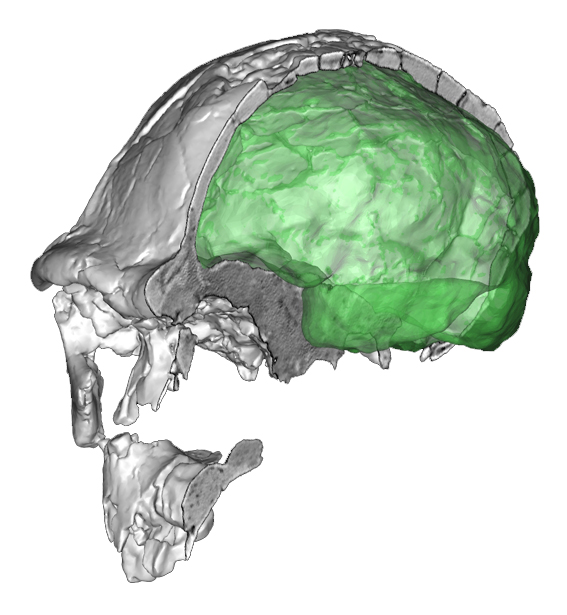
In the article, there is also a very interesting analysis correlating bone thickness with endocranial shape. Here, there is a possible bias because of the sample balance (a lot of modern humans, very few Neandertals) and bipolar distribution of the features (Neandertals have both different brain shape and different cranial thickness, introducing a sort of multivariate tautology). Nonetheless, the results are stimulating. For example, they support the association between bulging parietal lobes and thinner parietal squama.

This study is, in my opinion, a milestone in anthropology, craniology, and paleoanthropology, that will be used as a key reference for many future surveys.