Wednesday, January 07, 2026


Sound the horn! Rare Iron Age battle trumpet found among hoard in Norfolk

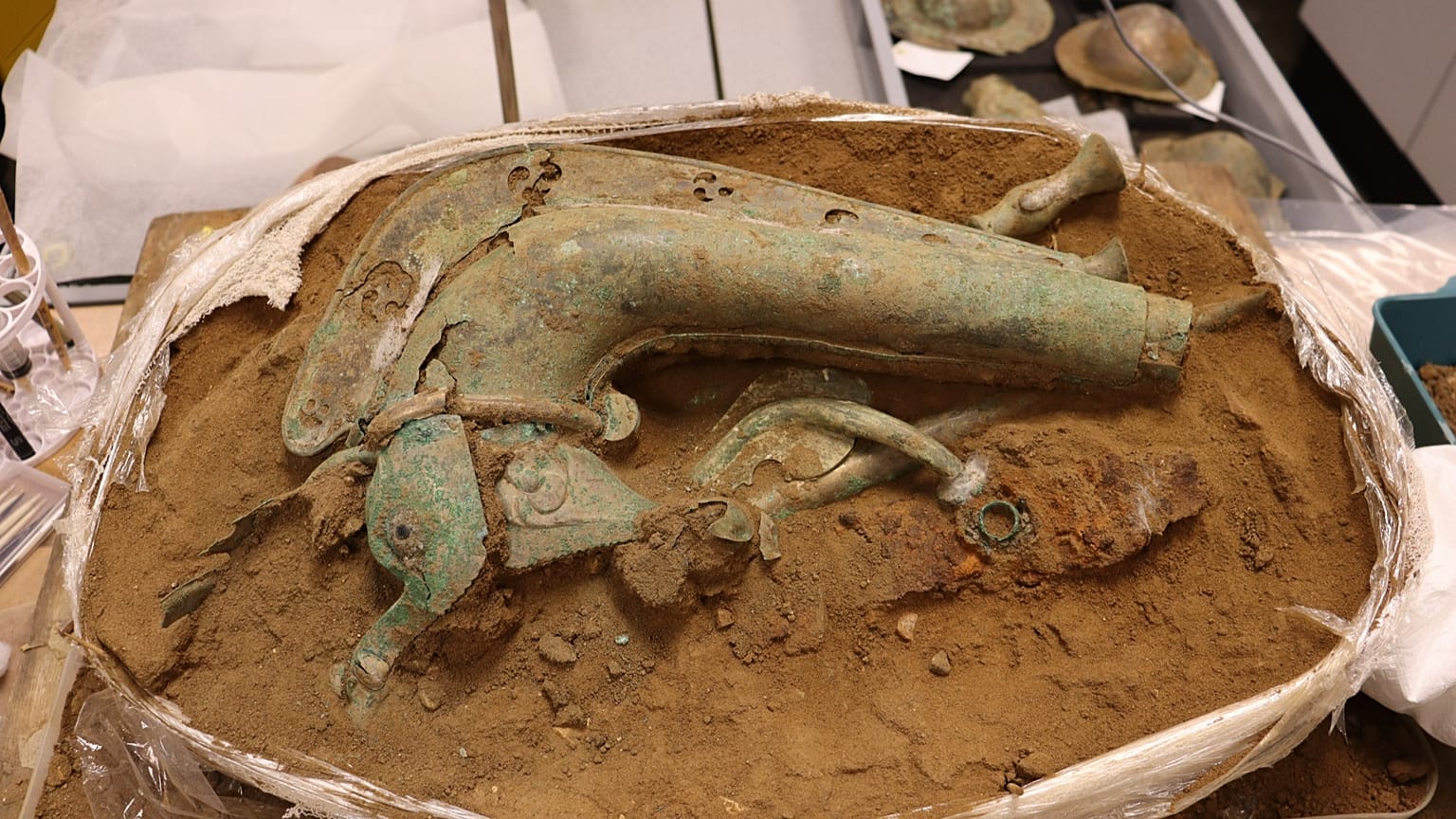
With the shield bosses and boar standard excavated from the block, the carnyx, trumpet, is revealed.
Copyright Credit: Norfolk Museum Service

By Tokunbo Salako
Published on 

An extraordinary collection of Iron Age objects has been unearthed in West Norfolk. The hoard of metal objects was found during a routine archaeological excavation by Pre-Construct Archaeology as part of the standard planning process for residential properties.

A remarkable collection of Iron Age artifacts has been unearthed in West Norfolk, shedding new light on ancient British culture.

The hoard, discovered during a routine archaeological excavation by Pre-Construct Archaeology, includes a near-complete Iron Age battle trumpet, known as a carnyx, and parts of another.

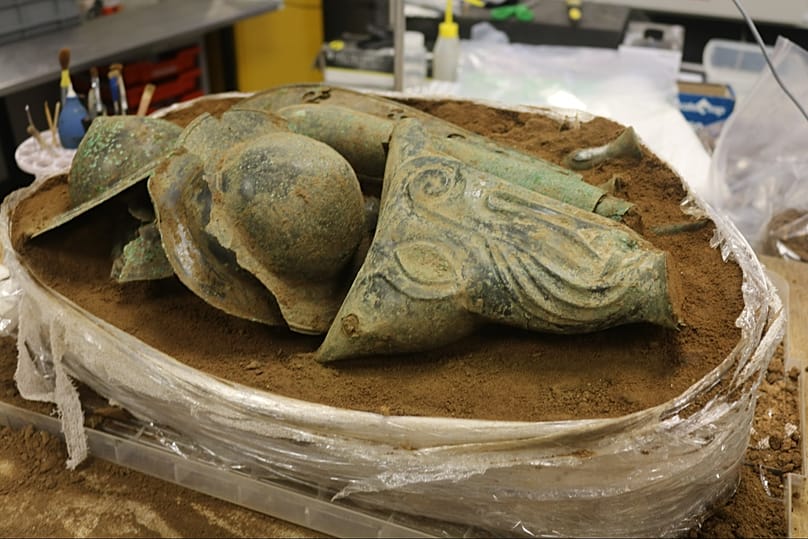
These animal-headed bronze instruments were used by Celtic tribes across Europe to inspire warriors in battle and fascinated the Romans, who frequently depicted them as war trophies. The hoard also includes a sheet-bronze boar's head, originally from a military standard, five shield bosses, and an iron object of unknown origin.

Image
The carnyx is one of only three known examples from Britain and one of the most complete found in Europe. Credit: Norfolk Museum Service

Conservation efforts

According to Dr. Fraser Hunter, Iron Age and Roman curator at National Museums Scotland, this rare find will add enormously to our understanding of the period: "The full research and conservation of these incredibly fragile remains will reshape our view of sound and music in the Iron Age."

"The carnyces and the boar-headed standard are styles well known on the continent and remind us that communities in Britain were well-connected to a wider European world at this time," he added.

Image
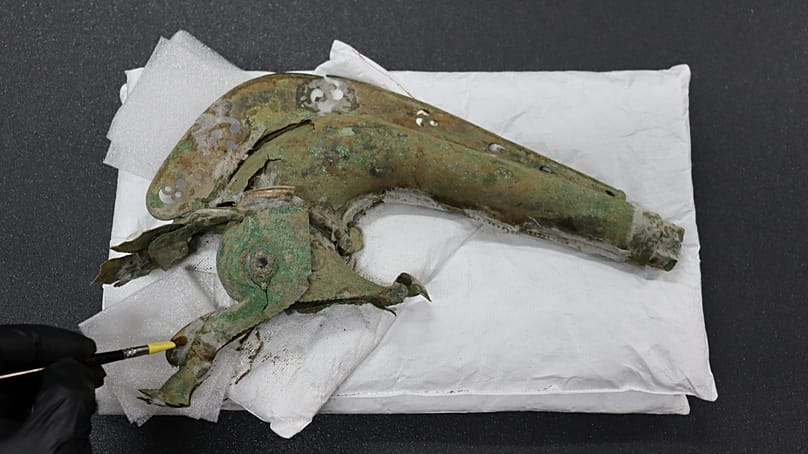
The boar standard ready to be lifted from the block Credit: Norfolk Museum Service

Following the discovery, the objects were carefully lifted within a block of soil from the site, and initial scanning took place to reveal their position. Conservation experts at Norfolk Museums Service then removed each object for preliminary examination. The items are in a fragile condition and require extensive stabilization work before detailed research can begin.

"This find is a powerful reminder of Norfolk's Iron Age past, which still retains its capacity to fascinate the British public," said Dr. Tim Pestell, Senior Curator of Archaeology for Norfolk Museums Service. "The Norfolk Carnyx Hoard will provide archaeologists with an unparalleled opportunity to investigate a number of rare objects and ultimately, to tell the story of how these came to be buried in the county two thousand years ago."

As the find consists of two or more base metal prehistoric items from the same find, it has been reported to the coroner as potential treasure under the terms of the Treasure Act 1996. The case currently rests with the coroner, who will determine its legal status in early 2026. This decision will inform the next steps for the hoard’s future.

Historic England is working with Pre-Construct Archaeology, Norfolk Museums Service and the National Museum of Scotland to coordinate research and conservation. Where the objects will be housed long-term is yet to be determined.


Italy and France seek exemption on fertilisers from EU's carbon border tax

	Jerome Delay
Copyright Jerome Delay/Copyright 2025 The AP. All rights reserved.

By Marta Pacheco & Vincenzo Genovese
Published on 

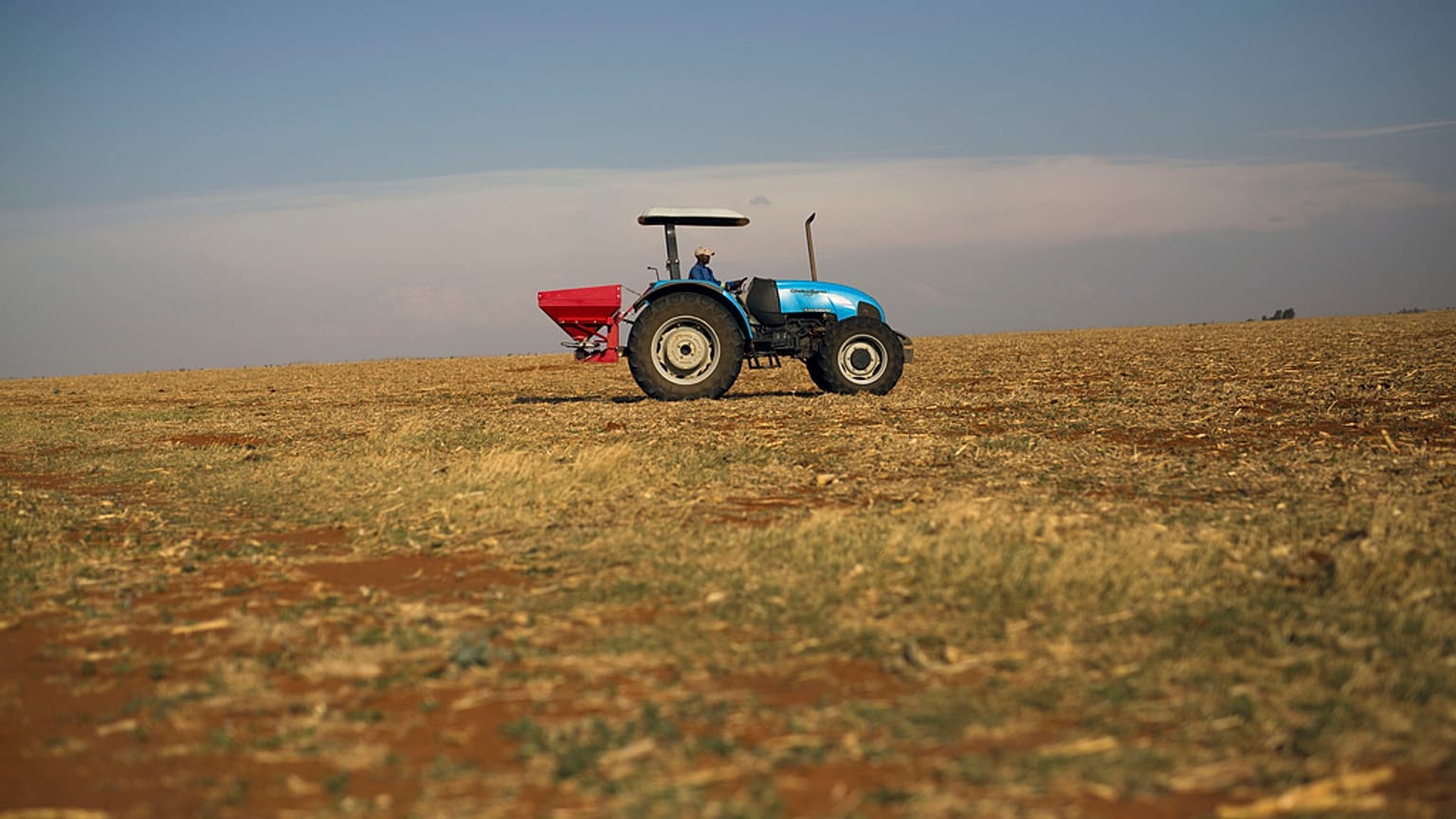
France and Italy are calling on the European Commission to exempt carbon tariffs on imported fertilisers from the bloc's carbon border tax, which came into force on January 1. They argue that the measure will help preserve European competitiveness for local farmers.

France and Italy are calling on the European Commission to exempt fertilisers from the bloc's carbon border tax, which requires EU importers to pay for the pollution caused by products entering the EU, according to two documents seen by Euronews.

French and Italian officials are concerned that the country's agricultural sector will be exposed to a "significant increase" in the cost of fertilisers imported into the EU, with the French estimating prices to rise by around 25% due to the new taxes.

"Such a postponement would ease tensions in the crop farming sector and give economic operators time to restore the satisfactory fertilizer supply conditions for the 2026 crop year," said a letter sent by the French seen by Euronews.

Fertilisers are essential in agriculture for replenishing soil nutrients, like nitrogen, to boost crop yields and ensure food security, despite their environmental challenges.

However, the vast amount of energy required to manufacture these chemicals will ultimately be reflected in the EU's carbon border tax

The EU's carbon border tax, the Carbon Border Mechanism Adjustment (CBAM), currently covers nitrogen fertilisers, such as ammonia, compound and mineral fertilisers, and other fertilisers with significant emissions from production processes.

While France backs the levy as a whole, dubbing it a "fundamental tool" for strengthening carbon pricing and ensuring fair competition with third countries, Paris expressed concerns that the law will inevitably increase costs for already struggling farmers facing weak crop prices and higher fertiliser import costs, namely from Russia.

Algeria, Belarus, China, Egypt and the United States are some of the most prominent countries that sell fertilisers to the EU. Fertilisers from Belarus and Russia were hit by EU tariffs last summer.

These would operate under such regime even if the Franco-Italian proposal is applied, the Italian minister Lollobrigida said.

More measures to support European farmers

A second letter, signed by the Italian agriculture ministry urges the Commission to consider further parallel measures to benefit farmers "in the immediate future".

This could be achieved by scrapping duties on fertilisers imported from third countries, the Italian minister said.

"The alarming market situation suggests that a suspensive clause on CBAM effects for fertilisers should be activated as soon as possible," reads the Italian letter addressed to Commissioner for Agriculture Christophe Hansen.

Fertilisers Europe, a Brussels-based trade association, said the entry into force of the financial mechanism under CBAM would bring "high financial uncertainties" for EU fertiliser blenders and importers, preventing them from placing further fertiliser orders.

"With 50% of EU fertiliser supplies sourced from third countries and current stocks covering only around 60% of next year’s needs, this uncertainty threatens the trade of fertilisers and continuity of fertiliser availability for European farmers," Fertilisers Europe said in a statement.

EU agriculture ministers meet in Brussels

EU ministers will meet in Brussels on Wednesday to discuss a possible CBAM exemption, as European governments debate ways to approve the controversial Mercosur trade deal with Latin American countries, including Brazil, which would see duties come down across the board but also open the European single market to South American goods.

On January 6, the Commission announced access to €45 billion of funding under the next Common Agricultural Policy budget as soon as 2028 to appease farmers.

France has been rallying support from member states to back its exemption proposal on fertilizers, according to two EU officials.

"We are looking at the French proposal," one EU diplomat told Euronews.

 Denmark and Greenland seek talks with Rubio over US interest in taking the island


By Gavin Blackburn
Published on 

Greenland sits off the northeastern coast of Canada, with more than two-thirds of its territory lying within the Arctic Circle making its location crucial to the defence of North America since World War II.

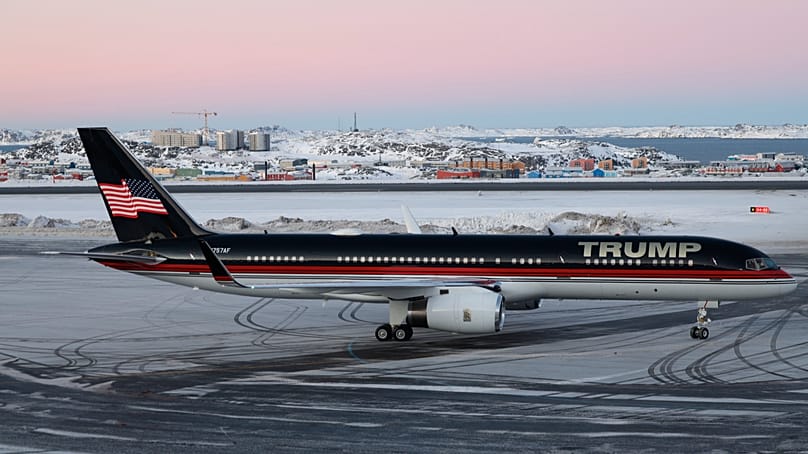
Denmark and Greenland are seeking a meeting with US Secretary of State Marco Rubio after the Trump administration doubled down on its intention to take over the strategic Arctic island.

Tensions escalated after the White House said on Tuesday that the "US military is always an option."

President Donald Trump has argued that the US needs to control the world's largest island to ensure its own security in the face of rising threats from China and Russia in the Arctic.

Danish Prime Minister Mette Frederiksen warned earlier this week that a US takeover of Greenland would amount to the end of NATO.

"The Nordics do not lightly make statements like this," Maria Martisiute, a defence analyst at the European Policy Centre think tank, said on Wednesday.

"But it is Trump, whose very bombastic language bordering on direct threats and intimidation, is threatening the fact to another ally by saying 'I will control or annex the territory.'"

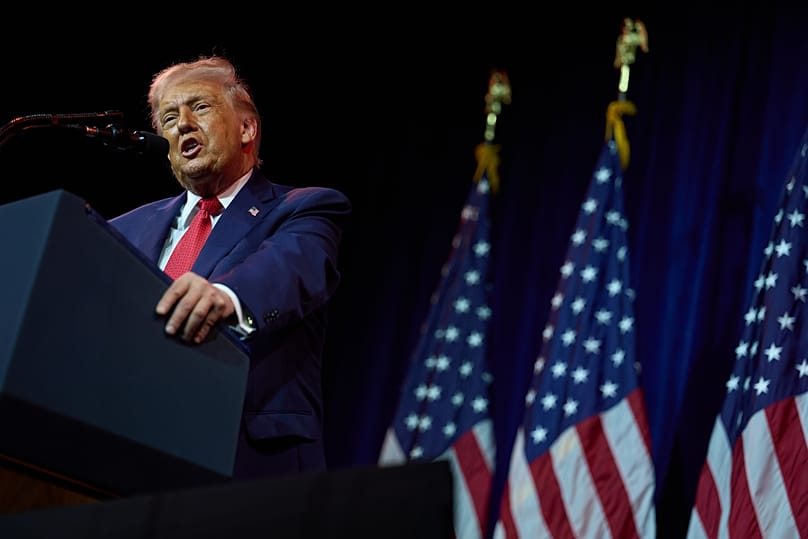
Image
US President Donald Trump speaks to House Republican lawmakers during their annual policy retreat in Washington, 6 January, 2026 AP Phot

The leaders of France, Germany, Italy, Poland, Spain and the United Kingdom joined Frederiksen in a statement on Tuesday reaffirming that the mineral-rich island "belongs to its people."

Their statement defended the sovereignty of Greenland, which is a self-governing territory of Denmark and part of NATO.

The US military operation in Venezuela last weekend has heightened fears across Europe and Trump and his advisers in recent days have reiterated a desire to take over the island, which guards the Arctic and North Atlantic approaches to North America.

"It's so strategic right now," Trump told reporters on Sunday.

Danish Foreign Minister Lars Løkke Rasmussen and his Greenland counterpart, Vivian Motzfeldt, have requested a meeting with Rubio in the near future, according to a statement posted Tuesday to Greenland's government website on Wednesday.

Previous requests for a sit-down were not successful, the statement said.

'This is America now'

Thomas Crosbie, an associate professor of military operations at the Royal Danish Defence College, said an American takeover would not improve upon Washington's current security strategy.

"The United States will gain no advantage if its flag is flying in Nuuk versus the Greenlandic flag," he said.

"There's no benefits to them because they already enjoy all of the advantages they want. If there's any specific security access that they want to improve American security, they'll be given it as a matter of course, as a trusted ally. So this has nothing to do with improving national security for the United States."

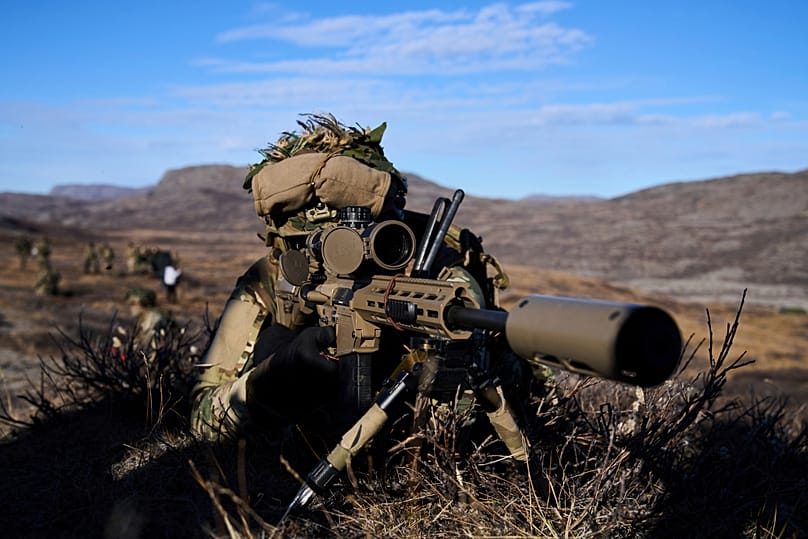
Image
Danish military forces participate in an exercise with hundreds of troops from several European NATO members in Kangerlussuaq, 17 September, 2025 AP Photo

Denmark's parliament approved a bill last June to allow US military bases on Danish soil. It widened a previous military agreement, made in 2023 with the Biden administration, where US troops had broad access to Danish airbases.

Rasmussen, in a response to lawmakers’ questions, wrote over the summer that Denmark would be able to terminate the agreement if the US tries to annex all or part of Greenland.

But in the event of a military action, the US Department of Defence currently operates the remote Pituffik Space Base, in northwestern Greenland, and the troops there could be mobilised.

Crosbie said he believes the US would not seek to hurt the local population or engage with Danish troops.

"They don't need to bring any firepower. They don't to bring anybody," Crosbie said on Wednesday.

"They could just direct the military personnel currently there to drive to the centre of Nuuk and just say, 'This is America now,' right? And that would lead to the same response as if they flew in 500 or 1,000 people."

'Greenland is not for sale'

French Foreign Minister Jean-Noël Barrot said he spoke by phone with Rubio on Tuesday, who dismissed the idea of a Venezuela-style operation in Greenland.

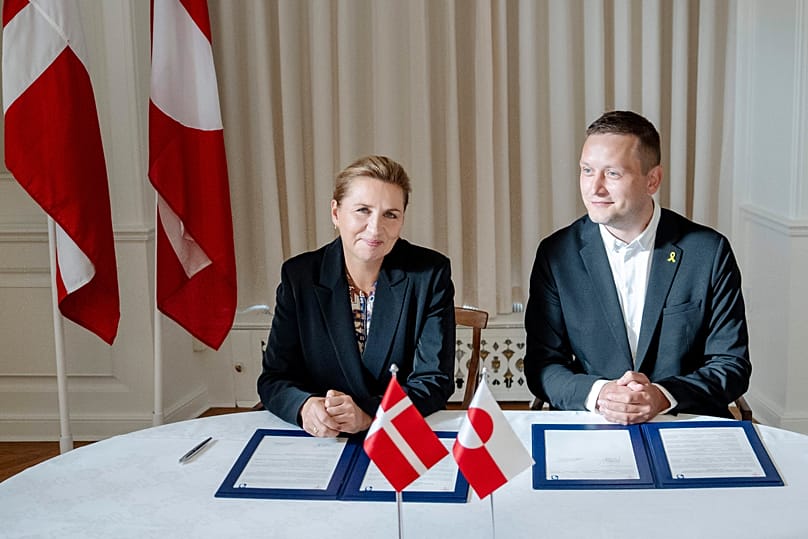
Image
Denmark's Prime Minister Mette Frederiksen and Greenland's Prime Minister Jens-Frederik Nielsen at the Prime Minister's Office in Copenhagen, 16 September, 2025 AP Photo

"In the United States, there is massive support for the country belonging to NATO – a membership that, from one day to the next, would be compromised by…any form of aggressiveness toward another member of NATO," Barrot told France Inter radio on Wednesday.

Asked if he has a plan in case Trump does claim Greenland, Barrot said he would not engage in "fiction diplomacy."


How Ukraine is shaping the European response to Trump's threats against Greenland

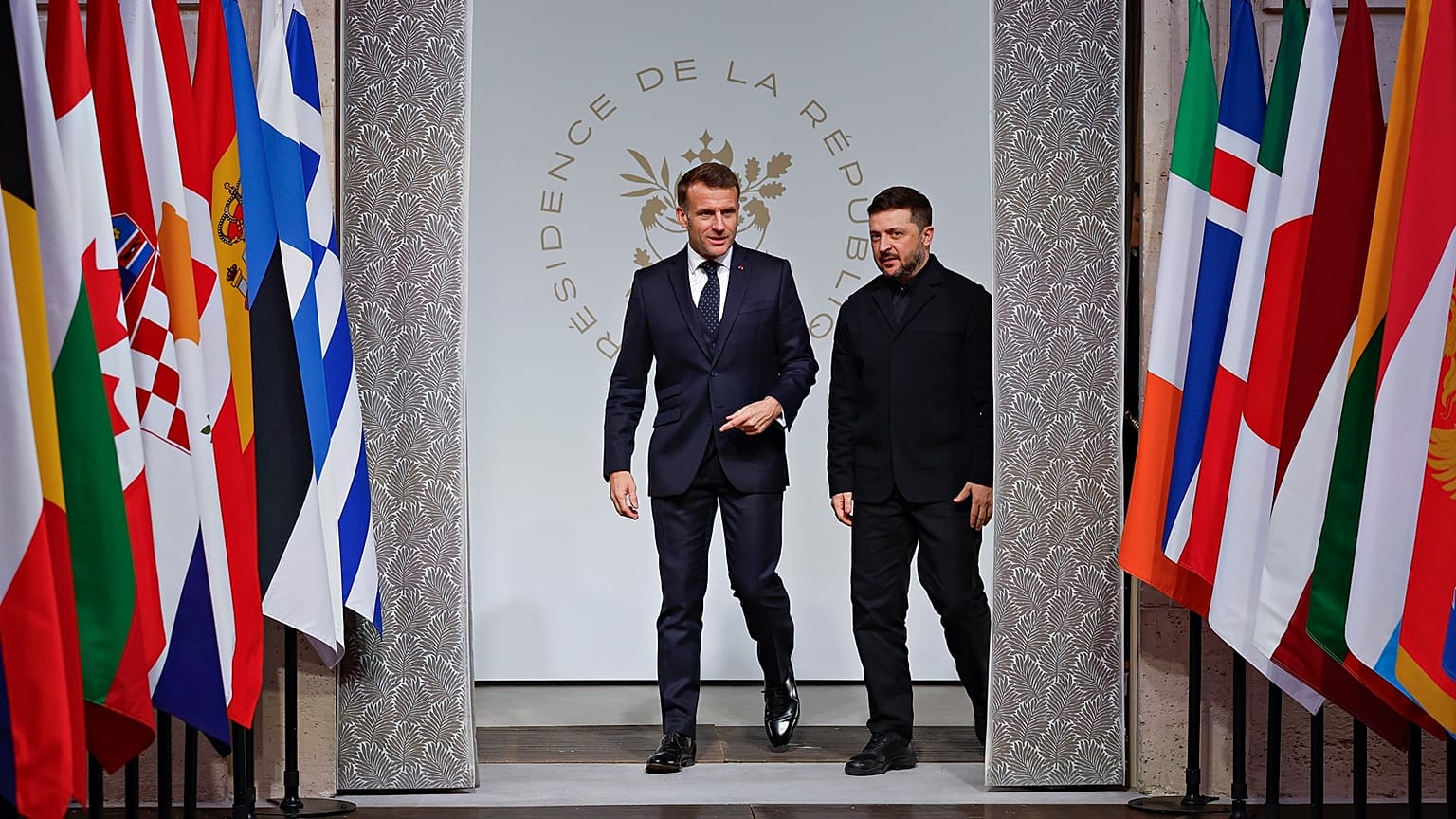
Emmanuel Macron hosted Volodymyr Zelenskyy in Paris.
Copyright Yoan Valat/AP

By Jorge Liboreiro
Published on 

As Europeans seek to defend Greenland against Donald Trump's annexation threats, the fear of losing US support for ending Russia's war on Ukraine makes for a delicate balancing act.

For the past year, staying in Donald Trump's good graces has become a top priority for European leaders, who have gone the extra mile to appease the mercurial US president, rein in his most radical impulses and keep him firmly engaged in what is their be-all and end-all: Russia's war on Ukraine.

Though Europe is by far the largest donor to Kyiv, nobody on the continent is under the illusion that the invasion can be resisted without US-made weapons and come to an eventual end without Washington at the negotiating table.

In practice, the strategic calculus has translated into painful sacrifices, most notably the punitive tariffs that Trump forced Europeans to endure.

"It's not only about the trade. It's about security. It is about Ukraine. It is about current geopolitical volatility," Maroš Šefčovič, the European Commissioner for Trade, said in June as he defended the trade deal that imposed a sweeping 15% tariff on EU goods.

The same thinking is now being replicated in the saga over Greenland's future.

As the White House ramps up its threats to seize the vast semi-autonomous island, including, if necessary, by military force, Europeans are walking an impossibly thin line between their moral imperative to defend Denmark's territorial integrity and their deep-rooted fear of risking Trump's wrath.

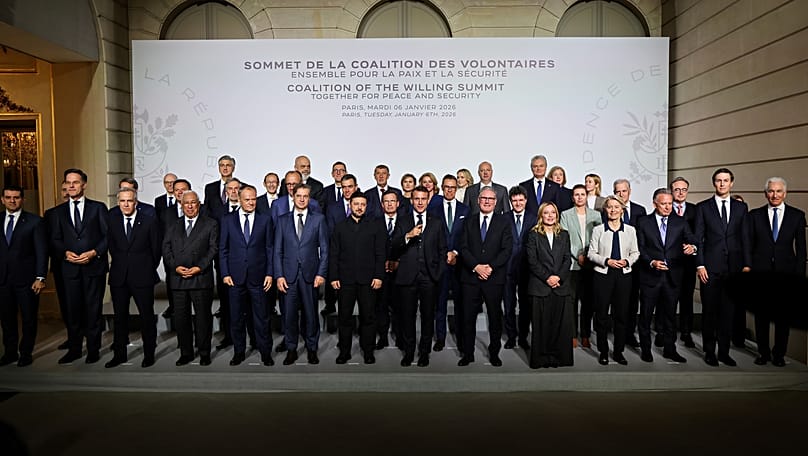
The precarity of the situation was laid bare at this week's meeting of the "Coalition of the Willing" in Paris, which French President Emmanuel Macron convened to advance the work on security guarantees for Ukraine.

The high-profile gathering was notable because of the first-ever in-person participation of Steve Witkoff and Jared Kushner, the chief negotiators appointed by Trump.

At the end of the meeting, Macron hailed the "operational convergence" achieved between Europe and the US regarding peace in Ukraine. By his side, British Prime Minister Keir Starmer was equally sanguine, speaking of "excellent progress".

But it did not take long for the elephant in the room to make an appearance.

Hard pivot

The first journalist who took the floor asked Macron whether Europe could "still trust" America in light of the threats against Greenland. In response, the French president quickly highlighted the US's participation in the security guarantees.

"I have no reason to doubt the sincerity of that commitment," Macron said. "As a signatory of the UN charter and a member of NATO, the United States is here as an ally of Europe, and it is, as such, that it has worked alongside us in recent weeks."

Starmer was also put on the spot when a reporter asked him about the value of drafting security guarantees for a country at war "on the very day" that Washington was openly talking about seizing land from a political ally.

Image
The Coalition of the Willing met in Paris. Ludovic Marin/AP

Like Macron, Starmer chose to look at the bright side of things.

"The relationship between the UK and the US is one of our closest relationships, particularly on issues of defence, security and intelligence," the British premier said. "And we work with the US 24/7 on those issues."

Starmer briefly referred to a statement published earlier on Tuesday by the leaders of France, Germany, Italy, Poland, Spain, the UK and Denmark in defence of Greenland.

The statement obliquely reminded the US to uphold "the principles of sovereignty, territorial integrity and the inviolability of borders" enshrined in the UN Charter – precisely the same tenets that Moscow is violating at large in Ukraine.

The text did not contain any explicit condemnation of the goal to forcefully annex Greenland and did not spell out any potential European retaliation.

"Greenland belongs to its people. It is for Denmark and Greenland, and them only, to decide on matters concerning Denmark and Greenland," its closing paragraph read.

Conspicuous silence

The lack of censure was reminiscent of the European response to the US operation that just a few days earlier removed Nicolás Maduro from power in Venezuela.

Besides Spain, which broke ranks to denounce the intervention as a blatant breach of international law, Europeans were conspicuously silent on legal matters. Rather than condemn, they focused on Venezuela's democratic transition.

Privately, officials and diplomats concede that picking up a fight with Trump over Maduro's removal, a hostile dictator, would have been counterproductive and irresponsible in the midst of the work to advance security guarantees for Ukraine.

The walking-on-eggs approach, however, is doomed to fail when it comes to Greenland, a territory that belongs to a member of both the EU and NATO.

Image
Donald Trump wishes to annex Greenland. Associated Press.

Danish Prime Minister Mette Frederiksen has warned that the entire security architecture forged at the end of World War II, which allies have repeatedly invoked to stand up to the Kremlin's neo-imperialism, would collapse overnight in the event of an annexation. The worry is that trying to stay in Trump's good graces at all costs might come at an unthinkable price.

"Europeans are clearly in a 'double-bind': Since they are in desperate need of US support in Ukraine, their responses to US actions – whether on Venezuela or Trump threatening Denmark to annex Greenland – are weak or even muted," said Markus Ziener, a senior fellow at the German Marshall Fund.

"Europeans are afraid that criticising Trump could provide a pretext for the US president to conclude a peace deal at Ukraine's and Europe's expense. Is this creating a credibility gap on the part of the EU? Of course. But confronted with a purely transactional US president, there seems to be no other way."


Iran protests enter eleventh day with 36 dead as security forces raid hospitals

Iran protests enter eleventh day with 36 dead as security forces raid hospitals
Security officers sealed off Sina Hospital on January 6. / CC: Vahid Online
By bnm Tehran bureau January 7, 2026

Iran's protests continued for an eleventh consecutive day with at least 36 people killed and 2,076 arrested, whilst security forces raided hospitals in Ilam and Tehran, expatriate-based human rights group HRANA reported on January 6.

Protests occurred in 285 locations across 92 cities in 27 provinces, with 22 universities witnessing student demonstrations. The death toll includes four people under 18 years of age and two security force members, whilst dozens of protesters sustained injuries mostly from pellet and plastic bullets, the human rights group reported working off reports from towns and cities across the country. Bne IntelliNews could not verify the numbers.

In the latest report from the provinces, bazaar merchants from Bojnurd, near the border with Turkmenistan, were seen protesting on the streets, with police officers in high-visibility jackets controlling the crowds. 

According to one report, security forces raided Imam Khomeini Hospital in Ilam on January 4, firing tear gas inside the facility whilst attempting to arrest injured protesters from Malekshahi who had been transferred for treatment. Videos showed tear gas deployed inside the hospital building, causing respiratory problems for patients and staff.

The Ministry of Health issued a statement saying the matter was under urgent investigation at the health minister's order, stressing the necessity of maintaining security for medical centres, patients and medical staff. President Masoud Pezeshkian ordered the Interior Minister to investigate and submit a report.

Security forces also entered Sina Hospital in Tehran on January 6, arresting injured protesters who had been transferred for treatment, with photos showing the gates the the hospital were closed to the street during the disturbances.

Eyewitnesses said the security presence created an atmosphere of fear and disrupted patient treatment, with some families avoiding medical centres for fear of arrest.

Tehran's Grand Bazaar witnessed strikes on January 6 focused on the main sections, including the gold and currency market, the textile market, and parts of the shoe and household goods markets.

The strike formed spontaneously without official calls, with shopkeepers protesting severe currency fluctuations, gold price jumps, market recession and a sharp decline in purchasing power.

IRGC-linked Tasnim News Agency, affiliated with security institutions, claimed 568 police officers and 66 Basij militia members were injured since the protests began. Fars News Agency confirmed security forces' presence at Imam Khomeini Hospital but claimed protesters used the medical facility to hide.

UN Secretary-General António Guterres expressed deep concern about developments, calling on Iranian authorities to respect freedom of expression, assembly and peaceful protest. The US State Department's Farsi account described the hospital raid as a "blatant crime against humanity".

Pezeshkian said in an official ceremony that "parliament and government together brought the country to this point", stating "we are all guilty" in an unusually critical acknowledgement of responsibility for the current situation.

Exiled former prince Reza Pahlavi, in a video message released on Tuesday, issued his first call to continue the protests and urged citizens to gather and chant slogans in a coordinated manner at 8 PM on Thursday and Friday, January 7 and 8.

A second video was released early in the morning on January 7, offering amnesty to military police and for them to register on his website, if they were willing to join his cause. 

Northwest Territories facing a hard-as-diamonds reality as pivotal industry wanes

By The Canadian Press

Image
Lac de Gras surrounds the Diavik mine pit about 300 kilometres northeast of Yellowknife, N.W.T., on July 19, 2003. THE CANADIAN PRESS/Adrian Wyld (ADRIAN WYLD)

It’s said that pressure makes diamonds, but a diamond mining downturn is what’s putting pressure on the Northwest Territories economy these days.

Diamond mines have long been a vital source of well paying local jobs, with spinoffs in hospitality, construction and other areas. It’s been estimated that the region’s three operating mines directly and indirectly employ more than 1,500 residents — a significant chunk of the territory’s population of almost 46,000 — and account for about one-fifth of the N.W.T.’s gross domestic product.

“Diamond mining in the Northwest Territories has been incredibly pivotal to our economy over the last 25 years,” said Caitlin Cleveland, the N.W.T.’s minister of industry, tourism and investment.

“It’s put over $30 billion into the Canadian economy, $20 billion of which has stayed here in the Northwest Territories.”

But diamonds aren’t forever, and that reality is hitting home.

Rio Tinto’s Diavik mine is scheduled to close down in March, having reached the end of its productive life. The Gahcho Kue mine, operated by De Beers Canada and Mountain Province Diamonds, is expected to run until 2031.

Those mines are reaching their end of life at the same time the rising popularity of less expensive lab-grown jewels undercuts the business case for digging up raw diamonds in the Far North. The International Diamond Exchange’s price index shows a steep decline since early 2022.

The Ekati mine, owned by Australia-based Burgundy Diamond Mines Ltd., has a plan that could see it operate as long as 2040, but it’s been under financial strain. It asked the Australian Stock Exchange in September to suspend its stock trading until it can secure new funding and it undertook major staff cuts last year.

Burgundy blamed “ongoing challenging market conditions,” but said U.S. President Donald Trump’s tariffs have also been a big headwind. Most of the world’s diamonds are sent to India for cutting and polishing, and imports into the U.S. of those finished gems are subject to 50 per cent tariffs.

Last month, the federal government extended a $115-million Large Enterprise Tariff Loan to a Burgundy subsidiary so Ekati can continue operating.

Even without the recent geopolitical and market challenges, the territory has been urged to contemplate life beyond diamonds.

“Mines aren’t forever. They are finite resources,” said Paul Gruner, CEO of Tlicho Investment Corp., the business arm of the Tlicho Nation.

The corporation has been working with Rio Tinto on keeping people on the job as the Diavik mine winds down. He figures the reclamation and remediation work will buy the community about three years until employment disappears.

Heather Exner-Pirot, senior fellow at the Macdonald Laurier Institute, agrees mine closure and rehabilitation is going to be “big business” for a few years.

“In terms of jobs and contracts in mining, they still exist,” she said. “But those are not things that produce royalties and taxes.”

Diamonds make up most of the territory’s own-source revenue, said N.W.T. Finance Minister Caroline Wawzonek, who is also responsible for the territorial power corporation, strategic infrastructure, energy and supply chains.


If not for its funding relationship with the federal government, the territory’s coffers would be in much worse shape.

“It’s not really a story of ‘Do I think our government is going to be in financial trouble’ — not exactly,” Wawzonek said.

“Do I think the economy here will be in financial trouble? I would say that’s our real risk.”

Gruner said population decline is a serious threat. Transfer payments are calculated based on population, so a drop could hit territorial revenue. And then the public sector — itself a huge employer — might have to shrink.

“It becomes a bit of that death spiral.”

While there’s much beyond the territorial government’s control, Gruner said it can “get creative” on ways to keep as many people employed for as long as possible to avoid brain drain.

“It’s not just about driving revenue, it’s also about building and preserving skills, driving employment, getting those numbers up.”

Indigenous economic development corporations like Gruner’s have grown up around diamond mining into sophisticated businesses over the years, said Exner-Pirot. Others include ones run by the Yellowknives Dene First Nation, North Slave Metis Alliance and Lutsel K’e Dene First Nation.

“You don’t want those workers to have to move and you don’t want those corporations to atrophy,” said Exner-Pirot.

Contracts with diamond mines account for 54 per cent of the total gross output of the N.W.T.’s four Indigenous economic development corporations, those groups said in a report last year.

Territorial leaders have been setting their sights on critical minerals as a potential longer-term economic driver. That would mean more, but smaller, mines than the diamond trio that has long anchored the territorial economy.

Cleveland said the territory has almost three quarters of the resources on Canada’s list of critical minerals.

The economy has diversified somewhat into tourism, film and other areas, but “we absolutely are a mineral extraction economy here in the Northwest Territories,” she said.

The key, she said, is diversifying within that sector — mining a more varied array of materials so the booms and busts aren’t so severe.

Getting new mining industries off the ground is going to mean big investments in year-round transport infrastructure, as roads now serving diamond mines can only operate in the winter, the ministers said. Energy infrastructure is also needed in a territory still largely dependent on pricey and inefficient diesel generation.

The federal government has listed the Arctic Economic and Security Corridor as a potential nation building project that could be referred to its new major projects office for a speedy review. It would include ports, all-season roads, runways and communications systems in Nunavut and the N.W.T. serving both military and commercial functions.

Wawzonek said she’s noticed a shift in her interactions with the federal government lately.

“You go to the federal ministers and they can’t ask enough questions,” she said.

She added that she’s spoken to major projects office head Dawn Farrell and got the impression she “gets it” when it comes to the need for northern infrastructure.

Exner-Pirot questioned whether it’s worthwhile to sink billions into new roads before critical mineral investment is a sure bet.

“If you don’t have the private sector using this kind of infrastructure, it can become a real drag on the territorial economy. They don’t have the tax base to maintain a couple hundred kilometres of linear infrastructure or transmission lines that no one is really using,” she said.

“So they’re certainly in a pickle.”

Investor enthusiasm in critical minerals in the Far North could perk up if the right commodities hit the right price at the right time, Exner-Pirot added.

“They would have to go up a lot — a lot — to make the deposits in the Northwest Territories more attractive and there’s nothing on deck that would replace or even come close to replacing what the impact of the diamond mining sector was.”

This report by The Canadian Press was first published Jan. 1, 2026.
Lauren Krugel, The Canadian Press
Air Transat pilots approve new contract that locks in big gains

ByThe Canadian Press
Published: January 06, 2026 

Image
Air Transat aircraft are seen on the tarmac at Montreal-Trudeau International Airport in Montreal, on April 8, 2020. (THE CANADIAN PRESS/Paul Chiasson) (Paul Chiasson)

MONTREAL — Air Transat pilots have ratified a new collective agreement after voting overwhelming in favour of the deal.

The vast majority of the leisure airline’s 750 aviators approved the five-year contract, which includes raises of more than 50 per cent for most pilots over that time period.

Backdated to May 1, the contract with owner Transat A.T. Inc. will remain in effect through April 2030.

Air Transat steered clear of a work stoppage that would have shut down operations last month after a tentative deal was reached with hours to go before a strike deadline.

The labour dispute would have marked the third strike in a year and a half in Canada’s airline sector, as workers seek to make gains that match those achieved elsewhere in North America amid the rising cost of living.


Transat CEO Annick Guérard says the agreement acknowledges the progress that was needed to catch up to the industry.

Bradley Small, who chairs the union’s Air Transat contingent, says it was “unfortunate” that the Air Line Pilots Association needed to apply so much pressure, but that the strategy delivered results.

This report by The Canadian Press was first published Jan. 6, 2026.

Christopher Reynolds, The Canadian Press
BC Premier Eby says Canada should build refineries, not pipelines, after Venezuela attack
January 06, 2026

Image
B.C. Premier David Eby, speaks during an announcement for new funding to support victims of crime, in Surrey, B.C. on Friday, Nov. 28, 2025. 
THE CANADIAN PRESS/Ethan Cairns (ETHAN CAIRNS)

British Columbia Premier David Eby says Canada should prioritize building more oil refinery capacity over new export pipelines amid the threat that Venezuelan oil could begin to displace Canadian crude in U.S. refineries.

The premier was responding to recent calls from the Alberta government to expedite new pipeline infrastructure from the oilsands to the B.C. coast, following the American capture of Venezuelan President Nicolás Maduro and the Trump administration’s stated plans to take control of that country’s vast oil resources.

“I, like many Canadians, am glad to see the back of Mr. Maduro,” Eby told reporters Tuesday, referring to the ousted Venezuelan leader as a “terrible man” and a “tyrannical dictator.”

But the economic risk that is posed by a potential glut of Venezuelan crude displacing Canadian heavy oil at U.S. Gulf Coast refineries would be better mitigated by refining more oil domestically, Eby said.

“If we’ve got tens of billions of dollars to spend, I think we should spend it on a refinery, and we should develop oil products for Canadians and for export, instead of being reliant on American and Chinese refineries to do it for us,” the premier said ahead of his departure on a planned trade mission to India later this week.


“We’ve got to stand on our own feet here, and building that capacity and jobs in our country is something we should be talking about as opposed to shipping raw resources out as quickly as possible,” he added.

The premier reiterated his opposition to building new oil pipelines through northern B.C., and said the existing Trans Mountain pipeline to Burnaby is not at full capacity and could be expanded further within its existing right of way.

“If we’re going to do public investment into our resources here in Canada, I think it might be time to pivot that discussion to a refinery,” he said. “We still buy oil products from the United States.”

More than 90 per cent of Canada’s oilsands exports are currently shipped to the U.S. for refining, according to data from the Canada Energy Regulator.

Venezuela boasts the world’s largest proven reserves of crude oil, primarily in the same form of bituminous heavy oil that is produced in Alberta.

Shares in many of Canada’s largest oilsands companies have been trading at a discount following the ouster of Maduro and Washington’s assertion of control over Venezuela’s energy industry.

Oil production in Venezuela peaked in the 1990s but struggled in the years since under international sanctions. A resurgence of Venezuelan crude production under American control would likely further discount Canadian oil prices in a U.S.-dominated market.

“I don’t understand why, if we’re talking about massive public investment into supporting Albertans in this fragile global time, we can’t talk about supporting all Canadians with oil and gas products that are made right here at home while we transition,” Eby said.

He added the B.C. government remains focused on diversifying markets for a variety of Canadian products away from the U.S. in light of Trump’s attacks on Canadian sovereignty through threats of annexation and tariffs.

The premier also condemned the U.S. military’s unilateral actions against Venezuela as “deeply unsettling,” and said the focus of his trip to India will be on making B.C. “more independent than ever from the United States.”

Eby will be joined on the trade mission by Ravi Kahlon, the province’s minister of jobs and economic development.


Todd Coyne

CTVNewsVancouver.ca Journalist

 Image

Machado's Nobel Prize may have cost her Venezuela's presidency

Machado's Nobel Prize may have cost her Venezuela's presidency
The lesson for opposition movements elsewhere is uncomfortable: in Trump's transactional approach to foreign policy, even Nobel recognition counts for less than control over oil reserves and security forces. And considerably less than avoiding perceived personal slights.
By bnl editorial staff January 6, 2026

María Corina Machado's desperate attempt to salvage her standing with Donald Trump by offering him her Nobel Peace Prize has laid bare the peculiar dynamics that led Washington to sideline Venezuela's legitimate electoral winner in favour of a Chavista technocrat with two decades defending authoritarian rule.

The 58-year-old firebrand opposition leader told Fox News on January 5 that she wants to meet with Trump personally to tell him that "the Venezuelan people" want to "give it to him, share it with him,” in a striking reversal for someone who accepted the award just three months earlier whilst dedicating it to the US president "for his decisive support of our cause."

Yet according to two people close to the White House who spoke to The Washington Post, Trump's decision to back acting president Delcy Rodríguez rather than Machado stemmed directly from her acceptance of the prize he has long coveted. "If she had turned it down and said, 'I can't accept it because it's Donald Trump's,' she'd be the president of Venezuela today," one person told the newspaper.

Trump publicly denied the Nobel Prize influenced his decision, telling NBC on January 5 that Machado "should not have won it" but insisting the award had "nothing to do with my decision" to work with Rodríguez instead. He has repeatedly stated that “nice woman” Machado "doesn't have the support within, or the respect within, the country," calling it "very tough" for her to become Venezuela's leader despite her movement's landslide victory in widely disputed 2024 elections.

The episode reveals how personal pique and strategic calculation conspired to seal Venezuela's political fate following Nicolás Maduro's capture by US special forces on January 3. Whilst Machado does command genuine popular support – several independent election monitors and NGOs confirmed that Edmundo González, who stood in for the banned Machado, captured over two-thirds of votes cast in July 2024 – Trump administration officials concluded she lacked the capacity to manage Venezuela's immediate transition.

A classified CIA assessment, reported by The New York Times, suggested that maintaining senior figures from Maduro's government rather than promoting the opposition would best secure the country's stability. Such an analysis apparently influenced Trump's decision to empower Rodríguez, who controls levers of state power including the military apparatus that Machado cannot command.

"We are dealing with the immediate reality," Secretary of State Marco Rubio, a long-time supporter of Machado, told NBC's Meet the Press on January 4. "The immediate reality is that, unfortunately and sadly, but unfortunately the vast majority of the opposition is no longer present inside of Venezuela."

US officials concluded that Machado and her centre-right Vente Venezuela movement lack sufficient influence over the Bolivarian National Armed Forces – the very same military that shielded and enabled Maduro's authoritarian rule for more than a decade. Without that control, American officials feared, installing Machado could further destabilise Venezuela rather than facilitate an orderly transition.

Defence Minister Vladimir Padrino López and Interior Minister Diosdado Cabello, who command the armed forces and domestic intelligence apparatus respectively, remain in their positions despite Maduro's ouster, their loyalty to Chavismo intact. Rodríguez, who served as Maduro's vice president and oil minister, maintains working relationships with these power brokers that Machado simply cannot replicate from exile.

"Delcy Rodríguez, as you know, is one of the main architects of torture, persecution, corruption, narcotrafficking," Machado told Fox News. Yet her accurate characterisation of Rodríguez's complicity in authoritarian governance could not overcome Trump’s assessment that stability requires co-opting figures who control Venezuela's coercive apparatus.

Machado has sought to position herself as the ideal partner for Trump's Venezuela objectives, promising that under her leadership the country would become "the energy hub of the Americas" with markets opened to foreign investment and rule of law restored.

But it is Rodríguez, not Machado, will oversee those negotiations, despite the opposition leader's superior democratic credentials. Conversations between Caracas and Washington regarding petroleum shipments to US refineries are underway, Reuters reported, citing multiple sources within government, industry and maritime sectors. US oil chief executives are expected to visit the White House as early as this week to discuss investments in Venezuela.

Venezuela possesses approximately 303bn barrels of reserves, the world’s largest, primarily heavy crude requiring complex refining. The country's oil industry has deteriorated sharply over the last decade due to corruption, lack of investment and Western sanctions. Current production stands at roughly 1.1mn barrels daily, less than a third of levels achieved in the 1970s.

Trump has declared the United States is now "in charge" of Venezuela and will help revive its oil industry with private company assistance. It now looks that revival will occur under Rodríguez's supervision, with Machado relegated to offering praise and giving remote interviews from undisclosed locations whilst her movement's electoral mandate is nullified.

Politico reports that Washington has outlined expectations for Rodríguez including suppressing narcotics trafficking, expelling Cuban, Iranian, Russian and other anti-American personnel, and halting petroleum exports to US rivals, and eventual facilitation of free elections in which she would stand down. However, no timeline has been specified, and Venezuela's Supreme Court has classified Maduro's detention as "temporary" rather than permanent, technically allowing Rodríguez to serve for up to six months without triggering constitutional requirements for elections within thirty days.

Machado’s offer to surrender the Nobel Prize to Trump comes across as a final, futile gesture acknowledging the reality that personal rapport with the American president might have mattered more than democratic legitimacy or popular support. The lesson for opposition movements elsewhere is uncomfortable: in Trump's transactional approach to foreign policy, even Nobel recognition counts for less than control over oil reserves and security forces. And considerably less than avoiding perceived personal slights.

For now, Venezuela's most daring and celebrated opposition leader remains in exile, offering prizes she cannot deliver to a president who has already crowned her pro-regime nemesis.